Best NFT Lending Platforms for Digital Asset Owners
 by
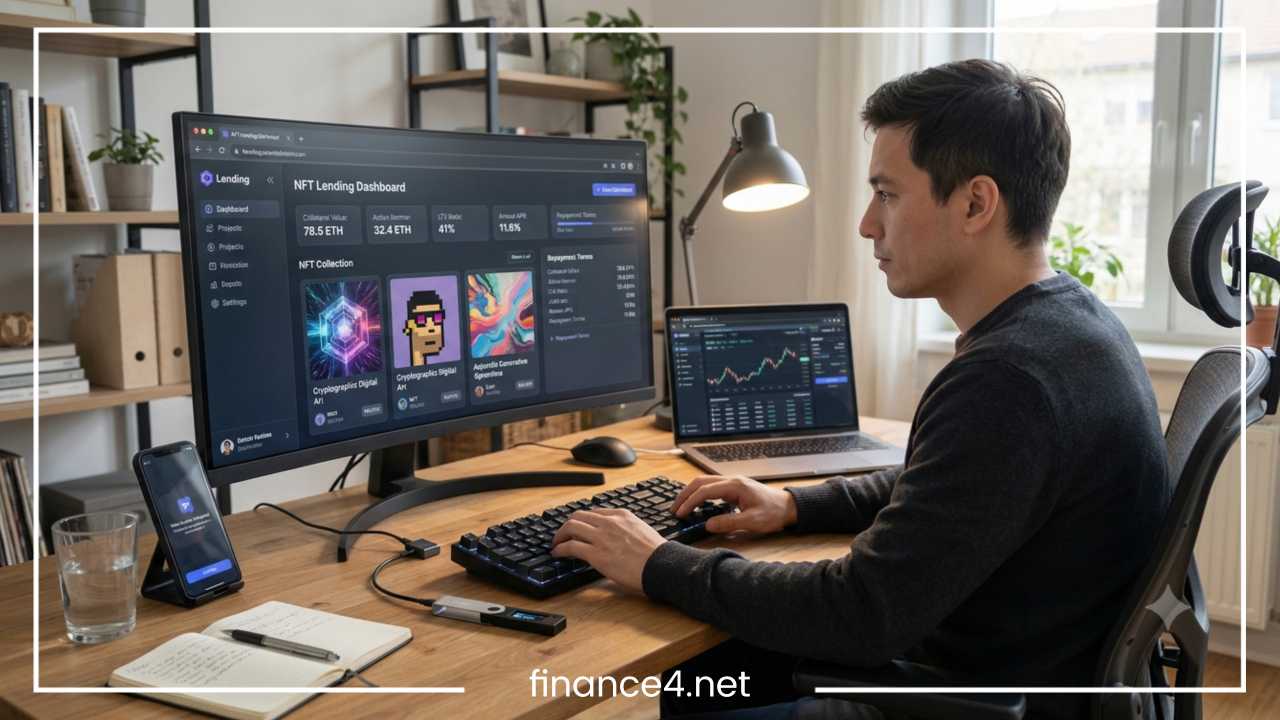
Best NFT Lending Platforms for Digital Asset Owners
Non-fungible tokens have evolved well beyond simple digital collectibles into recognized on-chain assets representing digital art, virtual real estate, gaming items, intellectual property, and tokenized real-world goods. As the market for these assets has matured, a critical financial challenge has persisted: illiquidity. Unlike fungible cryptocurrencies that can be traded instantaneously on decentralized exchanges at any fraction of a unit, high-value NFTs often require significant time to sell at fair market value. Forced sales during urgent capital needs frequently result in steep discounts, costing collectors long-term upside.
This challenge has driven the rapid integration of NFTs into decentralized finance (DeFi) through NFT lending platforms. These specialized protocols allow digital asset owners to unlock liquid capital—typically in the form of Ether, Solana, or stablecoins—by pledging their NFTs as collateral without relinquishing long-term ownership. Instead of permanently parting with a prized piece of digital art or a core ecosystem pass, holders can access immediate working capital, fund new investments, or manage cash flow while retaining exposure to future price appreciation.
In this comprehensive buyer’s guide, we will examine how NFT-backed loans operate, compare the leading NFT lending platforms across major blockchains, analyze the differences between peer-to-peer and peer-to-pool models, and break down the key risks, features, and selection criteria every digital asset owner must evaluate before locking their assets into a smart contract.
What Is NFT Lending?
NFT lending is a decentralized financial mechanism that enables owners of non-fungible tokens to use their digital assets as collateral to secure cryptocurrency loans. Through automated smart contracts, a borrower locks an eligible NFT into a secure escrow vault or delegation contract and receives liquid tokens from a lender or liquidity pool. Once the borrower repays the principal plus accrued interest within the agreed terms, the smart contract automatically releases the NFT back to the owner’s wallet.
While the foundational concept mirrors traditional crypto-backed borrowing on money markets like Aave or Compound, NFT lending differs substantially due to the unique nature of non-fungible collateral. Fungible tokens such as Bitcoin or Ether share uniform pricing, deep order books, and continuous price feeds, allowing protocols to liquidate undercollateralized positions instantaneously in partial increments. By contrast, every NFT possesses distinct metadata, rarity traits, and provenance, meaning two tokens from the exact same collection can carry vastly different market values. Because NFTs cannot be easily split or sold instantaneously at a guaranteed price, NFT lending protocols rely on specialized valuation methods—such as collection floor price oracles, trait-based appraisals, or direct lender underwriting—alongside custom liquidation rules.
Digital asset owners turn to NFT collateralization for several strategic reasons. Collectors with long-term conviction often need short-term liquidity for personal expenses, tax obligations, or opportunistic investments without triggering taxable sale events or losing community membership perks. Active traders also use NFT-backed loans to achieve capital efficiency, leveraging existing holdings to acquire additional assets.
Across the ecosystem, these borrowing arrangements are structured around two primary architectures: peer-to-peer NFT lending, where individual borrowers and lenders negotiate or accept bespoke loan offers on an open marketplace, and peer-to-pool lending, where borrowers draw instant liquidity from shared capital pools governed by algorithmic interest rates and automated risk parameters.
How Does NFT Lending Work?
Although user interfaces and loan structures vary across protocols, the lifecycle of an NFT-collateralized loan follows a clear, trustless sequence executed entirely on-chain. Understanding each stage helps borrowers avoid unexpected fees, missed deadlines, or accidental asset loss.
-
Selecting an Eligible NFT: The process begins when a digital asset owner connects a Web3 wallet to a lending protocol and reviews which assets in their portfolio qualify as collateral. Most platforms maintain a curated whitelist of established collections with sufficient trading volume and price history to support reliable underwriting.
-
Evaluating Market Value: Before a loan can be issued, the collateral must be appraised. In peer-to-pool systems, decentralized price oracles calculate the collection’s floor price using time-weighted averages across major marketplaces. In peer-to-peer markets, individual lenders evaluate the specific token’s traits, rarity, and recent comparable sales to determine how much they are willing to lend.
-
Depositing or Locking the NFT: Once the borrower selects a loan offer or pool, they approve a smart contract transaction that transfers the NFT into a non-custodial escrow contract—or, on select modern platforms, applies an on-chain freeze directly inside the borrower’s wallet so they retain utility and airdrop eligibility.
-
Receiving Loan Proceeds: Immediately upon collateral lockup, the smart contract transfers the agreed loan principal—commonly denominated in Wrapped Ether (WETH), USDC, USDT, or SOL—directly to the borrower’s wallet. No credit checks, income verifications, or centralized intermediaries are required.
-
Managing Interest Rates and Terms: During the active loan period, interest accrues according to either a fixed annual percentage rate (APR) or a variable rate tied to pool utilization. Loans may carry fixed maturity dates—ranging from seven days to several months—or operate as perpetual open-ended agreements.
-
Repaying the Loan: Before the loan expires or breaches liquidation thresholds, the borrower submits a repayment transaction covering the original principal plus accrued interest. Upon confirmation, the smart contract unlocks the NFT and returns full, unrestricted control to the owner.
-
Default and Liquidation: If a borrower fails to repay on time—or, in oracle-based pools, fails to add funds when the collateral’s floor price drops below the required health factor—the protocol initiates default procedures. Depending on the platform, ownership of the NFT either transfers directly to the lender or enters a public liquidation auction to recover the outstanding debt.
Best NFT Lending Platforms for Digital Asset Owners
Choosing among the leading NFT lending platforms requires examining how each protocol balances liquidity speed, loan customization, supported blockchains, and borrower protections. While early pioneers in the sector proved the viability of on-chain NFT credit—and some legacy platforms have since wound down their front-end interfaces in favor of immutable on-chain settlement—the active platforms listed below represent the most capable, well-audited, and actively maintained solutions available to digital asset owners today.
| Platform | Lending Model | Supported Blockchains | Supported Loan Currencies | Key Differentiator |
| Gondi | Peer-to-peer with multi-source refinancing | Ethereum, HypeEVM | WETH, USDC | Pro-rata interest, tranche refinancing, and integrated Sell & Repay |
| Arcade | Peer-to-peer with collection vaults | Ethereum, Base | WETH, USDC, ERC-20s | Multi-asset bundle vaults and non-liquidatable fixed-term loans |
| BendDAO | Peer-to-pool | Ethereum | ETH, USDT | Instant liquidity, boundNFT utility preservation, and 24-hour liquidation protection |
| Zharta | Hybrid peer-to-pool and bespoke peer-to-peer | Ethereum | ETH, WETH, USDC | Fixed-rate predictability, productive smart escrow, and institutional credit lines |
| Sharky | Peer-to-peer order book | Solana | SOL | Escrow-free borrowing and rapid short-term liquidity |
| Citrus | Peer-to-peer with LTV collection offers | Solana | SOL | Floor-linked LTV offers, in-wallet freezing, and NFT mortgage financing |
| Blend | Perpetual peer-to-peer protocol | Ethereum | ETH | No fixed expiration dates and market-driven floating rates |
Gondi
Gondi is a decentralized, non-custodial peer-to-peer NFT lending protocol and marketplace designed for high capital efficiency and granular loan management. Built primarily on Ethereum mainnet with expansion into HypeEVM, Gondi connects borrowers directly with individual lenders and institutional liquidity providers without relying on price oracles to trigger mid-loan liquidations.
-
Supported Collections and Networks: Gondi supports blue-chip profile picture collections, generative art, and high-value ERC-721 and ERC-1155 assets, including CryptoPunks, Autoglyphs, Chromie Squiggles, Fidenza, Bored Ape Yacht Club, and Azuki, operating across Ethereum and HypeEVM.
-
Loan Currencies and Borrowing Options: Borrowers can take out loans denominated in WETH or USDC. Users can list individual NFTs to solicit custom offers or accept pre-existing collection bids for immediate execution.
-
Interest Rates and Repayment Flexibility: One of Gondi’s standout advantages is pro-rata interest calculation, meaning borrowers only pay interest for the exact duration the loan remains open and can repay early without penalty. The protocol also supports instant full or partial tranche refinancing, allowing third-party lenders to step in and offer lower rates or extended durations automatically.
-
Key Features and Advantages: Gondi integrates marketplace functionality directly into its lending engine, enabling a “Sell & Repay” mechanism where borrowers can sell escrowed collateral in a single transaction to pay off debt and pocket the surplus. It also supports ownership delegation via Delegate.cash so borrowers can claim airdrops while assets are escrowed.
-
Potential Limitations: Because Gondi operates on an order-book underwriting model rather than passive liquidity pools, owners of niche or lower-volume collections may experience longer wait times to receive competitive offers.
Arcade
Arcade is an established peer-to-peer decentralized lending protocol built on Ethereum and Base that specializes in customizable, oracle-less loans across a broad spectrum of digital assets. By decoupling loan health from volatile floor-price feeds, Arcade provides borrowers with certainty throughout the entire duration of their loan agreement.
-
Supported Collections and Networks: Operating on Ethereum and Base, Arcade supports blue-chip NFTs, fine digital art, gaming assets, tokenized real-world assets (RWAs), and even ERC-20 tokens.
-
Loan Currencies and Borrowing Options: Borrowers can request or accept loans in WETH, USDC, and various supported ERC-20 tokens. A signature capability of Arcade is its Asset Vault system, which lets users bundle multiple NFTs—and even fungible tokens—into a single wrapped vault to secure one consolidated loan.
-
Interest Rates and Repayment Flexibility: Loans on Arcade feature fixed interest rates and fixed terms negotiated between borrower and lender. Because there are no price-based liquidations, borrowers cannot be liquidated due to temporary market dips during the loan term, provided they repay before maturity.
-
Key Features and Advantages: Arcade’s multi-asset bundling makes it ideal for collectors holding mid-tier portfolios or sets of related digital items who want to avoid paying separate transaction fees and managing multiple due dates. Lenders can also post collection-wide offers that borrowers can accept immediately.
-
Potential Limitations: Fixed-term loans generally require paying the full agreed interest or adhering to strict maturity schedules, offering less automatic rate-refinancing elasticity than perpetual lending protocols.
BendDAO
BendDAO is the pioneer of decentralized peer-to-pool NFT lending on Ethereum, modeled after established DeFi money markets like Aave. Rather than waiting for an individual counterparty to review an asset and submit a bid, digital asset owners can deposit eligible blue-chip NFTs into BendDAO’s smart contracts and borrow liquid funds instantaneously.
-
Supported Collections and Networks: Deployed on Ethereum, BendDAO focuses on highly liquid blue-chip collections with deep trading volume, such as Bored Ape Yacht Club, Mutant Ape Yacht Club, CryptoPunks, Azuki, and Pudgy Penguins.
-
Loan Currencies and Borrowing Options: Borrowers can draw instant loans in ETH or USDT. Maximum borrowing power is determined by protocol-defined loan-to-value (LTV) parameters, typically allowing users to borrow up to 40% to 60% of a collection’s oracle-verified floor price.
-
Interest Rates and Repayment Flexibility: BendDAO utilizes variable interest rates that adjust algorithmically based on pool utilization—when borrowing demand is high relative to supplied ETH, rates rise to attract more liquidity providers. Loans have no fixed expiration date, allowing borrowers to keep positions open indefinitely as long as their health factor remains safe.
-
Key Features and Advantages: When depositing an NFT, borrowers receive a non-transferable “boundNFT” that preserves visual identity and grants flash-claim access to ecosystem airdrops and staking rewards. Furthermore, if a floor price drop pushes a loan into liquidation territory, BendDAO enforces a 24-hour liquidation protection window during which the borrower can repay debt to reclaim their asset without penalty.
-
Potential Limitations: Because loans are tied to floor-price oracles, sudden market downturns can trigger margin calls, and rare traits within a collection receive no valuation premium over standard floor items.
Zharta
Zharta is a non-custodial NFT and digital asset lending protocol on Ethereum engineered to combine the speed of automated pools with the predictability of fixed-rate financing. Positioned for both individual collectors and institutional credit participants, Zharta emphasizes transparent pricing, customizable terms, and productive collateral management.
-
Supported Collections and Networks: Built on Ethereum, Zharta supports major NFT collections across art, collectibles, and gaming, alongside tokenized real-world assets and other digital securities.
-
Loan Currencies and Borrowing Options: Borrowers can access loans in ETH, WETH, and USDC, choosing either instant pool-backed loans with predefined duration tiers or bespoke peer-to-peer credit offers tailored to specific collateral portfolios.
-
Interest Rates and Repayment Flexibility: Unlike pure variable-rate pools that expose borrowers to sudden interest spikes, Zharta offers fixed-rate loans across selectable maturity periods, enabling borrowers to lock in known financing costs. Shorter durations typically unlock higher LTV ratios, while longer terms prioritize lower periodic risk.
-
Key Features and Advantages: Zharta’s smart escrow architecture keeps collateral productive even while locked, supporting delegation and yield-generating integrations so owners do not sacrifice token utility. The protocol also offers automated refinancing tools and multi-collateral credit lines.
-
Potential Limitations: While Zharta supports a growing roster of verified assets, strict risk underwriting means newer or thinly traded NFT collections must wait for governance approval before becoming eligible for instant pool liquidity.
Sharky
Sharky is one of the largest and most active peer-to-peer NFT lending protocols on the Solana blockchain. Designed around high-speed, low-cost execution, Sharky operates an open order-book model where liquidity providers post collection-wide SOL loan offers and NFT holders accept them in a single click.
-
Supported Collections and Networks: Operating natively on Solana, Sharky supports hundreds of Solana NFT collections ranging from premier ecosystem communities to emerging gaming and art projects.
-
Loan Currencies and Borrowing Options: Loans are denominated in SOL. Borrowers browse live order books for their specific collection, compare the offered SOL amounts, and accept the best available offer immediately.
-
Interest Rates and Repayment Flexibility: Sharky specializes in standardized short-term loans, typically running from 7 to 16 days with fixed interest rates set by the lender’s offer. Because Solana transaction fees are fractions of a cent, borrowers frequently roll over or refinance loans at minimal cost.
-
Key Features and Advantages: Sharky utilizes an escrow-free freezing mechanism on Solana, meaning the collateralized NFT remains visible inside the borrower’s own wallet during the loan term. This allows owners to maintain Discord verification, staking rewards, and airdrop eligibility while using their borrowed SOL.
-
Potential Limitations: Short loan durations require active calendar management; if a borrower forgets to repay or extend before the strict deadline expires, the smart contract automatically transfers the NFT to the lender with no grace period.
Citrus
Citrus, developed by the Famous Fox Federation team, is a feature-rich peer-to-peer NFT lending protocol on Solana that bridges fixed-offer order books with dynamic floor-linked lending. It caters to both everyday collectors seeking fast SOL liquidity and lenders looking to automate risk management.
-
Supported Collections and Networks: Citrus operates on Solana and supports a vast catalog of verified Solana NFT collections across collectibles, DeFi passes, and gaming ecosystems.
-
Loan Currencies and Borrowing Options: All loans on Citrus are issued in SOL. In addition to standard peer-to-peer borrowing, Citrus features a “Mortgage” or Buy Now, Pay Later module that enables users to acquire verified NFTs from Solana marketplaces by paying a partial down payment while borrowing the remainder directly through Citrus.
-
Interest Rates and Repayment Flexibility: Lenders can post offers specifying exact SOL amounts, durations, and APYs, or configure dynamic offers pegged to a percentage LTV of the collection’s real-time floor price. Borrowers can repay early or utilize Citrus’s secondary loan market to manage positions.
-
Key Features and Advantages: Similar to Sharky, Citrus freezes collateralized NFTs directly inside the borrower’s wallet rather than removing them to an external custody address. Its integrated loan marketplace also allows lenders to buy and sell active loan positions, enhancing secondary liquidity across the ecosystem.
-
Potential Limitations: Like other order-book protocols on Solana, loan durations are predominantly short-term, making Citrus better suited for tactical liquidity needs rather than multi-month financing.
Blend
Blend (short for Blur Lending) is an immutable, permissionless peer-to-peer perpetual lending protocol deployed on Ethereum. Created to solve the twin problems of rigid expiration dates and oracle dependency, Blend’s smart contracts remain active on-chain and continue to serve as a foundational primitive for perpetual NFT-backed borrowing.
-
Supported Collections and Networks: Deployed on Ethereum mainnet, Blend supports major Ethereum NFT collections approved through protocol governance.
-
Loan Currencies and Borrowing Options: Loans on Blend are denominated in ETH. Borrowers pledge an eligible NFT against off-chain signed lender offers to draw ETH immediately without negotiating custom maturity schedules.
-
Interest Rates and Repayment Flexibility: Blend eliminates fixed maturity dates entirely. Loans remain open indefinitely at a floating interest rate until either the borrower repays the debt or the lender triggers a refinancing auction.
-
Key Features and Advantages: When a lender wishes to exit a position, Blend initiates a competitive Dutch auction where other lenders can seamlessly take over the loan—often at a lower interest rate if market demand is strong. Only if no new lender steps in within the auction window does the original lender claim the collateral.
-
Potential Limitations: Because rates float dynamically and lenders can trigger refinancing auctions at any time, borrowers face interest rate unpredictability and must monitor active positions closely during periods of market stress. Also note that while Blend’s core smart contracts remain live on Ethereum, users should verify current front-end interface availability and interact through audited interfaces or direct contract tools.
NFT Lending Models: Peer-to-Peer vs. Peer-to-Pool
Understanding the structural differences between peer-to-peer and peer-to-pool architectures is essential when evaluating NFT borrowing platforms, as each model shifts risk and convenience differently between borrowers and lenders.
In peer-to-peer NFT lending, the protocol acts as a decentralized matchmaking layer connecting individual NFT owners directly with individual capital providers. Borrowers either list their specific NFT and request desired terms or browse existing offers posted by lenders. Because human underwriters or custom automated bots evaluate each offer, peer-to-peer platforms can account for rare visual traits, one-of-one art pieces, and non-standard assets that algorithmic price feeds cannot accurately price. Most peer-to-peer loans are also oracle-less, meaning a temporary dip in collection floor prices will not trigger an unexpected liquidation mid-loan. The primary trade-off is speed and liquidity certainty: if no lender has posted an attractive offer for your specific asset, you may have to wait for counterparties to bid.
In peer-to-pool lending, liquidity providers deposit fungible tokens such as ETH or stablecoins into shared smart contract vaults to earn passive yield. Borrowers interact directly with the protocol’s liquidity pool rather than negotiating with an individual person. As long as the pool holds sufficient funds and the user’s NFT belongs to a supported collection, the loan is approved and disbursed within seconds. Interest rates and maximum loan-to-value ratios are governed algorithmically based on oracle floor prices and pool utilization. While peer-to-pool platforms deliver unmatched speed and predictable availability for blue-chip assets, they treat every NFT in a collection identically at its floor value and expose borrowers to price-based liquidation if the collection’s floor drops sharply.
| Feature | Peer-to-peer | Peer-to-pool |
| Loan matching | Individual lenders | Liquidity pools |
| Loan terms | Negotiable | Protocol-defined |
| Liquidity | Depends on lender demand | Depends on pool liquidity |
| Flexibility | Generally higher | Generally standardized |
Key Features to Look for in an NFT Lending Platform
Before locking valuable digital assets into any smart contract, borrowers should systematically evaluate eight core protocol characteristics to ensure the platform aligns with their financial goals and risk tolerance.
-
Supported NFT Collections: Verify that the protocol supports the exact token standard (such as ERC-721, ERC-1155, or Solana SPL NFTs) and specific collection you hold. Platforms with active, liquid order books for your collection will offer significantly better borrowing terms than platforms where your asset rarely trades.
-
Loan-to-Value (LTV) Ratio: The LTV ratio determines how much capital you can borrow relative to your NFT’s appraised value. While a higher LTV maximizes immediate liquidity, it also leaves a narrower margin of safety against price drops or high repayment burdens.
-
Interest Rates: Examine whether borrowing costs are fixed for the life of the loan or variable based on pool utilization and refinancing auctions. Fixed rates provide budget certainty, whereas variable rates can save money during low-utilization periods but spike unexpectedly during market volatility.
-
Repayment Flexibility: Check whether interest accrues on a pro-rata basis—allowing you to save money by repaying early—or if you owe the full term’s interest regardless of when you close the loan. Support for seamless refinancing, loan extensions, and partial repayments is a major advantage for active portfolio managers.
-
Smart Contract Security: Prioritize platforms that have undergone multiple independent security audits by reputable Web3 security firms, maintain active bug bounty programs, and utilize battle-tested, non-custodial escrow or wallet-freeze architectures.
-
Blockchain Compatibility: Network choice directly affects transaction costs and execution speed. Borrowing small amounts on Ethereum mainnet can become uneconomical when gas fees surge, whereas Layer 2 networks like Base or high-throughput chains like Solana offer near-instant settlement at negligible fees.
-
Liquidity Availability: Evaluate total value locked (TVL), active loan volume, and lender depth. Deep liquidity ensures you can access funds quickly and refinance existing obligations on competitive terms when needed.
-
User Experience and Utility Preservation: Look for clear repayment dashboards, automated deadline notifications, and ownership delegation features (such as Delegate.cash or boundNFTs) that let you continue claiming airdrops, accessing token-gated communities, and staking while your NFT serves as collateral.
Benefits of Using NFT Lending Platforms
When used prudently, NFT lending protocols transform static digital collectibles into versatile financial instruments, offering several distinct advantages for digital asset owners.
-
Access Liquidity Without Selling: The foremost benefit is unlocking immediate spendable capital while retaining rightful ownership of rare or culturally significant NFTs. Collectors do not have to accept lowball bids on secondary marketplaces just to cover short-term cash needs.
-
Retain Long-Term Upside Exposure: If the floor price or collector demand for your NFT surges while it is locked as collateral, you capture 100% of that appreciation once you repay the loan.
-
Turn Idle NFTs into Productive Collateral: Rather than sitting dormant in cold storage, high-value digital assets can be leveraged to generate yield in DeFi protocols, fund business operations, or diversify into other asset classes.
-
Permissionless and Fast Execution: Decentralized NFT borrowing platforms require no credit scores, bank approvals, or lengthy paperwork. Anyone with a self-custodial wallet and eligible collateral can originate a loan on-chain within minutes.
-
Strategic Portfolio and Tax Management: In many jurisdictions, borrowing against an appreciated asset does not constitute a taxable disposal, allowing holders to access liquidity without realizing capital gains—though borrowers should always consult local tax professionals.
-
Tailored Borrowing Solutions: From 7-day tactical loans on Solana to multi-month bundled vaults on Ethereum, digital asset owners can match loan structures precisely to their liquidity horizons.
Risks and Challenges of NFT Lending
Despite their utility, NFT collateral loans carry substantial financial and technical risks that digital asset owners must manage carefully.
-
NFT Price Volatility: NFT markets experience sharp, sudden price swings. On oracle-based peer-to-pool platforms, a rapid drop in collection floor price can push your loan-to-value ratio past liquidation thresholds, triggering margin calls or forced auctions.
-
Liquidation and Foreclosure Risk: Missing a fixed repayment deadline—even by a few minutes on automated peer-to-peer contracts—can result in the irreversible transfer of your NFT to the lender. Borrowers who treat loans casually risk losing assets worth far more than the borrowed principal.
-
Smart Contract Vulnerabilities: Every DeFi protocol relies on code that may contain undiscovered bugs or approval exploits. Even audited platforms have faced security incidents involving token approval permissions, making it vital to revoke unused contract approvals and avoid concentrating all assets on a single protocol.
-
Market Illiquidity: During broad crypto downturns, buyer demand for NFTs can evaporate. If you plan to sell your NFT to pay off a maturing loan, thin order books may prevent you from exiting in time.
-
Valuation and Appraisal Challenges: Because every NFT is unique, automated floor-price oracles frequently undervalue rare traits, while peer-to-peer lenders may apply conservative haircuts to protect themselves against illiquidity.
-
Interest Rate Uncertainty: On variable-rate pools and perpetual lending protocols, surging utilization or lender refinancing auctions can drive borrowing costs sharply higher, eroding your profitability if you do not monitor rates.
-
Regulatory Uncertainty: Global regulatory frameworks governing DeFi lending and digital asset collateral continue to evolve, which can impact front-end accessibility, KYC requirements, or tax treatment depending on your jurisdiction.
How to Choose the Best NFT Lending Platform
Selecting the right protocol is not about finding a single universal winner; rather, it requires matching your specific NFT portfolio and financial objectives to the architecture best suited to support them.
-
If You Prioritize Flexible Negotiations and Rare Trait Recognition: Choose a peer-to-peer marketplace such as Gondi or Arcade. Individual lenders can evaluate the specific rarity, artist provenance, or historical significance of your NFT and offer higher loan amounts than a floor-price algorithm ever could.
-
If You Need Instant Liquidity Without Waiting for Bids: Opt for a peer-to-pool protocol like BendDAO or Zharta’s instant pool liquidity. Provided you hold an eligible blue-chip asset, you can draw ETH or stablecoins immediately at any hour without negotiating terms.
-
If You Hold High-Value Blue-Chip Collections: Prioritize battle-tested smart contract security, non-custodial delegation features, and liquidation buffers. Platforms offering boundNFTs or Delegate.cash integration ensure you never miss valuable ecosystem airdrops while your asset is collateralized.
-
If You Want to Minimize Total Borrowing Costs: Look beyond headline APR figures. Compare origination fees, gas costs on the underlying blockchain, and whether the protocol calculates interest pro-rata. A slightly higher APR on a pro-rata platform like Gondi can cost significantly less than a lower APR on a fixed-term loan if you plan to repay within a few days.
-
If You Borrow Frequently or Manage Multiple Assets: Favor platforms with seamless refinancing, automated rate optimization, and multi-asset bundling. Consolidating several NFTs into a single vault on Arcade or operating on low-fee Solana platforms like Sharky and Citrus streamlines active management and lowers transaction overhead.
Ultimately, the optimal choice depends on four variables: the blockchain and liquidity profile of your NFTs, how quickly you need funds, your tolerance for floor-price volatility, and how actively you intend to manage the position.
The Future of NFT Lending
As decentralized finance matures, NFT lending platforms are steadily evolving from niche collectible pawnshops into sophisticated on-chain credit infrastructure. Deeper integration with broader DeFi money markets is enabling cross-margin accounts where users can combine fungible tokens, liquid staking derivatives, and NFTs within a single unified credit line. Simultaneously, valuation mechanisms are advancing beyond simple floor-price feeds toward machine-learning appraisal models and trait-adjusted oracle networks that price individual digital assets with far greater precision.
Asset diversity is also expanding rapidly. Beyond profile picture collectibles and generative art, protocols are increasingly underwriting tokenized real-world assets, on-chain intellectual property, gaming economies, and institutional financial instruments. Combined with improved risk-tranching, institutional compliance modules, and non-custodial wallet-freezing standards, on-chain digital asset lending is positioned to become a core pillar of modern Web3 capital markets.
Final Thoughts
NFT lending platforms empower digital asset owners to unlock immediate liquidity from their portfolios without sacrificing long-term ownership or upside potential. Whether you prefer the bespoke terms of peer-to-peer marketplaces or the instant execution of peer-to-pool protocols, success depends on careful due diligence. Always compare lending models, verify smart contract security, calculate total repayment costs, and monitor liquidation conditions before committing your digital assets.
Frequently Asked Questions About NFT Lending Platforms
How do I borrow money against my NFT without selling it?
To borrow against your NFT without selling it, connect a compatible Web3 wallet to a decentralized NFT lending platform such as Gondi, Arcade, BendDAO, or Sharky. Select an eligible NFT from your wallet, review either direct peer-to-peer offers or instant peer-to-pool terms, and sign a smart contract transaction to lock or freeze the asset as collateral. Once confirmed, the protocol transfers cryptocurrency—typically ETH, SOL, or stablecoins like USDC—straight to your wallet. When you repay the loan principal plus interest before the due date, your NFT is automatically unlocked.
Which NFT lending platform offers the lowest interest rates?
Peer-to-peer NFT lending platforms with open refinancing mechanisms—such as Gondi and Blend—generally offer the lowest interest rates because multiple lenders compete to undercut existing loan terms. Additionally, choosing a protocol that calculates interest on a pro-rata basis lets you repay early and pay only for the exact number of days you held the funds, significantly reducing your total borrowing cost compared to fixed-term loans.
Can you get liquidated on an NFT-backed loan if the floor price drops?
Whether you can be liquidated mid-loan depends on the protocol’s architecture. On peer-to-pool NFT lending platforms like BendDAO, loans are tied to collection floor-price oracles; if the floor price drops sharply and pushes your loan-to-value (LTV) ratio past the liquidation threshold, the protocol can initiate a margin call or liquidation auction. Conversely, most peer-to-peer NFT lending platforms like Arcade and Gondi are oracle-less, meaning temporary market dips will not trigger liquidation as long as you repay the loan before its expiration date.
What happens if I default on an NFT collateral loan?
If you fail to repay the principal and accrued interest before the loan maturity deadline—or fail to cure a liquidation warning on a pool-based protocol—the smart contract executes a default. On peer-to-peer platforms, ownership of the collateralized NFT transfers directly and permanently to the lender. On peer-to-pool platforms, the NFT is typically placed into an open auction so the protocol can recover the unpaid debt. In both cases, you keep the borrowed cryptocurrency, and no off-chain debt collectors or credit score penalties are involved.
What is a good loan-to-value (LTV) ratio for NFT loans?
Most NFT lending protocols offer maximum loan-to-value (LTV) ratios between 30% and 60% of an NFT’s appraised value, depending on the collection’s trading volume and price stability. For borrowers, a conservative LTV ratio of 30% to 40% is generally ideal because it provides a comfortable buffer against market volatility, lowers the risk of floor-price liquidation, and keeps total repayment obligations manageable.
Can I still claim airdrops and staking rewards while my NFT is locked as collateral?
Yes, several leading NFT borrowing platforms preserve token utility while your asset is collateralized. Protocols on Solana like Sharky and Citrus freeze the NFT directly inside your own wallet rather than moving it to external escrow, allowing you to retain holder verification and staking benefits. On Ethereum, platforms like BendDAO issue a non-transferable “boundNFT” with flash-claim support, while Gondi and Zharta integrate with delegation tools like Delegate.cash so you can safely claim ecosystem airdrops during an active loan.
What are the best NFT lending platforms for Solana NFTs?
The top NFT lending platforms on Solana are Sharky and Citrus. Both protocols operate high-speed order books where borrowers can secure instant SOL loans against hundreds of verified Solana collections for negligible transaction fees. They also utilize escrow-free wallet freezing so your NFT stays visible in your wallet throughout the loan term.
Is NFT lending safe for high-value digital art and blue-chip collectibles?
Using NFT lending platforms is generally safe when you stick to established, non-custodial protocols that have undergone multiple independent smart contract audits and maintain active bug bounties. However, borrowers should always verify website URLs to avoid phishing scams, review token approval permissions carefully, and choose oracle-less peer-to-peer platforms when borrowing against rare, one-of-one digital art that floor-price algorithms cannot accurately value.