Best Aggregator for Bridging Music NFTs
 by
by 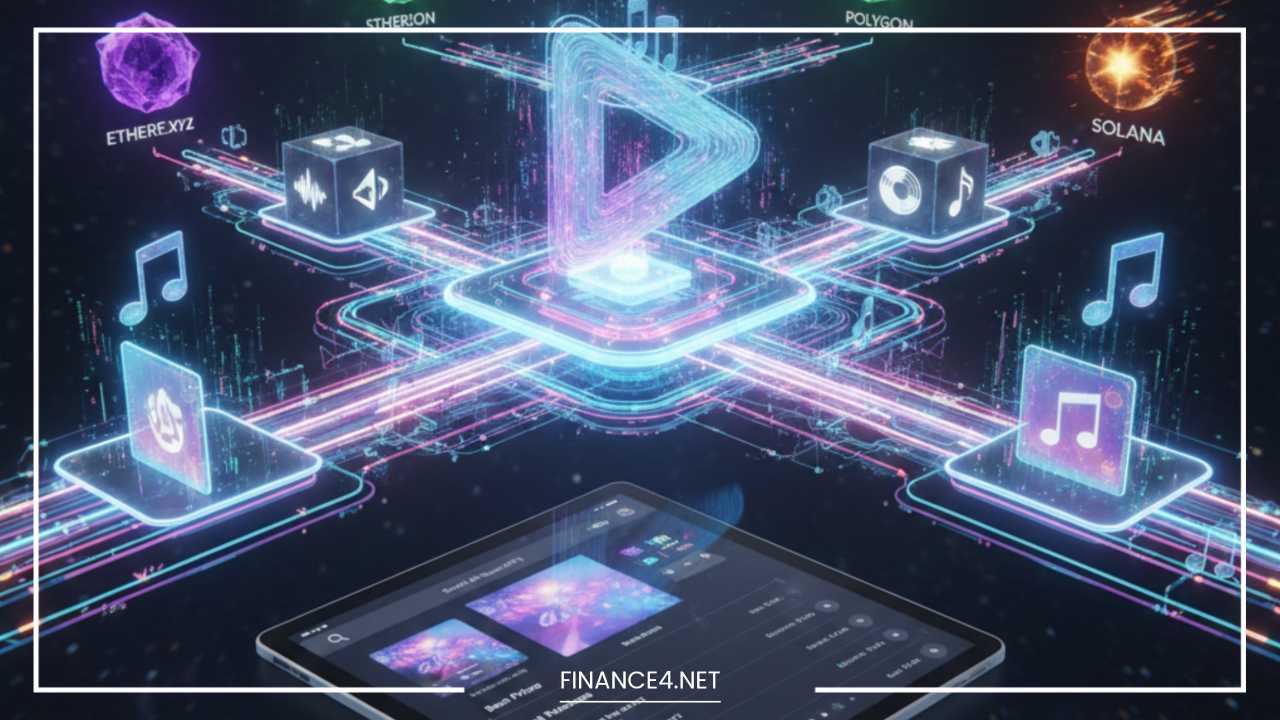
Best Aggregator for Bridging Music NFTs – Top Platforms & Tools
The explosion of Music Non-Fungible Tokens (NFTs) has fundamentally altered the relationship between artists and fans, creating new streams of revenue, direct ownership models, and closer community ties. However, this nascent ecosystem, while vibrant, is deeply fragmented. Music NFTs are scattered across dozens of dedicated marketplaces and numerous underlying blockchains, creating significant hurdles for both discoverability and asset management.
This challenge has given rise to a critical piece of infrastructure: the Music NFT Aggregator and Bridge. This article delves into the necessity of these tools, examines the top platforms, and provides a framework for creators and collectors to navigate the best solutions for a cross-chain music future.
Introduction: The Fragmented Music NFT Landscape
What are Music NFTs?
Music NFTs are unique digital tokens representing ownership, royalty rights, or exclusive access linked to a piece of music, an album, a sound recording, or related art. Unlike traditional streaming, which provides access without ownership, an NFT grants verifiable, provable ownership of a digital collectible.
Artists benefit immensely, moving from relying on intermediaries to direct monetization, often earning immediate primary sale revenue and perpetual royalties from secondary market trades. Fans, in turn, become early patrons and financial stakeholders in an artist’s success.
Why Aggregation Matters: The Fragmentation Problem
The music NFT space is a patchwork quilt of platforms: Sound.xyz, Catalog, NINA, and others, each catering to different niches and, crucially, often built on different blockchains (Ethereum, Polygon, Solana, Tezos, etc.).
For a collector, tracking a diverse portfolio means checking a dozen websites. For an artist, deciding where to launch can feel like a gamble on a single chain’s liquidity. Aggregation solves this by providing a single, unified interface to view, analyze, and purchase listings from multiple underlying marketplaces and chains.
What “Bridging” Means in the NFT World
In blockchain terminology, a bridge is a protocol that allows assets and/or data to be transferred between two different blockchain networks. In the NFT context, bridging is the process of moving a specific NFT (like a music track) from its native chain (e.g., Ethereum) to another chain (e.g., Polygon).
This process typically involves a “lock-and-mint” or “burn-and-mint” mechanism:
-
The original NFT is locked in a smart contract on the source chain.
-
A wrapped NFT—a representation of the original—is minted on the destination chain.
-
Crucially, the music file’s associated metadata must be preserved and accurately linked to the wrapped asset for the NFT to remain functional.
A “music NFT aggregator + bridge” is the ultimate utility tool, combining multi-marketplace discovery with cross-chain movement capability.
Understanding NFT Aggregators
Definition: What is an NFT Marketplace Aggregator?
An NFT marketplace aggregator is a layer built on top of the NFT ecosystem. It pulls listing data from numerous individual marketplaces (like OpenSea, Blur, Magic Eden, and specific music platforms) and displays them in a single, digestible user interface. The actual transaction is executed on the underlying marketplace’s smart contract, but the process of discovery is centralized.
Key Features of Aggregators
-
Unified Interface Across Marketplaces: The primary feature, offering collectors a single dashboard to browse listings from all connected platforms, eliminating the need to visit each site individually.
-
Best Price Discovery and Arbitrage: By indexing all listings, an aggregator can instantly identify the lowest price for a specific music NFT or collection across the entire ecosystem. This is vital for collectors looking to maximize value.
-
Batch Purchases: Aggregators often allow users to execute multiple purchase or bid actions across different marketplaces in a single blockchain transaction, significantly saving on transaction (gas) fees and execution time.
-
Real-time Search, Indexing, and Data Analytics: Advanced aggregators provide deep market data, historical floor price charts, rarity rankings, and collection volume metrics, enabling more informed purchasing decisions.
Types of Aggregators
-
Marketplace Aggregators: Focus on consolidating listings on the same blockchain (e.g., collecting Ethereum listings from OpenSea and Blur).
-
Bridging (Cross-Chain) Aggregators: Focus on enabling the transfer of an NFT token (and its metadata) between entirely different blockchains (e.g., a tool like XP.Network).
-
Hybrid Aggregator-Bridge Models: The most comprehensive platforms aim to unify both discovery and movement, allowing users to find the best deal and transfer the asset if needed, or simply display cross-chain collections in one view.
Why Bridging is Crucial for Music NFTs
The argument for bridging is particularly strong in the music vertical due to the varied blockchain choices made by artists and music platforms.
Cross-Chain Fragmentation in Music
-
Ethereum (Mainnet): Home to many foundational music NFT platforms (Sound.xyz, Catalog), offering high security but often burdened by high gas fees, limiting smaller, more frequent drops.
-
Layer 2s and Sidechains (Polygon, Zora Network, Base, Optimism): Chosen for low transaction costs and scalability, making them ideal for high-volume drops or lower-priced collectibles.
-
Alternative L1s (Solana, Tezos): Offer extremely fast, low-cost transactions, attracting artists prioritizing fan-friendly pricing and speed.
Without bridging, an artist on Solana is cut off from the collector base on Ethereum, and vice versa. Bridging enables an artist to mint a collection cost-effectively on Polygon, then have a high-value 1-of-1 piece seamlessly transfer to an Ethereum-based gallery for a high-net-worth collector.
Metadata Preservation: The Music NFT’s Soul
For a music NFT, the metadata—which contains the artist’s name, song title, cover art, track playback link, and crucially, any associated licensing or royalty information—is the asset’s core value.
-
Challenge: When an NFT is bridged, the original token is locked, and a new token is minted. This new token must flawlessly reference the original metadata. If the bridge protocol fails to accurately transfer or link the metadata, the “wrapped” NFT becomes a worthless placeholder, lacking the essential connection to the music file.
-
Importance: Top bridging solutions must prioritize a robust, auditable method for metadata transfer, often utilizing decentralized storage solutions like IPFS to ensure the music itself is not subject to centralization risk.
Risks and Technical Issues
-
Wrapped NFTs (W-NFTs): While the standard method, the W-NFT is only as good as the contract holding the original. If the original contract is compromised, all wrapped assets become invalid.
-
Smart Contract Security: Bridges are highly complex smart contracts, making them attractive targets. A flaw in the bridge’s code can lead to the permanent loss of assets.
-
Centralization Risk: Some bridges rely on a small set of validators or a centralized entity to verify the lock/mint transaction. A truly decentralized bridge is preferred for censorship resistance and security.
Use Cases: Bridging in Practice
-
Artist Liquidity: An artist launches a large collection on a low-fee chain (e.g., Polygon) to keep collector costs low, but advertises the ability to bridge to Ethereum, tapping into the deeper liquidity of the mainnet’s primary market.
-
Collector Strategy: A collector finds a coveted early-career music NFT at a substantial discount on an emergent Layer 2 chain. They purchase it and bridge it to Ethereum for display in their high-value portfolio wallet, increasing its perceived prestige and future selling pool.
-
Platform Migration: A music platform changes its primary chain. Bridging allows all users to migrate their existing collectibles to the new network without re-minting.
Top Bridging Aggregators (Applicable to Music NFTs)
While few bridges are music-specific, several industry leaders have developed robust, generalized NFT bridging solutions that are highly applicable to the music vertical due to their focus on metadata integrity and multi-chain support.
1. XP.Network
XP.Network has positioned itself as one of the first multi-chain NFT bridging solutions. It is designed specifically for NFTs, differentiating it from token bridges that were retrofitted for non-fungibles.
| Feature | Detail | Suitability for Music NFTs |
| Focus | Dedicated NFT bridge | High, designed to handle metadata |
| Blockchain Support | Extensive (20+ chains) including EVM and non-EVM (e.g., Solana, Elrond) | Excellent, covers the chains most used for music (Ethereum, Polygon, Solana, BNB Chain) |
| Mechanism | Lock-and-mint (utilizes a secure bridge relay) | Proven, though requires trust in the relay mechanism |
| Pros | Supports the widest range of chains, robust NFT-specific API for developers. | |
| Cons | User interface can be technical, focused on infrastructure rather than the end-user collector experience. |
2. Synapse Protocol
Synapse is a generalized cross-chain messaging protocol known primarily for liquidity-based token swaps, but its generalized message passing layer allows for the bridging of arbitrary data, including NFT metadata.
| Feature | Detail | Suitability for Music NFTs |
| Focus | Generic Cross-Chain Messaging and Token Swaps | Requires use of generic messaging for NFTs |
| Blockchain Support | 20+ EVM and non-EVM chains (Ethereum, Arbitrum, Optimism, Avalanche, Polygon) | Strong EVM support, covering key music L2s |
| Mechanism | Generic Message Passing (Optimistic Rollup style verification) | Highly secure model with fraud-proof systems; effective for complex data |
| Pros | High security due to optimistic verification, highly decentralized architecture. | |
| Cons | NFT bridging might be less optimized than a dedicated NFT bridge, more complex for a novice user. |
3. Portal Token Bridge (formerly Wormhole)
Portal (Wormhole) is one of the most widely adopted and technically advanced cross-chain protocols, used for both tokens and NFTs across a vast number of chains.
| Feature | Detail | Suitability for Music NFTs |
| Focus | Generalized Interoperability (Tokens and NFTs) | Very strong, well-integrated across ecosystems |
| Blockchain Support | 20+ chains (Ethereum, Solana, Polygon, BNB Chain, Avalanche) | Excellent coverage of all major music NFT launchpads |
| Mechanism | Validator-based trust model (Guardian network) | Industry-standard, proven for high-volume transactions, but dependent on the validator set |
| Pros | Extremely wide adoption, high speed, and a massive developer ecosystem. | |
| Cons | Past security events highlight inherent bridge risks, though security has been significantly enhanced. |
Music-Specific Aggregators / Platforms
While the above are infrastructure bridges, music-specific aggregators prioritize discoverability, listening, and purchase across music platforms, often incorporating soft-bridging (multi-chain display) functionality.
Spinamp: The Music NFT Indexer
Spinamp is an application often described as a “Spotify meets OpenSea” for Music NFTs. It does not actively facilitate the bridging of assets but acts as a powerful aggregator and indexer of music NFTs across dozens of platforms and chains.
-
How it Works: Spinamp indexes music NFT data from major marketplaces (Sound, Catalog, NINA, Zora, etc.) and even artist-owned smart contracts on various chains. It pulls the publicly available metadata (including the music file link) and presents it in a unified listening and discovery interface.
-
Features:
-
Cohesive Listening Experience: Users can listen to tracks from different platforms seamlessly in one player.
-
Best-Price Search: Users can discover the lowest price for a specific track NFT available across all indexed marketplaces.
-
Playlist-Based Rewards: Some features allow curators who create popular playlists to earn rewards if a track they featured is purchased through their curation.
-
Multichain Display: Aggregates music NFTs across chains like Base, Optimism, and Zora.
-
-
Value Proposition: Spinamp solves the primary collector problem: discoverability and listening. It creates a unified user experience for fragmented digital music ownership, making the act of collecting feel less like portfolio management and more like music consumption.
Serenade: Web3 Music Tech Company
Serenade focuses less on multi-chain bridging and more on leveraging Web3 technology to issue digital collectibles and NFTs for high-profile artists and institutions.
-
Focus and Business Model: Serenade works as an end-to-end partner for artists, helping them mint, launch, and sell digital collectibles. Their focus is often on high-volume, culturally relevant drops (e.g., specific music history milestones) that are consumer-friendly and often fiat-purchasable.
-
Blockchain Usage: They prioritize a simple, low-cost, and sustainable chain for their drops, often integrating with fiat on-ramps to reduce the technical barrier for mainstream fans.
-
Limitations: Serenade is a platform, not an open aggregator or a generalized bridge. Its utility is in consumption and direct primary market purchase, not in tracking floor prices or moving assets across third-party marketplaces.
Music NFT Marketplaces (Context for Aggregators)
To understand the aggregator’s value, it is essential to know the ecosystem it is built upon.
Key Music NFT Marketplaces
-
Sound.xyz: A leading platform for emerging artists on Ethereum and Layer 2s, facilitating listening parties and limited-edition “song ownership” drops, fostering direct community engagement.
-
Catalog: A platform focused on 1-of-1 master recordings, acting as a digital record store for unique, high-value art pieces.
-
NINA: A more permissionless platform focusing on low-cost minting and decentralized distribution.
These platforms are where the Music NFTs live and trade. The aggregator’s role is to pull the price, availability, and metadata from all of them simultaneously, acting as the collector’s universal shopping cart and discovery engine.
How to Choose the Right Aggregator / Bridge for Music NFTs
For an artist planning a release or a collector building a portfolio, the choice of tool is paramount. It involves balancing convenience with security and cost.
Criteria for Selection
-
Blockchain Support: Does the bridge/aggregator support the chains where my target NFTs live, and where I want them to end up (e.g., does it connect Zora Network and Solana)?
-
Metadata Preservation: Does the protocol have a proven, audited method for ensuring the music’s metadata and associated licensing information are perfectly preserved during the bridge? This is non-negotiable for music.
-
Cost (Gas and Transaction Fees): Bridging can incur fees on both the source and destination chains, plus a service fee. Is the cost justified by the increase in liquidity or utility on the destination chain?
-
UX / Ease of Use: Is the interface simple and intuitive? A complex process is a security risk, as user error is a leading cause of asset loss in bridging.
-
Security: Has the bridge been audited by reputable firms? Does it use a highly decentralized set of validators (Portal) or a robust security model (Synapse’s optimistic verification)?
-
Integration with Music-Specific Platforms: Does the aggregator pull listing data from Sound.xyz, Catalog, and NINA, or only generic marketplaces like OpenSea?
-
Rewards or Incentives: Does the tool offer incentives (e.g., Spinamp’s curator rewards) that align with your goal (e.g., maximizing curator sales)?
Example Use-Case Comparisons
| Use Case | Recommended Tool Focus | Justification |
| Independent Artist Launching Cross-Chain | Dedicated NFT Bridge (XP.Network, Portal) | Needs robust infrastructure to offer fans the option to move their asset from the low-cost launch chain to a high-liquidity chain (like Ethereum). |
| Collector Seeking Discounted NFTs | Music-Specific Aggregator (Spinamp) | Needs a unified discovery engine to quickly find the lowest floor price for a desired artist across all marketplaces, regardless of the underlying chain. |
| Curator Maximizing Playlist Gains | Music-Specific Aggregator (Spinamp) | Focused entirely on the front-end experience, leveraging playlist features to drive sales and earn rewards. Bridging is secondary. |
Challenges and Risks in the Aggregator/Bridge Landscape
While aggregators and bridges solve major problems, they introduce their own set of complex risks that must be understood.
Technical and Security Risk
-
Loss of NFTs: A bug in the smart contract that locks the original NFT or mints the wrapped NFT can permanently render the asset unretrievable.
-
Metadata Mismatch: If the music file’s crucial external link or IPFS hash is corrupted or incorrectly linked during the wrap, the new NFT may lose its ability to play the music, making it a valueless token.
-
Bridge Hacks: Bridges are high-value targets. A single security exploit can compromise millions in locked assets, a risk that has historically plagued the cross-chain space.
Centralization and Liquidity Risk
-
Metadata Centralization: If a music NFT’s file data is not stored on a decentralized file system (like Arweave or IPFS) but on a centralized server, the music can disappear, regardless of the chain it lives on. The best aggregators index decentralized data.
-
Liquidity Risk: Bridging an NFT to a chain with low liquidity means that while the asset is movable, there may be no buyers willing to pay its valuation. Bridging for low-demand collections is often a waste of gas fees.
Cost Trade-offs and UX
-
Cost Trade-offs: While minting on a Layer 2 saves money, the process of bridging to a Layer 1 (like Ethereum) can sometimes cost more in total transaction fees than minting directly on the Layer 1 would have in the first place. This requires strategic timing and cost analysis.
-
Adoption Risk: Many artists and collectors are not yet ready to engage with the technical complexity of bridging. The true “best” solutions will abstract this complexity away, making cross-chain movement as simple as a single click.
Future Outlook
The trajectory of Music NFT infrastructure is clear: a move toward seamless, invisible interoperability.
-
Trends:
-
Generalized Cross-Chain Interoperability: Protocols are moving beyond simple token transfers to robust, generalized messaging systems (like Synapse and Portal) that can securely relay complex NFT data and smart contract calls.
-
Better User Experience (UX): Aggregators will increasingly abstract the bridging step entirely, allowing users to see a listing on Solana and purchase it with Ethereum on a single interface, with the cross-chain swap happening under the hood.
-
Growth of Reward Systems: Music-specific aggregators will continue to innovate on community-driven features, like rewarding curators, driving social discovery, and creating play-to-earn/collect-to-earn models around music consumption.
-
-
Potential Innovations:
-
Social/Curated Aggregators: Platforms leveraging decentralized social graphs (like Lens Protocol) to link music NFT discovery directly to trusted community members and curators.
-
AI-Driven Recommendations: Using on-chain purchase and listening data to create AI-powered discovery feeds for new music NFTs.
-
Deeper Streaming Integration: Further seamless integration where ownership (the NFT) grants perpetual, high-quality streaming access through aggregated players, blurring the line between ownership and consumption.
-
Final Thoughts
The development of the Music NFT aggregator and bridge is not merely a technical advancement; it is the catalyst for mass adoption in the music Web3 space. The true value of a decentralized ecosystem is its ability to communicate across its parts.
For both creators and collectors, the takeaway is the need for a bifurcated strategy:
-
For Discovery and Listening: Rely on Music-Specific Aggregators like Spinamp to consolidate the fragmented listening experience and discover the best prices across platforms.
-
For Portfolio Management and Liquidity: Utilize audited, Robust Cross-Chain NFT Bridges like XP.Network or Portal to strategically move high-value assets between chains to maximize security and access to liquidity pools.
The fragmentation of the music NFT market is a temporary state. The best platforms and tools are those that are actively working to unify the experience, making the act of owning and trading digital music as simple, secure, and intuitive as the technology allows.