Best Cross-Chain NFT Aggregator
 by
by 
The Best Cross-Chain NFT Aggregator for Seamless Trading
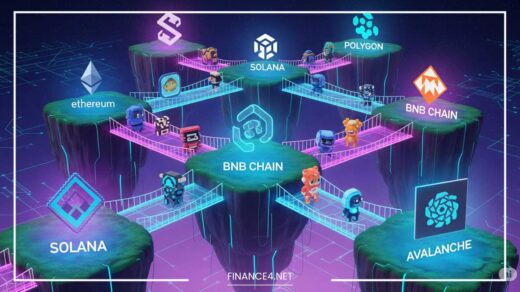
Non-Fungible Tokens (NFTs) have fundamentally changed digital ownership, creating vibrant, multi-billion-dollar ecosystems for art, collectibles, gaming, and digital identity. However, as the industry has matured, it has simultaneously become fragmented. The growth of independent blockchains—Ethereum, Solana, Polygon, BNB Chain, and others—has led to a situation where NFT collections and their liquidity are scattered across disparate chains.
This is the multi-chain fragmentation problem: a user might find the best deal for a ‘Bored Ape’ on an Ethereum marketplace, but the best floor price for a ‘DeGod’ on a Solana platform, forcing them to juggle multiple wallets, bridge assets, and pay multiple sets of gas fees.
Enter the Cross-Chain NFT Aggregator. These platforms are the crucial infrastructure designed to solve this complexity, promising the next evolutionary leap: seamless NFT trading across ecosystems. By pulling together listings from every major marketplace and blockchain into a single, unified interface, the best cross-chain aggregator acts as the indispensable tool for collectors, flippers, and creators navigating the Web3 landscape in 2025.
Understanding Cross-Chain NFT Trading
A Non-Fungible Token (NFT) is a unique, non-interchangeable unit of data stored on a digital ledger, or blockchain. The underlying blockchain dictates the NFT’s standard, its transaction speed, and its fee structure. Historically, the Ethereum blockchain was the dominant home for NFTs.
However, high Ethereum gas fees and slower transaction speeds spurred the growth of competing Layer-1 (L1) and Layer-2 (L2) solutions. This is where the concept of “cross-chain” becomes vital.
Cross-chain refers to the ability to transfer assets, data, or value between two otherwise incompatible blockchain networks. The need for this arose because single-chain NFT markets are inherently limited:
-
Limited Liquidity: A marketplace only sees the listings on its own chain.
-
Poor Price Discovery: A collector must manually check OpenSea (Ethereum), Magic Eden (Solana), and others to find the true global floor price.
-
High UX Friction: Trading an Ethereum NFT for a Solana NFT traditionally required multiple steps: sell the ETH NFT, bridge the resulting ETH/USDC to Solana, and then buy the SOL NFT—each step involving risk, time, and fees.
The cross-chain approach aims to abstract away these limitations, transforming the trading experience from a complex, multi-step chore into a single, cohesive action, whether the assets are on the same chain or completely different ones.
What Is a Cross-Chain NFT Aggregator?
A Cross-Chain NFT Aggregator is a platform that indexes and compiles NFT listings from all major marketplaces and across all supported blockchains, presenting them to the user in a single, unified dashboard.
Aggregator vs. Marketplace
-
A Marketplace (like a traditional OpenSea or Foundation) hosts and facilitates listings on its own platform and chain.
-
An Aggregator (like a Zapper or 1inch for NFTs) does not host listings; it uses Application Programming Interfaces (APIs) and direct blockchain indexing to pull data from multiple marketplaces (e.g., Blur, LooksRare, OpenSea, Magic Eden) and multiple chains (e.g., Ethereum, Polygon, Solana, Bitcoin) simultaneously.
The Mechanism of Aggregation
When a user searches for a collection, the aggregator performs a massive, real-time query across all integrated chains and marketplaces. It displays every available listing, allowing the user to compare prices instantly.
The core technology enabling the cross-chain aspect involves sophisticated interoperability protocols:
-
Bridges and Message Passing: Tools like LayerZero, Wormhole, or dedicated lock-and-mint bridge mechanisms are used to move tokens or, more commonly, to pass authenticated messages across chains to execute a trade.
-
Smart Routing: The aggregator’s engine determines the most efficient path for a transaction, often involving a complex multi-step process (e.g., wrapping, bridging, and swapping) that is entirely hidden from the user.
-
Account Abstraction (AA) and L2s: These technologies help simplify gas payments, sometimes allowing a user to pay fees on one chain using a token native to another, further reducing friction.
The primary benefit is a radical improvement in liquidity and price discovery. By combining all available supply and demand into one place, an aggregator ensures the user always sees the most competitive price, regardless of which ecosystem the NFT is currently listed on, while simultaneously improving overall market efficiency.
Why Cross-Chain Aggregation Matters in 2025
The urgency for a seamless cross-chain experience has intensified in 2025 due to several irreversible market trends:
-
Growing Multi-Chain Ecosystem: The ecosystem is no longer dominated by Ethereum. Major platforms like Polygon, Solana, BNB Chain, and emerging networks like Avalanche and various Ethereum Layer-2 solutions (Arbitrum, Optimism, Base) have cemented their positions. An asset’s value is no longer confined to its chain of origin.
-
Unified User Demand: The average Web3 user is no longer a maximalist focused on a single chain; they are an opportunist who holds assets across multiple networks. They demand a trading experience that reflects this reality—they shouldn’t have to switch network settings or wallets just to view their full portfolio or execute a trade.
-
Emergence of Chain-Agnostic Collections: Top-tier NFT projects are increasingly launching or expanding their presence across multiple chains to tap into new communities and liquidity pools. The value of a collection should be its floor price across all chains, a metric only an aggregator can provide.
-
Gas Optimization and Liquidity: Aggregators reduce the need for manual, expensive bridging transactions. By routing trades through Layer-2 networks or using efficient atomic swaps, they ensure users achieve maximum efficiency and benefit from the lowest available fees and deepest liquidity pools across the entire market.
-
Trend Toward Chain Abstraction: The industry is moving toward a future where the underlying blockchain is merely a technical detail, not a user interaction point. Aggregators are the leading implementers of chain abstraction, offering a glimpse into a world where a user can simply click “Buy” and the platform handles the complexity of gas payments, bridging, and cross-chain settlement instantly and invisibly.
Key Features to Look for in a Cross-Chain NFT Aggregator
A top-tier cross-chain NFT aggregator must offer a robust suite of tools that go far beyond simple data compilation. The best platforms are defined by their ability to provide security, speed, and a unified experience.
Multi-Chain Support & Depth
-
Breadth: Must support the dominant L1s (Ethereum, Solana, Bitcoin Ordinals/Runes) and the most popular L2s and EVM-compatible chains (Polygon, Arbitrum, Base).
-
Depth: Not only the number of chains, but the depth of integration—can it aggregate listings from every major marketplace on that chain (e.g., all Solana marketplaces, not just one)?
Unified Wallet Experience
-
Multi-Wallet Compatibility: Seamless support for dominant wallets like MetaMask, Phantom, and Ledger, but increasingly, support for Smart Wallets (using Account Abstraction).
-
Single-Click Trading: The ability to execute a purchase of an NFT on Chain B using a token held on Chain A, all confirmed with a single signature. This is the gold standard of seamless trading.
Smart Routing & Aggregated Listings
-
Best Price Routing: Automatically identifies the absolute lowest listed price across all integrated marketplaces and chains.
-
Batch Buying/Selling: The capacity to buy multiple NFTs from different collections or marketplaces (on the same chain, and ideally across chains) in a single transaction to save on gas fees.
Real-Time Price Comparison & Analytics Dashboard
-
Live Data: Must provide lightning-fast, real-time floor price updates to prevent arbitrage opportunities for others and ensure the user is not trading on stale data.
-
Advanced Analytics: Built-in tools for rarity checks, trait filtering, historical volume tracking, and wallet tracking to aid in professional-grade trading decisions.
Cross-Chain Swaps & Bridgeless Transactions
-
This is the core differentiator: the platform should facilitate the swap of the value of a token on one chain for the value of an NFT on another chain, without forcing the user to manually interact with an external bridge. The bridging process should be an invisible back-end function.
Security Framework
-
Protocol Audits: Use of battle-tested interoperability protocols (e.g., LayerZero, Wormhole) and public, third-party security audits for all smart contracts.
-
Non-Custodial: Ensuring the platform never takes control of the user’s funds or assets (non-custodial trading).
Gas & Fee Optimization
-
Automatically calculating and selecting the route that results in the lowest final cost, including gas, marketplace fees, and aggregator fees. The ideal setup even allows for gas fee abstraction, where the user pays gas using any token in their wallet, regardless of the native gas token for the target chain.
Mobile Compatibility & UI/UX
-
A clean, intuitive interface that hides the underlying complexity of multi-chain transactions. A responsive, feature-rich mobile application or optimized web experience is essential for traders on the go.
Best Cross-Chain NFT Aggregators in 2025
In 2025, the market has begun to consolidate, with marketplaces pivoting to become aggregators, and successful aggregators expanding their chain coverage. The best platform is often determined by the user’s primary ecosystem, but one stands out as the multi-chain leader.
Magic Eden: The Cross-Chain Leader
Magic Eden, which began as the premier Solana NFT marketplace, has aggressively executed a multi-chain strategy to become the most comprehensive cross-chain aggregator by chain coverage and depth. It is often cited as the de facto leader in unified NFT trading.
-
Supported Chains: Solana, Ethereum, Bitcoin (Ordinals/Runes), Polygon, with integrations for L2s like Base, Arbitrum, and others.
-
Key Features: Strong focus on gaming NFTs, a native Magic Eden Wallet that supports all its chains from a single interface, and deep integration with the Bitcoin Ordinals ecosystem. They pioneered a seamless UX for traders jumping between EVM and non-EVM chains.
-
Strengths: Unrivaled breadth of chain support (especially the non-EVM chains: Solana and Bitcoin), excellent UI/UX, and robust tools for creators and gaming projects.
-
Weaknesses: Transaction fees can be higher than pro-trader platforms like Blur, and while it aggregates, its focus often leans on its own marketplace dominance.
-
Ideal User Profile: Cross-chain Collectors, Gaming Enthusiasts, and Solana/Bitcoin Native Traders looking for the widest selection in a single hub.
Blur: The Pro-Trader Aggregator
Blur revolutionized Ethereum NFT trading with its focus on speed, data, and fee incentives for professional volume traders. While primarily an Ethereum aggregator, its pro-tools and integration strategy place it firmly in the cross-chain discussion via L2s.
-
Supported Chains: Ethereum, with deep aggregation across all major ETH marketplaces (OpenSea, X2Y2, LooksRare) and direct integration with scaling solutions like Blast Network.
-
Key Features: Lightning-fast listings, advanced analytics (rarity filtering, sweep alerts), portfolio tracking, and a focus on high-volume batch buying/selling.
-
Strengths: Best execution speed and liquidity for Ethereum-based assets. The tools are unparalleled for sophisticated traders.
-
Weaknesses: Less native support for non-EVM chains like Solana and Bitcoin; the interface is optimized for professionals, which can be daunting for beginners.
-
Ideal User Profile: Professional NFT Flippers, Arbitrageurs, and High-Volume Ethereum Traders.
OpenSea: The Multi-Chain Marketplace & Aggregation Elements
OpenSea remains the industry’s default entry point and has transformed from a single-chain marketplace into a multi-chain platform with aggregation capabilities.
-
Supported Chains: Ethereum, Polygon, Arbitrum, Optimism, Solana, BNB Chain—a strong lineup of EVM and non-EVM chains.
-
Key Features: User-friendly interface, the largest overall volume, and broad wallet compatibility. It aggregates listings from some partner marketplaces on specific chains.
-
Strengths: Accessibility, brand recognition, and a massive community. Its multi-chain infrastructure is reliable.
-
Weaknesses: Aggregation depth is not as comprehensive as Magic Eden or Blur; it often prioritizes its own listings. Historically, it has been slower to integrate new chain technology.
-
Ideal User Profile: Beginners and Casual Collectors who prioritize ease of use and trust over hyper-optimized price discovery.
Rarible Aggregator
Rarible has repositioned itself as a community-governed multi-chain platform, prioritizing creator tools and decentralized governance while providing aggregation features.
-
Supported Chains: Ethereum, Tezos, Flow, Polygon, with an emphasis on its custom-built protocol that allows other marketplaces to tap into its liquidity.
-
Key Features: DAO-based governance, customizable storefronts for creators, and a focus on open-source, flexible multi-chain infrastructure.
-
Strengths: A true community-first, multi-chain philosophy and support for non-EVM chains like Tezos and Flow, which house niche art ecosystems.
-
Weaknesses: Volume and liquidity often trail the market leaders.
-
Ideal User Profile: Creators, Artists, and DAO-focused Collectors who value decentralization and unique chain support.
Emerging Chain-Abstracted Aggregators
A new wave of aggregators is emerging, often built on generalized message-passing protocols (like LayerZero or Axelar), or pioneering Account Abstraction (AA) technology. Platforms in this category, like certain protocols utilizing unified wallet technology, are focused solely on abstracting away the chain, allowing users to think only about the asset and the price, not the network.
-
Supported Chains: Often starts with EVM-compatible networks (ETH, Polygon, L2s) but quickly expands via interoperability protocols.
-
Key Features: Native gas fee abstraction (pay gas with any token), unified balance view, and “intent-based” trading (user states their intent, and the protocol finds the best cross-chain path).
-
Strengths: Represents the future of seamless trading; maximum UX simplicity.
-
Weaknesses: Newness means lower market volume and potentially higher technical risk.
-
Ideal User Profile: Early Adopters and Visionary Traders focused on the next evolution of Web3 UX.
Comparison Table: Best Cross-Chain NFT Aggregators
| Platform | Primary Chains Supported | Fees (General) | Wallets Supported | Ideal Use Case | Pros/Cons Summary |
| Magic Eden | SOL, ETH, BTC, Polygon, Base | 0-2% (varies by chain) | Phantom, MetaMask, ME Wallet | Wide Cross-Chain & Gaming | Pros: Best chain coverage (SOL, BTC), great UX. Cons: ETH volume lower than Blur. |
| Blur | ETH, Blast, Arbitrum | 0.5% (with royalty focus) | MetaMask, WalletConnect | Pro-Volume Trading & Sweeping | Pros: Best ETH liquidity, fastest aggregation, pro tools. Cons: Steep learning curve, limited non-EVM support. |
| OpenSea | ETH, Polygon, SOL, BNB, etc. | 2.5% (standard) | MetaMask, Coinbase, Phantom | Beginner & Casual Collectors | Pros: Best accessibility, largest overall brand. Cons: Less comprehensive aggregation depth, higher fees. |
| Rarible | ETH, Tezos, Flow, Polygon | Varies by marketplace | MetaMask, Tezos wallets | Creator-Focused & Niche Chains | Pros: Community governance, unique chain support (Tezos, Flow). Cons: Lower overall liquidity and volume. |
How Cross-Chain NFT Aggregators Improve User Experience
The impact of cross-chain aggregation on the user experience cannot be overstated; it moves the industry from a clunky, crypto-native experience to a fluid, integrated digital platform.
-
Unified Listings $\rightarrow$ Better Price Discovery: The user no longer needs to open five different browser tabs to check the true floor price for a collection. The aggregator provides the single, lowest price point across all connected chains, enabling immediate, informed decision-making.
-
Reduced Transaction Steps: For the first time, a user can essentially trade an asset on Chain X for an asset on Chain Y in what appears to be a single transaction. The aggregator handles the complex logistics of cross-chain message relay, value conversion, and settlement in the back-end, eliminating the need for error-prone manual bridging.
-
Safer Trading (Avoiding Manual Bridging): Manually bridging assets is a notorious source of security risk and user error. By embedding the cross-chain logic into audited smart contracts, aggregators make the process safer and trust-minimized.
-
More Liquidity $\rightarrow$ Less Slippage: By consolidating all market depth, aggregators ensure high-volume trades have minimal impact on the final execution price, securing the best possible deal for the buyer.
-
Faster Execution & Batch Buying/Selling: Tools like batch buying not only save on gas but also allow traders to execute complex sweeping strategies instantly, turning hours of manual work into a single-click action.
Challenges & Risks of Cross-Chain NFT Trading
While the technology is transformative, cross-chain trading introduces new layers of complexity and risk that users must acknowledge for a balanced perspective.
-
Bridge Vulnerabilities: The core of cross-chain functionality relies on protocols known as bridges. While they are becoming more robust, history has shown bridges to be high-value targets for hackers, with significant exploits occurring in the past. An aggregator is only as secure as the cross-chain protocol it utilizes.
-
Smart Contract Risks: The smart contracts that govern the aggregation and routing logic are complex. A bug in a contract could lead to failed transactions, locked funds, or, in the worst case, a platform-level exploit. Continuous, public auditing is essential.
-
Liquidity Inconsistency Across Chains: While an aggregator shows listings from all chains, the actual liquidity (the depth of buy/sell orders) for an asset might be very thin on a secondary chain. Users must check volume metrics to ensure they can easily sell an asset they just bought on a less-trafficked chain.
-
Metadata Discrepancies: NFT metadata (the traits, images, and other identifying information) is sometimes stored off-chain (e.g., on IPFS). In a cross-chain context, ensuring the metadata remains immutable and verifiable across multiple platforms can occasionally lead to display issues or confusion if the data isn’t standardized.
-
Scam Collections Across Networks: Aggregators can, by nature, pull data from both legitimate and low-quality marketplaces. This broad view can inadvertently highlight duplicated or scam versions of popular collections that have been launched on secondary chains to confuse users. Robust filtering and verification systems are crucial.
-
UX Friction (Wallet Switching, Verification Issues): Even with the best abstraction, users must still connect wallets for each native chain to manage their assets. If the aggregator’s system fails to correctly communicate with a non-native wallet, the transaction can stall.
Future of Cross-Chain NFT Aggregation
The trajectory of cross-chain aggregation is clear: the underlying infrastructure is moving towards complete invisibility for the end-user. The future will focus on eliminating the final points of friction.
-
Rise of Chain Abstraction (Intent Systems): The next generation of protocols is focused on intent-based trading. A user will merely state their intent (“I want to buy the lowest-priced blue-chip NFT”), and a sophisticated system will use AI and smart routing to find, execute, and settle the trade across any chain, using any token, all in one go.
-
Smart Contract Wallets Reducing Friction: Wallets built on ERC-4337 Account Abstraction will become the norm, allowing users to pay gas fees with any token (not just the native coin), automate recurring tasks, and remove the need to manage complex seed phrases for every single chain.
-
AI-Driven NFT Recommendations & Pricing: Aggregators will leverage AI to analyze cross-chain volume, rarity, and sentiment to provide predictive pricing models and personalized trade recommendations, moving beyond simple listing to advanced market intelligence.
-
Multi-Chain Gaming and Metaverse Economies: As major gaming titles and metaverse platforms launch assets across multiple chains (e.g., a land deed on Polygon, a wearable on Ethereum), aggregators will be necessary to provide a unified inventory and trading experience for these digital goods.
-
NFT Token Standards Integrating Across Chains: New token standards will emerge that are inherently designed for cross-chain use, simplifying the underlying technical work required for aggregators to function.
Final Thoughts
The journey of NFTs began on a single chain, but their destiny is inextricably linked to the multi-chain future. In 2025, the Cross-Chain NFT Aggregator is not a luxury; it is the essential tool that dictates a trader’s efficiency and a collector’s ability to find the best value.
Platforms like Magic Eden have successfully pioneered this unified experience, demonstrating that a fluid, multi-chain market is both possible and profitable. As the technology moves toward complete chain abstraction, the current leaders will be challenged by new, highly-optimized protocols focused on a single, core promise: to make NFT trading as simple as buying a product online, regardless of the underlying digital storefront or currency.
The quest for the best cross-chain NFT aggregator is ongoing, but the direction is undeniable. The future of digital asset trading is seamless, unified, and chain-agnostic. Readers are encouraged to test the top platforms, evaluate their supported chains against their own portfolios, and embrace the power of aggregated liquidity to ensure they are always trading at the absolute edge of the market.