
Best Cross-Chain Solutions for Stablecoins
 by
by 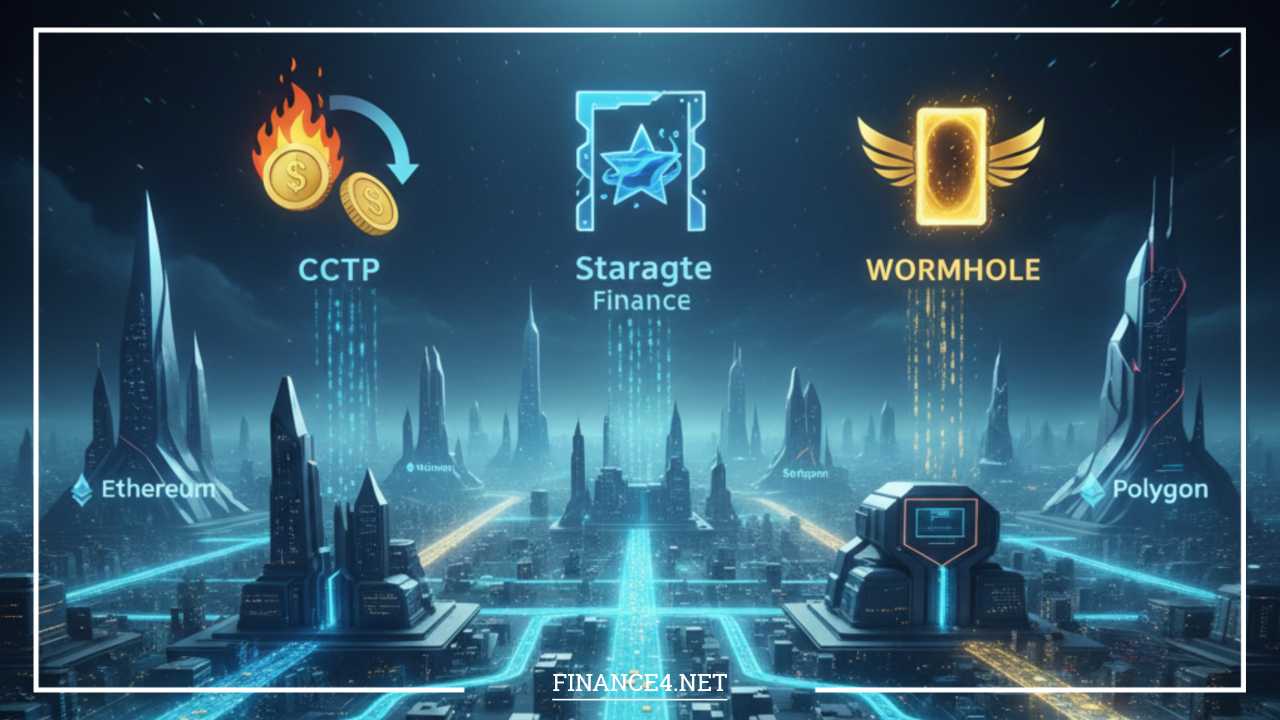
Best Cross-Chain Solutions for Stablecoins
The cryptocurrency ecosystem is rapidly evolving from a single, dominant blockchain landscape to a highly fragmented, multi-chain environment. In this new world, the ability to seamlessly move value—especially stable value—is not a luxury but a necessity. Stablecoins, designed to maintain a stable price relative to fiat currencies like the US dollar, have become the bedrock of the Decentralized Finance (DeFi) space. They act as the primary medium of exchange, unit of account, and liquidity engine for decentralized applications.
The challenge lies in the fact that liquidity is now spread across dozens of Layer 1 (L1) and Layer 2 (L2) blockchains, from Ethereum and Solana to Arbitrum, Polygon, and beyond. This fragmentation renders the traditional approach of having a stablecoin exist only on a single chain inefficient. The integration of stablecoins with robust cross-chain solutions is, therefore, paramount to achieving true global liquidity, composability, and the next phase of DeFi growth.
This article delves into the current landscape of cross-chain stablecoin solutions. It will define the key concepts, establish the criteria for evaluating these solutions, and compare the leading protocols and mechanisms powering the multi-chain stablecoin future.
Background: Stablecoins & Cross-Chain — Key Concepts
1. What Is a Stablecoin?
A stablecoin is a class of cryptocurrency designed to offer price stability by being pegged to a stable asset, typically the US Dollar.
-
Definition and Purpose: Their core purpose is to serve as a reliable medium of exchange, a store of value, and a crucial on/off-ramp between the volatile crypto market and the traditional financial system. They are the primary source of liquidity for DeFi protocols.
-
Types of Stablecoins:
-
Fiat-Backed (Centralized): (e.g., USDC, USDT, BUSD). These are backed 1:1 by reserves of fiat currency, commercial paper, or government securities held by a central issuer.
-
Crypto-Collateralized (Decentralized): (e.g., DAI). These are backed by a basket of other crypto-assets locked in smart contracts, often in an over-collateralized manner.
-
Algorithmic/Seigniorage-Based: (less common now due to historical failures like UST). These aim to maintain a peg using smart contract-based mechanisms to dynamically adjust supply and demand through minting and burning.
-
-
The Single-Chain Limitation: Historically, many major stablecoins were first issued natively on a single chain (e.g., USDT/USDC on Ethereum). While the issuers have since deployed on many chains, a user moving a stablecoin from Chain A to Chain B without the issuer’s direct involvement often requires a cross-chain mechanism—a bridge—which introduces complexity and new risks.
2. What Is “Cross-Chain”?
Cross-chain refers to the ability to transfer assets, data, or value between two otherwise distinct and incompatible blockchain networks.
-
Common Mechanisms:
-
Bridges (Lock-and-Mint): The user locks the native asset on the source chain, and an equivalent wrapped or synthetic asset is minted on the destination chain (e.g., $wETH$ on Polygon). This is the most common, yet riskiest, method.
-
Liquidity Pools (AMM-based): Protocols use shared liquidity pools on both sides to facilitate a near-instant swap of native assets (e.g., swapping native USDC on Chain A for native USDC on Chain B).
-
Cross-Chain Messaging (Messaging-Only): Protocols like Wormhole or LayerZero send cryptographically verified messages between chains, allowing application-layer logic (like a token contract) to execute a burn on the source and a mint on the destination.
-
Native Issuance (Burn-and-Mint): The stablecoin issuer itself manages the process, burning the native token on the source chain and minting a new native token on the destination chain (e.g., Circle’s Cross-Chain Transfer Protocol – CCTP for USDC).
-
Inter-Blockchain Communication (IBC): A standardized, light-client-based protocol enabling trustless communication between compatible chains (primarily in the Cosmos ecosystem).
-
Why Cross-Chain Matters for Stablecoins
Cross-chain connectivity turns stablecoins from a single-chain asset into the universal money of DeFi, enabling:
-
Multi-Chain DeFi and Liquidity Aggregation: Users can move their capital to where the best yield, fastest transaction speed, or cheapest fees exist, unifying the fragmented liquidity of the entire ecosystem.
-
Resilience and Redundancy: If one major network is congested (high fees) or experiences an outage, users can instantly switch their stablecoin usage to a different, more cost-efficient network.
-
Global Payments: Cross-chain stablecoins facilitate faster, cheaper, and more transparent cross-border payments and remittances than traditional finance.
What Makes a “Good” Cross-Chain Solution for Stablecoins
Before diving into specific solutions, we must define the metrics for evaluation. A strong cross-chain solution for stablecoins must balance the competing demands of the Bridging Trilemma: Security, Decentralization, and Capital Efficiency.
| Evaluation Criteria | Description for Stablecoins |
| Security | The paramount concern. Assesses the risk of a hack, compromise of the validator/guardian set (for message bridges), or smart contract vulnerability leading to the loss of locked funds or unauthorized minting. Look for multiple audits, bug bounty programs, and a strong track record. |
| Liquidity & Depth | The volume of stablecoins available on each side of the bridge. High depth is crucial for moving large amounts (e.g., $10M+) with minimal slippage and low fees. |
| Cost / Fees / Speed | Total cost (gas on source/destination + bridging fees) and transaction finality time. A good solution offers fast, near-instant finality with competitive fees, especially for smaller users. |
| Decentralization & Trust | Who controls the lock/mint process? Centralized/custodial bridges pose a single point of failure and censorship risk. Decentralized validator sets or trustless light-client verification are preferred. |
| Native vs. Wrapped | Whether the user receives the native stablecoin (1:1 fungible with the issuer’s original token) or a wrapped/synthetic version. Native assets are generally preferred for liquidity and trust. |
| Composability | The ability for dApps to interact with the stablecoin and the underlying bridging protocol in a single, seamless transaction. |
Overview of Leading Cross-Chain Solutions for Stablecoins
The current solutions can be broadly categorized into three models: Bridging Protocols, Multi-Chain Native Issuance, and Liquidity-Pooling mechanisms.
1. Bridging Protocols / Cross-Chain Bridges
These protocols specialize in moving assets and arbitrary data between chains using a lock-and-mint or message-passing model.
Wormhole (Portal)
-
Mechanism: Wormhole is primarily a generic cross-chain messaging protocol. Assets (including stablecoins) are bridged using the Token Bridge built atop this core messaging layer. It relies on a decentralized network of validators called Guardians (19 independent nodes) who observe messages on the source chain and sign a Verifiable Action Approval (VAA) to trigger an action (e.g., minting a wrapped token) on the destination chain.
-
Stablecoins: Stablecoins moved via Wormhole are typically Portal-wrapped assets (e.g., $wUSDC$).
-
Strengths:
-
Extensive Reach: Connects over 30 chains, including non-EVM chains like Solana, Aptos, and Sui, offering the broadest ecosystem support.
-
Generic Messaging: Allows for cross-chain smart contract calls, making it highly composable for DeFi developers.
-
-
Trade-offs:
-
Validator-Based Trust: Security depends on the honesty and non-collusion of the Guardian set (requiring a 2/3 majority signature).
-
Wrapped Tokens: Users receive a wrapped asset, which carries the intrinsic risk of the bridge protocol itself.
-
Stargate Finance
-
Mechanism: Built on the LayerZero cross-chain messaging protocol, Stargate is an AMM-based (Liquidity-Pool) bridge. It uses unified liquidity pools across all supported chains, enabling native asset transfers (no wrapped tokens) with instant guaranteed finality. Its novel $\Delta$Bridge algorithm solves liquidity fragmentation.
-
Stablecoins: Designed specifically for native stablecoin transfers (USDC, USDT, DAI, etc.). When a user sends USDC from Chain A to Chain B, they receive the native USDC on Chain B directly from the shared pool.
-
Strengths:
-
Native Assets: Users receive the actual native stablecoin on the destination chain, eliminating the wrapped token risk/slippage of simple lock-and-mint bridges.
-
Unified Liquidity: Reduces fragmentation and slippage, making it highly capital-efficient for large stablecoin transfers.
-
Instant Finality: Transfers are finalized very quickly due to the pooled liquidity model.
-
-
Trade-offs:
-
LayerZero Dependency: Relies on the security model of LayerZero (which separates the security of the oracle and the relayer).
-
Liquidity Risk: While capital-efficient, its ability to move truly massive sums still depends on the depth of the pooled liquidity.
-
Synapse Protocol
-
Mechanism: Synapse combines a general-purpose bridge with a stablecoin-optimized AMM (Automated Market Maker). Like Stargate, it uses liquidity pools for swaps but can also bridge wrapped assets. Its unique value proposition is the ability to swap between different wrapped and native stablecoins across chains (e.g., $USDC$ on Ethereum to $DAI$ on Arbitrum).
-
Stablecoins: Primarily used for stablecoins and stablecoin-adjacent assets (like synthetic tokens).
-
Strengths:
-
Strong Stablecoin Focus: AMM design minimizes slippage for stable assets, making it cost-optimized for these transfers.
-
Robust Track Record: A well-established player with significant cross-chain volume processed.
-
-
Trade-offs:
-
Security Model: Utilizes a decentralized multi-party computation (MPC) validator network for message verification, which introduces its own set of trust assumptions compared to light-client or issuer-native models.
-
2. Multi-Chain Native Issuance / Native Transfers
This model avoids intermediary bridges entirely by having the stablecoin issuer manage the cross-chain movement.
Circle’s Cross-Chain Transfer Protocol (CCTP)
-
Mechanism: Developed by the issuer of USDC, Circle, CCTP is a permissionless, native burn-and-mint protocol for USDC. The user initiates a transfer, the USDC is burned on the source chain (e.g., Ethereum), and an attestation is issued. This attestation is then used to mint an equivalent amount of native USDC on the destination chain (e.g., Solana).
-
Stablecoins: Exclusively for USDC.
-
Strengths:
-
No Wrapped Risk: The destination asset is the officially issued, native USDC. This is the gold standard for trust and fungibility.
-
Zero Slippage: The 1:1 burn/mint ratio ensures there is no slippage, regardless of the transfer size.
-
High Security: The transfer is secured by Circle’s attestation process, leveraging the security of the USDC reserve itself rather than relying on a third-party bridge’s smart contract or validator set.
-
-
Trade-offs:
-
Single-Asset Focus: Only supports USDC.
-
Centralized Trust: While eliminating bridge smart contract risk, the system relies entirely on the centralized entity, Circle, to correctly burn and mint tokens.
-
Tether (USDT) / Multi-Network Deployment
-
Mechanism: Tether employs a more traditional multi-network deployment strategy. They natively issue USDT on over a dozen blockchains (e.g., Tron, Ethereum, Solana, Avalanche). Cross-chain flow is managed either by users utilizing bridges or by centralized exchanges/custodians who handle the underlying minting/burning in their reserve wallets to rebalance supply across chains.
-
Strengths:
-
Widespread Availability: Available on more networks than any other stablecoin.
-
Native Fungibility: The asset is the official, native USDT on all chains where it is deployed by the issuer.
-
-
Trade-offs:
-
Manual Rebalancing: The cross-chain flow is often not seamless or programmatic for the end-user outside of a centralized service; it depends on the issuer’s or an exchange’s rebalancing efforts.
-
Risks, Challenges & Common Pitfalls When Moving Stablecoins Cross-Chain
While cross-chain solutions are essential, they are complex and introduce unique vulnerabilities that must be understood.
1. Security Risks
-
Bridge Hacks: Historically, cross-chain bridges have been the target of some of the largest exploits in DeFi (e.g., Wormhole, Ronin/Axie Infinity, Nomad). These attacks often exploit vulnerabilities in the bridge’s smart contract logic, validator signing mechanisms, or multi-signature controls.
-
Oracle Failures & State Corruption: For message-passing protocols, a compromise of the oracle or relayer network can lead to unauthorized messages or the incorrect state being relayed to the destination chain, resulting in double-spending or unauthorized minting/burning.
-
Wrapped Asset De-peg: If a bridge is compromised, the wrapped token on the destination chain can lose its backing (the locked native asset on the source chain), causing the wrapped token to de-peg from the native stablecoin.
2. Liquidity and Economic Risks
-
Liquidity Fragmentation: When a stablecoin exists on many chains, its total supply is splintered. This leads to shallow liquidity pools on individual chains, increasing slippage for large trades and creating arbitrage opportunities that might destabilize the peg.
-
De-pegging Risk for LPs: In liquidity-pool-based bridges (like Stargate or Synapse), liquidity providers face the risk of a malicious actor or a major market event draining one side of the pool, leaving LPs with an imbalance of the less-desired stablecoin.
3. Centralization and Regulatory Risks
-
Centralization Risks: Solutions that rely on a small multi-sig wallet, a small set of semi-anonymous validators, or a single corporate entity (like a centralized stablecoin issuer) present a single point of failure and potential for censorship or seizure of funds.
-
Regulatory Uncertainty: As stablecoin regulation evolves globally, cross-jurisdictional movement via non-compliant bridges may expose users or protocols to future regulatory action. The rules for an issuer (like Circle) operating under US jurisdiction may differ from those of a bridge protocol governed by a DAO.
Future Trends & What’s Next for Cross-Chain Stablecoins
The trajectory of cross-chain stablecoins is moving away from wrapped assets and toward native, more trust-minimized solutions.
-
The Rise of Native Multi-Chain Stablecoins: The burn-and-mint model, as demonstrated by Circle’s CCTP, is the future standard. Stablecoin issuers are recognizing that deploying their tokens natively across a growing list of chains, and managing the cross-chain flow themselves, is the safest and most efficient path. This eliminates the middleman (the third-party bridge) and the associated wrapped token risk.
-
Growth of Interoperability Protocols: General messaging protocols like Wormhole, LayerZero, and Chainlink CCIP will continue to be critical infrastructure. They will increasingly be used not just for token bridging but for enabling cross-chain composable DeFi—allowing a contract on Chain A to call a function on Chain B, using stablecoins as the underlying unit of value.
-
IBC-Style Communication: The Inter-Blockchain Communication (IBC) protocol, which enables light-client-verified, trustless communication between chains, is the most robust model for interoperability. Its extension to non-Cosmos chains (e.g., through inter-chain protocols) promises a more secure and standardized cross-chain stablecoin experience.
-
Focus on Risk Management and Auditability: The sheer volume of funds moved across bridges is forcing the industry to adopt better security standards, more frequent audits, and decentralized governance models that can react quickly to threats.
Recommendations & Best Practices
The choice of a cross-chain solution is a trade-off that depends on the user’s priority: security, speed, or cost.
For End Users:
-
Prioritize Native/CCTP Transfers (if available): For USDC, always prioritize using a bridge or application that leverages Circle’s CCTP to ensure you receive native USDC without wrapped risk or slippage.
-
Verify Liquidity and Slippage: Before making a large stablecoin transfer (over $100K), check the liquidity depth of the bridge pools (e.g., on Stargate or Synapse) to ensure you don’t incur excessive slippage.
-
Check the Trust Model: Understand the underlying security. Is it secured by a decentralized validator set (Wormhole), a liquidity pool (Stargate), or the stablecoin issuer itself (CCTP)? Choose the model that aligns with your risk tolerance.
For Developers / DeFi Builders:
-
Integrate Native Stablecoins First: Wherever possible, integrate and support the native stablecoin (e.g., native USDC on Polygon) and its issuer’s chosen cross-chain solution (e.g., CCTP). Avoid relying solely on wrapped assets from third-party bridges.
-
Choose Audited/Proven Protocols: When integrating a third-party bridge, prioritize protocols with a long track record, multiple independent security audits, and a transparent governance and emergency system (e.g., pause function).
-
Abstract Complexity: Use cross-chain aggregators or composability layers to route stablecoin transfers, providing the user with the most secure, fastest, and cheapest route without forcing them to manually manage wrapped vs. native tokens.
Final Thoughts
Cross-chain stablecoins are not just an operational necessity; they are the financial rails of a multi-chain decentralized economy. They empower users to seamlessly allocate capital to the most capital-efficient opportunities, unify fragmented liquidity, and enable genuinely global payments.
However, the technology remains in its adolescence. No single solution offers a perfect balance of security, decentralization, and capital efficiency. The user’s risk tolerance will dictate the choice:
-
For maximum trust and fungibility, Native Burn-and-Mint models (like CCTP) are the best choice for large, risk-averse transfers.
-
For the best liquidity and capital efficiency across a broad range of chains, Liquidity-Pool Bridges (like Stargate or Synapse) are optimal for most common stablecoin pairs.
-
For the broadest ecosystem access, Generic Messaging Protocols (like Wormhole) provide the necessary infrastructure.
The future of stablecoins is multi-chain and natively interoperable. Success will be measured not just by the speed of transfer, but by the robustness of the underlying infrastructure, the trust established with users, and the commitment to decentralized security and regulatory clarity. Due diligence for both users and builders remains the final, indispensable layer of defense.