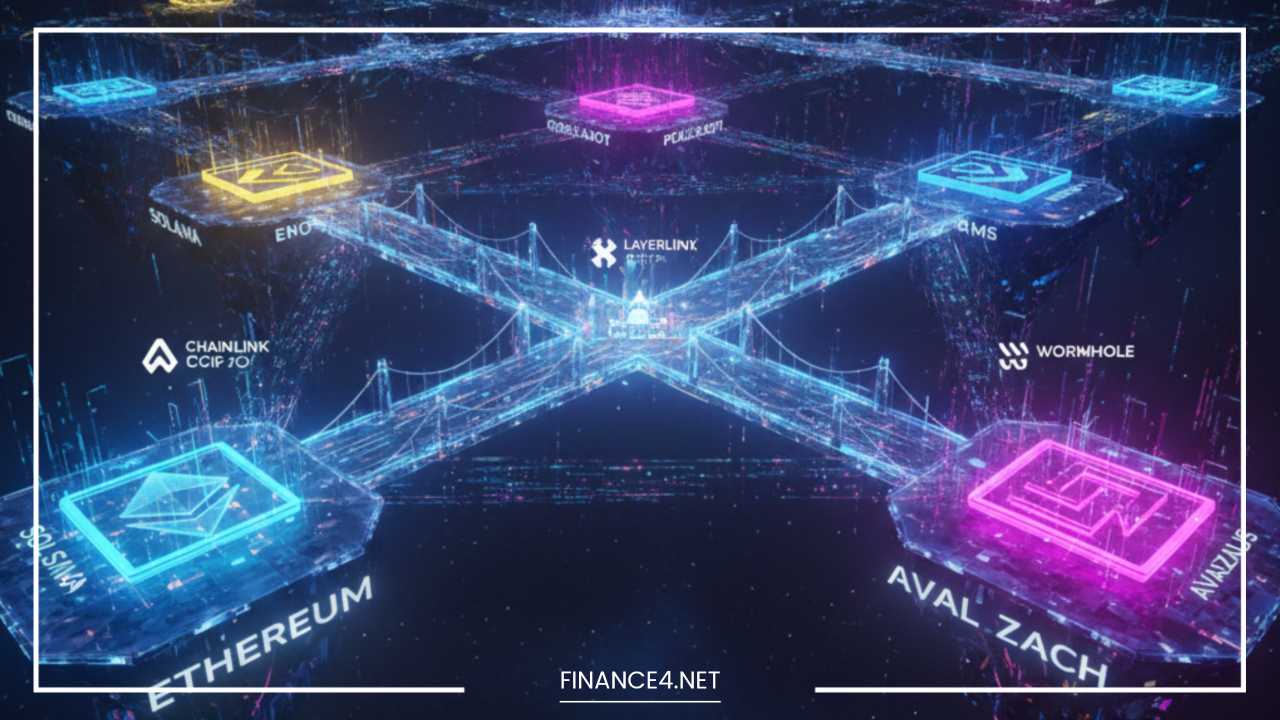
Best Cross-Chain Stablecoins
 by
by 
Best Cross-Chain Stablecoins | Top Stablecoins for Multi-Chain Use
In the rapidly evolving landscape of decentralized finance (DeFi), the ability to move assets seamlessly between different blockchain networks has transitioned from a luxury to a fundamental necessity. At the heart of this interoperability revolution are cross-chain stablecoins—digital assets pegged to a stable value that can exist and function across multiple ecosystems.
As we progress through 2025, the “multi-chain” thesis has become the standard. Users no longer stay confined to the Ethereum mainnet; they seek the low fees of Layer 2s like Base and Arbitrum, the high throughput of Solana, and the unique ecosystems of Avalanche or BNB Chain. This article provides an in-depth exploration of the best cross-chain stablecoins, how they maintain their pegs across networks, and what you need to consider before moving your capital.
What Are Cross-Chain Stablecoins?
A stablecoin is a cryptocurrency designed to have a stable price, typically pegged to a fiat currency like the U.S. Dollar. A cross-chain stablecoin is a version of these assets that is technically equipped to move between different blockchains while maintaining its value and utility.
Historically, if you held a stablecoin on Ethereum, it stayed on Ethereum. To move it elsewhere, you had to use a centralized exchange as a middleman. Today, cross-chain stablecoins utilize several mechanisms to achieve mobility:
-
Native Issuance: The issuer (like Circle or Tether) officially supports and mints the coin on multiple chains.
-
Wrapped Tokens: A bridge locks the original token on Chain A and mints a “wrapped” representative version on Chain B (e.g., “bridged USDC”).
-
Burn-and-Mint Protocols: Advanced protocols that destroy a token on the source chain and simultaneously authorize the minting of a fresh, native token on the destination chain.
The Role of Interoperability
Cross-chain functionality relies on interoperability protocols—the digital highways of the crypto world. Standards like Circle’s Cross-Chain Transfer Protocol (CCTP) and LayerZero’s Omnichain Fungible Token (OFT) have made it possible for stablecoins to travel without the security risks associated with traditional “lock-and-mint” bridges. By removing the need for third-party collateral or “honeypot” bridges, these protocols ensure that the token you hold on Solana is just as “official” as the one you held on Ethereum.
Importance of Cross-Chain Stablecoins
The demand for multi-chain stablecoins is driven by three primary factors: liquidity, cost, and utility.
1. Liquidity Efficiency
In the early days of DeFi, liquidity was fragmented. You might have had millions in stablecoin liquidity on Ethereum, but almost none on a newer chain like Fantom. Cross-chain stablecoins unify this liquidity, allowing capital to flow where it is most needed or where it can earn the highest yield. This prevents “slippage” (the price difference between when you start a trade and when it finishes) and ensures that markets remain efficient regardless of which chain they are on.
2. Transaction Cost Optimization
Stablecoins are the primary medium of exchange for traders. When gas fees on Ethereum spike, users can move their stablecoin holdings to a Layer 2 or an alternative Layer 1 (like Solana) to continue trading, lending, or yield farming for a fraction of a cent. For a retail user, a $10 transaction fee on Ethereum can be a dealbreaker; on a cross-chain optimized network like Arbitrum or Base, that same transaction costs less than $0.01.
3. Hedging and Risk Management
If a specific blockchain experiences a network outage or a localized security exploit, the ability to quickly bridge stablecoins to a different environment allows investors to protect their purchasing power. Stablecoins act as the “safe harbor” during cross-chain migrations. Furthermore, being able to hold “native” stablecoins across multiple chains reduces the systemic risk of any single bridge failing.
Criteria for Choosing the Best Cross-Chain Stablecoins
Not all stablecoins are created equal. When selecting which asset to use for multi-chain operations, consider the following metrics:
Stability and Pegging Mechanism
-
Fiat-Backed: Assets like USDC and USDT are backed by actual dollars and government bonds in off-chain bank accounts. These are generally considered the most stable but carry centralization risk (the issuer can freeze your funds).
-
Crypto-Collateralized: Assets like DAI (now transitioning to USDS) are backed by other cryptocurrencies. They are decentralized but can be subject to volatility if the underlying collateral drops sharply.
-
Synthetic/Algorithmic: Assets that use market incentives to maintain a peg. While innovative, these are high-risk. A recent example is Ethena’s USDe, which uses delta-neutral hedging rather than direct fiat backing.
Security and Audits
Check if the stablecoin issuer publishes regular attestations (proof of reserves). Furthermore, examine the security of the bridges used to move the coin. A stablecoin is only as secure as the bridge it travels on. Look for protocols that have been audited by top-tier firms like Trail of Bits, Zellic, or OpenZeppelin.
Multi-Chain Breadth
A top-tier cross-chain stablecoin should be supported on at least five to ten major networks. High adoption leads to “deep liquidity,” meaning you can swap large amounts of the coin without moving the price. In 2025, the standard for a “major” stablecoin is native issuance on 20+ blockchains.
Top Cross-Chain Stablecoins in 2025
The following assets represent the gold standard for multi-chain utility, balancing security, liquidity, and technological innovation.
1. USDC (USD Coin)
Issued by Circle, USDC is arguably the king of the cross-chain era. In 2025, it maintains a significant lead in “native” interoperability thanks to its Cross-Chain Transfer Protocol (CCTP).
-
Supported Chains: 28+ networks, including Ethereum, Solana, Arbitrum, Base, Avalanche, Optimism, Polygon, Sui, and Aptos.
-
Market Position: As of late 2025, USDC has a market cap exceeding $77 billion, with over $4 trillion in annual on-chain volume.
-
Key Feature: CCTP. This technology allows USDC to be “teleported” natively. It burns the USDC on the source chain and mints it on the destination, eliminating the need for wrapped tokens.
-
Pros: Highly regulated, monthly attestations by a Big Four accounting firm, almost universal DeFi support.
-
Cons: Centralized control means Circle can blacklist addresses if required by law enforcement.
2. USDT (Tether)
Tether remains the most widely used stablecoin by volume, particularly in emerging markets and centralized exchanges. While it lacks a native “burn-and-mint” protocol like CCTP, it has integrated with interoperability layers like LayerZero and Axelar to boost its cross-chain presence.
-
Supported Chains: Tron, Ethereum, Solana, BNB Chain, Avalanche, Polygon, and several dozen more.
-
Market Position: Dominant 60% market share with a market cap of approximately $175 billion.
-
Pros: Deepest liquidity in the world; used by 70% of OTC trades in emerging economies.
-
Cons: Less transparency regarding reserves than USDC; highly centralized; heavy reliance on the Tron network for retail volume.
3. USDS (formerly DAI)
Under the “Endgame” update by Sky (formerly MakerDAO), DAI has evolved into USDS. It remains the flagship decentralized cross-chain stablecoin but has simplified its user experience to compete with USDC.
-
Supported Chains: Ethereum, Solana, Polkadot, Arbitrum, Optimism, and Base.
-
Key Feature: The Sky Savings Rate (SSR), which provides native yield to holders regardless of which chain they are on. It also uses SkyLink, a native cross-chain bridge.
-
Pros: Censorship-resistant heritage; transparent on-chain collateral; native yield.
-
Cons: The rebrand has caused some fragmentation between “Legacy DAI” and “New USDS” users.
4. PYUSD (PayPal USD)
PYUSD has seen an explosive 2025, surging over 200% in supply to reach a market cap of $3.8 billion. Its strategy focuses on high-throughput chains like Solana and Arbitrum to capture the payment market.
-
Supported Chains: Ethereum, Solana, Arbitrum, and 6+ other networks via LayerZero.
-
Mainstream Integration: In late 2025, YouTube integrated PYUSD for creator payouts, a massive milestone for stablecoin adoption.
-
Pros: Backed by PayPal; integrated with Venmo; high trust among Web2 users.
-
Cons: Still much smaller than the “Big Two” (USDT/USDC).
5. USDe (Ethena)
USDe is the leading “synthetic dollar.” It doesn’t use banks; instead, it maintains its peg by holding staked Ethereum and opening a corresponding “short” position in the futures market.
-
Market Cap: Surpassed $12 billion in late 2025.
-
Risk Profile: In October 2025, USDe experienced a brief “de-peg” on centralized exchanges during a market crash, though it held steady on DEXs like Curve.
-
Pros: High yield (often 10-30% APY); crypto-native (no bank risk).
-
Cons: High technical risk; susceptible to “negative funding rates” in bear markets.
6. FRAX (Frax Finance)
Frax has transitioned to a “Stablecoin Operating System” model. With the launch of its own blockchain, Fraxtal, and the rebranding of its token to a unified FRAX, it has simplified its cross-chain stack.
-
Innovations: Uses Fraxfer and Mesh (built on LayerZero OFT) to move between chains.
-
Backing: Now largely backed by BlackRock’s BUIDL fund and tokenized U.S. Treasuries.
-
Pros: Advanced DeFi utility; highly efficient yield-bearing versions (sfrxUSD).
How Cross-Chain Stablecoins Work
Understanding the technical workflow is crucial for security. Most users interact with a user interface (UI), but the underlying smart contracts follow specific paths.
1. The Legacy Bridge Model (Lock-and-Mint)
Imagine you move 100 USDT from Ethereum to Avalanche using an old bridge.
-
Chain A: 100 USDT is locked in a vault.
-
Chain B: 100 “Wrapped USDT” (USDT.e) is minted.
-
The Risk: If the vault on Chain A is hacked, the tokens on Chain B have no backing and their value drops to zero.
2. The Modern Native Model (Burn-and-Mint)
This is the approach taken by USDC (CCTP) and Frax.
-
Chain A: 100 USDC is permanently destroyed (burned).
-
Attestation: An oracle or the issuer signs a message proving the burn.
-
Chain B: 100 Native USDC is minted.
-
The Benefit: There is no vault to hack. The total supply across all chains remains constant.
3. The Liquidity Pool Model
Used by bridges like Stargate and Across.
-
The bridge maintains a pool of 1 million USDC on Ethereum and 1 million on Solana.
-
You give the bridge your USDC on Ethereum, and it pays you out from its own pool on Solana.
-
This is incredibly fast (often under 2 minutes) but depends on the bridge having enough liquidity.
Advantages and Risks of Multi-Chain Use
Advantages
-
Yield Arbitrage: In 2025, stablecoin yields vary by chain. You might find 4% on Ethereum but 12% on a new Layer 2 like Monad or Sei. Cross-chain stablecoins allow you to chase these returns instantly.
-
Capital Efficiency: You can use your stablecoins as collateral on one chain to borrow assets on another, maximizing your “Money Lego” potential.
-
Accessibility: For users in regions with high inflation, a cross-chain stablecoin on a cheap network (like Tron or Solana) provides a digital life raft that costs almost nothing to use.
Risks
-
Smart Contract Bugs: Even a “Native” stablecoin relies on code. If there is a bug in the CCTP or LayerZero contract, funds can be lost.
-
Regulatory Freezing: If you are using a centralized coin (USDC, USDT, PYUSD), the issuer has the “God Mode” button. They can freeze your funds globally across every chain you hold them on.
-
Bridge Finality Issues: Sometimes a transaction is “sent” from Chain A but the destination chain experiences a reorg or lag. This can leave your funds in “limbo” for hours or days.
The Role of Top Cross-Chain Bridges
If you aren’t using a native transfer tool, you will likely use one of these leading bridges:
| Bridge | Best For | Security Mechanism |
| Stargate (LayerZero) | Stablecoin Liquidity | Multi-chain messaging |
| Across Protocol | Speed & Low Fees | Optimistic verification |
| Wormhole | Cross-Ecosystem (EVM to Solana) | Guardian Network |
| Allbridge Core | Native Stablecoin Swaps | Liquidity Pools |
| Synapse | Wide Chain Support (20+) | Optimistic Rollup style |
The Future of Cross-Chain Stablecoins: 2026 and Beyond
As we look toward the next year, several trends are set to redefine the market.
1. Chain Abstraction
The goal of the “Chain Abstraction” movement is to make the underlying blockchain invisible. In the future, a PayPal or Venmo user will simply send “Dollars.” They won’t know if those dollars are moving over Ethereum, Solana, or a private bank chain. Projects like Particle Network and Near are leading this charge.
2. Tokenized Real-World Assets (RWAs)
The line between a “Stablecoin” and an “Investment Fund” is blurring. In 2025, we are seeing the rise of stablecoins backed 100% by BlackRock or Fidelity treasury funds. These assets pay the “Risk-Free Rate” (approx 4-5%) directly to the holder’s wallet across multiple chains.
3. Institutional “Permissioned” Stablecoins
Banks like J.P. Morgan and Standard Chartered are launching their own stablecoins for internal settlement. These will be “cross-chain” but only between “approved” networks. This will likely create a two-tiered system: a “Public DeFi” layer and a “Regulated Banking” layer.
Final Thoughts
The era of the “single-chain” stablecoin is over. Whether you are a retail investor looking for the best yield, a developer building a global app, or a business owner settling invoices, cross-chain functionality is the most important feature you should look for.
-
For Safety & Compliance: Stick with USDC and use Circle’s CCTP.
-
For Maximum Liquidity: Use USDT, but be mindful of which bridge you choose.
-
For Decentralization: Use USDS (DAI) and leverage its native yield.
-
For Payments: PYUSD on Solana is becoming the industry standard for consumer apps.
As always, never put all your eggs in one “stable” basket. Diversify your stablecoin holdings across different issuers and different chains to protect yourself against the unexpected technical or regulatory hurdles of the digital age.