Best NFT Bridging Protocols
 by
by 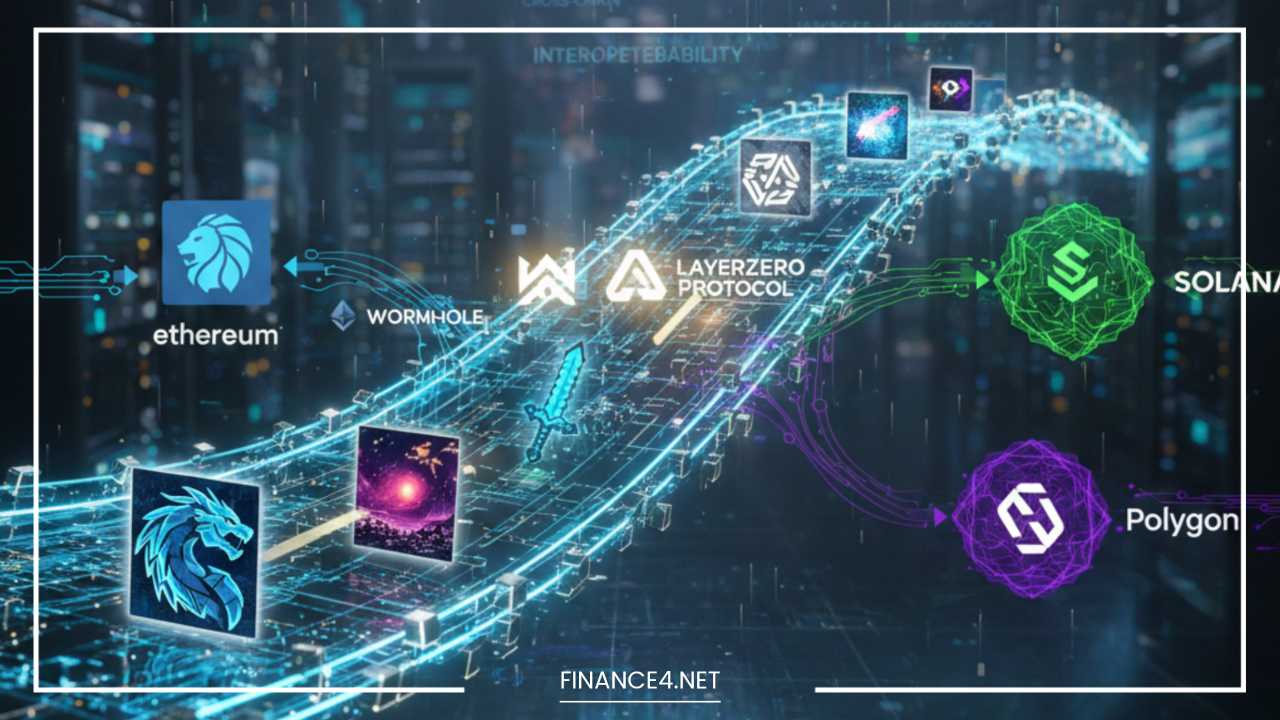
Best NFT Bridging Protocols | Top Cross-Chain NFT Solutions
The digital frontier of Non-Fungible Tokens (NFTs) has fundamentally reshaped digital ownership, introducing concepts of scarcity, authenticity, and verifiable provenance to the digital world. The popularity of NFTs has exploded, encompassing everything from digital art and collectibles to virtual land and in-game assets. However, this growth has also exposed a core limitation of blockchain technology: siloed ecosystems. Most NFTs are native to one specific blockchain, such as Ethereum, Polygon, or Solana, creating walls that hinder true interoperability and limit market reach.
This is where the crucial concept of NFT bridging emerges. An NFT bridge is the necessary infrastructure—the digital overpass—that allows these unique digital assets to move, or be represented, from one blockchain network to another. Without effective cross-chain compatibility, the NFT market remains fragmented.
The goal of this article is to dive deep into the mechanics of these essential technologies and explore the best NFT bridging protocols that are currently driving the multi-chain future for users, creators, and developers.
What Are NFT Bridging Protocols?
NFT bridging protocols are specialized applications, built primarily using smart contracts, that facilitate the movement of an NFT’s ownership and metadata between two different, and otherwise incompatible, blockchain networks.
How They Work: Locking, Wrapping, and Pegging
Unlike simple fungible token bridges that often rely on liquidity pools or atomic swaps, NFT bridges must handle a unique, non-interchangeable asset. The general process for bridging an NFT typically involves a variation of the lock-and-mint or lock-and-peg mechanism:
-
Locking: A user initiates the transfer by sending the native NFT to a dedicated smart contract on the source chain (e.g., Ethereum). This contract locks the original NFT, rendering it unusable on its native network.
-
Messaging/Verification: A decentralized network of validators (or a centralized system, depending on the bridge’s architecture) verifies that the NFT has been successfully locked on the source chain. They then transmit a cryptographic proof of this lock to the destination chain.
-
Minting/Wrapping: Upon receipt and verification of the proof, the smart contract on the destination chain (e.g., Polygon) mints a new, equivalent token. This new token is often referred to as a wrapped NFT or a pegged NFT. It retains the original NFT’s metadata, token ID, and contract address reference, but it adheres to the destination chain’s token standard (e.g., a standard ERC-721 on Ethereum might be mapped to an equivalent, wrapped ERC-721 on Polygon).
-
Unlocking/Burning: To move the NFT back to the source chain, the wrapped NFT on the destination chain is burned (destroyed), which triggers the release of the original NFT from the locking contract on the source chain.
The security and integrity of this process hinge entirely on the reliability of the verifying parties and the flawless execution of the smart contracts.
Difference Between Fungible and NFT-Specific Bridges
The complexity of NFT bridging stems from the asset’s non-fungibility.
-
Fungible Token Bridges focus on creating a 1:1 liquid representation. For example, bridging 10 ETH results in 10 wETH (wrapped ETH) or a corresponding token on the destination chain, often using deep liquidity pools for instant swaps.
-
NFT-Specific Bridges must ensure the uniqueness of the asset is maintained. The focus is on transferring the single, specific instance of the token (Token ID #42 of a collection) and its associated metadata (the artwork, attributes, rarity score) without duplication, ensuring that only one version of the NFT exists and is tradable at any given time across all chains.
Why NFT Bridging Is Important
NFT bridging is not just a niche technical feature; it is a prerequisite for the mass adoption and long-term viability of the Web3 ecosystem. It unlocks critical functionality that benefits every participant in the NFT space.
Enabling Cross-Chain Marketplaces and Gaming Ecosystems
The most immediate benefit is the creation of a seamless, interconnected world for NFTs.
-
Expanded Marketplaces: A collector on an Ethereum-centric marketplace should be able to buy an NFT minted on a Solana-based protocol without needing to create a separate wallet or ecosystem. Bridges enable omnibchain marketplaces that aggregate liquidity and listings from multiple networks.
-
Interoperable Games and Metaverses: Blockchain gaming is a primary driver of NFT adoption. Bridges allow a player to use their character NFT or in-game asset—which may have been cheap to mint on a Layer 2 solution like Polygon—within a highly secure, Ethereum-based metaverse. For instance, an NFT purchased on Solana could be bridged to an EVM chain for use in a specific DeFi lending protocol, drastically increasing its utility.
Increasing Liquidity for NFTs
Fragmentation kills liquidity. An NFT locked on a chain with low trading volume is an illiquid asset. By connecting disparate ecosystems, bridges introduce NFTs to a much wider pool of buyers, capital, and financial applications.
-
Access to New Capital: Bridging an NFT from a smaller, less-liquid chain to a massive ecosystem like Ethereum or Polygon immediately exposes it to billions in capital and a greater number of potential buyers, increasing its perceived value and tradability.
-
Cross-Chain DeFi: Bridges allow NFTs to be used as collateral for loans or to earn yield in decentralized finance (DeFi) protocols that exist on entirely different blockchains, creating new financial primitives.
Supporting Decentralization
Blockchain maximalism—the idea that only one chain will win—is giving way to the reality of a multi-chain future. Different blockchains are optimized for different purposes (e.g., speed, security, low fees, specialization).
-
Bridges support the philosophical goal of decentralization by preventing a single network from becoming a bottleneck or single point of failure. They allow developers to choose the best chain for their specific use case (e.g., a fast, cheap chain for a large-scale game) while still connecting to the deep liquidity and robust security of established chains like Ethereum.
Key Features to Look for in NFT Bridges
Choosing a reliable NFT bridge is a critical decision, as the process inherently involves security and smart contract risk. Users and developers must evaluate protocols based on several core criteria.
Security and Audits
Security is paramount. Cross-chain bridges are one of the most frequently exploited targets in crypto, often holding hundreds of millions in locked value.
-
Decentralization of Validators: A bridge secured by a large, independent, and diverse set of validators (Guardian Network) is inherently safer than one secured by a small, known multi-sig wallet, which presents a high-value, centralized target.
-
Rigorous Audits: Look for bridges that have undergone multiple, public security audits by reputable firms.
-
Circuit Breakers: The best protocols incorporate security mechanisms, often called circuit breakers, that can temporarily halt the bridge’s operation if suspicious activity (like a massive withdrawal or minting discrepancy) is detected, limiting potential damage from an exploit.
Transaction Speed and Gas Efficiency
A cumbersome or expensive bridging process defeats the purpose of interoperability.
-
Speed: Bridging an NFT should ideally take minutes, not hours. Delays can be caused by the consensus requirements of the source or destination chain, but the bridge’s off-chain messaging layer must be highly optimized.
-
Gas Efficiency: The cost of the two required transactions (locking and minting/claiming) must be manageable, especially on high-traffic chains like Ethereum. Bridges that utilize generalized message-passing to batch transactions or use Layer 2 networks for relaying can offer lower costs.
Interoperability: Which Chains Are Supported
The value of a bridge is directly proportional to the number and quality of the chains it connects.
-
EVM and Non-EVM Support: Top protocols must connect major Ethereum Virtual Machine (EVM) chains (Ethereum, Polygon, BNB Chain, Avalanche) as well as non-EVM chains (Solana, Cosmos, Tezos), as this is where the major liquidity and user bases reside.
-
Generalized Messaging: The most advanced bridges support not just token transfers but also arbitrary cross-chain contract calls (generalized message passing), allowing developers to create truly multi-chain applications.
User Experience (UX) and Cost
A simple, intuitive interface is essential for mass adoption.
-
Ease of Use: The process should be simple: connect wallet, select NFT, select destination chain, confirm. Complex manual steps or the need to interact directly with smart contracts create friction and risk.
-
Cost and Fees: Fees should be transparent and competitive. While all bridges require payment for gas on both chains, some add a service fee or a premium for speed.
Top NFT Bridging Protocols
The following protocols represent the cutting edge of cross-chain NFT and asset solutions, each employing distinct architectural models to achieve secure and fast interoperability.
Wormhole (Portal Token Bridge)
Wormhole is one of the most established and widely integrated cross-chain interoperability protocols. Initially known as a token bridge, it evolved into a generalized message-passing protocol, making it a powerful solution for moving complex data, including NFTs, between chains. Wormhole’s bridging interface for assets is often referred to as Portal.
-
How It Works: Wormhole is secured by a decentralized network of validators known as Guardians (currently 19 independent entities). When an NFT is locked on the source chain, the Guardian network observes the event, verifies it, and signs a Verifiable Action Approval (VAA). This VAA is the cryptographic proof that the event occurred. Relayers then submit this VAA to the destination chain’s core contract, triggering the minting of the wrapped NFT. The security relies on a supermajority (13 out of 19) of Guardians signing the VAA.
-
Supported Chains: Wormhole boasts extensive support, including all major EVM chains (Ethereum, Polygon, BNB Chain, Avalanche, Fantom, Arbitrum, Optimism), Solana, Terra, Sui, Aptos, and Cosmos ecosystems.
-
NFT Use Case: Wormhole is used heavily in the Solana-to-EVM bridge space, allowing high-volume NFT collections and gaming assets minted on Solana to access Ethereum’s deeper liquidity pools and L2 marketplace ecosystems.
Allbridge
Allbridge is a multichain bridge that differentiates itself by connecting a wide array of networks, including both EVM and non-EVM chains like Solana and Tron, with a focus on both tokens and NFTs via its Allbridge Classic service.
-
How It Works: Allbridge utilizes a trust-minimized approach secured by a set of validators. The process involves locking the native NFT on the source chain, and the validators approve the creation of a wrapped asset (known as an ae-token for “Allbridge Equivalent” asset) on the destination chain. The key feature is the separation of its core service (liquidity pool-based token transfers) from its classic service (lock-and-mint NFT/wrapped token transfers), allowing it to cater to different asset classes.
-
User Experience and Fees: Allbridge is known for its relatively clean and straightforward user interface, making the multi-step bridging process manageable for beginners. Its fees are dynamic and competitive, designed to incentivize flow across its supported chains.
-
Security Considerations: Allbridge’s smart contracts have undergone rigorous third-party audits, making it a trusted option for users seeking a wide range of chain connections for their NFT transfers.
Axelar + General Message Passing (GMP)
Axelar is a decentralized network that provides a secure, universal way for all blockchains to communicate. While Axelar itself is the underlying infrastructure, its core technology is increasingly used to power NFT bridging solutions. It aims to be a foundational layer, abstracting away the complexities of cross-chain communication for developers.
-
Focus on Interoperability: Axelar’s power lies in its General Message Passing (GMP), which allows smart contracts on one chain to call smart contracts on any other connected chain. For NFTs, this means that a single minting event on one chain can trigger complex, multi-chain logic, such as updating metadata or transferring ownership simultaneously.
-
Portal (Axelar-Powered): Projects leverage Axelar to build their own “Portal” solutions (not to be confused with Wormhole’s Portal) that integrate cross-chain functionality directly into their dApps.
-
Security: Axelar operates its own decentralized Proof-of-Stake consensus network, secured by a large, dynamic validator set. This design is built to provide enterprise-grade security for cross-chain transactions, often favored by institutional partners for its robust security model.
LayerZero + Stargate
LayerZero is not a bridge in the traditional sense, but an omnichaian interoperability protocol designed for lightweight and secure data transfer across chains. It uses a novel architecture involving two off-chain entities: an Oracle (like Chainlink) and a Relayer.
-
Ultra-Light Node Technology: LayerZero is built around the concept of an “Ultra-Light Node” (ULN), which is far more cost-effective and secure than deploying and maintaining full nodes for every connected chain. A transaction is considered valid only when both the Oracle and the Relayer confirm its authenticity. The Oracle provides the block header, and the Relayer provides the transaction proof. This separation of duties minimizes the trust assumption on any single party.
-
Cross-Chain NFT Use Cases: While Stargate is the flagship fungible asset bridge built on LayerZero, the core LayerZero protocol enables Omnichain NFTs (ONFTs). An ONFT is a single NFT contract that can exist and be transacted on any chain LayerZero supports, without needing to create a separate “wrapped” version. The token ID and contract address remain canonical across all chains, dramatically simplifying the development of multi-chain games and applications.
Synapse Protocol
Synapse is a generalized cross-chain protocol that provides a universal asset bridge and an inter-chain messaging system, making it a strong contender in the NFT bridging space.
-
Mechanism: For fungible tokens, Synapse primarily uses a liquidity-based model with an integrated cross-chain Automated Market Maker (AMM). However, its core Generic Message Passing (GMP) capability is what enables sophisticated NFT transfers. This messaging layer allows for custom smart contract logic to be executed across chains, facilitating the secure lock-and-mint process for non-fungible tokens.
-
Ecosystem Adoption: Synapse has built a reputation for speed and support across a vast network of over 20 EVM and non-EVM compatible chains (including Ethereum, Arbitrum, Optimism, Polygon, and Avalanche).
-
Security Model: Synapse utilizes a decentralized, threshold-signature-based security model. It is transitioning toward an optimistic security model, where transactions are assumed valid unless a fraud proof is submitted, offering a blend of security and high throughput. Developers can leverage Synapse to build custom NFT bridges that are optimized for their specific collection’s needs across a wide array of networks.
Challenges and Risks of NFT Bridging
Despite the immense benefits, NFT bridging is one of the most complex and risk-prone areas of Web3 infrastructure. Understanding these risks is essential for users.
Smart Contract Vulnerabilities and Hacks
Cross-chain bridges are high-value targets. A flaw in the smart contract code, especially in the logic that governs the locking or minting of assets, can lead to devastating exploits.
-
The Cost of Failure: The history of Web3 is littered with bridge hacks, with billions of dollars lost. While many of these targeted fungible token bridges, the underlying security principles apply to NFT bridges. If the smart contract securing the locked native NFT is compromised, the wrapped representation on the destination chain becomes worthless, and the original NFT may be irretrievable.
Wrapped NFT Standardization Issues
The creation of a wrapped NFT on the destination chain (e.g., a “wNFT”) can lead to fragmentation.
-
Canonical vs. Non-Canonical: If a popular NFT collection is bridged via multiple different protocols, there can be five different “wrapped” versions of the same NFT across five different networks. Buyers on the destination chain may prefer the canonical wrapped version created by the project itself or the most trusted bridge, leading to confusion and fragmented liquidity for the non-canonical versions.
-
Metadata Loss or Manipulation: Improperly executed bridging can sometimes lead to the loss or corruption of the NFT’s crucial metadata (the associated image and attributes), potentially making the asset worthless.
High Transaction Costs and Network Congestion
While the goal is low cost, the actual cost of two-way bridging can fluctuate wildly.
-
Gas Price Spikes: During periods of high network congestion (especially on Ethereum), the cost of the lock and the final redeem transaction can become prohibitively expensive, pricing out smaller users and slowing down commerce.
Risks of Bridge Centralization
Many bridges, to achieve speed and low cost, rely on a small, trusted set of validators or an underlying multi-signature wallet to sign and approve cross-chain transfers.
-
Single Points of Failure: A bridge secured by a 5-of-9 multi-sig committee is significantly more centralized than a network secured by hundreds of independent Proof-of-Stake validators. The compromise of a few key signatories or the internal corruption of a centralized bridge operator represents a major trust risk. Users must always vet the security model and trust assumptions of the bridge they use.
The Future of NFT Cross-Chain Solutions
The future of NFT bridging is rapidly evolving, driven by the push for true “omnichain” functionality and seamless user experience.
Potential for Multi-Chain NFT Marketplaces
The next generation of NFT marketplaces will move beyond simply listing assets from one chain. They will integrate bridging protocols directly into the UI, allowing a buyer on Polygon to purchase an Ethereum-native NFT in a single, abstracted transaction. Protocols like LayerZero and Axelar are the building blocks for these aggregator marketplaces that will provide a single view of global NFT liquidity.
Emerging Interoperable NFT Protocols
Current standards like ERC-721 and ERC-1155 are chain-specific. New standards are emerging to address this.
-
Omnichain Fungible Tokens (OFTs) and ONFTs: Protocols like LayerZero are spearheading the creation of tokens that are natively multichain, meaning they retain a single, unified contract and state across all networks. This is the logical end-state for NFT interoperability, removing the need for a “wrapped” asset entirely.
Layer 2 Solutions and Scalability Improvements
The mass migration of NFT activity to Layer 2 (L2) networks (Arbitrum, Optimism, zkSync) and other scalable chains (Solana, Sui, Aptos) has already reduced the initial cost of minting. The next step is optimizing the bridge between the high-security Layer 1 (L1) and the low-cost L2s. Advances in Zero-Knowledge (ZK) technology are poised to make bridging between L1 and L2s faster and more cryptographically secure than existing optimistic models.
Predictions for Mass Adoption
In the near future, the act of bridging an NFT will become an invisible backend function.
-
Gaming: Gamers won’t need to know which chain their assets are on; they will simply buy, use, and trade them across different virtual worlds and marketplaces.
-
Metaverse and DeFi: The financialization of NFTs will accelerate as true cross-chain compatibility allows any NFT to be immediately plugged into any DeFi protocol, regardless of its original chain, leading to sophisticated new lending, borrowing, and yield-generation strategies centered around unique digital assets.
Final Thoughts
The fragmentation of the blockchain landscape is the single biggest barrier to the NFT market reaching its full potential. The development of robust, secure, and efficient NFT bridging protocols is therefore not optional—it is essential infrastructure that underpins the entire multi-chain future.
Protocols like Wormhole (Portal), Allbridge, Axelar, LayerZero, and Synapse are the clear market leaders, each offering a distinct balance of security, chain coverage, and developer-friendly messaging layers.
For any user or developer engaging with cross-chain transfers, the fundamental advice remains: always prioritize security. Before bridging a high-value NFT, carefully consider the bridge’s audits, its underlying security model (decentralized validators vs. multi-sig), and the overall cost and chain compatibility. By choosing a top-tier protocol, users can confidently unlock the vast liquidity and utility that the interconnected, omnichain world has to offer.