Best Sidechains for NFTs
 by
by 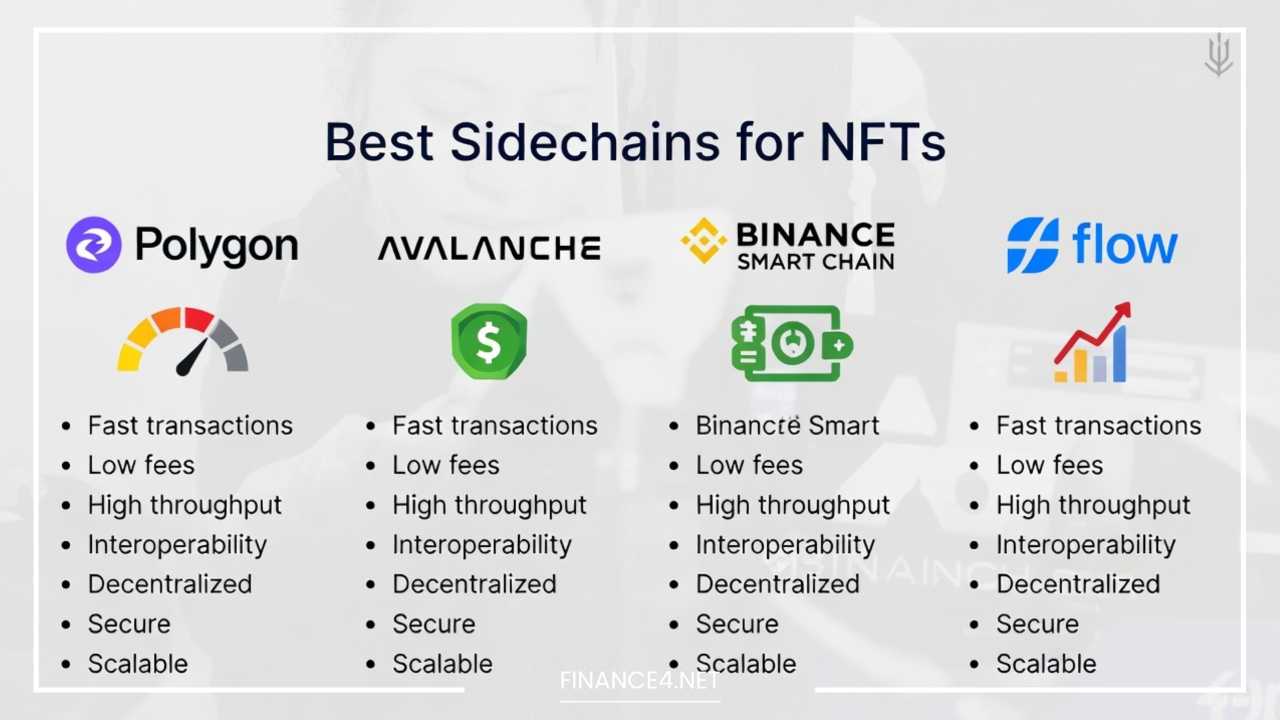
Best Sidechains for NFTs: Top Blockchain Solutions for Speed & Scalability
The digital art and collectibles space has been irrevocably changed by Non-Fungible Tokens (NFTs). Representing unique ownership of digital assets, from art and music to in-game items and virtual real estate, NFTs have exploded in popularity, transitioning from a niche crypto concept to a mainstream cultural and financial phenomenon. The global NFT market size, while experiencing volatility, shows a strong long-term expansion prospect, with user numbers and total value locked continuing to grow significantly. This rapid adoption underscores the massive demand for digital provenance and ownership.
However, the rapid growth of the NFT ecosystem has severely tested the capacity of the primary network where most early projects began: Ethereum. The main Ethereum network, while providing unmatched decentralization and security, is hampered by significant scalability limitations. High network traffic translates directly into exorbitant gas fees (transaction costs) and slow transaction confirmation speeds, making the simple acts of minting, trading, or transferring an NFT frustratingly expensive and time-consuming. This friction has created a substantial barrier to entry for both new creators and collectors, limiting the potential for mass adoption.
This is where sidechains and other scaling solutions step in. These technologies offer a crucial pathway to overcome Ethereum’s bottlenecks, providing the necessary speed, scalability, and cost-effectiveness required for a thriving, high-volume NFT market. This article will explore the concept of sidechains and delve into the top blockchain solutions that are driving the next wave of NFT innovation, offering a faster and cheaper future for digital collectibles.
What are Sidechains?
A sidechain is a separate, independent blockchain that runs parallel to a main blockchain (often referred to as the “mainchain” or Layer 1, like Ethereum). Its primary purpose is to offload transactional activity from the mainchain, thereby boosting overall network performance, or scalability.
How Sidechains Work
The core mechanism involves a two-way peg, a protocol that allows digital assets to be moved back and forth between the mainchain and the sidechain. When a user wants to move an asset (like an NFT or a cryptocurrency) to a sidechain, they essentially lock the asset on the mainchain via a smart contract. An equivalent amount or representation of the asset is then “minted” on the sidechain. This process is called “pegging.”
All subsequent transactions involving that asset—minting new NFTs, trading them, or transferring them—occur entirely off-chain relative to the main network. Because sidechains have their own consensus mechanisms, often optimized for speed (such as Proof-of-Stake or variations thereof), they can process transactions significantly faster and cheaper than the congested mainchain. When the user is done, they can “unpeg” the asset, locking it on the sidechain and releasing the original asset on the mainchain.
Sidechains vs. Layer-2 Solutions
While often grouped together as scaling solutions, there is a fundamental difference between sidechains and true Layer-2 (L2) solutions like Rollups (e.g., Optimistic or ZK-Rollups).
-
Security Model: The most critical distinction is security. True Layer-2 solutions are designed to inherit the security of the mainchain (Ethereum), meaning their security is cryptographically derived from Ethereum’s robust network. In contrast, sidechains rely on their own independent consensus mechanism and validator set for security. If a sidechain’s validator set is compromised, the assets on that chain could be at risk, though assets locked on the mainchain are generally protected. This trade-off often means L2s offer higher security assurance, while sidechains can offer greater flexibility and faster finality.
-
Independence: Sidechains are essentially independent blockchains with their own native token and governance, running alongside Ethereum. L2s are more directly extensions of Ethereum, operating on top of the main chain.
Benefits of using Sidechains for NFTs
For NFT creators and collectors, sidechains deliver undeniable advantages:
-
Faster Transactions: Near-instantaneous confirmation of minting, trading, and transfer activities.
-
Reduced Fees: Transaction costs are typically a tiny fraction of Ethereum’s gas fees, making microtransactions, which are common in gaming NFTs, economically viable.
-
Massive Scalability: The ability to handle high volumes of transactions (high TPS—transactions per second) without congestion, ensuring a smoother user experience even during peak demand.
Why Are Sidechains Important for NFTs?
NFTs have matured beyond simple collectible art into complex assets integral to blockchain gaming, Decentralized Finance (DeFi) collateral, and metaverse economies. This evolution demands a transaction environment that the Ethereum mainnet, even post-Merge, often struggles to provide consistently.
Ethereum’s Scalability Issues
The main challenges on Ethereum—especially before the full implementation of scaling solutions—are a direct result of its limited block space and high demand:
-
High Gas Fees: During periods of intense network activity (e.g., a major NFT drop), the mechanism for prioritizing transactions leads to a surge in gas prices. Users are forced to pay exorbitant fees to ensure their transactions are included in a block. This can make minting a single NFT cost hundreds or even thousands of dollars.
-
Slow Confirmation Times: When the network is congested, transactions can take minutes, or even hours, to be confirmed, leading to a poor user experience, especially in time-sensitive activities like gaming or market sniping.
-
Congestion: The limited throughput of the network (historically around 15-30 transactions per second) creates a bottleneck that stifles widespread application use.
Challenges NFT Projects Face on Ethereum
NFT projects, particularly those focused on utility, suffer greatly from these issues:
-
Gaming: Play-to-Earn games, which require dozens of in-game transactions per player per hour, are completely non-viable on an expensive, slow Layer 1. Sidechains are critical for low-value, high-frequency transactions.
-
Mass Adoption: High fees exclude the majority of potential users who cannot afford to pay high gas prices, limiting the accessibility of NFTs to the wealthiest participants.
-
Artist Onboarding: High minting costs deter new or emerging artists who cannot afford the upfront capital required to deploy their NFT collections.
The Sidechain Solution: Speed and Efficiency
Sidechains alleviate these issues by creating specialized, efficient transaction environments:
-
Alleviating Congestion: By routing the bulk of NFT trading and minting activity off the main chain, sidechains dramatically reduce the load on Ethereum, allowing the L1 to focus on maintaining its robust security and settlement layer.
-
Improved User Experience: Fast and cheap transactions lead to a frictionless experience, similar to using traditional Web2 applications, which is vital for attracting non-crypto native users.
-
Maintaining Security (via Bridge or Consensus): While relying on their own consensus, the best sidechains utilize sophisticated bridge mechanisms to ensure the integrity of assets being transferred, allowing projects to tap into the broad security and network effects of Ethereum while operating at scale.
This fundamental importance has positioned sidechains as non-negotiable infrastructure for any NFT project aiming for high volume and mass consumer adoption.
Top Sidechains for NFTs
The market for NFT scaling solutions is competitive, with several distinct architectures vying for dominance. The following platforms represent the leading choices for speed, scalability, and ecosystem support in the NFT space.
1. Polygon (Matic)
Polygon is arguably the most popular and widely adopted sidechain solution for Ethereum. It is an Ethereum-compatible network operating as a Proof-of-Stake (PoS) sidechain.
-
Speed, Cost-Effectiveness, and Scalability: Polygon offers extremely low transaction fees (often less than a cent) and high throughput, capable of handling thousands of transactions per second. This makes it an ideal environment for cost-sensitive activities like gaming transactions and mass-scale minting.
-
Real-World NFT Use Cases: Polygon’s success is largely due to its high compatibility with the Ethereum Virtual Machine (EVM), meaning Ethereum developers can easily port their dApps and smart contracts. This has led to its integration with major platforms. For instance, global brands and popular metaverse projects like Decentraland and the vast majority of NFT activity on OpenSea (which supports Polygon NFTs) have integrated the sidechain, proving its reliability at scale.
-
Strengths and Weaknesses for NFTs:
-
Strengths: EVM Compatibility (massive developer pool), Low Fees, Robust Ecosystem (major exchanges and dApps support it).
-
Weaknesses: As a sidechain, its security relies on its own set of validators and PoS consensus, meaning it does not fully inherit Ethereum’s security in the same way a ZK-Rollup does.
-
-
How to Use Polygon for NFTs: Users typically use a cross-chain bridge (the Polygon PoS Bridge) to send their ETH or other tokens from the Ethereum mainnet to the Polygon network, where they can then use platforms like OpenSea or specialized NFT marketplaces to mint and trade.
2. Avalanche C-Chain
Avalanche is an open-source platform for launching decentralized applications and enterprise blockchain deployments. While technically a Layer 1 blockchain, its architecture uses multiple, purpose-built chains, with the C-Chain (Contract Chain) acting as a highly scalable EVM-compatible execution layer, which makes it compete directly with sidechains for NFT activity.
-
Consensus Mechanism and Suitability: Avalanche utilizes a novel consensus protocol, Snowman, which allows for high throughput (over 4,500 transactions per second) and extremely fast finality (transactions are irreversible in under two seconds). This speed is critical for time-sensitive NFT activities like in-game trading.
-
High Throughput and Low Fees: Transaction fees are consistently low and predictable, providing a powerful environment for NFT projects that require high-speed interaction.
-
Popular NFT Projects: The ecosystem is growing rapidly, with marketplaces like Kalao and DeFi platforms like Pangolin supporting the network’s NFT initiatives.
-
Pros and Cons for NFT Creators and Collectors:
-
Pros: Ultra-Fast Finality, EVM Compatibility, Strong Security derived from its validator network.
-
Cons: Smaller NFT ecosystem compared to Polygon/Ethereum, requiring some bridge-reliance for liquidity.
-
3. Binance Smart Chain (BSC) – Now BNB Chain
The BNB Smart Chain (BSC), a key component of the BNB Chain ecosystem, is another highly-used EVM-compatible blockchain. While often functioning as a separate Layer 1, it competes in the same low-cost, high-speed space as sidechains.
-
Fast Block Times and Low Transaction Costs: BSC uses a Proof-of-Staked Authority (PoSA) consensus, which enables incredibly fast block times and very low transaction costs. This focus on performance and low fees has made it highly popular among a broad, global user base.
-
Comparison with Ethereum and other Sidechains: BSC historically offered a highly affordable alternative to the Ethereum mainnet before the rise of rollups and sidechains. Its fees remain consistently low, often competing with Polygon’s. However, its use of a smaller set of validators makes it less decentralized than Ethereum and some other sidechains.
-
NFT Marketplaces and Platforms: A large number of NFT and GameFi projects have found a home on BSC, utilizing marketplaces like BakerySwap and TreasureLand.
-
Benefits and Challenges of using BSC for NFTs:
-
Benefits: Low Barrier to Entry due to minimal fees, High Speed, and a Large User Base from the Binance exchange ecosystem.
-
Challenges: Centralization Concerns due to the smaller validator set, which can lead to questions regarding network censorship resistance compared to Ethereum-aligned solutions.
-
4. Ronin (by Axie Infinity)
Ronin is a specialized sidechain explicitly designed for the massively popular play-to-earn game, Axie Infinity. This provides a perfect illustration of a sidechain purpose-built for a single, high-volume application.
-
Design for the Axie Infinity Ecosystem: Ronin was created to solve the crippling fee and speed issues that Axie Infinity faced when it operated on the Ethereum mainnet. By moving the entire game economy, including the millions of daily in-game NFT transactions (like breeding and item transfers), to its own dedicated sidechain, Ronin eliminated the high gas fees and slow confirmation times.
-
Scalability and Low Fees for NFT Gaming: Ronin focuses on offering a seamless, near-instant user experience for gamers, making constant microtransactions economically viable. The fees on Ronin are generally minimal or covered by the system, prioritizing user experience over transaction revenue.
-
Limitations and Considerations: Ronin is highly application-specific. While a highly effective solution for the Axie Infinity universe and its spin-offs, it is not a general-purpose sidechain for all NFT projects. Its design and validator set are focused on supporting the Sky Mavis/Axie ecosystem, which leads to a more centralized structure than general-purpose sidechains.
5. Solana (A High-Speed Layer 1 Alternative)
While technically a Layer 1 blockchain and not a sidechain, Solana must be included in any discussion of NFT scaling due to its architectural focus on high throughput and low cost, which makes it a direct competitor to sidechains.
-
High-Speed, Low-Cost Features: Solana combines a Proof-of-Stake (PoS) consensus with a unique Proof-of-History (PoH) mechanism to achieve industry-leading transaction speeds (a theoretical maximum of 65,000 TPS) and transaction fees that are consistently a fraction of a cent.
-
NFT Platforms Built on Solana: Its high performance has led to the rapid growth of its NFT ecosystem, with major marketplaces like Magic Eden and Solanart becoming dominant forces. Its low fees and speed are excellent for generative, large-scale NFT collections and high-frequency trading.
-
Why Solana is Gaining Traction: Solana’s monolithic architecture and speed offer an alternative philosophical approach to scaling than Ethereum’s modular sidechain/L2 strategy. For projects prioritizing speed and low cost above all else, it presents a compelling environment.
-
Considerations: Centralization vs. Decentralization Debate: Solana’s high performance comes at the cost of high hardware requirements for its validator nodes, which leads to a more concentrated validator set. This has raised concerns about centralization, with critics arguing it sacrifices some decentralization for scale and speed, contrasting with Ethereum’s focus on maximizing security and decentralization at the Layer 1.
6. Flow
Flow is a purpose-built Layer 1 blockchain specifically engineered by Dapper Labs (the creators of CryptoKitties and NBA Top Shot) for high-scale applications like games, digital collectibles, and NFTs.
-
Purpose-Built for NFTs and Digital Collectibles: Flow’s architecture is unique, utilizing a multi-role, pipelined design (Separation of Concerns) where different nodes (Collection, Execution, Consensus, Verification) handle different tasks. This vertical efficiency is optimized for high-volume consumer experiences.
-
Partnerships and Major NFT Projects: Flow has secured significant partnerships with mainstream brands, most notably NBA Top Shot and NFL All Day. The success of these high-traffic platforms demonstrates Flow’s capacity to handle millions of transactions and mainstream user onboarding.
-
Speed, Low Fees, and User-Friendly Design: Flow offers instant finality and very low, predictable fees. Its proprietary programming language, Cadence, is designed to be easier to learn and more secure for smart contracts dealing with digital assets.
-
Pros and Cons for NFT Marketplaces and Creators:
-
Pros: Highly Optimized Architecture for NFTs, Strong Corporate Partnerships, and a Developer-Friendly Language.
-
Cons: It is not EVM-compatible, meaning developers must learn the new Cadence language, and its ecosystem is less diverse than EVM-compatible chains, focusing heavily on its partner projects.
-
7. Tezos
Tezos is an open-source Layer 1 blockchain characterized by its on-chain governance and liquid Proof-of-Stake (LPoS) consensus mechanism. It has become particularly popular in the digital art world for its low environmental impact.
-
Low-Energy, Low-Cost Transactions: Tezos’s PoS mechanism, known as “baking,” is highly energy-efficient, offering a significant advantage for environmentally conscious artists and collectors. Transaction fees are consistently extremely low.
-
Popularity in the NFT Art Space: Tezos has cultivated a vibrant, artist-centric ecosystem, with platforms like Hic et Nunc (now a community-driven project known as TezTok) gaining massive traction by focusing on accessible and affordable art NFTs.
-
How Tezos is Different: Its on-chain governance allows the protocol to upgrade itself autonomously, minimizing the risk of hard forks and ensuring its scaling solutions are continually integrated and optimized.
-
Strengths for Environmental Sustainability and Scalability: Its LPoS consensus is naturally scalable and energy-efficient, making it a powerful contender for the “green NFT” movement.
8. Immutable X
Immutable X stands out as a pure Layer-2 scaling solution specifically built for NFTs on Ethereum, leveraging a technology called ZK-Rollups (specifically Validium, which is similar to a ZK-Rollup but stores data off-chain for greater scalability).
-
Layer-2 Sidechain for Ethereum: Unlike other general-purpose sidechains, Immutable X is entirely dedicated to optimizing NFT transactions while still benefiting from Ethereum-grade security. It bundles thousands of off-chain transactions into a single cryptographic proof (a ZK-STARK) that is verified and settled on the Ethereum mainnet.
-
Zero Gas Fees and Fast Transaction Speeds: The core value proposition of Immutable X is zero gas fees for minting and trading NFTs and instant confirmation of transactions. This eliminates the main financial barrier on the Ethereum mainnet for high-volume projects.
-
Popular NFT Platforms Using Immutable X: Its specialized design makes it the choice for major NFT-focused games like Gods Unchained and a range of other high-throughput decentralized applications.
-
Advantages for NFT Creators and Collectors: Creators can mint millions of assets at no cost, and collectors can trade instantly without fearing high gas spikes, leading to better liquidity and user experience in gaming and trading applications.
Key Considerations When Choosing a Sidechain for NFTs
The “best” sidechain is not a universal one-size-fits-all answer; it depends entirely on the specific needs of the NFT project, be it a high-volume game, a fine art collection, or a large-scale metaverse. Choosing wisely requires an evaluation of several critical factors.
Transaction Speed & Scalability
This is often the primary driver. How quickly can a transaction achieve finality (being permanently recorded and irreversible)? A game that requires instant item transfers will prioritize a chain with ultra-fast finality (like Avalanche or Immutable X). A collectible project with intermittent volume might prioritize a robust ecosystem and low fees (like Polygon). The network’s Transactions Per Second (TPS) capacity must be sufficient to handle peak demand without significant delays.
Fees
The cost of minting, buying, and selling must be sustainable. For projects aiming for mass adoption and microtransactions (e.g., in-game purchases), fees must be near-zero. Sidechains like Polygon, Ronin, and Layer-2 solutions like Immutable X excel here, often keeping costs a tiny fraction of a cent. High, unpredictable fees on the main Ethereum network make most utility-based NFT applications non-viable.
Interoperability
How well does the sidechain communicate with the broader crypto ecosystem, particularly the Ethereum mainnet? High interoperability, typically achieved via secure bridges, is crucial for liquidity. An NFT minted on a highly isolated chain, while cheap to transact, may have lower trading volume if it cannot easily access the massive liquidity pools and marketplaces of the Ethereum ecosystem. EVM compatibility is a key measure of interoperability, making solutions like Polygon and Avalanche highly attractive.
Security
Security should never be compromised. Layer-2 solutions like Immutable X offer the highest grade by inheriting the security of Ethereum itself (the most decentralized and secured network). Sidechains rely on their own validator sets. Users must assess the robustness of the consensus mechanism and the decentralization of the validator pool. A highly centralized sidechain may be faster but carries a higher risk profile.
Ecosystem & Support
A robust ecosystem offers immediate benefits. This includes:
-
Vibrant Community and Developer Support: A large pool of experienced developers and active community forums.
-
Tools and Infrastructure: Availability of major NFT marketplaces (OpenSea, Magic Eden), established wallets (MetaMask compatibility), and minting tools.
-
DeFi Integration: The ability to use NFTs as collateral or integrate with lending protocols (a strong feature on EVM-compatible chains like Polygon and Avalanche).
User Experience (UX)
The process of onboarding, setting up a wallet, bridging funds, and completing transactions must be intuitive. Solutions that reduce complexity, such as Flow with its user-friendly wallet design for brands or Immutable X with its zero-fee architecture, are essential for attracting users who are new to crypto.
Environmental Impact
The environmental cost of blockchain operation is an increasingly important factor. Blockchains operating on Proof-of-Work (PoW) are energy-intensive. Almost all leading sidechains and L2 solutions utilize energy-efficient Proof-of-Stake (PoS) or related consensus models. Chains like Tezos, which explicitly prioritize low energy consumption, appeal to the growing number of environmentally conscious artists and collectors.
Future of Sidechains in the NFT Space
The scaling landscape for NFTs is in a state of continuous, rapid evolution. The current generation of sidechains and Layer-2s are merely the first phase in addressing the inherent limitations of Layer 1 networks.
The Evolving Landscape
As NFT adoption expands into enterprise, real-world asset tokenization, and massive metaverse environments, the demand for throughput will only intensify. This is shifting the industry’s focus away from a single-chain mentality toward a multi-chain future, where assets can move seamlessly and securely between different specialized networks.
Addressing Future Scalability Challenges
Future scaling will likely be dominated by two key trends:
-
Zero-Knowledge (ZK) Technology: ZK-Rollups and ZK-EVMs (such as those being developed for Polygon and others) are predicted to be the ultimate solution, as they offer the best of both worlds: massive scalability with the ironclad security inheritance of the Ethereum mainnet. They will become the gold standard for high-value NFT transactions.
-
Modular Blockchains: The design of new chains is becoming more modular, separating the execution layer from the data availability layer. This allows for hyper-specialized and extremely scalable chains that can handle immense data loads at low cost.
Potential Advancements: Interoperability and Multi-Chain Networks
The biggest challenge remaining is the safe and efficient movement of assets between these diverse chains. The focus is now on creating secure, trustless interoperability protocols that function more securely and seamlessly than the current generation of bridges. We are moving toward a reality where an NFT can be minted on a low-cost sidechain, used as collateral on a Layer 2 DeFi platform, and settled securely on Ethereum, all without the user even realizing the asset is crossing multiple blockchain boundaries.
Predictions for Sidechain Dominance
It is unlikely that a single sidechain will dominate; rather, specialization will reign. Polygon will continue to be a leading general-purpose EVM-compatible choice. Immutable X will solidify its position as the premier solution for high-volume NFT gaming. Purpose-built chains like Flow will retain brand-specific partnerships and consumer-facing success. The future of NFTs is inherently a sidechain/Layer-2 future, as the transaction volume required for mass consumer adoption simply cannot be handled by a single Layer 1 network.
Final Thoughts
The journey of Non-Fungible Tokens from niche digital collectibles to mainstream utility assets has been fundamentally dependent on the advancement of scaling technologies. Sidechains and their Layer-2 cousins have been the essential infrastructure that salvaged the NFT ecosystem from the brink of unviability caused by high gas fees and network congestion on Layer 1.
The best scaling solutions for NFTs—including leaders like Polygon for its vast ecosystem, Avalanche for its speed, Ronin for its gaming specialization, and Immutable X for its zero-gas L2 security—all share a common goal: to deliver a smooth, fast, and cost-effective experience. They turn the prohibitive, expensive process of minting and trading into a seamless, near-instant consumer experience.
Choosing the right platform is a strategic decision. A creator focused on fine art and sustainability might prefer Tezos. A collector focused on high-frequency, high-volume trading of in-game items will lean toward Immutable X or Ronin. A large-scale metaverse project will prioritize the EVM compatibility and broad liquidity of Polygon or Avalanche.
The current landscape is a vibrant, competitive testing ground for the future of digital ownership. For anyone serious about the NFT space, whether as an artist, developer, or collector, understanding and leveraging the power of these scaling solutions is paramount. Encourage yourself to explore the diverse offerings of these top sidechains to find the best-fit environment for your specific NFT needs.