Bridging Non-Fungible Financial Instruments
 by
by 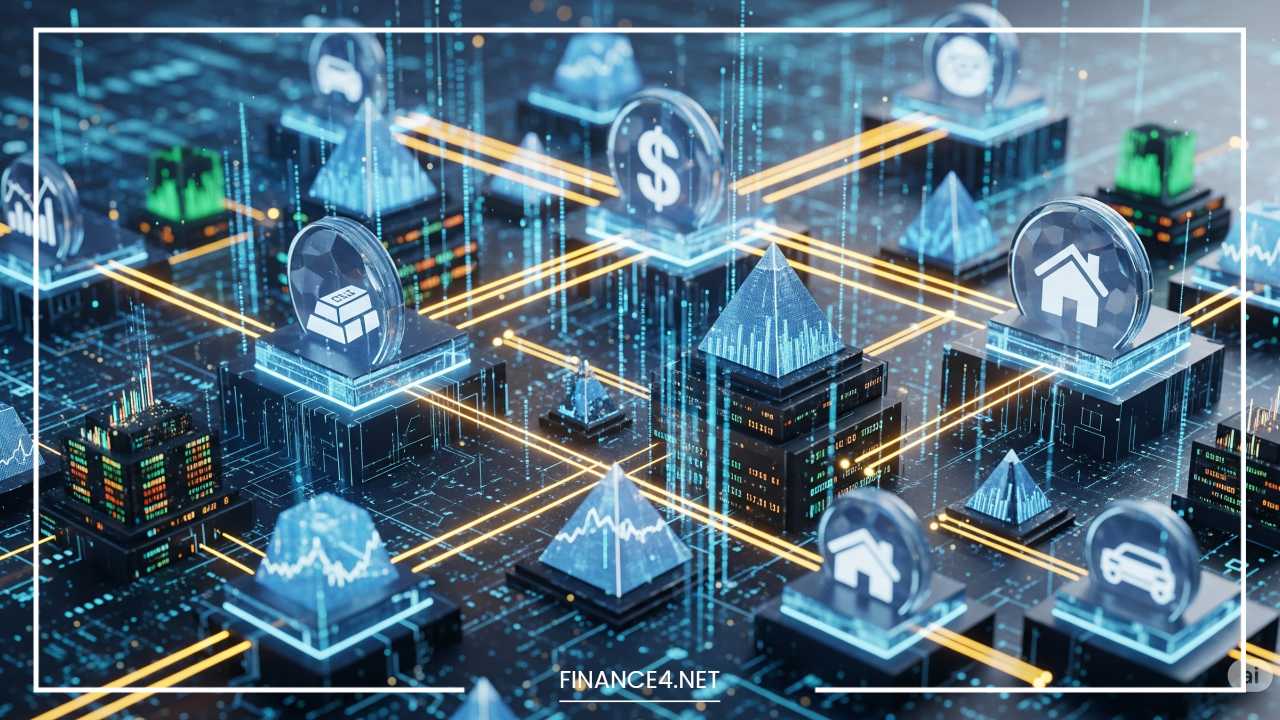
Bridging Non-Fungible Financial Instruments | Unlocking New Financial Frontiers
The financial landscape is undergoing a profound transformation, driven by the emergence of blockchain technology and the innovative concept of non-fungible tokens (NFTs). While initially gaining prominence in digital art and collectibles, the underlying principles of NFTs are now poised to revolutionize traditional finance by giving rise to a new class of assets: Non-Fungible Financial Instruments (NFFIs). These unique digital assets hold the promise of unlocking unprecedented liquidity, transparency, and programmability in markets, yet their widespread adoption hinges on effectively “bridging” the inherent fragmentation within the nascent decentralized finance (DeFi) ecosystem and the established traditional financial (TradFi) world.
Introduction to Non-Fungible Financial Instruments
At its core, a non-fungible financial instrument (NFFI) is a unique, verifiable, and indivisible digital asset representing a specific financial right, claim, or position. Unlike their traditional counterparts, which are typically fungible – meaning any unit is interchangeable with another (e.g., one share of Apple stock is the same as any other share, or a $100 bill is interchangeable with another $100 bill) – NFFIs possess distinct characteristics and cannot be directly swapped for an identical equivalent.
This fundamental difference stems from their underlying technology: blockchain-based NFTs. Each NFFI is endowed with a unique identifier and metadata, allowing it to represent specific, individualized financial assets or contracts. This contrasts sharply with traditional fungible instruments like stocks, bonds, or fiat currency, where units are homogenous and their value is derived from their collective market perception, not individual traits.
The emergence of NFFIs is a direct consequence of several converging trends. First, tokenization, the process of converting real-world assets (RWAs) and financial instruments into digital tokens on a blockchain, has opened up new avenues for ownership and transfer. Second, the rapid growth of DeFi has demonstrated the power of programmable money and financial services operating outside traditional intermediaries. NFFIs are the natural evolution, allowing for the representation of complex, bespoke financial agreements in a decentralized, transparent, and immutable manner.
The Rise of Tokenization and Financial NFTs
Tokenization is a pivotal concept in the rise of NFFIs. It involves taking an asset, be it a physical property, a debt obligation, intellectual property rights, or even future revenue streams, and representing its ownership or a claim against it as a digital token on a blockchain. This process brings numerous advantages, including increased liquidity for traditionally illiquid assets, fractional ownership possibilities, faster settlement times, and reduced administrative overhead.
Within this broader tokenization movement, financial NFTs are emerging as a powerful subset. These aren’t just speculative art pieces; they are sophisticated digital contracts embodying unique financial characteristics. A prime example is Uniswap V3 liquidity provider (LP) positions. In previous versions of Uniswap, LP tokens were fungible, representing a proportional share of a liquidity pool. However, Uniswap V3 introduced concentrated liquidity, allowing LPs to specify price ranges for their capital. This customization makes each LP position unique, as it varies by price range, asset pair, and fee tier. Consequently, these positions are represented as ERC-721 NFTs, effectively making them NFFIs. This means an LP position on Uniswap V3 is not interchangeable with another, even in the same pool, if their parameters differ.
Another compelling example can be found in Tranche tokens. In structured finance, tranches divide a debt instrument into different slices with varying risk and return profiles. When tokenized, these individual tranches can be represented as NFTs, each embodying specific seniority, interest rates, and maturity dates. This allows for the granular representation and trading of complex debt structures on a blockchain.
In essence, financial NFTs leverage the non-fungible nature of the token standard to represent unique contracts, specific positions within a financial protocol, individualized rights (e.g., royalty streams from a piece of music), or specific claims against an asset (e.g., a tokenized mortgage note). The immutable and transparent nature of blockchain ensures the integrity and verifiability of these unique financial agreements.
The Fragmentation Problem
Despite the immense potential of NFFIs, their current landscape is plagued by a significant challenge: fragmentation. This problem manifests in several critical ways, hindering the seamless integration and scaling of these innovative instruments.
Firstly, there is a pervasive lack of interoperability between NFT platforms and DeFi protocols. Many NFFIs are built on specific blockchain networks (e.g., Ethereum, Polygon, Solana) and within particular DeFi applications. An NFFI native to one platform often cannot be easily recognized, traded, or utilized as collateral on another, even if they share the same underlying blockchain. This creates isolated “silos” of liquidity and utility.
Secondly, the bespoke and project-specific nature of many NFFIs exacerbates this fragmentation. Each project might implement its own custom smart contracts and metadata standards for its NFFIs, making it difficult for external protocols or users to understand, interpret, and interact with them uniformly. For instance, a tokenized real estate deed from one platform might have different data structures and verification processes than a similar deed from another, even if they represent the same asset class.
These silos and lack of standardization erect significant barriers to composability, liquidity, and overall standardization. Composability, a cornerstone of DeFi, relies on the ability to combine different financial primitives (tokens, protocols) like LEGO bricks to create new, more complex financial products. When NFFIs are isolated, their composability is severely limited. Similarly, liquidity suffers because NFFIs cannot freely move between markets to find buyers and sellers, leading to inefficient pricing and higher transaction costs. Without common standards, auditing, risk assessment, and regulatory oversight become significantly more complex, impeding institutional adoption and broader market development.
What Does “Bridging” Mean in This Context?
In the context of non-fungible financial instruments, “bridging” transcends the simple act of moving assets between blockchains. It encompasses a multifaceted approach to achieving seamless interaction and utility across disparate ecosystems. More precisely, bridging refers to:
- Cross-platform operability: The ability for NFFIs created on one platform or protocol to be recognized and utilized on other, distinct platforms or protocols, even if they reside on the same blockchain. This involves standardizing how NFFIs are structured, their metadata, and how their underlying rights are represented.
- Cross-chain movement: The capability to transfer NFFIs from one blockchain network to another (e.g., from Ethereum to Polygon, or from an EVM-compatible chain to a non-EVM chain). This is crucial for accessing diverse liquidity pools, leveraging different network efficiencies (e.g., lower gas fees on L2s), and expanding the reach of NFFIs.
- Protocol-level standardization: The development and adoption of common standards, interfaces, and conventions for NFFIs that allow different DeFi protocols and applications to interact with them uniformly, regardless of their origin or specific implementation. This is about creating a universal language for NFFIs.
Bridging involves both technical solutions and legal/financial frameworks. Technical bridging focuses on the underlying blockchain infrastructure, smart contract logic, and data standards. Legal and financial bridging addresses the recognition, enforceability, and regulatory compliance of NFFIs across different jurisdictions and within existing financial systems.
The benefits of effective bridging are transformative:
- Enhanced Liquidity: By enabling NFFIs to move freely across platforms and chains, bridging unlocks deeper liquidity pools, making it easier for holders to buy and sell, and for market participants to find counter-parties.
- Improved Pricing: Greater liquidity and broader market access lead to more efficient price discovery, ensuring that NFFIs are valued more accurately based on supply and demand.
- Vibrant Secondary Markets: Bridging fosters robust secondary markets for NFFIs, allowing for speculative trading, hedging, and the development of new financial products built on top of existing NFFIs.
- Efficient Risk Transfer: The ability to transfer ownership and rights associated with NFFIs across different environments enables more sophisticated risk management strategies and the creation of bespoke financial derivatives.
Technical Challenges of Bridging NFFIs
Achieving seamless bridging for NFFIs is a complex endeavor, fraught with significant technical hurdles:
- Metadata Standardization and Off-Chain Data: NFFIs inherently carry unique metadata that defines their properties, rights, and the real-world assets they represent. Standardizing this metadata across different platforms and ensuring its consistency is crucial. Furthermore, many NFFIs rely on off-chain data (e.g., the appraisal value of a tokenized property, the performance metrics of a revenue-share agreement). Reliably linking this off-chain data to the on-chain NFFI, and ensuring its integrity and up-to-dateness, is a major challenge.
- Smart Contract Risk, Oracle Integration, and Data Verification: The logic governing NFFIs resides in smart contracts. Any vulnerability or error in these contracts can have catastrophic financial consequences. Bridging solutions must ensure the security of wrapped or cross-chain NFFIs. Moreover, for NFFIs tied to real-world events or data, oracle integration is paramount. Oracles are third-party services that feed external data to smart contracts. Ensuring the reliability, decentralization, and tamper-resistance of these oracles is critical to prevent manipulation and maintain the integrity of NFFIs. The data verification process, both on-chain and off-chain, needs to be robust to ensure that the NFFI accurately reflects the underlying asset or right.
- Identity, Compliance (e.g., KYC/AML), and Legal Recognition of Digital Assets: While the blockchain offers pseudonymity, the integration of NFFIs with TradFi necessitates compliance with regulatory requirements such as Know Your Customer (KYC) and Anti-Money Laundering (AML). This often requires tying on-chain addresses to verified real-world identities, which poses privacy and technical challenges. Furthermore, the legal recognition of digital assets and the enforceability of rights embedded within NFFIs across different jurisdictions remain a complex and evolving area. How can a tokenized real estate deed be legally enforced in a court of law if the legal framework for digital ownership is not clearly defined? These issues require innovative solutions that bridge the gap between cryptographic certainty and legal precedent.
Emerging Solutions and Protocols
Despite the challenges, numerous innovative solutions and protocols are emerging to address the fragmentation and facilitate the bridging of NFFIs:
- ERC-721/1155 Extensions: While ERC-721 is the standard for unique NFTs and ERC-1155 allows for both fungible and non-fungible tokens, ongoing development is pushing the boundaries of these standards. For instance, ERC-3525 for semi-fungibility proposes a new token standard that allows tokens to have both fungible and non-fungible characteristics. This could enable representing financial instruments that have a base fungible value but also unique, non-fungible attributes (e.g., a bond with a specific issuance date or a loan with unique collateral).
- Projects specializing in financial NFTs and bridging:
- Revest Finance: Focuses on creating “Financial Non-Fungible Tokens” (FNFTs) that can wrap other assets and provide programmable expiry dates and vesting schedules. This allows for the tokenization of time-locked assets and complex financial agreements, making them tradable as NFFIs.
- Centrifuge: Aims to bridge DeFi and real-world assets by enabling the tokenization of invoices, supply chain financing, and other real-world credit. They issue asset-backed NFTs that represent these real-world assets, allowing them to be used as collateral in DeFi lending protocols.
- Maple Finance: A decentralized corporate credit market that allows institutional borrowers to access uncollateralized loans from DeFi lenders. While not directly issuing NFFIs, their model relies on a unique underwriting and reputation system that could potentially be tokenized into non-fungible reputation scores or loan positions.
- Pendle Finance: Specializes in yield tokenization, splitting yield-bearing assets into principal tokens (PTs) and yield tokens (YTs). While YTs represent a future yield stream and can be semi-fungible, the underlying asset positions or complex strategies built on Pendle could potentially lead to NFFIs that represent unique yield-generating positions.
- Role of Layer-2 Solutions, Rollups, and Cross-Chain Bridges:
- Layer-2 (L2) solutions like Optimistic Rollups and ZK-Rollups improve the scalability and efficiency of main blockchains (e.g., Ethereum) by processing transactions off-chain and then batching them back to the mainnet. This significantly reduces transaction costs and speeds, making NFFI transactions more viable.
- Cross-chain bridges are protocols that enable assets and data to be transferred between different blockchain networks. These bridges are essential for allowing NFFIs to move seamlessly between, for example, Ethereum and Polygon, or even to entirely different blockchain ecosystems. They achieve this by locking tokens on one chain and minting equivalent wrapped tokens on the destination chain.
These solutions collectively contribute to creating a more interconnected and efficient ecosystem for NFFIs, paving the way for their broader adoption and utility.
Use Cases and Applications
The bridging of non-fungible financial instruments unlocks a vast array of innovative use cases, blurring the lines between traditional finance and decentralized finance.
- TradFi Meets DeFi:
- Tokenized Loans: Individual loans with specific terms, collateral, and repayment schedules can be tokenized as NFFIs, allowing them to be originated, serviced, and traded on-chain. This could include mortgages, auto loans, or even peer-to-peer lending agreements.
- Royalties: Future royalty streams from intellectual property (music, art, patents) can be tokenized into NFFIs, providing creators with upfront liquidity and enabling investors to gain exposure to these unique income streams.
- Invoice Financing: Small and medium-sized enterprises (SMEs) can tokenize their outstanding invoices, effectively selling them as NFFIs to investors for immediate capital, thereby streamlining invoice financing processes.
- Dynamic NFTs in Structured Products or Derivatives: The programmability of NFTs allows for the creation of dynamic NFTs (dNFTs), whose characteristics can change based on real-world conditions or on-chain events. This opens up possibilities for:
- Structured Products: dNFTs could represent complex structured financial products, where the payout or underlying asset changes based on market performance, interest rates, or other pre-defined triggers.
- Derivatives: NFFIs could represent bespoke derivative contracts, such as options or futures, where the terms and conditions are unique to each contract and can be updated or settled based on oracle-fed data.
- Tokenization Across Industries: The application of NFFIs extends far beyond traditional financial instruments:
- Insurance: Individual insurance policies, representing unique coverage and risk profiles, could be tokenized as NFFIs, enabling secondary markets for policies and more granular risk assessment.
- Carbon Credits: Each carbon credit, representing a verified reduction in greenhouse gas emissions, can be tokenized as an NFFI, enhancing transparency, traceability, and liquidity in the voluntary carbon markets. JPMorgan, for example, is actively exploring this.
- Real Estate: Fractional ownership of specific properties can be represented by NFFIs, allowing for greater liquidity and accessibility to real estate investments. Each NFFI could represent a unique share with specific rights (e.g., voting rights, rental income distribution).
- Private Equity: Illiquid private equity investments can be tokenized, allowing for fractional ownership and potential secondary market trading, democratizing access to these historically exclusive asset classes.
These examples merely scratch the surface of the transformative potential that bridged NFFIs hold for unlocking new financial primitives and enabling more efficient, transparent, and accessible markets.
Regulatory Landscape
The rapid evolution of non-fungible financial instruments presents a significant challenge to existing regulatory frameworks. The regulatory landscape is characterized by jurisdictional issues and considerable ambiguity, as legal definitions designed for traditional finance struggle to encompass the nuances of digital, programmable assets.
A central question revolves around whether NFFIs constitute securities. If an NFFI represents an investment contract where individuals invest money in a common enterprise with the expectation of profits to be derived from the efforts of others (as per the Howey Test in the US), it could be classified as a security, subjecting it to stringent regulatory requirements regarding issuance, disclosure, and trading. However, the unique nature of many NFFIs – sometimes representing access rights, unique services, or fractional ownership of tangible assets – complicates this determination. Different jurisdictions may adopt varying interpretations, leading to a patchwork of regulations globally.
Tax treatment is another critical area of ambiguity. How are capital gains or income generated from NFFIs taxed? Are they treated as property, collectibles, or a form of currency? The answers vary widely across countries, creating uncertainty for investors and businesses alike.
Furthermore, the legal enforceability of rights embedded within NFFIs remains a nascent field. While smart contracts offer cryptographic certainty, their legal standing in traditional court systems is still being defined. Can an on-chain dispute resolution mechanism be legally binding? How are off-chain assets secured when represented by an NFFI? Clear legal precedents and international cooperation are crucial for NFFIs to achieve mainstream adoption.
Recognizing these challenges, standards bodies are beginning to play a crucial role. Organizations like the International Organization for Standardization (ISO) are working on standards for blockchain and distributed ledger technologies, which could eventually encompass NFFIs. Financial accounting bodies like the Financial Accounting Standards Board (FASB) are grappling with how to classify and report digital assets. International bodies like the Bank for International Settlements (BIS) are also exploring the implications of digital currencies and tokenized assets for financial stability and regulation. Their efforts, alongside ongoing dialogues between regulators and industry participants, will be vital in creating a comprehensive and coherent regulatory environment that fosters innovation while mitigating risks.
The Future of Bridged Financial NFTs (Final Thoughts)
The trajectory for bridged non-fungible financial instruments points towards a future where digital and traditional finance are increasingly intertwined. The outlook for their adoption is highly optimistic, driven by growing institutional interest and the inherent advantages of blockchain technology. As the technical challenges of interoperability are overcome and regulatory clarity begins to emerge, we can expect a surge in sophisticated NFFI applications.
Institutional interest is a key driver. Major financial institutions, keen to leverage the efficiencies and new revenue streams offered by tokenization, are actively exploring and investing in projects that facilitate NFFIs. This includes experimenting with tokenized real-world assets, developing compliant infrastructure for digital securities, and exploring the potential of programmable finance. Their involvement will lend significant legitimacy and capital to the NFFI space.
The importance of interoperability for real-world integration cannot be overstated. For NFFIs to truly transform finance, they must seamlessly integrate with existing legal systems, accounting practices, and operational workflows. This requires more than just technical bridges; it demands standardized legal frameworks, clear regulatory guidelines, and robust off-chain data feeds that are verifiable and trusted. Without this holistic interoperability, NFFIs will remain niche digital curiosities rather than foundational financial instruments.
Ultimately, the advent of bridged financial NFTs ushers in the era of programmable finance and the potential for truly next-gen instruments. Imagine financial products that automatically adjust their terms based on real-time market data, loans that self-liquidate if conditions are met, or royalty streams that distribute payments autonomously. NFFIs, when seamlessly bridged across platforms and chains, will unlock unprecedented levels of financial innovation, efficiency, and accessibility, democratizing access to capital and investment opportunities on a global scale. While the path ahead presents complexities, the potential rewards of a truly interconnected, non-fungible financial ecosystem are immense and poised to redefine the future of value exchange.