Comparing Popular NFT Blockchains
 by
by 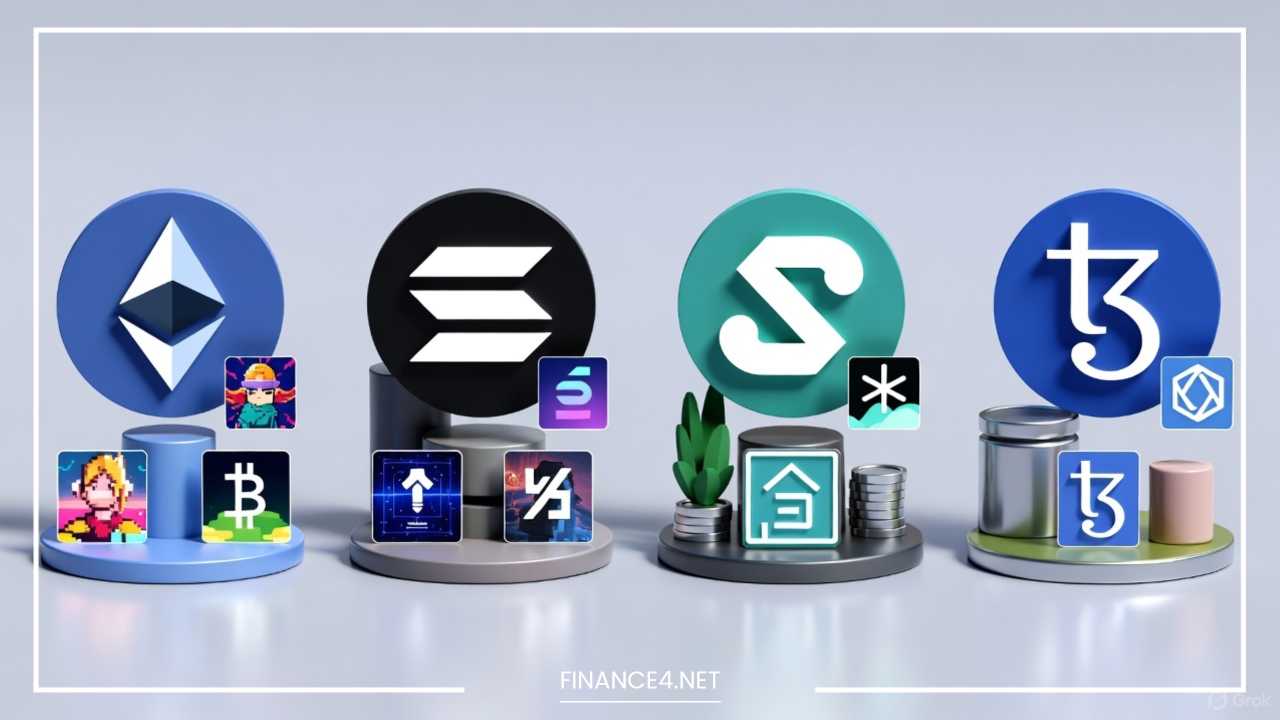
Comparing Popular NFT Blockchains: Features, Pros, and Cons
The digital art and collectibles market has been radically transformed by Non-Fungible Tokens (NFTs). Representing ownership of unique assets—from digital paintings and music to in-game items and virtual land—NFTs have swiftly evolved from a niche concept into a multi-billion-dollar industry. At the heart of this revolution lies the blockchain, the distributed ledger technology that ensures an NFT’s verifiable uniqueness, provenance, and ownership history.
The choice of the underlying blockchain is arguably the single most critical factor for an NFT creator, collector, or marketplace. The blockchain dictates everything: the transaction cost, the speed of minting and trading, the level of security, and the size of the potential audience. With a growing number of Layer 1 and Layer 2 solutions competing for dominance, the landscape can be bewildering.
This comprehensive article provides an in-depth comparison of the most popular NFT blockchains. We will explore their core features, technological advantages, and inherent trade-offs, offering readers a clear understanding of what each platform offers to the expanding digital collectible economy.
What Are NFTs?
A Non-Fungible Token (NFT) is a cryptographic asset on a blockchain with unique identification codes and metadata that distinguish it from every other token. Unlike fungible cryptocurrencies like Bitcoin (BTC) or Ethereum (ETH)—where one unit is identical to any other unit—each NFT is one-of-a-kind.
How NFTs Work
NFTs are essentially digital certificates of ownership. When a digital file, such as an image or a video, is “minted” as an NFT, a smart contract is executed on the blockchain. This contract generates a token that contains:
-
A unique ID: This ID permanently links the token to a specific address on the blockchain.
-
Metadata: This is the descriptive data that points to the actual digital asset (often stored off-chain using services like IPFS). It includes the asset’s name, description, and link to the content.
-
Proof of Provenance: The blockchain records the token’s entire history, from its creation to every subsequent sale, offering immutable proof of authenticity and ownership.
Use Cases of NFTs
NFTs have exploded across various sectors, creating new models for ownership and monetization:
-
Art and Collectibles: Digital fine art, generative art, and profile picture (PFP) collections (e.g., CryptoPunks, Bored Apes).
-
Gaming: In-game items, virtual land, and characters that players truly own and can trade (e.g., Axie Infinity, The Sandbox).
-
Music: Tokenized albums, singles, and royalties, allowing artists to connect directly with fans.
-
Virtual Real Estate: Ownership of land parcels in metaverse environments.
Blockchain and NFTs
A blockchain is a decentralized, distributed, and often public digital ledger composed of records called blocks, used to record transactions across many computers so that any involved block cannot be altered retroactively without the alteration of all subsequent blocks. This tamper-proof ledger is what gives NFTs their core value: irrefutable ownership and scarcity in a digital world where copying is trivial.
Overview of NFT Blockchains
The suitability of a blockchain for NFTs depends on its underlying architecture and consensus mechanism. When evaluating a platform, creators and collectors look for key characteristics:
-
Decentralization: A higher number of validators or nodes reduces the risk of single-point-of-failure and censorship.
-
Speed (Throughput): Measured in transactions per second (TPS), faster chains improve the user experience, especially during high-demand events like a public mint.
-
Scalability: The network’s ability to handle a rapidly increasing number of transactions without a loss of performance.
-
Cost (Fees): Low transaction fees (gas fees) are crucial for accessible trading and minting, particularly for low-value collectibles.
-
Security: The robustness of the consensus mechanism against attacks and malicious activities.
The choice of blockchain directly impacts the user base, the developer tools available, the associated environmental footprint, and ultimately, the commercial viability of an NFT project.
Ethereum: The Pioneer
Ethereum remains the undisputed leader in the NFT space, often considered the “gold standard.” Its journey with NFTs began with the launch of CryptoKitties, which famously demonstrated the network’s strengths and, crucially, its limitations.
How Ethereum Supports NFTs
Ethereum’s dominance is built on two key token standards:
-
ERC-721: The first and most common standard for NFTs, representing a completely unique token (e.g., a single piece of art).
-
ERC-1155: A multi-token standard that allows a single smart contract to contain both fungible (like money) and non-fungible tokens, often used in blockchain gaming for different item types.
Strengths
-
Widely Recognized and Established: Ethereum enjoys the largest NFT market share, providing unparalleled liquidity and brand recognition.
-
Strong Developer Ecosystem: With thousands of developers and years of testing, the smart contract language, Solidity, and its developer tools are the most mature in the industry.
-
Robust Security and Decentralization: Secured by one of the most decentralized networks in crypto, offering a high degree of trust and immutability.
-
Programmable Royalties: Smart contracts on Ethereum allow for the automatic enforcement of creator royalties on secondary sales, providing a sustainable income model for artists.
Weaknesses
-
High Gas Fees: The most significant drawback is the volatile and often prohibitively high transaction (gas) fees, which surge during periods of high network congestion.
-
Scalability Issues: Despite improvements, Ethereum’s Layer 1 has limited transaction throughput, leading to long confirmation times and high costs, bottlenecking mass adoption.
Notable NFT Platforms on Ethereum
The largest and most influential NFT marketplaces, such as OpenSea, Rarible, and Foundation, originated on and still primarily support the Ethereum mainnet.
The Impact of Ethereum 2.0 (Proof of Stake)
The monumental transition of Ethereum to a Proof-of-Stake (PoS) consensus mechanism, known as “The Merge,” dramatically reduced its energy consumption—addressing a major environmental criticism. While this did not directly lower gas fees or increase Layer 1 capacity, it laid the essential technical foundation for future scalability upgrades (like sharding), cementing its long-term viability.
Solana: Speed and Low Costs
Solana emerged as a formidable challenger to Ethereum by prioritizing speed and low-cost transactions, making it an attractive platform for high-frequency trading and mass-market applications.
How Solana Works for NFTs
Solana utilizes a novel hybrid consensus mechanism that combines Proof-of-Stake (PoS) with its key innovation: Proof-of-History (PoH). PoH is not a traditional consensus mechanism but a cryptographic clock that verifies the passage of time between events. This allows nodes to agree on the order of transactions without having to communicate extensively, enabling:
-
High Throughput: Solana can process tens of thousands of transactions per second (TPS).
-
Fast Finality: Transactions are confirmed in a matter of seconds.
Strengths
-
Low Transaction Fees: With average transaction costs often fractions of a cent, Solana is highly accessible for all users, regardless of transaction value.
-
High Throughput and Speed: The exceptional speed minimizes delays and dramatically improves the user experience for interactive applications like gaming and minting.
-
Strong Ecosystem for DeFi and NFTs: Solana’s technical foundation has attracted significant developer activity, resulting in a thriving ecosystem of decentralized finance (DeFi) and NFT projects.
Weaknesses
-
Network Outages and Reliability Concerns: Solana has historically experienced a number of full or partial network outages, which raises concerns about reliability and stability under extreme stress.
-
Centralization Concerns: Compared to Ethereum, Solana’s network relies on fewer, more powerful (and thus more expensive) validators, leading to some valid questions about its long-term decentralization.
Popular NFT Platforms on Solana
Platforms like Magic Eden (which has become a cross-chain giant but has deep roots in Solana), Solanart, and various project-specific launchpads have capitalized on the network’s speed and low fees.
Flow: Focused on NFTs and Gaming
Flow was purpose-built from the ground up by Dapper Labs, the team behind the viral NFT game CryptoKitties, specifically to address the scalability issues they experienced on Ethereum. It is designed to handle the massive transaction volume required by consumer-facing applications, particularly gaming.
Flow’s Architecture
Flow employs a unique multi-role, pipelined architecture that separates the tasks of a validator node into four roles:
-
Collection Nodes: Improve network efficiency.
-
Consensus Nodes: Ensure decentralization and security.
-
Execution Nodes: Enable speed and scale.
-
Verifier Nodes: Guarantee correctness.
This separation of duties dramatically increases throughput without compromising security or decentralization as severely as some monolithic chains.
Strengths
-
Designed Specifically for NFTs and Digital Collectibles: The architecture is fundamentally optimized for high-volume transactions and low-value items.
-
Fast Transaction Processing and Scalability: Flow handles thousands of transactions per second with instant finality and very low costs.
-
Strong Focus on Gaming and Collectibles: It has secured high-profile partnerships with major brands, providing a stable, recognized environment for official digital collectibles.
-
Resource-Oriented Programming Language (Cadence): Flow’s native smart contract language is designed with resource-based security, making digital assets intrinsically scarce and secure.
Weaknesses
-
Relatively New Compared to Ethereum: As a newer blockchain, it has not faced the same level of decentralized stress-testing as the market leader.
-
Centralization Concerns: Its initial reliance on Dapper Labs for development and curation led to early centralization concerns, though it is steadily working toward greater decentralization.
Popular NFT Platforms on Flow
The most famous examples are the official platforms built by Dapper Labs, including NBA Top Shot, NFL All Day, and UFC Strike. Other marketplaces like VIV3 also utilize the network.
Tezos: Energy Efficient and Artist-Friendly
Tezos is a self-amending Proof-of-Stake (PoS) blockchain that has quietly become a favorite among artists and smaller creators due to its low barriers to entry and strong focus on sustainability.
Overview of Tezos and Its Use for NFTs
Tezos uses a liquid Proof-of-Stake (LPoS) mechanism, where holders of the native token (XTZ) can delegate their tokens to a baker (validator) to secure the network and earn rewards. This mechanism is incredibly energy efficient.
Strengths
-
Energy-Efficient Proof of Stake (PoS): Tezos is one of the most eco-friendly major blockchains, a significant draw for environmentally conscious artists and collectors.
-
Low Transaction Fees: Fees are consistently low and predictable, making minting and trading accessible to a wider audience.
-
Self-Amending Ledger: Its unique governance model allows the blockchain to upgrade itself without a hard fork, ensuring continuous evolution and security.
-
Artist-Centric Ecosystem: The low costs and strong community focus have fostered a thriving, collaborative art scene.
Weaknesses
-
Smaller NFT Ecosystem: While growing rapidly, its overall market liquidity and trading volume remain significantly smaller than Ethereum and Solana.
-
Lesser-Known Compared to Other Blockchains: Tezos has struggled for mainstream recognition despite its technical advantages.
Popular NFT Platforms on Tezos
The Tezos ecosystem gained significant early traction with Hic et Nunc (now a community-driven project with spin-offs) and platforms like Objkt.com, which host a wide variety of artist-driven collections.
Polygon: Ethereum’s Layer 2 Solution
Polygon (formerly Matic) is a notable scaling solution that operates on top of the Ethereum network, classifying it as a Layer 2 solution. It’s an essential bridge that helps solve the very problems that plague Ethereum’s mainnet: high fees and slow speed.
How Polygon Solves Ethereum’s Scalability Issues
Polygon runs a parallel sidechain that is compatible with the Ethereum Virtual Machine (EVM). This means developers can port their Ethereum-based applications and NFTs to Polygon with minimal changes, giving them access to the huge Ethereum user base while benefitting from Polygon’s own performance.
Strengths
-
Low Fees and Faster Transactions: By processing transactions off-chain, Polygon offers fees that are typically less than a cent and near-instant transaction finality.
-
Compatible with Ethereum-Based NFTs: NFTs minted on Ethereum can be bridged to Polygon, and Polygon-native NFTs can easily interact with Ethereum’s ecosystem, maintaining access to Ethereum’s massive liquidity.
-
Strong Ecosystem for Decentralized Applications: Polygon is used by many major decentralized applications (dApps), giving it a robust platform for further growth.
-
EVM Compatibility: The familiarity of the EVM lowers the barrier to entry for Ethereum developers.
Weaknesses
-
Dependent on Ethereum’s Ecosystem: As a Layer 2 solution, Polygon’s long-term security ultimately relies on the Ethereum mainnet.
-
Not a Fully Autonomous Blockchain: It is not as decentralized as the Ethereum mainnet, and reliance on its validator set introduces some centralized risk, though security is still high.
Popular NFT Platforms on Polygon
Major platforms like OpenSea fully integrate Polygon, and numerous projects have found success here, including gaming projects like Aavegotchi and various corporate collaborations (e.g., with major social media companies).
Binance Smart Chain (BSC): Popular and Affordable
Binance Smart Chain (now part of the BNB Chain ecosystem) quickly became a popular choice due to its direct connection to the massive Binance Exchange and its initial offering of cheap, fast transactions.
How BSC Supports NFTs
BSC runs parallel to the Binance Chain and is also compatible with the EVM, making it easy for developers to migrate Ethereum projects. It supports its own NFT standards, BEP-721 and BEP-1155, which function similarly to Ethereum’s corresponding standards.
Strengths
-
Low Fees and Fast Transactions: BSC uses a Proof-of-Staked-Authority (PoSA) consensus, which enables low fees and high throughput.
-
Large User Base and Easy Integration: Its association with the world’s largest crypto exchange, Binance, provides an immediate, massive user base and easy on/off-ramp for fiat.
-
Growing Number of NFT Platforms: The ecosystem has seen a proliferation of marketplaces and gaming projects.
Weaknesses
-
Centralization Concerns: The PoSA consensus mechanism is highly efficient but relies on a small, vetted number of validators. This high degree of control by Binance has raised serious concerns about centralization compared to more open, decentralized networks.
-
Smaller Developer Community Compared to Ethereum: While large, the core developer community and smart contract tooling are less mature than Ethereum’s.
Popular NFT Platforms on BSC
Popular platforms include early pioneers like BakerySwap and various gaming and decentralized application (dApp) marketplaces like Juggerworld.
Avalanche: Fast and Decentralized
Avalanche is an open, programmable smart contracts platform for decentralized applications. Its unique architecture is designed to support the needs of both the decentralized finance (DeFi) and NFT ecosystems.
Overview of Avalanche and its Consensus Mechanism
Avalanche uses a novel consensus protocol of the same name. Unlike traditional Proof-of-Work (PoW) or standard Proof-of-Stake (PoS), the Avalanche protocol uses repeated sub-sampled voting (gossiping) to quickly achieve consensus across the network.
Avalanche is composed of three interoperable blockchains:
-
P-Chain: Platform Chain, coordinates validators.
-
X-Chain: Exchange Chain, for creating and trading assets.
-
C-Chain: Contract Chain, where EVM-compatible smart contracts and NFTs live.
Strengths
-
Fast Finality and Low Fees: The consensus protocol achieves transaction finality in under two seconds, which is significantly faster than most competitors, and gas fees are low and predictable.
-
Scalable with High Throughput: The ability to create custom, interoperable blockchains called Subnets allows Avalanche to scale horizontally for specific application needs without bottlenecking the main network.
-
Strong DeFi and NFT Ecosystems: Its EVM compatibility on the C-Chain has allowed many Ethereum projects to easily migrate and grow.
Weaknesses
-
Newer and Less Proven than Ethereum: Despite its technological advancements, it is a younger platform and still building trust and market share against the established pioneer.
-
Smaller NFT Marketplace Compared to Ethereum: While its DeFi sector is robust, its native NFT marketplace size is still catching up to the giants.
Popular NFT Platforms on Avalanche
Marketplaces like Kalao and Trader Joe (known primarily for DeFi but with an NFT marketplace) are key players in the Avalanche NFT space.
Other Notable NFT Blockchains
The competition is fierce, and several other Layer 1 solutions offer compelling alternatives, often excelling in specific areas.
-
Cardano: An up-and-coming player focusing on security, sustainability, and scalability through a layered architecture. It uses the environmentally friendly Ouroboros Proof-of-Stake protocol and aims for a methodical, research-backed development approach. Its NFT ecosystem is slowly but steadily gaining traction.
-
WAX (Worldwide Asset eXchange): Highly optimized for NFTs, especially in gaming and virtual collectibles. WAX features a Delegated Proof-of-Stake (DPoS) model with zero-fee transactions for users, making it a powerful platform for mass-market, high-volume transactions like digital trading cards.
-
EOS: Known for high transaction speed and low-to-zero transaction fees, achieved through a DPoS consensus. While it faced early challenges, it remains a viable option for high-performance applications.
-
Polkadot: An interoperable “Layer 0” protocol that allows specialized blockchains, or Parachains, to connect and communicate. This architecture is powerful for NFTs, as it could allow tokens to move between networks while maintaining security.
-
Hedera Hashgraph: Not technically a blockchain, but a distributed ledger technology (DLT) that uses a unique Gossip about Gossip protocol and a directed acyclic graph (DAG) structure. It is extremely fast, environmentally friendly, and governed by a council of global corporations, making it attractive for enterprise-level NFT solutions.
Choosing the Right Blockchain for Your NFTs
Selecting the correct blockchain is the first major strategic decision for any NFT project. It is crucial to align the blockchain’s characteristics with the project’s goals.
Key Factors to Consider
-
Transaction Fees: For collections intended for mass-market adoption (e.g., thousands of inexpensive items), platforms like Solana, Polygon, Flow, or Tezos are superior due to their low fees. For high-value, one-of-a-kind art, Ethereum’s high fees are often tolerated for its prestige and superior security.
-
Speed and Scalability: Projects requiring real-time interaction, such as blockchain games, need high TPS and low latency, making Solana, Flow, or Avalanche excellent choices.
-
Ecosystem and Marketplace Availability: If a project relies on maximum exposure and liquidity, being on Ethereum (and its Layer 2, Polygon) grants access to the largest markets like OpenSea.
-
Community and Developer Support: For a team familiar with Solidity, the EVM-compatible chains (Ethereum, Polygon, BSC, Avalanche) offer the easiest start.
-
Environmental Impact: For artists and brands focused on sustainability, Proof-of-Stake networks like Tezos, Solana, Cardano, and post-Merge Ethereum offer vastly lower energy consumption than older Proof-of-Work systems.
Different blockchains cater to different needs: Ethereum is the prestige gallery, Solana is the high-volume trading floor, Flow is the exclusive collectibles shop, and Polygon is the accessible side entrance to the main gallery.
Final Thoughts
The NFT market is a dynamic ecosystem, and the competition between underlying blockchains is driving rapid innovation. While Ethereum remains the most important network, due to its security, massive liquidity, and first-mover advantage, challengers have successfully captured market share by addressing its core limitations.
Solana leads the charge on speed and affordability, demonstrating the viability of high-throughput NFT trading. Layer 2 solutions like Polygon provide a critical escape valve for Ethereum users seeking lower fees without fully leaving the ecosystem. Meanwhile, specialized chains like Flow have proven that a purpose-built architecture can deliver a superior user experience for specific applications like digital collectibles.
Ultimately, there is no single “best” blockchain. The optimal choice is the one that best suits a project’s technical demands, target audience, and business model. Creators and collectors must weigh the trade-off between Ethereum’s supreme security and brand recognition versus the low costs and blinding speed of its modern competitors. As the technology matures, interoperability will only increase, making the ability to move assets between these varied networks a critical factor in the continuing evolution of the NFT space.