How to Earn Cross-Chain Staking Rewards
 by
by 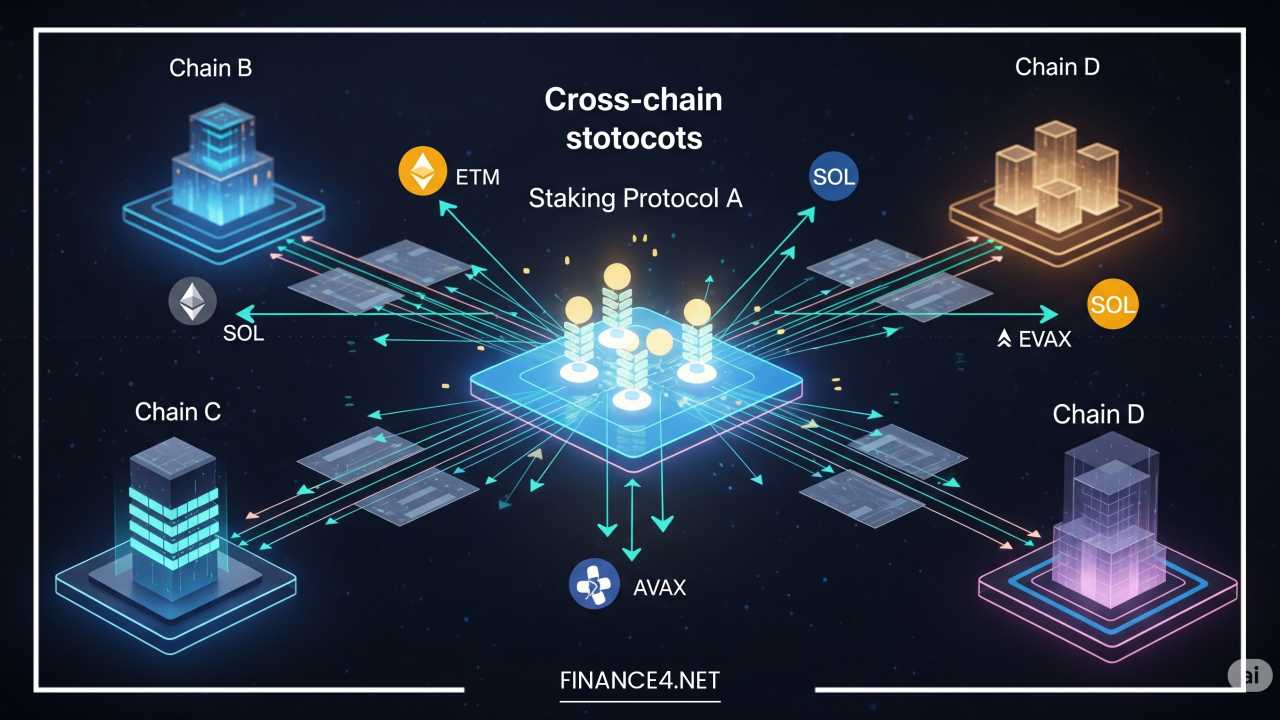
How to Earn Cross-Chain Staking Rewards | Step-by-Step Guide
In the world of cryptocurrency, staking has become a popular and accessible way for investors to earn passive income. Instead of just holding assets, staking allows you to actively participate in securing a blockchain network and get rewarded for it. But as the crypto landscape expands from a single dominant chain to a vast “multichain” ecosystem, a new and powerful strategy has emerged: cross-chain staking. This innovative approach goes beyond a single network, allowing you to diversify your assets, access new opportunities, and optimize your returns in ways that were previously impossible.
This article will guide you through the intricacies of cross-chain staking, from the foundational concepts to advanced strategies. We’ll cover how it works, its benefits and risks, and provide a step-by-step guide to get you started on your cross-chain journey. Whether you’re a seasoned DeFi user or a curious beginner, understanding this new frontier is essential for maximizing your potential in the decentralized finance (DeFi) space.
What is Staking?
At its core, staking is a process used by blockchains that operate on a Proof-of-Stake (PoS) consensus mechanism. Instead of using energy-intensive computing power to solve complex puzzles (the way Bitcoin’s Proof-of-Work, or PoW, works), PoS networks rely on validators who “stake” their own cryptocurrency as collateral to verify transactions and create new blocks. By locking up their assets, stakers are incentivized to act honestly, as any malicious behavior could result in a portion of their staked tokens being “slashed” or forfeited. In return for their contribution, they earn rewards, often in the form of newly minted tokens or transaction fees.
This mechanism is different from mining, which is the process of creating new blocks on a PoW blockchain. Mining requires specialized hardware (like ASIC miners) and vast amounts of electricity, making it a capital-intensive and often centralized process. Staking, by contrast, is far more energy-efficient and can be done by anyone with a compatible wallet and the minimum required amount of tokens.
There are several types of staking, each with its own level of control and complexity:
- Custodial Staking: This involves staking through a centralized exchange (CEX) like Coinbase or Binance. The exchange handles all the technical aspects, including running the validator node. It’s the simplest option, but you sacrifice control of your private keys and are subject to the platform’s terms and fees.
- Non-Custodial Staking (Delegated Staking): This is a more decentralized approach where you delegate your tokens to a validator of your choice while retaining control of your private keys. You are essentially lending your “voting power” to a validator, who then performs the validation work and shares the rewards with you. This is the most common form of staking on networks like Cosmos and Polkadot.
- Liquid Staking: This innovative method solves the problem of illiquidity. When you stake your tokens, you receive a derivative token (like Lido’s stETH for Ethereum) that represents your staked position. This liquid staking token (LST) can then be used in other DeFi protocols, such as for lending or as collateral, while your original tokens continue to earn staking rewards. This significantly increases your capital efficiency.
Understanding Cross-Chain Staking
Cross-chain staking is an evolution of liquid staking that allows users to leverage their staked assets on a different blockchain than the one where the assets are originally staked. While traditional staking locks your assets on a single chain, cross-chain staking creates a bridge, enabling you to use a tokenized representation of your staked assets across multiple chains. For example, you might stake ATOM on the Cosmos Hub but then use a liquid staking token representing that ATOM on a different, interoperable chain to participate in a lending protocol there.
This differs from traditional staking in a few key ways:
- Expanded Utility: Your assets aren’t idle. Cross-chain staking unlocks the liquidity of your staked assets, allowing them to be used for borrowing, lending, and yield farming on other chains.
- Diversification: Instead of being tied to the economic activity and rewards of a single chain, you can tap into the opportunities of multiple ecosystems.
- Interoperability: It relies on the critical infrastructure that connects different blockchains, which is not a factor in traditional, single-chain staking.
The technology that makes this possible is a crucial part of the modern crypto landscape. These technologies include:
- Bridges: These are protocols that enable the transfer of assets and data between different blockchains. A basic bridge might “lock” an asset on Chain A and “mint” a wrapped version on Chain B. More complex bridges use liquidity pools or decentralized relayers to facilitate the transfer.
- Interoperability Protocols: These are foundational layers designed to allow chains to communicate natively. The Inter-Blockchain Communication (IBC) protocol is a prime example, allowing blockchains within the Cosmos ecosystem to seamlessly transfer tokens and data without the need for a separate bridge. Polkadot and its parachains are another example, where a central Relay Chain provides a shared security and communication layer for the entire network of custom blockchains.
- Layer Solutions: These are protocols that exist beneath the blockchain layer, acting as a foundational network for other chains. They provide a shared base for security and communication, making cross-chain interaction a native feature.
Benefits of Cross-Chain Staking
Cross-chain staking isn’t just a technical novelty; it offers tangible advantages for sophisticated investors looking to optimize their portfolio.
- Diversification of Assets and Rewards: By spreading your staked assets across different chains, you diversify your risk and can access a wider range of rewards. One chain might offer higher APY on its native token, while another provides rewards in a different asset or through transaction fees. This allows you to build a more resilient and multi-faceted passive income stream.
- Mitigating Risk by Spreading Across Chains: The “don’t put all your eggs in one basket” mantra holds true in crypto. A smart contract bug or a governance failure on one chain could negatively impact your holdings. By having assets staked across multiple chains, you reduce your exposure to any single point of failure.
- Access to New and Emerging Ecosystems: The crypto world is constantly evolving, with new chains and protocols launching regularly. Cross-chain staking allows you to easily participate in these new ecosystems without having to sell your existing assets. You can use a wrapped or liquid-staked version of your asset to explore new DeFi opportunities and be an early adopter in a new community.
- Compounding and Arbitrage Opportunities: The liquidity provided by liquid staking tokens enables more advanced strategies. You can use your staked assets as collateral to borrow, then use the borrowed funds to stake again, creating a compounding effect. Similarly, you can take advantage of small price differences (arbitrage) between a liquid staking token and its underlying asset across different chains.
Risks and Challenges
While the rewards can be great, cross-chain staking is not without risks. These are often more complex than those of traditional staking.
- Smart Contract Vulnerabilities: The protocols that manage cross-chain staking, from bridges to liquid staking platforms, are governed by smart contracts. A bug or exploit in this code can lead to the loss of user funds. While audits are standard practice, they don’t guarantee a protocol is completely immune to vulnerabilities.
- Bridge/Hack Risks: Bridges are often a target for hackers due to the large amount of value they hold. An attack on a bridge can result in the loss of funds on one or both sides of the bridge. The history of crypto is unfortunately filled with multi-million dollar bridge exploits.
- Chain-Specific Governance or Slashing Risks: You are still subject to the rules of the underlying chain. If you delegate to an unreliable validator who gets “slashed” for misbehavior, you could lose a portion of your staked assets. Additionally, changes in a chain’s governance or tokenomics could impact your rewards.
- Token Volatility and Impermanent Loss: If your strategy involves providing liquidity in a pool (e.g., a liquid staking token paired with its native asset), you are exposed to impermanent loss. This occurs when the price ratio of the two assets in a liquidity pool changes, and the value of your staked assets becomes less than what they would have been had you just held them in your wallet. The volatile nature of crypto assets exacerbates this risk.
- Validator Reliability Issues: Your rewards depend on the performance and reliability of the validator you delegate to. If a validator has frequent downtime or is unreliable, your rewards could be reduced, and in some cases, your stake could be penalized.
How to Get Started with Cross-Chain Staking
Getting into cross-chain staking requires a bit more technical knowledge than simply buying and holding a token on a centralized exchange. Here’s a general guide to help you begin:
- Prerequisites: You’ll need a non-custodial wallet that supports multiple chains and an understanding of how to navigate different networks. Wallets like Keplr (for Cosmos ecosystem) and Polkadot.js (for Polkadot) are essential. MetaMask with the correct network configurations can also be used for EVM-compatible chains. You will also need some of the chain’s native tokens to pay for transaction fees (gas).
- Choose a Chain or Ecosystem: Start by picking a popular ecosystem known for its interoperability, such as Cosmos or Polkadot. These networks were built from the ground up for cross-chain communication, making them a great starting point.
- Use Cases and Walkthroughs: The best way to learn is by doing.
- Example: Using Osmosis to stake ATOM cross-chain. First, you would acquire ATOM and send it to your Keplr wallet. From there, you can use the IBC protocol to transfer your ATOM to the Osmosis DEX. On Osmosis, you can provide liquidity in a pool (e.g., ATOM/OSMO) or use liquid staking protocols to get a derivative token that you can then use in other applications on the Cosmos network.
- Example: Staking DOT using Polkadot’s parachains. You can stake your DOT on the Polkadot Relay Chain, but its liquidity is locked. A liquid staking protocol on a parachain (e.g., Acala) could issue you a tokenized version of your staked DOT (like aDOT), which you can then use on the Acala network or bridged to other chains.
- Tools/Platforms to Use:
- Keplr Wallet: The primary wallet for the Cosmos ecosystem. It integrates natively with IBC, allowing for seamless cross-chain token transfers.
- Polkadot.js: A comprehensive browser extension and interface for the Polkadot and Kusama networks. It allows you to manage your accounts, participate in governance, and stake DOT.
- MetaMask with bridges: For EVM-compatible chains like Ethereum, Polygon, and Avalanche, MetaMask is the standard. To move assets between these chains, you would use a bridge protocol like LayerZero or Axelar, which facilitates the secure transfer of assets.
Best Platforms and Tools
As cross-chain staking has grown in popularity, a number of specialized platforms have emerged to simplify the process.
- Ankr: Ankr is a multi-chain liquid staking platform that allows users to stake a variety of tokens (ETH, AVAX, MATIC, BNB, etc.) and receive a liquid staking token in return. The platform focuses on providing a user-friendly experience and has a wide range of integrations across different DeFi protocols.
- pStake: A liquid staking protocol built on the Persistence network, pStake specializes in providing liquid-staked versions of Proof-of-Stake assets. It currently supports tokens like BNB and ATOM, allowing users to earn staking rewards while using the corresponding liquid-staked tokens in DeFi on other chains.
- Lido: While Lido is most famous for its dominance in Ethereum liquid staking, it has been expanding its liquid staking services to other chains, like Polygon (MATIC). It is a highly trusted and decentralized protocol with a large user base, but its fees can be a consideration.
- Persistence (XPRT): The Persistence network is a hub for liquid staking solutions. Its native token, XPRT, can be staked, and the network itself is designed to facilitate the creation of liquid staking derivatives and their use across different chains, particularly within the Cosmos ecosystem.
- Stafi: StaFi (Staking Finance) is a decentralized protocol that provides liquidity for staked assets. It mints rTokens (reward-tokens) for assets staked through its contracts, such as rETH and rDOT. These rTokens can then be traded, and their value reflects the underlying staked asset plus accrued rewards.
When evaluating a platform, consider the following: APY, which shows the estimated annual return; security, as you want a platform with a strong track record and recent audits; fees, which can be a percentage of your rewards or a flat fee; and support, which is critical if you encounter any issues.
Strategies for Maximizing Rewards
To truly master cross-chain staking, you need a strategy that goes beyond simply staking and forgetting.
- Choosing the Right Validators: For delegated staking, the validator you choose matters. Look for validators with a strong reputation for uptime and security. A higher commission fee doesn’t always mean better service, so find a balance between good performance and reasonable fees. You can use blockchain explorers to check a validator’s uptime and track record.
- Compounding Rewards: Don’t let your earned rewards sit idle. Regularly claim and restake them to take advantage of compounding. Many protocols have automated compounding features, which can save you time and gas fees.
- Multi-Wallet Setup for Different Chains: Use separate wallets for different ecosystems. For example, use Keplr for Cosmos chains and MetaMask for Ethereum and its Layer s. This keeps your assets organized and reduces the risk of making an error and sending tokens to the wrong address.
- Timing and Yield Optimization: Be aware of market conditions. High-yield farming opportunities on one chain may be temporary. Be prepared to move your assets to a more lucrative opportunity, but always weigh the potential for higher yield against the transaction costs and risks.
- Use of Analytics Dashboards: Tools like DeFiLlama and chain-specific explorers provide valuable data on staking rewards, TVL (Total Value Locked), and protocol performance. Use these dashboards to compare APYs and track your portfolio’s performance across different chains.
Future of Cross-Chain Staking
The landscape of cross-chain staking is rapidly evolving. We are only in the early stages of a truly interconnected crypto world.
- Evolving Interoperability Standards: As protocols like IBC, LayerZero, and Polkadot continue to mature, they will become more efficient and secure. The next generation of interoperability will likely focus on seamless asset transfers and shared security models, making cross-chain strategies even more frictionless.
- Modular Blockchains and Rollups: The rise of modular blockchains and Layer rollups (e.g., Arbitrum, Optimism) creates a need for even more sophisticated cross-chain solutions. Users will want to move assets between different rollups and their respective Layer s, which will drive innovation in bridging and interoperability protocols.
- Potential for DeFi-Native Staking Strategies: We are already seeing the first generation of DeFi protocols built specifically for cross-chain liquid staking. In the future, we can expect more advanced financial primitives that allow for complex strategies, such as leveraged yield farming on a different chain using your staked assets as collateral.
- Regulatory Outlook: As with all crypto activities, the regulatory landscape will shape the future of cross-chain staking. Regulators are still trying to understand and define the rules for these new financial products, and future regulations could impact the accessibility and design of cross-chain platforms.
Final Thoughts & Tips
Cross-chain staking is a powerful strategy that unlocks the full potential of your staked assets. It transforms passive crypto holding into an active and rewarding form of network participation. By moving beyond a single chain, you can diversify your risks, access new markets, and find novel ways to earn yield.
Remember to always do your own research (DYOR) before committing your funds to any protocol. Start small and test your strategy with a small amount of tokens before scaling up. Stay informed by following the communities of the chains and protocols you use, and keep an eye on developments in the interoperability space. With a careful and informed approach, cross-chain staking can be a highly effective tool for long-term wealth generation in the exciting, multi-chain world of decentralized finance.