How to Mint NFTs on Multiple Blockchains
 by
by 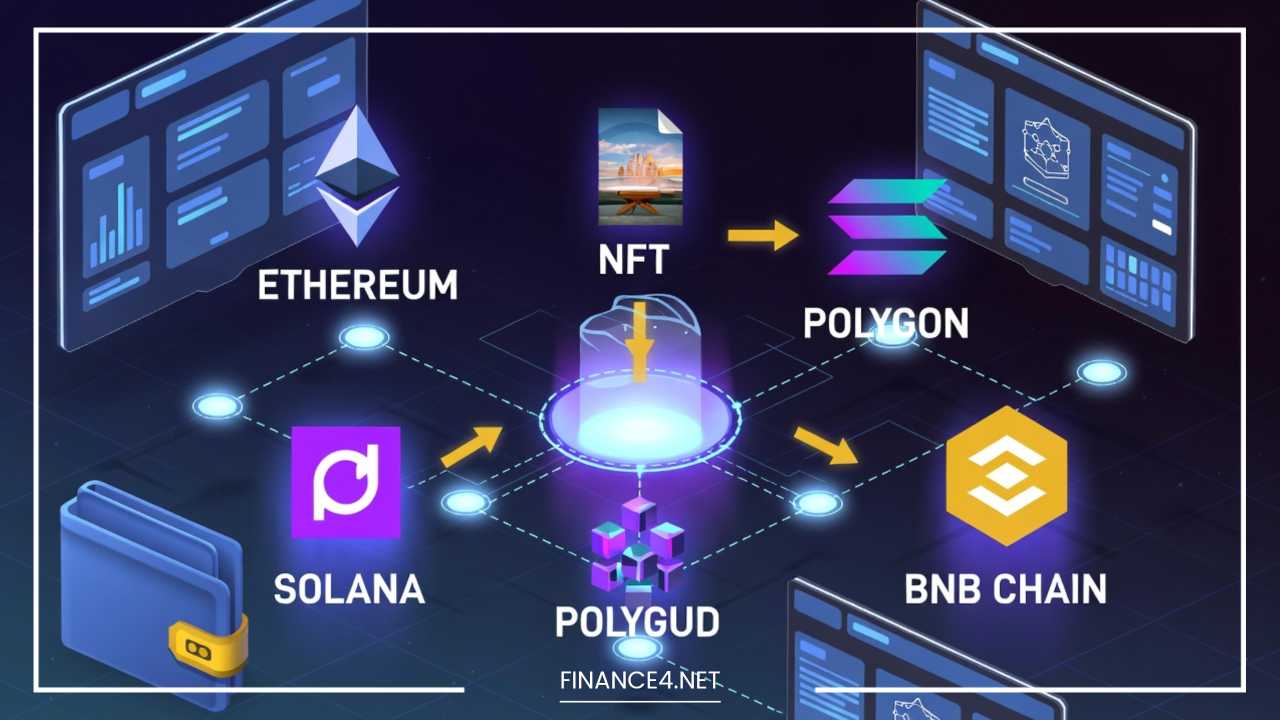
How to Mint NFTs on Multiple Blockchains
How to Mint NFTs on Multiple Blockchains: A Step-by-Step Guide
The digital asset landscape has evolved from a niche experimental playground into a multi-billion-dollar economy. At the heart of this revolution are Non-Fungible Tokens (NFTs)—unique digital identifiers recorded on a blockchain that certify ownership and authenticity. While the early days of NFTs were almost synonymous with the Ethereum network, the ecosystem has fractured into a vibrant, diverse collection of competing and complementary blockchains.
Minting is the technical process of turning a digital file into a crypto collectible. It is the act of publishing your token on the blockchain to make it purchasable and tradable. Today, creators and developers are no longer content with being locked into a single ecosystem. Multi-blockchain minting has become a strategic necessity, allowing creators to tap into different liquidity pools, user bases, and technological advantages. This guide provides an exhaustive deep dive into how to navigate this multi-chain world, from selecting the right network to the technical execution of the mint.
Why Mint NFTs on Multiple Blockchains?
The decision to mint across various blockchains is driven by several pragmatic factors. Primarily, it is about audience reach. Just as a brand might sell products on both Amazon and its own independent website, an NFT creator may want to be present where different communities live. Ethereum users often represent high-net-worth collectors, while users on Polygon or Solana might be more interested in high-volume, low-cost utility NFTs, such as gaming assets or social badges.
Cost efficiency is another major driver. Ethereum is known for high gas fees—the cost of processing a transaction. During periods of high congestion, minting a single NFT can cost hundreds of dollars. By utilizing blockchains like BNB Chain or Polygon, creators can mint thousands of items for pennies. This enables “micro-NFTs” and accessible entry points for new collectors.
Furthermore, diversification of risk is essential. If a single network experiences technical downtime or a shift in regulatory sentiment, having your assets distributed across multiple protocols ensures that your entire portfolio or project is not dependent on one single point of failure. Finally, different chains offer different scalability benefits. Some chains are optimized for speed, processing thousands of transactions per second, which is vital for real-time applications like metaverse gaming or real-time digital identity verification.
The competitive landscape also means that different blockchains offer different grant programs and incentives. A creator might find that a newer blockchain like Aptos or Sui is willing to provide marketing support or financial grants to attract high-quality content, a benefit you likely won’t receive from the established giants like Ethereum. By spreading your presence, you leverage the marketing engines of multiple foundations.
Understanding NFT-Compatible Blockchains
To mint effectively across chains, you must understand the infrastructure, culture, and technical limitations of each major player.
Ethereum: The Foundation
Ethereum remains the “gold standard” for NFTs. It introduced the ERC-721 standard, which defines how non-fungible tokens should behave. It offers the highest level of security and the largest secondary market (OpenSea, Blur). However, its Proof of Stake (PoS) consensus, while energy-efficient, still faces congestion issues.
-
Standards: ERC-721 (unique), ERC-1155 (semi-fungible).
-
Security: Highest in the industry due to massive decentralization.
-
Best Use Case: High-value fine art, luxury brands, and historical “blue chip” collections.
Polygon: The Ethereum Scaler
Polygon is a “Layer-2” or sidechain solution for Ethereum. It offers full compatibility with the Ethereum Virtual Machine (EVM). If you can mint on Ethereum, you can mint on Polygon with almost no changes to your code.
-
Costs: Extremely low (fractions of a cent).
-
Speed: Much faster block times than Ethereum.
-
Best Use Case: Gaming assets, loyalty programs, and large-scale avatar collections.
Solana: The High-Performance Contender
Solana uses a unique consensus mechanism called Proof of History (PoH) combined with PoS. This allows it to be incredibly fast. Unlike Ethereum-based chains, Solana uses a different token standard (SPL).
-
Speed: Capable of 50,000+ transactions per second.
-
Ecosystem: Highly integrated marketplaces like Magic Eden.
-
Best Use Case: High-frequency trading NFTs, compressed NFTs (cNFTs) for mass distribution.
BNB Chain: The Exchange-Backed Giant
Originally Binance Smart Chain, this network offers a middle ground. It has a massive user base due to its integration with the Binance exchange ecosystem.
-
Affordability: Low fees, though slightly higher than Polygon.
-
Compatibility: EVM-compatible, making it easy for Ethereum developers to port over.
-
Best Use Case: DeFi-integrated NFTs and “GameFi” projects.
Emerging and Niche Chains
-
Avalanche: Known for its “Subnets,” which allow creators to build their own dedicated blockchain environments.
-
Tezos: A pioneer in energy-efficient minting with a strong foothold in the generative art community (via platforms like fxhash).
-
Flow: Built by Dapper Labs (the creators of NBA Top Shot), it focuses on mainstream consumer experiences and removes the complexity of “seed phrases” for the average user.
NFT Standards and Metadata Basics
Before you mint, you must understand the “language” the blockchain speaks. On Ethereum and its cousins (Polygon, BNB Chain, Avalanche), two standards dominate. ERC-721 is the original standard where each token is completely unique. ERC-1155 is the “multi-token” standard, allowing a single smart contract to represent an infinite variety of tokens—some unique, some with a supply of millions. This is much more efficient for gaming, where you might have one “Legendary Sword” but 5,000 “Iron Daggers.”
Metadata is the most critical part of your NFT that isn’t the token itself. It is a JSON file that contains the name, description, and link to the image or video. Because storing large files directly on a blockchain is prohibitively expensive, most NFTs use decentralized storage.
-
IPFS (InterPlanetary File System): A peer-to-peer network for storing and sharing data. It uses content-addressing, meaning the link is based on the file’s content, not its location.
-
Arweave: A “permaweb” solution where you pay a one-time fee to store data forever. This is increasingly popular for high-end art where longevity is a primary concern.
Your metadata also defines royalties. While early NFT standards didn’t have royalties “on-chain,” newer standards and marketplace-specific tools allow you to designate a percentage of every secondary sale that returns to your wallet.
Tools & Platforms for Multi-Blockchain NFT Minting
The barrier to entry for minting has dropped significantly thanks to user-friendly tools. These can be broken down into three main categories.
NFT Marketplaces
Most creators begin here. Marketplaces provide an “all-in-one” interface for minting and listing.
-
OpenSea: The industry leader. It supports Ethereum, Polygon, Solana, Arbitrum, and Base. Its “Studio” tool allows for easy collection creation without coding.
-
Magic Eden: The dominant force on Solana, which has expanded aggressively into Bitcoin Ordinals and Ethereum.
-
Rarible: Known for its “Multichain” approach, it allows you to aggregate listings from other marketplaces.
Minting Platforms (No-Code & Low-Code)
These are for creators who want more control than a marketplace offers but don’t want to write Solidity (the programming language for Ethereum) from scratch.
-
Thirdweb: A powerhouse for developers. It provides a library of pre-built, audited smart contracts for almost every major chain. You can deploy a contract in minutes.
-
Manifold: Favored by “crypto-native” artists. It allows you to create your own “Creator Contract,” ensuring that your name, not the marketplace’s name, appears as the creator on the blockchain.
-
Crossmint: A vital tool for mass adoption. It allows you to create a minting page where users can pay with a credit card, and Crossmint handles the blockchain side for them.
Wallets
You cannot interact with a blockchain without a wallet.
-
MetaMask: The standard for all EVM-compatible chains.
-
Phantom: The best-in-class wallet for Solana, which now also supports Ethereum and Polygon.
-
Trust Wallet: A mobile-first wallet that supports a massive variety of blockchains, including niche ones.
Preparing Your NFT Before Minting
Preparation is 90% of the work. If you rush the preparation, you may find yourself with a permanent error on the blockchain that cannot be fixed.
1. Asset Optimization
While IPFS can handle large files, you must consider the end-user experience. A 500MB video NFT will take a long time to load in a marketplace gallery. Aim for:
-
Images: WebP or optimized PNGs.
-
Videos: MP4 or WebM (H.264/H.265).
-
3D Assets: GLB or GLTF formats are the industry standards for AR/VR compatibility.
2. Creating the Metadata JSON
You need a file for every NFT. If you are doing a large collection, you will use a script to generate these. A typical JSON looks like this:
JSON
{
  "name": "My Multi-Chain Art #1",
  "description": "A unique piece available on multiple networks.",
  "image": "ipfs://your-cid-here",
  "attributes": [
    { "trait_type": "Color", "value": "Blue" },
    { "trait_type": "Rarity", "value": "Epic" }
  ]
}
3. Setting Royalties
Decide on your fee. While 10% was the standard, many professional projects now opt for 5% to encourage more trading volume. Be sure to register your royalties on “Royalty Registry” tools to ensure they are respected across different platforms.
Step-by-Step: How to Mint NFTs on Multiple Blockchains
This is the core execution phase. We will look at how to approach this systematically.
Step 1: Strategy and Chain Selection
Don’t mint the exact same image on five different chains. This devalues the scarcity. Instead:
-
Split the Collection: Mint #1-#500 on Ethereum and #501-#1000 on Polygon.
-
Chain-Specific Editions: Create a “Gold” edition for Ethereum and a “Silver” edition for BNB Chain.
-
Utility Focus: Use Solana for items that will be used frequently in a game to save your users money on fees.
Step 2: Wallet Setup and Funding
You need “Gas” to power the minting transaction.
-
Ethereum: You need ETH.
-
Polygon: You need POL (formerly MATIC).
- Solana: You need SOL.Use a reputable exchange like Coinbase or Binance to buy these tokens and send them to your MetaMask or Phantom addresses. Always send a small “test amount” first to ensure you have the right address.
Step 3: Choose Your Minting Method
-
For Beginners: Go to OpenSea Studio. Click “Create a Collection.” Follow the prompts to upload your images. OpenSea will handle the IPFS upload and the contract deployment.
-
For Intermediate Creators: Use Manifold. It allows you to “claim” your own contract. This means you own the “provenance.” If OpenSea ever goes away, your contract remains independent and fully under your control.
-
For Developers: Use the Thirdweb CLI (Command Line Interface). This allows you to deploy contracts to multiple chains simultaneously using a single command.
Step 4: Uploading to IPFS
If you aren’t using a marketplace’s built-in uploader, use a service like Pinata or NFT.Storage.
-
Upload your folder of images. Get the “Folder CID.”
-
Update your JSON files to point to the images using that CID.
-
Upload the folder of JSON files. Get the “Metadata CID.” This final CID is what you will provide to the smart contract.
Step 5: The Actual “Mint”
Once your contract is deployed:
-
Navigate to the “Mint” function on your platform or via Etherscan/Solscan.
-
Specify how many tokens you want to create.
-
Confirm the transaction in your wallet.
-
Wait. Do not refresh the page. Blockchains can take anywhere from a few seconds to several minutes to confirm the “Finality” of the transaction.
Step 6: Verification and Secondary Market Listing
Once minted, your NFTs will appear in your wallet. However, to sell them, you must “List” them. This involves signing another transaction that gives the marketplace permission to move the NFT if someone pays your asking price.
Gas Fees, Costs, and Optimization Strategies
One of the biggest hurdles in a multi-chain strategy is the cost. Here is how to navigate it:
Understanding Gas
Gas is the unit used to measure the computational effort required to execute a transaction.
-
Base Fee: The minimum required to get into a block.
-
Priority Fee (Tip): An extra amount you pay to “skip the line” during high traffic.
Lazy Minting
This is a game-changer for new artists. With lazy minting, the NFT is not written to the blockchain at the moment of creation. Instead, the marketplace stores the data off-chain. When a buyer clicks “Buy,” the NFT is minted in that exact second. The buyer pays the gas fee. If no one ever buys your NFT, you never pay a cent in gas.
Batch Minting
If you are minting 50 NFTs, don’t do 50 transactions. Use a contract that supports “Batch Minting.” This groups all 50 items into a single transaction, which can save up to 80% on total gas costs compared to individual mints.
Timing the Market
Gas prices on Ethereum fluctuate based on US and European business hours.
-
Cheapest Times: Usually between 12:00 AM and 4:00 AM EST, or on weekends.
-
Tools: Use “Ethereum Gas Tracker” or “Blocknative” to see real-time prices.
Cross-Chain NFTs and Bridges
As the ecosystem matures, the wall between blockchains is crumbling.
What is an NFT Bridge?
A bridge allows you to move an NFT from one chain to another. For example, you might mint an NFT on Ethereum for its prestige but want to move it to a Layer-2 like Arbitrum to use it in a low-cost decentralized application (dApp).
How it Works
Most bridges use a Lock-and-Mint mechanism. You send your NFT to a “Vault” on Ethereum. The bridge verifies this and then mints a “Wrapped” version of that NFT on the destination chain. If you want to go back, the wrapped version is burned, and the original is released from the vault.
The Risks of Bridging
Bridges are high-value targets for hackers. If the bridge’s smart contract is exploited, your original NFT in the vault could be stolen, leaving you with a worthless “wrapped” version. Always use official, well-audited bridges like the Polygon PoS Bridge or the Arbitrum Bridge.
The Future: Omnichain NFTs
Protocols like LayerZero are creating “Omnichain” NFT standards (ONFT). These don’t require traditional bridging. The NFT can “teleport” between chains natively. This is the ultimate goal for a multi-chain creator—a single asset that can exist anywhere.
Legal, Copyright & Security Considerations
The “Wild West” era of NFTs is closing, and legal clarity is increasing.
Copyright and Ownership
When you mint an NFT, you are creating a record of ownership for a token, not necessarily the art. As a creator, you should include a “Terms of Service” or a license (like Creative Commons CC0) in your metadata. This tells the buyer exactly what they can do: Can they print it on a t-shirt? Can they use it as a logo for their business?
Avoiding Scams
-
The “Sleepminting” Scam: Scammers can mint an NFT that appears to have been minted by a famous artist. Always verify the “Contract Address” against the creator’s official social media profiles.
-
Phishing: Never enter your 12-word seed phrase into any website. No legitimate minting platform will ever ask for it.
Smart Contract Security
If you are writing your own code, get it audited. If you can’t afford a professional audit, use well-known, battle-tested templates from OpenZeppelin. These are the industry standard for secure NFT contracts.
Common Mistakes to Avoid
-
Inconsistent Metadata: If your Ethereum version has “Background: Blue” but your Polygon version says “bg_color: blue,” rarity tools will treat them as different traits, ruining your collection’s data integrity.
-
Over-minting: Flooding five different chains with thousands of identical items usually leads to a price collapse. Scarcity is what drives value in the NFT space.
-
Ignoring the Community: Each blockchain has its own “vibe.” Solana’s community is very active on Discord and X (Twitter), while Tezos has a huge presence in the “Art Twitter” scene. Don’t just mint and leave; engage with the local community.
-
Neglecting Post-Mint Support: Users will have questions about how to see their NFTs or how to bridge them. Provide a clear FAQ and support channel.
Future Trends in Multi-Blockchain NFT Minting
The next three to five years will redefine what it means to “mint” an NFT.
AI and Real-Time Minting
We are moving toward “Generative” mints where AI creates the asset at the moment of purchase based on user input. This requires blockchains with sub-second block times to ensure a smooth user experience.
Soulbound Tokens (SBTs)
These are NFTs that cannot be transferred or sold. They are tied to a person’s identity. Expect to see multi-chain SBTs used for educational credentials, medical records, and digital “passports” that follow you across the entire crypto ecosystem.
Integration with Physical Assets
“Phygitals”—NFTs tied to physical goods like sneakers or watches—are exploding. Multi-chain support is vital here so that a luxury brand can track a physical item’s lifecycle across different platforms and international markets.
The Rise of “App-Chains”
Large brands (like Nike or Disney) may eventually launch their own dedicated blockchains (App-Chains) just for their NFTs. These will still be connected to the main networks like Ethereum via “Aggrolayers” or “Superchains.”
Final Thoughts
Minting NFTs on multiple blockchains is a powerful way to future-proof your digital presence. It allows you to be agile, cost-effective, and reach a global audience that is currently divided by technical barriers. While the process may seem daunting at first, the tools available today—from MetaMask to Thirdweb—have made it more accessible than ever before.
The key to success in the multi-chain world is intentionality. Don’t mint on a new chain just because it’s trendy. Do it because that chain offers a specific feature, a specific audience, or a specific cost advantage that aligns with your creative vision. Start with a single “home” chain, learn the ropes, and then gradually expand your reach.
The blockchain is a permanent ledger. When you mint, you are leaving a mark that will last as long as the internet exists. Make it count by choosing the right infrastructure, securing your assets, and building a community that transcends any single network.