Leveraging Ethereum Sidechains for NFT Minting
 by
by 
Leveraging Ethereum Sidechains for NFT Minting: Benefits & Solutions
The rise of Non-Fungible Tokens (NFTs) has fundamentally reshaped the digital economy, creating new paradigms for digital ownership, art, collectibles, and gaming assets. Yet, the very blockchain that birthed this revolution, Ethereum, has struggled to keep pace with its own success. The solution to Ethereum’s scalability woes, particularly for resource-intensive activities like NFT minting, is increasingly being found in complementary architectures: Ethereum sidechains. These layer-1 equivalent networks operate alongside the main Ethereum blockchain, offering the speed and affordability necessary to onboard the next billion users into the NFT space.
This comprehensive guide explores the pivotal role of Ethereum sidechains, detailing their technical foundation, the significant benefits they offer for NFT creators and users, the challenges they present, and their ultimate trajectory in the evolving multi-chain ecosystem.
Introduction to NFTs and Ethereum
Definition of NFTs
Non-Fungible Tokens, or NFTs, are unique cryptographic tokens that exist on a blockchain and cannot be replicated. Unlike fungible tokens such as Ether or Bitcoin, where one unit is identical to another, each NFT possesses distinct, immutable data—the token metadata—that proves its singularity. This uniqueness is what grants them value as certificates of ownership for both digital and sometimes physical assets. An NFT can represent a piece of digital art, a collectible item, a virtual plot of land in a metaverse, or an in-game asset. The underlying technology ensures provable scarcity and verifiable ownership, attributes previously impossible for purely digital goods. The common standards used to create these tokens are primarily ERC-721 for unique items and ERC-1155 for semi-fungible batches, both established on the Ethereum network.
Ethereum’s Role in NFTs
Ethereum rapidly became the de facto standard for NFT minting and trading. Its programmable architecture, via the Ethereum Virtual Machine (EVM), allowed developers to create complex smart contracts necessary to manage the lifecycle of an NFT—from creation (minting) to sale and secondary trading. Furthermore, Ethereum’s established network effect, robust security, and the largest ecosystem of developers and users provided the perfect launchpad. Major marketplaces like OpenSea, SuperRare, and Foundation were all built upon the Ethereum mainnet, cementing its dominance in the early days of the NFT boom. The vast majority of high-value and blue-chip NFT collections, like CryptoPunks and Bored Ape Yacht Club, originated on Ethereum.
Challenges with Ethereum
Despite its pioneering status, Ethereum’s original design limitations became painfully obvious as NFT popularity exploded. The primary challenges centered on scalability, high gas fees, and network congestion.
-
High Gas Fees: Gas is the fee required to execute a transaction or smart contract function on Ethereum. During periods of high demand, these fees—denominated in Gwei—can surge dramatically. Minting a single NFT could cost hundreds or even thousands of dollars in gas, making the process prohibitive for everyday creators and casual collectors.
-
Network Congestion: Ethereum’s core design limits its transaction throughput (transactions per second, or TPS). When demand for block space exceeds this limit, the network clogs, transactions slow down, and gas prices skyrocket, creating a poor user experience.
-
Scalability Issues: The combination of high fees and slow transaction confirmation times means Ethereum cannot support the massive, high-frequency activity required by applications like NFT-intensive blockchain games or large-scale generative art drops. This operational friction severely hampers the ability to achieve mass adoption.
These inherent difficulties laid the groundwork for the necessity of alternative solutions that could leverage Ethereum’s security while offering superior performance—a gap precisely filled by Ethereum sidechains.
Understanding Ethereum Sidechains
What Are Ethereum Sidechains?
An Ethereum sidechain is an independent, EVM-compatible blockchain that runs parallel to the Ethereum mainnet. It’s often described as a separate, interconnected blockchain, offering a two-way peg to the main chain. The key distinction from true Layer 2 solutions, such as Optimistic Rollups or ZK-Rollups, is how they derive their security. Rollups inherit their security directly from the Ethereum mainnet by posting transaction data back to it. Sidechains, conversely, operate with their own independent consensus mechanism and set of validators. While they connect to Ethereum via a bridge for asset transfer, their block validation and transaction processing occur separately.
How Sidechains Work
The architecture of a sidechain is characterized by its distinct components:
-
Independent Consensus: Unlike the Ethereum mainnet’s Proof-of-Stake (PoS) system (post-Merge), sidechains often utilize more efficient consensus mechanisms, such as Proof-of-Stake (PoS) variants like Delegated Proof-of-Stake (DPoS) or Proof-of-Authority (PoA). These systems typically involve a smaller, permissioned or semi-permissioned set of validators, enabling much faster block finality and higher TPS.
-
Two-Way Peg Bridge: This is the critical component that links the sidechain to the Ethereum mainnet. To move an asset (like ETH or an ERC-20 token) from Ethereum to the sidechain, it is locked on the mainnet, and an equivalent wrapped version is minted on the sidechain. To move it back, the wrapped token is burned on the sidechain, and the original asset is unlocked on the mainnet. This process ensures a 1:1 asset backing.
-
EVM Compatibility: Most popular sidechains are fully compatible with the EVM. This is a massive advantage as it means developers can deploy existing Solidity smart contracts and use the same tooling (like Hardhat or Truffle) and wallets (like MetaMask) they use for Ethereum, with minimal code changes.
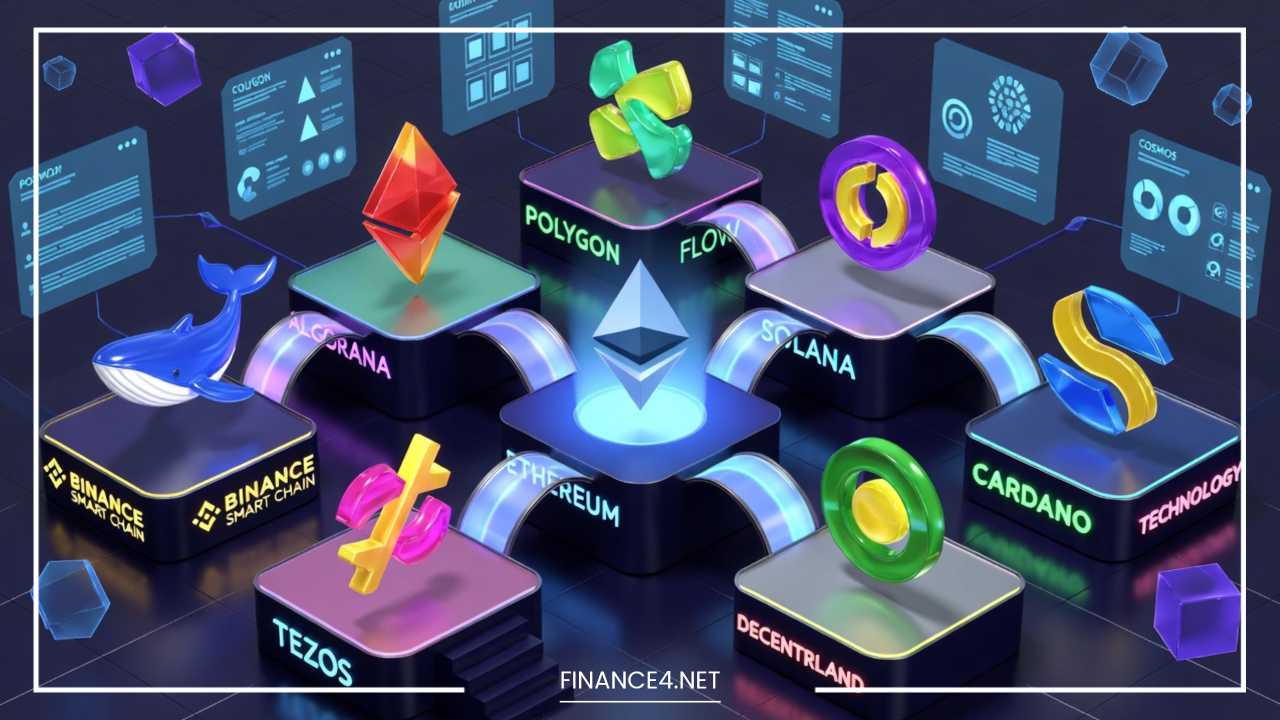
Popular Ethereum Sidechains
Several sidechains have successfully established themselves as viable alternatives for NFT operations.
-
Polygon (formerly Matic Network): Arguably the most successful sidechain, Polygon runs on a PoS consensus mechanism with its own network of validators. It offers incredibly low transaction costs (often fractions of a cent) and high throughput. Polygon has become a dominant force in the NFT and blockchain gaming space, hosting major projects and integrations with marketplaces like OpenSea.
-
xDai / Gnosis Chain: A highly efficient and cost-effective sidechain that uses a Proof-of-Stake consensus called POSDAO. It utilizes the stablecoin xDAI for gas fees, providing a predictable cost structure, which is excellent for utility-focused NFTs and micro-transactions.
-
Skale Network: A decentralized elastic blockchain network designed specifically for dApp and NFT scaling. It employs a randomized PoS system and allows developers to lease an independent, application-specific chain (or ‘Skale Chain’), offering customizable block size and speed.
Each of these sidechains effectively acts as a traffic overflow lane for Ethereum, diverting transactional pressure and offering a more economical environment for users, particularly for NFT creators.
Why Use Ethereum Sidechains for NFT Minting?
The migration of NFT projects from the Ethereum mainnet to sidechains is driven by tangible economic and performance advantages that address the critical barriers to mass adoption.
Lower Transaction Fees
The most compelling reason for the shift is the dramatic reduction in gas fees. While an Ethereum mainnet mint might cost anywhere from $50 to over $1,000 during peak times, minting the same NFT on a sidechain like Polygon often costs less than a single U.S. dollar, or even just a few cents. This difference is transformative:
-
Accessibility for Creators: It allows new artists and smaller projects to enter the market without needing a massive upfront capital investment for gas costs.
-
Democratization for Collectors: It makes collecting truly affordable, enabling micro-transactions and removing the “gas war” barrier that previously limited participation to those with significant capital. The shift from high-stakes auctions to low-cost, high-volume drops is a direct result of sidechain adoption.
Faster Transactions
Sidechains are engineered for superior speed. With consensus mechanisms optimized for throughput, they achieve significantly faster block times and near-instant transaction finality compared to Ethereum’s mainnet.
-
Rapid Minting and Listing: Creators can execute large batch-mints of their collections in a matter of minutes, not hours.
-
Improved User Experience: For end-users, this means faster purchases, quicker confirmations, and a smoother interaction with decentralized applications (dApps) and marketplaces, essential for latency-sensitive applications like blockchain games.
Scalability
Sidechains offer a crucial layer of scalability that Ethereum’s mainnet fundamentally lacks. They are designed to process a volume of transactions orders of magnitude higher than Ethereum’s current capacity.
-
High-Volume NFT Drops: Projects can launch massive collections (e.g., 10,000+ pieces) without the transaction volume crippling the network or driving gas prices to unattainable levels.
-
Supporting Web3 Gaming: Sidechains are the backbone of many successful Web3 games, where in-game actions like acquiring, upgrading, or selling items are all on-chain transactions that must be fast and cheap. Ethereum mainnet simply cannot support the tens of thousands of daily transactions needed by a popular blockchain game.
Interoperability with Ethereum
Crucially, sidechains do not isolate users from the Ethereum ecosystem. They maintain interoperability via the secure two-way bridges.
-
Leveraging Ethereum’s Security: While sidechains have their own consensus, they ultimately rely on the security and liquidity of the Ethereum mainnet. Assets can be easily moved back to the main chain if the user desires.
-
Ecosystem Access: Developers can still utilize Ethereum’s established smart contract language (Solidity) and access the massive pool of Ethereum-native users, liquidity, and protocols. The ability to seamlessly transfer wrapped assets allows sidechains to tap into Ethereum’s deep market without being bogged down by its limitations.
Benefits of Using Ethereum Sidechains for NFT Minting
The advantages of utilizing sidechains for NFT minting extend beyond mere technical specifications, creating a more sustainable, affordable, and vibrant ecosystem for all participants.
Cost Efficiency
The most immediate and quantifiable benefit is cost efficiency. The cost savings are monumental for large-scale minting operations.
-
Reduced Development Costs: By eliminating prohibitively high gas fees during contract deployment and testing, developers can iterate faster and cheaper.
-
Lower Barrier to Entry: Creators can afford to offer their NFTs at lower starting prices, as they do not need to factor in an exorbitant gas overhead. This allows for more experimental projects, lower-priced collectibles, and a more diverse range of offerings, catering to a wider economic demographic. A comparison shows that a simple ERC-721 mint might cost $100-$300 on Ethereum, versus pennies on Polygon. This massive disparity makes the cost a non-factor, shifting the focus back to the creative value of the NFT.
Environmental Impact
While the entire blockchain industry is moving towards more energy-efficient models, sidechains have traditionally held an advantage over the energy-intensive Proof-of-Work (PoW) model that Ethereum utilized before its Merge to PoS. Even after the Merge, the high transaction volume on Ethereum can still consume significant energy. Sidechains, which primarily run on highly efficient Proof-of-Stake (PoS) variants, inherently have a much smaller environmental footprint per transaction.
-
Sustainability for Creators: Artists and collectors who are environmentally conscious prefer to utilize sidechains, knowing that their minting and trading activities contribute less to carbon emissions. This factor has become a significant consideration for corporate and institutional adoption of NFTs.
Faster Market Entry
In the rapidly evolving world of NFTs, speed to market is paramount. Sidechains drastically cut down the time required to go from concept to live deployment.
-
Agile Launches: The ability to mint thousands of NFTs rapidly and cheaply means projects can launch collections and react to market trends with greater agility. A spontaneous, community-driven drop can be executed quickly, fostering greater community engagement.
-
Immediate Utility: For game developers, sidechains allow for the immediate minting of in-game items or currency, enhancing the gameplay experience without waiting for slow block confirmations. This rapid, responsive environment is a key component for the success of play-to-earn and metaverse applications.
Developer-Friendly
Ethereum-compatible sidechains offer a highly developer-friendly environment. This is not simply a matter of technical compatibility but one of ecosystem familiarity.
-
Familiar Tooling: Developers can use the same programming language (Solidity), development frameworks (Hardhat, Truffle), and testing environments they are accustomed to on Ethereum. The learning curve for an Ethereum developer to move to a sidechain like Polygon is shallow.
-
Extensive Documentation and Community: The largest sidechains have built out extensive documentation, Software Development Kits (SDKs), and large, active developer communities, providing strong support for new projects and integrations. This allows for rapid prototyping and deployment of complex NFT functionalities, such as dynamic metadata or time-locked vesting schedules.
The combination of low cost, high speed, and ease of use makes sidechains an economically and technically superior choice for the vast majority of new NFT projects seeking mainstream adoption.
Step-by-Step Process of Minting NFTs on Ethereum Sidechains
For a creator looking to transition from the costly Ethereum mainnet to a sidechain, the process leverages familiar tools but requires a few specific steps related to network configuration and asset bridging.
Setting Up a Wallet
The first essential step is preparing a cryptocurrency wallet capable of interacting with the sidechain.
-
Use a Compatible Wallet: Wallets like MetaMask, which is the industry standard, are fully compatible with EVM-based sidechains.
-
Add the Sidechain Network: By default, wallets are set to the Ethereum mainnet. The user must manually add the sidechain network (e.g., Polygon Mainnet, Gnosis Chain) using the network’s specific RPC URL, Chain ID, and currency symbol. Many resources and aggregators, such as Chainlist, simplify this process.
-
Fund the Wallet: Transactions on a sidechain require the chain’s native token for gas fees. For Polygon, this is MATIC; for Gnosis Chain, it’s xDAI. A small amount of the native gas token must be acquired and transferred to the wallet on the sidechain.
Choosing the Right Sidechain
Selecting the correct sidechain is a critical decision based on a project’s long-term goals and technical requirements.
-
Fees and Speed: While all sidechains offer lower fees than Ethereum, developers should compare the exact transaction costs and block times. For high-frequency, low-value transactions (like in-game items), the chain with the lowest, most predictable fee structure is ideal (e.g., Gnosis Chain with xDAI).
-
Ecosystem and Marketplaces: Consider where the target audience is. Polygon boasts the largest ecosystem and is supported by major marketplaces like OpenSea. Choosing a sidechain already integrated with target platforms reduces friction for both creators and buyers.
-
Security and Decentralization: Review the consensus mechanism. While all sidechains involve trade-offs, developers should select a chain whose security model aligns with their risk tolerance and commitment to decentralization.
Minting NFTs
The actual minting process remains structurally similar to the Ethereum mainnet, primarily involving smart contract deployment.
-
Contract Creation: Write or customize the NFT smart contract, typically using the ERC-721 or ERC-1155 standard in Solidity.
-
Deployment: Using development tools like Hardhat or Remix, the contract is deployed not to the Ethereum mainnet, but to the chosen sidechain (e.g., Polygon). This deployment is cheap and fast.
-
Metadata and Assets: The NFT’s metadata (details, attributes, links to the media file) is prepared. Best practice is to store the actual media file (image, video) on a decentralized storage network like IPFS or Arweave and embed the immutable URI link within the NFT’s smart contract.
-
The Mint Transaction: The creator calls the mint function on the deployed contract, paying the negligible sidechain gas fee. The NFTs are created and deposited into the specified wallet address on the sidechain.
Deploying and Listing NFTs on Marketplaces
The final step is making the newly minted NFTs available for sale.
-
Marketplace Integration: Leading marketplaces (e.g., OpenSea, Rarible) have integrated support for the major sidechains, allowing users to switch networks within the platform’s interface.
-
Listing: The creator connects their wallet to the sidechain version of the marketplace. The platform recognizes the NFTs in the wallet on that specific network. The creator then signs a transaction to list the NFT for sale, again incurring only a small sidechain gas fee.
-
User Experience: Buyers can now purchase the NFT quickly and cheaply using the sidechain’s native currency or wrapped Ethereum, providing a seamless buying experience that eliminates the traditional barrier of high gas fees.
Challenges and Solutions in Using Ethereum Sidechains for NFTs
While sidechains present a compelling solution for scaling NFTs, they introduce their own set of trade-offs, primarily concerning security, user adoption, and cross-chain mechanics. Addressing these challenges is crucial for their long-term viability.
Security Concerns
The most significant trade-off in using sidechains is the compromise on security compared to the economic security of the Ethereum mainnet.
-
Independent Security Model: Because sidechains use their own validator sets and consensus, they are susceptible to attacks that don’t affect Ethereum. A 51% attack on a less-decentralized PoS sidechain, where a small group of validators collude, is a theoretical risk.
-
Bridge Vulnerabilities: The two-way bridge connecting the sidechain to the mainnet is often a single point of failure and a massive target for hackers. Numerous high-profile hacks have targeted cross-chain bridges, resulting in the loss of hundreds of millions of dollars in locked assets.
Solutions:
-
Increasing Decentralization: Sidechains are continuously working to increase the number of independent validators and improve their consensus models to enhance the cost of attack.
-
Bridge Security Upgrades: Implementing more robust, decentralized, and audited bridge designs, such as multi-signature schemes and decentralized custodian networks, is an ongoing effort. Developers are also leveraging Layer 2 solutions which rely on cryptographic proof posted to Ethereum for superior security.
User Adoption
Despite the technical benefits, getting the vast majority of the mainstream user base to adopt sidechains presents friction.
-
Complexity: The process of switching networks, acquiring the correct gas token, and bridging assets can be confusing for new users, creating a cognitive barrier.
-
Fragmentation: Assets are now spread across multiple chains (Ethereum mainnet, Polygon, etc.), leading to market fragmentation and liquidity being split.
Solutions:
-
Improved UX and Tooling: Wallets and marketplaces are continually improving their user interface (UX) to make switching between networks and acquiring gas tokens a near-seamless process. Projects like Polygon’s “gasless” transactions (meta-transactions) also remove the need for users to hold the native gas token, simplifying the experience.
-
Marketplace Aggregation: Marketplaces are evolving to seamlessly display NFTs from multiple chains, providing a unified gallery view for collectors.
Cross-Chain Compatibility
The necessity of bridging assets creates issues of compatibility and friction, particularly when it comes to liquidating or using assets in other DeFi protocols.
-
Bridging Time and Fees: Moving assets (especially Ether) back from the sidechain to the mainnet can sometimes take significant time (e.g., hours or even days, depending on the bridge architecture) and still incur an Ethereum mainnet gas fee.
-
Liquidity Bottlenecks: When a wrapped asset (e.g., wETH on Polygon) loses its peg to the native asset due to bridge failure, it can cause market instability.
Solutions:
-
Native Bridge Solutions: The sidechains themselves are investing heavily in improving the speed and security of their native bridges.
-
Liquidity Protocols: Decentralized finance (DeFi) protocols are being developed to offer fast, liquidity-pool-based cross-chain swaps, allowing users to “swap” a wrapped asset on the sidechain for the native asset on the mainnet instantly, bypassing the lengthy official bridge waiting periods for a small fee.
Governance and Decentralization
The governance models of many sidechains present another level of scrutiny, often being more centralized than the Ethereum mainnet.
-
Centralization Risks: Some sidechains initially rely on a smaller, permissioned set of validators (e.g., a Proof-of-Authority model) to achieve high speed. This smaller set is easier to collude, raising concerns about censorship resistance and potential misuse of power.
-
Upgrades and Control: Decisions about protocol upgrades and changes are often controlled by a more centralized foundation or team, which contradicts the core ethos of decentralized finance.
Solutions:
-
Progressive Decentralization: Successful sidechains adopt a strategy of progressive decentralization, where they start with a fast, centralized model and gradually introduce more independent validators and community-driven governance over time as the network matures and gains value.
-
Transparency: Maintaining high transparency in governance votes and validator selection processes is key to building community trust and mitigating centralization risks.
Future of NFTs and Ethereum Sidechains
The trajectory of the NFT ecosystem is intrinsically linked to the continued evolution of scaling solutions. Sidechains are not just a temporary fix; they are shaping the future of how decentralized applications are built and utilized.
Emerging Trends
The future of NFT adoption will be characterized by two major trends driven by sidechains and related scaling technologies.
-
Multi-Chain NFTs: The concept that an NFT must exist on a single chain is fading. New tools and standards are emerging to allow an NFT to be represented, traded, or used across multiple chains simultaneously. This increases liquidity and utility by making an asset accessible in multiple ecosystems.
-
Sidechain and Layer 2 Convergence: The market is starting to consolidate around a few dominant scaling solutions. The line between high-throughput sidechains and cutting-edge Layer 2 Rollups is blurring. We may see sidechains integrate features of Layer 2 solutions to improve their security posture while retaining their high speed.
Role of Sidechains in the Future of NFT Ecosystems
Sidechains are destined to be the workhorses for the most demanding Web3 applications.
-
Web3 Gaming Dominance: They will remain the primary infrastructure for blockchain gaming, where the requirement for thousands of instantaneous, low-cost transactions is non-negotiable. The metaverse economy relies on these high-performance environments.
-
Mass Market Utility: Sidechains enable novel NFT use cases that require volume and affordability, such as ticketing, loyalty programs, digital identity, and real-world asset tokenization, pushing NFTs beyond high-value art and collectibles and into everyday consumer applications.
-
Micro-transactions: The incredibly low cost allows for true micro-transaction economies within dApps, unlocking new business models previously impossible due to prohibitive mainnet fees.
Upgrades in Ethereum’s Ecosystem
Ethereum’s own roadmap, particularly the Merge to Proof-of-Stake and the planned implementation of sharding and other Layer 2 enhancements, will certainly impact the ecosystem.
-
Layer 2 as the Gold Standard: While sidechains offer incredible speed, true Layer 2 solutions (Rollups) are generally considered the most secure long-term scaling strategy for high-value transactions because they inherit Ethereum’s security directly. Over time, high-value, ‘blue-chip’ NFTs may migrate to Layer 2 Rollups.
-
Complementary Roles: Sidechains, however, will likely retain their niche for specific use cases. They are already established, highly performant, and often easier to integrate for certain applications. They will coexist with Layer 2s, offering a different set of security and performance trade-offs, ensuring a diverse landscape of scaling options. Sharding, when fully implemented, may increase Ethereum’s base throughput, but sidechains will still provide a dedicated, high-speed environment for highly active ecosystems.
Opportunities for Developers and Artists
The rise of sidechains creates a fertile ground for innovation.
-
Lowered Risk for Experimental Projects: Artists and developers can afford to experiment with novel NFT concepts (e.g., dynamic NFTs, on-chain generative art, community projects) with a minimal financial risk related to gas fees. This encourages creative and technical freedom.
-
New Revenue Models: Developers can build applications that rely on high transaction volume rather than high transaction value, unlocking subscription models, small in-game purchases, and other sustainable revenue streams.
The future is one where the ecosystem embraces multiple chains, each optimized for different needs—Ethereum as the ultimate settlement layer, Rollups for high-security applications, and Sidechains for high-speed, cost-effective transactional environments like gaming and mass adoption NFT projects.
Final Thoughts
Ethereum sidechains have unequivocally proven themselves to be a pivotal solution to the scalability and cost challenges that plagued the initial NFT boom. By offering dramatically lower transaction fees, near-instant confirmation times, and robust EVM compatibility, sidechains like Polygon and Gnosis Chain have democratized NFT minting, making it accessible to creators and collectors globally, regardless of their financial resources. This shift has not only addressed the immediate pain points of high gas prices but has also unlocked entirely new categories of NFTs, driving the rapid expansion of Web3 gaming and utility-focused digital assets.
While inherent challenges related to security, user experience, and centralization remain, the continuous evolution of bridge technology, coupled with the progressive decentralization of these networks, is rapidly mitigating these risks. The ecosystem is moving towards a sophisticated, multi-chain future where Ethereum serves as the foundational security layer, and sidechains act as the crucial, high-performance execution layers. Sidechains are not merely a temporary fix but a permanent, vital component of the decentralized internet’s infrastructure, ensuring that the promise of NFTs and digital ownership can scale to serve a global, mass-market audience. Their role is solidified: they are the engine driving the next wave of affordable, high-volume NFT creation.