NFT Aggregator vs Direct Marketplace
 by
by 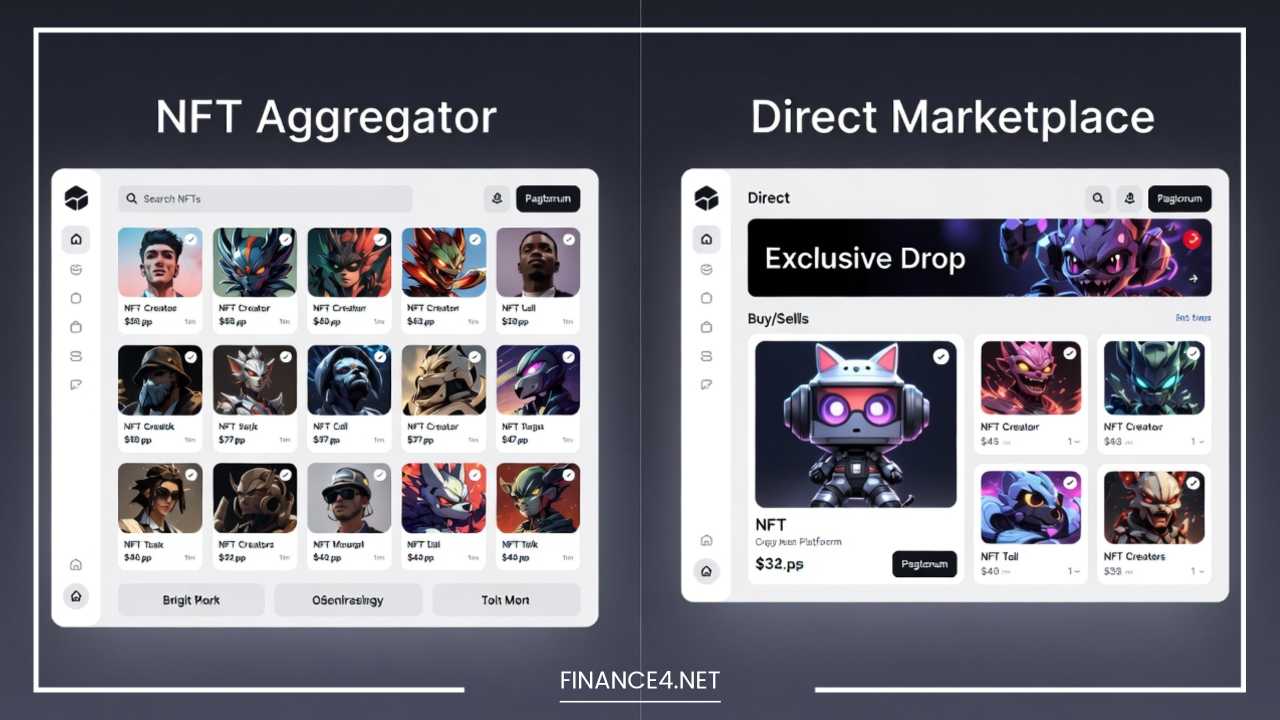
NFT Aggregator vs Direct Marketplace: Key Differences & Benefits
Buying and selling digital assets has evolved significantly since the early days of simple pixelated art. As we move through 2026, the non-fungible token (NFT) landscape has transitioned from a speculative trend into a foundational technology for the digital economy. NFTs now represent everything from high-end digital fine art and gaming assets to real-world tokenized property and exclusive membership passes. The global market is projected to reach over $60 billion this year, moving away from “hype-based” profile pictures toward utility-driven assets like event tickets, digital identities, and phygital luxury goods.
With this expansion comes a critical choice for collectors, traders, and creators: how to navigate the massive sea of digital inventory. This has led to a prominent debate between using NFT Aggregators and Direct Marketplaces. While a direct marketplace acts like a dedicated brand boutique, an aggregator functions more like a high-tech search engine and comparison tool, pulling data from across the entire web.
This article provides a comprehensive 2600-word analysis of both models. We will explore their unique functionalities, compare their user experiences in a multi-chain environment, break down the sophisticated cost models of 2026, and ultimately help you decide which platform aligns with your goals in an ecosystem that is now “smaller, sharper, and more professional” than ever before.
What is an NFT Aggregator?
An NFT Aggregator is a decentralized platform that consolidates data from multiple NFT marketplaces and blockchains, displaying it within a single, unified interface. In the fragmented world of Web3—where an asset might be listed on Ethereum, Solana, or Polygon simultaneously—the aggregator serves as the “Expedia” or “Google” of the NFT world.
Definition and Explanation
The primary function of an aggregator is to solve the problem of market fragmentation. In 2026, there are hundreds of niche marketplaces specializing in everything from AI-generated art to tokenized real estate. Without an aggregator, a user would need to visit dozens of websites individually to compare prices or check the rarity of a specific asset. Aggregators pull this data in real-time using Application Programming Interfaces (APIs) and smart contract indexing, allowing users to interact with various marketplaces without ever leaving the aggregator’s dashboard.
How it Works
Aggregators function through three primary layers:
-
Indexing & Normalization: The platform continuously monitors marketplace events across supported blockchains. Because different marketplaces (like Blur or Magic Eden) use different order formats, the aggregator normalizes this data into a standardized schema.
-
Order Book Aggregation: It maintains a global state of all active orders. If a Bored Ape is listed for 20 ETH on OpenSea and 19.5 ETH on a smaller platform, the aggregator lists both, often highlighting the cheapest option as the “Best Deal.”
-
Execution Engine: This is the most technical component. When a user clicks “buy,” the aggregator’s smart contract routes the transaction to the original marketplace’s contract. Advanced aggregators in 2026 use “smart routing” to find the most gas-efficient path, potentially saving the user significant amounts on network fees.
Popular NFT Aggregators in 2026
-
Blur: The dominant force for professional Ethereum traders. Known for its high-speed data feeds, zero platform fees, and “Sweep” functionality that allows for buying dozens of NFTs in a single click.
-
Hyperspace: Often called the “Google of NFTs” for the Solana ecosystem. It indexes nearly every Solana-based asset and provides deep rarity analytics.
-
Uniswap NFT: Since its expansion into the NFT space, Uniswap has leveraged its DeFi roots to provide a highly liquid aggregation service that pools listings from major marketplaces.
-
Reservoir: More of an “aggregator-as-a-service,” Reservoir provides the back-end API that many other apps use to display NFT market data.
What is a Direct Marketplace?
A Direct Marketplace is a standalone platform where creators can mint (create) their NFTs and collectors can list, buy, or sell them directly. These platforms host their own smart contracts, maintain their own internal databases, and often build a specific brand identity or community around their listings.
Definition and Explanation
While an aggregator is a window into the whole market, a direct marketplace is a destination. These are the “primary” hubs where digital assets are born. In 2026, marketplaces have evolved into “digital commerce centers.” They are no longer just places to trade; they are where you engage with artists, join “gated” communities, and participate in the initial “drop” of a new collection.
How it Works
The lifecycle on a direct marketplace typically follows a specific path:
-
Minting: Creators use the platform’s tools to turn a digital file into a token on the blockchain. Marketplaces often offer “lazy minting,” where the NFT isn’t actually written to the blockchain until someone buys it, saving the creator initial costs.
-
Curation and Verification: Unlike aggregators, which show everything, many direct marketplaces (like SuperRare) have a strict vetting process. They verify the identity of the artist and the originality of the work to prevent fraud.
-
Internal Liquidity: The marketplace manages its own “order book.” When you list an NFT on OpenSea, it is primarily visible to OpenSea users unless an aggregator pulls that data.
Examples of Direct Marketplaces
-
OpenSea: Still the industry giant in 2026, supporting over 20 blockchains and acting as the “Amazon” of NFTs.
-
Magic Eden: The leading multi-chain marketplace with deep roots in Solana and a massive focus on Web3 gaming and Bitcoin Ordinals.
-
SuperRare & Foundation: High-end curated galleries focused on single-edition (1/1) digital fine art.
-
Binance NFT & Bitget NFT: Marketplaces integrated directly with major crypto exchanges, offering high security and seamless transitions between coin trading and NFT collecting.
Key Differences Between NFT Aggregators and Direct Marketplaces
The choice between these two types of platforms depends on whether you value breadth of data or depth of experience.
User Experience (UX)
-
Aggregators: The UX is designed for power users. It features dense tables, real-time “sales walls,” and complex rarity filters. In 2026, many aggregators have integrated AI-driven dashboards that predict “fair market value” based on recent sales. It is a functional, data-heavy environment meant for efficiency.
-
Marketplaces: These platforms focus on the “story.” You will find high-quality banners, artist profiles, and community commentary. The interface is often cleaner and more beginner-friendly, emphasizing the visual appeal of the art over the technicality of the trade.
Access to Listings
-
Aggregators: Provide a “Global View.” You are looking at the entire supply of an NFT collection across the internet. This is essential for finding “mispriced” items—for example, an NFT listed cheaply on a forgotten marketplace.
-
Marketplaces: Provide a “Local View.” You are limited to the inventory on that specific platform. While this limits choice, it ensures a more consistent experience regarding terms of service and security.
Fees and Pricing
-
Aggregators: Usually do not charge an additional fee to the user. Instead, they make money through venture funding, their own native tokens (like $BLUR), or by taking a small affiliate cut from the marketplace they route to.
-
Marketplaces: Almost all charge a platform fee, typically 1.5% to 2.5% of the sale price. However, some newer exchange-based marketplaces (like Bitget) have introduced zero-fee models to compete for market share.
Liquidity
-
Aggregators: Offer the highest possible liquidity because they aggregate “buy orders” (bids) from multiple sources. If you need to sell an NFT instantly, an aggregator will show you the highest bid available anywhere in the ecosystem.
-
Marketplaces: Liquidity is confined to their specific user base. However, for “blue-chip” collections like CryptoPunks or Bored Apes, the liquidity on a major marketplace like OpenSea is often sufficient on its own.
Marketplace Variety
-
Aggregators: Allow for “Cross-Platform Browsing.” You can view gaming items from the Ronin chain alongside Ethereum fine art in a single browser tab.
-
Marketplaces: Generally specialize. You wouldn’t go to SuperRare to buy a gaming sword; you would go there for art. Direct marketplaces offer a specialized ecosystem tailored to the specific asset class they host.
Benefits of Using an NFT Aggregator
Aggregators have become the “Swiss Army Knife” of the 2026 NFT trader. Their utility spans from financial optimization to deep-dive research.
Wide Selection and Global Inventory
The most obvious benefit is the sheer volume of choices. An aggregator ensures you never miss a listing. In a market where timing is everything, having every available NFT on one screen gives the user a massive advantage.
Real-Time Price Comparison
Aggregators function as a “best price” engine. Because they pull live data, they can show you that the exact same NFT is $50 cheaper on one marketplace versus another. For institutional investors or “whales” buying hundreds of assets, these small price differences add up to thousands of dollars in savings.
Better Discoverability and Rarity Sniping
In 2026, rarity is a science. Aggregators integrate “rarity scores” directly into the UI. Traders use this to “snipe”—finding an NFT with a rare trait (like “Gold Fur”) that a seller has mistakenly listed at the “floor” price (the lowest price for common items). Aggregators often have “instant buy” buttons specifically for these sniped assets.
Cross-Market Insights and Analytics
Aggregators offer tools that individual marketplaces cannot. This includes:
-
Volume Tracking: Seeing which collections are gaining traction across all blockchains.
-
Wallet Tracking: Following the moves of “smart money” or high-profile collectors.
-
Heat Maps: Visualizing which traits are being bought and sold most frequently.
Convenience and “Sweep” Functionality
“Sweeping the floor” refers to buying up all the cheapest NFTs in a collection to raise the overall value or accumulate a large position. Aggregators allow you to select 50 NFTs from 5 different marketplaces and buy them all in a single transaction. This is a massive time-saver and a core feature for the 2026 trading meta.
Benefits of Using a Direct Marketplace
While aggregators are superior for data, direct marketplaces are superior for the “soul” of the NFT movement—creativity, trust, and community.
Exclusive Listings and Primary Drops
When a major brand like Nike (RTFKT) or a famous artist launches a new project, they do it through a direct marketplace launchpad. You cannot “mint” a new project through an aggregator; you must go to the source. These exclusive drops are often the most profitable entries for collectors.
Community and Branding
Direct marketplaces act as social hubs. Many have integrated “social feeds” where you can see what your friends are buying or interact directly with the creator. For many collectors, the “vibes” of a platform like Foundation are just as important as the art itself.
Simplified User Interface and Fiat Support
For the 90% of the world that isn’t comfortable with crypto wallets, direct marketplaces are the bridge. In 2026, many major marketplaces allow you to buy NFTs with a credit card, bypassing the need to buy ETH or SOL first. Aggregators, being more technical, rarely offer this level of accessibility.
Support for Creators (Royalties)
The “Royalty Wars” of 2023-2024 led to a 2026 standard where direct marketplaces are the primary enforcers of creator fees. If you want to ensure the artist receives their 5% or 10% on every resale, using the artist’s preferred direct marketplace is the most ethical choice.
Security and Trust
Marketplaces invest heavily in AI-driven fraud detection. They proactively delist “scam” collections that use stolen artwork. Because aggregators are just mirrors of the market, they are more susceptible to displaying fraudulent listings. A “Verified” badge on a direct marketplace remains the gold standard for trust.
When to Use an NFT Aggregator
[Image Concept: A multi-monitor setup showing complex financial charts and a “Bulk Buy” button highlighted in neon green]
You should prioritize an aggregator in the following “Pro” scenarios:
1. High-Volume Trading
If your goal is to buy and sell NFTs for a profit, the speed of an aggregator is non-negotiable. The “live sales” feed on an aggregator like Blur is seconds faster than the refresh rate of a standard marketplace, which can be the difference between a successful trade and a missed opportunity.
2. Market Research and Arbitrage
Arbitrage—buying an asset on one platform to sell it instantly for a higher price on another—is only possible with an aggregator. You can spot a “low-floor” on a smaller, less-active marketplace and immediately “re-list” it on a high-volume platform like OpenSea.
3. “Sweeping” for Collection Entry
If you decide you want to own 1% of a 10,000-piece collection, an aggregator is the only efficient way to do it. Selecting 100 individual pieces across multiple sites is tedious; an aggregator makes it a 30-second task.
When to Use a Direct Marketplace
[Image Concept: A clean, minimalist gallery view showing a single, high-detail digital painting with “Buy with Credit Card” and “Artist Profile” buttons]
You should stick to a direct marketplace in these “Collector” scenarios:
1. Your First NFT Purchase
If you are new to Web3, the complexity of an aggregator will likely lead to mistakes. Direct marketplaces offer a “walled garden” experience that is safer and more intuitive for beginners.
2. Fine Art and “1/1” Collecting
When buying a piece of art worth $10,000 or more, you want to know the provenance is 100% accurate. Curated marketplaces like SuperRare provide a level of “white-glove” service and verification that an automated aggregator cannot provide.
3. Participating in Primary Mints
If you are “white-listed” for a new project or want to participate in a brand’s NFT launch, you must go to their official marketplace partner. Aggregators only serve the “secondary” market (resales).
Comparing Cost & Transaction Models
In 2026, the cost of an NFT transaction is more than just the “listing price.” It is a combination of platform fees, network fees, and royalty payments.
Aggregator Fees
The industry standard for aggregators is 0% platform fees. They monetize through other means, such as:
-
Tokenomics: Using their own token to incentivize liquidity.
-
Premium Tools: Charging a subscription for advanced AI analytics.
-
Affiliate Models: Taking a tiny fraction of the fees generated for the underlying marketplace.
Marketplace Fees
Marketplaces generally charge between 1% and 2.5%. For example:
-
OpenSea: 2.5%
-
Magic Eden: 2%
-
Binance NFT: 1%
-
SuperRare: 15% (Primary) / 3% (Secondary)
Which is More Cost-Effective?
For a single purchase, the difference is negligible. However, for a “portfolio” of 10 NFTs, an aggregator is significantly cheaper. Not only do you avoid the “markups” of fragmented pricing, but you also save 30-50% on gas fees by bundling transactions.
Final Thoughts: Which is Right for You?
The “NFT Aggregator vs. Direct Marketplace” debate isn’t about which one is “better”—it’s about which one is the right tool for your specific journey in the digital economy.
-
The Aggregator is for the Strategist. It is for the person who sees NFTs as assets, who values data above all else, and who wants to maximize every cent of their liquidity. It is the powerhouse of the modern trader.
-
The Marketplace is for the Collector. It is for the person who values the artist’s story, the community’s energy, and the security of a trusted brand. It is the gallery and the social club of the NFT world.
As we move further into 2026, the lines are blurring. Marketplaces are adding aggregator features, and aggregators are trying to build communities. For most users, the “hybrid” approach is best: use an aggregator to research and find the best prices, but use a direct marketplace to discover new artists and engage with the heart of the NFT ecosystem.
Regardless of your choice, the most important rule remains: Always verify the contract address and never share your seed phrase.