NFT Bridging Between Ethereum and BNB Chain
 by
by 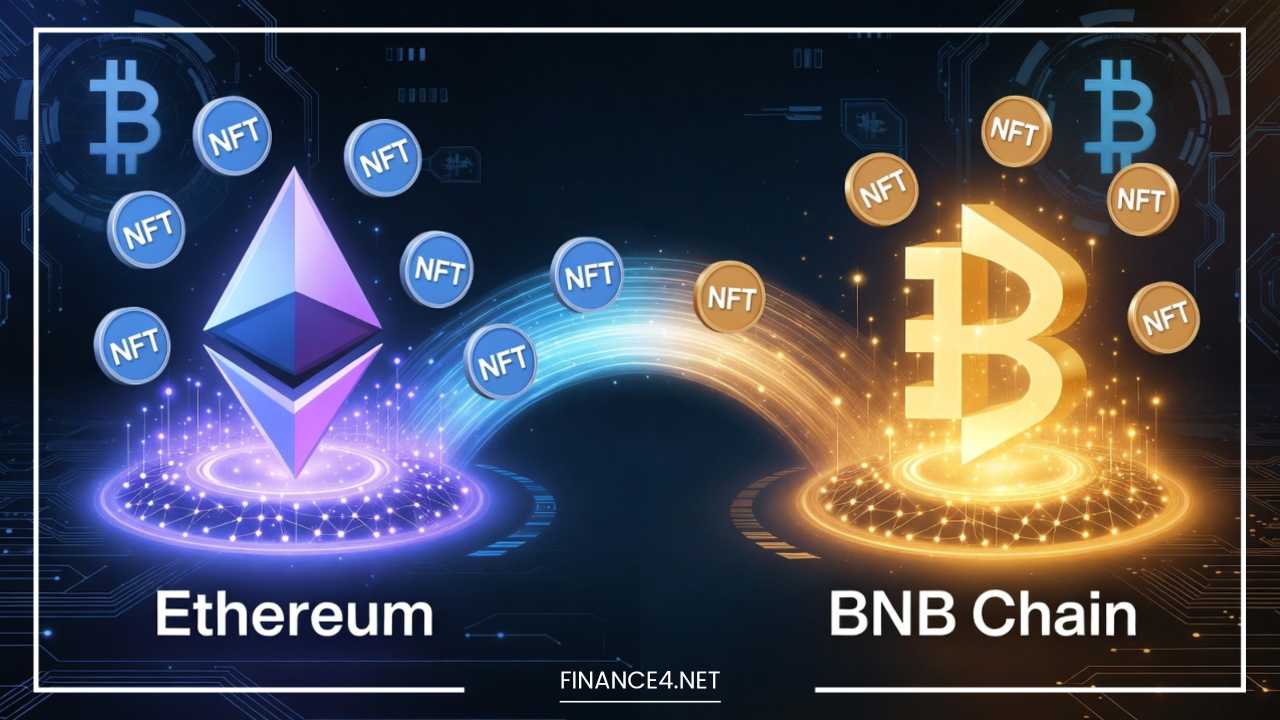
In the rapidly evolving landscape of digital assets, Non-Fungible Tokens (NFTs) have emerged as the cornerstone of digital ownership, spanning from fine art and collectibles to gaming assets and real-world property titles. However, as the ecosystem has matured in 2026, a significant technical hurdle remains: the “silo” effect. Most NFTs are minted on a specific blockchain and, by default, remain trapped within that network’s borders.
Ethereum and BNB Chain (formerly Binance Smart Chain) represent two of the largest and most influential NFT ecosystems. While Ethereum remains the gold standard for high-value blue-chip collections and institutional security, BNB Chain has carved out a massive niche through high-speed, low-cost transactions and a flourishing GameFi scene. For collectors and creators alike, the ability to move assets between these two giants is no longer a luxury—it is a strategic necessity.
Cross-chain bridging is the bridge that connects these isolated islands of value. By enabling the transfer of unique digital assets from one protocol to another, bridging unlocks liquidity, broadens community reach, and allows users to capitalize on the unique strengths of different networks. This article provides a comprehensive deep dive into the technical, practical, and strategic dimensions of NFT bridging between Ethereum and BNB Chain.
Understanding NFTs
To grasp the complexity of bridging, one must first understand the fundamental nature of an NFT. At its core, a Non-Fungible Token is a unique digital identifier recorded on a blockchain that is used to certify ownership and authenticity. Unlike “fungible” tokens—such as Ether (ETH) or BNB, where every unit is identical and interchangeable—each NFT is distinct.
Definition and Characteristics
-
Uniqueness: Every NFT has a specific token ID that distinguishes it from any other asset. This ID is linked to specific metadata, often including an image, a description, and the creator’s history.
-
Indivisibility: Generally, NFTs cannot be divided into smaller denominations like a cryptocurrency can be split into decimals. You cannot own half of a unique piece of digital art in the same way you can own 0.5 ETH.
-
Provable Ownership: The blockchain provides an immutable ledger that tracks the entire history of an asset from its minting to every subsequent transfer.
While the media (like a JPEG or MP4) is often stored off-chain on decentralized storage systems like IPFS, the “token” itself exists as a piece of code on the blockchain. Moving this code—the actual smart contract record of ownership—from one chain to another is the primary challenge of bridging.
Popular NFT Use Cases
In 2026, the utility of NFTs has expanded far beyond simple “profile pictures” (PFPs).
-
Digital Art: High-fidelity art remains a core pillar, with collectors prioritizing provenance.
-
Gaming Assets: In-game items like swords, armor, or land parcels are increasingly tokenized, allowing players to truly own their progress.
-
Collectibles: From sports cards to digital fashion, the market for limited-edition digital goods continues to grow.
-
Real-World Assets (RWA): Tokenized real estate and physical luxury goods are bridged between chains to access different liquidity pools.
Ethereum vs. BNB Chain for NFTs
The decision to bridge an NFT often stems from the inherent differences between the source and destination chains. Each network offers a distinct environment for assets.
Overview of Ethereum
Ethereum is the pioneer of NFT technology, home to the ERC-721 and ERC-1155 standards.
-
Market Leadership: It remains the home of “blue-chip” collections like Bored Ape Yacht Club and CryptoPunks. Marketplaces like OpenSea and Blur dominate the landscape here.
-
Pros: It boasts the highest level of decentralization and security. The network effect is massive; if an NFT is on Ethereum, it is viewed as having a higher “institutional” grade.
-
Cons: The main drawback remains the “gas” fees. Even with the transition to Proof of Stake and the rise of Layer-2s, the Ethereum mainnet can be prohibitively expensive for small-scale transfers or minting events.
Overview of BNB Chain
BNB Chain was designed for performance and retail accessibility, operating on a Proof of Staked Authority (PoSA) consensus.
-
Efficiency: It offers near-instant transaction finality and fees that are often a fraction of a dollar. This makes it the preferred home for high-volume NFT projects, particularly in the GameFi sector.
-
Marketplaces: Platforms like Treasureland and the Binance NFT marketplace have built thriving communities that prioritize speed and low barriers to entry.
-
Pros: Extreme cost-effectiveness and a massive user base coming from the Binance exchange ecosystem.
-
Cons: While highly efficient, it is more centralized than Ethereum, relying on a smaller, vetted set of validators.
Why Bridging Matters
For a creator, bridging to BNB Chain might mean reaching millions of retail users who cannot afford Ethereum’s gas fees. For a collector, bridging an asset to Ethereum might mean positioning it for a high-value auction at a major house that only supports the Ethereum ecosystem. Bridging turns a single-chain asset into a multi-chain opportunity.
What is NFT Bridging?
NFT bridging is the process of moving a unique digital asset from one blockchain to another while maintaining its identity and provenance. It is important to distinguish this from a “swap.”
In a fungible token swap, you trade one asset for another of equal value (e.g., swapping 1 ETH for its equivalent in BNB). In an NFT bridge, you are moving the exact same unique item. You aren’t trading your NFT for a different one; you are transporting the record of your ownership into a new jurisdiction.
Why is Bridging Necessary?
-
Liquidity: If an NFT is on a chain with low trading volume, bridging it to a more active network can help find a buyer faster.
-
Accessibility: Users on BNB Chain may not want to deal with the complexities of the Ethereum network. Bridging brings the asset to where the users are.
-
Community Expansion: Projects can launch on one chain and “export” their community to another, tapping into new demographics.
-
DeFi Integration: Some NFTs can be used as collateral for loans. If a specific lending platform only exists on BNB Chain, an Ethereum NFT holder must bridge their asset to participate.
How NFT Bridging Works (Technical Overview)
Technically, an NFT doesn’t actually “travel” across the internet like an email. Instead, bridges use a sophisticated “Lock-and-Mint” mechanism.
Smart Contracts and Wrapped NFTs
When you bridge an NFT, you are interacting with smart contracts on both the source and target chains. The asset you receive on the new chain is technically a “Wrapped NFT.” This is a new token that points to the metadata of the original.
The Lock-and-Mint Mechanism
-
Locking: The user sends their original NFT (e.g., an ERC-721 token) to a “bridge vault” smart contract on Ethereum. This contract “locks” the NFT, making it untradable and immovable on the original chain.
-
Validation: A set of validators or an oracle network (like Chainlink or Wormhole’s Guardians) monitors the source chain. Once they confirm the NFT is safely locked, they sign a message confirming the transaction.
-
Minting: This signed message is sent to a smart contract on BNB Chain. This contract verifies the signature and mints a corresponding “Wrapped” version of the NFT (a BEP-721 token).
-
Ownership: The user now holds the wrapped NFT on BNB Chain. It has the same traits, image, and utility as the original.
To move the asset back, the process is reversed: the wrapped NFT is “burned” (destroyed) on BNB Chain, which triggers the vault on Ethereum to “unlock” and release the original NFT to the user’s wallet.
Validation and Security
The security of this process depends on the consensus mechanism of the bridge.
-
Trusted Bridges: Rely on a central entity (like an exchange) to verify the transfer.
-
Trustless Bridges: Use a decentralized network of validators or Zero-Knowledge proofs to ensure that the minting on the target chain exactly matches the locking on the source chain.
Popular NFT Bridges Between Ethereum and BNB Chain
Several protocols have established themselves as reliable pathways for moving NFTs between these two networks.
-
Portal (Wormhole): One of the most prominent cross-chain protocols. It uses a decentralized validator set known as “Guardians.” It is highly regarded for its support of various NFT standards and its clean user interface.
-
Celer cBridge: Known for its high level of security audits (over 15 independent audits), Celer provides a fast and non-custodial way to move NFTs between EVM-compatible chains like Ethereum and BNB.
-
Stargate Finance (LayerZero): While primarily used for liquidity swaps, Stargate’s underlying LayerZero technology is the foundation for the “Omnichain” NFT standard, which aims to make bridging feel instantaneous.
-
Binance Official Bridge: Often the starting point for newcomers, this bridge is deeply integrated with the Binance ecosystem, making it easy to move assets into the BNB Smart Chain environment.
Benefits of NFT Bridging
The primary driver for bridging is Interoperability. By breaking down the walls between Ethereum and BNB Chain, users gain several tactical advantages.
Access to Multiple Marketplaces
A digital artist can mint their collection on Ethereum to establish “prestige” but bridge the assets to BNB Chain to list them on marketplaces with significantly lower listing and sales fees. This allows them to capture both high-end collectors and the broader retail market.
Reducing Transaction Costs
For collectors who trade frequently, Ethereum’s gas fees can eat up 10-20% of a trade’s value. By moving assets to BNB Chain, they can trade, list, and de-list NFTs for cents rather than dollars.
Cross-Chain Interoperability
In the gaming world, a player might own a high-value character skin on Ethereum but want to use it in a GameFi project built on BNB Chain. Bridging allows that asset to function across different digital universes (the “Metaverse” concept).
Risks and Challenges
While bridging is a powerful tool, it is one of the most complex areas of blockchain technology and carries inherent risks.
Smart Contract Bugs and Exploits
Bridges are high-value targets. Because bridge contracts must hold the “locked” assets, they act as massive honeypots for hackers. If the bridge’s code has a vulnerability, a hacker could steal the locked NFTs on Ethereum, leaving the wrapped versions on BNB Chain essentially worthless.
Bridge Failure and Liquidity
If a bridge protocol loses its validator set or the company behind it goes bankrupt, users might find their NFTs “stuck” in a wrapped state with no way to bridge them back to the native chain.
Complexity and User Experience
The process is not yet as simple as a “one-click” transfer. Users must manage gas on two different chains, handle multiple wallet approvals, and often wait 10-30 minutes for finality. For non-technical users, this complexity can lead to errors, such as sending assets to the wrong address.
Best Practices for Safe NFT Bridging
To navigate the cross-chain world safely, collectors should follow these guidelines:
-
Use Reputable Bridges: Stick to well-known protocols like Wormhole or Celer that have been “battle-tested” over several years and have processed billions in volume.
-
Check Audits: Always verify if a bridge has been recently audited by reputable firms like Trail of Bits or CertiK.
-
Beware of “Zombie” Bridges: Avoid using small, unverified bridging platforms that offer “zero fees.” These are often scams or lack the security infrastructure to protect your assets.
-
Double-Check Addresses: Before confirming a bridge transaction, ensure you are on the correct URL and that your destination wallet address is correct.
-
Hold Native Gas: Remember that you need ETH on the source side to lock the asset and BNB on the destination side to claim or interact with the asset. Many bridges now offer “gas on arrival” features to help with this.
Future of Cross-Chain NFT Ecosystem
The industry is moving toward a state of Total Abstraction.
Omnichain NFTs (ONFTs)
We are seeing the rise of the “Omnichain” standard. Instead of “locking and minting,” an ONFT exists natively on multiple chains at once. When you move an asset, the protocol simply updates the “owner” and “active chain” status on a global ledger. This removes the risk of “wrapped” assets.
Layer-2 and Scaling Integration
As Ethereum’s Layer-2 solutions (like Arbitrum and Optimism) become more interconnected with BNB Chain, the speed of bridging will increase to seconds rather than minutes. We may soon see “universal marketplaces” where you can buy an Ethereum NFT using BNB without ever manually using a bridge.
Predictions
By the end of the decade, the concept of a “blockchain-specific” NFT will likely be obsolete. Assets will flow as freely as data flows across the modern internet, with the underlying chain being a background technical detail rather than a barrier to ownership.
Final Thoughts
NFT bridging between Ethereum and BNB Chain is a vital bridge between two of the most productive ecosystems in Web3. While it introduces certain technical risks and complexities, the ability to move assets freely unlocks a level of utility and liquidity that single-chain NFTs simply cannot match.
For creators, it is a way to reach a global, multi-chain audience. For collectors, it is a tool for portfolio optimization and cost reduction. As the technology moves toward more secure, “trustless” models and omnichain standards, the barriers between these networks will continue to crumble, creating a more unified and vibrant digital economy.