NFT Developer Toolkits – Tools for NFT Creation, Minting & Management
 by
by 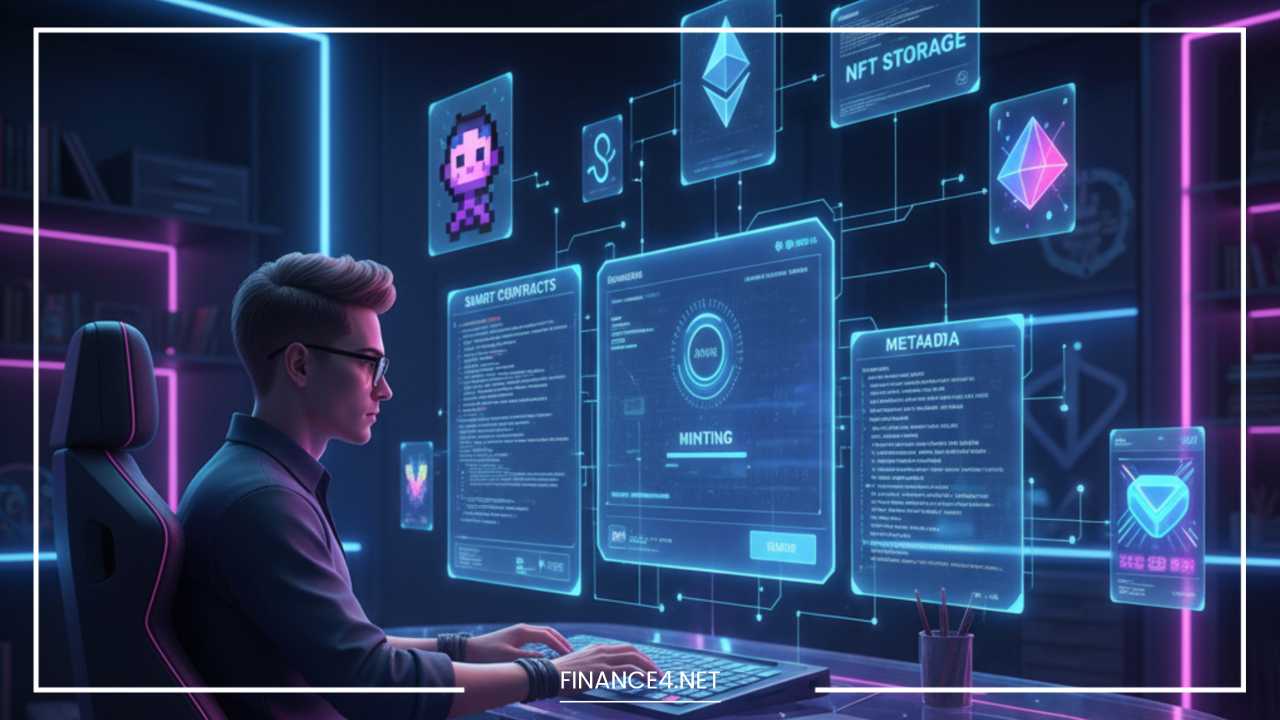
Ultimate NFT Developer Toolkit: Build, Launch & Scale Your NFTs
The Non-Fungible Token (NFT) revolution has matured far beyond speculative digital art. Today, NFTs are the foundational assets powering decentralized finance (NFTfi), gaming economies (GameFi), digital identities, and tokenized real-world assets. For developers, this expanding utility has necessitated a robust and efficient set of tools—the NFT Developer Toolkit. This comprehensive toolset streamlines the journey from concept to deployment, ensuring smart contracts are secure, metadata is permanent, and user experience is seamless.
This article provides a deep dive into the essential components of a modern NFT developer toolkit, covering everything from core smart contract frameworks and low-code solutions to advanced management APIs and the future of cross-chain development. Mastering these tools is crucial for any developer looking to build the next generation of Web3 applications.
Core Components of an NFT Developer Toolkit
A modern, professional NFT toolkit is a stack of interconnected technologies, each addressing a specific need in the development lifecycle. Understanding these core components is the first step toward building a scalable and secure project.
Smart Contract Frameworks
These frameworks provide the scaffolding and environment necessary for writing, testing, and deploying the immutable code that defines an NFT.
- OpenZeppelin Contracts: The gold standard for secure, community-audited smart contract libraries. Most developers use OpenZeppelin to inherit standard-compliant NFT contracts, such as ERC-721 (for unique assets) and ERC-1155 (for multi-token standards, ideal for gaming items), ensuring security from day one.
- Hardhat: A highly flexible, extensible Ethereum development environment designed for writing Solidity contracts, running tests locally, and deploying to multiple networks. Its superior debugging features, including stack traces for failed transactions, make it the preferred choice for intermediate to advanced developers.
- Truffle Suite: A long-standing, comprehensive set of tools for compiling, migrating, and testing smart contracts. While Hardhat has gained popularity for modern workflows, Truffle remains a robust option, often used with its personal blockchain, Ganache, for local testing.
Blockchain Networks Support
Choosing the right blockchain is paramount. Toolkits must support the specifics of the chosen network, as development on an EVM-compatible chain (like Ethereum, Polygon, or Avalanche C-Chain) differs significantly from a non-EVM chain.
- Ethereum/EVM Chains: Tools like Hardhat and Truffle natively support these. They benefit from the extensive OpenZeppelin library.
- Solana: Development requires a dedicated toolchain, with Metaplex serving as the leading protocol and standard for Solana NFTs, and Anchor as the framework for building Solana programs (smart contracts) in Rust.
Metadata Management
The metadata—the name, description, traits, and link to the digital asset’s file—is what gives an NFT its character. If the metadata is not stored correctly, the NFT is merely a pointer to a broken link.
- JSON Structure: Metadata must adhere to a specific JSON format dictated by NFT standards (e.g., OpenSea Metadata Standards). Toolkits need to include utilities or services to correctly format this data, including critical fields like
name,description,image, andattributes. - Immutability: The ultimate goal is to ensure the metadata link is immutable, meaning the content it points to cannot be changed, thus guaranteeing the asset’s provenance.
Decentralized Storage Solutions
Because most blockchains are too expensive to store large image or video files directly, the actual digital assets are stored off-chain using decentralized protocols.
| Solution | Model | Best for | Key Feature |
| IPFS (InterPlanetary File System) | Content-addressed, P2P | Active dApps, speed | Uses Content-ID (CID) for immutable linking. Needs Pinning (e.g., via Pinata or Web3.Storage) to guarantee permanence. |
| Arweave | Permanent, one-time payment | Archival, guaranteed permanence | “Pay once, store forever” model using its unique Blockweave architecture. Ideal for NFT metadata. |
| Filecoin | Incentivized storage market | Large-scale archival storage | Provides economic incentives (FIL tokens) for storage providers, building an incentive layer atop IPFS. |
For most NFT projects, the best practice is a hybrid model: store the small, critical metadata JSON on Arweave (for permanence) and the large media files on IPFS/Filecoin (for efficiency and retrieval speed), with the smart contract linking to the immutable CID/Arweave hash.
APIs & Web3 Libraries
These are the bridges connecting the smart contract logic on the blockchain to the frontend application (your website or marketplace).
- Web3.js & Ethers.js: The essential JavaScript libraries for interacting directly with the Ethereum network and EVM-compatible chains. They allow your application to read data from the blockchain, sign transactions, and deploy contracts. Ethers.js is often favored for its cleaner architecture and comprehensive documentation.
- Dedicated NFT APIs (e.g., Alchemy, NFTPort): These third-party services provide powerful, indexed data for NFTs across multiple chains, saving developers from running their own full nodes. They offer endpoints to easily fetch all NFTs owned by an address, check marketplace prices, and get real-time contract events.
NFT Creation Tools
The creation phase involves generating the digital art and the associated metadata, often for large, generative collections.
No-code/Low-code Tools
The democratization of NFT creation has been driven by platforms that abstract away the complexity of smart contract development.
- Thirdweb: A leading platform offering pre-built smart contracts (ERC-721, ERC-1155) and a comprehensive SDK. Developers can deploy a secure, audited contract in minutes through a user-friendly dashboard without writing a single line of Solidity.
- Manifold Studio: This tool focuses on granting true, creator-controlled contracts (e.g., Manifold Creator Contract). This gives the creator maximum sovereignty, allowing them to define custom logic, handle royalties, and evolve their NFT without relying on a third-party marketplace.
- Bueno: Specialized for generative art collections, Bueno provides a seamless way to upload traits, configure rarity, preview the collection, and generate all the final images and metadata files needed for a launch.
Design Tools
While generative art requires programming, individual artist-driven projects often rely on professional design software.
- Adobe Suite (Photoshop, Illustrator): Still the industry standard for creating high-fidelity raster and vector art.
- Figma/Sketch: Essential for designing the frontend UI/UX of the eventual minting site or marketplace, ensuring the user experience is intuitive.
- Voxel Editors (e.g., VoxEdit, MagicaVoxel): Crucial for creating assets used in the Metaverse (e.g., The Sandbox, Decentraland), which often rely on a voxel (3D pixel) aesthetic.
Metadata Creation and Automation
For generative projects, manually creating thousands of JSON files is impractical.
- Batch Creation Scripts: Developers rely on custom Node.js or Python scripts to automatically combine layers of art, generate the final image, and systematically output the corresponding JSON metadata file for each unique combination. These scripts handle the complexity of trait rarity and ensure no two NFTs share the exact same configuration.
- Structuring JSON: The key task is ensuring the JSON structure aligns with marketplace standards, with a focus on defining attributes/traits correctly to allow for filtering and sorting on platforms like OpenSea.
NFT Minting Tools & Platforms
Minting is the process of writing the NFT’s existence onto the blockchain. This is where smart contract deployment, transactional efficiency, and security become critical.
Smart Contract Deployment Platforms
These environments facilitate the final step of pushing the audited contract bytecode onto the live network.
- Hardhat & Truffle: Their built-in deployment scripts are the backbone for professional launches, allowing developers to automate the process, manage deployment settings (like initial supply, max mint per wallet), and easily deploy across multiple networks (e.g., testnet, Polygon, Ethereum Mainnet).
- Remix IDE: A simple, browser-based integrated development environment, often used by beginners or for quick, small contract prototyping and deployment to testnets.
NFT Minting APIs
For projects that require a non-technical user to mint an NFT via a web application, robust APIs are essential.
- Alchemy NFT API: Offers high-speed, reliable RPC access and powerful, cross-chain data indexing services. Their API allows developers to handle the complexities of transaction management, gas estimation, and post-mint contract interaction.
- Moralis & NFTPort: These providers offer abstraction layers that simplify common Web3 functions, including one-click minting via their APIs. They allow developers to bypass much of the low-level blockchain interaction, focusing purely on application logic.
Lazy Minting Tools
Lazy minting defers the gas cost and the physical creation of the NFT until the moment it is purchased by the first collector. This significantly lowers the barrier to entry for creators.
- Marketplace SDKs (e.g., OpenSea/Seaport Protocol): Marketplaces like OpenSea and Rarible offer tools or leverage standardized protocols (like Seaport) that allow creators to sign a metadata hash, but only require the buyer to pay the transaction/gas fee when they purchase the item, completing the minting process.
Gas Optimization Strategies
High gas fees can kill a project before it even launches. Optimization is a non-negotiable part of the toolkit.
- ERC721A: An optimized contract standard, notably used by projects like Azuki, that allows a user to mint multiple NFTs in a single transaction while paying roughly the same gas fee as minting one. This provides massive savings for buyers participating in bulk mints.
- Layer 2 (L2) Solutions: Deploying contracts on L2 networks like Polygon, Arbitrum, or Optimism drastically reduces transaction costs while still inheriting the security of Ethereum. Developers must be fluent in deploying across these L2-specific ecosystems.
Security Considerations
The biggest pitfall in NFT development is a vulnerable smart contract.
- Contract Audits: Before a mainnet launch, a formal audit by a reputable blockchain security firm is standard practice. Tools like Slither (for static analysis) and Certora (for formal verification) are used by advanced developers to pre-check for common vulnerabilities (e.g., reentrancy attacks, front-running).
- Access Control: Implementing strict Role-Based Access Control (RBAC), typically using OpenZeppelin’s access control features, is essential to limit who can call sensitive functions (like
mint,reveal, oremergency withdraw).
NFT Management & Marketplace Integration
Once minted, the toolkit shifts its focus to post-launch management, secondary market functionality, and user interactions.
Royalty Management Tools
Royalties are the creator’s lifeblood. Robust tools ensure these payments are correctly executed on secondary sales.
- Manifold/Zora Protocols: These solutions offer sophisticated on-chain royalty structures, allowing creators to define percentages and track payments directly within the smart contract itself, ensuring they are paid regardless of which marketplace the NFT is traded on.
- EIP-2981: This standard formalizes a way for contracts to signal their intended royalty percentage. Toolkits must support this standard to interact seamlessly with royalty-compliant marketplaces.
Ownership Tracking and Analytics
Understanding who owns what, and how the collection is performing, is vital.
- The Graph: This decentralized indexing protocol allows developers to define subgraphs—APIs that specifically track and query data from their smart contract (e.g., all token transfers, the current owner of a token, and historical sales).
- APIs for Analytics (e.g., Nansen, Icy Tools): While not strictly developer tools, project owners rely on data APIs from these platforms to track floor price, holder distribution, and market sentiment.
Interacting with Marketplaces
Most sales happen on centralized or decentralized NFT marketplaces, requiring SDKs and APIs for integration.
- Marketplace SDKs (OpenSea, LooksRare, Magic Eden): These provide the necessary tools to list, bid on, and transfer NFTs on their specific platforms. Since OpenSea uses the Seaport protocol, their SDK allows for complex, secure interaction with the largest NFT ecosystem.
- Multi-Chain Wallets: For a smooth user experience, developers must integrate a way for users to connect their wallet. WalletConnect is the essential tool, providing a standardized, secure connection between a decentralized application (dApp) and dozens of mobile and desktop wallets (e.g., MetaMask, Trust Wallet, Phantom).
Upgrading or Evolving NFTs
Modern NFTs often require the ability to be upgraded or change over time—a process that must be done carefully to maintain the trust in immutability.
- Proxy Contracts (Upgradeable NFTs): Using OpenZeppelin’s Upgrades Plugins with Hardhat or Truffle, developers can deploy a Proxy Contract that points to an implementation contract. The implementation contract can be updated to add new features or fix bugs without changing the NFT’s contract address or tokens—a critical feature for long-term projects and GameFi.
- Dynamic NFTs: These are NFTs whose metadata changes based on an external factor (e.g., time, external data, or a user’s action in a game). These require integration with decentralized oracle networks like Chainlink, which securely feed off-chain data (like weather, game scores, or a wallet’s token balance) into the smart contract to trigger a metadata update.
Full Toolkit Examples by Developer Level
The right toolset depends entirely on the project’s scope and the developer’s experience.
Beginner Toolkit (Focus on Simplicity & Speed)
This toolkit minimizes coding, gas fees, and infrastructure maintenance.
- Smart Contract: Thirdweb or Manifold Studio (No-code deployment).
- Blockchain: Polygon or another Layer 2 (Low gas).
- Storage: Pinata or Web3.Storage (IPFS Pinning Service).
- Frontend: Simple HTML/CSS integration with the chosen platform’s built-in minting widget.
- Wallet: MetaMask and WalletConnect integration for user connection.
Intermediate Toolkit (Focus on Customization & Auditing)
This is the standard professional stack for a custom, secure launch.
- Framework: Hardhat (for local testing, debugging, and deployment scripts).
- Smart Contract: OpenZeppelin Contracts (inheriting ERC721A or upgradeable proxy contracts).
- Blockchain: Ethereum Mainnet (using L2s for scaling).
- Storage: Direct Arweave deployment for metadata and IPFS/Filecoin for media assets.
- APIs: Alchemy/NFTPort (for robust API access and indexed data).
- Frontend: Ethers.js or Web3.js with React/Next.js.
Advanced Toolkit (Focus on Scalability, High-Frequency Data & Interoperability)
For large-scale, enterprise-grade dApps, like games or complex fractionalization platforms.
- Contracts: Custom, heavily optimized Solidity/Rust contracts with Formal Verification via tools like Slither.
- Data/APIs: The Graph (building custom subgraphs for complex data queries), Chainlink Oracles (for dynamic NFTs).
- Architecture: Microservices architecture using GraphQL for data delivery, decoupled from the core smart contracts.
- Storage: Hybrid storage logic combining IPFS/Filecoin for data and Arweave for audit trails.
- Interoperability: Integration of Cross-Chain Messaging Protocols (like LayerZero or Wormhole) for multi-chain asset management.
Choosing the Right Tools for Your Project
Selecting the appropriate toolkit is a strategic decision that impacts cost, security, and long-term viability.
- Budget & Cost Management: The primary cost is gas fees for deployment and minting. High-volume projects should prioritize L2 solutions (Polygon, Arbitrum) and gas-optimized contracts (ERC721A). Startups should leverage lazy-minting APIs to defer the initial creation cost.
- Scalability & Performance: If your project involves high transaction volume (e.g., a play-to-earn game), the underlying blockchain is crucial. Solana and Flow offer high throughput and low fees for applications that need speed over maximal decentralization. High-traffic dApps should use professional API providers like Alchemy for reliable, low-latency node access.
- Ecosystem & Community Support: Building on a chain like Ethereum means instant access to the largest liquidity, the most secure smart contract standards, and the largest pool of developers and audited code (OpenZeppelin). This robust community support often outweighs the higher gas costs for high-value projects.
- User Experience (UX): The toolkit must minimize user friction. This means implementing gasless transactions (via meta-transactions or L2s), seamless WalletConnect integration, and providing instant feedback via real-time APIs.
- Evaluating Open-Source Tools: Open-source frameworks like Hardhat and OpenZeppelin are preferred because their code is publicly audited, battle-tested, and constantly improved by the global developer community. Always verify the license and the recency of the last security audit before integrating any open-source code into a production environment.
Future of NFT Development Toolkits
The evolution of the NFT space is rapidly being driven by new developer tooling focused on utility, interoperability, and AI.
AI-Assisted NFT Creation
The most immediate change is the integration of Generative AI into the creation pipeline. Tools are emerging that allow developers to use Large Language Models (LLMs) to generate vast quantities of diverse art and automatically structure the associated metadata, speeding up the creation process from weeks to hours. Developers will shift from manual art generation to AI prompt engineering to control the artistic output.
Cross-Chain Interoperability Tools
As NFTs reside on dozens of different blockchains, the need to move them seamlessly between ecosystems is paramount. New protocols and tools, often leveraging zero-knowledge proofs for security, are being developed to facilitate secure, trustless cross-chain beaming of NFT ownership. Future toolkits will include specialized SDKs for chains like LayerZero or Wormhole to build truly multi-chain applications.
NFTfi (NFT + DeFi) Integration
The fusion of NFTs with Decentralized Finance (DeFi) is creating new asset classes. Toolkits are adapting to include:
- Fractionalization Protocols: Tools that allow a single, high-value NFT to be split into numerous fungible tokens, increasing liquidity.
- Lending Protocol SDKs: Enabling the use of NFTs as collateral for loans, requiring new APIs to securely value the NFT asset on-chain.
- Modular Smart Contracts (e.g., ERC-6900): This proposed standard focuses on making smart contract features more modular and composable. This will allow developers to snap together functionality—like royalty enforcement, staking mechanics, and dynamic updates—without rewriting complex base contracts, leading to faster development and fewer errors.
Final Thoughts
The trajectory of the NFT ecosystem is directly tied to the sophistication of its developer toolkits. From the security and auditability provided by OpenZeppelin to the production-grade environment of Hardhat, the core technologies are mature and reliable. Meanwhile, specialized services like Alchemy and platforms like Thirdweb continue to lower the bar to entry while increasing the complexity of what can be built.
The call to action for every aspiring NFT developer is to embrace experimentation. The best approach is often a hybrid one, combining the security of foundational frameworks with the speed of low-code APIs and the permanence of decentralized storage like Arweave and IPFS. The future lies in building utility-driven, scalable, and cross-chain-enabled assets. By leveraging the comprehensive toolkits available today, developers are poised to unlock the full potential of digital ownership and create the core infrastructure of Web3.