NFT Floor Price Analysis Tools
 by
by 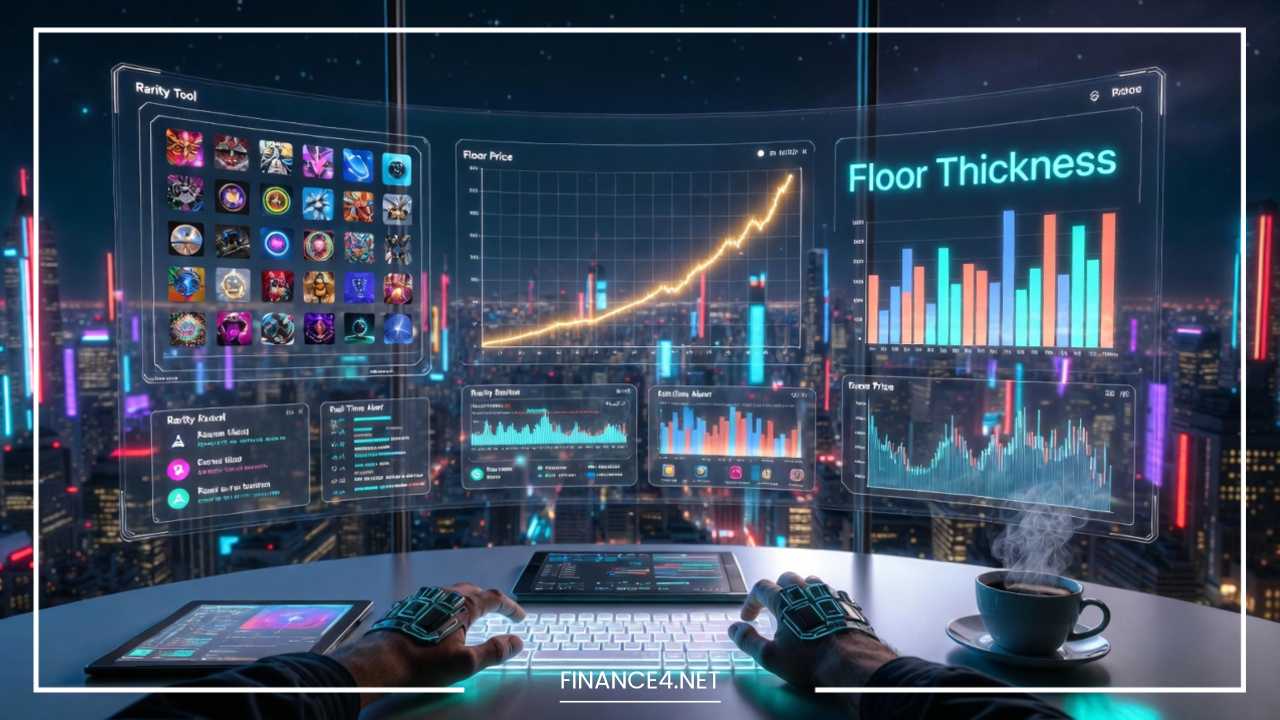
NFT Floor Price Analysis Tools: Track, Compare, and Optimize NFT Investments
The digital asset landscape has undergone a seismic shift since the initial NFT boom. What began as a niche interest for blockchain enthusiasts has blossomed into a multi-billion-dollar industry spanning art, gaming, real estate, and digital identity. As we navigate through 2026, the global NFT market is projected to reach over $60 billion, driven by a shift from speculative profile pictures to practical, utility-based ownership infrastructure. In this maturing ecosystem, the need for sophisticated data analysis is no longer optional—it is the primary differentiator between successful investors and those left behind.
Non-Fungible Tokens (NFTs) are unique digital assets verified by blockchain technology. Unlike fungible tokens such as Bitcoin or Ethereum, where every unit is identical and interchangeable, each NFT possesses distinct metadata and attributes. This uniqueness creates a complex valuation environment where price is dictated by a multifaceted mix of rarity, utility, community strength, and broader market sentiment.
In this volatile and often opaque market, the floor price serves as the most critical heartbeat monitor for any collection. It represents the lowest entry point for an investor to join a specific project. Because the floor price reflects the minimum value a seller is willing to accept for the most common items in a set, it acts as the baseline for liquidity and project health.
However, simply observing a single price point on a marketplace is rarely enough to make an informed decision. The rise of NFT Floor Price Analysis Tools has revolutionized how participants interact with the market. These platforms aggregate real-time data from disparate blockchains and marketplaces, providing insights into historical trends, market depth, and “whales” activity. This article explores the mechanics of floor prices and identifies the essential tools and strategies needed to track, compare, and optimize NFT investments in 2026.
What is NFT Floor Price?
In the simplest terms, the floor price is the lowest price at which an NFT within a specific collection can be purchased on the secondary market. If a collection consists of 10,000 items and the cheapest one currently listed for sale is 2 ETH, then 2 ETH is the floor price for that collection.
A Metric for Liquidity and Health
For investors, the floor price is a proxy for the “market value” of the project’s most common assets. It is the primary metric cited when assessing a project’s growth or decline. A rising floor price suggests high demand and a community of “diamond-handed” holders who are unwilling to sell at lower valuations. Conversely, a falling floor price often indicates a “race to the bottom,” where sellers undercut each other to exit a position, potentially signaling a loss of confidence.
Influencing Market Perception
The floor price creates a psychological anchor for the entire collection. When a floor price breaks through a “resistance level”—for example, moving from 0.99 ETH to 1.1 ETH—it often triggers a wave of FOMO (fear of missing out), as the project is now perceived as part of a more prestigious price tier.
Real-World Fluctuations
Consider the evolution of blue-chip collections like Bored Ape Yacht Club (BAYC) or Pudgy Penguins. In early 2026, these collections have shown renewed resilience. For instance, while thousands of 2021-era projects have seen their floors drop to near zero, a select few “blue chips” maintain floors in the double-digit ETH range, driven by brand intellectual property (IP) and institutional interest. Analysis tools allow investors to see these recoveries in real-time, distinguishing between a dead project and a healthy consolidation phase.
How NFT Floor Prices are Determined
The floor price of an NFT collection is an emergent property of decentralized market activity, shaped by several technical and social factors.
Auction-Based vs. Secondary Market Sales
While initial “mints” often have a fixed price set by the creator, the floor price is a product of the secondary market (marketplaces like OpenSea, Blur, or Magic Eden).
-
Fixed-Price Listings: The floor is determined by the lowest “Ask” price currently available.
-
Auction-Based Pricing: In collections where most items are up for bid, the floor is often dictated by the highest “Bid” a seller is willing to accept for immediate liquidity.
Rarity and Scarcity
While the floor tracks the cheapest items, it is heavily influenced by the distribution of traits. If a collection has a “floor” of common items and a “mid-tier” of slightly rarer items, a sudden buy-up of the common items—known as “sweeping the floor”—will raise the floor price to the level of the next rarest tier.
Market Sentiment and External Factors
NFTs are highly sensitive to cultural and macroeconomic trends. A celebrity endorsement, a major brand partnership (like Nike or Disney), or even shifts in Ethereum’s leverage ratio can impact prices. By February 2026, the market has seen a “leverage reset,” where lower speculative debt has led to a more robust market structure, meaning floor prices are now more reflective of real demand than forced liquidations.
Smart Contracts and Blockchain Transparency
Because all transactions are on a public ledger, floor prices are inherently transparent. Smart contracts ensure that as soon as a sale occurs, the data is updated across all integrated platforms. This prevents “dark pool” trading and allows retail investors to see the exact entry point without intermediaries.
Importance of Floor Price Analysis in NFT Investment Strategy
Relying on “gut feeling” in the NFT market is a high-risk approach. Professional investors use floor price analysis as a cornerstone of their risk management and growth strategies.
Risk Management
Tracking the floor price helps investors avoid “buying the top.” Historical data can reveal if a project is currently overextended. If a floor has tripled in 48 hours without a fundamental change in the project’s utility, analysis tools will flag this as a high-risk entry point. It also allows investors to set “stop-loss” targets based on floor movement.
Understanding Long-Term Potential
The floor price is just one piece of the puzzle. When combined with “listing percentage”—the percentage of the total collection for sale—it reveals holder conviction. A project with a steady floor and a low listing percentage (under 5%) is generally a healthier long-term bet than one with a high floor but 20% of the supply on the market.
Case Studies of Profitable Decisions
Investors who utilized floor price analysis during the “Pudgy Penguins” resurgence were able to spot “floor thickness”—a large number of buy orders just below the floor—which suggested a strong support level. Buying at that floor before the project’s brand IP went mainstream resulted in significant gains as the floor rose toward 14 ETH and beyond in early 2026.
Diversification
Floor price data allows investors to identify undervalued assets. By comparing the floor prices of different “sub-niches”—such as Gaming NFTs versus Real-World Asset (RWA) NFTs—investors can rebalance their portfolios toward sectors with higher growth potential and lower volatility.
Top NFT Floor Price Analysis Tools
To navigate the 2026 market, you need a dashboard that aggregates multi-chain data. Here are the most influential tools available:
1. OpenSea Floor Price Tracker (and OpenSea 2.0)
As the industry’s legacy leader, OpenSea continues to provide a standard for floor price reporting.
-
Key Features: Real-time floor tracking, volume, and percentage of items listed.
-
OpenSea 2.0: Recently launched with AI-powered discovery and gasless minting options, making it a go-to for beginners.
2. Rarity.tools
Rarity.tools remains essential for connecting rarity to price.
-
How it Works: It assigns a rarity score to every NFT. If a “rare” item is listed at the “floor” price, the tool flags it as a “mispriced” asset.
-
Best For: Collectors looking to “snipe” rare items for the price of common ones.
3. NFTGo
NFTGo is a comprehensive data aggregator that provides a professional-grade “macro” view.
-
Key Features: “Floor Thinness” charts, which show how many purchases are required to raise the floor price. It also tracks “Whale” movements and “Smart Money” addresses.
-
Floor Price Insights: Provides a “Market Cap” for collections based on floor price, offering a more accurate valuation of a project’s scale.
4. CryptoSlam
CryptoSlam is a cross-chain powerhouse, tracking sales across Ethereum, Solana, Polygon, and even the thriving TON network.
-
Key Features: Global rankings based on sales volume and floor price.
-
Best For: Investors who want to see which blockchain is gaining the most momentum in the NFT sector.
5. DappRadar
DappRadar offers a holistic view of the decentralized ecosystem, integrating NFTs with DeFi and Gaming analytics.
-
AI-Powered Valuation: Their “Value Estimator” (powered by bitsCrunch) uses computer vision and machine learning to estimate a “fair market value” that may differ from the listed floor price.
-
Best For: Gauging the overall health of the NFT ecosystem and identifying upcoming airdrops.
6. Blur
Blur has evolved into a high-speed DeFi-integrated trading terminal.
-
Key Features: Real-time data feeds, floor-sweeping buttons, and NFT lending (Blur Lend).
-
Best For: Professional traders who require zero-latency data and advanced liquidity tools.
Key Features to Look for in NFT Floor Price Analysis Tools
When selecting a tool, specific features will dictate your ability to react to a fast-moving market.
Real-Time Data Tracking
In the NFT world, an hour is an eternity. A tool that updates every 10 minutes is significantly more valuable than one that updates twice a day. Real-time data allows you to react to “floor sweeps” or sudden “dumps” before the wider market notices.
Historical Data and Trends
A single price point is meaningless without context. Investors need to see the floor price over 7 days, 30 days, and the “All-Time” chart. This helps identify “support levels”—prices where buyers historically step in to prevent further drops.
Comparison Across Collections
Can you overlay the floor price of “Azuki” against “DeGods”? The ability to correlate projects helps you understand if a specific niche (e.g., Anime-style NFTs) is trending upward or if the whole market is moving in tandem with Ethereum.
Rarity and Trait Analysis
The “floor” usually consists of the least desirable traits. However, sophisticated tools allow you to filter the “floor” by specific traits (e.g., the floor price for “Gold Skin” Apes). This is vital because the “sub-floor” of a rare trait might be moving independently of the main collection floor.
Alerts and Notifications
The most successful traders use custom alerts. Setting an alert for when a project’s floor drops 10% or hits a specific target (e.g., “Notify me if CloneX drops below 1.5 ETH”) allows for “sniper” entries without 24/7 manual monitoring.
How to Use NFT Floor Price Data to Optimize Investment Decisions
Data is only useful when translated into action. Here is how to use floor price metrics to optimize your portfolio.
Identifying Trends and Momentum
Look for “Floor Consolidation.” When a floor price remains flat for a long period while trading volume increases, it often indicates that “weak hands” (short-term flippers) are being replaced by “strong hands” (long-term holders). This is frequently the precursor to a breakout.
Capitalizing on Price Corrections
Markets rarely move in a straight line. If a fundamentally strong project sees a floor price correction of 20% due to a broader crypto dip, it is often a “buy the dip” opportunity. Analysis tools help you distinguish between a “dead project” and a “healthy correction.”
Using “Floor Thickness”
Tools like NFTGo allow you to see the “depth” of the floor. If there are 50 NFTs listed within 5% of the floor price, the floor is “thick” and hard to move. If there are only 2 NFTs at the floor and the next one is 20% more expensive, the floor is “thin” and a single buyer could significantly raise the project’s valuation.
Combining Floor Price with Broader Insights
Don’t trade floor price in a vacuum. Combine it with macroeconomic signals. For instance, in early 2026, the stabilization of Ethereum gas fees between $50 and $150 has made “low-floor” trading more viable on Mainnet. Always check the “gas” cost before attempting to flip an NFT at the floor.
Challenges and Limitations of NFT Floor Price Analysis
While powerful, floor price analysis is not a crystal ball. It has inherent flaws that every investor must account for.
Market Volatility and Illiquidity
NFTs are illiquid assets. Unlike Bitcoin, you cannot sell 10,000 NFTs at the floor price instantly. If 50 people decide to sell at once, the floor can drop 50% in minutes. This volatility makes floor price a “lagging” indicator in some high-panic scenarios.
Inconsistent Data and Wash Trading
A project might have different floors across OpenSea, Blur, and Magic Eden. Furthermore, “wash trading” (where one person buys and sells to themselves) can artificially inflate the floor price. Advanced tools like bitsCrunch now use AI to filter out this fake volume, but investors must still remain skeptical of sudden, unexplained price spikes.
Overreliance on a Single Metric
The biggest mistake is looking only at the floor. A project could have a high floor price but zero daily volume, meaning you cannot actually exit your position. Rarity, utility, and the founding team’s track record remain essential pillars of value.
Future of NFT Floor Price Analysis Tools
As the industry moves toward 2027 and beyond, the tools will become even more integrated into the financial fabric of Web3.
AI and Predictive Modeling
The next generation of tools will use machine learning (like XGBoost and Random Forest algorithms) to predict floor price movements based on social media sentiment, creator activity, and historical “price persistence.” We are moving from “What is the floor?” to “Where is the floor likely to be in 48 hours?”
Cross-Platform Integration and Aggregators
We are seeing the rise of “Marketplace-as-a-Service,” where floor data is integrated directly into wallets and DeFi lending protocols. This allows users to use their “floor-priced” NFTs as collateral for loans instantly, with the loan-to-value (LTV) ratio dictated by real-time floor analysis.
Greater Efficiency and Transparency
As zero-knowledge roll-ups slash minting fees and regulations like Europe’s MiCA ensure mandatory disclosures, the data feeding floor price tools will become cleaner and more reliable. This will increase institutional confidence, potentially leading to the development of NFT index funds based on weighted floor prices.
Final Thoughts
The NFT market in 2026 is no longer a playground for speculators; it is a sophisticated arena for data-driven investors. The floor price is more than just a number; it is a story of market psychology, liquidity, and project conviction. By utilizing tools like NFTGo, DappRadar, and Blur, you can peel back the layers of hype and make decisions based on verifiable on-chain evidence.
Whether you are looking for the next blue-chip gaming asset or a piece of tokenized real estate, tracking and comparing floor prices is your primary defense against volatility. As you move forward, remember that data is an extension of your strategy—not a replacement for it. Stay updated on market trends, use alerts to your advantage, and always approach the floor with a critical eye.