NFT Marketplace Aggregator Comparisons
 by
by 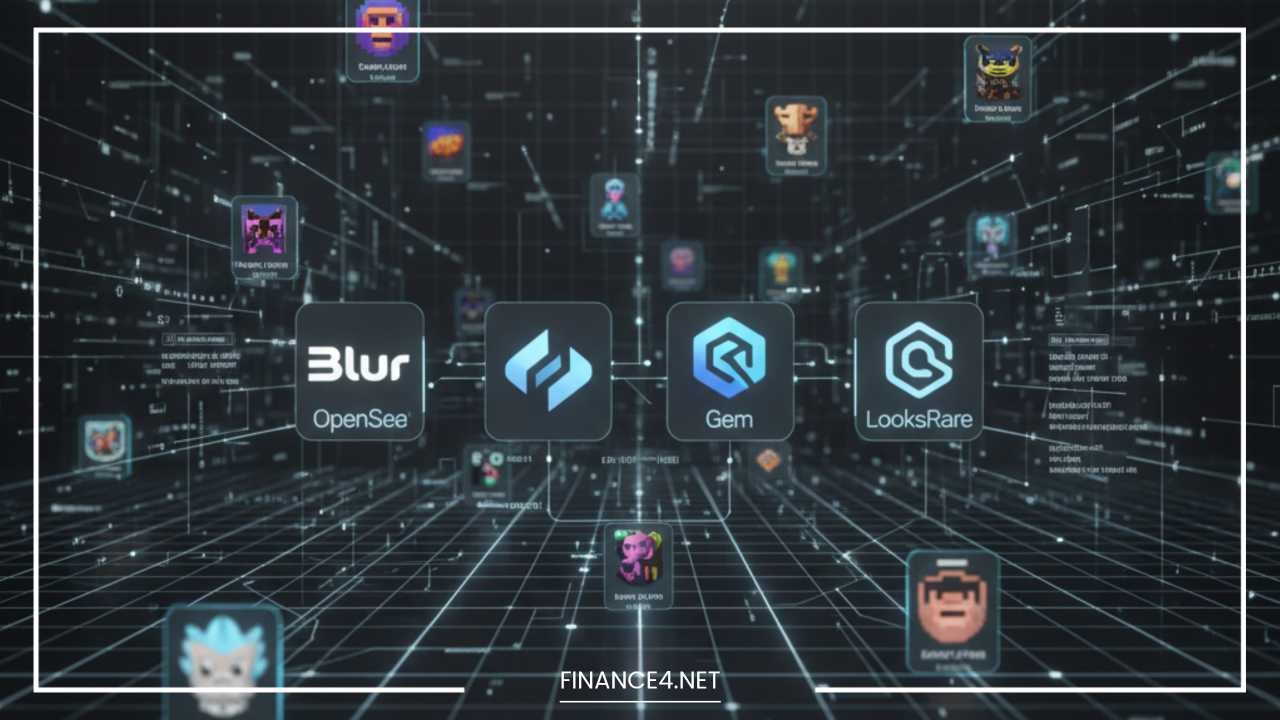
Best NFT Aggregators Compared | Features, Tools & More
The rapid proliferation of Non-Fungible Token (NFT) marketplaces has created a fragmented digital landscape, making it difficult for users to efficiently track, compare, and trade assets. This challenge has catalyzed the rise of NFT Marketplace Aggregators, platforms designed to unify the scattered NFT ecosystem into a single, powerful interface. These aggregators are no longer just supplementary tools; they are the critical infrastructure for serious traders and collectors, essential for efficient price discovery, liquidity, and execution in the dynamic Web3 world.
This comprehensive article delves into the mechanics, history, leading platforms, and comparison criteria for NFT marketplace aggregators, providing a vital roadmap for navigating this evolving sector.
An NFT marketplace aggregator is a centralized platform that pulls real-time listing data from numerous decentralized NFT marketplaces (like OpenSea, LooksRare, X2Y2, etc.) and presents them in a single, unified interface.
Why They Matter: Solving Market Fragmentation
The NFT market is inherently fragmented. A single NFT collection, such as the Bored Ape Yacht Club, can have listings spread across dozens of competing marketplaces, each with different prices, fees, and liquidity pools. Aggregators solve this critical problem by:
- Saving Time: Eliminating the need to check multiple websites to find the best deal.
- Better Price Discovery: Instantly identifying the lowest available price (the “floor”) for any NFT in a collection, regardless of which marketplace it’s listed on.
- Batch Functionality: Allowing users to purchase multiple NFTs across different marketplaces in a single, gas-optimized transaction. This is crucial for floor sweeping (buying up the cheapest NFTs in a collection to raise its floor price).
Who Uses Them
Aggregators serve various user personas in the NFT ecosystem:
- Traders and Arbitrageurs: Rely on real-time price feeds and fast execution to exploit fleeting price discrepancies between markets.
- Collectors: Use the platforms for quick, efficient purchasing and to ensure they secure the best possible entry price.
- Whales/DAOs: Utilize batch tools to acquire large quantities of NFTs for treasuries or to “sweep the floor” of a collection.
- Developers: Access aggregator APIs to build new decentralized applications (dApps) that require cross-market data and liquidity.
Brief History and Evolution of NFT Marketplaces (~280 words)
The need for aggregators is a direct consequence of the competitive evolution of the NFT ecosystem.
Early Dominance and the ERC-721 Standard
The journey began around 2017 with seminal projects like CryptoPunks and CryptoKitties, which cemented the ERC-721 standard on the Ethereum blockchain. OpenSea, launched in 2017, quickly established itself as the dominant, general-purpose NFT marketplace, benefiting from first-mover advantage and a simple, user-friendly interface.
The Rise of Competitors and the Liquidity Problem
The NFT boom of 2021-2022 saw the emergence of numerous well-funded competitors, challenging OpenSea’s hegemony. Marketplaces like LooksRare and X2Y2 entered the scene, often employing novel incentive models, such as “SudoSwap” for liquidity, or providing zero-fee models and rewarding users with native tokens.
The consequence was a fragmented market. If a trader wanted to find the absolute lowest price for an NFT, they were forced to check OpenSea, LooksRare, and X2Y2 individually. This inefficiency created the perfect market opportunity for aggregation.
The Aggregator Pivot
The first standalone aggregators, such as Genie and Gem, emerged to consolidate this liquidity. Their success was so undeniable that the market leaders realized aggregation was a core feature, not an external tool. In a competitive strategic move, Uniswap acquired Genie, and OpenSea acquired Gem (which was later rebranded to OpenSea Pro), cementing aggregation as a non-negotiable component of a cutting-edge NFT platform. This shift marked a mature phase for the market, prioritizing efficiency, multi-chain support, and advanced trading tools.
How NFT Aggregators Work (Technically & Functionally)
Aggregators operate by creating a sophisticated layer that sits atop the existing NFT marketplace ecosystem, allowing users to interact with numerous smart contracts without having to visit the underlying websites.
Technical Mechanism: APIs and Smart Contracts
- Data Harvesting: Aggregators continuously monitor the smart contracts and use APIs (Application Programming Interfaces) of all integrated marketplaces to pull in real-time listing data, including price, attributes, and collection details. This ensures the data is as accurate and up-to-the-second as possible.
- Smart Routing: When a user initiates a purchase (e.g., an NFT sweep), the aggregator’s smart contract executes an atomic transaction. It identifies the cheapest available NFTs from the combined data pool and utilizes Smart Routing algorithms to find the most cost-effective path to execute the trade across the various underlying marketplace contracts.
- Gas Optimization: A key technical advantage is gas optimization. By bundling multiple purchases from different marketplaces into a single, complex transaction (a “batch transaction”), the aggregator minimizes the total blockchain execution fees (gas). This is a substantial saving for large-volume traders.
Functional Overview: Trading Tools
Aggregators are defined by their advanced trading functionality, which goes far beyond a simple search bar:
- Floor Sweeping: The most crucial feature, enabling the bulk purchase of the lowest-priced NFTs in a collection, often with rarity filters applied.
- Batch Listing/Delisting: Users can list or delist hundreds of NFTs across multiple platforms simultaneously from a single dashboard.
- Sniping Tools: Advanced aggregators offer fast-loading interfaces and near-instant price updates, allowing traders to “snipe” underpriced listings before others can react.
- Wallet Analytics: Sophisticated tools to track the activity of “whales” or successful traders, allowing users to follow profitable moves.
In essence, the aggregator acts as a universal adapter, converting fragmented liquidity into a single, high-efficiency trading hub.
Top NFT Aggregators: Overview & Comparison
The aggregator market has consolidated around a few power players, each carving out a distinct niche based on its feature set and target user.
1. Gem / OpenSea Pro
Overview:
- Gem was one of the earliest dedicated aggregators, providing a robust suite of tools for efficient trading.
- OpenSea Pro is the rebranded and expanded version of Gem, following its acquisition by OpenSea. This move strategically integrated an aggregator directly into the OpenSea ecosystem to compete with newer, aggressively trader-focused platforms.
- Chains Supported: Primarily Ethereum, with growing multi-chain support (e.g., Polygon).
Features:
- Comprehensive Listings: Integrates OpenSea, LooksRare, X2Y2, and numerous others (over 170 marketplaces).
- Advanced Analytics: Includes rarity filtering, portfolio tracking, and Gas Cost Previews to optimize transaction timing.
- Unique Selling Point: Backed by the industry’s largest marketplace, offering a trusted and familiar bridge for mainstream users to transition to professional tools. Its interface is generally considered cleaner than its main competitor, Blur, making it a strong choice for the advanced-casual trader.
2. Blur
Overview:
- Blur launched in 2022 and quickly became a dominant force, primarily by targeting the professional, high-volume NFT trader and leveraging an aggressive token-incentive model.
- It operates as both a dedicated marketplace and a powerful aggregator.
- Chains Supported: Ethereum.
Features:
- Speed and Data Accuracy: Known for its real-time data feeds, often updating prices faster than competitors (reportedly every four seconds), which is critical for sniping.
- Batch Tools: Industry-leading tools for floor sweeping, bulk bidding, and listing management, all optimized for speed.
- Token Incentives: Its launch and subsequent token airdrops heavily incentivized high-volume trading, driving massive liquidity and market share.
- Unique Selling Point: Built for speed and volume. It’s the platform of choice for the most active and “alpha-hungry” traders, prioritizing execution efficiency over a simple collector experience. It offers a trading experience akin to a crypto-exchange order book.
3. Rarible Aggregator (Rarible 2.0)
Overview:
- Rarible started as an independent marketplace but strategically pivoted to become a multi-chain aggregator to retain relevance.
- It emphasizes creator tools and multi-chain functionality.
- Chains Supported: Wide multi-chain support including Ethereum, Polygon, Tezos, Flow, and others.
Features:
- Multi-Chain Focus: One of its main strengths is its native integration of listings across different chains, not just Ethereum.
- “Creator First” Approach: Strong tools for creators to mint and set royalties, even while aggregating listings from other markets.
- Unique Selling Point: Ideal for users with diversified portfolios across different blockchains who still want to engage with a user-friendly platform. It’s less focused on the rapid-fire trading of Blur and more on collection and discovery.
Other Notable Aggregation Solutions
- Reservoir: While not a consumer-facing platform, Reservoir is crucial as a developer-focused, open-source NFT data and liquidity layer. It’s the backend engine used by many platforms and developers to build their own custom aggregators or marketplace features.
- JPG Store Tools: A significant marketplace on the Cardano blockchain. While primarily a marketplace, its tools function as an aggregator for the Cardano NFT ecosystem, demonstrating the need for aggregation on every major chain.
- Mojito: Focuses on enterprise-level NFT solutions, often used by large brands and companies to build custom, aggregated NFT storefronts and loyalty programs.
Key Comparison Criteria & Metrics
Selecting the right NFT aggregator depends entirely on the user’s strategy. Here are the most critical criteria for comparison:
Trends & Future of NFT Aggregation
NFT aggregation is not a static technology; it’s the foundation for the next wave of Web3 liquidity tools.
Multi-Chain Interoperability
The current focus on Ethereum-based aggregation is already shifting to true multi-chain aggregation. Future aggregators won’t just support Ethereum, they will seamlessly allow users to sweep floors across Solana, Polygon, Arbitrum, and other chains from a single interface. This requires sophisticated cross-chain messaging protocols and smart contract wrappers to enable atomic, secure trades across disparate ecosystems.
Integration with DeFi and NFT Finance
The line between NFT trading and Decentralized Finance (DeFi) is blurring. Aggregators will integrate directly with:
- NFT Lending Protocols: Allowing users to instantly take a loan against an NFT or check available collateral pools.
- Index and Fractionalization Platforms: Facilitating the purchase of fractions of blue-chip NFTs or trading NFT indices.
- Floor Trading: Creating liquid markets for floor NFTs (the cheapest in a collection) via derivative tokens or specific liquidity pools.
AI and Advanced Data Handling
The sheer volume of NFT data will soon necessitate AI-powered search and recommendation engines. These tools will move beyond simple rarity filters to predict shifts in market sentiment, recommend arbitrage opportunities, and even alert users to anomalous price movements indicative of potential listings. The competition will shift from simply aggregating data to intelligently processing it.
Use Cases & User Personas
The power of an NFT aggregator is best understood through the lens of its users:
- The Casual Collector (OpenSea Pro): Wants to find the best price for a specific NFT without visiting four different sites. They value a clean interface and ease of use over pure speed.
- The Pro Trader/Sniping Arbitrageur (Blur): Lives by the second. They need the fastest, most accurate price feeds and the ability to execute bulk transactions instantly to capitalize on price discrepancies or “sniped” listings.
- The DAO Treasury Manager (OpenSea Pro/Reservoir): A community-led organization tasked with acquiring a large number of NFTs for a treasury. They need batch-buying tools, reliable execution, and deep market integration to sweep the floor in a gas-efficient manner.
- The Cross-Chain Collector (Rarible Aggregator): Holds diverse assets on Ethereum, Tezos, and Solana. They need a single dashboard that can manage and trade assets across all these networks without switching platforms.
- The dApp Developer (Reservoir): Does not need a UI, but requires a reliable, open-source API to power the NFT data layer for a new project, game, or customized storefront.
Final Verdict / Recommendations
The choice of the best NFT aggregator is a function of the user’s trading style and priorities.
For the Professional, High-Volume Trader whose sole priority is speed, execution, and maximizing trade efficiency, Blur is the undisputed market leader. Its focus on real-time data, 0% platform fees, and exchange-like interface makes it essential for arbitrage and floor-sweeping at scale.
For the Mainstream User, Serious Collector, or DAO Manager who prioritizes a polished user experience, reliability, and broad market reach, OpenSea Pro (formerly Gem) is the recommended choice. It offers robust tools in a cleaner, more intuitive package, backed by the security and trust of the industry’s largest marketplace.
The market has evolved from the early, clunky aggregation tools into a competitive landscape where aggregators are the primary gateways to NFT liquidity. Users are strongly encouraged to experiment with both leading platforms to see which interface and feature set best align with their personal trading rhythm.
Final Thoughts
NFT marketplace aggregators have transitioned from optional conveniences to essential utilities, single-handedly solving the core problem of market fragmentation. By concentrating liquidity, optimizing gas fees, and providing advanced analytical insights, they significantly lower the friction of trading, making the NFT ecosystem more efficient and accessible. The future of aggregation will be defined by seamless multi-chain interoperability and the integration of sophisticated AI, ensuring that as the Web3 landscape expands, a trader is never more than a click away from the best deal. Aggregation is not just a tool; it is the backbone of a liquid NFT economy.