NFT Music Rights Explained
 by
by 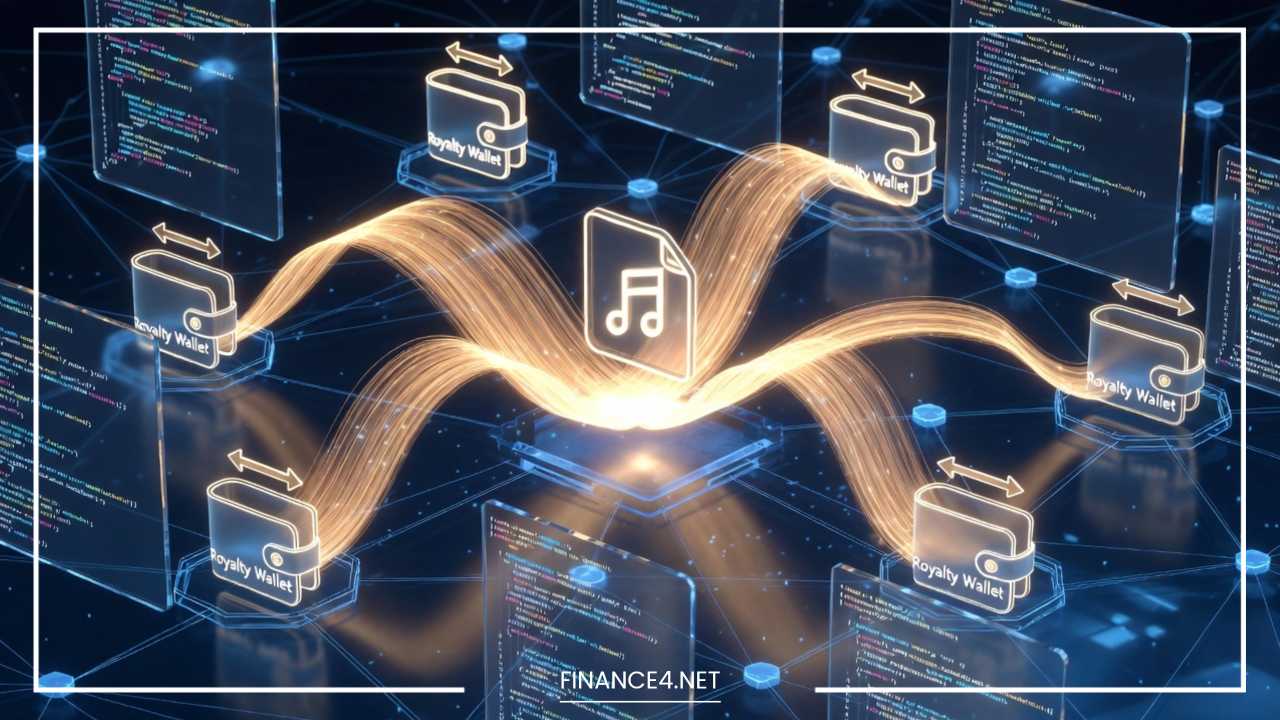
NFT Music Rights Explained: How NFTs Are Changing Music Ownership & Royalties
The music industry has always been a battlefield of technology versus tradition. From the transition of vinyl to cassette, the disruption of Napster and digital piracy, to the eventual dominance of streaming services like Spotify and Apple Music, the way we consume music has changed radically. However, while the delivery mechanism has evolved, the underlying financial structure—the “pipes” through which money flows to creators—has remained notoriously opaque, slow, and tilted in favor of intermediaries.
In recent years, a new technological shift has emerged: the Non-Fungible Token (NFT). While often associated with digital art and profile pictures, NFTs represent a fundamental shift in how digital property rights are recorded and enforced. For the music industry, this isn’t just about selling digital collectibles; it is about rewriting the rules of ownership, copyright, and royalty distribution. By leveraging blockchain technology and smart contracts, artists are finding ways to bypass traditional gatekeepers, offer fans a literal stake in their success, and ensure they are paid instantly and transparently.
NFTs are redefining music ownership by enabling programmable royalties, fractional rights, and direct-to-fan monetization. To understand this shift, we must first dissect the legacy system that Web3 is attempting to replace.
How Traditional Music Rights and Royalties Work
To understand how NFTs are revolutionary, one must first understand the complexity—and some would say the inefficiency—of the traditional music royalty system. Music rights are generally split into two distinct categories, often referred to as the “two sides” of a song.
1. Master Rights (The Sound Recording)
The “Master” is the actual recording of a performance—the specific file you hear on the radio or a streaming app. Traditionally, record labels (like Universal Music Group, Sony Music Entertainment, or Warner Music Group) own the master rights in exchange for providing the artist with an upfront advance, marketing, and distribution. When a song is streamed or licensed, the owner of the master rights receives the largest share of the revenue.
2. Publishing Rights (The Composition)
Publishing rights cover the underlying melody, lyrics, and composition. These are owned by the songwriters and their publishers. A single song might have one master recording but dozens of “covers,” each of which generates publishing royalties for the original songwriter. This side is further split into:
-
Mechanical Royalties: Fees paid for the reproduction of the work (digital or physical).
-
Performance Royalties: Fees generated when the song is played in public spaces, including radio, bars, and streaming.
-
Sync Rights: Revenue from “synchronizing” music with visual media (TV, film, games).
The Role of Intermediaries
The legacy system relies on Performance Rights Organizations (PROs) like ASCAP, BMI, or PRS, and Mechanical Licensing Collectives (MLC). While these organizations serve a vital purpose, they add layers of bureaucracy. A stream on a platform like Spotify may take six to eighteen months to filter through labels, publishers, and PROs before a few cents reach the artist’s bank account.
Furthermore, the “split” is often heavily weighted against the creator. It is common for a signed artist to receive only 15% to 20% of their streaming revenue after the label takes its cut and recoups its initial expenses (which are essentially a high-interest loan). This lack of transparency and the “black box” of royalty accounting—where millions of dollars in unallocated royalties sit in escrow because the owners can’t be found—is the primary problem NFTs seek to solve.
What Is an NFT in the Context of Music?
At its core, a Non-Fungible Token (NFT) is a digital certificate of authenticity stored on a blockchain—a decentralized, public ledger. Unlike a Bitcoin or a dollar bill (which are “fungible” because every unit is identical), an NFT is unique. In music, an NFT can represent anything from a digital copy of a song to a backstage pass or, most significantly, a percentage of the song’s future royalty streams.
The Role of Smart Contracts
The “magic” of an NFT lies in the smart contract. This is a piece of code embedded in the NFT that automatically executes actions when certain conditions are met. For example, a smart contract can dictate that every time a music NFT is resold on a secondary market, 10% of the sale price is automatically sent back to the original artist’s digital wallet.
This automation removes the need for an accounting department. The “code is law” approach ensures that as long as the blockchain exists, the artist’s rights are enforced by the network itself, rather than a human administrator who might make a mistake or a company that might go bankrupt.
Blockchain Ecosystems
Most music NFTs currently live on the Ethereum blockchain, which pioneered smart contract technology. However, high transaction fees (gas fees) have led many artists to explore “Layer 2” solutions like Polygon or alternative blockchains like Solana, which offer faster and cheaper transactions. These networks allow artists to mint thousands of affordable NFTs for their “superfans” without the cost of the transaction exceeding the price of the music.
Important Clarification: A common misconception is that buying a music NFT automatically grants the buyer the copyright to the song. In most cases, it does not. Unless the smart contract and associated legal terms explicitly state otherwise, an NFT holder usually owns a “limited edition” digital copy—much like a signed vinyl—while the artist retains the underlying intellectual property (IP).
How NFTs Change Music Ownership
NFTs are shifting the power dynamic from centralized institutions to a direct-to-fan model. This manifests in several transformative ways:
1. Direct-to-Fan Ownership
In the Web2 era (the era of streaming), fans are “renters” of music. They pay a monthly subscription to access a library, but they own nothing. If the streaming service disappears, so does their library. With NFTs, fans become “collectors” or “owners.”
Artists can release limited edition “drops” of songs or albums. For example, the electronic artist 3LAU famously sold 33 NFTs associated with his Ultraviolet album for over $11 million. These NFTs included custom artwork and unreleased music. Similarly, Kings of Leon released their album When You See Yourself as an NFT, generating over $2 million in sales. This allowed them to monetize their “superfans” at a much higher price point than a $10 digital download or a $0.003 stream.
2. Fractional Ownership and Crowdfunding
Perhaps the most radical shift is fractionalization. Instead of a label “buying” an artist’s soul for a $100,000 advance, the artist can sell 20% of the royalty rights for their next single directly to their fans.
Platforms like Royal, co-founded by 3LAU, and Sound.xyz allow fans to purchase “Limited Digital Assets” that carry a percentage of the song’s streaming royalties. This turns fans into “street teams” with a financial incentive. If a fan owns 1% of a song’s royalties, they are going to play that song for everyone they know, put it in their playlists, and promote it on social media. This aligns the incentives of the creator and the audience in a way the music industry has never seen before.
3. Programmable Revenue Splits
In a traditional studio session, there might be a producer, a lead singer, and three songwriters. Splitting the money between them is a manual nightmare. With NFT music, the revenue “split” can be hard-coded into the smart contract. As soon as a fan buys the NFT, the blockchain instantly distributes the funds to five different wallets in the exact percentages agreed upon. There is no “waiting for the check” or disputing the accounting.
NFT Music Royalties Explained
Royalties in the NFT space operate on two levels: Primary Sales and Secondary Resales.
Primary Sale Revenue
This is the initial purchase. When an artist “mints” (creates) an NFT and sells it for 1 ETH, they receive that 1 ETH minus any platform fees (usually 2.5% to 5%). This provides immediate liquidity for the artist. For many independent artists, selling 100 NFTs for $50 each ($5,000 total) provides more profit than 1.5 million streams on Spotify.
Secondary Resale Royalties
In the traditional world, if you buy a rare vinyl record for $20 and sell it ten years later for $2,000, the artist gets $0 from that second sale. In the NFT world, the smart contract ensures the artist gets a cut (usually 5% to 10%) of every subsequent sale forever. This creates a perpetual revenue stream that grows as the artist’s “brand” and demand increase.
On-Chain vs. Off-Chain Royalties
It is important to distinguish where the money comes from.
-
On-Chain Royalties: These are the proceeds from the sale of the NFT itself on marketplaces like OpenSea or Rarible.
-
Off-Chain Royalties: These are traditional streaming royalties (from Spotify, YouTube, etc.) that are brought “on-chain” by platforms. The platform (like Royal) collects the USD from Spotify, converts it to cryptocurrency, and distributes it to the NFT holders.
This transparency allows anyone to view the “ledger” of a song. You can see exactly how much a song has earned and who owns the rights to those earnings, eliminating the “black box” accounting that has plagued the industry for decades.
Legal & Copyright Considerations
As exciting as the technology is, it exists within a complex legal framework. The intersection of “code” and “law” is where many early NFT projects have run into trouble.
Copyright vs. Token Ownership
Legally, owning an NFT is like owning a physical painting. You own the canvas and the ink, but you do not own the right to print t-shirts of that painting or use it in a movie—unless those rights are explicitly transferred. Most music NFTs today are sold as “collectibles” with a license for personal use. Artists must be extremely careful to define what the buyer is actually getting to avoid future lawsuits over IP infringement.
Securities Law Risks
This is the “elephant in the room” for the NFT industry. In the United States, the SEC (Securities and Exchange Commission) uses the “Howey Test” to determine if an asset is a security. If an NFT is marketed as an investment where the buyer expects profits primarily from the efforts of the artist, it could be classified as an unregistered security.
If a platform sells “shares” of a song’s royalties, they are treading very close to being an unregulated stock exchange. This is why many platforms are now requiring “Know Your Customer” (KYC) identity verification and restricting certain features to accredited investors in specific jurisdictions.
Smart Contract Enforceability
What happens if a smart contract says one thing, but a legal contract signed with a record label says another? In most jurisdictions, the paper contract (the “meatspace” law) still overrides the code. If an artist sells rights they previously signed away to Universal Music Group, the NFT sale could be declared void, and the artist could face significant legal penalties.
Criticism & Challenges
No technological revolution is without its detractors. The music NFT space faces several significant hurdles:
1. Market Volatility and Speculation
The early NFT boom of 2021 and 2022 was characterized by extreme speculation. Many “investors” bought music NFTs not because they loved the music, but because they hoped to “flip” them for a profit. When the crypto market cooled, many of these assets lost 90% of their value, leaving fans disgruntled. For NFTs to succeed long-term, they must provide “utility” (like concert access or exclusive content) rather than just being a speculative vehicle.
2. Environmental Concerns
Initially, the energy consumption of “Proof of Work” blockchains like the early version of Ethereum was a major point of criticism. However, with Ethereum’s transition to “Proof of Stake” (The Merge) and the rise of green blockchains like Solana and Tezos, the carbon footprint of minting an NFT has been reduced by over 99%. The “environmental” argument against NFTs is now largely outdated, though the stigma remains in some fan circles.
3. Liquidity Problems
Unlike a stock or a Bitcoin, an NFT is unique. To sell it, you need to find a specific buyer who wants that specific song at that specific price. This can make music NFTs highly “illiquid” assets. If you need money quickly, you might have to sell your NFT for much less than its perceived “floor price.”
4. The “Rich Get Richer” Problem
While NFTs are touted as a way for indie artists to survive, the biggest winners so far have been established stars like Snoop Dogg, Steve Aoki, and Grimes. There is a risk that Web3 will simply recreate the hierarchies of Web2, where the top 1% of artists capture 99% of the value because they already have the marketing machine to drive NFT sales.
Real-World Case Studies
To see how this works in practice, we can look at a few pioneers:
-
Tory Lanez: In 2021, he released his album When It’s Dark as an NFT for $1 per copy. He sold 1 million copies in under a minute. Because he owned the rights and used a direct-to-fan platform, he bypassed the traditional chart system and label fees entirely, earning $1 million instantly.
-
Snoop Dogg: Perhaps the biggest advocate for “Death Row Records” becoming a Web3 label. He has integrated NFTs into his “Snoopverse” in the Sandbox metaverse and released unreleased tracks as NFTs, viewing them as the modern version of a fan club membership.
-
Grimes: She sold a suite of digital artworks and music videos for nearly $6 million. Her success proved that the “audio-visual” nature of NFTs is a powerful tool for artists who have a strong visual brand.
-
Latashá: An independent artist who has become a leading voice in the “Music NFT” movement. She has funded her career entirely through NFT sales on platforms like Zora and Foundation, proving that you don’t need a million fans to make a living; you just need a few hundred “superfans” who are willing to collect your work.
The Future of NFT Music Ownership
Where do we go from here? The future likely won’t be “all NFT” or “all streaming,” but rather a hybrid model.
Integration with Streaming
We may soon see “Token-Gated” content on platforms like Spotify. Imagine a world where a band’s most loyal fans—those who hold a specific NFT—get access to bonus tracks, early concert tickets, or private discord channels directly through their streaming app. Spotify has already begun testing “token-enabled playlists” in certain regions.
AI and Ownership
As AI-generated music becomes more prevalent, the need for a “Proof of Authenticity” becomes even more critical. If an AI can perfectly mimic Drake’s voice, how do we know what is real? NFTs can serve as a cryptographic watermark, proving that a song was indeed created by a specific human artist rather than an algorithm.
The Role of Major Labels
Major labels are not sitting idly by. They are evolving from “gatekeepers” to “service providers.” Warner Music Group has already partnered with OpenSea and Splinterlands to explore blockchain gaming and NFT drops. The labels of the future will likely act as “Web3 Consultants,” helping artists navigate the complexities of minting, community management, and digital rights in a decentralized world.
Decentralized Autonomous Organizations (DAOs)
We are seeing the rise of “Fan DAOs,” where a group of fans pools their money to buy the rights to a classic song or to fund a new artist’s tour. This takes the concept of a “fan club” and gives it a treasury and voting rights. In the future, your favorite band might be owned and managed by its community rather than a corporation.
Final Thoughts
The music industry is currently in a “Napster moment” for ownership. Just as Napster forced the industry to move from physical sales to digital access, NFTs are forcing a move from digital access to digital ownership.
By transforming music from a “disposable stream” into a “programmable asset,” blockchain technology is giving power back to the creators and the people who support them. It provides a solution to the “starving artist” trope by allowing musicians to monetize their most dedicated fans directly and transparently.
While legal and regulatory challenges remain—specifically regarding securities laws and the enforcement of smart contracts—the genie is out of the bottle. The transition from “Donating to an artist” to “Investing in an artist” is underway. In this new era, ownership isn’t just for the executives in the boardroom; it’s for anyone with a digital wallet and a love for the music. The next generation of global superstars may never sign a record deal; they might just mint one.