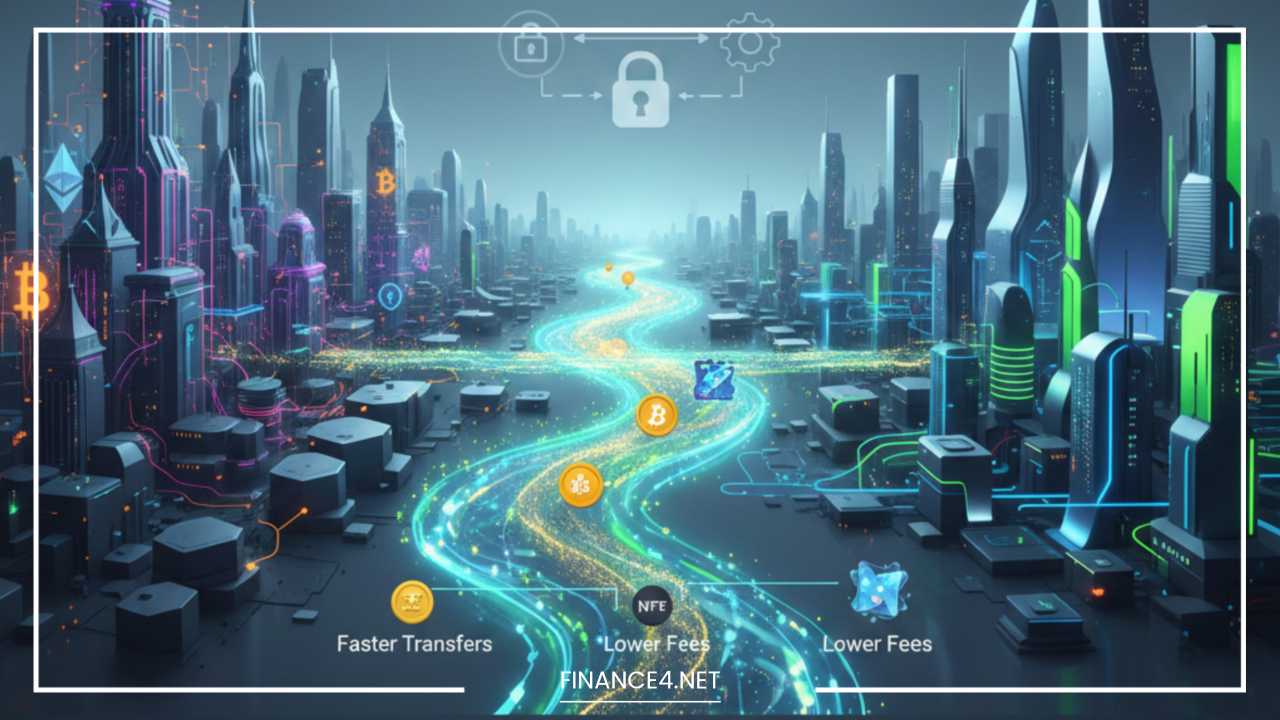
NFT Real Estate Auctions
 by
by 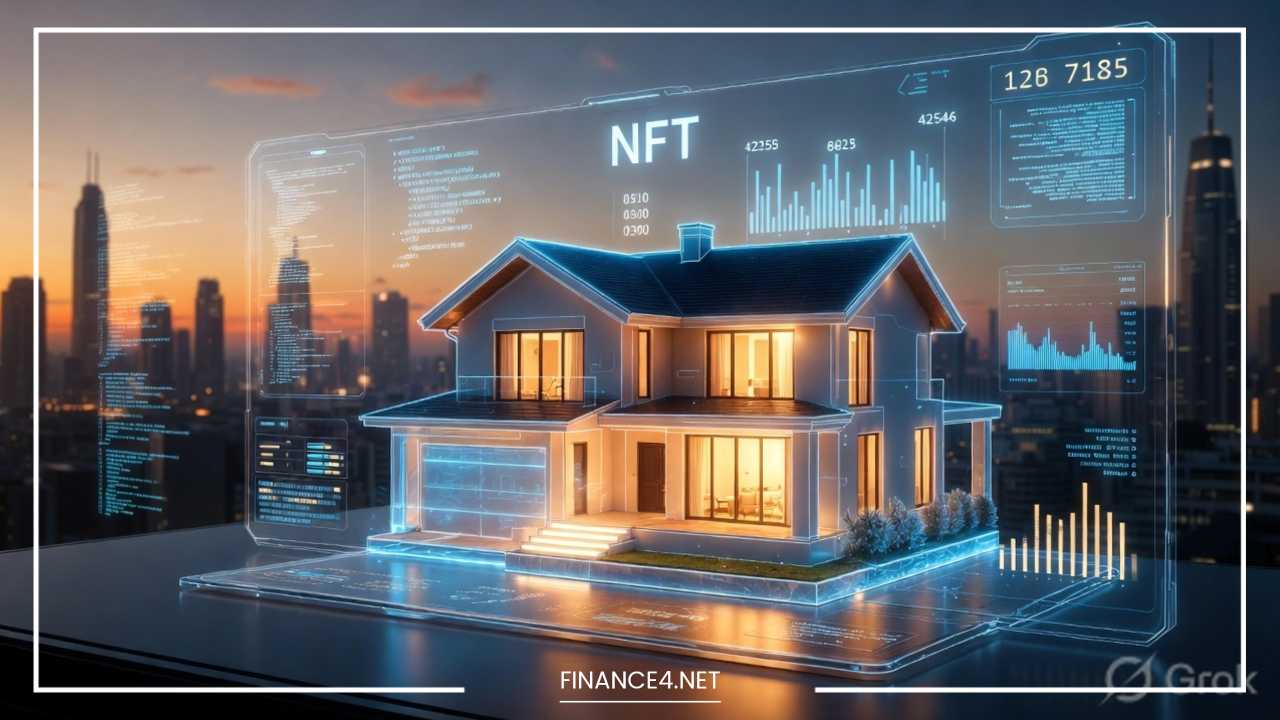
NFT Real Estate Auctions: Buy & Sell Property with Blockchain Technology
The real estate industry, long defined by mountainous paperwork, opaque bidding wars, and multi-month closing periods, is undergoing a digital renaissance. In 2026, the convergence of blockchain technology and physical property has moved beyond a “proof of concept” to a multi-billion-dollar global reality.
NFT Real Estate Auctions represent the vanguard of this shift. By transforming a property title into a unique digital token, the market is solving age-old problems of liquidity, transparency, and accessibility. Whether it is a luxury villa in Dubai, a commercial warehouse in Berlin, or a single-family rental in Florida, the way we exchange the world’s most valuable asset class is being rewritten by the block.
What Are NFT Real Estate Auctions?
To understand the auction model, one must first understand the underlying vehicle: the Non-Fungible Token (NFT). While the world first knew NFTs for digital art and profile pictures, their true “killer app” is the tokenization of real-world assets (RWA).
The Anatomy of a Property NFT
In an NFT real estate auction, a physical property is “minted” onto a blockchain—most commonly Ethereum, Solana, or Polygon. This NFT is not just a digital image of the house; it is a programmable smart contract that carries legal weight.
-
The Digital Twin: The NFT serves as a digital representation of the property’s legal rights.
-
The Legal Wrapper: Because many local land registries are still catching up to blockchain, the property is typically held by a Special Purpose Vehicle (SPV) or a Limited Liability Company (LLC). When you buy the NFT, you are legally purchasing the company that owns the house.
-
Whole-Property vs. Fractional: Auctions can be structured for “Whole-Asset” transfers (one winner takes the entire property) or “Fractionalized” sales (where thousands of bidders buy small percentages of a high-value asset).
Why the Auction Format?
Auctions have always been the preferred method for high-demand real estate because they establish “true market value.” However, traditional auctions are hindered by geographic limits and the need for physical presence or complex wire transfers. NFT auctions remove these barriers, allowing a property in Tokyo to be bid on by investors in London, New York, and Lagos simultaneously, with settlement occurring the moment the digital hammer falls.
How NFT Real Estate Auctions Work: A Step-by-Step Guide
The transition from a physical deed to a digital auction involves a specialized pipeline designed to bridge the gap between “code” and “courtroom.”
Step 1: Due Diligence and Legal Onboarding
Before a property can be minted, it must undergo a rigorous “off-chain” verification process. This includes:
-
Title Search: Ensuring there are no liens or encumbrances.
-
Appraisal and Inspection: Providing bidders with a certified condition report.
-
Legal Structuring: Transferring the deed into a blockchain-compatible legal entity (like an LLC).
Step 2: Minting and Metadata
The property’s details—blueprints, inspection reports, tax history, and the legal operating agreement of the LLC—are uploaded to a decentralized storage system (like IPFS). This data is then linked to the NFT. Once “minted,” these details are permanent and verifiable by anyone with a web browser.
Step 3: Setting Auction Parameters
The seller determines the rules of the engagement:
-
Reserve Price: The minimum amount they are willing to accept.
-
Duration: How long the bidding window will stay open (often 24 to 72 hours).
-
Accepted Currency: Usually stablecoins like USDC or USDT to avoid price volatility during the auction.
Step 4: The Bidding Phase
Global buyers connect their digital wallets (e.g., MetaMask or Phantom) to the auction platform. Unlike traditional auctions, many NFT platforms require “escrowed bidding.” This means the smart contract verifies that the bidder actually has the funds in their wallet, preventing “phantom bids” or non-payment issues.
Step 5: Instant Settlement
In a traditional sale, “closing” takes 30 to 60 days. In an NFT auction, the moment the timer hits zero and the reserve is met, the smart contract executes:
-
The Funds are instantly transferred to the seller’s wallet.
-
The NFT (and thus the legal ownership) is instantly transferred to the buyer’s wallet.
-
Proof of Sale is etched onto the blockchain forever.
The Benefits: Why the World is Moving On-Chain
The traditional real estate model is fraught with “friction”—costs, time, and middlemen. NFT auctions act as a lubricant for the global property market.
For Sellers: Efficiency and Reach
-
Zero Carry Costs: Because settlement is near-instant, sellers don’t have to pay two months of mortgage and utilities while waiting for a bank to approve a buyer’s loan.
-
Global Liquidity: By listing on a blockchain, a seller is not just marketing to their local zip code; they are marketing to the entire internet.
-
Programmable Royalties: Smart contracts can be programmed so that the original developer or seller receives a small percentage (e.g., 1%) of every future resale of that property—a concept impossible in the legacy system.
For Buyers: Transparency and Lower Barriers
-
Immutable History: Buyers can see every previous sale price and ownership transfer on-chain. No more wondering if the “market value” is being manipulated.
-
Reduced Fees: By removing the need for traditional escrow companies and reducing the billable hours for title attorneys, buyers save significantly on closing costs.
-
24/7 Access: Markets never close. A buyer can perform due diligence and place a winning bid at 3:00 AM on a Sunday.
Challenges, Risks, and the “Trust Gap”
No technological leap is without its growing pains. For NFT real estate to become the global standard, several hurdles must be cleared.
Regulatory Fragmentation
Real estate is inherently local. While the Smart Contract is global, the Physical Land is subject to the laws of the country it sits in. If a jurisdiction does not recognize the transfer of an LLC via a token as a valid title transfer, the buyer is left in a legal limbo. In 2026, we see a “bifurcated” world: “Crypto-friendly” nations (like Switzerland, the UAE, and certain US states) and “Laggard” nations that still require physical paper deeds.
The Oracle Problem
How does the blockchain know if the house burned down the day before the auction? This is known as the “Oracle Problem”—the need for reliable real-world data to be fed into the smart contract. NFT auctions rely on third-party inspectors, but if an inspector provides false data, the blockchain will faithfully record that falsehood as truth.
Security and Custody
In the world of NFTs, “Your Keys, Your House.” If a homeowner’s digital wallet is compromised via a phishing attack, the attacker could theoretically transfer the ownership of the house to themselves. This has led to the rise of Institutional Custodians and “Multi-Sig” wallets, where a transfer requires two out of three signatures (e.g., the owner, a legal firm, and a security provider) to proceed.
Real-World Case Studies: From Niche to Mainstream
As we look at the landscape in 2026, several pioneering examples have set the stage.
The Miami Commercial Boom
In early 2025, a boutique hotel in Miami Beach was auctioned as an NFT for $28 million. The auction attracted 14 bidders from 9 different countries. The winner, a decentralized autonomous organization (DAO), was able to pool funds from 500 different members to win the bid. The entire legal transfer was completed in 48 hours—a process that would have taken 6 months under traditional commercial real estate protocols.
Residential Success in South Carolina
Platforms like Roofstock onChain have standardized the “Single Family Rental” NFT. Investors can now browse a map of the US, look at the rental yields of a home in Columbia, South Carolina, and buy the NFT representing that home with one click. These homes often come “pre-rented,” meaning the new owner starts receiving rental income in their wallet (in stablecoins) the very next day.
6. NFT Auctions vs. Traditional Auctions: A Comparison
| Feature | Traditional Auction | NFT Real Estate Auction |
| Settlement Time | 30–60 Days | Minutes / Hours |
| Geographic Reach | Local / Regional | Global / Internet-wide |
| Bidding Transparency | Often Opaque | Fully Public on-chain |
| Escrow Process | Manual (Bank/Attorney) | Automated (Smart Contract) |
| Closing Costs | 2% – 5% of Sale Price | < 1% (Platform + Gas fees) |
| Verification | Physical Paperwork | Digital Hash / Metadata |
Fractional Real Estate: The Democratization of Wealth
One of the most revolutionary aspects of NFT auctions is Fractionalization. Historically, real estate has been a “lumpy” asset—you either own a whole building or you own nothing. This has locked millions of young investors out of the market.
How Fractional Auctions Work
A developer might auction 1,000 “fractions” of a new apartment complex. Each NFT represents 0.1% of the building.
-
The Yield: Rental income is automatically distributed by a smart contract to the 1,000 wallet holders.
-
Liquidity: If an investor needs $5,000, they don’t have to sell their house; they just sell 10 of their 100 fractions on a secondary NFT marketplace like OpenSea or Blur.
This “Lego-like” approach to property allows for diversified portfolios. Instead of owning one $500,000 house, an investor can own $5,000 pieces of 100 different houses across the globe, significantly reducing their risk.
The Legal Landscape in 2026
The “Wild West” era of 2021 is gone. Today, the legal framework is catching up.
KYC (Know Your Customer) and AML (Anti-Money Laundering)
Every reputable NFT real estate platform now requires bidders to verify their identity. This ensures that the blockchain isn’t used to bypass international sanctions or launder illicit funds. This “permissioned” layer makes the technology palatable to institutional investors and banks.
The Rise of “Smart Deeds”
Governments in the UAE and parts of the EU have begun experimenting with “Smart Deeds”—land registries that are themselves built on a blockchain. In these jurisdictions, the NFT is the deed. There is no LLC wrapper needed because the government recognizes the digital token as the ultimate source of truth.
The Future: AI, Metaverse, and DeFi Integration
Where do we go from here? The next five years will see the “Financialization of Everything.”
AI-Driven Auctions
By 2028, we expect AI agents to participate in NFT auctions. These bots will analyze real-time market data, local zoning changes, and climate risks to place bids on behalf of investment funds, ensuring that properties are always priced at peak efficiency.
Metaverse “Digital Twins”
When you buy a physical property via NFT, you will increasingly receive a Digital Twin in a metaverse platform. This allows owners to “walk through” their property from across the world, plan renovations in VR, or even rent out the digital version for virtual events while they live in the physical one.
DeFi Mortgages
If you own a property NFT, you can use it as collateral in a Decentralized Finance (DeFi) protocol. Within seconds, you can lock your NFT in a contract and receive a loan of 50% of the property’s value. No credit checks, no bank interviews—just pure, code-based collateralization.
Frequently Asked Questions (FAQ)
Is buying real estate via NFT actually legal?
Yes, provided the proper legal wrapper (like an LLC) is used. The NFT serves as the ownership certificate for the entity that holds the physical deed. However, always check local regulations as “direct-to-token” deed laws are still evolving.
What happens if I lose my digital wallet?
This is the “nuclear option” of blockchain. If you lose your private keys and have no backup, you lose access to the token. However, modern platforms use “Recoverable Smart Contracts” or legal “Clawback” provisions that allow the legal entity to re-issue a token if ownership can be proven via traditional legal means (ID, court order).
Can I get a mortgage on an NFT house?
Traditional banks are starting to offer “Crypto-Mortgages,” but the real growth is in DeFi lending. You can often borrow against your NFT property instantly using decentralized lending pools.
Are there taxes on NFT real estate sales?
Yes. Governments treat these as real estate transactions. You are still subject to capital gains tax, property tax, and transfer taxes. The blockchain records the transaction, which actually makes it easier for tax authorities to ensure compliance.
Final Thoughts: The New Foundation of Property
NFT Real Estate Auctions are not just a gimmick for tech enthusiasts; they are a fundamental restructuring of how humanity handles its most important asset. By moving property onto the blockchain, we are stripping away centuries of bureaucracy and replacing it with the mathematical certainty of code.
The transition from “Paper” to “Programmable” real estate will create trillions of dollars in new liquidity, democratize access for a new generation of investors, and make the dream of property ownership a “one-click” reality for the global population.