NFT Staking vs NFT Flipping
 by
by 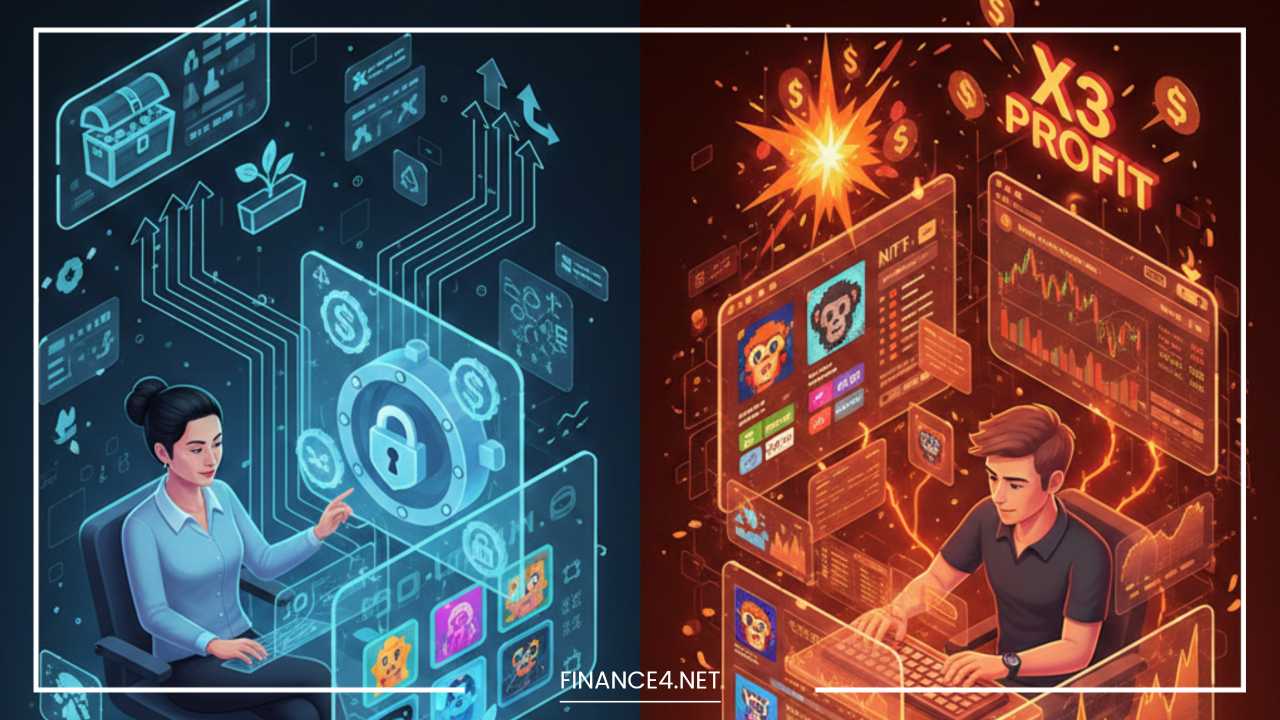
NFT Staking vs NFT Flipping: Key Differences, Benefits & Strategies
The digital landscape has undergone a seismic shift with the emergence of Non-Fungible Tokens (NFTs). What began as a niche interest for cryptographers and digital artists has blossomed into a multi-billion-dollar industry, permeating sectors as diverse as fine art, gaming, real estate, and high-fashion collectibles. At its core, an NFT is a unique digital identifier recorded on a blockchain that certifies ownership and authenticity of a specific asset. Unlike cryptocurrencies like Bitcoin, which are fungible and identical to one another, each NFT is one-of-a-kind, carrying its own distinct value and metadata.
As the NFT market matured, the methods for extracting value from these digital assets evolved. No longer are investors merely buying and holding (or “HODLing”) in the hopes of a distant price appreciation. Instead, the ecosystem has bifurcated into two primary financial strategies: NFT Staking and NFT Flipping.
NFT Staking represents the “passive” side of the coin, allowing holders to put their assets to work to earn rewards without relinquishing ownership. Conversely, NFT Flipping is the “active” pursuit of profit through market timing, requiring a keen eye for trends and a high tolerance for volatility. Understanding the nuances between these two approaches is essential for anyone looking to navigate the complex waters of Web3. This article provides a comprehensive deep dive into the key differences, benefits, risks, and strategies of both NFT staking and flipping to help you determine which path aligns with your financial goals.
What is NFT Staking?
NFT staking is a process that allows NFT holders to lock their digital assets into a smart contract on a specific platform or protocol. In exchange for “staking” or committing these assets for a set period, the owner receives rewards. This concept is heavily inspired by Yield Farming and Decentralized Finance (DeFi) staking, where users lock up liquid tokens to provide liquidity or secure a network.
How NFT Staking Works
When you stake an NFT, you are essentially moving it from your personal wallet to a secure vault managed by a smart contract. While the NFT is staked, you generally cannot sell it or transfer it to another user until you “unstake” it. The protocol uses the presence of your NFT to provide value to its ecosystem—this could be in the form of securing a game’s economy, providing utility in a metaverse, or simply reducing the circulating supply of a collection to support its floor price.
Types of Rewards
The incentives for staking vary significantly depending on the project:
-
Governance Tokens: Many platforms reward stakers with native utility tokens. These tokens can often be traded on decentralized exchanges for ETH or stablecoins, or used to vote on the future direction of the project (DAOs).
-
Staking Rewards/Yield: Some projects offer a daily or weekly “yield” of a specific currency that can be used to purchase merchandise, mint future collections, or upgrade existing NFTs.
-
Exclusive Perks: Beyond monetary gains, staking can grant access to private Discord channels, early “allowlist” spots for new drops, or physical real-world events.
Common Platforms
Several pioneers have set the standard for NFT staking:
-
Aavegotchi: A DeFi-enabled NFT game where players stake “Gotchis” to earn GHST tokens and participate in “rarity farming.”
-
Decentraland: Users can stake or delegate LAND parcels to participate in the governance of the virtual world.
-
The Sandbox: LAND owners can stake their assets alongside SAND tokens to earn rewards and multipliers on their yield.
-
Mutant Cats: One of the earlier examples of fractionalized ownership staking, where staking a Cat NFT earned tokens representing a share in a vault of high-value NFTs like Bored Ape Yacht Club.
Advantages of NFT Staking
The primary allure of staking is the creation of a steady income stream. It transforms a non-productive asset into a productive one. Furthermore, it suits investors with a long-term outlook who believe in the fundamental value of a project and wish to grow their position without the stress of constant market monitoring.
What is NFT Flipping?
NFT flipping is the high-octane, speculative practice of purchasing an NFT at a perceived “low” price and reselling it quickly for a “high” price. This strategy is rooted in the “buy low, sell high” mantra of traditional day trading but is amplified by the extreme volatility and cultural hype cycles of the NFT market.
How Flipping Works
Flipping is an art that combines data analysis with social sentiment. A successful flipper spends hours researching upcoming “mints” (the initial release of an NFT), analyzing the social media following of creators, and scrutinizing the roadmap of a project. The process usually follows a specific cycle:
-
Discovery: Finding a project before it reaches mainstream hype.
-
Acquisition: Minting the NFT at the base price or sniping an undervalued listing on the secondary market.
-
Pumping/Hype: Waiting for the “reveal” (when the artwork is shown) or a major announcement to drive up demand.
-
Liquidation: Selling the asset as the price hits a target profit margin, often within days or even hours of the purchase.
The Importance of Timing and Rarity
In flipping, timing is everything. Most NFT collections experience a massive surge in volume and price immediately following the mint or right before the “reveal.” Flippers aim to exit during these peak liquidity windows. Rarity also plays a massive role; using “rarity tools,” flippers look for NFTs with rare traits (like a specific hat or eye color) that are listed at the “floor price” (the lowest price in the collection). Sniping these rare items and relisting them at a premium is a hallmark of a professional flipper.
Popular Platforms for Flipping
-
OpenSea: The largest general marketplace for secondary sales across multiple chains.
-
Blur: A marketplace specifically designed for professional flippers, offering high-speed data and zero marketplace fees.
-
Magic Eden: The go-to hub for flipping NFTs on the Solana and Bitcoin (Ordinals) networks.
-
LookingRare: A community-first marketplace that rewards users for trading.
Advantages of Flipping
The most obvious benefit of flipping is the potential for astronomical, rapid returns. A successful flip can double or triple an initial investment in a matter of 48 hours. It also allows for high capital efficiency; instead of having money locked away for months in a staking contract, flippers keep their capital “liquid,” moving from one project to the next as opportunities arise.
Key Differences Between NFT Staking and NFT Flipping
While both strategies aim to generate profit from NFTs, they operate on completely different logic and require different psychological profiles.
Objective and Approach
Staking is an accrual strategy. The investor acts more like a “landlord” or a shareholder. The goal is to accumulate value over time through dividends (rewards) and the long-term appreciation of the underlying asset. It is a passive approach that favors patience.
Flipping is an arbitrage strategy. The investor acts like a “trader” or a merchant. The goal is to exploit price inefficiencies and short-term hype. It is an active approach that favors speed and market intuition.
Risk Levels
Flipping is inherently riskier. If you buy an NFT to flip and the hype dies down, you may be left with an “illiquid” asset that no one wants to buy, forcing you to sell at a loss or hold a “dead” project. Staking is often perceived as lower risk in terms of daily volatility, but it carries “opportunity cost” and “lock-up risk.” If the market crashes while your NFT is staked and locked, you cannot sell to preserve your capital.
Income Models
The income from staking is incremental. You earn small amounts of tokens or points consistently. This is predictable and can be calculated as an Annual Percentage Yield (APY).
The income from flipping is lump-sum. You receive a single, large payout upon the sale of the asset. This is unpredictable and depends entirely on finding a buyer at your desired price.
Time Commitment
Staking is “set it and forget it.” After the initial setup, you might only check your rewards once a week or once a month.
Flipping is a full-time job. It requires monitoring Twitter (X), Discord, and “floor prices” around the clock. Missing a single announcement or a “whale” dump can be the difference between profit and loss.
Market Behavior
Stakers look for fundamental value: Who is the team? What is the utility? Is the community loyal?
Flippers look for momentum: Is the volume increasing? Are influencers talking about it? Is there a “supply squeeze” coming?
Benefits of NFT Staking
NFT staking has emerged as a cornerstone of the “HODL” culture, providing several layers of value to the long-term believer.
Passive Income Generation
The most significant benefit is the ability to earn while you sleep. For many, the volatility of the crypto market is stressful. Staking provides a psychological cushion; even if the floor price of your NFT drops by 5%, you are still earning tokens that might offset that loss. Over a long period, the accumulated rewards can sometimes exceed the original purchase price of the NFT itself.
Long-Term Strategy and Compounding
Staking encourages a disciplined investment approach. By locking away assets, investors are less likely to “panic sell” during temporary market dips. Furthermore, many staking protocols allow for compounding, where the rewards earned can be reinvested to increase the staking tier or purchase more NFTs, leading to exponential growth of the portfolio.
Support for the Community and Ecosystem
Staking is often a requirement for participating in a project’s Decentralized Autonomous Organization (DAO). This gives the investor a seat at the table to vote on how the project’s treasury is spent, which artists are hired for future drops, or which features are added to a game. This sense of ownership and agency is a powerful motivator for many in the Web3 space.
Low Maintenance and Reduced Gas Fees
In a high-fee environment like Ethereum, constant buying and selling can be prohibitively expensive. Staking involves a one-time transaction to lock the asset and occasional transactions to claim rewards. This is much more cost-effective for smaller investors who don’t want their profits eaten away by network “gas” fees.
Benefits of NFT Flipping
Despite the risks, flipping remains the most popular way to “get rich quick” in the NFT world.
Quick Profit Potential
There is no other asset class where a 100% return in 24 hours is as common as it is in NFTs. For those with a small starting “bankroll,” flipping offers a path to rapidly grow their capital. By successfully navigating three or four flips, an investor can move from “penny” NFTs to blue-chip assets like Bored Apes or Punks in a fraction of the time it would take through staking.
Access to Exclusive Items
Flippers are often the “market makers” of the NFT world. By being active in the secondary market, they often stumble upon rare, “mispriced” items. A flipper might find an NFT with a 1% rarity trait listed at the same price as a common one because the seller was in a rush. Exploiting these errors allows flippers to hold rare assets temporarily that they might not otherwise be able to afford.
Engagement with the NFT Market
Flipping forces you to stay at the cutting edge of technology and culture. You learn about new blockchain scaling solutions, social trends, and digital art movements before the general public. This “alpha” (insider knowledge) can be parlayed into other investment opportunities in the broader crypto space.
Flexibility and Agility
The NFT market moves in cycles. Sometimes “Profile Picture” (PFP) projects are hot; other times, it’s digital art or gaming land. Flippers can pivot their entire portfolio in a single day to chase the current trend. Stakers are often “married” to their projects, whereas flippers are “mercenaries” who go where the money is.
Challenges and Risks of NFT Staking
While staking seems like “free money,” it is fraught with hidden dangers that can catch the unwary investor off guard.
Illiquidity and Lock-up Periods
The biggest drawback of staking is the loss of liquidity. Most staking contracts have a “cooldown” period. If the NFT market starts to crash and you want to sell, you might have to wait 7 to 30 days to unstake your NFT. By the time the asset is back in your wallet, its value may have plummeted to near zero.
Market and Project Risk
Staking is a bet on the longevity of a project. If the founding team abandons the project (a “rug pull”) or if the project simply loses relevance, the rewards you are earning will also become worthless. You are essentially doubling down on your exposure: you own the NFT and you are holding the project’s reward tokens. If the project fails, both go to zero.
Platform and Smart Contract Risk
When you stake, you are trusting the code of the smart contract. Even reputable projects have been victims of hacks where the NFTs held in the staking vault were drained by malicious actors. Unlike a traditional bank, there is usually no insurance or “undo” button in DeFi. If the staking contract is breached, your NFT is gone forever.
Time Sensitivity of Rewards
The “yield” of staking is often front-loaded. Projects offer high rewards early on to attract users, but these rewards usually decrease over time (halving) as the token supply increases. If you enter a staking pool too late, the rewards might not be enough to justify the risk of locking up your asset.
Challenges and Risks of NFT Flipping
Flipping is often described as “picking up pennies in front of a steamroller.”
Extreme Market Volatility
NFTs are “low-velocity” assets. In a stock market, you can sell a share of Apple in a millisecond. In NFTs, you need a specific person to like your specific image at your specific price. If the market sentiment turns negative, liquidity dries up instantly. You might be willing to sell for half of what you paid, but if there are no buyers, the “floor price” is a myth.
FOMO and Emotional Trading
Flippers are highly susceptible to “Fear Of Missing Out.” Seeing a project’s price moon on Twitter often leads people to “ape in” at the top. This is the most common way flippers lose money. They buy the “top” of the hype cycle and are left holding the bag when the professional traders move on to the next thing.
Competition and “Bots”
The flipping market is no longer just humans. Highly sophisticated “sniping bots” monitor the blockchain for underpriced listings and purchase them within milliseconds—faster than any human could click a mouse. Competing against these automated systems makes it increasingly difficult for retail flippers to find profitable deals.
Gas Fees and Taxes
On the Ethereum network, a single “buy and sell” cycle can cost $50 to $100 in gas fees. If you are flipping an NFT for a $200 profit, half of that is gone instantly. Furthermore, in many jurisdictions, every single flip is a taxable event. Keeping track of hundreds of trades for tax purposes is a significant administrative burden and can result in a massive tax bill at the end of the year.
Scams and Counterfeits
The secondary market is rife with “copy-mint” collections—fake NFTs that look exactly like a famous collection but have no value. In the rush to flip, many investors fail to verify the contract address and end up buying a worthless JPEG.
Which Strategy is Right for You?
Choosing between staking and flipping depends on your personality, capital, and available time.
The Conservative Investor (The Staker)
If you have a full-time job, a low tolerance for stress, and a long-term belief in the “Metaverse,” staking is likely your best bet. It allows you to participate in the upside of Web3 without the need for constant surveillance. Staking is ideal for those who have a significant amount of capital and want to preserve and slowly grow it.
The Active Trader (The Flipper)
If you are a “digital native” who spends hours on Discord, enjoys the thrill of the hunt, and has a smaller amount of capital that you want to grow aggressively, flipping is for you. It requires a “risk-on” mentality and the ability to take losses without becoming emotionally compromised.
The Hybrid Strategy
Most successful NFT investors don’t choose just one. A balanced approach might involve:
-
Core Holdings (60%): High-quality “Blue Chip” NFTs (like Bored Apes, Azuki, or Pudgy Penguins) that are staked for long-term rewards and governance.
-
Tactical Flips (40%): A dedicated portion of the portfolio used to “churn” through new mints and hype-driven projects to generate the liquid ETH needed to pay for gas fees or acquire more core holdings.
Future of NFT Staking and Flipping
The NFT market is still in its infancy, and both strategies are evolving.
Innovations in Staking
We are seeing the rise of “Liquid Staking” for NFTs, where you receive a “receipt token” representing your staked NFT. This token can then be used as collateral for loans or traded, solving the illiquidity problem. Additionally, integration with “Real World Assets” (RWA) means we may soon be staking NFTs that represent shares in physical real estate or carbon credits.
The Maturation of Flipping
As the market matures, flipping will likely become more data-driven. We are already seeing the move toward “Professional-grade” trading terminals like Blur. Regulatory oversight is also looming; as governments begin to classify certain NFTs as securities, the wild-west days of unregulated flipping may be numbered, leading to a more stable but perhaps less “explosive” market.
Final Thoughts
The debate between NFT staking and NFT flipping is not about which is “better,” but which is better for you. Staking offers the slow, steady path of the tortoise—building wealth through consistency, utility, and community alignment. Flipping offers the fast, erratic path of the hare—building wealth through agility, market timing, and speculative prowess.
Both strategies require a deep understanding of blockchain technology and a healthy respect for the risks involved. The NFT space is unforgiving to those who enter without a plan. Whether you choose to lock up your assets in a vault or trade them on the open floor, the key to success lies in due diligence, emotional discipline, and a constant willingness to learn. As the digital economy continues to expand, those who master these strategies will be well-positioned to capitalize on the next era of the internet.