NFT Subscription Models Explained
 by
by 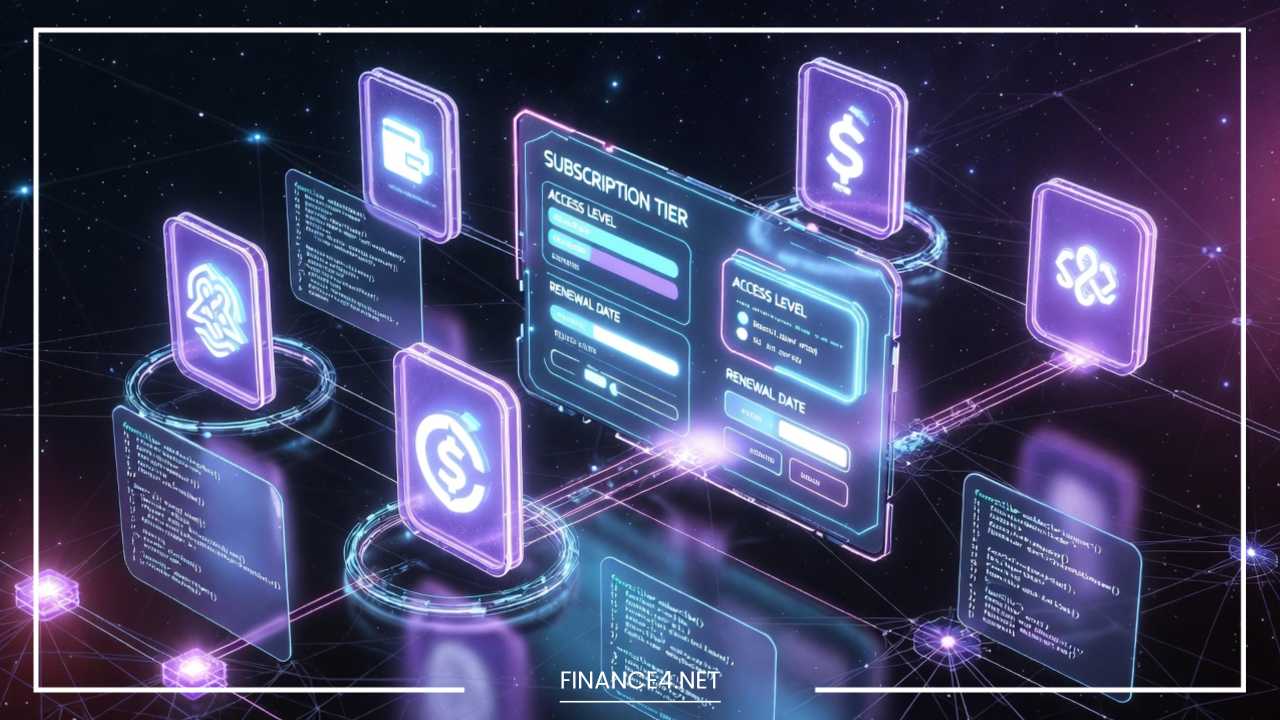
NFT Subscription Models Explained: How Web3 Recurring Access Works
The digital subscription economy has become the backbone of modern commerce. From the software we use for work to the entertainment we consume at home, the “as-a-service” model dominates. However, as we transition into the era of Web3, the fundamental nature of these recurring relationships is shifting.
While the first wave of Non-Fungible Tokens (NFTs) was defined by digital art and speculative collectibles, the next evolution is functional. NFT subscription models are reimagining how users access services, how creators monetize their work, and how ownership is defined in a digital-first world. This comprehensive guide explores the mechanics, benefits, and future of Web3-native recurring access.
Why Subscription Models Matter in Web3
The dominance of Web2 subscription giants like Netflix, Patreon, and Spotify is undeniable. They provide convenience and steady revenue streams. However, these models come with inherent limitations: centralized control, payment lock-in, and platform dependency. In the traditional model, you do not own your subscription; you simply rent access. If the platform decides to ban your account, change its terms, or cease operations, your access—and often your data—disappears instantly.
The rise of NFTs beyond collectibles marks a pivotal shift. By moving the logic of a subscription onto a blockchain, we move from a centralized database entry to a programmable, user-owned asset. This is the birth of “Ownership as a Service.”
NFTs are evolving into:
-
Access Credentials: Digital keys that unlock specific software or regions of the web.
-
Membership Passes: Verified proof of belonging to an elite community or DAO.
-
Recurring Utility Tokens: Assets that provide ongoing value as long as they are “fueled” by renewals.
This transition allows for a more equitable digital landscape. Instead of a platform-to-user relationship, we move toward a peer-to-peer infrastructure where the “contract” is enforced by code, not by a corporate legal department.
What Is an NFT Subscription Model?
Before diving into the technicalities, it is essential to define what makes an NFT subscription unique compared to its predecessor. In a traditional setup, a database checks if your credit card payment was successful this month. If yes, it flips a “true” flag next to your user ID in a private server.
In an NFT subscription model, the access right is encapsulated within a token held in your cryptographic wallet. The “flag” is public, verifiable, and exists on a decentralized ledger.
The Core Difference: Ownership vs. Permission
A one-time NFT purchase usually grants permanent ownership of a digital asset. A subscription NFT, however, utilizes smart contract logic to determine if the token is currently “active” or “expired.” It is a dynamic asset that reflects the current state of a financial relationship.
Key Terms to Know
-
Smart Contracts: Self-executing code on the blockchain that enforces subscription rules without a middleman.
-
Token Gating: The process of restricting website, app, or physical content so only holders of a specific NFT can view or enter it.
-
Wallet Authentication: Using a cryptographic wallet (like MetaMask or Phantom) as a “login” instead of a username and password.
-
Expirable NFTs: Tokens designed with a built-in “time-to-live” (TTL) timestamp that dictates when the utility ends.
-
Renewable NFTs: Tokens that can be “recharged” or extended by sending a specific payment to the smart contract.
How NFT Subscriptions Work Technically
This is the “under the hood” section. To build a robust subscription model in Web3, developers must bridge the gap between static blockchain assets and the fluid nature of time-based access.
1. Smart Contracts: The Digital Enforcer
The smart contract acts as the ultimate arbiter. Unlike a central server, the contract is public, transparent, and immutable. It stores specific variables, such as the expirationTimestamp for each individual token ID. When a user attempts to access a service, the service performs an on-chain query.
If the current block.timestamp is less than the expirationTimestamp stored in the NFT’s metadata or contract state, access is granted. This logic can be deployed on various networks depending on the project’s needs:
-
Ethereum: Offers the highest security and most established ecosystem, though it is often hampered by high gas fees for frequent renewals.
-
Polygon: A popular Layer-2 solution offering near-instant transactions and negligible costs, making monthly $10 or $20 renewals economically viable.
-
Solana: Known for high throughput and low latency, ideal for high-frequency usage models like gaming or real-time data feeds.
2. Wallet-Based Authentication and Signatures
In Web3, your wallet is your identity. Instead of the “Log in with Google” button, which tracks your data and can be revoked by a third party, users sign a cryptographic message. This signature proves they control the wallet address holding the required NFT.
This “signature-based verification” is fundamentally private; the platform never sees your private keys or your personal billing address—only the cryptographic proof that you hold the valid subscription pass.
3. Payment Flow: The “Push” vs. “Pull” Dilemma
Web3 faces a unique challenge: blockchains are “push” systems, whereas Web2 banking is a “pull” system. In Web2, a merchant can “pull” money from your bank account every month. In Web3, the user must manually “push” the payment.
To create a seamless user experience, developers use several workarounds:
-
Upfront Minting: Users pay for six months or a year in advance at the time of minting.
-
Stablecoin Subscriptions: Using tokens like USDC or USDT to avoid the volatility of ETH, ensuring the price remains consistent.
-
Allowance Mechanisms: Users can “approve” a smart contract to take a specific amount of tokens at set intervals, mimicking the automated “pull” experience of a credit card.
4. Expiration Models and Dynamic Metadata
There are three primary ways to handle an expired subscription:
-
Time-bound NFTs: The token remains in the wallet but the smart contract returns a “False” value for access until a renewal fee is paid.
-
Burn-and-Remint: The old token is “burned” (destroyed) upon expiration, and a new one is issued once the user pays again. This keeps the wallet clean but loses the “loyalty history” of the original token.
-
Dynamic NFTs (dNFTs): Using Oracles or on-chain logic, the metadata of the NFT changes visually. An active pass might show a glowing gold badge, while an expired one turns gray or “cracks” visually, providing an immediate visual cue to the holder.
Types of NFT Subscription Models
The programmable nature of smart contracts allows for various creative structures that go far beyond what is possible with a standard Shopify or Stripe integration.
1. Time-Limited Access NFTs
These are the most straightforward. You buy an NFT that is valid for a set duration (e.g., 30 days or 1 year). Once the time is up, the token gating software recognizes the expiration. This is common for seasonal event access, such as a “Summer 2026 Concert Pass.”
2. Renewable Subscription NFTs
These function most like a gym membership. The user holds a permanent “Membership NFT,” but its utility is toggled on or off based on a recurring payment. If the payment is missed, the NFT becomes “dormant.” This allows users to maintain their “status” or “member number” even if they take a break from the service.
3. Tiered Membership NFTs
Projects can issue different “classes” of NFTs—for example, Bronze, Silver, and Gold.
-
Bronze: Basic access to a Discord channel.
-
Silver: Access to the channel plus monthly live streams and airdropped reports.
-
Gold: All the above plus one-on-one consulting and voting rights in the project’s DAO.
4. Usage-Based NFTs
Instead of time, these NFTs track consumption. Think of it as a “prepaid phone card” on the blockchain. Every time you use an AI image generator or download a premium file, the NFT’s “credits” decrease. Once it hits zero, the NFT must be “topped up” with more tokens.
5. Hybrid Web2 + Web3 Subscriptions
Many legacy companies are entering the space using a hybrid model. They use an NFT for the “identity” layer while maintaining their actual content on traditional servers (like AWS). This balances the decentralization of ownership with the speed and cost-efficiency of the traditional web.
Real-World Use Cases
The move from theory to application is happening across several multi-billion dollar industries.
The Creator Economy
Creators on platforms like Patreon or YouTube are subject to high fees (up to 30%+) and the constant risk of deplatforming. With NFT subscriptions, a creator can launch an “Inner Circle” pass. Fans buy the pass directly, and the creator receives nearly 100% of the revenue. Platforms like Mirror and Paragraph are already allowing writers to turn their newsletters into collectible, subscription-based assets.
Media, Publishing, and Research
Imagine a premium financial research firm where your subscription is an NFT. If you decide you no longer want to read the reports, you can sell your “remaining six months” of access to someone else on a secondary market like OpenSea. In Web2, your subscription is a sunk cost; in Web3, it is a transferable asset.
Gaming: The Evolution of the Battle Pass
“Battle Passes” are a staple of games like Fortnite and Call of Duty. In Web3, these passes are NFTs. Players can earn rewards, level up their pass, and then trade that high-level pass to another player. The game developer can program a “royalty” so they get a 5% cut of every secondary sale, creating a new revenue stream while giving players actual value.
SaaS & Software Access
Software licenses have historically been difficult to manage and verify. By using an NFT as an API key or a license file, companies can automate the provisioning and revocation of software access. This also allows for “composable” software, where holding a specific “Developer NFT” might unlock features in three different, unaffiliated coding tools.
Events & Conferences
Instead of a single-use paper ticket, attendees buy a “Season Pass” NFT. This grants them entry to multiple events throughout the year. Because it is an NFT, organizers can “airdrop” exclusive digital merchandise, backstage passes, or early-bird access to future events directly to the holders’ wallets, maintaining a constant line of communication with their most loyal fans.
Advantages of NFT Subscription Models
Why go through the trouble of using blockchain for a subscription? The benefits for both sides of the transaction are transformative.
For Creators and Businesses
-
No Platform Dependency: You own the direct relationship with your customers. No third party can sit between you and your audience or change the algorithm to hide your content.
-
Programmable Royalties: Creators can earn a percentage of every secondary market sale. If your “Membership Pass” becomes highly sought after and trades for a high price, you continue to profit from that success.
-
Global Payments by Default: You can accept payments from anyone in the world, instantly, without worrying about international banking restrictions, merchant account freezes, or currency conversion fees.
-
Instant Settlement: No waiting 30 to 60 days for a payout from an app store. Funds are transferred to your treasury the moment the user clicks “pay.”
For Users and Subscribers
-
True Ownership: You own your access. It is an asset in your wallet, not just a permission granted by a corporation.
-
Transferability and Resale: If you go on vacation for a month or lose interest in a service, you can rent or sell your subscription. This introduces “liquidity” to the subscription market.
-
Privacy: You can subscribe to services without revealing your name, physical address, or credit card details. This is vital for sensitive services or users in restrictive regimes.
-
Interoperability: One subscription NFT can grant you perks across multiple different platforms. For example, a “Music Fan NFT” could unlock a badge on a social media site, a discount on a merch store, and a “skip the line” pass at a concert venue—all managed by different companies but recognizing the same token.
Challenges and Limitations
Despite the potential, we must be honest about the hurdles that currently prevent mass adoption.
UX Barriers and Onboarding Friction
The “wallet” experience is still intimidating. Managing private keys, seed phrases, and gas fees is a significant barrier for the average person. Until “Account Abstraction” (which allows for social logins like email) becomes the standard, NFT subscriptions will likely remain a tool for tech-savvy early adopters.
Regulatory and Tax Concerns
The legal landscape for Web3 is still being written. Depending on the jurisdiction, selling an NFT that promises future services or a share of revenue could be classified as a security. Furthermore, for a business, tracking the tax implications of thousands of micro-transactions in fluctuating cryptocurrencies is an accounting nightmare.
Price Volatility
If a monthly subscription is priced in ETH, the cost to the user could double or halve in a matter of weeks. This is why most serious NFT subscription models are shifting toward stablecoins (pegged to the US Dollar) to provide the price stability necessary for a predictable business model.
Smart Contract Risks and Security
Code can have bugs. If a subscription smart contract is exploited, users could lose their access or their pre-paid funds. Unlike a credit card, there is no “chargeback” feature on the blockchain. Rigorous audits and “bug bounty” programs are essential but can be prohibitively expensive for small creators.
NFT Subscriptions vs. Traditional Subscriptions
To see the value clearly, we must compare the two models side-by-side.
| Feature | Web2 Subscription (Legacy) | NFT Subscription (Web3) |
| Ownership | Platform (Access is rented) | User (Access is owned) |
| Payment Method | Credit Card / Fiat | Crypto / Stablecoins |
| Transferability | Strictly Prohibited | Fully Transferable/Sellable |
| Interoperability | Siloed (Walled Gardens) | Composable across Web3 |
| Identity | Email / Personal Data | Cryptographic Wallet |
| Control | Platform-governed | Smart Contract-governed |
| Secondary Market | Non-existent | Active and Liquid |
The shift here is from Lock-in (where the platform makes it hard to leave) to Portability (where the user chooses to stay because the service is excellent).
Token Standards Enabling NFT Subscriptions
The technical backbone of these models relies on specific Ethereum Request for Comment (ERC) standards that provide the necessary functionality.
-
ERC-721: The original NFT standard. While it works, it was not built with time-bound logic in mind, often requiring “wrapper” contracts or off-chain scripts to handle subscriptions.
-
ERC-1155: A multi-token standard that allows for “semi-fungible” items. It is excellent for tiered memberships where you might have 1,000 identical “Silver” passes. It is more gas-efficient than ERC-721.
-
ERC-4907 (The “Rental” Standard): This is a critical development. It introduces a “user” role separate from the “owner” role. It allows the owner to grant someone access for a specific period, after which the access automatically expires on-chain. This removes the need for manual revocation and makes renting subscriptions safe and automated.
Platforms Building NFT Subscription Infrastructure
You do not have to be a senior blockchain engineer to launch an NFT subscription. Several protocols are creating the “Stripe of Web3.”
-
Unlock Protocol: An open-source, collective-owned protocol that allows creators to integrate “locks” and “keys” into their websites and applications easily. It is the most mature player in the recurring access space.
-
Zora: A protocol for “media sovereignty” that focuses on allowing creators to mint and manage access to their digital works with minimal friction.
-
Lit Protocol: Provides decentralized access control and key management, allowing users to “gate” content based on complex on-chain conditions (e.g., “Must hold at least 2 Gold NFTs and have been a member for 3 months”).
The Economics of NFT Subscriptions
From a financial perspective, NFT subscriptions change how a project manages its “Runway” and long-term viability.
Recurring Revenue vs. “The Mint”
Early NFT projects relied on “The Mint”—a one-time massive influx of cash. This created “pump and dump” incentives where creators would take the money and disappear. Subscription models favor long-term sustainability. If the creator stops providing value, users stop renewing. This perfectly aligns the incentives of the creator and the community.
Community-Owned Revenue Streams
Many Web3 projects operate as DAOs (Decentralized Autonomous Organizations). In these cases, the subscription revenue does not go to a CEO; it goes into a community-owned treasury. Members can then vote on how to spend that money to improve the service, creating a self-sustaining ecosystem.
Security Considerations
Security in Web3 is a shared responsibility between the developer and the end-user.
-
Contract Audits: Projects must have their subscription logic reviewed by third-party security firms to prevent “infinite access” exploits or unauthorized withdrawals from the treasury.
-
Wallet Hygiene: Users must be educated on “phishing” attacks. A common scam involves a fake “renewal” page that asks for permissions to move your NFTs. Always verify the contract address.
-
Revocation and Social Recovery: If a user’s wallet is compromised, the subscription provider needs a way to “nullify” the old NFT and issue a new one to the user’s recovery wallet. This requires “Administrative Roles” in the smart contract, which must be managed with extreme care (often via a Multi-Sig wallet).
Future of NFT Subscriptions
Where is this heading? The convergence of several technologies will likely trigger a “Goldilocks” moment for adoption in the late 2020s.
-
Account Abstraction (ERC-4337): This will allow users to pay for subscriptions with a credit card or email login, while the “NFT” is created and managed in the background. The user will experience all the benefits of ownership without the headache of managing gas fees.
-
Gasless Transactions: Using “Relayers,” companies can pay the blockchain fees on behalf of the user, making the subscription experience as smooth as a standard web app.
-
AI-Powered Gating: Imagine an AI service that requires an NFT to access its API. The NFT could track usage, compute power, and data storage in real-time, automatically renewing itself from a linked wallet.
-
Cross-Chain Subscriptions: A future where you buy a subscription on Polygon, but it grants you access to a service running on Avalanche or Ethereum, managed by a cross-chain messaging protocol.
Final Thoughts: Are NFT Subscriptions the Future?
We are moving away from an era of “content ownership” and into an era of “access ownership.” The centralized subscription model served us well in the transition from physical media to digital clouds, but it has reached its limits regarding privacy, portability, and creator fairness.
NFT subscriptions offer a middle ground: the predictable revenue of a membership model combined with the freedom and transparency of the blockchain. While technical and regulatory hurdles remain, the infrastructure is being laid for a future where your digital “keys” reside in your wallet, not on a corporate server.
As Web3 matures, the question will not be “Why use an NFT for a subscription?” but rather, “Why would I ever pay for a subscription I do not truly own?” The era of the “Rental Economy” is ending; the era of “Programmable Access” has begun.