Polygon’s Approach to Interoperable NFTs
 by
by 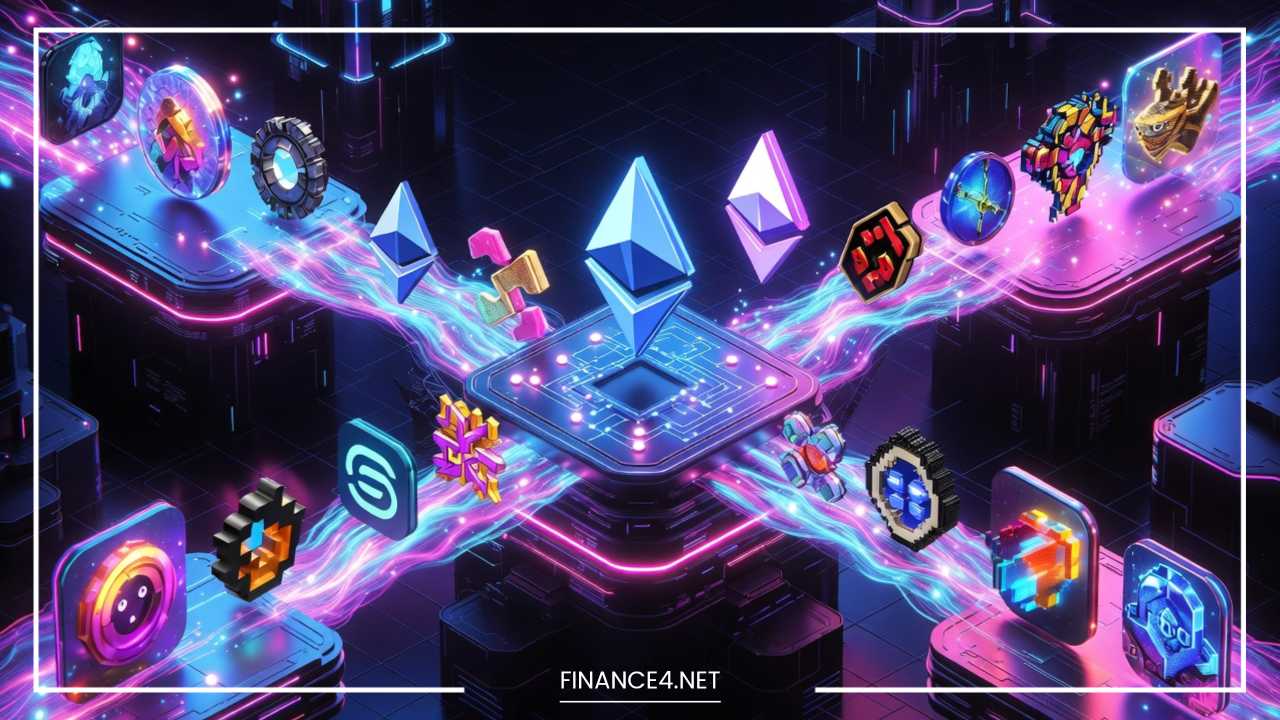
Polygon’s Approach to Interoperable NFTs | Blockchain & Web3 Insights
In the rapidly evolving landscape of Web3, Non-Fungible Tokens (NFTs) have transitioned from simple digital collectibles to the foundational building blocks of a decentralized economy. However, as the ecosystem has expanded across a fragmented array of blockchains, a significant hurdle has emerged: the “silo effect.” Traditionally, an NFT minted on one blockchain is trapped there, unable to interact with applications, marketplaces, or gaming environments on another.
Polygon, a leading Layer 2 scaling suite for Ethereum, has positioned itself at the forefront of solving this fragmentation. By developing a sophisticated architecture centered on “aggregated liquidity” and “cross-chain messaging,” Polygon is moving beyond mere scaling to create a truly interoperable NFT environment. This article explores Polygon’s multi-faceted approach to making NFTs fluid, functional, and accessible across the entire blockchain spectrum.
Understanding NFT Interoperability
To appreciate Polygon’s contribution, one must first define what NFT interoperability entails. In its simplest form, it is the ability for a digital asset to maintain its utility, provenance, and value as it moves between different blockchain networks or decentralized applications (DApps).
The Current Limitations
For years, the NFT market was dominated by Ethereum-native assets. While Ethereum offers unmatched security and a massive user base, its limitations are well-documented:
-
High Gas Fees: Small-scale creators and gamers often find it prohibitively expensive to mint or transfer assets.
-
Liquidity Silos: An NFT on Ethereum Mainnet cannot easily be used as collateral in a DeFi protocol on an alternative chain.
-
Static Utility: A sword earned in a blockchain game on one network rarely works in a different game on another network, stifling the vision of a unified “Metaverse.”
Interoperability is the “Holy Grail” of the NFT sector because it unlocks compound value. When an NFT is interoperable, its value is not just tied to its scarcity, but to the number of platforms where it can be used.
Overview of Polygon: The Scaling Powerhouse
Polygon (formerly Matic Network) was designed to solve Ethereum’s scalability issues without compromising the security of the underlying Layer 1. By 2026, it has evolved into a diverse ecosystem of scaling solutions, including the ubiquitous Polygon PoS (Proof of Stake) chain, the high-performance Polygon zkEVM, and the privacy-focused Polygon Miden.
Key Features for NFTs
Polygon has become the “de facto” home for NFTs due to three core pillars:
-
Cost Efficiency: Transaction fees on Polygon PoS typically range from $0.0005 to $0.02, making “mass-market” NFTs viable.
-
EVM Compatibility: Because Polygon is fully compatible with the Ethereum Virtual Machine, developers can use the same tools (like Hardhat or Foundry) and standards (ERC-721 and ERC-1155) they use on Ethereum.
-
Speed: With confirmation times of just a few seconds, Polygon provides the “Web2-like” experience necessary for gaming and real-time commerce.
How Polygon Supports NFT Interoperability
Polygon’s strategy for interoperability is not just about building a faster chain; it is about building the connective tissue between chains.
1. The Polygon AggLayer
The most significant leap in Polygon’s interoperability roadmap is the AggLayer (Aggregation Layer). Unlike traditional bridges that often require “wrapping” assets (creating a synthetic version of the NFT on the destination chain), the AggLayer aims to provide unified liquidity.
When a chain connects to the AggLayer, it gains the ability to perform trustless cross-chain transfers. For an NFT collector, this means their asset can be moved across various Polygon-based chains—such as a dedicated gaming chain or a social media chain—as if they were all part of a single, unified network. This “aggregated” approach eliminates the friction of manual bridging and reduces the security risks associated with third-party bridge protocols.
2. The LxLy Bridge and Token Standards
At a technical level, Polygon utilizes the LxLy Bridge, a Zero-Knowledge (ZK) powered bridge that facilitates cross-chain communication.
-
Standard Compatibility: Polygon supports the ERC-721 (individual unique tokens) and ERC-1155 (multi-token standard) protocols natively.
-
Lock-and-Mint Mechanism: When an NFT moves from Ethereum to Polygon, it is locked in a smart contract on Ethereum, and an identical “pegged” version is minted on Polygon. When it returns, the Polygon version is burned, and the Ethereum version is released. This ensures that the total supply remains constant and the provenance remains intact.
3. Native Account Abstraction
Polygon has integrated Account Abstraction (ERC-4337), which simplifies the user experience. Interoperability often fails because users struggle with managing different gas tokens across chains. With Polygon’s support for paymasters and gasless transactions, a user can move an NFT from one chain to another without needing to hold a specific “bridge fee” token, drastically lowering the barrier to entry.
Technical Deep Dive: The LxLy Bridge Architecture
To understand how Polygon handles the complex state of an NFT across chains, we must look at the LxLy Bridge (specifically the PolygonZkEVMBridgeV2 contract). This is the infrastructure that allows different Layer 2 chains to “talk” to each other and to the Ethereum Layer 1.
Global Exit Trees and State-Truth
The core of the LxLy bridge is a data structure called the Global Exit Tree.
-
Exit Leaves: Every time an NFT is bridged (transferred out of a chain), a “leaf” containing the transfer data is appended to a Merkle tree called the Exit Tree.
-
The Global Root: The roots of these individual exit trees are combined into a Global Exit Tree Root. This single hash represents the “state-truth” of all bridged assets across the entire Polygon ecosystem.
By 2026, the introduction of a Rollup Manager contract has further refined this process. Instead of each individual chain managing its own verification, the Rollup Manager acts as a central orchestrator. It verifies sequenced batches from various chains (whether they are zkEVMs or zk-Validiums) and updates the global state. This means an NFT can be proven to exist on “Chain A” and be validly claimed on “Chain B” without the two chains needing a direct, peer-to-peer connection.
Pessimistic Proofs: The Security Layer
A major concern in interoperability is “chain level accounting”—ensuring that a compromise on one chain doesn’t lead to the drainage of assets on another. Polygon uses Pessimistic Proofs within the AggLayer. This mechanism assumes the worst: it guarantees that no chain can withdraw more assets (including NFTs) from the unified bridge than it has deposited. This cryptographic “circuit breaker” is essential for scaling to hundreds of interconnected chains without creating a systemic risk.
Case Studies and Use Cases
The theoretical benefits of Polygon’s interoperability are best seen through real-world applications in gaming, art, and real-world assets.
1. Web3 Gaming: The “Ecological Identity”
In the gaming sector, projects like Moonveil and Aavegotchi have leveraged Polygon to create assets that transcend a single title. Using the AggLayer, a player might earn a “badge” NFT in a fantasy RPG on one Polygon CDK chain and have that badge instantly recognized by a social hub on another chain.
One of the most prominent examples is the Immutable zkEVM, which is powered by Polygon technology. By 2026, Immutable has established a massive ecosystem where players can own assets (like skins or cards) that are tradeable across a unified order book. Because these assets live on a Polygon-based infrastructure, they can be easily bridged to Ethereum Mainnet for high-value sales or used within other Polygon-compatible metaverses. This creates a “cross-game” reputation system where player achievements are portable.
2. “Phygital” and Real-World Assets (RWA)
Polygon has become the primary hub for tokenized real-world assets. Brands like Nike (via .SWOOSH), Starbucks, and Disney have used Polygon to issue digital collectibles that are often tied to physical rewards.
-
Institutional Adoption: Companies like Securitize have reached major milestones in tokenizing real-world funds on Polygon.
-
Secondary Market Fluidity: Interoperability allows these “phygital” tokens to move from a brand’s private ecosystem into the broader secondary market, such as OpenSea or Magic Eden, without the user needing to understand the underlying technical migration. A “loyalty NFT” earned at an e-commerce giant like Flipkart can be verified by a third-party ticketing DApp on another chain to grant a discount, all because they share the same underlying Polygon interoperability framework.
3. Global Marketplaces and the “Unified Liquidity” Model
Marketplaces like OpenSea, Rarible, and Magic Eden operate across both Ethereum and Polygon. By 2026, these platforms have integrated “chain abstraction” features. A creator can mint on Polygon to save on costs, but the asset remains visible and tradeable to collectors on Ethereum.
-
Cross-Chain Swaps: Modern NFT marketplaces now allow a user to pay with funds on Ethereum and receive an NFT on Polygon in a single transaction. This is made possible by Polygon’s deep integration with the AggLayer, which settles transactions with “near-instant” finality compared to traditional cross-chain solutions.
Challenges and Limitations
Despite the progress, the path to perfect interoperability is not without obstacles.
Security and Bridge Risks
Historically, bridges have been a primary target for hackers, accounting for nearly 70% of total funds stolen in DeFi. While Polygon’s move toward Zero-Knowledge proofs (via the AggLayer and zkEVM) significantly enhances security by moving away from multisig reliance toward mathematical proof, the complexity of these systems remains a challenge.
-
Smart Contract Risk: The logic of the LxLy bridge is complex. Any bug in the “Global Exit Root” manager or the rollup contracts could potentially impact the entire ecosystem.
-
Finality Delays: Although Polygon 2.0 aims for sub-5-second finality, bridging back to Ethereum Layer 1 still requires waiting for Ethereum’s checkpointing, which can take several minutes.
Fragmented User Experience (UX)
While the tech is improving, users still face a “fragmented” experience when dealing with multiple wallets, network RPC settings, and different gas tokens. Interoperability requires every piece of the stack—wallets, explorers, and marketplaces—to be in sync. If a wallet doesn’t support a specific Polygon CDK chain, the NFT might be “invisible” to the user, leading to confusion and support overhead for developers.
Competitive Pressure
Polygon is not alone in the “Interoperability Wars.” Other ecosystems are competing to become the industry standard:
-
Optimism’s Superchain: A network of chains sharing a common stack.
-
Arbitrum Orbit: Focused on high-performance gaming chains.
- Cosmos (IBC): A long-standing leader in cross-chain messaging.Polygon must continue to provide superior developer tooling (like the CDK) and a larger user base (through its massive brand partnerships) to remain the dominant NFT hub.
The Future: Toward the “Internet of Value”
Looking toward the end of the decade, Polygon’s vision is a world where “the blockchain is invisible.”
The Evolution of Polygon 2.0 and the POL Token
The ongoing transition to Polygon 2.0 has fundamentally changed the role of the network’s native token. POL has replaced MATIC as the “hyperproductive” token.
-
Multi-Chain Staking: Validators can now secure multiple chains within the Polygon ecosystem using only one token. This creates a shared security pool that protects all interoperable NFTs, regardless of which specific chain they are on.
-
Governance: The community now manages an Ecosystem Fund and protocol upgrades, ensuring that the interoperability standards evolve with the needs of creators rather than being dictated by a centralized entity.
Dynamic NFTs and Cross-Chain DeFi
As virtual worlds and financial systems become more complex, we can expect to see:
-
Dynamic NFTs (dNFTs): Assets that change their metadata (appearance or stats) based on events happening on other chains. For example, a “Knight NFT” on a gaming chain might get a power boost because the owner holds a certain amount of “governance tokens” on a DeFi-focused chain.
-
NFTs as Collateral: In 2026, we are seeing the rise of “NFT lending” terminals. A user can lock an expensive art NFT on Polygon and instantly borrow a stablecoin on a different chain like Base or Arbitrum through the AggLayer’s messaging protocols.
-
Universal Identity: Your NFT avatar will be your “login” for the entire decentralized web. Whether you are posting on a decentralized social media chain or shopping in a virtual store, the underlying Polygon infrastructure will verify your ownership of that identity NFT across all boundaries.
Mass Adoption and Brand Loyalty
With major technical upgrades like the Bhilai and Rio hard forks, Polygon has reached a capacity of over 5,000 transactions per second (TPS). This level of scalability, combined with interoperability, is what allows giants like Starbucks or Nike to run global loyalty programs. By 2026, the goal is not just to onboard “crypto natives” but to make every internet user an NFT holder without them ever needing to see a “gas fee” or a “bridge” button.
Final Thoughts
Polygon’s approach to interoperable NFTs is defined by a shift from “isolation” to “aggregation.” By building the infrastructure that allows assets to flow freely while maintaining the security of Ethereum, Polygon is solving the most critical pain point in the NFT space.
For creators, this means a wider audience and the ability to build experiences that span multiple worlds. For collectors, it means greater utility and the peace of mind that their assets aren’t “locked” in a dying ecosystem. And for developers, it provides a modular, future-proof toolkit to build the next generation of Web3. As the AggLayer matures and the Polygon 2.0 vision becomes the standard for the “Internet of Value,” the silos of the early NFT era will finally crumble, giving way to a truly open, interconnected, and liquid digital economy.
Would you like me to create a detailed technical breakdown of how to deploy a cross-chain NFT collection using the Polygon CDK?