
Top Bridging Solutions for Cosmos
 by
by 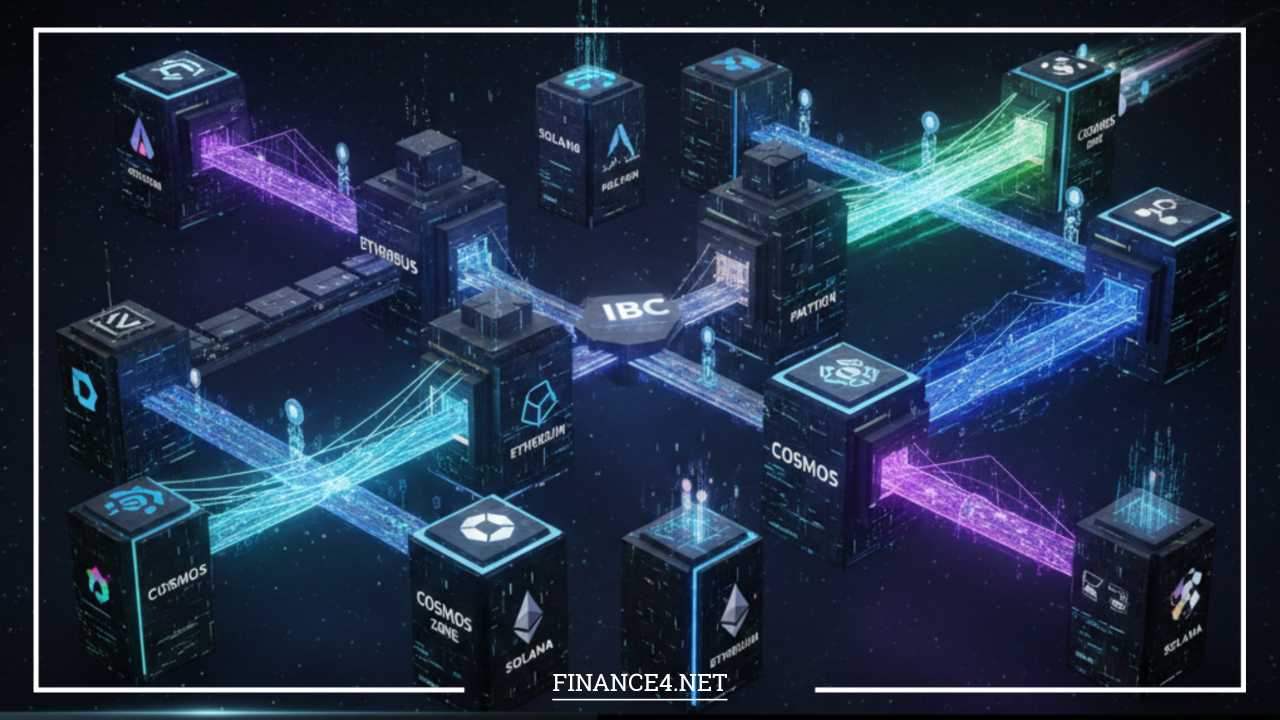
Top Bridging Solutions for Cosmos | Best Cross-Chain Platforms
The vision for the decentralized web, or Web3, is one where digital assets, data, and services flow freely between different blockchain networks. The Cosmos ecosystem stands at the forefront of this vision, often heralded as the “Internet of Blockchains.” Cosmos is not a single blockchain but a vast network of independent, sovereign chains, each built using the Cosmos SDK and powered by the Tendermint (now CometBFT) consensus engine. Its fundamental thesis is modularity: developers should be able to launch application-specific blockchains—or “Zones”—that are highly customized for a single purpose, rather than forcing all activity onto a single, monolithic chain.
However, the strength of sovereignty also presents a significant challenge: isolation. To realize its true potential, these sovereign chains cannot operate in silos. This is where interoperability becomes the cornerstone of the Cosmos vision.
Bridging is the technology that solves this challenge. In the simplest terms, a bridge is a link that enables the transfer of tokens, data, and contract instructions between two distinct blockchain environments.
-
Asset Portability: Moving an ERC-20 token like USDC from Ethereum to a Cosmos Zone like Osmosis for trading.
-
Data Transfer: Sending a message that triggers a smart contract function on a remote chain.
-
Ecosystem Growth: Unlocking liquidity from established chains like Ethereum and funneling it into the burgeoning Cosmos DeFi and NFT landscape.
A “good” bridge improves liquidity, enables DeFi composability (the ability for different protocols to seamlessly interact), and accelerates the overall ecosystem growth by creating a seamless user and developer experience across what would otherwise be isolated networks.
Native Interoperability: Inter-Blockchain Communication Protocol (IBC)
The baseline for interoperability within the Cosmos ecosystem is the Inter-Blockchain Communication Protocol (IBC). It is arguably the most secure and trust-minimized method for cross-chain activity because it is a protocol baked into the Cosmos SDK, not a separate, external bridge solution.
What is IBC and How it Works
IBC is a universal, open-source protocol for secure, permissionless, and authenticated transport of data between arbitrary state machines (blockchains). It achieves this without relying on any external validator set or custodian; the security of the connection is inherited from the security of the two connected chains’ native validator sets.
The IBC architecture is built on a few core concepts:
-
Light Clients: Each connected chain maintains a light client of the counterparty chain. This light client verifies the header and state root of the connected chain, allowing Chain A to cryptographically verify proofs that an event (like a token transfer) actually happened on Chain B.
-
Relayers: These are off-chain processes that monitor for state changes (i.e., new packets) and submit the proof of that change to the light client on the destination chain. They are purely transaction carriers and do not require any trust; they are incentivized with transaction fees and punished if they relay invalid data.
-
Connections and Channels: A Connection is established between two light clients, verifying that the chains trust each other’s state. A Channel is then built atop a connection to facilitate the transfer of data packets for a specific application (e.g., a token transfer module).
-
Packet Transfer (ICS-20): For token transfers, the common standard is ICS-20. When a user sends tokens from Chain A to Chain B, the tokens are locked in an escrow account on Chain A. A proof of this lock is relayed to Chain B, which then mints a representation of the token (a pegged asset) to the user’s wallet. The reverse process (burn-and-unlock) occurs when the token is sent back.
Advantages of IBC
-
Trust-Minimized Security: This is the primary advantage. Unlike external bridges that introduce a new layer of trust (a third-party validator set or a multisig), the security of an IBC transfer is guaranteed by the two connected chains’ native consensus mechanisms. You only need to trust the security of the chain you are transacting on and the counterparty chain.
-
Sovereignty: Chains connected via IBC maintain their full sovereignty. There is no central Hub or Relay Chain that dictates consensus or governance.
-
Generic Communication: IBC is not limited to token transfers. It can pass arbitrary data, enabling sophisticated features like Interchain Accounts (ICA), which allow one chain to control an account on another, unlocking true cross-chain smart contract composability.
Use Cases
IBC is the foundational technology for:
-
Native Token Transfers: Moving ATOM to Osmosis, or OSMO to the Cosmos Hub.
-
Interoperable DeFi: Cross-chain staking, liquidity provision, and borrowing/lending.
-
Interchain Accounts: Enabling one-click experiences where a user can stake on one chain and provide liquidity on another in a single transaction.
Why External Bridges Still Matter — Connecting Cosmos to EVM & Other Ecosystems
IBC is the “universal language” of the Cosmos ecosystem. Its trust-minimized model is highly dependent on the ability of one chain to verify the cryptographic proofs of another, which is easiest when both chains are built with the Cosmos SDK and use the same consensus mechanism (Tendermint/CometBFT).
However, the blockchain world is vast and includes major ecosystems like Ethereum (EVM), Solana, Polkadot, and others. These networks use fundamentally different consensus mechanisms and virtual machines. The computational cost and technical complexity of running a full Ethereum light client on a Cosmos chain (or vice versa) is often prohibitively high, making native IBC impractical for non-Cosmos chains.
This is the necessity that gives rise to external bridges.
Role of External/Non-Native Bridges
External bridges serve as the crucial on-ramps and off-ramps, allowing assets and messages to move between the IBC-connected ecosystem and the rest of the crypto world. They address the need for liquidity access—specifically, bringing the vast liquidity of stablecoins and major assets (like ETH) from EVM chains into Cosmos and allowing Cosmos assets (like ATOM) to be used on Ethereum DeFi.
Trade-Offs
The primary trade-off is trust. Since IBC’s cryptographic proof model is not feasible across disparate architectures, external bridges must introduce a different security model, which invariably involves an additional layer of trust beyond the two transacting chains’ native validators. This can be a separate Proof-of-Stake (PoS) network, a multisig committee, or a Guardian set, which introduces a new point of failure and centralization risk.
Top Bridging Solutions for Cosmos — Overview & Comparison
For connecting the sovereign Cosmos Zones to external ecosystems, three solutions are currently dominant, each with a distinct approach to security and connectivity.
1. Gravity Bridge
The Gravity Bridge is a foundational, purpose-built, open-source bridge specifically designed to connect the Ethereum (EVM) ecosystem with the Cosmos ecosystem.
What it Connects & Implementation
-
Ecosystems: Ethereum (EVM) to Cosmos Chains (via IBC connection to the Gravity Bridge chain).
-
How it Works (Lock-Mint Model): Gravity Bridge operates as its own Cosmos SDK chain.
-
Ethereum to Cosmos: A user sends an ERC-20 token to the Gravity.sol smart contract on Ethereum, which locks the token and emits an event. The Gravity Bridge Validator Set (a separate PoS network secured by its native $GRAV token) observes this event, reaches consensus, and submits a cryptographic proof (a batch of validator signatures) back to the Gravity Bridge chain. The Gravity Bridge then mints an IBC-compatible representation of the token on its chain, which can then be transferred to any other IBC-enabled Cosmos Zone.
-
Cosmos to Ethereum: Tokens are burned on the Cosmos side, and the validator set signs a message to instruct the Ethereum contract to unlock and release the native ERC-20 tokens.
-
Strengths & Trade-offs
| Feature | Gravity Bridge |
| Strength | Decentralization: Secured by its own dedicated validator set, independent of a central authority. Its design is open-source and focuses on maximum efficiency and simplicity for a pure Ethereum peg. |
| Strength | IBC Integration: Acts as the primary, high-security gateway for Ethereum assets, allowing a single bridge to serve the entire IBC ecosystem. |
| Trade-off | Limited Ecosystem Reach: Primarily focused on the Ethereum/EVM connection. It is not designed for generalized message passing to non-EVM chains. |
| Trade-off | Validator Trust: Security is reliant on the integrity of the Gravity Bridge Validator Set. If a supermajority (>2/3) of the validator stake colludes, they can fraudulently mint assets. |
2. Axelar
Axelar is not just a bridge; it is a full-fledged Cosmos-SDK-based interoperability network that provides a layer of infrastructure for General Message Passing (GMP) across dozens of different chains.
What it Connects & Implementation
-
Ecosystems: Cosmos, Ethereum, and over 50 EVM and non-EVM chains (including Avalanche, Polygon, Fantom, and others).
-
How it Works (Decentralized PoS & GMP): Axelar functions as a decentralized relay chain secured by its own Proof-of-Stake validator set using the native $AXL token.
-
Gateways: It deploys Gateway Smart Contracts on every connected chain.
-
Validation: When a user initiates a transaction (e.g., token transfer or contract call) on Chain A’s Gateway, Axelar validators observe this event. They reach consensus, and once a threshold is met via threshold cryptography, they collectively sign the transaction payload.
-
Relay: This validated, signed message is then submitted to the Gateway Contract on the destination chain (Chain B), which executes the instruction.
-
-
General Message Passing (GMP): Axelar’s key feature is not just token transfer, but the ability to send arbitrary data payloads. This allows a dApp on a Cosmos chain to call a function on a smart contract on an Ethereum-based chain, creating true cross-chain composability.
Strengths & Trade-offs
| Feature | Axelar |
| Strength | Ecosystem Reach: The broadest connectivity, linking Cosmos to the majority of the crypto market’s liquidity, including both EVM and major non-EVM networks. |
| Strength | General Message Passing (GMP): Supports complex dApp interactions and contract calls, not just simple asset transfers. This is critical for building “omnichain” applications. |
| Strength | Security Model: Uses a robust, dynamic Proof-of-Stake validator set, incentivized and secured similar to a major L1 chain, making it more decentralized than simpler multisig bridges. |
| Trade-off | New Trust Layer: Requires users to trust the security of the Axelar validator set in addition to the security of the source and destination chains. |
| Trade-off | Complexity: The decentralized PoS design introduces operational overhead and potential costs compared to native IBC. |
3. Wormhole Gateway
Wormhole is a well-established, high-speed message-passing protocol that has expanded its reach into the Cosmos ecosystem through the dedicated Wormhole Gateway appchain.
What it Connects & Implementation
-
Ecosystems: Cosmos to Ethereum, Solana, Polygon, and over 30 other chains.
-
How it Works (Guardian Network & Gateway): Wormhole is secured by a network of 19 independent entities called Guardians.
-
Observation: When a user sends assets/messages through a Wormhole contract on a source chain, a verifiable message (a VAA, or Verifiable Action Approval) is emitted.
-
Consensus: At least two-thirds of the Guardians must observe and attest to the VAA by cryptographically signing it.
-
Gateway Integration: The Wormhole Gateway is a dedicated Cosmos SDK chain. It takes the attested VAA from the Guardian network and leverages it to execute the instruction on a Cosmos chain, routing the asset via IBC (ICS-20). This allows Wormhole-bridged assets to maintain the security and composability of native IBC within the Cosmos ecosystem.
-
Strengths & Trade-offs
| Feature | Wormhole Gateway |
| Strength | Speed and Liquidity: Known for its high speed and extensive market penetration, especially connecting to Solana and other high-throughput chains. |
| Strength | ICS-20 Native: By utilizing the Cosmos Gateway chain, assets that enter the Cosmos ecosystem are wrapped in the secure, IBC-native ICS-20 standard, maximizing composability within Cosmos. |
| Trade-off | Guardian Trust: Security relies on the 19 Guardians. While decentralized, it is a smaller, fixed-size set of entities compared to a large, open-entry PoS network like Axelar. The integrity of this set is a core trust assumption. |
| Trade-off | Past Security Incident: The Wormhole bridge suffered a significant $325M exploit in 2022. While security has been heavily upgraded and the Gateway includes features like the Governor (rate limiting), this remains a historical risk factor for some users. |
Criteria to Evaluate a “Good” Bridge
Selecting the right bridging solution is a trade-off decision that depends entirely on the user’s or developer’s priority. Here are the core criteria for evaluation:
1. Security — Trust Assumptions
This is the most critical factor. The security of a bridge is only as strong as its weakest link.
-
Trust Assumptions: Does the bridge require trusting a fixed multisig, a dynamic PoS validator set, or a core Guardian committee? Bridges that rely on a smaller, fixed set of external parties (like a Guardian set) generally have higher trust assumptions than native IBC.
-
Decentralization: How many independent actors are required to reach consensus on a cross-chain transaction? More, diverse actors generally lead to greater security.
-
Audit History: Has the bridge undergone rigorous, independent audits, and how has it responded to any discovered vulnerabilities or past exploits?
2. Compatibility / Ecosystem Reach
-
Chains Supported: How many ecosystems does the bridge connect to? A bridge connecting only to Ethereum (like Gravity Bridge) is excellent for EVM liquidity, but an infrastructure layer supporting dozens of EVM/non-EVM chains (like Axelar or Wormhole) offers broader market access.
-
Integration Capabilities: Does it support simple token transfers, or does it also support General Message Passing (GMP) and complex smart contract calls? GMP is vital for the next generation of cross-chain dApps.
3. Speed & Cost
-
Latency: How quickly does the asset or message arrive at the destination chain? High-speed protocols are critical for time-sensitive applications like trading or liquidations.
-
Fees: What are the associated transaction costs? This includes gas fees on the destination chain and any service or relay fees charged by the bridge operator/network. Batching (like that used by Gravity Bridge) can significantly lower costs on the Ethereum side.
4. Usability & Developer-Friendliness
-
User Experience (UX): Is the process for a non-technical user simple and intuitive, or does it require manual claiming and complex steps?
-
Developer Experience (DevX): Does the bridge provide easy-to-use SDKs and APIs that abstract away the cross-chain complexity? Axelar’s focus on a unified SDK for GMP is a prime example of high developer-friendliness.
5. Liquidity & Asset Support
-
Token Coverage: Which tokens are supported? The primary need for Cosmos is access to major stablecoins (USDC, USDT) and liquid L1 assets (ETH, SOL).
-
Slippage: For large transfers, is there deep enough liquidity on the source/destination side, or does the transaction result in significant slippage?
-
Wrapped Assets: Is the representation on the destination chain fungible, well-adopted, and universally recognized by other dApps (e.g., is it the “canonical” wrapped version)?
6. Composability
-
Does the bridge allow for simple token transfers, or can it support cross-chain contract calls and Interchain Accounts (ICA)? True composability is the ability to send tokens and execute a smart contract function on the destination chain in a single transaction.
Risks, Challenges, and What Users Should Watch Out For
Despite the technological advancements, cross-chain bridges remain one of the most significant attack vectors in the entire crypto industry. Users must approach external bridges with a high degree of caution and awareness of the inherent risks.
Security Risks
-
Compromised Custodians/Guardians: For most external bridges, a supermajority of the external consensus mechanism (validators, guardians, or multisig holders) must be trusted not to collude and steal the locked assets. If these private keys or nodes are compromised—either through a hack or insider collusion—the security breaks down, and the assets backing the wrapped tokens can be stolen (a $325M hack on Wormhole and a $625M hack on Ronin Bridge are examples of this).
-
Smart Contract Bugs: Vulnerabilities in the smart contract code (on either the source or destination chain) that handles the locking, burning, minting, or release of tokens can be exploited.
-
External vs. Native Security: Always remember that non-IBC bridges introduce a third trust layer. A chain connected via IBC (native) only relies on the security of the two chains’ validators. A chain connected via an external bridge relies on Chain A’s validators, Chain B’s validators, and the bridge’s external security system.
Centralization Trade-offs
Many high-speed or highly-connected bridges achieve their performance or reach by adopting a more centralized security model (e.g., a smaller, faster set of signers). Users must decide if the trade-off for speed and convenience is worth the increased centralization risk. The “best” bridge often sits at the perfect balance point of security, decentralization, and feature-set for a specific use case.
Liquidity and Operational Risks
-
Liquidity Risk: If a bridge’s liquidity is not sufficient, a large user transfer may be stalled, delayed, or subject to high slippage.
-
Bridging Delays/Gas Costs: Transfers to and from high-fee chains like Ethereum Mainnet can be expensive, and congestion can lead to significant delays. Users should always check the real-time gas costs before initiating a transfer.
-
Wrapped Token Limitations: A wrapped token (e.g., axlUSDC or wETH bridged via Wormhole) is not the native asset. Its value is purely derived from the guarantee that the native asset is locked elsewhere. If the bridge fails, the wrapped token becomes worthless. Furthermore, these wrapped tokens may not be recognized by all dApps or may have fragmented liquidity across different protocols.
Use-Case Scenarios / Practical Recommendations
The choice of the best bridging solution for a Cosmos user depends on their goal:
| Use-Case Scenario | Recommended Bridge(s) | Rationale |
| Purely within Cosmos (e.g., ATOM to Osmosis for trading). | IBC (Inter-Blockchain Communication Protocol) | Maximum Security & Minimal Trust. IBC is the native, trust-minimized standard for all communication between two chains built with the Cosmos SDK. Always use IBC when available. |
| Bringing stablecoins or ERC-20 assets from Ethereum to Cosmos. | Gravity Bridge or Axelar | Gravity Bridge is the purpose-built, highly-optimized, and decentralized peg-zone for Ethereum, serving the entire IBC ecosystem. Axelar offers a more general-purpose gateway and broader asset selection, though with a different trust model. |
| Transferring assets between Cosmos and many EVM/non-EVM ecosystems. | Axelar or Wormhole Gateway | Axelar provides the broadest reach (50+ chains) with its GMP and PoS security. Wormhole Gateway excels at high-speed token transfers, especially to non-EVM chains like Solana, while leveraging IBC composability inside Cosmos. |
| Cross-chain dApp messaging and composability (e.g., triggering a contract on a remote chain). | Axelar (General Message Passing – GMP) | Axelar is explicitly designed for arbitrary data and smart contract function calls across chains, a core requirement for complex “omnichain” applications. |
| Maximum Security & Minimal Trust | IBC whenever possible, or the most decentralized alternative (e.g., Gravity Bridge for Ethereum). | Minimizing the reliance on an external consensus mechanism reduces the risk exposure from an external hack. |
The Future of Cross-Chain Bridging in Cosmos — Trends & What to Watch For
The current generation of bridges, while effective, is only the beginning of true cross-chain interoperability. The future is focused on pushing the envelope on security and composability.
Evolution of Bridging Standards: Cross-Chain Messaging
The trend is moving away from simple token bridging (lock-and-mint) toward general message passing (GMP) and deeper smart contract interaction. Protocols like Axelar, with their GMP focus, are leading this charge, allowing developers to build logic that spans multiple chains, abstracting the complexity away from the user. Features like Interchain Accounts (ICA) native to IBC and similar implementations on external bridges will make dApps truly multi-chain by allowing one contract to control a wallet on a remote chain.
Potential Improvements: Lighter Clients and ZK-Proof-Based Bridging
The ultimate goal is to achieve the security of native IBC without the computational overhead of running full light clients for every connected chain.
-
Lighter Clients: Innovations in light client technology will make it easier and cheaper for chains to cryptographically verify the state of non-Cosmos chains, potentially bridging the security gap.
-
Zero-Knowledge (ZK) Proofs: ZK-proofs represent a paradigm shift. In a ZK-bridge, instead of relying on an external validator set to attest that a transaction occurred, the bridge would provide a cryptographic proof that the transaction occurred on the source chain according to its rules, all verifiable on the destination chain without revealing the full transaction data. This would dramatically reduce the trust assumptions, potentially matching or exceeding IBC’s trust-minimization in a universal manner.
Growing Adoption and Standardization
The Cosmos ecosystem’s adoption of IBC continues to grow, integrating dozens of application-specific chains. Simultaneously, external bridge standards are becoming more robust, with security features like rate-limiting and circuit breakers (like Wormhole’s Governor) becoming standard best practices. As more liquidity flows into Cosmos, the pressure on bridges to be fast, secure, and cost-effective will only increase. Security, decentralization, and standardization will be the critical metrics for the next decade of cross-chain infrastructure.
Final Thoughts & Key Takeaways
Bridging is not a peripheral technology; it is vital to the Cosmos’s vision of an interoperable, sovereign “Internet of Blockchains.” Without secure and robust bridges, the individual strengths of the specialized Cosmos Zones would remain isolated, limiting the flow of liquidity and innovation.
-
The “Best” Bridge is Contextual: There is no single universal solution. The “best” platform depends on the user’s specific needs:
-
For inter-Cosmos transfers, IBC is the gold standard for security.
-
For EVM liquidity, Gravity Bridge offers a battle-tested, decentralized peg.
-
For broad, multi-ecosystem reach and dApp composability, Axelar is a leading infrastructure layer.
-
For speed to non-EVM chains, Wormhole Gateway provides efficient, IBC-compatible routing.
-
-
Security Must Guide Decisions: Users and developers must always be acutely aware of the trust assumptions of their chosen bridge. The convenience of speed and the reach of broad compatibility always come with a corresponding increase in trust in an external, non-native security layer.
-
Future is Composability: Emerging innovations like ZK-bridges and advanced cross-chain messaging will continue to improve the fundamental infrastructure, moving the industry toward a truly seamless, cryptographically-secure multi-chain experience where the chain a user is operating on becomes an invisible detail.