Top NFT Bridging Technology
 by
by 
Top NFT Bridging Technology: Revolutionizing Cross-Chain Assets
The digital economy has witnessed an extraordinary evolution with the advent of Non-Fungible Tokens (NFTs). More than just digital art, NFTs represent unique ownership over a vast array of assets, from virtual real estate and in-game items to intellectual property and financial instruments. Their inherent uniqueness and provable scarcity, secured on a blockchain, have made them cornerstones of the Web3 world, giving rise to multi-billion dollar markets.
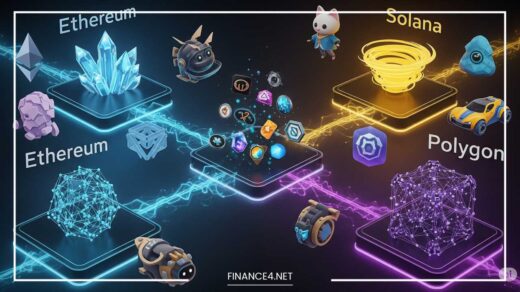
However, the initial promise of a seamlessly connected digital world faced a crucial hurdle: blockchain silos. The majority of NFTs were initially created on isolated ecosystems, primarily Ethereum, making them unusable, untradable, or illiquid on other leading blockchains like Solana, Polygon, or Avalanche. This challenge necessitated a groundbreaking solution—NFT bridging.
NFT bridging is not merely a technical fix; it is a conceptual revolution. It is the core technology transforming NFTs from platform-specific collectibles into universally accessible, cross-chain assets. This article delves into the mechanics of NFT bridging, explores the top technologies enabling this shift, and analyzes the profound implications for the future of the decentralized digital economy.
Understanding NFT Bridging: What is it?
NFT bridging is the specialized process that enables a non-fungible token to be securely and verifiably transferred from one independent blockchain network to another. In essence, it constructs a digital “bridge” across the conceptual chasm separating incompatible blockchain architectures.
To understand its significance, it’s vital to contrast it with traditional fungible token bridging. Fungible tokens, such as cryptocurrencies, are interchangeable—one Ethereum (ETH) is identical to any other ETH. When bridging these, the protocol often only needs to ensure the value is locked on the source chain and an equivalent wrapped token is minted on the destination chain, maintaining a stable supply.
NFTs, by definition, are non-fungible. Each one has a unique identity, metadata, and history. When an NFT is bridged, the bridge must transfer the uniqueness and ownership record—not just the value—from the source to the destination chain.
The fundamental challenge of NFT interoperability stems from differing token standards (e.g., Ethereum’s ERC-721 versus Solana’s Metaplex standard) and the inability of one blockchain’s smart contract to natively “read” or “verify” a transaction on another chain. An NFT contract on Chain A cannot know if its counterpart on Chain B is acting honestly, nor can it communicate its internal state.
NFT bridging addresses this by acting as a trusted intermediary, dramatically improving the liquidity, accessibility, and utility of NFTs. An NFT originally minted on a high-fee, high-security chain can be transported to a low-fee, high-speed chain for active trading or use in a game, only to be returned when needed. This expands the NFT’s potential audience and use cases exponentially.
Why is NFT Bridging Important?
The importance of NFT bridging extends beyond mere convenience; it is a prerequisite for achieving the full potential of a decentralized, interconnected Web3 ecosystem.
Cross-Chain Compatibility and Versatility
The primary driver is cross-chain compatibility. An NFT confined to a single blockchain is inherently limited. Bridging makes NFTs more versatile, enabling them to be used as collateral in DeFi protocols on one chain, traded on a marketplace on a second, and utilized as an avatar in a metaverse built on a third. This mobility unlocks the true utility of the digital asset.
Market Expansion and Liquidity
NFT bridging facilitates market expansion by allowing collections minted on one chain to access the user base and capital of another. For example, a popular Ethereum collection can be bridged to a chain like Polygon or Immutable X, instantly tapping into a community seeking lower transaction costs and faster speeds. This increased access translates directly into higher trading volumes and enhanced liquidity, which is critical for price discovery and asset stability.
Innovation in Gaming, Metaverse, and DeFi
The ability to transport assets is transformative for innovation in gaming and the metaverse. A sword acquired in a game on one blockchain could be bridged to a different virtual world and used as an item, or even broken down and used as collateral in a DeFi lending protocol. This composability breaks down the walled gardens of traditional digital ecosystems. In Decentralized Finance (DeFi), bridged NFTs can be used to unlock new financial products, such as tokenized fractional ownership, or serving as collateral for loans in cross-chain NFT-Fi platforms.
Overcoming Blockchain Silos
Ultimately, NFT bridging aims to overcome blockchain silos. By providing a secure, verified path for assets and data to move between disparate networks, bridges are stitching together a fragmented blockchain landscape. This fosters a shared, interconnected ecosystem where the focus shifts from the underlying chain to the utility of the asset itself, accelerating mass adoption.
How Does NFT Bridging Work?
The core mechanism of NFT bridging is built on the interplay of smart contracts, cryptographic proofs, and off-chain relayers (or oracles). Unlike traditional file transfer, the actual digital file (the NFT’s metadata and image, usually stored on IPFS or a similar service) does not move; only the proof of ownership moves.
Technical Overview: Lock-and-Mint
The most common technical mechanism is the Lock-and-Mint model, which ensures that the NFT’s uniqueness is maintained across the two chains.
-
Locking: The user initiates a transfer by sending their NFT to a specialized Bridge Smart Contract on the source chain. This contract locks the NFT, rendering the original non-transferable and effectively taking it out of circulation.
-
Verification: A network of validators, relayers, or oracles (depending on the bridge architecture) observes the locking transaction on the source chain. They verify the transaction’s validity and, upon consensus, create a cryptographic proof or a signed message attesting to the lock event.
-
Minting: The user submits this proof/message to the Bridge Smart Contract on the destination chain. This contract then mints a wrapped version of the NFT. This new token, often called $wNFT$ (wrapped NFT), is a representation of the original. Crucially, the metadata and unique ID of the original NFT are preserved, and a one-to-one mapping is enforced.
-
Unlocking/Burning: To move the asset back to the source chain, the user sends the wrapped NFT to the destination chain’s bridge contract to be burned. Once this burn is verified, the bridge contract on the original source chain unlocks the original NFT, returning ownership to the user.
Different Types of NFT Bridges
NFT bridges can be broadly categorized based on their security model and governance:
-
Custodial Bridges (Centralized Bridges): These rely on a single, trusted entity or a small multi-sig group to hold the assets and attest to the transfer. While fast and inexpensive, they introduce a centralization risk, as the assets are custodied by a third party and are vulnerable to a single point of failure (a major security concern in the crypto space).
-
Decentralized Bridges (Trust-Minimized Bridges): These protocols use a large, decentralized network of validators, staking mechanisms, and complex cryptographic proofs (like zero-knowledge proofs) to secure the bridging process. They are trust-minimized, as users rely on code and economic incentives rather than a central party. Examples include protocols utilizing decentralized messaging layers and Layer 2 solutions.
Challenges of NFT Bridging
Despite their vital role, bridges face serious challenges:
-
Security Risks: Bridges are notorious targets for hackers, often being one of the largest attack surfaces in Web3. Vulnerabilities in complex smart contract logic can be exploited, leading to massive financial losses (e.g., the Wormhole exploit in 2022).
-
Technical Complexity: The differing standards of token contracts, cross-chain messaging formats, and consensus mechanisms create significant technical hurdles that must be managed by the bridge protocol.
-
User Experience: The process often requires multiple steps, different wallet configurations, and an understanding of underlying gas fees, creating a non-intuitive experience for the average user.
Top NFT Bridging Technologies & Protocols
The technological race for true, secure cross-chain interoperability has produced several leading protocols, each with a unique architectural approach to facilitating the flow of NFT assets.
Polkadot and Kusama
Polkadot (and its canary network, Kusama) takes an architectural approach to interoperability rather than a bridge protocol. Its core design is the Relay Chain and Parachains.
-
Mechanism: Parachains are independent, application-specific blockchains that connect to the shared security of the Relay Chain. The system uses Cross-Consensus Messaging (XCM), a native messaging format that allows any data—including NFT transfers and smart contract calls—to be exchanged securely and trustlessly between any two parachains, or the Relay Chain.
-
NFT Use Case: XCM enables true, native NFT interoperability within the Polkadot ecosystem. For example, an NFT minted on an asset-focused parachain like Acala can be instantly used in a gaming-focused parachain like Moonbeam without a conventional lock-and-mint bridge.
Chainlink Cross-Chain Interoperability Protocol (CCIP)
Chainlink’s CCIP is positioned as a secure, decentralized standard for cross-chain communication, leveraging its proven network of decentralized oracle nodes.
-
Mechanism: CCIP allows smart contracts on one blockchain to securely send messages and transfer tokens (both fungible and non-fungible) to a smart contract on another blockchain. It uses a network of independent, battle-tested oracle operators and a Risk Management Network to monitor the entire process, providing an extra layer of security assurance against exploits.
-
NFT Use Case: CCIP is an essential infrastructure for building highly secure NFT bridges. It enables developers to implement complex cross-chain logic, such as minting an NFT on Polygon by paying the minting fee on Ethereum, or creating a universally accessible NFT collection that can trigger actions on multiple chains through a single, secure message.
Wormhole
Wormhole is a generalized messaging protocol that began as a bridge between Ethereum and Solana and has expanded to connect over 30 chains.
-
Mechanism: Wormhole operates using a decentralized network of validators called Guardians. When an NFT is locked on the source chain, the Guardians observe and verify the event, signing a Verified Action Approval (VAA) message. This VAA is then relayed to the destination chain’s contract, where it is used to mint the wrapped asset. This architecture prioritizes broad chain support and speed.
-
NFT Use Case: Wormhole has been critical for the cross-chain movement of high-profile NFT collections, allowing Solana-native collections to move to Ethereum or Polygon to access larger marketplaces, or vice versa, maximizing their market reach.
LayerZero
LayerZero describes itself as an “omnichain interoperability protocol” that aims to enable communication between all blockchains.
-
Mechanism: LayerZero utilizes an Ultra-Light Node (ULN) design. The protocol separates verification logic between a light on-chain client (the ULN) and two independent off-chain entities: a Relayer and an Oracle. The Oracle sends the block header to the destination chain, and the Relayer sends the transaction proof. Only if the proof is validated against the block header does the message execute. This separation of concerns significantly enhances security and efficiency.
-
NFT Use Case: LayerZero is the foundation for creating OFTs (Omnichain Fungible Tokens) and ONFTs (Omnichain Non-Fungible Tokens), which are inherently multi-chain and can be transferred without the traditional “wrapping” process. This enables protocols to maintain a unified NFT collection that exists seamlessly across multiple networks.
Polygon Bridge
The Polygon Bridge is a dedicated two-way bridge designed to facilitate asset movement between the Ethereum mainnet and the Polygon sidechain (or its Layer 2 solutions).
-
Mechanism: Polygon operates two primary bridges: the PoS (Proof-of-Stake) Bridge for rapid, low-cost transfers (often used for NFTs), and the Plasma Bridge for higher security and slower transactions. The PoS Bridge uses a set of network validators to confirm deposits on the Ethereum mainnet before minting assets on the Polygon sidechain.
-
NFT Use Case: It has become the standard for projects that wish to leverage Ethereum’s security and established NFT market while benefiting from Polygon’s low gas fees and high throughput for minting, trading, and in-game mechanics.
Immutable X
Immutable X is a Layer 2 scaling solution for NFTs on Ethereum, rather than a generalized cross-chain bridge. However, its architecture addresses a core bridging use case: moving from a high-cost environment to a low-cost one.
-
Mechanism: Immutable X uses ZK-Rollup (Zero-Knowledge Rollup) technology to bundle thousands of transactions off-chain, prove their validity cryptographically, and then submit a single, highly compressed proof to the Ethereum mainnet. This allows for instant, gas-free NFT minting and trading.
-
NFT Use Case: The platform itself acts as a gateway, allowing users to move their NFTs from Ethereum to Immutable X for a virtually free, high-speed experience, which is essential for scaling NFT-heavy applications like trading card games and virtual worlds.
Challenges and Risks of NFT Bridging
While the technologies are advancing rapidly, the process of NFT bridging is not without its significant challenges and inherent risks. These must be addressed for the widespread, secure adoption of cross-chain assets.
Security Risks
The greatest threat to bridging technology is security. Cross-chain bridges have historically been the most exploited sector in Web3, with billions of dollars lost to sophisticated attacks.
-
Smart Contract Exploits: The complexity of bridge smart contracts, which must manage locking, minting, and cross-chain message parsing, makes them highly susceptible to bugs and vulnerabilities. An error in the code can allow an attacker to fraudulently mint wrapped assets without locking the original, leading to hyperinflation and collapse of the wrapped token’s value.
-
Custodial Risks: Centralized or smaller multi-sig bridges inherently have a single point of failure. If the private keys of the custodians are compromised, all locked assets are at risk.
-
Relayer/Oracle Attacks: In decentralized bridge designs, the integrity of the off-chain network (relayers, oracles, or guardians) is paramount. If a majority of these entities collude or are compromised, they can approve fraudulent transactions, compromising the security guarantees of the bridge.
Transaction Fees and Gas Costs
While the destination chain may offer low fees, the act of initiating or settling a bridge transaction, especially to or from a network like Ethereum, can incur substantial gas costs. These high transaction fees can deter smaller users or make high-frequency bridging economically unviable. Furthermore, some bridges charge their own protocol fees in addition to the network gas fees, adding to the total cost.
User Experience
Despite efforts to simplify, the bridging process remains a complex user experience. Users must understand which bridge to use, manage multiple wallets across different networks, confirm various transaction types, and navigate different asset representations ($NFT$ vs. $wNFT$). Transaction delays—sometimes hours long—and the need for technical knowledge create a barrier to entry for mainstream adoption.
Governance and Centralization
The governance of a bridge is a critical risk factor. A bridge managed by a small, closed committee of token holders or a corporate entity is more centralized than the chains it connects. The decisions regarding security upgrades, fee structures, or even emergency shutdowns can be made by a few, contrasting with the decentralized ethos of Web3. Trustless, decentralized governance is a massive technical challenge that many protocols are still striving to achieve.
Scalability
As the volume of NFTs increases across multiple chains, current bridging technologies face potential scalability issues. The cross-chain messaging layer can become congested, leading to slower transaction times, especially during peak demand periods. New architectural designs like the omnichain messaging protocols are attempts to mitigate this, but sustained high-volume stress remains a practical test.
Future of NFT Bridging and Cross-Chain Assets
The current landscape of bridging is merely the beginning. The future will be defined by innovations that solve the security, speed, and usability challenges, leading to a truly seamless, interconnected digital asset ecosystem.
Upcoming Innovations: ZK-Proofs and Intents
Emerging technologies are set to revolutionize the efficiency and security of bridging:
-
Zero-Knowledge Proofs (ZK-Proofs): ZK-Rollup technology, currently used by Layer 2 solutions, is expanding into general cross-chain messaging. ZK-proofs allow one chain to cryptographically verify that an event occurred on a source chain without requiring the source chain’s block headers or a costly, external validator network. This offers the highest theoretical security model for trustless bridging.
-
Intents-Based Bridging: This represents a paradigm shift from a message-passing system to a goal-oriented one. Instead of manually executing the lock-mint-burn steps, a user simply expresses their intent (“I want this NFT on Polygon”) and a network of competing relayers/solvers executes the transaction via the fastest, cheapest, and most secure route. This promises to drastically simplify the user experience.
Increased NFT Interoperability: The Universal Asset
The trajectory points toward a truly interoperable NFT ecosystem where the underlying chain becomes a mere implementation detail. The goal is to create a “Universal Asset” that operates as a single entity, regardless of the blockchain it currently resides on. This will be facilitated by advanced messaging protocols that allow for atomic swaps and unified liquidity across all connected networks.
Metaverse and Gaming Integration
In the future of the Metaverse and Gaming, NFT bridging will be invisible to the user. Players will not need to manually bridge their assets; their in-game currency or gear will simply load from one virtual world to the next, regardless of the disparate chains they are built upon. This seamless, cross-chain experience is crucial for massive adoption, enabling in-game economies to transcend platform boundaries and become truly open.
Role of Decentralized Finance (DeFi)
Bridging will unlock new horizons for NFT integration in DeFi. Once an NFT can move freely, it can be seamlessly used as collateral in lending markets, tokenized into derivative products, or integrated into indices across various DeFi hubs. This mobility will unlock significant capital efficiency for NFT holders, transforming digital collectibles into active, productive financial assets.
Final Thoughts
The development of Top NFT Bridging Technology represents a pivotal moment in the evolution of the decentralized web. What began as a fragmented collection of digital assets, confined to isolated blockchain silos, is rapidly transforming into a single, cohesive, and universally accessible digital economy.
The ingenuity of protocols like Wormhole, LayerZero, Polkadot’s XCM, and the foundational security of Chainlink CCIP is successfully tackling the monumental challenges of security, speed, and complexity inherent in cross-chain communication. These technologies have done more than just connect two chains; they have validated the core Web3 promise: that digital ownership and value should not be restricted by platform.
As these bridging protocols mature—incorporating next-generation advancements like ZK-proofs and intents-based routing—they will fundamentally redefine the concept of a digital asset. The NFT of tomorrow will be a truly fluid, multi-chain entity, moving effortlessly to wherever its utility and liquidity are greatest. The revolution is not just in the asset itself, but in the infrastructure that allows it to travel, ushering in a new era of global, interconnected digital commerce and experience.