Top NFT Watchlist Tools for Bridging Expansions
 by
by 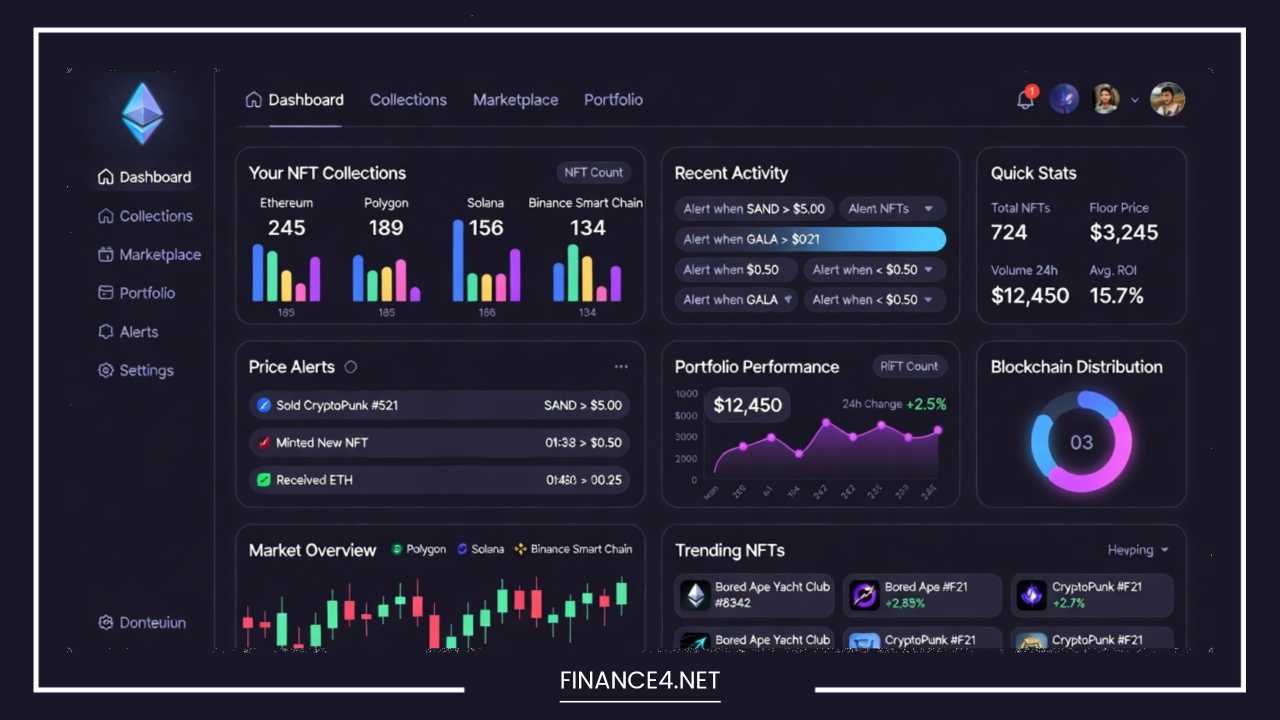
Top NFT Watchlist Tools for Bridging Expansions
The world of Non-Fungible Tokens (NFTs) is no longer a centralized playground primarily dominated by a single blockchain like Ethereum. Instead, it has exploded into a complex, multi-chain, and multi-platform ecosystem, driven by a race toward bridging expansions—the seamless movement and tracking of assets across disparate environments. For investors, collectors, and creators, navigating this fragmented landscape requires specialized tools capable of providing a cohesive view of their assets and the broader market. The days of relying on a single marketplace’s ranking page are over; success in the modern NFT space hinges on having a reliable, cross-platform watchlist.
This comprehensive guide will explore the critical need for sophisticated NFT watchlist tools, dive into the concept of bridging expansions, and detail the top-tier platforms equipped to handle the demands of a decentralized, multi-chain future.
The NFT ecosystem, born from the simple idea of verifiable digital ownership, has grown exponentially, morphing into a sprawling market encompassing digital art, collectibles, gaming assets, and real-world assets (RWAs) tokenized on the blockchain. This rapid expansion, however, has also led to complexity. As scaling solutions like Layer 2s (Polygon, Arbitrum) and alternative Layer 1s (Solana, Tezos, BNB Chain) gain traction, the NFT market is no longer a monoculture.
This fragmentation introduces a challenge: tracking and managing Non-Fungible Tokens that might be scattered across different wallets, blockchains, and marketplaces.
An NFT watchlist is an essential tool that goes beyond a simple bookmark. It is a dynamic, real-time dashboard that monitors specific collections, individual assets, and market metrics relevant to a user’s strategy. Its importance is amplified by the industry’s push toward bridging expansions. This term refers to the technologies and strategies that enable interoperability—the ability to bridge NFTs, data, and liquidity between different chains and platforms. Without tools that can track these bridging expansions, investors are effectively operating blind in a high-speed, multi-lane marketplace.
The promise of this article is to deliver a curated list of top-tier tools that not only manage a basic NFT portfolio but actively simplify the daunting task of cross-platform tracking, ensuring collectors and traders never miss an opportunity due to walled-garden data.
Understanding NFT Watchlists
At its core, an NFT watchlist is a personalized monitoring system. Its primary functions include:
-
Tracking: Monitoring the floor price, 24-hour volume, number of holders, and specific trait data for selected NFT collections.
-
Alerts: Providing real-time notifications for significant market events, such as a sharp drop in the floor price, a ‘whale’ purchase, or the sale of a specific, high-rarity asset.
-
Portfolio Management: Offering a consolidated view of a user’s entire NFT holdings across all connected wallets, calculating realized and unrealized profit and loss (P&L), and estimating the portfolio’s fair market value (FMV).
In the early days of NFTs, a simple spreadsheet or the built-in watchlist feature of a single marketplace like OpenSea was sufficient. However, the ecosystem has rapidly matured beyond these capabilities. Traditional watchlists fall short because they are often limited to a single blockchain (e.g., Ethereum-only) or a specific marketplace’s listings. They fail to capture the holistic picture of an investor’s exposure across the entire Web3 space.
For example, a collector might own assets on Ethereum and Solana, trade gaming items on Immutable X, and track a new mint on the Base network. A traditional watchlist would require them to manually check four different platforms. Missing updates in this fragmented environment can have significant financial consequences. A five-minute delay in receiving an alert about a floor price collapse on a secondary chain could be the difference between profitably exiting a position and being stuck with a depreciating asset. Conversely, missing a sudden spike in demand for a rare trait on an alternative marketplace could lead to a missed opportunity to sell at peak valuation. The need for a unified, multi-chain dashboard is now paramount.
The Importance of Bridging Expansions in NFTs
The concept of “bridging” is arguably the most important trend driving the evolution of the NFT market. Bridging in NFTs refers to the development of infrastructure and protocols that enable the transfer of NFT assets, metadata, and functionality from one blockchain to another. This is key to achieving true interoperability, where a digital asset is not confined to the chain on which it was originally minted.
Current trends accelerating this need for bridging-capable watchlist tools include:
-
Layer 2 Solutions and Scaling: Blockchains like Ethereum are scaling via Layer 2 solutions (e.g., Arbitrum, Optimism, Polygon). NFTs are increasingly minted and traded on these L2s to leverage lower gas fees and faster transaction times. A watchlist must track both the L1 (Ethereum) and the associated L2s to provide a complete view of a collection’s activity.
-
Cross-Chain NFT Platforms: Dedicated platforms are emerging to facilitate the actual movement of NFTs across chains, often locking the asset on the source chain and minting a wrapped version on the destination chain.
-
Multi-Chain Minting and Ecosystem Growth: Major projects are launching natively on multiple chains (e.g., launching PFP collections on Solana and their gaming assets on Polygon) or expanding to new ecosystems like Avalanche or Flow.
Why a Watchlist Tool Needs to Handle These Expansions:
If a popular Ethereum-based collection announces a bridging expansion to a chain like Avalanche, demand and liquidity can instantly move. A watchlist focused only on Ethereum will not register the immediate price action or the sudden influx of new buyers on Avalanche. A bridging-capable tool, however, will aggregate the total floor price, volume, and holder data across both chains, providing a real-time, consolidated market signal.
Risks of Not Using Bridging-Capable Tools:
-
Missed Drops and Launches: New, high-potential projects are often launching exclusively on alternative chains (e.g., zkSync, Base). If a tool isn’t tracking new contract deployments and mint activity on these chains, an investor will miss the opportunity to get in early.
-
Market Inefficiencies: Prices for the same collection (or wrapped versions of the same asset) can diverge across chains. A cross-chain watchlist highlights these arbitrage opportunities, allowing savvy traders to buy low on one chain and sell high on another, a key component of a dynamic market strategy.
-
Incomplete Valuation: Without factoring in assets held on Polygon, Solana, or other EVM-compatible chains, a portfolio valuation will be severely underrepresented, leading to poor capital allocation decisions.
Criteria for Choosing a Top NFT Watchlist Tool
As the market matures, the bar for a “top” watchlist tool rises significantly. Investors must look beyond simple price tracking and prioritize features that address the complexities of bridging expansions.
Key Features to Look For:
-
Cross-Chain Compatibility: This is the non-negotiable cornerstone. The tool must support multiple prominent blockchains, ideally including EVM-compatible chains (Ethereum, Polygon, Arbitrum, BNB Chain, Optimism, Base) and at least one major non-EVM chain (Solana). This is the definition of bridging capability in a watchlist.
-
Real-Time Alerts: Alerts should not be limited to price changes. Top tools offer notifications for:
-
Rarity Snipes: When an undervalued rare NFT is listed.
-
Whale Activity: When a known, large collector buys or sells a significant portion of a collection.
-
New Listings: Instant notification of new assets hitting the floor price or below.
-
-
Portfolio Analytics (P&L and FMV): A tool must accurately calculate the user’s Profit and Loss (P&L) across all connected wallets and chains, and provide an accurate, aggregated Fair Market Value (FMV). The best tools use machine learning or proprietary algorithms to estimate the value of unlisted NFTs based on traits and recent sales.
-
Market Insights and Rarity Tracking: The ability to instantly rank an NFT by its rarity score and filter collections based on market activity (volume, sales velocity, total unique holders) is crucial for identifying undervalued assets or warning signs in a declining collection.
-
Integration with Marketplaces: Seamless data aggregation from major marketplaces (OpenSea, Blur, Magic Eden, X2Y2, Foundation) is required. The tool should aggregate the best listing price across all platforms for a given asset.
User Experience Considerations:
-
Dashboards and Customization: A clean, intuitive dashboard is essential for viewing complex data at a glance. Users should be able to create multiple, customizable watchlists for different strategies (e.g., a “Blue Chip” list, a “New Mint” list, a “Solana Flip” list).
-
Mobile Apps: Given the 24/7 nature of the NFT market, a reliable mobile app with instant, push notifications is vital for capturing time-sensitive opportunities, especially those arising from cross-chain market inefficiencies.
Top NFT Watchlist Tools
The following tools represent the current gold standard for NFT investors, with a particular focus on their ability to handle the complexity and data aggregation required for bridging expansions. The sheer volume and speed of the multi-chain ecosystem demand the capabilities offered by these platforms.
1. NFTBank.ai
Brief Introduction: NFTBank.ai is fundamentally a multi-chain portfolio management and tax platform that has evolved into a powerful watchlist tool. It is designed to solve the problem of fragmented data by offering an aggregated financial view of all NFT assets across various wallets and blockchains.
Features:
-
Bridging Capability (Multi-Chain Support): Excellent support across 12+ EVM chains (Ethereum, Polygon, BNB Chain, etc.). This makes it one of the strongest tools for tracking assets that have been bridged or minted on EVM Layer 2s.
-
Portfolio Analytics: Its core strength. It offers highly accurate Profit and Loss (P&L) tracking, distinguishing between realized and unrealized gains. Its valuation engine uses advanced models to estimate the fair market value of illiquid or unlisted NFTs, a critical feature for a holistic multi-chain portfolio view.
-
Tax Reporting: A standout feature, allowing users to generate crypto tax reports based on their multi-chain NFT transactions, simplifying regulatory compliance.
-
Watchlist Functionality: Users can track collection floor prices and specific assets, receiving updates directly related to their portfolio’s financial performance.
Pros:
-
Best-in-class for financial and tax reporting on multi-chain NFT assets.
-
Robust valuation model provides realistic portfolio estimates.
-
Clean, financial-focused user interface.
Cons:
-
Less focused on real-time drop/mint alerts compared to market-centric tools.
-
Limited support for non-EVM chains like Solana (though this is continually expanding).
Pricing: Offers a free tier for basic portfolio tracking; paid tiers unlock advanced features, increased wallet connections, and full tax reporting capabilities.
2. DappRadar
Brief Introduction: DappRadar is a veteran Web3 data aggregator that has broadened its scope from tracking Decentralized Applications (DApps) to providing comprehensive, cross-platform NFT and DeFi market intelligence. It is a powerful tool for understanding ecosystem growth and market trends across multiple blockchains.
Features:
-
Bridging Capability (Cross-Platform Tracking): Outstanding support, tracking dApps, NFTs, and tokens across 90+ blockchain networks (including Ethereum, Solana, Polygon, Arbitrum, Flow, etc.). Its coverage is among the widest in the industry, making it ideal for tracking the entire footprint of a project’s bridging expansion.
-
Watchlist: Recently introduced a dedicated Watchlist feature allowing users to pin and monitor their favorite DApps, tokens, chains, and, crucially, NFT collections from across its supported chains.
-
NFT Rankings: Provides detailed rankings based on sales volume, user activity, and market capitalization, helping traders spot which chains are trending for NFT activity.
-
Portfolio Tracker: Allows users to connect their wallets to manage their tokens and NFT assets, providing a cross-chain overview of holdings.
Pros:
-
Unrivaled breadth of cross-chain coverage (90+ chains).
-
Excellent for tracking new and emerging ecosystems following bridging.
-
Strong focus on both NFT and DApp metrics, providing a holistic Web3 view.
Cons:
-
Rarity tracking and snipes are not its primary focus; it’s more of a macro-market intelligence tool.
-
The NFT portfolio tracking features, while robust, may be less granular on P&L than specialized financial tools like NFTBank.ai.
Pricing: Free access to most data; a DappRadar PRO membership (paid for with the native RADAR token) unlocks advanced features, custom alerts, and deeper analytics.
3. Gem.xyz (OpenSea Aggregator)
Brief Introduction: Gem.xyz, now owned by OpenSea, is an NFT marketplace aggregator initially built to streamline the purchasing experience on Ethereum. While its primary function is transactional (batch buying), its underlying data aggregation is a powerful watchlist feature for high-volume traders.
Features:
-
Bridging Capability (Multi-Marketplace & Cross-Chain): While its initial focus was on Ethereum marketplaces (OpenSea, LooksRare, X2Y2), its integration with OpenSea has expanded its ability to track collections listed across OpenSea’s supported chains (e.g., Ethereum, Polygon, Klaytn, BNB Chain). Its strength lies in aggregating listings and prices across multiple venues for the same chain/collection.
-
Aggregated Search and Listing: It allows users to view the cheapest listings for a specific NFT or collection across all major integrated marketplaces in one feed. This is critical for catching the lowest-priced listing, regardless of where it resides.
-
Batch Buying/Sweeping: The ability to “sweep” the floor—buy multiple NFTs across different collections in a single, gas-optimized transaction—is invaluable for capitalizing on cross-collection floor opportunities identified on a watchlist.
-
Rarity Filter Integration: Built-in rarity rankings allow users to apply rarity filters directly to the aggregated listings, instantly highlighting undervalued rare assets.
Pros:
-
Optimized for speed and transactional efficiency, saving gas and time.
-
Aggregates the lowest price across multiple marketplaces.
-
Ideal for active traders looking to execute quick decisions based on floor price movements.
Cons:
-
Primarily focused on the Ethereum ecosystem (and its direct extensions via OpenSea) for deep functionality.
-
Less focused on long-term P&L tracking or complex historical analytics.
Pricing: Free to use, as it acts as a transaction layer; users only pay standard network gas fees and marketplace commissions.
4. Icy.tools
Brief Introduction: Icy.tools is a high-speed NFT analytics platform renowned for its focus on real-time market data and identifying trending collections and new mints. It’s the go-to tool for traders focused on market momentum and early entry opportunities.
Features:
-
Bridging Capability (Market Tracking): Offers coverage of the largest NFT ecosystems, including Ethereum and Solana, with a focus on real-time data from both. This crucial ETH/SOL dual support addresses two of the most liquid, yet separate, NFT markets, which is a major aspect of bridging data fragmentation.
-
Real-Time Data Feeds: Known for its low-latency data, tracking volume and floor price changes by the minute, essential for fast-paced trading.
-
Trending Collections: Its powerful algorithm identifies collections with a sudden spike in trading activity, often signaling a new drop or a whale accumulation phase.
-
Watchlist & Alerts: Allows users to track specific collections, receiving push and email alerts for key metrics like price changes, volume spikes, and new high-value sales.
Pros:
-
Extremely fast and low-latency data, giving traders a competitive edge.
-
Strong focus on identifying trending and new collections.
-
Excellent interface for quickly assessing a collection’s momentum (charts, velocity).
Cons:
-
The free tier is quite limited, restricting access to crucial real-time data and historical charts.
-
Less focused on portfolio-level P&L and individual NFT valuation compared to NFTBank.ai.
Pricing: A free tier provides basic data; a premium subscription unlocks real-time data, full historical charts, and custom alerts.
5. Rarity.tools
Brief Introduction: Rarity.tools is a specialized platform that focuses almost exclusively on one thing: ranking the rarity of generative art and collectible NFTs. While not a complete portfolio tracker, its definitive rarity scoring system is an essential component of any strategic NFT watchlist, as rarity is the primary driver of value.
Features:
-
Rarity Ranking Algorithm: Provides a definitive, statistically derived rarity score and rank for almost every major NFT collection, allowing traders to instantly quantify the value of an asset based on its traits.
-
Rarity-Based Filtering: The core of its watchlist utility. Users can easily view collections sorted by rarity, enabling quick identification of “floor rares”—rare assets that are listed too close to the floor price, representing a potential snipe opportunity.
-
Multi-Chain Focus: While initially Ethereum-centric, the platform and its competitors/successors often include tools that track rarity for other major chains like Solana (via MoonRank/HowRare.is counterparts), acknowledging the bridging need for multi-chain rarity scores.
-
Direct Marketplace Links: It provides direct links to the relevant listings on marketplaces, facilitating rapid, informed purchases.
Pros:
-
The definitive source for rarity scoring and ranking.
-
Essential for sophisticated collectors who buy and sell based on trait value.
-
Simple, clean interface for filtering and sorting collections.
Cons:
-
Not a true portfolio or P&L tracker; it only addresses the rarity component of valuation.
-
Does not track real-time volume or broader market trends on its own.
Pricing: Primarily free to use, as its data is public for listed collections.
Tips for Maximizing NFT Watchlists
The mere existence of a multi-chain watchlist tool is not enough; the user must employ a strategic approach to maximize its utility across bridging ecosystems.
-
Set Up Smart Alerts for Cross-Chain Collections: Do not simply track the floor price on the primary chain (e.g., Ethereum). Set up distinct, but equally critical, alerts for the bridged or native collections on secondary chains (e.g., Polygon or Solana). A surge in volume on a secondary chain often precedes a price move on the primary, serving as an early indicator of renewed interest.
-
Track Floor Prices and Trends (Aggregated): Utilize tools like DappRadar or Gem.xyz that aggregate the lowest listing price across all connected marketplaces and chains. Your watchlist should show the true global floor price, not just the OpenSea Ethereum floor. This is how you catch cross-chain arbitrage.
-
Combine Multiple Tools for Complete Coverage: No single tool is perfect. A powerful strategy is to combine a market intelligence tool (like Icy.tools for speed and drop identification) with a financial management tool (like NFTBank.ai for accurate P&L and tax reporting). This provides both a tactical and a strategic view.
-
Avoid Overloading Notifications: The multi-chain environment generates a torrent of data. Overloading your watchlist with too many collections leads to alert fatigue. Balance the breadth of your tracking (the number of chains/collections) with a focused strategy. Only set up high-priority, low-volume alerts (like a 15% floor price drop or a rare listing) for your most crucial collections.
Future of NFT Watchlists and Bridging Expansions
The evolution of NFT watchlists is inextricably linked to the continued growth and complexity of the Web3 infrastructure. As bridging expands from a clunky, multi-step process to a near-instantaneous transaction, the tools monitoring the space must become even more intelligent.
-
Upcoming Features in Watchlist Tools:
-
AI Predictions and Automated Trading: The next generation of watchlists will integrate AI to predict the probability of a collection’s floor price moving based on on-chain signals (whale wallet activity, developer commits, social sentiment). This could lead to automated trading features, where the watchlist tool executes a pre-set strategy (e.g., “Sell if P&L falls below 10%”) across multiple chains via smart contract interactions.
-
Deep Wallet Integration: Watchlists will become central management hubs, allowing users to move assets, list, and delist directly from the dashboard, integrating marketplace and bridging functionality natively.
-
Fractionalized NFT Tracking: As more blue-chip NFTs are fractionalized, tools will need to track the price and liquidity of these individual ERC-20 fractions across DeFi protocols (DEXs) and compare them to the full NFT’s price on marketplaces.
-
-
Role of Cross-Chain Bridges in NFT Growth: True cross-chain bridges—which move the asset’s ownership from one chain to another securely—will eliminate the current data fragmentation. As this technology matures, watchlists will focus on tracking liquidity pools and market depth across chains to find the optimal venue for trading, rather than simply comparing floor prices.
-
How Watchlists Will Evolve with Web3 Expansion: The ultimate evolution is the Omnichain Watchlist, a tool that tracks NFTs regardless of which blockchain they reside on, viewing them as fungible assets that can be swapped and traded fluidly across chains. These tools will prioritize the underlying asset’s metadata and function over its current chain location, finally making the complexity of bridging an invisible background operation for the end-user.
Final Thoughts
The NFT market has decisively moved beyond a single-chain paradigm. With the accelerating trend of bridging expansions—new Layer 2s, new Layer 1s, and cross-chain platforms—the data landscape is now vast, disparate, and moves at incredible speed.
The right NFT watchlist tool is no longer a luxury; it is a fundamental requirement for anyone seeking to invest, trade, or build in the space. By prioritizing platforms with robust cross-chain compatibility, advanced P&L analytics, and real-time market intelligence, collectors can overcome the challenge of data fragmentation.
Using the right tools can save time, reduce the risk of operating on incomplete data, and dramatically increase the probability of capturing high-value opportunities that emerge from cross-ecosystem market inefficiencies. Take the time to explore and integrate the leading tools mentioned—they are the essential navigators for the next era of multi-chain NFT wealth creation.