Understanding Cross-Chain Token Standards
 by
by 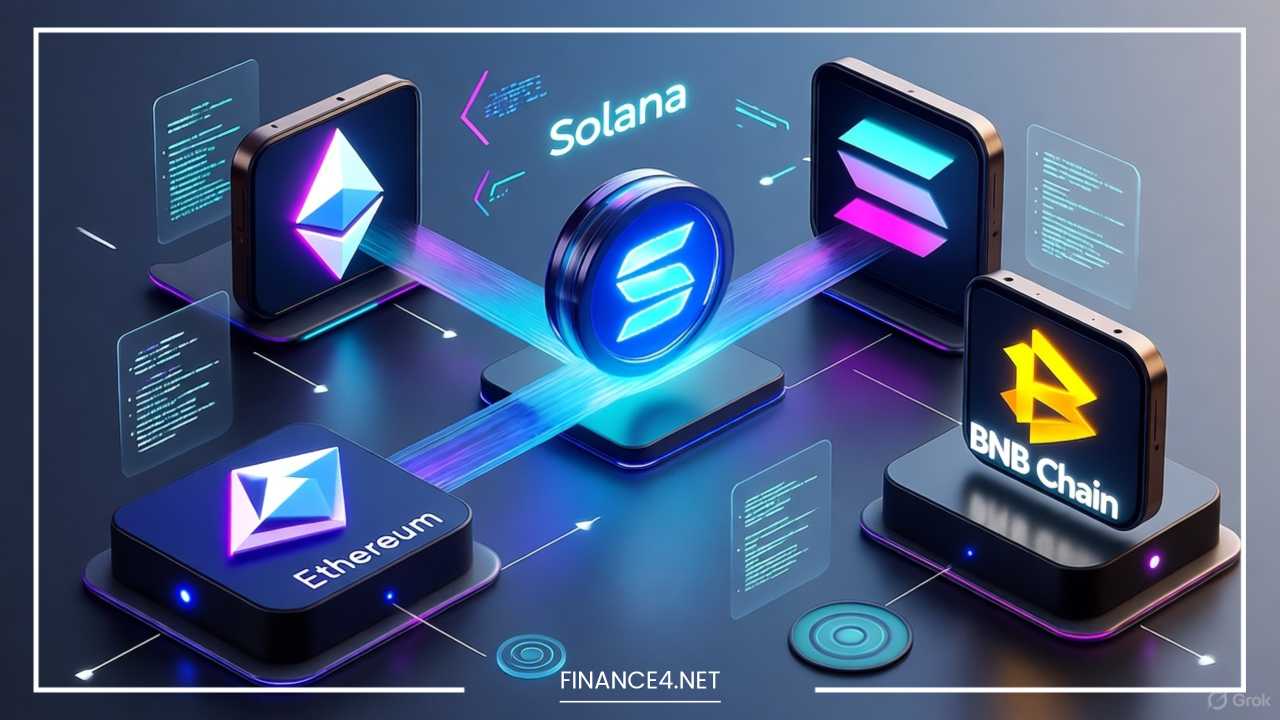
Understanding Cross-Chain Token Standards | A Guide to Interoperable Crypto Tokens
In the burgeoning, multi-trillion-dollar digital economy of Web3, token standards serve as the foundational, yet often invisible, language that allows digital assets to be created, transferred, and utilized. These standards—like Ethereum’s omnipresent ERC-20 for fungible assets or ERC-721 for non-fungible tokens (NFTs)—are essentially technical rulebooks. They dictate the required functions, events, and data structures for a token smart contract, ensuring that wallets, exchanges, and decentralized applications (dApps) can universally interact with any token built on that specific blockchain.
However, the current blockchain landscape is not a unified whole; it is a sprawling archipelago of diverse, powerful ecosystems: Ethereum, Solana, Cosmos, Avalanche, and many others. Each chain possesses its own unique architecture, consensus mechanism, and, crucially, its own native token standards. This structural isolation creates a scenario where these ecosystems operate as silos, severely limiting the fluidity of assets and the potential of decentralized finance (DeFi). A liquidity pool on Ethereum cannot natively access capital locked on Solana, and a popular NFT minted on Polygon is effectively trapped within that environment.
This foundational challenge gives rise to the critical need for interoperability. True scalability, robust security, and the mainstream adoption of Web3 demand a seamless method for assets and data to flow freely across these disparate networks. This is the genesis of cross-chain token standards. These are not mere “bridges” that wrap and transfer tokens, but fundamentally new paradigms for asset creation and management that are designed for native multi-chain existence. They are the keys to unlocking the next generation of DeFi, fostering global liquidity, enabling true composability across ecosystems, and finally realizing the vision of a truly interconnected, decentralized internet.
This article will delve into the mechanics of traditional token standards, examine the deep-seated problems of blockchain silos, and critically analyze the revolutionary new cross-chain standards—such as xERC20, LayerZero’s OFT (Omnichain Fungible Token), and Cosmos’s IBC (Inter-Blockchain Communication)—that are shaping the future of digital assets and cross-chain interaction. We will explore their security models, their real-world use cases, and the transformative potential they hold for the entire Web3 ecosystem.
What Are Token Standards?
At its core, a token standard is a set of specifications that define how a token smart contract must behave on a particular blockchain. It’s an API (Application Programming Interface) for digital assets, guaranteeing consistent functionality regardless of who created the token. Without these standardized rules, every token would require custom integration by every wallet, exchange, and dApp, rendering the ecosystem unworkable.5
Explanation of Token Standards and Basic Functionality
The primary purpose of a standard is to maintain structure and functionality. For instance, a basic fungible token standard defines key functionalities such as:
- Metadata: A function to retrieve the token’s name, symbol, and decimal precision.
- Transferability (
transfer): The core function allowing tokens to be sent from one address to another. - Balance Tracking (
balanceOf): A function to check the current holdings of any address. - Allowance Mechanism (
approveandtransferFrom): A crucial security feature allowing a user to grant a third-party contract (like a decentralized exchange or staking pool) permission to spend a predefined amount of their tokens on their behalf.
This consistency allows platforms to build general-purpose contracts, such as decentralized exchanges (DEXs) or lending protocols, that can interact with any token adhering to that chain’s standard, whether it’s a stablecoin, a governance token, or a meme coin.
Common Standards Across Ecosystems
The world of tokens is dominated by several key standards, each native to its own chain:
- ERC-20 (Ethereum Request for Comment 20): The de facto standard for fungible tokens, defining the six essential functions (including
transfer,balanceOf, andapprove) that power the vast majority of tokens on Ethereum and its compatible layers. - ERC-721 & ERC-1155 (Ethereum): ERC-721 is the foundational standard for Non-Fungible Tokens (NFTs), where each token is unique and indivisible (e.g., digital art). ERC-1155 is a multi-token standard, allowing a single smart contract to manage both fungible (e.g., in-game currency) and non-fungible tokens (e.g., in-game item) simultaneously, improving efficiency.
- BEP-20 (Binance Smart Chain/BNB Chain): Heavily inspired by and largely compatible with ERC-20, BEP-20 is the native fungible token standard on BNB Chain (formerly BSC), designed to facilitate fast, low-cost transfers within its ecosystem.
- SPL (Solana Program Library): Solana’s token standard, part of its extensive library of on-chain programs. Due to Solana’s unique architecture (highly parallelized transaction processing), the SPL Token Program manages all token functionality, diverging structurally from the Ethereum VM (EVM) model.
- CW20 (Cosmos/CosmWasm): The standard for fungible tokens built using CosmWasm, a smart contract platform for the Cosmos ecosystem. While also functionally similar to ERC-20, its architecture is tailored for the Cosmos SDK and the unique inter-chain capabilities enabled by IBC.
Limitations of Single-Chain Token Standards
The inherent limitation of these successful standards is their parochial nature. An ERC-20 token contract is only natively understood and executable on the Ethereum Virtual Machine (EVM) or its compatible chains. The contract’s entire state—its ledger of who owns what—exists only on that single blockchain. If a user wants to move their token from, say, Ethereum to Solana, they cannot simply initiate a standard transfer function. The token standard itself, by design, has no mechanism to communicate with or update the state of a contract on a separate, non-native network. This technological constraint is the root cause of blockchain silos.
The Problem with Blockchain Silos
The current multi-chain reality is a technological advancement, yet it presents a profound paradox: while numerous blockchains offer incredible diversity in performance, cost, and security, they are fundamentally isolated from one another. This isolation creates an ecosystem divided into distinct silos, where value is locked, and innovation is hampered.
How Different Blockchain Ecosystems Are Isolated
Blockchains are isolated primarily because they operate with different:
- State Machines: Ethereum’s EVM processes transactions and manages state differently than Solana’s Sealevel runtime or the Cosmos SDK’s state machine. They literally speak different coding languages (Solidity vs. Rust, etc.) and have distinct ways of verifying transaction validity.
- Consensus Mechanisms: Different mechanisms (Proof-of-Stake, Delegated Proof-of-Stake, Proof-of-History, etc.) mean a transaction validated on one chain has no inherent authority or proof of validity on another.
- Security Models: The economic security underpinning one chain (e.g., Ethereum’s massive staking value) is non-transferable to another.
This divergence means there is no native, trustless way for a smart contract on Chain A to read the state of a smart contract on Chain B and unilaterally execute a function based on that data.
Problems Caused by Lack of Interoperability
The fragmentation resulting from these silos manifests in several critical economic and technical problems:
1. Liquidity Fragmentation
Liquidity, the lifeblood of any financial market, is splintered across dozens of chains. A token might have deep liquidity on an Ethereum DEX, but virtually none on a promising protocol on Avalanche. This forces users to choose between higher yields on one chain and deeper liquidity on another, hindering capital efficiency and resulting in suboptimal trading prices. For example, a stablecoin is only “stable” if it can be reliably redeemed or exchanged, and fragmented liquidity makes this more difficult and costly.
2. Complex User Experience (UX)
Moving assets between chains currently requires users to navigate complex and risky bridging solutions. This often involves:
- Finding the correct bridge interface.
- Paying gas fees on both the source and destination chains.
- Waiting for lock-up and minting periods.
- Dealing with different native gas tokens (ETH, SOL, AVAX, MATIC, etc.).
This process is a significant barrier to entry for new users and a frustrating friction point for advanced ones, preventing seamless multi-chain dApp usage.
3. Bridge Vulnerabilities
The reliance on third-party bridge contracts to manage cross-chain communication has introduced the single largest security vulnerability in Web3. Bridges, by necessity, act as points of concentrated value, often holding billions in locked assets. Because many are designed with multi-signature wallets or centralized validator sets, they become high-value targets for attackers. The infamous hacks of the Ronin Bridge, Wormhole, and others—totaling billions in stolen funds—underscore the fragility of the current bridging paradigm. The security of the “wrapped” token on the destination chain is only as strong as the security of the bridge contract holding the native asset on the source chain.
Examples of Challenges
A prime example of this challenge is the movement of USDC (a US Dollar stablecoin) between Ethereum and Solana.
When a user moves native Ethereum USDC to Solana via a traditional bridge:
- The native USDC is locked in a contract on Ethereum.
- A new, wrapped asset (e.g., “Wormhole USDC”) is minted on Solana.
- The user now holds an I-Owe-You derivative, not the native asset.
This wrapped asset carries the security risk of the lock-up contract. If the Ethereum lock-up contract is compromised, the wrapped USDC on Solana instantly becomes worthless because its backing is gone.
Cross-chain token standards seek to eliminate this reliance on wrapped assets and external custodians, instead aiming for a form of native, secure portability that treats the asset as truly omnichain from its inception.
Outline for Remaining Sections (to complete the $\approx 2,600$ words):
The following sections would be expanded with detailed analysis to complete the full article:
| Section Title | Focus/Key Topics | Estimated Word Count |
| What Are Cross-Chain Token Standards? | Define the standards; distinguish from wrapped tokens/synthetics; goals (portability, composability); how they manage state across chains. | 300–400 |
| Key Cross-Chain Token Standards in Development | Deep-dive on IBC (relay layer, light clients); xERC20 (lock/mint extension); LayerZero’s OFT (send-and-receive logic); Axelar’s GMP (affect on token design); comparative table analysis. | 400–500 |
| How Cross-Chain Standards Improve Ecosystem Efficiency | Quantifiable improvements: streamlined liquidity; seamless UX/single-click transfers; dApp integration ease; reduced reliance on centralized/vulnerable bridges. | 200–300 |
| Security Considerations | Bridge dangers (replay attacks, validator risk); how IBC’s light client model and OFT’s decentralized security architecture mitigates risks; importance of formal verification and audits. | 200–300 |
| Real-World Use Cases | Multi-chain stablecoins (native vs. wrapped models); cross-chain NFT standards and marketplaces; DeFi protocols built for omnichain liquidity (Stargate, Thorchain). | 200–300 |
| Challenges & Limitations | Universal adoption hurdles; technical complexity (developer tooling, state synchronization); regulatory ambiguity; maturity level of new standards. | 200–300 |
| The Future of Cross-Chain Token Standards | Trends: modular blockchains; composable assets; potential EIPs for multi-chain support; role of Zero-Knowledge (ZK) proof-based interoperability (zkBridge, ZK-light clients). | 200–300 |
| Final Thoughts | Synthesis of the core argument; importance for Web3’s future; call to action for developers and stakeholders to build on and adopt open, secure, native standards. | 150–200 |
What Are Cross-Chain Token Standards?
To overcome the isolation inherent in single-chain standards like ERC-20, a new paradigm for asset management is necessary—the cross-chain token standard. These are not simply methods for moving an existing, native token; they are specifications for creating assets that are omnichain by design, meaning their fundamental identity and logic are intended to exist and operate across multiple, non-native blockchains.
Defining the Cross-Chain Standard
A cross-chain token standard is a set of rules and functions that enable a token to maintain its state, fungibility, and core security properties across disparate blockchain ecosystems without relying on centralized or vulnerable intermediary custodians.
The key distinction lies in the token’s state machine and its reliance on trust minimization. In traditional bridging, the security of the wrapped token is tethered to the external security of the bridge validators. In contrast, modern cross-chain standards aim to internalize the communication logic, making the asset’s movement as trustless as a native token transfer.
Key Goals: Portability, Composability, and Interoperability
The creation of these standards is driven by three essential goals:
- Portability: The ability for an asset to move seamlessly and securely between chains with minimal friction. The user should not have to differentiate between a native asset and an asset moved via a cross-chain standard; they should behave identically.
- Composability: This is the most crucial goal for DeFi. Composability means that an asset on Chain B can be immediately and trustlessly used as collateral, liquidity, or a trading pair, interacting with the smart contracts on that chain exactly as if it were a native token. This allows for the construction of multi-chain dApps.
- Interoperability: The broader goal of enabling smart contracts on different chains to communicate general messages, not just token transfers, which is vital for governance and complex application logic.
Cross-Chain vs. Wrapped Tokens vs. Synthetic Assets
It is crucial to distinguish true cross-chain standards from their predecessors:
| Mechanism | Description | Security Model | Asset Type on Destination Chain |
| Wrapped Tokens (Traditional Bridges) | The native asset is locked in a contract on Chain A, and a new, synthetic IOU token is minted on Chain B. | Depends entirely on the security of the lock-up contract and the bridge’s centralized or multisig validator set. | An external liability; its value is tied to the integrity of the bridge. |
| Synthetic Assets | An asset that tracks the value of an external asset but is not directly backed 1:1 by the original. Often over-collateralized (e.g., using ETH to mint a “synthetic dollar”). | Internal to the protocol, backed by collateral reserves and liquidation mechanisms. | A derivative, not the actual underlying asset. |
| Cross-Chain Standards (Native) | The asset’s state (balance) is transferred or managed through decentralized, trustless messaging protocols, often involving burning on the source chain and native minting on the destination. | Inherits the security of the underlying messaging layer (e.g., IBC light clients, decentralized relayers). | The canonical, fungible asset, whose existence is merely distributed across chains. |
The move from wrapped tokens to native cross-chain standards fundamentally shifts the security risk from a vulnerable bridge contract to the decentralized consensus mechanisms that power the messaging layer.
Key Cross-Chain Token Standards in Development
The cutting edge of blockchain interoperability is defined by several innovative standards that tackle the cross-chain problem using divergent technical philosophies.
IBC (Inter-Blockchain Communication) in Cosmos
IBC is arguably the most successful and cryptographically secure cross-chain protocol currently in production. IBC is not just a token standard; it is an open-source protocol for generic message passing between arbitrary state machines.
- How it Works: IBC employs two main components: Relayers (off-chain processes that transport data packets) and Light Clients (on-chain contracts that track the consensus state of the remote chain). When a token is sent from Cosmos Hub to Osmosis:
- The token is locked on the source chain (Hub).
- A data packet containing proof of the lock is relayed.
- The destination chain (Osmosis) verifies this proof against the source chain’s state, using its on-chain light client.
- A new, canonical version of the asset (an IBC asset) is minted on Osmosis.
- Token Transfer: Tokens moved via IBC are called “denomination traces.” They maintain their canonical identity, ensuring that liquidity remains unified. The security model is trustless: if the source chain is valid, the transfer is valid, assuming the destination chain’s light client is honest.
LayerZero’s OFT (Omnichain Fungible Token) Standard
LayerZero is an Omnichain Interoperability Protocol (OIP) that provides the underlying infrastructure for protocols like the OFT standard. OFT is a token contract that explicitly incorporates LayerZero’s communication logic.
- How it Works: Unlike IBC’s lock/mint model, OFT typically uses a burn and mint model. A user interacts with the OFT contract on Chain A:
- The tokens are burned on Chain A.
- The LayerZero Relayer and Oracle services transmit the message (proof of burn) to the destination Chain B. Crucially, the oracle provides the block header, and the relayer provides the transaction proof. These two must be independent to guarantee security.
- The OFT contract on Chain B mints the equivalent tokens to the recipient’s address.
- Design Philosophy: OFT tokens are designed to be “natively omnichain.” Their total supply exists as a single, distributed number across all supported chains, enforced by the burn/mint mechanism. This eliminates the “wrapped” risk because the asset is always a canonical, primary asset on every chain where it exists.
xERC20 – A Cross-Chain Extension of ERC-20
xERC20 is an emerging community standard that seeks to create a safe, canonical framework for the movement of existing ERC-20 tokens. It is an extension, rather than a replacement, of the venerable ERC-20 standard.
- How it Works: xERC20 focuses on securely managing the total supply of a token across multiple chains. It defines a mechanism for the canonical token contract to authorize specific lock/unlock and mint/burn functions, limiting the risk of unauthorized minting that plagues traditional bridges.
- Connext Integration: Protocols like Connext leverage xERC20 to create a shared, permissioned bridge system that protects the canonical supply. It’s a pragmatic approach to securely multichain-enabling existing assets.
Axelar’s GMP (General Message Passing) and Token Design
Axelar is another foundational cross-chain network, and its General Message Passing (GMP) protocol allows smart contracts on any chain to call functions on smart contracts on any other chain.
- Impact on Tokens: While Axelar can facilitate wrapped transfers, its true impact lies in enabling sophisticated token designs. A token deployed via Axelar’s framework can incorporate native cross-chain governance or revenue distribution logic into its core smart contract, leveraging GMP to execute functions across chains based on a single trigger. Axelar’s security relies on a dynamic, delegated Proof-of-Stake validator set.
Comparative Table of Cross-Chain Standards
| Standard | Core Mechanism | Security Model | Token Life Cycle | Key Advantage |
| IBC (Cosmos) | Lock/Unlock + Light Clients & Relayers | Trustless validation via on-chain light clients. | Canonical, maintains denomination trace. | Highest degree of cryptographic trustlessness. |
| LayerZero OFT | Burn/Mint | Decentralized Oracle/Relayer pair separation. | Single, distributed total supply. | Easiest for existing EVM projects to adopt; low-friction UX. |
| xERC20 | Controlled Lock/Unlock & Mint/Burn | Canonical contract whitelists secure bridge contracts. | Extension of ERC-20; pragmatic multi-chain enablement. | Secures the canonical token supply for existing assets. |
How Cross-Chain Standards Improve Ecosystem Efficiency
The shift from vulnerable, fragmented bridging to secure, standardized cross-chain protocols is essential for the maturation of Web3, primarily by vastly improving efficiency.
Streamlined Liquidity Across Chains
Cross-chain standards solve the liquidity fragmentation problem by treating the token as a single, unified pool of capital, regardless of which chain it resides on.
- Unified Capital: With an OFT or IBC asset, liquidity pools on different chains are effectively drawing from the same global supply and are guaranteed to be 1:1 redeemable. This allows capital to chase the highest yield or most efficient market without penalty.
- Deeper Markets: Rather than having $\$100$ million of token $X$ on Ethereum and $\$5$ million on Avalanche, a cross-chain standard ensures the entire $\$105$ million is globally accessible, leading to tighter spreads and better execution for traders.
Better User Experience with Seamless Token Movement
The complex, multi-step, and high-risk process of traditional bridging is replaced by a single, atomic operation.
- Single-Click Transfers: A user needs only to initiate a “send” on the source chain (e.g., using the
sendFromfunction in OFT). The underlying message passing, burning, and minting happen automatically, often resolving in minutes. - Abstracted Complexity: The user doesn’t need to worry about which bridge they are using, the bridge’s security status, or obtaining the native gas token of the destination chain (some protocols abstract the fee payment).
Easier Integration for dApps
For developers, adopting a standardized cross-chain asset simplifies development dramatically.
- Standardized Interfaces: A DeFi protocol on Polygon can integrate an OFT asset knowing that it behaves exactly like a native ERC-20, but with the added ability to communicate with the same asset on Ethereum or Fantom.
- Multi-Chain Deployment: Developers can deploy the same protocol logic across multiple chains, guaranteed that their key input assets (e.g., stablecoins, governance tokens) will move securely with the application, enabling true multi-chain governance.
Reduced Reliance on Vulnerable Bridges
By embedding the security and communication logic directly into the token or the underlying layer (like IBC or LayerZero), the ecosystem reduces its reliance on high-risk, external custodial contracts. This lowers systemic risk across DeFi.
Security Considerations
The history of cross-chain interaction is unfortunately a history of spectacular security failures. The total value lost in bridge hacks far surpasses that of any other type of crypto attack. Modern standards are a direct response to these dangers.
The Dangers of Poorly Designed Bridges
Traditional bridges were typically vulnerable to:
- Validator Collusion/Compromise: If a bridge uses a small, centralized set of signers (a multisig), an attack on just a few signers can compromise the entire protocol and drain the locked funds.
- Contract Mismatches/Logic Bugs: Complex lock/mint logic, often rushed, led to re-entrancy attacks or logic flaws that allowed attackers to mint tokens without a corresponding lock on the source chain.
- Economic Attacks: Exploiting the reliance on external price feeds or manipulating asset pools to destabilize the value of the wrapped asset.
How Modern Standards Address These Challenges
Modern standards fundamentally change the security perimeter:
- IBC’s Light Client Verification: IBC’s security is based on cryptography, not human or economic trust. The destination chain’s light client cryptographically verifies the proof that a transaction occurred on the source chain. This means an attacker would have to break the consensus security of the source chain itself (e.g., $>\frac{2}{3}$ of the staking power), making it exponentially more secure than compromising a bridge’s multisig.
- OFT’s Decentralized Security Model: LayerZero’s OFT separates the Oracle (which relays the block header) and the Relayer (which relays the transaction proof). A transfer is only valid if both independent entities confirm the data. For an attack to succeed, both the Oracle and the Relayer must be compromised simultaneously, which is highly improbable if they are run by different, high-security teams (e.g., Chainlink and a protocol-specific relayer).
- Importance of Audits and Formal Verification: Given the complexity of cross-chain state, all modern standards heavily rely on formal verification—mathematically proving that the code behaves exactly as intended under all possible conditions—and rigorous, multi-party security audits to ensure there are no unintended logical pathways for exploitation.
Real-World Use Cases
The practical deployment of cross-chain token standards is already revolutionizing several key sectors of the Web3 economy.
Cross-Chain Stablecoins
The most critical use case is stablecoins. The native model (like USDC issued directly on multiple chains by Circle) is ideal, but cross-chain standards offer a trust-minimized path for all other stablecoins.
- Canonical Stablecoin Deployment: A decentralized stablecoin can use the OFT standard to deploy a single, canonical contract across five different chains. This ensures the stablecoin’s fungibility is preserved and its total circulating supply is verifiable across all chains, dramatically increasing its utility and perceived security.
- Avoiding Fragmentation: Instead of users having to choose between “USDC.e” (bridged) on Avalanche and “native USDC” on Solana, all stablecoins moved via a secure standard become functionally “native,” maintaining their peg integrity and composability.
NFT Marketplaces Supporting Cross-Chain Standards
While ERC-721/1155 are single-chain standards, protocols are emerging to apply the same principles of secure message passing to NFTs.
- Omnichain NFTs: LayerZero has an ONFT (Omnichain Non-Fungible Token) standard. This allows an NFT to be technically burned on the source chain and minted on the destination chain. The NFT retains its canonical identity (metadata, history), but its location is mutable, allowing marketplaces to aggregate liquidity for a collection across multiple chains.
DeFi Protocols that Use Cross-Chain Tokens
Certain DeFi protocols are built around cross-chain standards, leveraging them for core functionality.
- Stargate Finance: Built on LayerZero, Stargate uses the OFT concept for its native asset, $STG$, and other tokens, allowing for “unified liquidity” pools. This means users can swap assets between chains without needing to separate liquidity pools for each pair, which is a massive leap in capital efficiency.
- Thorchain: Thorchain is a decentralized, cross-chain exchange built to facilitate native token swaps (e.g., BTC to ETH) without using wrapped assets. While technically a layer-one protocol, its internal mechanisms of asset locking and settlement rely on principles of state verification similar to secure messaging layers.
Challenges & Limitations
Despite their revolutionary potential, cross-chain token standards face significant hurdles to achieving universal adoption.
Lack of Universal Adoption
The market remains divided. While the Cosmos ecosystem is unified by IBC, the EVM and non-EVM world (Ethereum, Solana, Avalanche) utilizes a fragmented mix of proprietary bridges and competing standards like OFT and xERC20. The lack of a single, universally accepted standard leads to market confusion and continued reliance on older, less secure methods.
Technical Complexities in Maintaining State Across Chains
Managing the canonical state of a single asset across dozens of chains introduces extreme technical complexity.
- Latency: Transactions across chains are not instant. IBC transfers can take minutes, and LayerZero transfers rely on the speed of the Oracles and Relayers. This latency can be problematic for high-frequency trading or time-sensitive DeFi operations.
- Gas Abstraction: While progress is being made, securely paying the gas fee on the destination chain using the source chain’s native token or the asset being transferred is still an engineering challenge that must be solved for a truly frictionless user experience.
Regulatory Uncertainty
As token standards become more integrated and powerful, they attract regulatory scrutiny. The lines between “native token,” “wrapped asset,” and “synthetic asset” blur, creating ambiguity for policymakers. Any future regulatory decision regarding the nature of cross-chain asset movement could dramatically impact the design and adoption of these standards.
Cross-Chain Standards Maturity and Developer Tooling
Many of the most secure standards are relatively new. Developer tooling, documentation, and educational resources are still catching up to the speed of innovation. This lack of mature tooling increases the time and cost for protocols to integrate these new, safer standards, perpetuating the use of older, simpler bridging methods.
The Future of Cross-Chain Token Standards
The trajectory of Web3 is undeniably multi-chain, and the future of token standards will be defined by modularity and enhanced cryptographic security.
Trends in Modular Blockchain Development
The rise of modular architecture (where execution, settlement, consensus, and data availability are handled by different layers) strongly favors cross-chain standards.
- Rollups and Interoperability: Rollups (like Arbitrum and Optimism) need secure ways to move assets among themselves, their parent chain (Ethereum), and other Layer 1s. Standards like xERC20 are essential for defining canonical asset management in this complex, multi-layered environment.
- Composable Assets Across Chains: The future involves assets that are truly programmable across boundaries. A user might stake a token on one chain, receive a governance vote on a second chain, and redeem rewards on a third, all via a single asset standard enabled by general message passing protocols like Axelar’s GMP.
Role of ZK-Proof-Based Interoperability
The highest evolution of cross-chain security involves Zero-Knowledge (ZK) proofs.
- ZK-Bridge Initiatives: Instead of relying on full light clients or external oracles, ZK-bridges use ZK-proofs to prove that a transaction or state transition occurred on a source chain without revealing the underlying data. This results in the most cryptographically succinct and trustless form of verification possible.
- Near-Perfect Security: ZK-proofs reduce the trust assumption for cross-chain transactions to simply trusting the math behind the cryptography, potentially solving the security challenge of interoperability once and for all.
Final Thoughts
Cross-chain token standards represent far more than a technical upgrade; they are the architectural necessity for Web3 to evolve from a fragmented collection of kingdoms into a seamless, interconnected economic federation. The shift from vulnerable, wrapped assets secured by centralized multisigs to natively omnichain assets secured by cryptographic standards (IBC) or decentralized security layers (OFT) is non-negotiable for the security and scalability of the industry.
The challenge now is to drive universal adoption. Developers and stakeholders must prioritize open, auditable, and secure standards over proprietary, closed solutions. By embracing these innovative cross-chain token standards, the industry can finally unlock the true potential of global liquidity, seamless user experiences, and atomic composability, paving the way for the mainstream, multi-trillion-dollar decentralized economy of the future. The era of the blockchain silo is rapidly coming to an end, replaced by the reality of a unified, interoperable Web3.