What Is a Cross-Chain Bridge?
 by
by 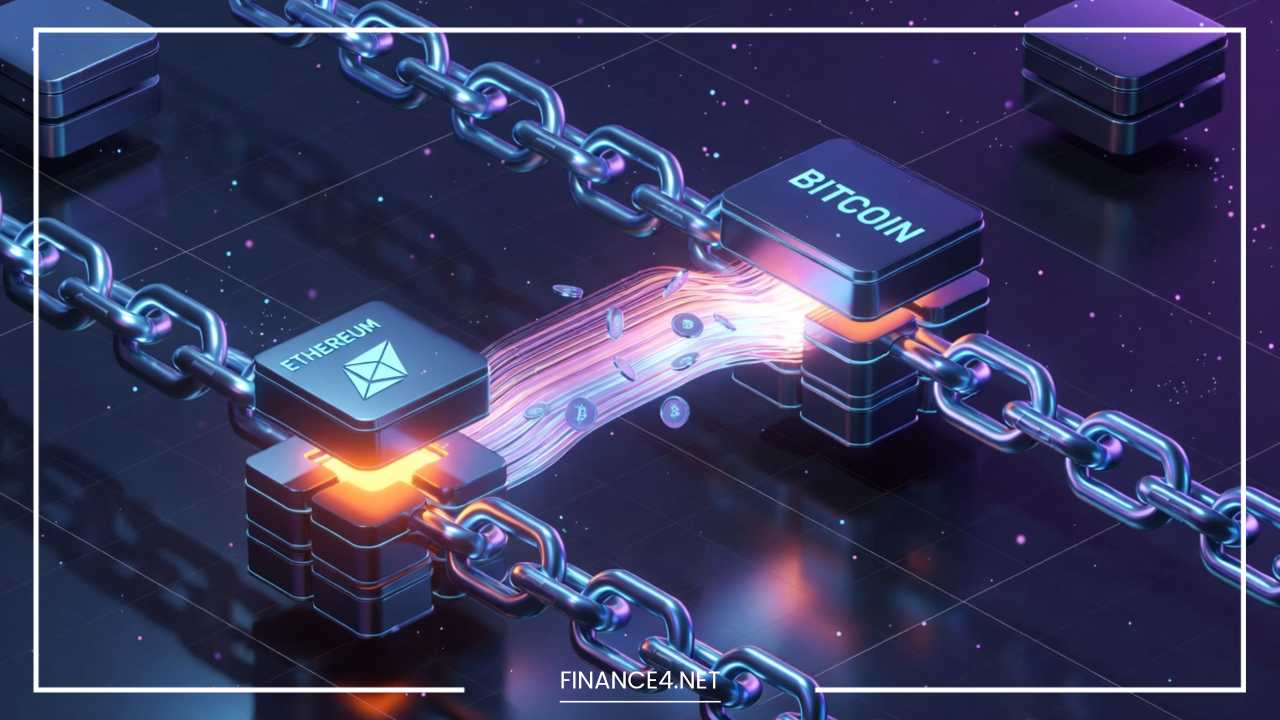
What Is a Cross-Chain Bridge? Definition, How It Works & Benefits Explained
The blockchain landscape has undergone a radical transformation over the last decade. We have moved from a world dominated almost exclusively by Bitcoin to a sprawling, diverse “multichain” ecosystem. Today, hundreds of layer-1 and layer-2 networks—such as Ethereum, Solana, Avalanche, and Polygon—thrive simultaneously. However, this growth has birthed a significant challenge: fragmentation.
Blockchains are, by design, closed loops. They are isolated digital ledgers that cannot naturally communicate with one another. An asset on Ethereum does not exist on Bitcoin, and a smart contract on Solana cannot see the data on the BNB Chain. This lack of interoperability creates “walled gardens,” where liquidity is trapped and utility is limited.
This is where the cross-chain bridge comes in. A cross-chain bridge is a protocol that allows for the transfer of value and data between two or more distinct blockchain networks. It is the connective tissue of the decentralized web, enabling a future where users can move their capital and identity freely across the digital landscape. As decentralized finance (DeFi) and Non-Fungible Tokens (NFTs) continue to mature, understanding how these bridges function, their benefits, and their inherent risks is essential for any participant in the crypto economy.
What Is a Cross-Chain Bridge?
At its simplest level, a cross-chain bridge is a tool that allows you to move digital assets from one blockchain to another. While we often use the word “transfer,” it is technically more accurate to think of it as a communication protocol. Because a token cannot literally leave its native chain and travel through a wire to another, a bridge facilitates a coordinated change in the state of two different ledgers.
A Technical Perspective
Technically, a bridge is a set of smart contracts or a network of nodes that monitors a specific address on a source chain and triggers an action on a destination chain. When you “bridge” assets, you are interacting with a mechanism that ensures if assets are removed or locked on Chain A, an equivalent value is made available or created on Chain B.
The Real-World Analogy
Think of blockchains as different countries with different currencies. If you travel from the United States to the United Kingdom, you cannot spend your U.S. Dollars directly at a London coffee shop. You must go to a currency exchange (the bridge). You give them your Dollars (locking them), and they give you an equivalent value in British Pounds (minting/releasing them). The total value of your wealth remains the same, but the form it takes changes so it can be used in a new environment.
Bridge vs. Cross-Chain Swap
It is important to distinguish between a bridge and a swap. A cross-chain swap typically involves trading one asset for another (e.g., trading ETH for SOL). A bridge, however, usually involves moving the same asset across chains (e.g., moving ETH from Ethereum to Polygon), resulting in “Wrapped ETH” on the destination side.
Why Cross-Chain Bridges Are Needed
The necessity for bridges stems from the fundamental architecture of blockchain technology. Most blockchains are built using different languages, consensus mechanisms, and data structures. This leads to several systemic issues:
1. Isolated Ecosystems
Blockchains like Bitcoin and Ethereum are siloed. Bitcoin was designed as a store of value and a payment network, while Ethereum was designed as a programmable “world computer.” Without a bridge, Bitcoin’s massive liquidity cannot be used in Ethereum’s complex DeFi applications.
2. Liquidity Fragmentation
As new networks emerge, the total amount of capital in the crypto market gets spread thin. Instead of all the “money” being in one place, it is divided among a dozen different networks. This fragmentation leads to higher slippage for traders and less efficient markets. Bridges help aggregate this liquidity by allowing capital to flow to where it is most needed or where it can earn the highest yield.
3. Scalability and Costs
Ethereum is the king of DeFi, but during periods of high demand, transaction fees (gas) can become prohibitively expensive. Bridges allow users to move their assets from a high-fee environment to a low-fee Layer 2 (like Arbitrum or Optimism) or a faster Layer 1 (like Solana), enabling them to participate in the economy without spending hundreds of dollars on a single transaction.
4. The Multi-Chain Future
The prevailing thesis in the industry is that no single blockchain will “win” everything. Instead, we will have a specialized multi-chain world where some chains are optimized for gaming, others for high-frequency trading, and others for privacy. Bridges are the infrastructure required to make this diverse ecosystem user-friendly.
How Cross-Chain Bridges Work
The underlying mechanics of a bridge depend on its design, but most follow a few standardized models to ensure that the total supply of an asset remains constant across all chains.
1. Lock-and-Mint Mechanism
This is the most common model. It works in three steps:
-
Lock: The user sends their assets to a specific smart contract on Chain A (the source). These assets are “locked” and held in escrow.
-
Mint: A third-party validator or a smart contract confirms the assets are locked and then signals a contract on Chain B (the destination) to “mint” an identical number of “wrapped” tokens.
-
Result: If you lock 1 BTC on the Bitcoin network via a bridge, you receive 1 Wrapped Bitcoin (WBTC) on Ethereum. The WBTC is a claim check for the original BTC.
2. Burn-and-Release Mechanism
This is the reverse of the lock-and-mint process. It is used when a user wants to move their assets back to the original chain.
-
Burn: The user sends their wrapped tokens to a burn address on Chain B, effectively destroying them.
-
Release: Once the burn is verified, the original assets are “unlocked” from the escrow contract on Chain A and sent to the user’s wallet.
3. Liquidity Pool-Based Bridges
Some bridges do not mint wrapped tokens. Instead, they maintain large pools of native assets on both sides of the bridge.
-
The Swap: A user deposits USDC into a pool on Ethereum.
-
The Pay-out: The bridge then pays out USDC from its pool on the Avalanche network to the user’s address.
-
Risk: This requires “Liquidity Providers” (LPs) to deposit their funds into these pools in exchange for a share of the bridging fees. The risk here is “liquidity crunch”—if everyone wants to move from Chain A to Chain B, the pool on Chain B might run dry.
4. Verification: The Role of Oracles and Relayers
To ensure that a bridge isn’t minting money out of thin air, it needs a way to verify that the “lock” or “burn” actually happened.
-
Validators: A group of nodes that vote on the validity of a transaction.
-
Oracles: External data feeds that provide the necessary information to the smart contracts.
-
Relayers: These are the messengers that carry the proof of a transaction from one chain to the other.
Types of Cross-Chain Bridges
Not all bridges are created equal. They are generally categorized by how they handle security and who controls the funds.
1. Trusted (Custodial) Bridges
Trusted bridges rely on a central entity or a small group of intermediaries to manage the funds. When you use a trusted bridge, you are essentially saying, “I trust this company to hold my Bitcoin and give me an equivalent token on another chain.”
-
Pros: Often faster and offer better customer support.
-
Cons: Central point of failure. If the custodian is hacked, goes bankrupt, or decides to freeze your funds, you lose your assets.
-
Example: Wrapped Bitcoin (WBTC) is managed by a consortium of custodians.
2. Trustless (Decentralized) Bridges
Trustless bridges use smart contracts and decentralized networks of validators to manage the process. The security is derived from the underlying code and the economic incentives of the validators.
-
Pros: No single entity controls the funds; “Code is law.”
-
Cons: Highly complex. If there is a bug in the smart contract code, the funds can be stolen by hackers (as has happened several times in crypto history).
-
Example: Wormhole, Axelar.
3. Native vs. Third-Party Bridges
-
Native Bridges: These are built by the developers of a specific blockchain. For example, the Polygon Bridge is the “official” way to move assets from Ethereum to Polygon. They are generally considered the safest option for that specific ecosystem.
-
Third-Party Bridges: These are independent protocols like Wormhole or Stargate that support dozens of different chains. They offer more flexibility but add an extra layer of protocol risk.
Key Benefits of Cross-Chain Bridges
Bridges offer more than just a way to move money; they unlock entirely new economic possibilities.
1. Capital Efficiency and Liquidity
Bridges allow investors to move idle assets to where they can be used most effectively. If interest rates for lending USDC are 2% on Ethereum but 8% on Solana, a bridge allows the user to chase that higher yield instantly, improving the overall efficiency of the global crypto market.
2. Lower Barriers to Entry
By bridging to “Layer 2” networks or cheaper “Layer 1s,” users with smaller portfolios can participate in DeFi. On Ethereum Mainnet, a $50 gas fee might ruin the profitability of a $500 investment. On a bridged network like Arbitrum, that same transaction might cost $0.10.
3. Access to Unique Ecosystem Features
Different chains have different strengths. A user might keep their long-term savings in Bitcoin but bridge a portion of it to Ethereum to use as collateral for a loan, or bridge it to a gaming-centric chain like Ronin to buy in-game assets.
4. Multi-Chain dApp Expansion
For developers, bridges allow them to deploy their applications on multiple chains while keeping the user experience seamless. A Decentralized Exchange (DEX) can exist on five different chains, using bridges to balance liquidity between them.
Risks and Security Concerns
While bridges are essential, they are currently one of the most vulnerable points in the entire blockchain ecosystem. Because bridges often hold massive amounts of “locked” collateral, they are prime targets for hackers.
1. Smart Contract Vulnerabilities
A bridge is only as strong as its code. If a hacker finds a logic error in the smart contract, they might be able to trigger the “mint” function without actually “locking” any assets on the other side. This essentially allows them to drain the bridge’s reserves.
2. Validator Compromise
In many decentralized bridges, a group of validators must sign off on transactions. If a hacker gains control of a majority of these validators (a “51% attack” or a “multisig compromise”), they can authorize fraudulent transfers.
-
Example: The Ronin Network hack occurred when hackers gained access to 5 out of 9 validator private keys, leading to a loss of over $600 million.
3. Centralization Risks
If a bridge is “trusted” and the central authority is compromised or acts maliciously, users have no recourse. This goes against the core ethos of decentralization but is a trade-off many make for speed and convenience.
4. Wrapped Asset Risk
When you bridge assets, you often hold a “wrapped” version (like WETH). If the bridge itself is hacked and the original ETH is stolen, your wrapped tokens become worthless because they are no longer backed by anything.
Cross-Chain Bridges vs. Atomic Swaps
A common point of confusion is the difference between a bridge and an Atomic Swap.
What is an Atomic Swap?
An atomic swap is a peer-to-peer exchange of cryptocurrencies across different blockchains without an intermediary. It uses “Hashed Timelock Contracts” (HTLCs). Essentially, either the trade happens for both parties, or it doesn’t happen at all—there is no middle ground.
Key Differences:
-
Architecture: Bridges usually involve locking assets and minting new ones. Atomic swaps are direct trades between two users.
-
Complexity: Bridges are easier for the average user and can handle large volumes of liquidity. Atomic swaps are technically complex and often require both parties to be online at the same time.
-
Use Case: Bridges are better for “moving” your own money to a new chain to use it there. Atomic swaps are better for “trading” one asset for another privately and securely.
Real-World Use Cases
The utility of bridges extends across every vertical of the Web3 space.
1. DeFi Arbitrage
Traders use bridges to exploit price differences between decentralized exchanges on different chains. If Ethereum is trading for $2,000 on Uniswap (Ethereum) but $2,005 on Raydium (Solana), a trader can use a bridge to quickly move funds and capture the $5 profit.
2. Yield Farming
DeFi users often hop from chain to chain to find the best “incentives.” New blockchains often offer high rewards to attract users. Bridges allow “yield farmers” to move their capital into these new ecosystems to harvest rewards before moving on to the next one.
3. NFT Migration
While still in its early stages, cross-chain bridges for NFTs allow collectors to move their digital art. A user might want to bridge an NFT from Ethereum to a chain with lower fees to list it for sale or use it as an avatar in a specific metaverse game.
4. Institutional Liquidity Routing
Large financial institutions can use bridges to move capital across private and public blockchains, ensuring that their liquidity is never “stuck” in a single ledger.
The Future of Cross-Chain Interoperability
The current era of “bridges” is likely just a stepping stone toward a more integrated future. The industry is moving away from simple “lock-and-mint” assets and toward Cross-Chain Messaging Protocols.
1. Cross-Chain Messaging
Instead of just moving tokens, new protocols (like LayerZero or CCIP) allow for the movement of data. This means a smart contract on Chain A can tell a smart contract on Chain B to do something. This will lead to “omnichain” applications where the user doesn’t even know they are using a bridge.
2. Modular Blockchains and Rollups
As Ethereum moves toward a “rollup-centric” roadmap, the “bridges” between the main chain and its Layer 2s are becoming more native and secure. This reduces the risk of third-party bridge hacks.
3. Interchain Standards
Projects like Cosmos (IBC) and Polkadot (XCM) have built interoperability into their very core. In these ecosystems, chains are designed to talk to each other from day one, eliminating the need for risky third-party bridges.
FAQ Section
Are cross-chain bridges safe?
No bridge is 100% safe. While they are audited, they represent a complex point of failure. Native bridges are generally safer than third-party bridges, and trustless bridges are generally preferred over custodial ones for long-term security.
What is a wrapped token?
A wrapped token is a digital asset that represents a token from another blockchain. For example, Wrapped Bitcoin (WBTC) is an ERC-20 token on Ethereum that is backed 1:1 by actual Bitcoin held in a vault.
What is the safest bridge?
Usually, the “Native Bridge” created by the developers of the blockchain you are moving to (e.g., the Arbitrum Bridge for moving funds to Arbitrum) is considered the most secure because it relies on the same security properties as the network itself.
Can you reverse a bridge transaction?
Generally, no. Once a transaction is confirmed on a blockchain, it is immutable. If you send funds to the wrong address or use a malicious bridge, those funds are usually lost forever.
Are cross-chain bridges decentralized?
It varies. Some are highly centralized (custodial), while others are managed by decentralized networks of validators. Always check the documentation of a bridge to understand its level of decentralization.
The evolution of cross-chain bridges is the story of the internet itself—moving from isolated intranets to a unified, global network. While the technology is still in its “wild west” phase, marked by both incredible innovation and significant security setbacks, bridges remain the most vital piece of infrastructure for a truly decentralized and accessible financial future.