How to Transfer NFTs Cross-Chain
 by
by 
Breaking the Chains: A Comprehensive Guide to Cross-Chain NFT Transfer
The explosion of Non-Fungible Tokens (NFTs) has unlocked unprecedented possibilities for digital ownership, art, collectibles, gaming assets, and much more. Millions of unique digital items now live on various blockchains, representing verifiable scarcity and individual provenance.
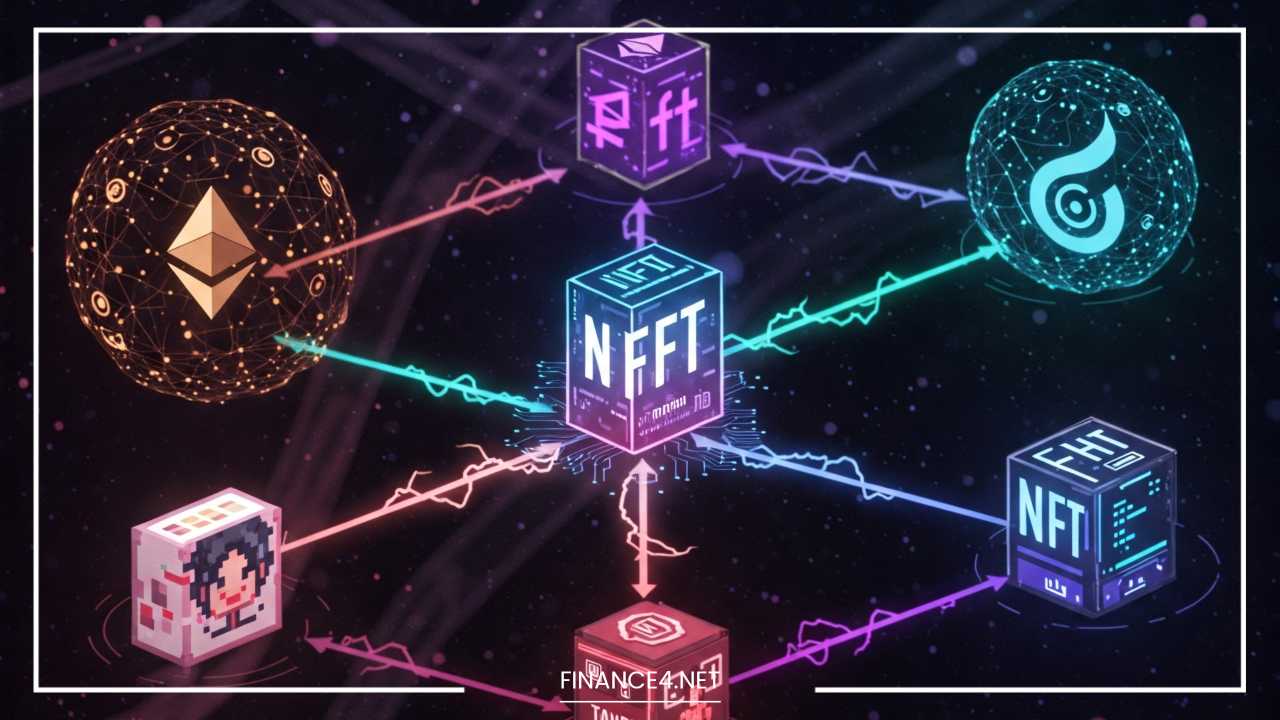
However, the very nature of blockchain technology – distributed, immutable, and often isolated by design – presents a significant challenge: interoperability. Your valuable NFT, minted on Ethereum, is typically “stuck” on Ethereum.
If you want to use it in a game on Polygon, sell it on a marketplace popular within the Solana ecosystem, or simply hold it in a wallet on a different chain you prefer for lower fees, you face a barrier. This barrier is the lack of native cross-chain compatibility.
The need to move NFTs between blockchains is not just about convenience; it’s crucial for unlocking their full potential.
It enhances liquidity by opening up assets to wider markets, enables richer experiences by allowing assets to be used across different applications and games on various chains, and offers users flexibility in choosing the chain that best suits their needs in terms of fees, speed, and ecosystem.
This necessity has given rise to cross-chain NFT transfer mechanisms, often facilitated by what are known as blockchain bridges.
Transferring an NFT cross-chain isn’t a simple “drag and drop” or a standard token transfer. It involves complex processes that fundamentally deal with the challenge of proving ownership and uniqueness across disparate blockchain states.
This article delves deep into the world of cross-chain NFT transfer, explaining why it’s necessary, how the underlying mechanisms work, the practical steps involved, the significant challenges and risks, and the future outlook for this critical piece of the web3 puzzle.
The Fundamental Challenge: Why are NFTs Stuck on One Chain?
To understand how to move an NFT across chains, we must first grasp why they are inherently tethered to their original blockchain.
Blockchains are essentially distributed ledgers, each maintaining its own independent state based on its specific set of rules, consensus mechanisms, and transaction history. An NFT is a unique token recorded on one of these ledgers.
Imagine a physical collectible, like a rare stamp, stored in a vault in one country. The stamp’s existence and ownership are verified by the records and laws of that country.
You can’t simply wish the stamp into existence in a vault in another country and have it recognized by their records and laws without a specific process (like physical transfer, customs declarations, etc.).
Similarly, an NFT on Chain A is verified by the consensus and state of Chain A. Chain B has no inherent knowledge of Chain A’s state, including the existence or ownership of that specific NFT.
Key characteristics of blockchains that contribute to this silo effect include:
- Independent State: Each blockchain maintains its own ledger and state, which is the snapshot of all accounts, balances, and smart contract states at a given time. These states are not automatically synchronized or known to other chains.
- Consensus Mechanisms: Different blockchains use different methods (Proof-of-Work, Proof-of-Stake, etc.) to validate transactions and agree on the state. There’s no universal consensus mechanism across chains.
- Smart Contracts: NFTs are typically managed by smart contracts (like ERC-721 or ERC-1155 on Ethereum). These contracts exist and execute only within the environment of their native blockchain. A smart contract on Chain A cannot directly interact with or verify data on Chain B.
- Security and Immutability: The security of a blockchain relies on its independent validation and the immutability of its history. Introducing a way for assets to freely jump between chains without rigorous verification would compromise this security.
Therefore, moving an NFT from Chain A to Chain B requires a mechanism that can securely and reliably prove that the NFT exists and is controlled by a certain address on Chain A, and then trigger the creation or recognition of that asset on Chain B, while simultaneously ensuring the original asset cannot be double-spent or exist in two places at once in a usable form. This is where cross-chain bridges come into play.
The Core Mechanisms of Cross-Chain NFT Transfer: Bridging the Gap
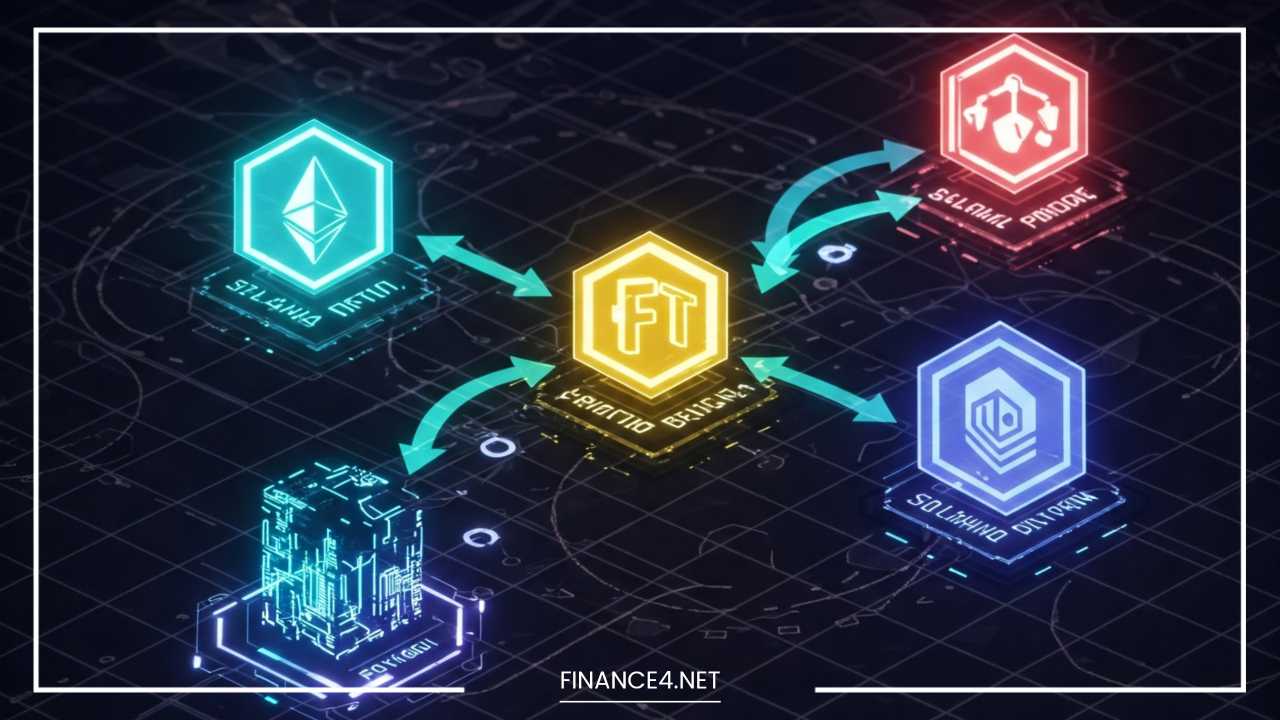
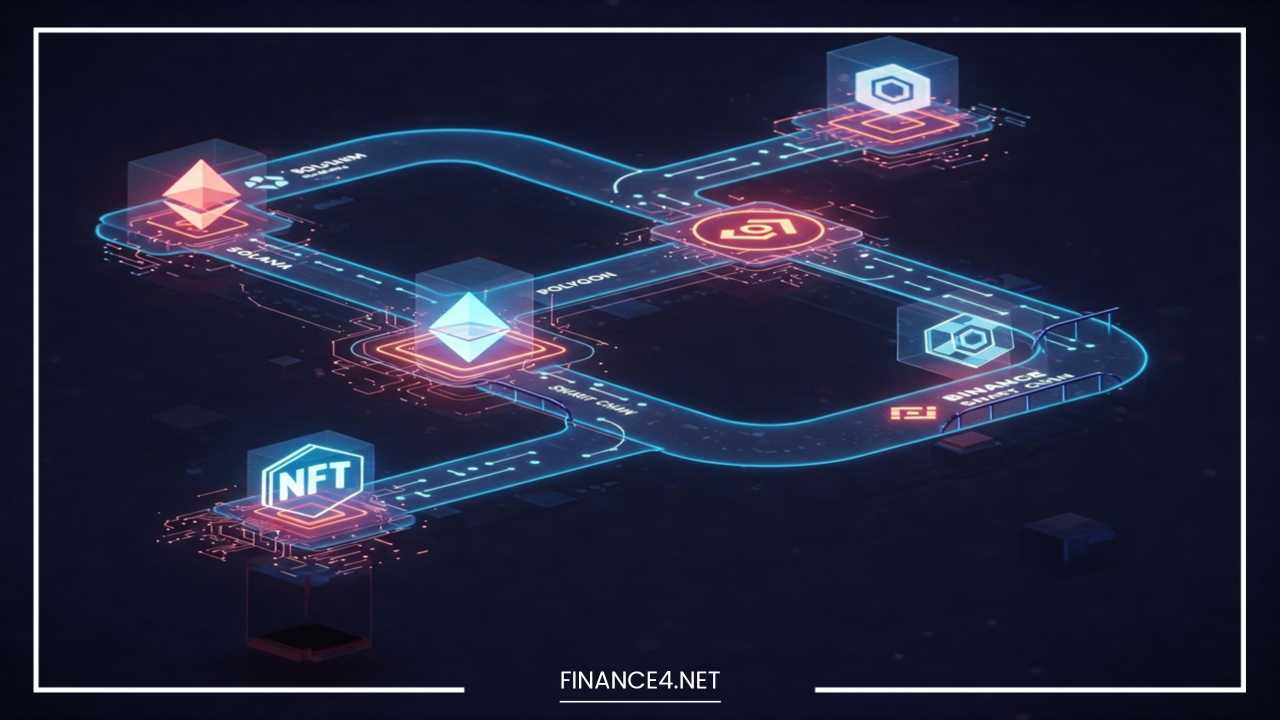
Cross-chain bridges are protocols or platforms designed to enable the transfer of assets or information between different blockchains. For NFTs, these bridges employ various mechanisms to handle the unique challenge of transferring non-fungible, unique assets.
The primary goal is to maintain the uniqueness and value of the NFT while allowing its representation to exist on a different chain. The two most common approaches are Lock-and-Mint and Burn-and-Mint. More advanced state-based bridges also play a role in more complex scenarios.
1. Lock-and-Mint (Wrapped NFTs)
This is perhaps the most prevalent method for transferring NFTs cross-chain. The core idea is to “wrap” the original NFT on the source chain and mint a new, corresponding token on the destination chain.
- The Process:
- Initiation: A user initiates a transfer request via a cross-chain bridge platform, specifying the NFT they want to move and the destination chain.
- Locking: The user sends their original NFT on the source chain to a specific smart contract address controlled by the bridge protocol. This contract “locks” the NFT, making it unusable and untransferable on the source chain for the duration it exists on the destination chain.
- Verification: The bridge protocol, through a network of validators, relayers, or other verification mechanisms, detects that the NFT has been successfully locked on the source chain. It verifies the authenticity of the NFT and the locking event.
- Minting: Once verification is complete, the bridge protocol triggers the minting of a new, corresponding NFT on the destination chain. This new NFT is often referred to as a “wrapped” or “bridged” version of the original. It typically carries metadata linking it back to the original NFT on the source chain (e.g., referencing the original contract address and token ID). The wrapped NFT is minted to the user’s specified wallet address on the destination chain.
- Availability: The user can now interact with the wrapped NFT on the destination chain – sell it, use it in dApps, etc. The original NFT remains locked on the source chain.
- Transferring Back: To move the NFT back to the source chain:
- The user initiates a transfer back via the bridge, sending the wrapped NFT on the destination chain to a specified bridge contract address.
- Burning (or Locking): The wrapped NFT on the destination chain is either burned (destroyed) or locked by the bridge contract.
- Verification: The bridge protocol verifies that the wrapped NFT has been successfully burned or locked on the destination chain.
- Unlocking: Once verified, the bridge protocol triggers the unlocking of the original NFT from the lock contract on the source chain.
- Availability: The original NFT is returned to the user’s wallet on the source chain, and the wrapped NFT is no longer valid on the destination chain.
- Pros:
- Preserves the original NFT’s existence and provenance on its native chain.
- Relatively straightforward concept to implement.
- Cons:
- Requires trust in the bridge protocol’s locking mechanism and the security of the lock contract. If the lock contract is compromised, the original NFTs could be at risk.
- The wrapped NFT is a representation, not the original. Its value is derived solely from the locked asset on the source chain. If the bridge fails or is compromised, the wrapped NFT may lose its backing.
- Can lead to liquidity fragmentation, as wrapped versions of the same NFT might exist on different chains, potentially confusing marketplaces and users.
2. Burn-and-Mint
This method is more drastic than Lock-and-Mint. It involves destroying the original NFT on the source chain and creating an identical one on the destination chain.
- The Process:
- Initiation: The user initiates a transfer request via the bridge.
- Burning: The user sends their original NFT on the source chain to a burn address or a specific bridge contract that destroys the NFT, effectively taking it out of circulation on the source chain permanently.
- Verification: The bridge protocol verifies that the NFT has been successfully burned on the source chain.
- Minting: Once verification is complete, the bridge protocol triggers the minting of a new, identical NFT on the destination chain. This new NFT has the same metadata (image, properties, etc.) as the burned original, but typically a new token ID specific to the destination chain’s contract. The newly minted NFT goes to the user’s wallet on the destination chain.
- Availability: The user interacts with the newly minted NFT on the destination chain.
- Transferring Back: To move the NFT back to the source chain:
- The user initiates a transfer back via the bridge, sending the NFT on the destination chain to a burn address or contract.
- Burning: The NFT on the destination chain is burned.
- Verification: The bridge verifies the burning event on the destination chain.
- Minting: The bridge triggers the minting of a new NFT on the original source chain, identical to the one that was burned on the source chain initially.
- Availability: The newly minted NFT appears in the user’s wallet on the source chain.
- Pros:
- Ensures only one active version of the NFT exists across both chains at any given time, reducing potential confusion compared to wrapped assets.
- Cons:
- Loss of Original Token ID and History: Burning the original NFT means losing its original token ID on the source chain. While the metadata is preserved, the specific history and provenance linked to the original token ID are broken. This can be significant for collectibles where the specific mint number or transaction history is important.
- Requires high trust in the bridge protocol’s ability to accurately burn and mint NFTs without errors or malicious actions. If the minting fails after burning, the NFT could be lost forever.
- More complex to implement correctly, especially across different NFT standards on various chains.
3. State-Based Bridges and General Message Passing (GMP)
Beyond simple asset transfers, more sophisticated bridge designs focus on relaying and verifying the state or events of one blockchain on another. While not exclusively for NFTs, these mechanisms can underpin more advanced cross-chain NFT interactions.
- How it Works: These bridges often involve a network of validators or relayers that watch for specific events on the source chain. They then cryptographically prove that these events occurred and relay this proof to a smart contract on the destination chain. The destination chain contract verifies the proof before taking action (like minting an NFT, triggering a game interaction, etc.).
- Relevance to NFTs: This approach can be used to verify ownership of an NFT on one chain to grant a user access or rights on another chain, even without moving the NFT itself. It can also be used in conjunction with lock-and-mint or burn-and-mint, with the state proof mechanism ensuring the security and validity of the locking/burning event.
- GMP: General Message Passing allows arbitrary data (not just asset transfer instructions) to be sent between chains, enabling more complex cross-chain dApps and interactions involving NFTs. For example, an action taken with an NFT on Chain A could trigger an effect within a game on Chain B.
- Pros:
- Can support more complex interactions beyond simple transfers.
- Potentially more decentralized and secure depending on the validation mechanism (e.g., using light clients or zero-knowledge proofs).
- Cons:
- Technically complex to build and secure.
- Can be more expensive due to the computational cost of verifying proofs cross-chain.
The Practical Steps: Using a Cross-Chain NFT Bridge
While the underlying mechanisms are complex, using a cross-chain NFT bridge from a user’s perspective typically involves a series of steps facilitated by a bridge platform’s interface. It is crucial to note that specific steps and interfaces vary significantly between different bridge protocols and platforms.
1. Identify the Need and Compatible Solution
Determine which blockchain you want to move your NFT from and to. Research and find a reputable cross-chain bridge or platform that explicitly supports transferring NFTs between those specific chains and ideally, supports the specific NFT collection you own. Not all bridges support all NFTs or all chains. Due diligence here is paramount.
2. Access the Bridge Platform
Navigate to the official website or dApp of the chosen cross-chain bridge. Be extremely cautious of phishing sites.
3. Connect Your Wallets
Connect your cryptocurrency wallet (e.g., MetaMask, Phantom, WalletConnect compatible wallets) to the bridge platform. You will typically need to connect two instances of your wallet, one set to the source chain and one set to the destination chain, or the platform will prompt you to switch networks during the process.
4. Select the Source and Destination Chains
On the bridge interface, clearly specify the blockchain where your NFT currently resides (source chain) and the blockchain where you want to send it (destination chain).
5. Select the NFT to Transfer
The platform should display the NFTs in your connected wallet on the source chain that are eligible for transfer via that bridge. Select the specific NFT you wish to move.
6. Review Transaction Details and Fees
The bridge platform will display important information, including:
- The estimated transaction time.
- The mechanism being used (though this might not always be explicitly stated for the user, the interface will reflect the process).
- The required fees, including gas fees on the source chain for initiating the transfer (locking/burning) and gas fees on the destination chain for completing the process (minting/unlocking). The bridge protocol may also charge its own service fee.
Ensure you have sufficient native tokens (e.g., ETH for Ethereum, MATIC for Polygon, SOL for Solana) in your wallet on both chains to cover these fees.
7. Initiate the Transfer
If you agree to the terms and fees, confirm the transaction in your wallet on the source chain. This authorizes the bridge contract to interact with your NFT (lock it or burn it).
8. Wait for Confirmation and Bridge Processing
After confirming the initial transaction, you will need to wait. The transaction must be confirmed on the source chain according to its consensus rules. Then, the bridge protocol’s internal mechanisms (validators, relayers) must detect and process this event.
9. Confirm on the Destination Chain (if applicable)
Depending on the bridge and mechanism, you might need to sign a final transaction on the destination chain to receive the wrapped or newly minted NFT. This step covers the gas cost on the destination chain. Some bridges automate this if you pre-pay the destination gas fee.
10. Verify the Transfer
Once the process is complete, check your wallet on the destination chain. The wrapped or newly minted NFT should appear there. You can also check the bridge platform’s transaction history or a block explorer for both chains to confirm the locking/burning and minting/unlocking events.
Important Considerations During Transfer
Transaction Speed
Cross-chain transfers are not instantaneous. They depend on the block confirmation times of both chains and the processing time of the bridge protocol. It can take minutes or even longer during periods of network congestion.
Monitoring
Keep an eye on the transaction status on the bridge platform’s interface or by using block explorers.
Support
Know where to find support if a transaction gets stuck or fails.
Challenges and Risks of Cross-Chain NFT Transfer
Despite the growing need and technological advancements, cross-chain NFT transfer is fraught with significant challenges and risks that users must be aware of.
1. Security Risks and Bridge Exploits
This is arguably the most critical risk. Cross-chain bridges are complex pieces of infrastructure that manage significant amounts of locked assets (in the case of Lock-and-Mint). They represent a large attack surface. Exploits targeting vulnerabilities in bridge smart contracts, validation mechanisms, or relay networks have resulted in hundreds of millions of dollars in losses, including both fungible tokens and, potentially, underlying assets backing wrapped NFTs.
Users must place a high degree of trust in the security and audits of the bridge protocol. A bridge exploit could lead to:
- Loss of the locked original NFT.
- Devaluation of the wrapped NFT if its backing is compromised.
- Loss of the newly minted NFT (in burn/mint scenarios) if the process is interrupted or compromised.
2. Technical Complexity and User Error
The process involves interacting with multiple chains and contracts. User errors, such as sending to the wrong address, selecting the wrong chain, or not having enough gas on either chain, can lead to failed or lost transactions.
3. High Costs
Transferring NFTs cross-chain can be expensive. You incur gas fees on the source chain for initiating the transfer and gas fees on the destination chain for receiving the asset.
Bridge protocols also charge service fees, which can be a percentage of the NFT’s value or a flat fee. These costs can be substantial, especially on high-fee networks like Ethereum mainnet.
4. Liquidity Fragmentation and Market Confusion
With Lock-and-Mint, multiple wrapped versions of the same NFT could theoretically exist on different chains.
This can fragment the market, making it hard for buyers to know which version to purchase and potentially impacting the perceived value of the wrapped asset compared to the original.
5. NFT Specific Issues
Metadata Handling
Ensuring that the NFT’s metadata (image, properties, traits) is correctly transferred and displayed on the destination chain is crucial.
Provenance and History
In Burn-and-Mint scenarios, the link to the original token ID and its full transaction history on the source chain is broken, which can diminish the historical value for some collectors. Even with Lock-and-Mint, the “history” of the wrapped token is distinct from the original.
Royalty Enforcement
Royalty mechanisms are typically enforced by smart contracts on the native chain. Ensuring that royalties are correctly paid to creators when a wrapped or newly minted NFT is sold on a different chain is a complex challenge that requires cross-chain communication and standardisation.
Fractional Ownership
Transferring fractionalized NFTs cross-chain adds another layer of complexity.
6. Centralization Risks
Some bridge designs rely on centralized validator sets, multisig wallets, or off-chain components, introducing points of failure or potential for censorship or manipulation.
7. Lack of Standardization
The absence of universal standards for cross-chain NFT transfer means that different bridges use different approaches, leading to a fragmented and sometimes incompatible ecosystem.
Choosing the Right Cross-Chain Solution
Given the risks and variations, selecting a cross-chain NFT bridge requires careful consideration:
- Supported Chains and Collections: Verify that the bridge supports the specific source and destination chains you need and, importantly, the particular NFT collection you want to transfer. Not all bridges support all NFT standards or contracts.
- Security Model: Research the bridge’s security architecture. Is it decentralized? Does it use robust validation mechanisms (e.g., light clients, ZK proofs)? Has it undergone rigorous audits? Are the audit reports publicly available? What is their track record?
- Mechanism (Lock-and-Mint vs. Burn-and-Mint): Understand which mechanism the bridge uses and the implications for your NFT’s provenance and the risks involved.
- Fees and Speed: Compare the costs (gas and service fees) and the estimated transaction times across different bridges.
- User Interface and Reputation: Choose a bridge with a clear, easy-to-use interface. Look for reviews and community feedback, but be wary of hype.
- Audits and Insurance: Prioritize bridges that have been audited by reputable security firms. Some newer protocols are also exploring insurance options, though this is still nascent.
Ultimately, transferring an NFT cross-chain involves entrusting your valuable digital asset to a third-party protocol. Due diligence and understanding the underlying risks are paramount.
The Future of Cross-Chain NFTs
The current landscape of cross-chain NFT transfer is complex and somewhat fragmented, but the demand for interoperability is a powerful driver for innovation. The future promises more seamless and secure solutions:
- More Robust and Decentralized Bridges: Development is moving towards more secure bridge designs that rely less on centralized trust and more on cryptographic proofs (like zero-knowledge proofs) and decentralized validator networks or light client-based verification.
- Protocol-Level Interoperability: While challenging, there’s ongoing research into achieving deeper interoperability at the blockchain protocol level, which could simplify cross-chain interactions in the future.
- Improved User Experience: As the technology matures, we can expect bridge interfaces to become more intuitive and potentially abstract away some of the underlying complexity for the end-user.
- Cross-Chain Marketplaces and Applications: The rise of more sophisticated cross-chain infrastructure will enable the development of marketplaces and decentralized applications that can natively interact with NFTs residing on different chains, offering a more unified user experience.
- Enhanced Standards: Greater collaboration and the development of cross-chain standards could help address issues like royalty enforcement and metadata handling across different ecosystems.
- Native Cross-Chain Assets (Long-Term): While speculative, the idea of assets that are natively designed to exist and be validated across multiple chains simultaneously is a long-term goal of some interoperability research.
True interoperability is essential for the widespread adoption and evolution of the NFT space. It allows digital assets to fulfill their potential as usable, valuable components of a decentralized
digital world, rather than being confined to isolated blockchain islands.
Final Thoughts
The ability to transfer NFTs across different blockchains is a critical step towards a more connected and liquid web3 ecosystem.
While not as simple as moving fungible tokens, mechanisms like Lock-and-Mint and Burn-and-Mint, supported by cross-chain bridge protocols, provide the current pathways.
Understanding the fundamental challenges of blockchain silos, the technical processes involved in bridging, and critically, the significant security and technical risks is essential for anyone looking to move their valuable NFTs cross-chain.
The landscape of cross-chain solutions is still evolving, marked by innovation but also by vulnerabilities.
As the technology matures and becomes more robust, cross-chain NFT transfer will become more seamless, secure, and accessible.
This will not only unlock greater liquidity and utility for existing NFTs but also pave the way for entirely new types of cross-chain digital experiences and applications, truly breaking the chains that currently limit the reach of non-fungible assets.
Until then, caution, thorough research, and a clear understanding of the process and its risks are your most important tools.