Bridging Arbitrum to Optimism
 by
by 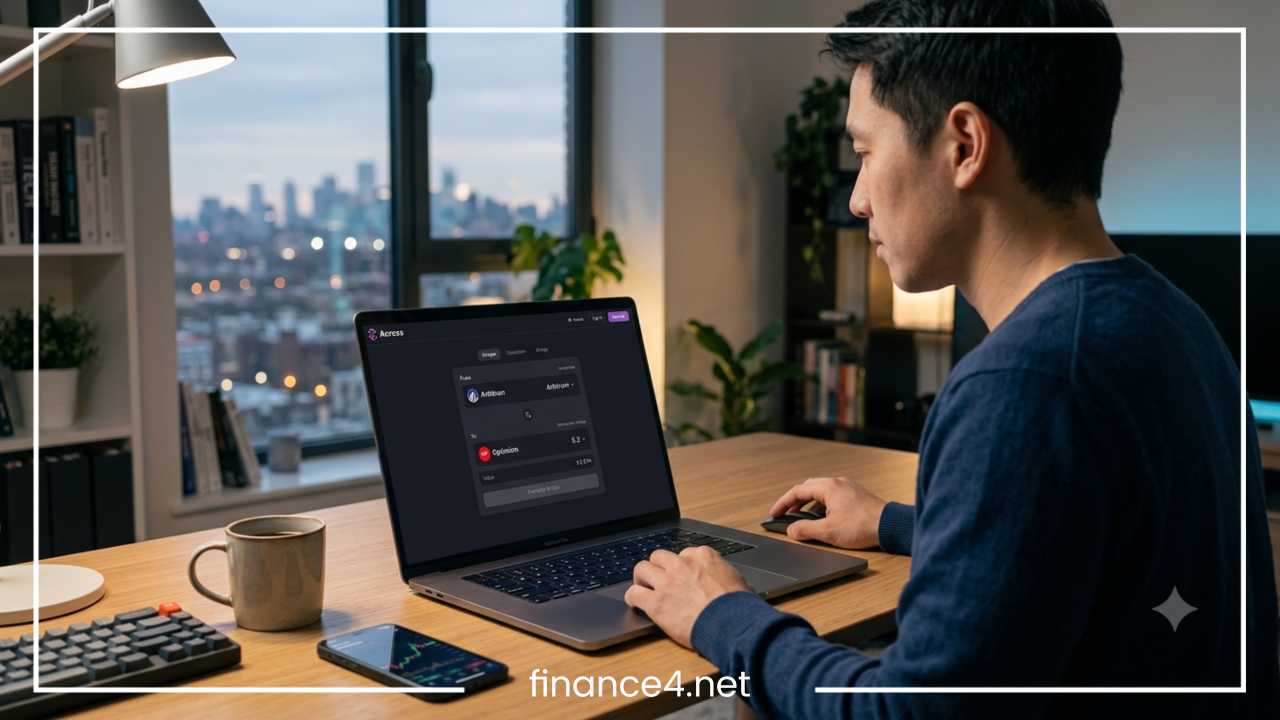
Bridging Arbitrum to Optimism: A Comprehensive Guide
The rapid expansion of the decentralized finance and non-fungible token ecosystems has placed immense pressure on the Ethereum mainnet. High transaction fees and network congestion have driven users to seek alternatives that maintain Ethereum’s robust security while providing a faster, more cost-effective user experience. This demand has fueled the explosive growth of Layer 2 scaling solutions, which process transactions off the main Ethereum blockchain before settling them back on the base layer.
Among these scaling innovations, Arbitrum and Optimism have emerged as dominant market leaders. Both networks host thousands of applications, millions of active wallets, and billions of dollars in total value locked. Because each ecosystem features unique applications, varying yield opportunities, and exclusive platform incentives, Web3 users frequently find themselves needing to transfer assets from Arbitrum to Optimism.
Moving assets between independent environments presents unique infrastructure challenges. Assets cannot simply be broadcast from an address on one network directly to an address on another without a dedicated cross-chain bridge. This guide provides a comprehensive framework for executing an Arbitrum to Optimism bridge transfer, analyzing the underlying technology, evaluating the top cross-chain protocols, walking through step-by-step transaction execution, and detailing security best practices to guarantee smooth capital migration.
Understanding Arbitrum and Optimism
To effectively execute a cross-chain bridge transaction, you must first understand the fundamental architectures of both the source and destination networks. While Arbitrum and Optimism are designed to scale Ethereum using similar underlying methodologies, they operate as distinct, isolated execution environments.
What Is Arbitrum?
Arbitrum is a Layer 2 scaling network developed by Offchain Labs. It utilizes an Optimistic Rollup architecture to achieve high throughput and radically reduced transaction costs. The core operational principle of an Optimistic Rollup is that transactions are assumed to be valid by default. Instead of performing expensive on-chain computations for every transaction, Arbitrum bundles thousands of transactions together, rolls them up into a single batch, and posts that compressed data to the Ethereum mainnet.
The primary benefits of using the Arbitrum network include:
-
Significantly Lower Fees: By shifting execution away from Ethereum Layer 1, users pay a small fraction of the standard mainnet gas fees.
-
Near-Instant Transactions: Transactions achieve soft finality in seconds, dramatically improving the user experience for interactive applications.
-
Inherited Ethereum Security: Because transaction data is anchored permanently to Layer 1, the network inherits the decentralized security guarantees of Ethereum.
Arbitrum employs a multi-round fraud-proof mechanism to handle disputes. If a validator submits an invalid state assertion, other validators can challenge it. The system pinpoints the exact point of disagreement and resolves it on the Ethereum mainnet, ensuring the integrity of the network without requiring constant execution overhead.
What Is Optimism?
Optimism is an equivalent Layer 2 scaling platform developed by the OP Labs team. Like Arbitrum, it is built on Optimistic Rollup technology, utilizing data compression and off-chain execution to scale Ethereum transaction capabilities. Optimism is engineered with a deep focus on simplicity and alignment with the Ethereum Virtual Machine, creating an environment known as EVM equivalence. This ensures that any smart contract or developer tool built for Ethereum can run seamlessly on the Optimism network without modification.
The broader OP ecosystem is built around the OP Stack, an open-source development blueprint that allows developers to launch highly customizable Layer 2 networks. These interconnected networks form a unified web of chains known as the Superchain. Optimism serves as the central hub of this expanding ecosystem, hosting popular applications across decentralized lending markets, decentralized exchanges, structured financial products, and digital art marketplaces.
Why Users Transfer Between Them
The motivation to bridge Arbitrum to Optimism often stems from the dynamic and competitive nature of decentralized finance. Because both networks operate distinct decentralized application ecosystems, users frequently encounter scenarios where capital migration becomes highly advantageous.
-
Accessing Different dApps: Certain protocols or decentralized applications are exclusive to a single platform. If a popular governance platform, betting engine, or gaming application launches solely on the Optimism network, an Arbitrum user must cross the bridge to participate.
-
Liquidity Opportunities: Yield generation strategies fluctuate constantly. Automated market makers and lending protocols on Optimism may offer higher annualized percentage yields for specific token pairs due to localized demand or protocol-specific reward programs.
-
Yield Farming and Ecosystem Incentives: The Optimism Collective regularly distributes incentives to stimulate growth across its ecosystem. Users often migrate capital to farm these native token distributions.
-
NFT Marketplaces: Digital creators and collectors regularly navigate between chains to access exclusive non-fungible token mints, collections, or trading venues native to one specific chain.
Can You Bridge Directly from Arbitrum to Optimism?
A common point of confusion for web3 newcomers is whether assets can be sent directly across Layer 2 chains via standard wallet transfer functions. Because Arbitrum and Optimism are independent execution environments with separate state histories, they do not share a direct native data pathway. You cannot input an Optimism wallet address into an Arbitrum network transaction window and expect the tokens to arrive. Doing so without utilizing a dedicated cross-chain bridge will result in a failed transaction or, in worse scenarios, permanently lost assets.
To transfer assets from Arbitrum to Optimism safely, users must employ a cross-chain bridge. These specialized systems facilitate interoperability by coordinating the lockup, burning, or swapping of tokens on the source chain with the corresponding release or minting of tokens on the destination chain.
Cross-chain architectures generally fall into three distinct structural categories:
-
Native Bridges: These are the official bridges built by the core protocol teams. The Arbitrum Native Bridge and the Optimism Native Bridge are designed primarily to connect their respective networks back to Ethereum Layer 1. They do not connect directly to other Layer 2 networks. Attempting to use native bridges to move between Layer 2 networks requires a multi-step process: bridging from Arbitrum down to Ethereum Layer 1, waiting through a multi-day dispute period, and then bridging from Ethereum Layer 1 up to Optimism. This path is slow and highly expensive.
-
Third-Party Liquidity Bridges: These private protocols bypass the Ethereum Layer 1 detour entirely. They utilize liquidity pools established across multiple networks to enable direct, rapid Layer 2 to Layer 2 transfers. When you use a liquidity bridge to transfer assets from Arbitrum to Optimism, you deposit tokens into the bridge’s pool on Arbitrum. The bridge’s smart contracts or off-chain relayers detect this deposit and automatically release an equivalent amount of tokens from their liquidity pool on Optimism directly to your destination address.
-
Mint-and-Burn Bridges: Rather than relying on pre-funded liquidity pools, these protocols utilize smart contracts to burn or lock assets on the source chain and instantly mint a wrapped or canonical representation of that asset on the destination chain.
For an optimal experience moving between Layer 2 networks, utilizing a third-party liquidity-based cross-chain bridge is the fastest and most cost-effective method available.
Prerequisites Before Bridging
Before initiating your first cross-chain transfer, you must prepare your Web3 environment. Proper preparation minimizes the risk of failed transactions, lost funds, or exposure to security threats.
Wallet Setup
You must possess a non-custodial software wallet capable of interacting with EVM-compatible networks and smart contracts. Popular choices include:
-
MetaMask: The most widely used browser extension and mobile wallet in Web3, providing robust manual control over network configurations and transaction parameters.
-
Rabby Wallet: A security-focused wallet designed specifically for multi-chain environments, which automatically detects and displays assets across different Layer 2 networks without requiring manual switching.
-
Coinbase Wallet: A user-friendly non-custodial wallet option that integrates seamlessly with major Layer 2 networks and decentralized applications.
Network Configuration
Your wallet must be configured to recognize both the Arbitrum network and the Optimism network. Most modern Web3 applications and bridges automatically prompt your wallet to add these networks when you connect. However, if you need to configure them manually, ensure you utilize verified Remote Procedure Call node details from a reputable aggregator like Chainlist.
Required Funds
A successful bridge transaction requires two distinct types of capital within your source wallet:
-
The Target Asset: The actual tokens you wish to transfer, such as Ether, USD Coin, Tether, or Dai.
-
Gas Tokens: You must hold a small amount of native Ether on the Arbitrum network to pay for the initial smart contract execution fees. Additionally, you will eventually need a small amount of native Ether on the Optimism network to perform future actions once your funds arrive, though many third-party bridges offer features that swap a portion of your bridged assets into destination gas automatically.
Security Checklist
Cross-chain operations are primary targets for malicious actors. Before executing any transaction, strictly adhere to the following checklist:
-
Verify Bridge URLs: Bookmark official bridge websites and avoid access via search engine advertisements, which are frequently used for phishing clones.
-
Evade Phishing Vector Risks: Never input your wallet’s private key or secret recovery phrase into any bridging interface or website.
-
Verify Destination Details: Always confirm that the destination network dropdown menu is explicitly set to Optimism before approving the transaction.
Best Bridges for Arbitrum to Optimism Transfers
Selecting the right cross-chain bridge depends on your specific priorities regarding transaction speed, total protocol fees, asset support, and interface simplicity. Several premier bridging protocols specialize in facilitating rapid Layer 2 interoperability.
Across Protocol
Across Protocol is widely recognized as one of the fastest and most capital-efficient cross-chain bridges in the Ethereum ecosystem. It relies on a decentralized network of independent relayers who fulfill user deposit intents immediately using their own capital.
When you initiate a transfer from Arbitrum to Optimism via Across, a relayer instantly pays out the funds to your address on Optimism. The relayer then collects your original deposit on Arbitrum along with a small fee. This optimization enables execution speeds often measuring under one minute, while minimizing gas consumption.
Hop Protocol
Hop Protocol was an early pioneer in the field of Layer 2 to Layer 2 interoperability. It creates an architecture utilizing AMMs and specialized bridge tokens called hTokens.
Hop uses market makers known as Bonkers to quickly execute transfers across networks. The protocol locks tokens on the source chain, mints hTokens, swaps them for canonical assets via local AMM pools, and delivers them to the destination wallet. It remains highly popular among decentralized finance users who value historical reliability and deep cross-chain liquidity tracking.
Stargate
Stargate Finance is a liquidity transport protocol built on top of LayerZero technology. It resolves the core cross-chain trilemma by offering instant guaranteed finality across unified liquidity pools.
Stargate does not use wrapped tokens. When you bridge assets from Arbitrum to Optimism via Stargate, you are swapping native assets for native assets across shared pools. It features a highly intuitive user interface and provides excellent structural support for large volume transfers of stablecoins and native Ether.
Synapse Protocol
Synapse Protocol is an extensible cross-chain communications network that supports generic smart contract message passing alongside asset bridging. It utilizes an optimized decentralized network of validators to secure state transfers.
Synapse provides deep liquidity for a massive array of asset types. Beyond standard stablecoins, it supports bridging for various governance tokens, liquid staking derivatives, and synthetic assets, making it an excellent hub for complex asset routing.
Orbiter Finance
Orbiter Finance is a decentralized cross-chain bridge focused explicitly on scaling infrastructures and rollup networks. It utilizes a unique decentralized Maker model to facilitate transfers.
When you use Orbiter to transfer assets from Arbitrum to Optimism, you send your tokens directly to a verified Maker’s address on the Arbitrum network. The Maker’s automated smart contract system then immediately releases the corresponding amount of native assets to your wallet on the Optimism network. This peer-to-pool-free setup results in incredibly low protocol fees and rapid finality times.
Bridge Comparison Matrix
The table below breaks down the primary operational characteristics of the top cross-chain protocols to help you select the ideal option for your specific requirements.
| Bridge | Speed | Fees | Supported Assets | Best For |
| Across Protocol | 1–3 Minutes | Extremely Low | ETH, USDC, USDT, DAI, WBTC | Speed and fee optimization |
| Hop Protocol | 3–10 Minutes | Low to Moderate | ETH, USDC, USDT, DAI | Long-term reliability |
| Stargate | 2–5 Minutes | Moderate | ETH, USDC, USDT | Native stablecoin transfers |
| Synapse Protocol | 3–8 Minutes | Moderate | Wide range of tokens and LSDs | Exotic asset transfers |
| Orbiter Finance | 1–2 Minutes | Very Low | ETH, USDC, USDT, native L2 tokens | Rapid low-cost asset routing |
Step-by-Step Guide: Bridging Arbitrum to Optimism
This section outlines the operational mechanics required to safely transfer assets from Arbitrum to Optimism using a decentralized third-party liquidity bridge interface.
Step 1: Connect Your Wallet
Navigate directly to the official, verified website of your chosen cross-chain bridge application. Locate and select the button labeled Connect Wallet, usually positioned in the top-right corner of the interface. Select your specific software wallet provider from the pop-up list. A prompt will appear within your wallet extension requesting permission to connect to the site. Verify the permissions and approve the connection.
Step 2: Select Source and Destination Networks
Locate the network routing section within the core application interface. This interface features two main fields: From (the origin network) and To (the destination network). Set the From or Source network dropdown selection to Arbitrum. Set the To or Destination network dropdown selection to Optimism. If your wallet is currently set to a different network, the application will prompt you to switch your wallet’s active network to Arbitrum.
Step 3: Choose Asset
Locate the asset selection dropdown menu inside the input interface. Select the specific token you intend to bridge from the available list. Common supported assets available for cross-chain transfer include:
-
Ether (ETH)
-
USD Coin (USDC)
-
Tether (USDT)
-
Dai (DAI)
Ensure that you possess a positive balance of this chosen token within your Arbitrum wallet.
Step 4: Enter Amount
Type the exact volume of the token you wish to transfer into the designated amount input field. The interface will automatically calculate and display the estimated output amount you will receive on the destination network. Review the protocol’s transfer limits, minimum transaction sizes, and structural fee deductions displayed below the main input windows.
Step 5: Approve Token (If Required)
If you are transferring an ERC-20 token rather than native Ether, you must complete an explicit asset approval step. This grants the bridge’s smart contract permission to interact with and move the specified tokens from your wallet. Click the Approve Token button. A window will open within your wallet asking you to set a spending limit. For safety, input a spending cap equal to the exact amount you are bridging, then confirm the transaction. Wait for this transaction to settle on the Arbitrum network.
Step 6: Confirm Bridge Transaction
Once token approval is processed, the main action button will update to read Transfer or Bridge Assets. Click this button to generate the final bridge transaction request. A confirmation summary screen will appear within the application detailing the final exchange rate, relayer fees, and expected delivery time. Review these values, click Confirm, and approve the subsequent transaction popup inside your wallet extension.
Step 7: Wait for Completion
The bridge interface will display a real-time status tracker indicating the progress of your transfer. The process involves three distinct milestones:
-
Source Chain Confirmation: Your asset deposit is processed and validated on Arbitrum.
-
Relayer or Validator Attestation: The bridge infrastructure verifies the deposit event.
-
Destination Chain Execution: Funds are dispatched directly into your wallet on Optimism.
Typical third-party bridge routes take between 1 and 20 minutes to achieve full settlement across networks.
Step 8: Verify Funds on Optimism
Open your wallet extension interface and switch your active network selection to the Optimism network. Look for your updated token balance to confirm safe arrival. If the tokens do not appear immediately in your wallet UI, copy your public address and paste it into an Optimism blockchain explorer to verify that the transaction successfully completed on-chain.
Fees and Costs Explained
Executing an Arbitrum to Optimism bridge involves navigating several independent layers of costs. Understanding these fee structures allows you to accurately price transactions and identify the most cost-efficient bridging opportunities.
Arbitrum Gas Fees
Before your assets leave the source chain, you must pay an initial transaction fee to the Arbitrum network. This gas fee covers the computation cost required to interact with the bridge deposit smart contract. Because Arbitrum is highly optimized, these entry gas fees are exceptionally low, typically costing under fifty cents worth of Ether.
Optimism Gas Fees
Every cross-chain transfer requires a corresponding payout execution transaction on the destination chain. Depending on the architecture of the bridge you choose, this cost is handled in one of two ways:
-
Bundled Fees: Most third-party liquidity bridges automatically compute the destination gas costs and bake them directly into the upfront fee structure collected on the source chain.
-
Manual Claims: A small number of legacy systems require users to manually trigger a claim transaction upon arrival, which demands that the user already hold native Ether gas on Optimism.
Bridge Service Fees
Third-party cross-chain protocols charge structural service fees to maintain liquidity pools and incentivize the independent relayers or validators who run the system infrastructure. This fee can be structured as a flat operational cost or as a small percentage fee based on the total volume of assets transferred.
Slippage Costs
When using bridges that rely on local Automated Market Maker liquidity pools to swap assets during transit, you may encounter slippage costs. If a liquidity pool on the destination chain has a low balance of assets relative to your transfer size, the effective exchange rate will degrade, resulting in a slightly lower output amount than initially anticipated.
Sending $1,000 USDC may incur:
Arbitrum gas: $0.10 to $0.30
Bridge fee: $1.00 to $3.00
Optimism claim fee (if applicable): Included in the bridge fee by default
Transfer Times: How Long Does It Take?
The duration of a cross-chain transfer depends on the design architecture of the bridging protocol and the real-time operational status of the underlying networks.
Liquidity-based third-party bridges offer the fastest available transfer times. Because these systems use active pools of capital distributed across both networks, they only require confirmation that your deposit transaction was successfully included in an Arbitrum block. Once block finality is recognized by the off-chain relayer network, the destination funds are released instantly. Under optimal network conditions, these transfers settle in 1 to 10 minutes.
In contrast, native bridging infrastructure functions under rigid security timetables. The official native infrastructure requires transactions to complete a full Layer 2 rollup validation cycle on Ethereum Layer 1. For withdrawals leaving an Optimistic Rollup network like Arbitrum or Optimism back to the base layer, this introduces a mandatory seven-day fraud-proof dispute window.
During times of severe network congestion or high volatility across the broader blockchain space, transaction processing queues can lengthen. If the blocks on either Arbitrum or Optimism become saturated, your transaction may experience execution delays. This extends typical fast-bridge transfer timelines out to an expected window of 15 to 30 minutes.
Security Risks and Best Practices
Cross-chain interaction is one of the most technically complex procedures in the broader web3 environment. Understanding the inherent structural risks allows you to implement specific behavioral guardrails to protect your digital assets.
Smart Contract Risk
Every bridge relies on complex smart contract arrays deployed across multiple blockchain ecosystems to manage asset custody, tracking, and lockups. If a vulnerability or coding oversight exists within these contracts, malicious actors can exploit the defect to drain the underlying liquidity reserves, rendering the bridge insolvent and putting user balances at risk.
Bridge Exploits
Cross-chain infrastructure represents an attractive honeypot for sophisticated ecosystem exploits. These security incidents often involve compromises of the validator keys that secure multi-signature bridge systems or manipulation of the internal oracle systems used to verify transaction state data across chains.
Phishing Attacks
The most common threat facing individual users is social engineering and phishing infrastructure. Cybercriminals construct replica websites that mimic the exact visual layouts of popular bridging applications. If you accidentally connect your wallet to a phishing clone and approve a malicious smart contract signature request, attackers can quickly drain the assets stored within your wallet.
User Errors
Because cross-chain transfers are irreversible, manual entry mistakes can result in permanent asset loss. Examples of costly user errors include:
-
Sending assets to unverified or incorrect destination smart contract addresses.
-
Attempting to bridge unsupported exotic tokens that do not possess a corresponding smart contract deployment on the destination chain.
-
Accidentally selecting an unintended destination network from the dropdown list.
Interoperability Best Practices
To insulate your assets from these operational risks, integrate the following habits into your web3 workflow:
-
Prioritize Reputable Bridges: Restrict your bridging activities to established protocols with massive transaction volumes, long histories of operational stability, and public smart contract audit documentation.
-
Execute a Test Transaction: When moving large quantities of capital, always send a small, low-value test transaction first. Confirm that the test amount safely arrives on the Optimism network before routing the remainder of your funds.
-
Manually Verify Addresses: Double-check that your recipient address is accurate and fully compatible with the destination chain environment.
-
Avoid Secondary Links: Never access a decentralized financial application via unsolicited direct messages, email links, or unverified social media announcements.
Common Issues and Troubleshooting
Even when following standard procedures, users occasionally encounter operational friction. Most cross-chain issues can be diagnosed and resolved using a few straightforward troubleshooting techniques.
Transaction Stuck
If your bridge transfer status tracker remains frozen for an extended period, the issue is usually caused by an insufficient gas fee allocation on the source chain. If network traffic spiked immediately after you clicked submit, your transaction may sit pending in the Arbitrum mempool. You can resolve this issue by opening your wallet history tab, locating the pending transaction, and selecting the Speed Up option to broadcast the transaction with a higher gas fee.
Funds Not Appearing
If the bridge application marks your transfer as fully completed but your tokens do not show up in your wallet UI on the Optimism network, do not panic. The issue is often a local interface display error rather than an asset loss event.
To fix this, look up the official token contract address for your specific asset on the Optimism block explorer. Open your wallet extension, scroll to the bottom of the asset list, select Import Tokens, paste the verified contract address, and click save to force your wallet to display the hidden balance.
Insufficient Gas
If you successfully bridge an asset like USDC to Optimism but find yourself completely unable to perform any subsequent swaps or transfers, you are experiencing a destination gas deficit. Every action on the Optimism network requires native Ether to cover gas costs.
To resolve this issue, you can use a gas-free cross-chain refueling tool, purchase a small amount of Ether directly on Optimism via an integrated fiat on-ramp provider, or execute a minor bridge transfer from another wallet specifically containing native Ether.
Wrong Network Selected
If you accidentally initiate a bridge transfer while your wallet is manually set to the wrong network, the bridge interface will generally block the transaction from broadcasting. If the transaction somehow processes through an unexpected custom RPC endpoint, the assets may become stuck in a pending queue until you switch your wallet back to the correct, canonical network configuration.
Failed Approval
If your initial ERC-20 token approval transaction continuously fails, it is typically caused by a mismatch between the spending cap you defined and the volume of tokens you are attempting to bridge. Reset the token approval interface, grant a spending limit that slightly exceeds your intended transfer size, and ensure your wallet holds enough native Arbitrum Ether to cover the minor approval gas cost.
Alternative Methods to Move Assets
While utilizing decentralized cross-chain liquidity bridges is the standard approach for active Web3 users, alternative methods exist to transfer capital from Arbitrum to Optimism.
Centralized Exchanges
For users who prefer to avoid direct interaction with smart contract interfaces or who already maintain balances on centralized platforms, a centralized exchange can serve as an efficient intermediary routing hub. Major exchanges feature native integration for multiple Layer 2 networks.
To use this method, you deposit your assets from the Arbitrum network into your unique deposit address on the centralized exchange. Once the platform credits your account balance, you navigate to the withdrawal section, select the asset, and initiate a withdrawal to your non-custodial wallet address while explicitly selecting the Optimism network as your target delivery chain.
-
Pros: Bypasses decentralized smart contract execution risks; eliminates the need to maintain gas balances on multiple chains simultaneously.
-
Cons: Requires compliance with identity verification protocols; subject to platform deposit confirmation delays and localized exchange withdrawal fees.
Cross-Chain Aggregators
Cross-chain bridge aggregators are advanced platforms that scan the entire decentralized interoperability landscape in real time. They evaluate multiple independent bridges simultaneously to determine which specific provider currently offers the lowest fee structure and fastest transit route for your requested asset pair.
-
Pros: Guarantees that you automatically secure the most optimal financial routing available at the exact second of your transaction execution.
-
Cons: Adds an additional layer of smart contract dependency, as you interact with the aggregator’s routing contracts on top of the underlying bridge contracts.
Final Thoughts
The ability to move capital freely across Layer 2 ecosystems is an essential skill for navigating the modern decentralized landscape. Utilizing an Arbitrum to Optimism bridge opens direct pathways to new decentralized applications, optimized lending yields, exclusive digital collectibles, and unique community incentive initiatives.
While the underlying engineering required to connect isolated rollup environments is highly sophisticated, the front-end user experience has evolved into a streamlined process. By relying on fast, capital-efficient third-party liquidity bridges like Across, Hop, or Stargate, you can bypass the lengthy settlement delays of native architectures and migrate assets across networks in minutes for minimal cost.
As you navigate between Layer 2 networks, always maintain an active security awareness. Prioritize verified and audited protocols, maintain accurate native gas balances across your active chains, and execute small test transfers whenever you handle significant volumes of capital. Developing a methodical approach to cross-chain asset management ensures that your assets remain secure as you explore new opportunities across the Ethereum scaling ecosystem.
Frequently Asked Questions
Here are the most common questions users ask when transferring digital assets across Ethereum Layer 2 ecosystems.
How do I bridge Arbitrum to Optimism without using Ethereum Layer 1?
To move funds directly between these Layer 2 chains without interacting with the costly Ethereum mainnet, you must use a third-party liquidity bridge rather than the official native gateways. Protocols like Across, Orbiter Finance, and Stargate connect the two execution networks directly via specialized multi-chain liquidity pools. This process circumvents the Layer 1 settlement layer entirely, executing transfers in minutes for minimal cost.
Why does the native bridge from Arbitrum to Optimism take 7 days?
If you route your transfer through the official native bridges, the assets must first undergo a withdrawal back down to Ethereum Layer 1 before they can be deposited up to the destination network. Because both ecosystems utilize Optimistic Rollup architectures, any withdrawal to Layer 1 triggers a mandatory seven-day challenge window. This security delay allows independent network validators to monitor the network and check for potential fraud before state transaction roots are permanently finalized on the base layer.
What is the cheapest bridge from Arbitrum to Optimism?
The absolute cost fluctuates depending on immediate network congestion, but Across Protocol and Orbiter Finance consistently rank as the cheapest options. Because Across utilizes an intent-based architecture fueled by independent off-chain relayers, it minimizes complex smart contract interactions. This structure keeps protocol fees low and limits gas consumption, making it highly economical for shifting minor or moderate asset volumes.
How do I bridge USDC from Arbitrum to Optimism directly?
The most secure and efficient method for transferring USD Coin is via Circle’s Cross-Chain Transfer Protocol (CCTP). Many prominent third-party bridge interfaces integrate CCTP directly into their backend. When you initialize a USDC transfer using this route, the system burns the original asset natively on the Arbitrum chain and automatically mints an identical amount of canonical, native USDC on the Optimism network, preventing any exposure to risky wrapped asset contracts.
Do I need ETH on Optimism to receive my bridged funds?
If you utilize an advanced third-party bridge like Across or Stargate, you do not immediately need native gas tokens on the destination network to receive your funds, as the relayer delivers the assets directly to your address. However, if you intend to swap, spend, or transfer those tokens once they arrive, you will need a small amount of native Optimism Ether to pay for gas. Many modern bridges offer a “gas refuel” feature that allows you to swap a small fraction of your source asset into destination network gas during the transfer process.
Can I bridge tokens from Arbitrum One to Optimism using MetaMask?
Yes, you can utilize MetaMask to manage and sign the smart contract confirmations necessary for cross-chain bridging. While MetaMask itself offers a built-in portfolio swap and bridge aggregation feature within its interface, you can also connect your MetaMask extension directly to external decentralized finance platforms like Hop Protocol or Synapse to manually execute your token transfers.