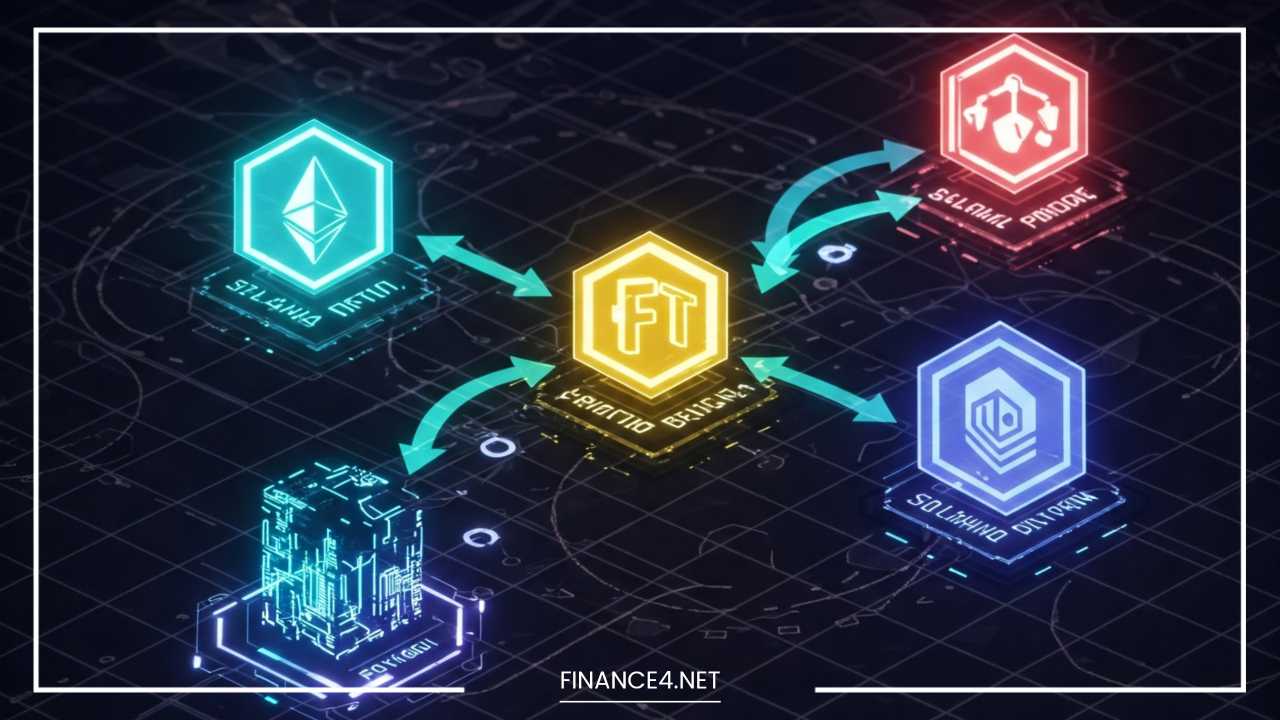
Top NFT Identity Solutions for Multi-Chain Ecosystems
 by
by 
Top NFT Identity Solutions for Multi-Chain Ecosystems | Best Cross-Chain ID Tools 2025
The digital realm is rapidly evolving, driven by the advent of Web3 and the proliferation of non-fungible tokens (NFTs). Beyond being mere digital collectibles, NFTs are increasingly becoming foundational components of our online identities. As we navigate a burgeoning multi-chain ecosystem, the need for robust, interoperable, and user-centric NFT identity solutions has never been more critical. This article delves into the transformative power of NFT identity, explores the challenges it faces, and highlights leading solutions shaping its future.
NFT identity refers to the use of Non-Fungible Tokens to represent and manage an individual’s digital presence, reputation, and credentials across decentralized applications and virtual worlds. Unlike traditional centralized identity systems, NFT identity grants users self-sovereignty, allowing them to own and control their data. This shift is particularly vital in multi-chain ecosystems, where diverse blockchains like Ethereum, Solana, Polygon, and Avalanche operate independently, creating a fragmented digital landscape.
The core challenge in this fractured environment is the lack of interoperability and identity portability. Imagine building a reputation in one game on Ethereum, only to find it inaccessible in another metaverse on Solana. This siloed nature hinders true digital ownership and seamless user experiences. Robust NFT identity solutions aim to bridge these gaps, enabling users to carry their digital persona, assets, and achievements across various chains and platforms. This article will explore the importance of such solutions and review the top contenders in this emerging space.
The Role of Identity in the NFT Ecosystem
The current state of NFT identity presents significant challenges. Most notably, identities remain siloed on single chains. A user’s profile on OpenSea, tied to an Ethereum address, doesn’t inherently translate to their identity on a Solana-based gaming platform. This leads to a lack of unified reputation systems, making it difficult to establish trust and credibility across the broader Web3 space. Without a persistent, verifiable identity, users are often forced to start from scratch in each new application or chain, diminishing the value of their digital contributions and achievements.
However, the benefits of having a persistent identity are profound. It enables trusted ownership of digital assets and verifiable credentials, crucial for proving provenance and authenticity. Furthermore, a unified identity can lead to enhanced social and gaming experiences, allowing users to carry their avatars, achievements, and social graphs across different virtual worlds and games. This also facilitates better discovery and personalization within Web3, as platforms can tailor experiences based on a user’s rich, verifiable on-chain history. The emergence of decentralized identity (DID) frameworks in Web3, built on blockchain technology, underpins this paradigm shift, offering a foundational layer for self-sovereign and interoperable digital identities.
Key Features of a Robust Multi-Chain NFT Identity Solution
A truly effective multi-chain NFT identity solution must embody several critical features to address the complexities of Web3:
- Cross-chain compatibility: The ability to seamlessly operate and link identities across various prominent blockchains (e.g., Ethereum, Solana, Polygon, Arbitrum, BNB Chain, Avalanche). This is paramount for true interoperability.
- Decentralized Identifiers (DIDs): Utilizing W3C-standardized DIDs ensures that users retain full control over their identity, independent of any central authority. DIDs provide a globally unique, resolvable, and cryptographically verifiable identifier.
- On-chain and off-chain data linking: The capacity to link a user’s on-chain activities (transactions, NFT ownership) with off-chain data (social media profiles, real-world credentials) in a privacy-preserving manner. This creates a holistic digital persona.
- Privacy controls and selective disclosure: Users must have granular control over what information they share and with whom. Zero-knowledge proofs (ZKPs) are increasingly vital here, allowing verification of credentials without revealing underlying sensitive data.
- Interoperability with wallets and metaverses: Seamless integration with popular Web3 wallets (MetaMask, Phantom, etc.) and various metaverse platforms is essential for practical adoption and a smooth user experience.
- Reputation and verification mechanisms: The ability to build and leverage a verifiable reputation based on on-chain activity, verifiable credentials, and social connections. This helps combat sybil attacks and fosters trust within communities.
Top NFT Identity Solutions for Multi-Chain Ecosystems
The landscape of NFT identity solutions is diverse and rapidly evolving. Here are some of the leading platforms, each with a unique approach to addressing the multi-chain identity challenge:
1. SpruceID
- Overview: SpruceID is a decentralized identity management platform focused on enabling users to control their personal data across Web3 and beyond. It leverages advancements in decentralized identity (DID) frameworks, digital wallets, and privacy-preserving cryptography. SpruceID aims to shift the paradigm from platforms owning user data to individuals maintaining their own secure data vaults.
- Key Features: W3C DID-compliant, verifiable credentials, secure data vaults (DIDKit, Rebase), cryptographic proofs for data ownership and consent, interoperability with existing identity systems.
- Supported Chains: Primarily blockchain-agnostic at its core, as DIDs and verifiable credentials can be anchored to various chains. Its tooling and integrations often support Ethereum and EVM-compatible chains.
- Use Cases: Secure online onboarding, credential verification, privacy-preserving access management for dApps, government digital identity programs, enterprise identity management.
- Pros: Strong emphasis on privacy and user control, adherence to open standards (W3C DID), robust cryptographic backing, versatile for both Web2 and Web3 applications.
- Cons: Primarily a developer-focused toolkit, requiring integration by dApps; not a direct “user-facing” identity solution in the same way some domain services are.
2. Civic Pass
- Overview: Civic Pass is a tokenized form of identity, often implemented as a Soulbound Token (SBT), that helps individuals privately manage and verify their identity across different blockchains. It focuses on “Proof of Personhood” (PoP) to ensure that an identity belongs to a unique human, combating sybil attacks.
- Key Features: Soulbound Tokens (non-transferable), Proof of Personhood (via CAPTCHA, liveness checks, ID verification), customizable passes for specific compliance rules (e.g., accredited investor status), integration with dApps and DAOs.
- Supported Chains: Solana and 11 other EVM-compatible blockchains, including Ethereum, Arbitrum, Avalanche, Base, BNB Chain, Fantom, Optimism, Polygon, Polygon zkEVM, XDC, and X Layer.
- Use Cases: Sybil attack prevention in DAO governance, on-chain accredited investor verification for DeFi, fair airdrop distribution, gaming identity verification, token-gated access.
- Pros: Strong focus on human-centric verification, wide multi-chain support for EVM and Solana, highly composable for builders, good for regulatory compliance in DeFi.
- Cons: Requires users to undergo verification processes, which might involve sharing some personally identifiable information (PII) with Civic as a trusted third party.
3. Lens Protocol
- Overview: Lens Protocol is a decentralized social graph built on Polygon, designed to empower creators to own their content and social connections. It treats user profiles, posts, and follows as NFTs, creating a portable and composable social identity.
- Key Features: Profile NFTs (user identity), Follow NFTs, Post NFTs, Collect NFTs, open and composable social graph, modular design, gasless transactions (leveraging Polygon).
- Supported Chains: Primarily Polygon PoS, with planned expansions to other Layer 2s and EVM chains.
- Use Cases: Decentralized social media applications, content monetization, building verifiable social reputation, community-building, integrating social interactions into dApps.
- Pros: True ownership of social data, highly composable for new social applications, fosters direct creator-audience relationships, active and growing ecosystem.
- Cons: Currently limited to Polygon (though expanding), adoption is still growing and depends on dApp integration.
4. ENS (Ethereum Name Service)
- Overview: ENS is a decentralized naming protocol built on Ethereum that translates complex blockchain addresses into human-readable names (e.g., yourname.eth). These names are NFTs (ERC-721) and serve as a fundamental layer for decentralized identity.
- Key Features: Human-readable names, resolves to various blockchain addresses (ETH, BTC, etc.), content hashes (IPFS), decentralized and censorship-resistant, reverse resolution, subdomains.
- Supported Chains: Primarily rooted in Ethereum, but can resolve addresses on various other chains. Efforts are underway to expand its multi-chain naming capabilities beyond just .eth domains.
- Use Cases: Simplifying crypto transactions (sending/receiving funds with a name), decentralized websites (linking to IPFS content), universal Web3 usernames, decentralized identity for dApps and wallets.
- Pros: Widely adopted and recognized, strong network effect, foundational layer for Web3 identity, easy to use, highly decentralized.
- Cons: Primarily tied to the .eth TLD, while its multi-chain resolution is good, true “native” multi-chain naming across all chains is still evolving.
5. Unstoppable Domains
- Overview: Unstoppable Domains offers blockchain domains with various extensions (e.g., .zil, .crypto, .nft, .x) that function as a user’s universal Web3 username and decentralized website address. Once purchased, they are owned forever with no renewal fees.
- Key Features: One-time purchase, no renewal fees, supports over 300 cryptocurrencies for simplified payments, censorship-resistant decentralized websites, integrates with dApps and wallets.
- Supported Chains: Ethereum and Solana for domain minting, supports resolutions for various other chains.
- Use Cases: Universal crypto payment addresses, decentralized personal websites, Web3 usernames, digital identity for metaverse profiles, NFT gallery showcasing.
- Pros: Lifetime ownership (no renewal fees), supports a wide array of cryptocurrencies for payments, user-friendly interface, strong brand recognition.
- Cons: Specific TLDs (not traditional .com etc.), browser support may require extensions for mainstream browsers (though Brave and Opera have native support).
6. Space ID
- Overview: SPACE ID is a universal name service network that aims to simplify Web3 domain management by providing a one-stop platform to discover, register, trade, and manage domains across multiple blockchains. It envisions a universal identity layer for Web3.
- Key Features: Multi-chain name service (e.g., .bnb, .arb, .eth), Web3 Name SDK & API for developers, reverse resolution, multi-wallet linking, domain NFT marketplace.
- Supported Chains: Ethereum, BNB Chain, Arbitrum, and other EVM-compatible networks.
- Use Cases: Unified identity management across chains, human-readable addresses for dApps and wallets, domain trading, creating identity-rich Web3 applications.
- Pros: Strong focus on multi-chain naming and unification, developer-friendly SDK, intuitive user interface, robust ecosystem with strategic partnerships.
- Cons: Newer entrant compared to ENS/Unstoppable, still building out its full ecosystem.
7. Humanity Protocol
- Overview: Humanity Protocol is a zkEVM Layer 2 blockchain built on Polygon CDK that introduces a decentralized Proof-of-Humanity (PoH) consensus mechanism using non-invasive palm recognition technology. It aims to enable users to cryptographically prove they are unique humans while maintaining privacy through zero-knowledge proofs. (Note: Public availability for mainnet is expected in early 2025).
- Key Features: Decentralized Proof-of-Humanity (via palm recognition), zero-knowledge privacy protection, self-sovereign identity (SSI) framework, comprehensive verifiable credentials system, decentralized verification network.
- Supported Chains: Built on Polygon CDK, making it inherently EVM-compatible.
- Use Cases: Sybil-resistant airdrops, decentralized governance/voting, regulatory compliance (KYC/AML), age and identity verification for digital services, professional credential verification.
- Pros: Innovative approach to Proof-of-Humanity, strong privacy guarantees with ZKPs, addresses a critical Web3 challenge (sybil attacks), enables a wide range of verifiable credentials.
- Cons: Still in early stages (testnet live, mainnet early 2025), relies on biometric data (though privacy-preserving), adoption depends on its integration by dApps.
8. Galxe (formerly Project Galaxy)
- Overview: Galxe is a leading platform for building Web3 communities and rewarding on-chain achievements. While not a direct identity solution in the naming sense, it provides a “credential-based” identity system, allowing users to aggregate their verifiable achievements and build a digital reputation.
- Key Features: Credential Protocol (on-chain and off-chain credentials), Galxe ID (aggregates credentials), Galxe Passport (for verifiable KYC/PoH), Galxe Score (reputation system), quest campaigns.
- Supported Chains: Supports various chains where user activities and NFTs are recorded, including Ethereum, Polygon, BNB Chain, Avalanche, Arbitrum, Optimism, ZkSync Era, Linea, Base, and more.
- Use Cases: Building Web3 reputation, incentivized community engagement, verifiable achievements for airdrops and whitelist eligibility, identity-gated experiences, and personalized dApp interactions.
- Pros: Excellent for building on-chain reputation, highly flexible credentialing system, user-friendly for projects to launch campaigns, wide multi-chain support for credential aggregation.
- Cons: Not a primary “naming” or DID solution, more focused on verifiable achievements and reputation rather than core identity infrastructure.
9. Lit Protocol
- Overview: Lit Protocol provides decentralized key management and programmable access control based on on-chain conditions. It allows developers to gate content, actions, and data through provable ownership and customizable rules, offering a powerful layer for programmable identity permissions.
- Key Features: Decentralized access control, Access Control Conditions (ACCs) based on blockchain data, Lit Actions (custom JavaScript for complex logic), distributed cryptographic enforcement, programmable key pairs (PKPs).
- Supported Chains: Chain-aware and can integrate with data from Ethereum, Polygon, Solana, Cosmos, and other EVM-compatible and non-EVM chains.
- Use Cases: Token-gated content/communities, private messaging, secure data access (e.g., encrypted files accessible only by NFT holders), decentralized compute and AI access control, secure agent wallets.
- Pros: Highly flexible and programmable for defining access rules, strong cryptographic security, decentralized enforcement, enables truly dynamic identity-based permissions.
- Cons: Primarily a developer tool, requires dApp integration to be fully utilized, not a direct user-facing identity solution for general public.
10. BrightID
- Overview: BrightID is a privacy-focused social identity network designed to prove that a person is a unique human, thereby providing sybil-resistance. It leverages an individual’s social graph to establish uniqueness without revealing personal identifying information.
- Key Features: Sybil-resistant proof of uniqueness, social graph analysis, privacy-preserving, decentralized and open-source, integrates with dApps for “proof of humanity.”
- Supported Chains: Ethereum, Polygon, Avalanche, and other EVM-compatible chains. Its uniqueness proof can be leveraged by applications across various chains.
- Use Cases: Preventing sybil attacks in airdrops, fair distribution of public goods, decentralized governance (one-person-one-vote), preventing bot manipulation in Web3 games and communities, universal basic income (UBI) distribution.
- Pros: Addresses a critical problem of sybil attacks, strong privacy guarantees, community-driven, non-invasive verification method.
- Cons: Requires users to build a social graph for verification, which might be a barrier for some; adoption depends on integration by dApps.
Comparison Table (Optional Visual Summary)
| Solution | Primary Function | DIDs/SSI Support | Multi-Chain Support | Privacy Focus | Reputation System | Key Use Cases |
| SpruceID | Decentralized Identity | Yes (W3C DID) | Chain-agnostic (tooling for EVM) | High (ZKPs) | Via Verifiable Credentials | Data control, credential verification, access |
| Civic Pass | Proof of Personhood | Yes (SBTs) | EVM, Solana | Medium (PoP via verification) | Yes (verified status) | Sybil resistance, DeFi compliance, gated access |
| Lens Protocol | Decentralized Social Graph | Yes (Profile NFTs) | Polygon (expanding) | Medium | Yes (Follows, Posts) | Social media, content ownership, reputation |
| ENS | Decentralized Naming | Yes (NFTs) | Ethereum (resolves across chains) | Low (public records) | Limited (address reputation) | Universal usernames, crypto payments, dWebsites |
| Unstoppable Domains | Decentralized Naming | Yes (NFTs) | Ethereum, Solana (resolves across chains) | Low (public records) | Limited (address reputation) | Universal usernames, decentralized websites |
| Space ID | Universal Name Service | Yes (NFTs) | EVM chains | Low (public records) | Limited | Multi-chain naming, unified identity |
| Humanity Protocol | Proof of Humanity (zkEVM L2) | Yes (SSI) | Polygon CDK (EVM compatible) | High (ZKPs) | Yes (Verifiable Credentials) | Sybil resistance, KYC, secure credentials |
| Galxe | Credential/Reputation | Indirect (Galxe ID) | Wide Multi-chain | Medium | High (Galxe Score) | Community building, airdrops, loyalty |
| Lit Protocol | Programmable Access Control | Yes (PKPs) | Chain-agnostic (data from many) | High (encryption) | Indirect (via ACCs) | Token-gated content, secure data, dApp permissions |
| BrightID | Sybil Resistance | Yes (Social Graph) | EVM chains | High (privacy-preserving) | Yes (uniqueness) | Fair airdrops, DAO voting, bot prevention |
Use Cases for Multi-Chain NFT Identity
The capabilities offered by these multi-chain NFT identity solutions unlock a plethora of transformative use cases:
- Gaming (cross-platform avatars): Imagine owning an NFT avatar that you can use across multiple blockchain games, carrying your achievements, skins, and reputation from one virtual world to another, regardless of the underlying chain.
- Social/DAO reputation and community-building: Users can port their verifiable reputation from one DAO to another, showcasing their contributions and expertise, fostering more engaged and trustworthy decentralized autonomous organizations.
- DeFi + NFT hybrid experiences: An NFT identity could serve as a credit score or collateral, unlocking specialized DeFi services or higher borrowing limits based on a user’s on-chain history and verifiable assets.
- Metaverse integration: A universal NFT identity allows users to seamlessly navigate different metaverse environments, maintaining a consistent persona, owning virtual land, and interacting with various applications without creating new profiles.
- Artist/creator branding across platforms: Artists and creators can establish a consistent, verifiable brand identity across various NFT marketplaces, social media platforms, and creative applications, building a reputation that transcends individual platforms.
Challenges and Limitations
Despite the immense potential, the path to a truly universal multi-chain NFT identity is fraught with challenges and limitations:
- Fragmented standards: While W3C DIDs provide a foundation, the broader ecosystem still grapples with diverse implementation standards and interoperability protocols across different blockchains and applications. This fragmentation can hinder seamless integration.
- Privacy concerns: Balancing the transparency of public blockchains with the need for personal privacy remains a delicate act. While ZKPs offer solutions, the inherent public nature of many on-chain activities can expose sensitive data.
- UX issues (too technical): For the average user, setting up a decentralized identity, managing multiple wallets, and understanding complex cryptographic concepts can be overwhelming. User experience needs significant simplification for mass adoption.
- Adoption barriers for users and developers: Developers face the challenge of integrating these complex identity solutions into their dApps, while users need compelling reasons and easy-to-use interfaces to embrace decentralized identity. The network effect is crucial.
The Future of NFT Identity in a Multi-Chain World
The trajectory of NFT identity points towards a future where digital personas are truly self-sovereign, composable, and portable. There is a growing demand for composable identity, where users can combine various verifiable credentials, reputation scores, and digital assets to form a rich, dynamic profile that adapts to different contexts.
The role of ZK (zero-knowledge) proofs and privacy-preserving identity will become increasingly prominent. ZKPs allow for selective disclosure and verification of attributes without revealing the underlying data, offering a powerful tool to balance transparency and privacy in a decentralized world.
Standardization efforts from bodies like the W3C (World Wide Web Consortium) and DIF (Decentralized Identity Foundation) are crucial for establishing common protocols and ensuring broad interoperability across the industry. This collaboration will pave the way for a more unified identity layer.
Ultimately, the ecosystem is moving towards a potential convergence toward a universal NFT passport. This “passport” would encapsulate a user’s entire digital life – their verifiable credentials, reputation, asset ownership, and social graph – all controlled by them and seamlessly portable across any blockchain or application. This vision, while ambitious, represents the true promise of decentralized identity in a multi-chain world.
Final Thoughts
NFT identity is rapidly evolving from a niche concept to a fundamental building block of the decentralized web. As multi-chain ecosystems continue to proliferate, the ability to maintain a persistent, interoperable, and self-sovereign digital persona becomes paramount. We’ve explored leading solutions like SpruceID, Civic Pass, Lens Protocol, ENS, Unstoppable Domains, Space ID, Humanity Protocol, Galxe, Lit Protocol, and BrightID, each contributing uniquely to this complex puzzle.
While challenges such as fragmented standards and UX complexities persist, the innovation in this space is relentless. We encourage early exploration of these NFT identity tools, as they represent the foundational frameworks for the next generation of online experiences. The journey towards a truly Web3-native identity framework is underway, promising a future where users, not platforms, are the true owners of their digital selves.