How to Open Bridging Channels for Multi-Chain DAOs
 by
by 
How to Open Bridging Channels for Multi-Chain DAOs
Introduction to Multi-Chain DAOs
A DAO, or Decentralized Autonomous Organization, is a new form of organization built on blockchain technology. Unlike traditional companies with hierarchical structures, DAOs operate through smart contracts and are governed by their members. These members, who hold the DAO’s native tokens, vote on proposals to make decisions. The DAO’s rules are transparent and immutable, embedded directly in its code.
Initially, most DAOs operated on a single blockchain, typically Ethereum. However, as the crypto ecosystem has matured, DAOs have begun to expand beyond their native chains, becoming multi-chain. This shift is driven by the desire to leverage the unique advantages of different blockchains. For example, a DAO might use Ethereum for its robust security and established developer community, while also operating on a faster, cheaper chain like Solana or a Layer 2 solution like Arbitrum to handle high-frequency transactions or governance votes. This multi-chain approach offers DAOs greater flexibility, scalability, and access to diverse communities and ecosystems.
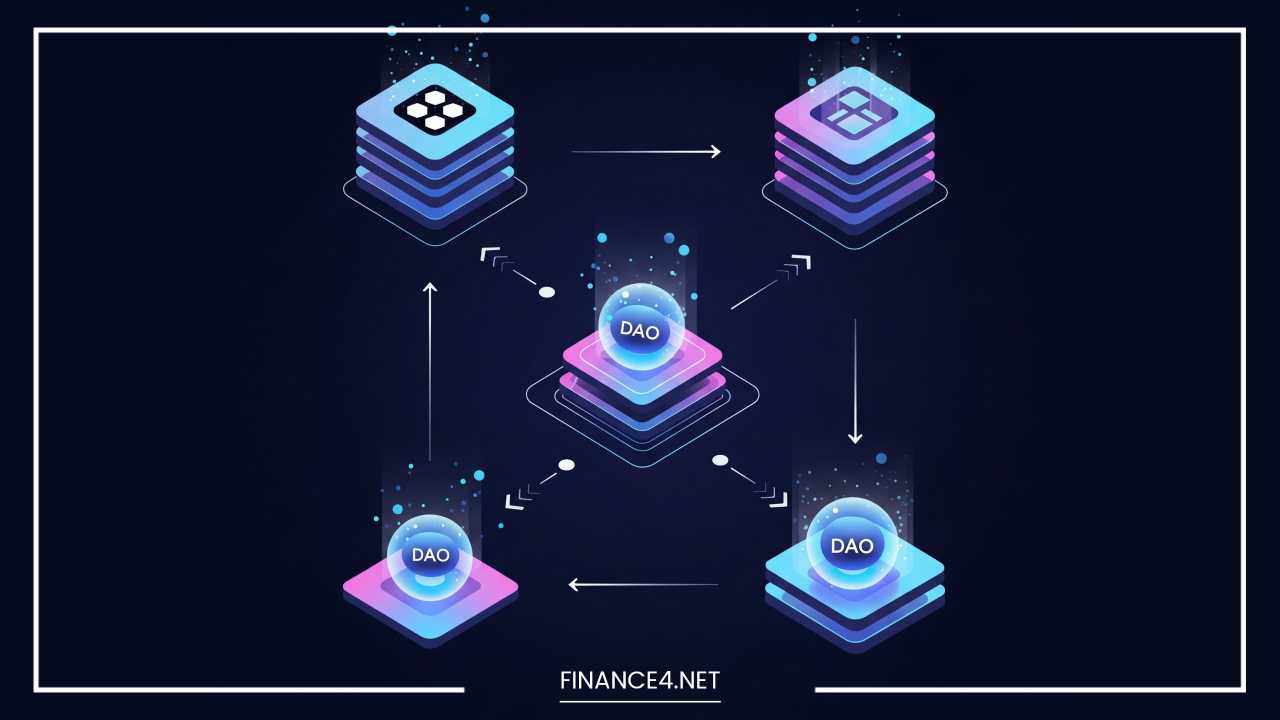
The expansion of DAOs across multiple chains necessitates a way for these disparate networks to communicate and interact. This is where bridging becomes essential. A bridge is a protocol that allows tokens, data, and messages to move from one blockchain to another. For multi-chain DAOs, these bridges are the critical infrastructure that enables cross-chain governance, treasury management, and asset transfers, ensuring the DAO remains a cohesive and functional entity despite being spread across several blockchains.
What Are Bridging Channels?
In the context of blockchains, a bridging channel is a communication and asset transfer pathway between two or more distinct blockchains. Think of a blockchain as a self-contained country with its own laws and currency. A bridge is a secure, digital tunnel connecting two of these countries, allowing people (tokens) and information (data) to travel between them without needing to go through a centralized intermediary.
There are three main types of bridges, each with its own security model:
- Trusted Bridges: These rely on a centralized or federated set of actors (validators or a multi-sig wallet) to secure and process cross-chain transactions. While they can be fast and efficient, they introduce a point of centralization, meaning users must trust the bridge operators to act honestly. The security of these bridges is as strong as the reputation and integrity of the entities running them.
- Trustless Bridges: These bridges operate without relying on a third-party’s reputation. They use cryptographic proofs and the underlying security of the source and destination chains to verify transactions. Examples include light client-based bridges, which verify a different chain’s block headers, making them highly secure but often more complex and resource-intensive to run.
- Hybrid Bridges: These combine elements of both trusted and trustless models. They might use a set of validators to relay messages but secure the process with cryptographic proofs or fraud detection mechanisms. This approach aims to balance security with performance and cost.
For DAOs, bridging channels are indispensable. They enable several key operations:
- Governance: A DAO might have its main governance token on one chain, but its community and operations are on another. A bridge allows token holders on different chains to participate in a single, unified voting process.
- Treasury Management: DAOs often hold significant treasuries in various assets. A bridge allows the DAO to move funds securely from one chain to another to capitalize on yield opportunities, provide liquidity, or pay for operational costs.
- Asset Movement: Members can use a bridge to move their governance tokens or other assets between chains to access different decentralized applications (dApps) or trading platforms, fostering a more dynamic and interconnected ecosystem for the DAO.
Technical Foundations of Cross-Chain Bridges
The core of a bridge’s functionality relies on a few key technical components. At the most fundamental level, a bridge consists of a pair of smart contracts deployed on each of the connected blockchains. When a user wants to send assets or a message from Chain A to Chain B, they interact with the smart contract on Chain A. This contract then “locks” the asset or records the message. The smart contract on the receiving Chain B then “unlocks” the asset or processes the message based on proof that the original event occurred on Chain A.
This proof is where the role of external actors comes in. Validators, oracles, and relayers are the intermediaries that observe events on one chain and relay the necessary information to the smart contract on the other.
- Validators or Guardians are decentralized network participants who confirm the validity of a cross-chain transaction. They typically stake their own tokens, which can be slashed if they act maliciously, to ensure honest behavior.
- Oracles are a specific type of relayer that feeds external data (in this case, data from another blockchain) into a smart contract. They are responsible for accurately reporting the state of the source chain to the destination chain.
- Relayers are responsible for physically transporting the “proof” or message data from the source chain to the destination chain’s smart contract. They act as the communication backbone, ensuring the message reaches its destination.
Several prominent cross-chain messaging protocols have emerged to standardize this process, offering DAOs pre-built infrastructure.
- LayerZero: A protocol that enables a “trustless” message-passing primitive by relying on two external parties: an Oracle (like Chainlink) and a Relayer. The Oracle fetches a block header from the source chain, and the Relayer provides the transaction proof. If the Oracle and Relayer are different entities, it becomes extremely difficult for them to collude to produce a fraudulent message.
- Axelar: A decentralized network that provides secure cross-chain communication. It uses a dynamic set of validators who run light clients for connected chains, allowing them to verify transactions directly. Axelar provides a universal gateway for dApps to interact with various blockchains.
- Wormhole: A decentralized messaging protocol that uses a set of “Guardians” to observe and verify cross-chain messages. It focuses on speed and efficiency, making it popular for high-throughput applications.
- Hyperlane: An interoperability protocol designed to be “permissionless and modular.” It allows developers to deploy interoperability channels between any two chains, giving DAOs more flexibility and control over their bridging infrastructure.
Despite these advancements, bridging channels are not without risks. Latency can be an issue, as transactions can take time to be finalized on both chains. Censorship is a risk if a centralized or colluding set of validators decides to block specific messages. Most importantly, security vulnerabilities are a significant concern. The contracts governing bridges often hold enormous amounts of value, making them prime targets for hackers. Flaws in the code, or a compromise of the validators, can lead to catastrophic losses, as seen in numerous high-profile bridge exploits. DAOs must understand these risks before choosing and implementing a bridging solution.
How to Choose the Right Bridge for Your DAO
Choosing the right bridge is a crucial, high-stakes decision for a multi-chain DAO. The wrong choice could lead to security vulnerabilities, high costs, or a poor user experience for community members. Here are the key factors to consider:
- Security Model: This is the most critical factor. Does the bridge rely on a small set of trusted validators (federated/trusted) or a more decentralized, cryptographic-based approach (trustless)? A DAO must weigh the trade-offs between speed and decentralization. A trustless model, while generally more secure, may be more expensive and slower. A federated model might be faster and cheaper, but the DAO must have a high degree of trust in the bridge operators and their security practices. It is essential to choose a bridge that aligns with the DAO’s risk tolerance.
- Supported Chains: Ensure the bridge supports all the blockchains where your DAO has a presence or plans to expand. If your DAO is on Ethereum and Polygon, you need a bridge that seamlessly connects these two networks. If you plan to expand to a newer chain, ensure the bridge has a clear roadmap for adding support.
- Cost and Speed: The cost of bridging includes transaction fees on both the source and destination chains, as well as any protocol fees charged by the bridge itself. High fees can be prohibitive for DAO members, especially for frequent governance votes or small asset transfers. Similarly, the speed of the bridge, or its finality time, is important for time-sensitive operations. A slow bridge can delay governance decisions or treasury movements, hampering the DAO’s operational efficiency.
- Developer Tooling and Documentation: A good bridge should have comprehensive documentation, well-maintained SDKs, and a supportive developer community. This is vital for the DAO’s technical team to integrate the bridge’s functionality into its smart contracts and front-end interfaces. Poor documentation can lead to integration errors and security holes.
- Community Trust and Audit History: Research the bridge’s history. Has it undergone multiple, independent security audits by reputable firms? Does the community trust the protocol? Look for a track record of successful operations and transparent communication during any past incidents. A bridge that has been exploited in the past but has learned from its mistakes and implemented strong security measures might still be a viable option, but it requires careful due diligence.
Case Studies of DAOs Using Bridges Successfully:
- GMX: The GMX DAO has a strong presence on both Arbitrum and Avalanche. It uses bridges to manage its multi-chain operations, allowing users to transfer GMX tokens and liquidity between the two chains. This has enabled the DAO to leverage the benefits of each ecosystem while maintaining a unified tokenomics model.
- MakerDAO: As a leading DeFi protocol, MakerDAO has a significant presence on Ethereum. It uses bridges to interact with Layer 2 solutions and other chains, allowing for faster and cheaper transactions related to its stablecoin, DAI, and governance. This multi-chain strategy helps the DAO maintain its position as a central player in the broader DeFi landscape.
Step-by-Step: Opening a Bridging Channel
Opening a bridging channel for a DAO is a significant technical and operational undertaking that requires careful planning, development, and community approval.
- Identify DAO Needs: The first step is to clearly define what the DAO needs from a bridge. Is the primary goal to enable cross-chain governance voting? Is it to move treasury assets to a new chain for a liquidity mining program? Or is it to allow community members to use their governance tokens on another chain’s dApps? Clearly defining these needs will guide the selection of the right bridge and the design of the implementation.
- Select Chains and a Compatible Bridge: Based on the DAO’s needs, identify the target chains. For example, a DAO might want to expand from Ethereum to Optimism and Solana. Next, research and choose a bridging protocol that supports all these chains and aligns with the DAO’s security and cost requirements. For example, if security and decentralization are the top priorities, a protocol like Axelar or a LayerZero-based solution might be a good fit. If speed and lower fees are more important, a different solution might be chosen.
- Deploy Required Smart Contracts: The DAO’s technical team will need to deploy the necessary smart contracts on each chain. This often involves deploying a “connector” or “router” contract that acts as the DAO’s interface to the bridging protocol. This contract will be responsible for sending and receiving messages and assets securely. It must be meticulously coded and audited to prevent vulnerabilities.
- Set Up Relayers/Oracles (if needed): Some bridges require the DAO to run its own relayers or oracles to facilitate message passing. If this is the case, the DAO must set up and maintain this infrastructure. This involves running nodes, ensuring they are well-funded, and monitoring their performance. For other bridges, like LayerZero, this step is handled by external, independent parties, simplifying the process for the DAO.
- Test Bridging in a Sandbox/Testnet: Before launching on the mainnet, it’s crucial to test the entire bridging system in a testnet environment. The DAO’s team should simulate all the intended use cases, such as sending governance votes, transferring assets, and handling various edge cases. This phase is critical for catching bugs, vulnerabilities, and performance issues before any real assets are at risk.
- Launch on Mainnet with DAO Approval: Once the testing is complete and successful, the DAO must formally propose the new bridging channel to its community. The proposal should include details about the chosen bridge, its security model, the contracts involved, and the planned use cases. The DAO’s members will then vote on the proposal. A successful vote signals community consensus and allows the team to deploy the contracts on the mainnet and activate the bridging channel. This democratic approval process is fundamental to the DAO’s decentralized ethos.
Example Using a Specific Bridge (e.g., LayerZero)
Let’s say a DAO wants to enable cross-chain governance from Ethereum to Polygon using LayerZero.
- The DAO’s core team would first define the governance logic and the smart contracts required on both chains. The contracts would include the governance token and the voting contracts.
- Next, they would integrate LayerZero’s messaging protocol. This involves deploying a LayerZero-compatible “OApp” (Omnichain Application) contract on both Ethereum and Polygon. The OApp contract on Ethereum would listen for governance proposals and votes, and then use LayerZero’s
send()function to transmit a message to the OApp on Polygon. - The LayerZero protocol, through its independent Oracle and Relayer, would then deliver the message to the Polygon OApp. The Polygon OApp would verify the message’s authenticity and update the governance state, allowing token holders on Polygon to participate in the unified governance process.
- Before deployment on the mainnet, the team would test this entire flow on testnets like Sepolia and Mumbai. After successful testing, a formal proposal would be put to a DAO vote. If the community approves, the smart contracts are deployed to the mainnet, and the bridging channel is officially open.
Governance & Security Considerations
Establishing a bridging channel introduces a new layer of complexity and potential risk to a DAO. The DAO must have robust governance and security considerations in place to protect its assets and maintain its integrity.
The primary security concern is bridge attacks. Bridge exploits are one of the most common and damaging types of attacks in the crypto space. They can be caused by vulnerabilities in the smart contracts, a compromise of the validators or relayers, or a lack of proper monitoring. The DAO must take proactive steps to mitigate these risks.
Multi-sig and time-delay mechanisms are crucial tools for this. A multi-signature (multi-sig) wallet requires multiple parties to approve a transaction before it can be executed. For a bridge, a multi-sig can be used to control the contracts that manage the bridged assets. Instead of a single person or entity having control, a group of trusted individuals (e.g., DAO core contributors or a security council) must sign off on any major changes or asset movements. This distributes the trust and makes it much harder for a single point of failure to be exploited. A time-delay mechanism adds another layer of security. It introduces a mandatory waiting period between when a transaction is proposed and when it is executed. For example, a proposal to upgrade a bridge contract might have a 48-hour time lock. This gives the community and security professionals time to review the transaction and flag any potential malicious activity before it’s too late.
The DAO community plays a vital role in approving and managing bridge-related proposals. All major decisions, such as the initial selection of a bridge, any protocol upgrades, or changes to the multi-sig signers, should be put to a community vote. This ensures the decision-making process is decentralized and transparent. The community must also be educated on the risks involved so they can make informed decisions.
Monitoring, Maintenance & Upgrades
A bridging channel is not a “set it and forget it” solution. It requires constant monitoring, maintenance, and upgrades to remain secure and functional.
Ongoing bridge monitoring is essential. The DAO’s technical team should set up alerts and dashboards to track the health of the bridge. This includes monitoring for unusual transaction volumes, failed messages, or any signs of a potential exploit. Analytics tools can help identify patterns and anomalies that might indicate a problem. For example, a sudden spike in asset transfers of a large amount could be a sign of a bridge exploit and needs immediate investigation.
The DAO must also keep up with protocol upgrades or deprecations of the chosen bridge. The interoperability landscape is constantly evolving, and a bridge protocol might release new, more secure versions of its contracts or announce the deprecation of older ones. The DAO needs a plan to stay current with these changes and upgrade its contracts accordingly to avoid being left on an insecure or unsupported version.
Finally, having a clear emergency response plan is critical. In the event of a bridge exploit or a major security incident, the DAO must be able to act quickly. This plan should include:
- A predefined communication strategy to inform the community about the situation.
- A clear process for pausing or shutting down the bridge to prevent further losses.
- A plan for working with the bridge protocol’s team and security professionals to investigate the incident and find a solution.
- A strategy for managing the aftermath, including a plan for potentially compensating affected users.
The Future of Bridging & Interoperability for DAOs
The current state of bridging, while functional, is still in its early days. The future of interoperability for DAOs is moving towards more seamless, secure, and integrated solutions.
One major trend is the rise of native interoperability. Protocols like Cosmos’s Inter-Blockchain Communication (IBC) and Polkadot’s parachain model are building ecosystems where interoperability is a native feature of the architecture, not an add-on. IBC, for instance, allows different blockchains in the Cosmos ecosystem to communicate securely and directly, without the need for an external bridge. This approach minimizes trust assumptions and can be more secure and efficient.
Another exciting development is the emergence of intent-based systems and programmable interoperability. These new models move away from the traditional “lock and mint” bridge approach. Instead, a user can express an “intent” (e.g., “I want to swap my ETH on Ethereum for SOL on Solana”), and the system uses a network of solvers and routers to find the most efficient and secure way to fulfill that intent, often involving multiple hops and complex transactions under the hood, but presenting a simple, unified interface to the user. This will make cross-chain operations much more user-friendly and composable.
The long-term vision is for truly composable, cross-chain DAOs. In this future, a DAO will be a multi-chain entity by default, with its governance, treasury, and operations seamlessly spread across different blockchains. For example, a DAO might use Ethereum for its high-value treasury, a fast L2 for frequent governance votes, and another chain for its community’s social or gaming activities. All these components will be connected through a robust interoperability layer, allowing the DAO to function as a single, unified entity while leveraging the strengths of each individual network. This will unlock a new era of decentralized coordination and innovation, making DAOs more resilient, scalable, and powerful than ever before.
Glossary
- Bridging: The process of moving tokens, data, or messages between two different blockchains.
- Relayer: A network participant that transmits information or transaction data from one blockchain to another, acting as a crucial component of many bridging protocols.
- Validator: An entity that verifies and secures cross-chain transactions by staking their own assets, ensuring the integrity of the bridging channel.
- IBC (Inter-Blockchain Communication): A native interoperability protocol used by blockchains in the Cosmos ecosystem to securely communicate with each other.
- Multi-sig: A type of crypto wallet or smart contract that requires more than one signature to authorize a transaction, significantly increasing security.