Best Aggregator for Bridging NFTs Cheaply
 by
by 
Best NFT Bridge Aggregator for Cheap Cross-Chain Transfers
Navigating the multi-chain world of NFTs can be a minefield of high fees, slow transactions, and security risks. While a direct bridge may seem like the simplest solution, they are often not the most efficient or cost-effective. This is where NFT bridge aggregators come in, acting as smart routers to find the cheapest, fastest, and most secure path for your digital assets. This article will delve into what these aggregators are, how they work, and, most importantly, which one offers the best value for bridging your NFTs.
The decentralized nature of the crypto world, while revolutionary, creates complexity, particularly when moving assets between disparate blockchain ecosystems. For Non-Fungible Tokens (NFTs)—unique digital collectibles ranging from artwork to metaverse land—this complexity is magnified. Bridging an NFT (e.g., from Ethereum to Polygon or BNB Chain) is often necessary to access lower transaction costs, participate in specific games, or tap into new marketplaces.
The primary hurdle is cost. High gas fees on source chains like Ethereum, combined with protocol fees from individual bridges, can render the process prohibitively expensive. Moreover, the manual process of comparing bridges for cost, speed, and security is tedious and error-prone.
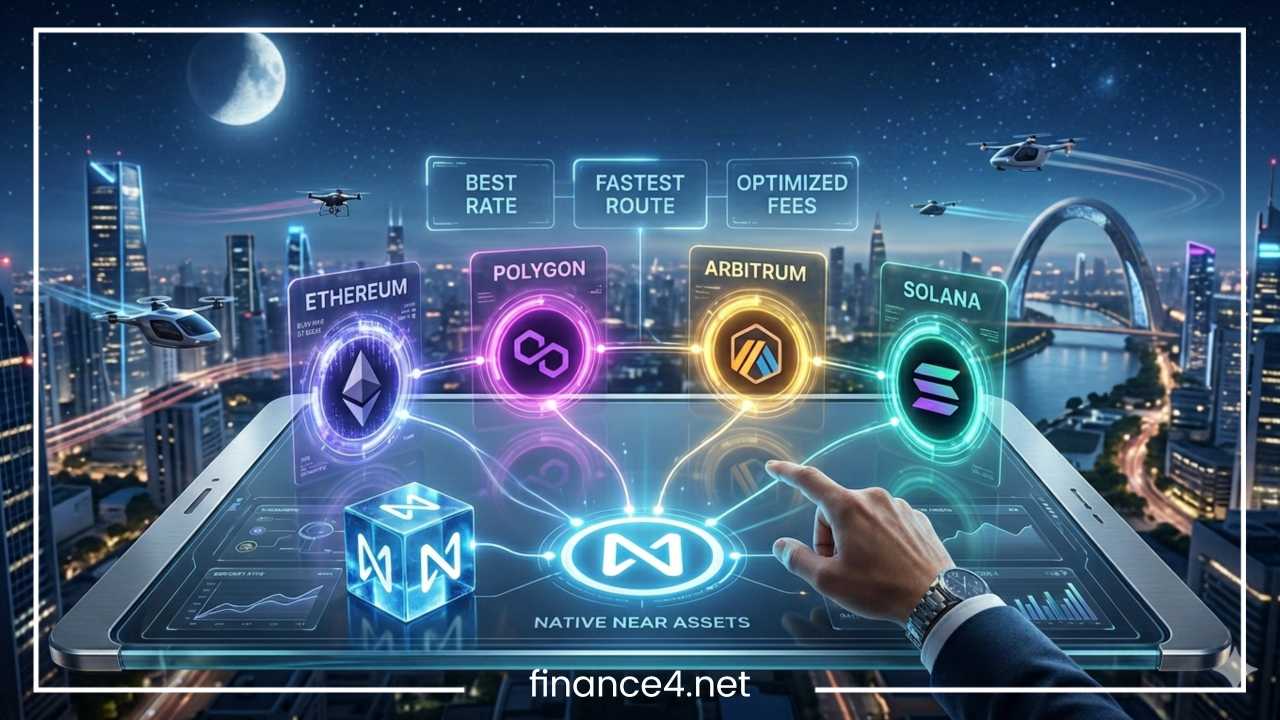
Why are aggregators the solution? By automatically comparing multiple underlying bridges and routing protocols, an aggregator acts as a sophisticated travel agent, ensuring users find the most cost-efficient and reliable path for their valuable digital property. Our purpose here is to identify the best and cheapest aggregator for this critical cross-chain activity.
What is NFT Bridging?
NFT bridging is the mechanism used to transfer a unique non-fungible token from its native blockchain to a different, interoperable blockchain.
Definition and Purpose
Unlike fungible tokens (like ETH or USDC) which are uniform and interchangeable, NFTs possess specific metadata and contract addresses that must be preserved exactly during transit. The standard method for bridging NFTs is the “lock and mint” process:
- Locking: The original NFT is deposited and locked within a designated smart contract on the source chain (e.g., Ethereum).
- Verification: The locking event is verified by bridge validators or oracles.
- Minting: A new, wrapped version of the NFT is minted on the destination chain (e.g., Polygon). This wrapped NFT maintains the original token ID and metadata, proving ownership on the new chain while its original counterpart is locked away.
Common Use Cases
The impetus for bridging is often purely economic or functional:
- Gaming and Metaverse Assets: Moving high-value collectibles from high-cost chains (Ethereum) to low-cost chains (Solana, Arbitrum) for seamless in-game use and transactions.
- Marketplace Accessibility: Listing and selling an NFT on a marketplace specific to a destination chain, or one that offers much lower listing fees.
- Liquidity and Utility: Participating in decentralized finance (DeFi) protocols or leveraging utility functions available only on the destination chain.
Technical Challenges
Bridging NFTs is inherently complex due to the need to maintain ownership integrity and metadata immutability. Smart contract compatibility (ERC-721, ERC-1155) and the security of the validation mechanism (oracles, relayers, multi-sig schemes) are constant technical challenges that aggregators must navigate on the user’s behalf.
How Do NFT Bridge Aggregators Work?
An NFT bridge aggregator is a sophisticated smart router designed to find the optimal path across the fragmented landscape of cross-chain bridges.
What is an Aggregator?
In the context of NFT bridging, an aggregator is a technology layer that connects to numerous individual bridge protocols (such as Wormhole, Hop, LayerZero integrations, etc.) via their respective APIs and SDKs. It is a unifying interface that allows a user to initiate a complex cross-chain movement without knowing which specific bridge protocol is being utilized underneath.
The Routing Mechanism
When a user submits a bridge request, the aggregator’s proprietary algorithm swings into action:
- Input Analysis: The system identifies the source chain, destination chain, specific NFT standard (ERC-721/1155), and the desired outcome (e.g., lowest cost).
- Bridge Comparison: The aggregator queries its integrated bridges in real-time, fetching data on current gas costs, protocol fees, estimated transaction times, and liquidity.
- Optimization: Using proprietary formulas, the aggregator weighs cost against speed and security risk. It might determine that a single-hop bridge (direct route) is best, or that a multi-hop route (e.g., Chain A Layer 2 Bridge Chain B) is cheaper or faster.
- Execution: The user selects the route recommended by the aggregator (usually the cheapest/fastest), and the aggregator executes the transaction via the chosen underlying bridge protocol.
This system is analogous to the functionality seen in DEX aggregators like 1inch or LI.FI (which also aggregates bridges) for fungible tokens, extending that efficiency to the specialized requirements of NFTs.
Advantages of Aggregators
- Lower Costs: Access to arbitrage opportunities and the consistently cheapest route available.
- Faster Routes: Prioritization of routes with lower confirmation times or higher throughput.
- Reliability: If one bridge is congested or temporarily down, the aggregator automatically redirects the user to an alternative functioning route.
Cost Factors in NFT Bridging
To truly bridge NFTs cheaply, one must understand the complex array of fees involved. The final cost is rarely determined solely by the bridge protocol itself.
| Fee Component | Description | Variability |
| Gas Fees (Source Chain) | Paid to miners/validators to execute the ‘lock’ transaction. | Highly variable (dependent on network congestion/Gwei price). |
| Protocol Fees | The fee charged by the underlying bridge (flat rate or percentage). | Moderate (varies per bridge protocol). |
| Gas Fees (Destination Chain) | Paid to receive and ‘mint’ the wrapped NFT. | Low (negligible on L2s/sidechains). |
| Aggregator Fees | Fee charged by the aggregator for its routing service. | Varies (often zero protocol fees, earning only on spread). |
| Cross-Chain Message Costs | Fees associated with the communication/verification protocol (e.g., oracle/relayer costs). | Low to moderate. |
The most significant cost driver is almost always the source chain gas fee, especially when bridging out of Ethereum Mainnet. A great aggregator minimizes the overall cost by finding routes that utilize protocols with the lowest protocol fees and requiring the most efficient smart contract execution (to reduce source chain gas consumption).
Key Features to Look for in a Good NFT Bridge Aggregator
Selecting the best aggregator requires looking beyond the advertised low fees. Reliability, security, and support are paramount.
Core Functionality
- Cost Optimization / Lowest Fee Routing: Must prove its value by consistently beating the price of direct bridges. Look for transparent fee breakdowns.
- Supported Chains and NFT Standards: A wide range of support for EVM chains (Ethereum, Polygon, Arbitrum, Optimism, zkSync) and non-EVM chains (Solana, Cosmos) is necessary. Compatibility with both ERC-721 (most common) and ERC-1155 (semi-fungible) is critical.
Operational Excellence
- Speed and Finality: The aggregator should provide accurate estimations of transaction finality, particularly for routes that involve long confirmation periods.
- Security Features: The aggregator must have strict due diligence on its integrated bridges. Look for platforms that prioritize audited bridges, multi-sig security, and progressive use of Zero-Knowledge (ZK) proofs in their underlying protocols.
- UI/UX and Wallet Integration: A clean, intuitive interface is vital. The process should be simple: connect wallet, select NFT, choose destination, and execute. Must support major wallets (MetaMask, WalletConnect, Ledger).
Developer Support
- Support for dApps (SDKs/APIs): For the ecosystem to thrive, aggregators must provide robust Software Development Kits (SDKs) allowing other dApps (games, marketplaces) to integrate cheap bridging directly into their own user flow.
Best Aggregators for Bridging NFTs Cheaply – Reviewed
While many aggregators focus primarily on fungible tokens, a few leaders have built comprehensive cross-chain infrastructure that includes NFT functionality, leveraging the cheapest underlying bridges.
1. LI.FI (Jumper Exchange)
LI.FI is fundamentally a cross-chain liquidity and bridge aggregation protocol, with its main front-end being Jumper Exchange. It focuses heavily on finding the most efficient path for any asset, including NFTs, by aggregating dozens of underlying protocols.
- Features: Comprehensive routing, intelligent pathfinding, and a strong developer focus. They integrate with bridges known for NFT support, such as those built on LayerZero.
- Supported Chains: Extremely broad support, covering nearly all major EVM chains and several others (30+ blockchains).
- Cost Efficiency: Highly cost-efficient. LI.FI often routes users through the cheapest sequence of bridges, and crucially, LI.FI itself currently charges zero protocol fees for its service, earning only via integration fees or token swaps.
- Security/Audits: Heavily audited by security firms. Their risk management framework is transparent, prioritizing audited and battle-tested protocols.
- Pros & Cons: Pro: Zero aggregator fee, wide chain support, excellent UX. Con: The cheapest route might sometimes rely on a lesser-known bridge.
2. Socket.tech (Bungee)
Socket is a cross-chain middleware that enables fast and secure asset transfers. Its front-end, Bungee, is known for its speed and sleek user experience, with growing support for NFT bridging through its robust API.
- Features: Focuses on minimizing the number of hops (transactions) required, which directly translates to lower gas costs.
- Supported Chains: Strong coverage of major EVM chains (Ethereum, Polygon, Arbitrum, Optimism, Avalanche, etc.).
- Cost Efficiency: Excellent at minimizing gas fees by finding efficient transaction paths. Its primary goal is optimizing the bridge experience, leading to inherent cost savings.
- Security/Audits: Highly secure with multiple third-party security audits.
- Pros & Cons: Pro: Extremely fast finality, great for minimizing transaction complexity. Con: NFT support may be newer and less comprehensive than its fungible token support.
3. Rango Exchange
Rango Exchange is a highly ambitious cross-chain DEX and bridge aggregator that prides itself on the sheer number of chains it connects, including niche ecosystems like Cosmos and Solana, making it excellent for maximum reach.
- Features: Aggregates both decentralized (DEXes) and centralized (CEXes) liquidity when necessary. Strong support for non-EVM-to-EVM bridging.
- Supported Chains: Widest coverage (75+ blockchains).
- Cost Efficiency: Competitive. Its extensive network allows it to find competitive quotes even when moving between disparate ecosystems.
- Security/Audits: Multiple audits and transparent risk reporting.
- Pros & Cons: Pro: Unrivaled chain coverage, crucial for bridging between niche ecosystems. Con: The UI/UX can feel slightly more complex due to the sheer number of options presented.
4. XY Finance
XY Finance is a cross-chain aggregator that provides one-click swaps and bridges for both fungible tokens and NFTs. It offers a very simple, consumer-friendly interface.
- Features: Simplified routing mechanism, dedicated NFT bridging page.
- Supported Chains: Strong support for EVM chains, including the most popular Layer-2 networks.
- Cost Efficiency: Its routing is designed to be highly cost-competitive, leveraging low-fee bridges and optimized gas usage.
- Security/Audits: Audited by major security firms.
- Pros & Cons: Pro: Very easy to use, excellent for beginners. Con: Chain and NFT collection support may not be as extensive as the larger infrastructure providers (LI.FI, Rango).
Cost Comparison Example
To illustrate the value of an aggregator, let’s analyze a common scenario.
Scenario: Bridging one ERC-721 NFT from Ethereum Mainnet to Polygon.
| Cost Factor | Direct Bridge (e.g., Standard ETH Bridge) | Aggregator (e.g., LI.FI Optimized Route) | Savings (Approx.) |
| Gas Fee (Source/ETH) | $20.00 (Standard Contract Execution) | $18.50 (Aggregator finds more gas-efficient contract) | $1.50 |
| Protocol Fee | $8.00 (Flat bridge fee) | $4.00 (Aggregator routes via lower-fee bridge) | $4.00 |
| Aggregator Fee | N/A | $0.00 (Assumes zero protocol fee model) | N/A |
| Gas Fee (Destination/Polygon) | $0.02 | $0.02 | N/A |
| Total Estimated Cost | $28.02 | $22.52 | $5.50 (19.6% Reduction) |
In this simple, single-hop scenario, the aggregator saves nearly 20% primarily by finding a slightly more gas-efficient contract interaction on the source chain and identifying a lower-fee bridge protocol. For high-volume or multi-hop transfers, these savings multiply rapidly.
Security Risks in NFT Bridging
While cost is the focus, security is paramount. A cheap bridge that gets exploited is the costliest outcome.
Common Exploits
- Bridge Contract Bugs: Vulnerabilities in the ‘lock and mint’ smart contracts that allow hackers to unlock assets without verification.
- Validator/Relayer Compromise: If a bridge relies on a multi-sig or set of validators, a successful compromise of enough of those entities can lead to unauthorized asset transfers (e.g., the Ronin bridge hack).
- Custodial Risk: Bridges that use a more centralized, custodial model require a high degree of trust.
Aggregator Reliability and Reliance
Aggregators reduce the risk of user error by simplifying the choice, but they inherit the risk of the underlying bridges.
- Risk Assessment: The best aggregators have a stringent security and risk assessment process for every bridge they integrate. They often have internal risk scores and may even temporarily disable routes using bridges that have recent, unaudited changes.
- Transparency: Reliable aggregators are transparent about the route they are using and the inherent risks of the underlying bridge.
Best Practice: Always check if the NFT bridge aggregator and the specific bridge protocol they use have been audited by reputable firms (like CertiK or Trail of Bits). Never bridge a high-value NFT first—use a small test transfer.
Aggregator vs. Direct Bridge: Which is Better for NFTs?
The decision balances control against efficiency.
| Feature | Aggregator | Direct Bridge |
| Cost Efficiency | High (Finds the absolute cheapest route) | Low to Moderate (Only one fee structure) |
| Speed | High (Routes around congestion) | Variable (Can be slow if congested) |
| Ease of Use | High (One-click experience) | Low (Requires manual comparison) |
| Security | Inherits risk from multiple protocols | Inherits risk from one protocol |
| Flexibility | High (Wide chain and protocol options) | Low (Fixed path) |
Recommendation:
- For Frequent Users and Cost-Conscious Collectors: The Aggregator is superior. LI.FI (Jumper) and Socket are excellent choices for consistently finding the best blend of speed and cost.
- For High-Value, Legacy NFTs: Some collectors may prefer using a direct, native bridge with the longest, proven track record (e.g., a heavily funded LayerZero-based NFT bridge) purely for maximum trust, even if the cost is slightly higher.
Future of NFT Bridge Aggregators
The sector is undergoing rapid evolution, driven by the need for true seamless interoperability.
Trends in Interoperability
- Native Cross-Chain NFTs: Protocols like LayerZero and Chainlink’s CCIP are paving the way for “omnichain” NFTs, where the asset exists natively on all supported chains simultaneously, potentially making traditional lock-and-mint bridging obsolete. Aggregators will evolve into “omnichain routers” that manage cross-chain communication rather than asset locking.
- Zero-Knowledge (ZK) Bridges: ZK technology will provide highly secure, verifiable bridging without the need to reveal all transaction data, enhancing trust and speed.
- Gas Abstraction: Expect gasless or subsidized bridging. The aggregator, or the dApp integrating it, may cover the gas cost to simplify the user experience, integrating the cost into a slightly higher protocol fee, or simply abstracting the concept of gas from the user entirely.
Aggregators will continue to be the essential abstraction layer, ensuring that even as the underlying bridge technology changes, the user experience remains unified, cheap, and simple.
Final Thoughts
The era of manual, expensive NFT bridging is rapidly fading. The rise of sophisticated bridge aggregators provides the necessary infrastructure to realize the true multi-chain future of NFTs.
To bridge NFTs cheaply, the answer is clear: utilize a specialized aggregator. LI.FI (Jumper Exchange) stands out due to its broad coverage and crucial zero aggregator protocol fee model, making it the most consistently cost-effective choice for general NFT bridging.
As the underlying technology and integrated bridges constantly change, the best aggregator today may evolve tomorrow. Always confirm the real-time fees displayed by the aggregator before executing any transaction, and begin with small, non-critical transfers to ensure confidence in the chosen route.