How to Create and Sell NFT Art
 by
by 
How to Create and Sell NFT Art: Step-by-Step Guide for Artists
What Artists Need to Know About NFT Art
The emergence of non-fungible tokens has introduced a distinct medium for digital distribution, offering creators an alternative avenue to showcase, monetize, and verify ownership of their digital creations. In basic terms, non-fungible token art represents a unique digital asset registered on a public blockchain network. Unlike physical paintings or limited prints, digital art files can be copied infinitely without quality loss. A tokenized digital asset changes this dynamic by introducing verifiable digital scarcity and traceable ownership history.
For creators of visual art, digital graphics, photography, and multimedia, this technological infrastructure provides a mechanism to sell original digital assets directly to collectors across the globe. Rather than relying entirely on physical galleries, commercial licensing agencies, or physical print sales, creators can tokenize their native digital formats.
Navigating the ecosystem requires understanding how several interconnected components function together:
-
Blockchain networks serve as transparent ledgers.
-
Crypto wallets handle key management and signing transactions.
-
Marketplaces act as digital storefronts for listing and transferring assets.
-
Smart contracts program automated secondary market royalties.
This practical guide covers every stage of the creator workflow, from initial file preparation and copyright verification to platform selection, smart contract minting, pricing, self-promotion, and operational security.
Note: Entering the digital token market requires navigating technical transaction fees, platform costs, extreme market volatility, and continuous audience-building efforts. Tokenizing an asset does not guarantee a sale.
What Is NFT Art and How Does It Work?
To utilize this distribution channel effectively, creators must understand the fundamental difference between standard digital media files and tokenized assets. An ordinary image file sitting on a local hard drive or shared online can be downloaded, cloned, and re-uploaded endlessly. An asset tokenized on a blockchain network consists of a unique cryptographically signed ledger entry associated with a specific digital file.
| Component | Function in the NFT Ecosystem |
| Blockchain Token Entry | Stores the immutable Token ID, Contract Address, Owner Wallet Address, and Metadata URL on the public ledger. |
| Metadata File | Holds descriptive JSON data including artwork title, artist identity, description, and direct media storage links. |
| Digital Media File | The high-resolution image, video, 3D model, or audio file stored on decentralized storage platforms like IPFS or Arweave. |
When an artist tokenizes a piece of art, they execute a smart contract transaction on a blockchain network. This process records key parameters:
-
The creator’s wallet address.
-
The transaction timestamp.
-
The total supply of tokens.
-
A cryptographic pointer to the metadata file storing details about the work.
The underlying digital file itself—whether a JPEG, PNG, MP4, or 3D model—is typically stored off-chain using decentralized storage solutions like the InterPlanetary File System (IPFS) or permanent storage networks like Arweave. The token acts as an unalterable certificate of authenticity pointing directly to that media file.
Creators can issue their work under different cryptographic structures:
-
1-of-1 Tokens: Unique single-edition artworks comparable to an original physical painting.
-
Limited Editions: Fixed, numbered series of identical pieces, similar to traditional screen prints or fine art photo runs.
-
Generative Collections: Multi-item releases created algorithmically from combined asset layers.
Primary market sales occur when a collector purchases a newly minted asset directly from the creator. Secondary market sales happen when a collector resells that asset to another buyer. Through smart contract standards, creators can program secondary sales royalties, earning an automated percentage whenever the asset changes hands on supported platforms.
Understanding ownership boundaries is critical for creators. Acquiring a token proves ownership of the specific cryptographic marker and the associated metadata token. It does not automatically transfer copyright, trademark rights, or commercial reproduction rights to the buyer unless those rights are explicitly granted by the artist in an accompanying legal agreement.
Decide What Kind of NFT Art You Want to Create
Before interacting with blockchain software or setting up trading wallets, creators must decide what medium best aligns with their technical capabilities and creative practice. The ecosystem supports a wide range of media formats:
-
Digital Paintings and Vector Graphics: Standard 2D visual media ranging from complex digital paintings created in raster programs to resolution-independent vector illustrations.
-
3D Art and Animation: Rendered 3D models, spatial environments, character designs, and short-form loop animations.
-
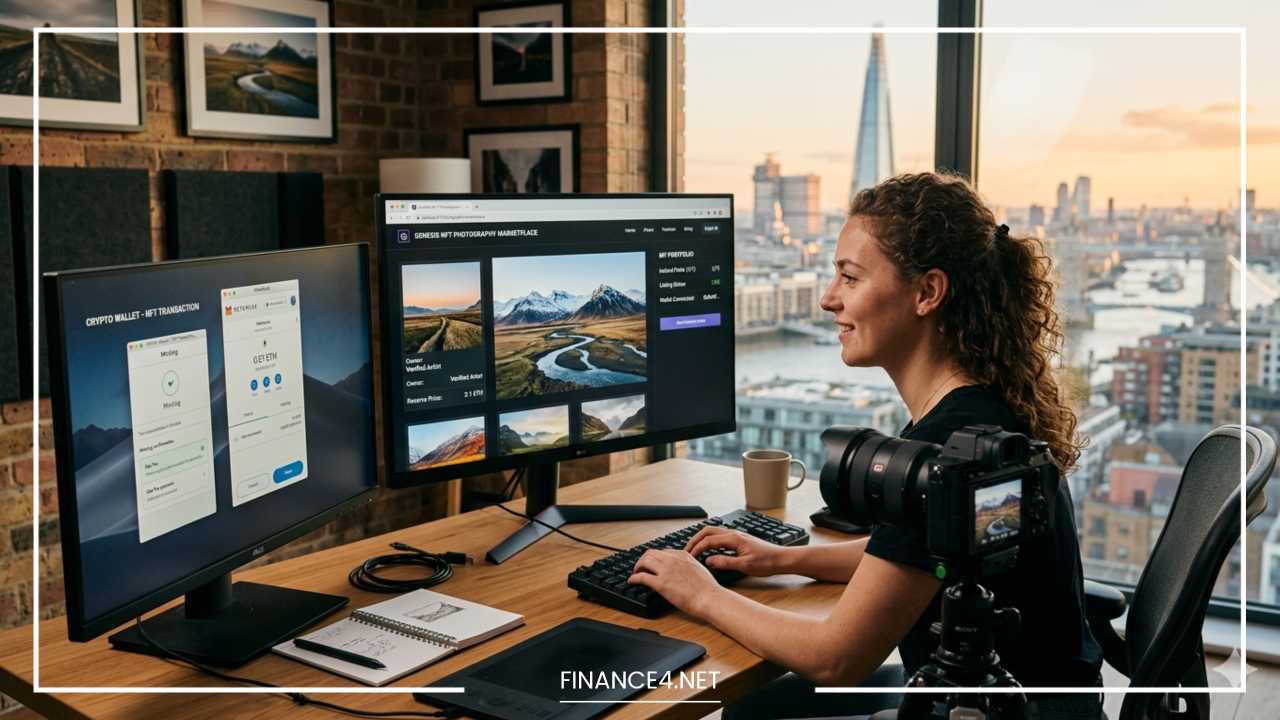
Photography: Fine art, documentary, portraiture, and architectural photography, often distributed as limited 1-of-1 editions.
-
Generative and Algorithmic Art: Works generated using code, mathematical scripts, or procedural rules, where outcomes are determined algorithmically during execution.
-
Video and Multimedia: Short films, motion graphics, ambient loops, and performance art captured in video containers.
-
Audio and Music: Soundscapes, full-length musical compositions, visual-audio syncs, and stem releases bundled with visual assets.
-
Character Collectibles: Large series of stylized characters using variable traits and visual properties.
Rather than altering your core artistic style to fit perceived market trends, choose a medium that reflects your existing creative workflow. Authentic artistic expression consistently outperforms temporary trends.
Creators must also determine their release strategy. Producing a single, highly detailed 1-of-1 piece requires a different positioning effort than launching a limited series of 10 editions or releasing a broad 50-piece curated collection. Assess your current capacity, software access, and creative output speed before deciding on a release format.
Create Your NFT Artwork
Preparing digital art for blockchain registration requires meticulous technical organization. Because metadata pointing to the asset is permanently written to public ledgers, file integrity must be finalized before initiating smart contract minting.
Concept Development and Execution
Develop the visual theme, story, or artistic message. Whether working digitally from scratch or digitizing physical mediums via high-resolution scanning or photography, focus on visual clarity and original execution.
File Format and Technical Specifications
Export your final asset using industry-standard formats recognized by primary marketplaces:
-
Static Images: PNG or high-quality JPEG for maximum clarity.
-
Animated Graphics: High-frame-rate GIF or MP4/WebM containers for smooth looping.
-
Video Assets: MP4 or MOV files utilizing standard H.264 or H.265 video codecs.
-
3D Models: GLTF or GLB formats for native web-based 3D viewing.
-
Audio: WAV or MP3 files paired with cover art graphics.
Ensure your visual files use appropriate display dimensions. Standard web-ready resolutions of 3000px to 4000px on the longest edge maintain visual fidelity across modern high-density displays without resulting in unwieldy file sizes.
File Hygiene and Metadata Preparation
Prior to upload, inspect file properties. Remove unnecessary local file system data, private EXIF location tags, or personal machine information if privacy is a concern.
Draft your metadata content carefully:
-
Artwork Title: A clear, descriptive name that reflects the concept.
-
Artwork Description: A detailed narrative describing the concept, physical origins, creation methods, medium details, and artistic intent.
-
Attributes and Properties: Categorical tags, visual traits, or technical parameters used by marketplaces to filter and organize works.
Organize all master production files, raw renders, working files (such as PSD, AI, or BLEND formats), and exported assets in multiple local and cloud-based secure backup locations. Once an asset is minted using a specific file hash, altering that file without re-minting a new token is impossible.
Understand Copyright and Ownership Before Minting
Tokenizing an asset requires clear legal entitlement to the underlying media content. Minting artwork created by others without explicit authorization, license, or ownership constitutes copyright infringement and will result in platform bans, blacklisting, and potential legal liability.
| Rights Category | What the Creator Retains | What the Buyer Acquires |
| Standard Minting | Full legal copyright, intellectual property rights, reproduction rights, commercial exploitation rights. | Ownership of the specific token, display rights in personal digital galleries, resale rights on public secondary markets. |
| Personal Use License | Copyright, commercial exploitation rights, merchandise rights. | Non-commercial display rights, profile picture display, personal gallery curation. |
| Commercial Rights Transfer | Underlying creator accreditation rights (unless waived via contract). | Right to monetize, print merchandise, display in commercial media, adapt artwork based on explicit contract terms. |
| Creative Commons (CC0) | Waives copyright to the public domain. | Public domain access; free for anyone to reproduce, alter, and monetize. |
Creators must follow strict intellectual property guidelines:
-
Third-Party Content: Avoid using unauthorized brand logos, copyrighted characters, stock elements without commercial licenses, or uncredited sample audio tracks.
-
AI-Generated Components: If your creative process incorporates generative artificial intelligence models, review the platform terms of the specific tools used and understand the legal status of AI-generated output within your jurisdiction. Certain jurisdictions restrict copyright protection to human-authored elements.
-
Clear Terms: Expressly state in your artwork description what rights the buyer receives upon purchase. Unless an explicit legal agreement transferring copyright accompanies the sale, the artist retains full legal copyright by default.
-
Proof of Authenticity: Retain early drafts, layer files, screen recordings of your creation process, or physical sketches. These serve as verifiable documentation if ownership disputes or unauthorized cloning attempts occur.
Choose a Blockchain for Your NFT
Selecting the appropriate blockchain network determines transaction costs, marketplace availability, environmental impact, and collector access. Each network operates under distinct consensus mechanisms and software protocols.
| Feature Category | Ethereum | Solana | Polygon |
| Primary Focus | High-Value Art / 1-of-1 Collectibles | High-Speed / Low-Fee Trading | Scalable / Low-Fee Layer 2 |
| Transaction Fees (Gas Costs) | Variable / Can Be High | Fractional Cents | Extremely Low |
| Liquidity & Demand | Very High | High | Moderate to High |
| Environmental Impact | Low (Proof-of-Stake) | Low (Proof-of-Stake) | Low (Proof-of-Stake) |
Factors to Evaluate When Choosing a Blockchain
Transaction/Gas Fees
Every blockchain operation—including contract deployment, token minting, listing approvals, and transfer executions—requires computational network fees paid in the network’s native cryptocurrency. Evaluate whether these costs fit your budget.
Collector Base and Liquidity
Established networks like Ethereum host a large concentration of high-volume digital art collectors and institutional buyers. Alternate blockchains offer lower entry barriers, higher transaction speeds, and active community-driven collector pools.
Creator Royalties Support
Different networks enforce secondary market royalty payments at different protocol levels. Investigate whether your target network handles royalty enforcement directly on-chain or relies on individual platform enforcement.
Environmental Footprint
Modern major networks utilize energy-efficient Proof-of-Stake (PoS) consensus mechanisms, consuming minimal energy per transaction compared to older Proof-of-Work systems.
Set Up a Crypto Wallet
A non-custodial crypto wallet is required to sign blockchain transactions, manage smart contracts, hold digital assets, and receive proceeds from sales. Non-custodial wallets give you full management control over your cryptographic keys.
| Wallet Key Component | Access Level | Primary Security Rule |
| Secret Recovery Phrase (12-24 Words) | Absolute control / Master access | Store offline on paper or metal. Never type into websites or share with anyone. |
| Public Wallet Address (0x…) | Public receive-only identifier | Shareable with anyone to receive funds or display public portfolio assets. |
Wallet Setup Workflow
Software Selection
Choose a reputable wallet application compatible with your chosen blockchain. Popular choices include browser extension and mobile app wallets designed for web3 interaction.
Wallet Initialization
Install the official browser extension or app directly from the developer’s verified website. Select the option to create a brand-new wallet.
Secure Your Secret Recovery Phrase
During setup, the wallet generates a 12-to-24-word seed phrase. This phrase serves as the master key to recover your wallet and funds across devices. Write down this phrase manually on physical paper or stamp it into metal. Store it in a secure, fireproof location.
Account Funding
To perform transactions like contract creation or minting, acquire small amounts of the chosen blockchain’s native token through a reputable exchange platform and transfer those funds to your public wallet address.
Essential Security Protocols
-
Never Share Your Seed Phrase: No legitimate marketplace support staff, buyer, or project representative will ever ask for your recovery phrase or private keys under any circumstance.
-
Verify Web URLs: Bookmark official marketplace sites. Avoid searching for platform names via search engines without checking links, as malicious sponsored ads often impersonate official marketplaces.
-
Use Hardware Wallets: For holding high-value assets or administrative access to contracts, pair your software wallet with a physical hardware wallet device. Hardware wallets store private keys offline, requiring physical button confirmation for every transaction.
-
Inspect Transaction Requests: Read every pop-up prompt in your wallet carefully before signing. Avoid signing obscure authorization requests or unreadable signature hashes on unfamiliar websites.
Choose an NFT Marketplace
Marketplaces serve as digital auction houses and galleries where creators list tokenized art for buyers. Platforms differ based on curated access, supported networks, fee structures, and feature sets.
| Feature Comparison | Open-Access Platforms | Curated Platforms |
| Access Control | Permissionless (Anyone can join) | Selective Application / Portfolio Review |
| Minting Fees | Low / Lazy Minting Available | Creator Contract Setup Fees |
| Collector Audience | Broad / Mixed | Targeted Fine-Art Collectors |
| Verification Process | Social Link & Profile Sign-off | Formal Identity and Portfolio Vetting |
Key Criteria for Marketplace Selection
Open vs. Curated Access
Open-access platforms allow any creator to connect a wallet and begin tokenizing assets immediately. Curated platforms require an application process, portfolio review, and community or editorial approval before granting listing privileges.
Platform Fee Structures
Review marketplace service fee schedules. Most platforms take a flat percentage of every completed primary and secondary sale, typically ranging from 2.5% to 5%.
Minting Options (Standard vs. Lazy Minting)
Standard minting writes the asset token directly to the blockchain upon creation, requiring immediate gas fee expenditure. Lazy minting defers on-chain token creation until a buyer completes the initial purchase transaction. At that point, minting and transfer occur simultaneously, saving the creator upfront gas costs.
Minting on Custom Contracts vs. Shared Contracts
Some platforms mint assets under shared, platform-wide smart contracts. Standardized platforms allow artists to deploy custom, sovereign smart contracts bearing their own name and symbol, giving them complete ownership over their digital infrastructure.
Mint Your Artwork as an NFT
Minting is the formal process of executing a smart contract to write your asset details permanently to the blockchain ledger. Below is the step-by-step procedure using a standard marketplace interface.
| Minting Phase | Key Action Required |
| Phase 1: Preparation | Connect crypto wallet and select or deploy your creation smart contract. |
| Phase 2: Metadata Input | Upload final media file, input title, detailed description, links, and properties. |
| Phase 3: Configuration | Set edition quantity (1-of-1 vs. Series) and configure creator royalty percentages. |
| Phase 4: Execution | Confirm mint transaction in wallet interface and confirm on-chain block completion. |
Step-by-Step Minting Steps
-
Connect Your Wallet: Navigate to your chosen marketplace platform. Click the connection button and authorize the read-only connection request via your wallet interface.
-
Initialize Creation / Deploy Contract: Select the creation menu. Choose whether to mint within an existing collection or deploy a dedicated smart contract for your brand. Enter contract details (Name, Symbol) if deploying your own contract.
-
Upload Artwork File: Upload your finalized media file (PNG, MP4, etc.) to the platform interface. Ensure the file size falls within platform parameters. The platform will automatically pin this file to IPFS or permanent cloud storage.
-
Enter Metadata Details: Input your finalized artwork title and comprehensive description. Add external website portfolio links if available.
-
Configure Properties and Traits: If your piece contains specific visual traits, attributes, or categories, enter them into the properties fields. These metadata tags help collectors filter and evaluate your work.
-
Set Supply and Editions: Select the token supply type (1-of-1 or limited edition quantity).
-
Configure Creator Royalties: Set your desired secondary market royalty percentage where supported (typically 5% to 10%). Input your payout wallet address to ensure secondary sale royalties route directly to your control.
-
Execute Mint Transaction: Review all entered information for spelling accuracy and correct file selection. Click the minting button. Your wallet will prompt you to confirm the transaction details and gas fee allocation. Review the details, approve the transaction, and wait for network block confirmation.
Price Your NFT Art
Establishing realistic prices for digital artwork requires balancing production effort, audience size, operational overhead, and long-term brand positioning. Avoid setting speculative prices based on isolated headlines of viral sales.
| Pricing Factor | Primary Impact on Valuation |
| Production Time & Complexity | Sets baseline labor value and minimum reserve requirements. |
| Platform & Gas Overhead | Establishes absolute breakeven costs for sales transactions. |
| Audience Reach & Demand | Determines realistic initial price ceilings based on existing collector interest. |
| Edition Scarcity | Dictates per-unit pricing (1-of-1 pieces command higher rates than 50-item runs). |
Sales Models
Fixed Price Listing
The asset is offered for immediate purchase at a predetermined price. This format provides pricing clarity for collectors and works well for regular edition drops or established baseline pricing.
Timed Auction
The listing runs for a set time window, selling to the highest bidder when the timer expires. Timed auctions build urgency, but run the risk of underperforming if market visibility is low during the active window.
Reserve Price Auction
The piece receives bids, but the auction countdown only triggers after a collector places a bid that meets or exceeds a hidden or public minimum reserve price. This protects the artist from selling an asset far below its estimated value.
Pricing Framework
-
Calculate Base Overhead: Factor in upfront gas fees, contract deployment costs, marketplace service commissions, and platform cash-out fees.
-
Evaluate Edition Scarcity: A 1-of-1 piece commands a higher individual price than items in a 50-piece edition. If pricing a multi-edition run, adjust the per-unit cost downward to reflect the larger overall supply.
-
Review Comparable Sales: Study sold listings from creators with similar artistic styles, experience levels, and social media reach.
-
Establish a Sustainable Baseline: It is easier to gradually increase prices following successful sales than to reduce inflated starting prices after assets sit uncollected on the market.
List and Sell Your NFT
Once an asset is minted, it resides in your wallet and shows in your profile, but it is not available for purchase until you complete a listing agreement.
| Listing Step | Operational Detail |
| Step 1: Selection | Select minted token within profile and select List for Sale option. |
| Step 2: Terms Setup | Choose sale format (Fixed Price vs. Auction), input price, and select listing duration. |
| Step 3: Approval Signature | Sign wallet authorization message permitting smart contract transfer upon sale completion. |
| Step 4: Publication | Listing publishes active status to marketplace order books. |
Listing Execution Steps
-
Navigate to your user profile and select the minted token you wish to list.
-
Click the List for Sale button.
-
Choose your sales mechanism (Fixed Price, Reserve Auction, or Timed Auction).
-
Specify the listing price in the required network cryptocurrency (e.g., ETH, SOL).
-
Set the listing duration (e.g., 7 days, 1 month, or continuous until canceled).
-
Review the summary showing platform service fees, creator royalty rates, and expected net proceeds.
-
Click to submit the listing. Your wallet will prompt you to sign a digital approval message. This signature authorizes the marketplace smart contract to transfer the asset if a buyer fulfills your listing terms.
Primary vs. Secondary Sales Dynamics
When a collector purchases your asset on the primary market, the marketplace smart contract routes the buyer’s funds directly to your wallet while transferring the token to the buyer’s wallet.
If that collector later resells the asset to a secondary buyer on a platform that enforces creator royalties, the smart contract routes the secondary sale price to the seller, minus the platform commission and your designated creator royalty fee. Your royalty percentage automatically transfers back to your primary wallet.
Promote Your NFT Art and Build an Audience
Sustained commercial success in the digital art space depends heavily on active self-promotion, storytelling, and community integration. A common mistake made by new creators is assuming that listing an asset on a marketplace guarantees organic discoverability.
Audience Building Strategies
Contextualize Your Process
Share behind-the-scenes content showing early sketches, layer compositions, color palette tests, software setups, or physical studio routines. Collectors respond to the artistic journey and craft behind the final piece.
Utilize Social Platforms
Platforms focused on visual media, real-time discussions, and digital communities serve as primary hubs for collectors, gallery curators, and fellow artists. Participate regularly in art sharing events, showcase your work, and interact with other creators.
Document Your Narrative
Write detailed artistic statements explaining the inspiration, themes, and emotional context of your work. Clear storytelling gives collectors a personal connection to the artwork.
Build Owned Channels
Establish an independent newsletter or website portfolio. Relying exclusively on third-party marketplace algorithms or social networks exposes your practice to sudden platform policy or ranking changes.
Avoid Link Spamming
Do not paste unprompted listing links into public comment sections, direct messages, or unrelated community discussions. Focus on building genuine professional relationships with fellow artists and art enthusiasts.
Avoid NFT Scams and Common Mistakes
The open, irreversible nature of blockchain transactions makes the ecosystem an attractive target for bad actors. Understanding common attack vectors is essential to protect your work, digital identity, and financial holdings.
| Scam Type | Mechanism and Tactic | Protection Strategy |
| Phishing Web Links | Fake marketplace sites designed to capture seed phrases or trigger malicious signatures. | Bookmark official domain links; double-check URL spellings. |
| Fake Support Accounts | Impersonators offering direct help on social channels, asking users to validate wallets. | Never respond to unprompted support DMs; real staff never ask for seed phrases. |
| Overpayment Checks | Scammers offering high purchase prices if the artist pays an upfront curation fee. | Never send crypto or pay upfront fees to receive payment from a buyer. |
| Malicious Approvals | Contracts requesting broad approvals that permit draining wallet contents. | Inspect every wallet signature; maintain dedicated hardware storage wallets. |
Security Checkpoints
-
Verify All Inbound Inquiries: Treat unexpected private messages offering to purchase your artwork at high prices with healthy skepticism. Scammers often use fake buyers to lure artists to dangerous phishing sites.
-
Never Pay to Sell: Legitimate buyers cover their own purchase and transaction costs. Never send cryptocurrency, pay registration fees, or buy gift cards to process a sale from a buyer.
-
Inspect Web Addresses: Always manually verify domain spellings before connecting your crypto wallet. Phishing sites frequently use subtle typos inside URL strings.
-
Isolate High-Value Assets: Maintain a dedicated hot wallet containing minimal funds for day-to-day transaction approvals and store primary holdings or key digital contracts in a separate, offline hardware wallet.
-
Validate Minting Contracts: Before approving wallet signatures, confirm that you are interacting with verified, official marketplace smart contracts.
What Happens After You Sell?
Completing an initial sale is an important milestone, but it also introduces ongoing legal, operational, and financial responsibilities for artists.
| Operational Task | Responsibilities Post-Sale |
| Financial Tracking | Log transaction dates, sale prices, platform fees, and fiat conversions. |
| Tax Compliance | Track capital gains or income events according to local tax regulations. |
| Collector Relations | Maintain clear communication channels and fulfill any promised utilities. |
| Permanent Archiving | Retain secure backups of master work files, raw renders, and proof logs. |
Operational Steps Post-Sale
Financial Record Keeping
Document every transaction date, sale price in cryptocurrency, equivalent fiat value at the exact time of transaction, platform fees paid, and net proceeds received.
Tax Compliance
In most jurisdictions, tokenizing, selling, swapping, or converting digital assets generates taxable income or capital gains events. Consult a qualified local tax professional to accurately calculate obligations based on your home country’s regulatory framework.
Fulfill Promised Utility
If your listing promised additional deliverables—such as high-resolution download links, physical signed gallery prints, or exclusive access to future releases—deliver those items promptly through secure channels.
Retain Master Archives
Maintain permanent offline and cloud archives of all original production files, exported assets, and transaction records.
A Simple NFT Art Selling Checklist
Use this pre-flight checklist to ensure every technical, legal, and operational step is complete before listing your work for sale:
-
[ ] Artwork Finalized: File exported in a supported web format with correct resolutions.
-
[ ] Copyright Verified: You hold 100% of the rights to all visual, textural, and audio elements used.
-
[ ] Master Files Backed Up: Master production files stored securely in multiple backup locations.
-
[ ] Wallet Set Up and Secured: Seed phrase written down offline and stored in a secure, fireproof location.
-
[ ] Blockchain Selected: Target network chosen based on fee structures, liquidity, and collector reach.
-
[ ] Marketplace Researched: Platform chosen based on minting structures, curation options, and fee schedules.
-
[ ] Metadata Prepared: Title, detailed description, attributes, and buyer license terms fully drafted.
-
[ ] Pricing Strategy Fixed: Sales model selected and pricing set based on overhead costs and market research.
-
[ ] Artwork Minted: Token created on-chain with verified metadata links and royalty parameters.
-
[ ] Listing Terms Confirmed: Sale format, reserve prices, and listing duration reviewed before signing wallet approvals.
-
[ ] Promotional Plan Ready: Storytelling content, process media, and social announcements prepared for sharing.
-
[ ] Security Protocols Verified: Website URLs double-checked; zero seed phrases or private keys shared.
-
[ ] Accounting System Prepared: Ledger spreadsheet or accounting software configured to track sales income and gas expenses.
Final Thoughts — Start Small and Build Your NFT Art Practice
Tokenizing digital artwork provides creators with a flexible modern medium to verify digital origin, bypass traditional gatekeepers, and establish global distribution channels. However, long-term success requires viewing tokenized art not as a short-term financial scheme, but as a professional creative practice that combines technical security, legal awareness, disciplined file management, and consistent audience engagement.
Beginners should approach the space deliberately:
-
Start small by preparing and tokenizing a single well-crafted piece or a small limited run.
-
Use this initial release to learn wallet operations, smart contract interactions, gas fee mechanics, and platform dynamics without overextending your budget.
-
Observe how collectors interact with your work, refine your promotional messaging, and gradually scale your production efforts as your understanding grows.
By combining strong visual artistry with clear licensing, smart contract literacy, and careful operational security, you can build a sustainable, future-proof digital art practice.
Frequently Asked Questions (FAQ)
How to Create and Sell NFT Art for Free Without Paying Gas Fees?
Artists can tokenize digital art without paying upfront transaction fees by using a process called lazy minting. Supported by major marketplaces like OpenSea and Rarible, lazy minting defers on-chain contract creation until a buyer completes the purchase.
When the transaction executes, the buyer covers the gas costs, allowing creators to list artwork with zero initial capital. Alternatively, creators can select low-fee or gasless networks such as Polygon.
Does Selling an NFT Transfer Copyright and Intellectual Property to the Buyer?
No. Selling an NFT transfers cryptographic ownership of the token and display rights to the buyer, but it does not transfer underlying copyright, reproduction rights, or trademark ownership.
The artist retains full legal copyright by default unless an explicit, legally binding written contract or commercial licensing agreement transferring those intellectual property rights accompanies the sale.
Do Digital Artists Get Royalties on Secondary NFT Sales?
Yes, digital artists can earn secondary sales royalties on platforms and blockchain networks that support creator royalty standards. Creators can program secondary royalty rates—typically ranging between 5% and 10%—into the token metadata or custom smart contracts during the minting phase.
Whenever a collector resells the artwork on a royalty-enforcing marketplace, the platform automatically routes the designated royalty percentage back to the artist’s wallet address.
Can You Turn Physical Art into an NFT?
Yes, physical paintings, sculptures, and mixed-media works can be converted into NFTs. Artists achieve this by capturing high-resolution digital scans or 3D renders of the physical object and minting the digital representation.
Creators can either retain the physical piece or offer physical redemption utility, where purchasing the token entitles the collector to claim and receive the physical artwork.
How Much Money Does It Cost to Mint and Sell Your First NFT?
Upfront costs to create and sell an NFT range from $0 to $150+ USD, depending on your choice of blockchain network, marketplace, and smart contract setup.
Using gasless networks or lazy minting options on open marketplaces allows artists to launch for zero initial costs. Deploying a dedicated smart contract on networks with higher computational demand requires paying variable network gas fees.
What Software Do Digital Artists Use to Make NFT Art?
NFT art can be created using standard visual art software. Popular programs include:
-
2D Raster & Vector: Adobe Photoshop, Procreate, Adobe Illustrator, and Corel Painter.
-
3D Modeling & Rendering: Blender, Cinema 4D, ZBrush, and Houdini.
-
Generative & Algorithmic Art: Processing, P5.js, Bueno, and NFT-Inator.
-
Animation & Video: Adobe After Effects, Premiere Pro, and DaVinci Resolve.
How Long Does It Take to Sell Your First NFT Artwork?
There is no fixed timeframe for selling a first NFT. Sales velocity depends primarily on existing audience reach, continuous self-promotion, price positioning, and community building.
Artists with established social media followings or active digital gallery presence can complete sales within days of listing, while new creators often spend several weeks or months building collector relationships before securing an initial sale.