Top Cross-Chain NFT Bridging Protocols
 by
by 
Top Cross-Chain NFT Bridging Protocols | Best NFT Bridge Solutions
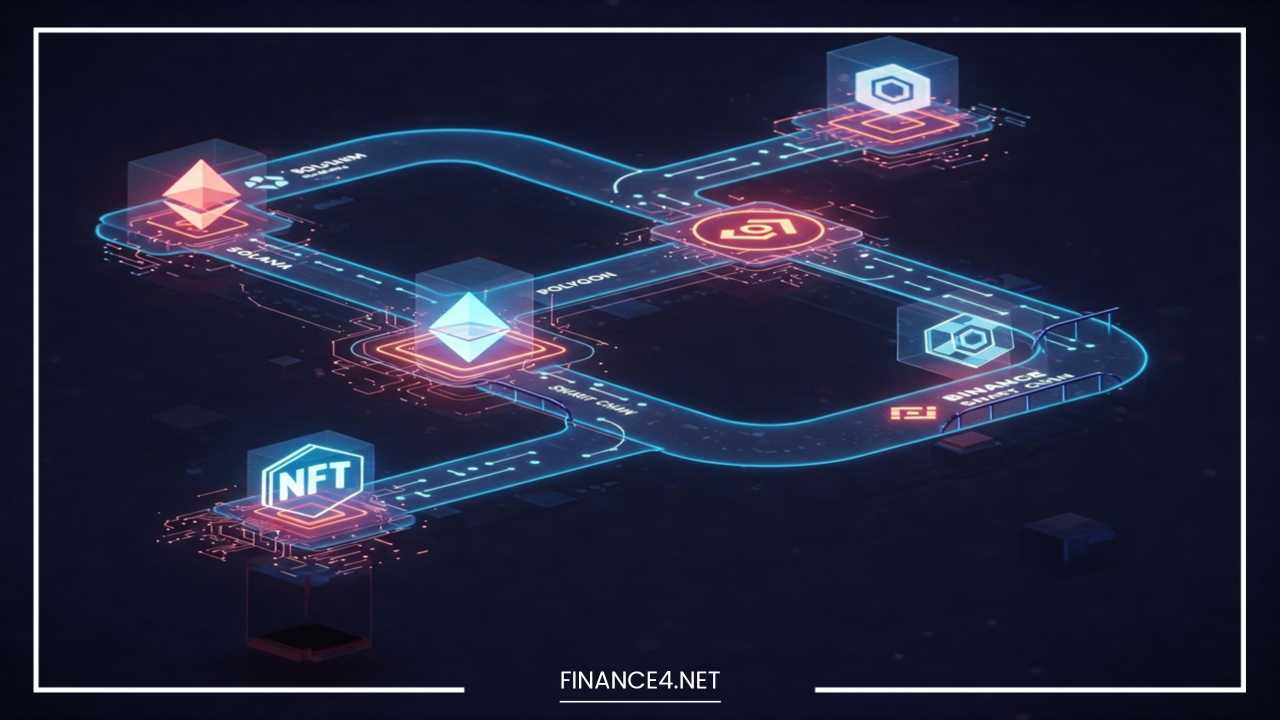
The rise of Non-Fungible Tokens (NFTs) fundamentally changed how we perceive digital ownership, enabling verifiable scarcity and unique asset representation on a blockchain. However, the initial design of NFTs, predominantly using standards like ERC-721 on Ethereum, meant they were chain-specific by default. A CryptoPunk on Ethereum could not natively exist or be used on the Solana network, nor could a gaming asset on Polygon seamlessly integrate into a marketplace on BNB Chain.
This is the core issue of blockchain silos: isolated ecosystems where assets, liquidity, and users are fragmented. As Web3 matured, with multiple Layer 1s (Ethereum, Solana) and Layer 2s (Polygon, Arbitrum) achieving massive scale, the inability to move unique digital assets became a critical bottleneck. This fragmentation limits liquidity, stifles innovation in cross-chain NFT marketplaces, and significantly impedes the development of truly interoperable gaming and metaverse experiences.
Cross-chain NFT bridging is the essential solution to this problem, acting as the connective tissue for the decentralized web. By creating mechanisms to securely transfer an NFT’s unique data and ownership rights from one chain to another, bridging protocols unlock vast new use cases. Gamers can move their high-value skins across different game environments, artists can list their work on the most liquid marketplace regardless of the minting chain, and DeFi NFTs can be used as collateral across multiple lending platforms. This article will dive deep into what NFT bridges are, how they work, and the top NFT bridge protocols leading the charge in 2025 to create a truly interconnected Web3.
What Is a Cross-Chain NFT Bridge?
A Cross-Chain NFT Bridge is a protocol that facilitates the transfer of a non-fungible asset and its corresponding ownership rights from a source blockchain to a destination blockchain. Unlike a simple token swap, which deals with fungible assets (where all units are identical), an NFT bridge must handle the transfer of a unique, indivisible asset.
NFT Bridges vs. Token Bridges
While a fungible token bridge simply transfers value by locking a token on one side and minting a pegged equivalent on the other, an NFT bridge must preserve three critical elements:
-
Uniqueness: It must ensure that only one valid, redeemable version of the NFT exists across the entire multi-chain ecosystem at any given time.
-
Metadata Integrity: The NFT’s unique data (image, properties, attributes), often stored off-chain on platforms like IPFS or Arweave, must remain consistently linked to the bridged asset on the destination chain.
-
Ownership Rights: The transfer of ownership must be atomically correct, meaning the asset is only released to the new owner on the destination chain once it is irrevocably secured on the source chain.
Bridging Models: Lock-and-Mint vs. Burn-and-Mint
The process of bridging NFTs primarily uses two models:
-
Lock-and-Mint: The original NFT is locked in a smart contract vault on the source chain (e.g., Ethereum). A new, wrapped NFT (e.g., a wNFT or xNFT) is minted on the destination chain (e.g., Polygon). This wrapped NFT represents a claim on the original locked asset. To move back, the wrapped NFT is burned, which triggers the unlock and release of the original NFT from the vault.
-
Burn-and-Mint: Used primarily by native cross-chain standards like LayerZero’s ONFT (Omnichain NFT). The NFT is burned (destroyed) on the source chain, and a new, identical NFT is minted on the destination chain with the same token ID and metadata link. This approach guarantees only one active copy and is often preferred for newer “omnichain-native” assets.
Wrapped NFTs Explained
A Wrapped NFT is the derivative asset minted on the destination chain in the lock-and-mint model. It is essentially an IOU. For example, if you bridge an Ethereum-based Bored Ape Yacht Club (BAYC) to BNB Chain, the wrapped version, perhaps called “wBAYC,” is what you interact with on the BNB Chain. Its value is entirely derived from its 1:1 redeemability for the original, locked BAYC on Ethereum. The security of the bridge is paramount, as a failure could render the wrapped asset worthless by making the original inaccessible.
Simple Example of Bridging an NFT from Ethereum to Polygon:
-
User Action: A user calls the “deposit” function on the NFT Bridge contract on Ethereum.
-
Locking: The original NFT is transferred from the user’s wallet into the bridge’s vault contract on Ethereum.
-
Message Passing: The bridge’s relayers or oracle network verify the lock event and send a message to the Polygon network.
-
Minting: The bridge contract on Polygon mints a corresponding wrapped NFT and sends it to the user’s Polygon wallet.
-
Reversal: To move back, the user burns the wrapped NFT on Polygon, triggering a message that unlocks and transfers the original NFT from the Ethereum vault back to the user’s Ethereum wallet.
How Cross-Chain NFT Bridging Works
Achieving trustless, secure interoperability is one of Web3’s hardest problems. NFT bridging requires a robust, multi-stage technical process to ensure atomicity and security.
Smart Contracts in NFT Bridges
At the core of every NFT bridge are two main smart contracts:
-
Lock/Burn Contract (Source Chain): This contract receives the NFT from the user. It is responsible for either locking the NFT (in a lock-and-mint model) or burning it (in a burn-and-mint model). It also emits an event, known as a transaction “receipt,” that signals the successful locking/burning of the asset.
-
Mint/Release Contract (Destination Chain): This contract is responsible for creating the corresponding wrapped NFT (minting) or releasing the original NFT back to the user (releasing). It can only execute its function after receiving cryptographic proof or a verified message that the corresponding event occurred on the source chain.
Validators, Relayers, or Oracles
The crucial component that connects these two contracts across chains is the Messaging/Verification layer. Since blockchains cannot natively read the state of other blockchains, an external mechanism is needed:
-
Validators/Guardians: A decentralized network of independent entities (validators or “guardians,” as in Wormhole) actively monitors the source chain’s lock/burn contract for events. Once a quorum (a required majority) of these parties confirms the event, they sign a message, often called a Verified Action Approval (VAA) or similar cryptographic proof.
-
Relayers: These are off-chain entities (can be anyone) whose job is to take the verified, signed message from the validator network and submit it as a transaction to the destination chain’s contract. They act purely as a transport mechanism, as the security is guaranteed by the validator signatures, not the relayer itself.
-
Oracles: Protocols like Chainlink CCIP and LayerZero utilize decentralized oracle networks to securely relay messages, separating the verification and execution roles for a stronger security posture.
Message Passing and Finality
The actual transfer relies on message passing.
-
The source chain transaction emits a message containing the token ID, source owner, destination address, and the original NFT’s metadata URL (the link to its off-chain data).
-
The validator/oracle network verifies this transaction and finality (ensuring the transaction won’t be reversed).
-
The signed message is passed to a relayer, which submits it to the destination chain.
-
The destination chain’s bridge contract verifies the signatures on the message. Only upon successful cryptographic verification is the minting/release function executed.
Metadata Handling and IPFS/Arweave
One of the complexities of NFT bridging is handling the metadata. Most NFT standards like ERC-721 only store a tokenURI (a URL) on-chain, which points to the actual metadata JSON file, which in turn contains the link to the image/asset.
-
The bridge must ensure that the
tokenURIon the newly minted NFT on the destination chain correctly links to the original metadata, preserving the NFT’s provenance and visual identity. -
Since most metadata uses decentralized storage like IPFS or Arweave, the link itself is often permanent and accessible from any chain, simplifying this part of the process, though bridge contracts must be careful not to introduce a central point of failure in their wrapper contracts’ metadata generation.
Gas Fees and Transaction Finality
Cross-chain operations involve gas fees on both the source and destination chains, plus a fee for the message passing service (to compensate validators/relayers). The transaction finality is also slower than a single-chain transaction, as the message must wait for sufficient block confirmations on the source chain before the verification process begins.
Types of Cross-Chain NFT Bridging Architectures
The architectural design of a bridge is the most important factor in determining its security, speed, and decentralization.
| Bridge Architecture | Security Model | Speed | Decentralization | Trust Assumption |
| Trusted Bridges | Centralized/Multisig | Fast | Low | Trust in a small, known group of custodians or a company. |
| Trust-Minimized Bridges | Decentralized Validator Set/Relayers | Moderate to Fast | High | Trust in cryptography and a large, decentralized network. |
| Native Bridges | The canonical security of the source/destination L1/L2 | Very Fast | High (if L1/L2 is decentralized) | Trust in the underlying chain’s core protocol. |
Trusted Bridges (Centralized / Semi-Centralized)
These bridges rely on a small set of known entities or a single company (often a multi-signature wallet) to secure the funds and sign the cross-chain messages. They are typically faster and cheaper because they do not require a large network consensus. However, they introduce major centralization risk. If the private keys of the signers are compromised (a common source of major bridge hacks), all locked assets are at risk.
Trust-Minimized Bridges
This architecture is the desired goal for Web3. It relies on a large, decentralized network of validators, staking capital, or purely cryptographic proofs (like ZK-proofs) to verify cross-chain state. Security is mathematically guaranteed or secured by economic incentives rather than human trust. Protocols like Wormhole, Axelar, and LayerZero fall into this category, using their own consensus mechanisms or external oracle networks to achieve high security.
Canonical Bridges vs. Wrapped NFT Bridges
-
Canonical Bridges: The official bridge endorsed by the Layer 2 or sidechain (e.g., the Polygon Bridge). Assets moved via a canonical bridge are generally considered the “official” version on the destination chain.
-
Wrapped NFT Bridges: Bridges created by third-party protocols (like the ones listed below). They create their own version of a wrapped NFT, which may not be the one favored by the destination chain’s official ecosystem, leading to potential market fragmentation for the bridged assets.
Key Criteria for Evaluating NFT Bridge Protocols
Choosing the right secure NFT bridge is crucial. Users and developers must evaluate protocols based on several core criteria:
-
Supported Blockchains: Does the protocol connect the source and destination chains required? The top solutions aim for universal connectivity (EVM, Solana, Cosmos, etc.).
-
Security Model & Audits: This is the most critical factor. Is it secured by a small multisig (high risk) or a large, economically incentivized validator set? Look for multiple, recent, and reputable third-party audits and an active bug bounty program.
-
NFT Standards Supported: The bridge must handle the required standards, typically ERC-721 and ERC-1155, but increasingly newer standards like LayerZero’s ONFT.
-
Speed & Cost Efficiency: How long does the transfer take, and what is the total cost, including gas and protocol fees? Faster finality is essential for high-frequency use cases like gaming.
-
User Experience (UX): Is the interface clear? Can the user track the progress? A good UX abstracts away the multi-step complexity of the underlying cross-chain transaction.
-
Developer Tooling & SDKs: For projects building on the bridge, the availability of comprehensive Software Development Kits (SDKs) and clean APIs is vital for integrating cross-chain functionality directly into their dApps.
SEO Keywords: best NFT bridge, secure NFT bridge, cross-chain NFT transfer, NFT bridge security audit.
Top Cross-Chain NFT Bridging Protocols
The competitive landscape for cross-chain interoperability is dominated by a few major players who are defining the future of Web3 connectivity. These protocols are moving beyond simple asset transfer to support generalized cross-chain messaging.
1. LayerZero
Overview: LayerZero is an omnichain messaging protocol designed to connect chains via immutable “Endpoints.” It allows dApps to send arbitrary messages, data, and function calls between chains, making it an application-layer solution rather than a traditional bridge.
Supported Chains: Extensive coverage including Ethereum, Solana, Polygon, Arbitrum, Optimism, Avalanche, BNB Chain, Fantom, and many others.
How NFT Bridging Works: LayerZero introduced the Omnichain Non-Fungible Token (ONFT) standard. When an NFT project implements the ONFT standard, its NFTs become natively cross-chain. Transferring an ONFT involves a burn-and-mint mechanism, ensuring a single canonical supply across all chains. The transfer message is verified by two independent parties: an Oracle (like Chainlink) and a Relayer. The message is only delivered if both parties provide a matching, valid proof.
Unique Features:
-
Customizable Security: Projects can choose their own Oracle and Relayer set, customizing their security and cost profile (X-Y-N model).
-
ONFT Standard: The application-level standard for native cross-chain NFTs, ensuring fungible token supply and metadata remains consistent across chains.
-
Immutable Endpoints: The core contracts are non-upgradable, reducing central party risk.
Pros & Cons:
| Pros | Cons |
| Highest security potential through separation of Oracle/Relayer. | New paradigm requires projects to implement the ONFT standard. |
| Supports native burn-and-mint for clean asset tracking. | Security relies on the chosen Oracle and Relayer remaining independent. |
| Extensive chain support (omnichain vision). | Can be slightly more complex for simple token bridging applications. |
Ideal Use Cases: Launching a new NFT gaming or metaverse project that needs assets to be liquid and usable across a dozen different chains from day one.
2. Wormhole
Overview: Wormhole is a generic message-passing protocol that acts as a decentralized communication layer between multiple heterogeneous blockchains (Solana to EVM, for instance). It was instrumental in establishing early connections between high-throughput non-EVM chains and the Ethereum ecosystem.
Supported Chains: Very broad, including EVM chains, Solana, Terra 2.0, Cosmos-based networks, Algorand, Aptos, and Sui.
How NFT Bridging Works: Wormhole utilizes a network of 19 independent entities called Guardians to monitor the connected chains. When an NFT is locked on the source chain, the Guardians observe the event, sign a Verified Action Approval (VAA) message (requiring 2/3 consensus), and this VAA is relayed to the destination chain. The destination contract verifies the VAA before minting the wrapped NFT. The NFT-specific bridging is often handled through the Portal Bridge application, which uses Wormhole’s core messaging layer.
Unique Features:
-
Guardian Network: A well-known, established, and economically-incentivized validator set.
-
Strong Solana–EVM Bridging: Historically crucial for connecting Solana’s high-liquidity ecosystem with EVM chains.
-
Speed: Known for fast message passing and relatively quick finality compared to some peers.
Pros & Cons:
| Pros | Cons |
| Battle-tested security, despite a past major exploit (which led to significant security enhancements). | Consensus relies on 2/3 of 19 Guardians, which is fewer than some other protocols. |
| Broadest connectivity across diverse ecosystems (non-EVM and EVM). | The VAA mechanism introduces a layer of trust in the Guardian set. |
| Portal Bridge offers a seamless NFT-specific UX. |
Ideal Use Cases: Moving high-value NFTs between major chains like Ethereum and Solana, or for projects requiring connectivity to emerging Layer 1s that have adopted the Wormhole standard.
3. Axelar
Overview: Axelar is a decentralized interoperability network that focuses on General Message Passing (GMP), allowing smart contracts to communicate and execute functions across any connected chain. Axelar’s security is rooted in its Proof-of-Stake (PoS) validator set and its ability to act as a routing layer.
Supported Chains: Major EVM chains (Ethereum, Polygon, Avalanche), Cosmos, Polkadot, and others.
How NFT Bridging Works: Axelar’s GMP enables advanced NFT interoperability. Instead of just sending the asset, a developer can program the asset’s transfer to trigger a specific function on the destination chain (e.g., “transfer the NFT and register it as collateral in this DeFi protocol”). The network’s decentralized validator set, secured by the staked AXL token, runs light clients of all connected chains to cryptographically verify state and relay messages via Gateway Contracts.
Unique Features:
-
General Message Passing (GMP): Allows for arbitrary function calls, enabling complex, cross-chain applications far beyond simple transfers (e.g., locking an NFT on Ethereum and using it as collateral on Polygon in a single transaction).
-
Decentralized Validator Set: Secured by a permissionless PoS network, providing robust, crypto-economic security.
-
Interchain Token Service (ITS): A standardized service for maintaining a canonical asset across chains.
Pros & Cons:
| Pros | Cons |
| Security is backed by a large PoS validator set and staked value. | The complexity of GMP can have a steeper learning curve for new developers. |
| Enables DeFi NFT use cases by combining asset transfer with function calls. | Asset transfers can sometimes incur slightly higher fees due to the underlying PoS security. |
| Focus on programmable interoperability for Web3 Super Apps. |
Ideal Use Cases: Projects building complex cross-chain DeFi applications where an NFT needs to trigger a smart contract function on another chain, such as fractionalizing an NFT or using it for universal lending.
4. Multichain (Anyswap)
Overview: Formerly known as AnySwap, Multichain was an early pioneer in cross-chain infrastructure, focusing primarily on asset bridges using the Lock-and-Mint model. While historically significant, it has faced critical security challenges and operational risks.
Supported Chains: Was broad, including Fantom, BNB Chain, Ethereum, and many others.
How NFT Bridging Works: Multichain used an MPC (Multi-Party Computation) network of nodes to secure assets in custody and approve transfers. The process involved locking the original NFT and minting a wrapped version, similar to the foundational lock-and-mint model.
Unique Features (Historical):
-
Early Mover: Provided a bridge solution for many emerging EVM-compatible chains in the early days of multi-chain growth.
-
Liquidity Management: Focused on maintaining high liquidity for fungible token bridging, which its NFT solution leveraged.
Pros & Cons:
| Pros | Cons |
| Historical importance and broad early adoption. | Major security and operational risks due to past exploits and centralized key management. |
| Fast transaction times for token transfers. | Not a recommended solution for new or high-value NFT bridging due to trust issues. |
Ideal Use Cases (Lesson Learned): Multichain serves as a crucial case study in the risks of trusted bridges and the paramount need for decentralized, trust-minimized security architectures for high-value assets like NFTs.
5. Chainlink CCIP
Overview: Chainlink’s Cross-Chain Interoperability Protocol (CCIP) is a new standard for decentralized cross-chain communication, offering enterprise-grade security backed by Chainlink’s battle-tested Decentralized Oracle Networks (DONs). It aims to be the universal standard for banks, institutions, and Web3 developers.
Supported Chains: EVM-compatible chains like Ethereum, Polygon, Avalanche, Arbitrum, and major Layer 2 solutions, with continuous expansion.
How NFT Bridging Works: CCIP provides a secure arbitrary messaging service. For NFTs, developers use CCIP to power a burn-and-mint or lock-and-mint contract. CCIP’s key innovation is its Risk Management Network, an independent network that monitors the primary DONs for malicious activity, providing a second, separate line of defense against exploits. This multi-layered security makes it one of the most robust solutions. CCIP supports programmable token transfers, meaning the NFT transfer can be bundled with an instruction to execute a specific function on the destination chain.
Unique Features:
-
Risk Management Network: A unique, secondary layer of defense to ensure security and reliability.
-
Decentralized Oracle Networks (DONs): Leveraging the same infrastructure that secures tens of billions of dollars in DeFi.
-
Programmable Token Transfers: Highly flexible for complex NFT-based dApps.
Pros & Cons:
| Pros | Cons |
| Industry-leading security backed by a defense-in-depth architecture. | Integration complexity can be higher due to its focus on enterprise-grade security and developer control. |
| High reliability and institutional focus. | Less connectivity to non-EVM chains like Solana (relying on partners). |
| Standardized, future-proof API. |
Ideal Use Cases: High-security applications, institutional NFT tokenization, and projects that require the most robust, decentralized, and audited cross-chain infrastructure.
6. Hyperlane
Overview: Hyperlane is an “Interchain Security Layer” focused on being permissionless and modular. Its core thesis is that anyone should be able to permissionlessly deploy an interoperability stack to any chain, and developers should have the flexibility to choose their own security model.
Supported Chains: EVM chains, Celestia, Manta, and many emerging sovereign rollups.
How NFT Bridging Works: Hyperlane enables permissionless interchain messaging through its Warp Routes. Developers can set up their own NFT bridges using Hyperlane’s modular architecture. Security is flexible; a project could choose a model secured by a multisig for speed or a large validator set for trust minimization. This modularity allows it to connect to chains that might be too new or too niche for other generalized protocols.
Unique Features:
-
Permissionless Deployment: Any developer can connect any chain to the network without permission from the Hyperlane team.
-
Modular Security: Projects can choose to secure their bridge with economic staking, a specific validator set, or external security providers.
-
Sovereign Chain Focus: A strong focus on integrating sovereign, app-specific blockchains (often in the Cosmos and Rollup ecosystems).
Pros & Cons:
| Pros | Cons |
| High degree of flexibility for niche chains and custom security. | The security model is outsourced to the deploying developer, increasing individual project risk. |
| Warp Routes simplify the developer experience for creating a custom bridge. | Less battle-tested than older protocols like Wormhole or Axelar. |
| Low barrier to entry for new chain integration. |
Ideal Use Cases: Projects on new, emerging Layer 2s, app-specific chains, or developers who need complete control over their bridge’s security parameters and validator set.
7. Portal Bridge (by Wormhole)
Overview: While Wormhole is the underlying message-passing protocol, Portal Bridge is the NFT-specific bridging application built on top of it. It offers a clean, user-focused solution for transferring NFTs.
Supported Chains: Same as Wormhole, including Solana, Ethereum, Avalanche, Polygon, and others.
How NFT Bridging Works: Portal Bridge utilizes the Wormhole Guardian network for message verification. Its smart contracts handle the locking of the source NFT (ERC-721 or Solana SPL) and the subsequent minting of the wrapped NFT on the destination chain. It abstracts away the complex Wormhole VAA process for the end user.
Unique Features:
-
Superior User Experience: Highly focused on simplifying the end-user process for bridging NFTs.
-
Deep Solana Integration: Offers one of the most robust and commonly used routes for bridging between Solana and EVM ecosystems.
Pros & Cons:
| Pros | Cons |
| Excellent, user-friendly interface. | Security is entirely dependent on the underlying Wormhole Guardian network. |
| Specialized for NFT transfers. | Less useful for developers who need general message passing (better to use the Wormhole SDK directly). |
Ideal Use Cases: Individual NFT holders looking for a straightforward, reliable, and fast way to move an NFT collection between major chains like Solana, Ethereum, and Polygon.
Use Cases of Cross-Chain NFT Bridges
The protocols above are building the infrastructure for a massive shift in how we interact with digital assets. The utility of NFTs skyrockets once they are not confined to a single blockchain.
-
NFT Gaming Interoperability: A high-value weapon or skin minted on a Layer 2 (like Arbitrum) can be seamlessly moved to a high-throughput Layer 1 (like Solana) to be traded on a more liquid marketplace, or used in a different, entirely separate game running on a third chain. This enables the true “play-and-earn” metaverse vision.
-
Metaverse Asset Portability: Land plots, avatars, and accessories can be ported between different virtual worlds, irrespective of their underlying chain. For example, moving an avatar from a virtual world on Ethereum to a social hub on Polygon.
-
Cross-Chain NFT Marketplaces: Marketplaces can aggregate liquidity by listing NFTs from multiple chains. A single transaction on the user’s preferred chain could buy an NFT locked on a distant chain, with the bridge handling the final transfer and wrapping/minting in the background.
-
NFT-Backed DeFi Products: Axelar’s GMP makes this possible. An NFT holder can lock their asset on the chain with the best security (e.g., Ethereum) but use it as collateral for a loan on the chain with the lowest transaction costs (e.g., Polygon or Arbitrum).
-
Creator Royalty Optimization: Artists and collections can set up their smart contracts to collect royalties efficiently across all chains where their NFTs are traded, ensuring they are not penalized by fragmentation.
Security Risks and Challenges in NFT Bridging
Despite the advancements, cross-chain bridging remains the single largest point of failure and source of loss in Web3 history. Over $2 billion has been lost to bridge exploits, making it essential to understand the risks.
-
Bridge Hacks and Exploits: The single biggest threat. These often stem from a compromised consensus mechanism, such as an attacker gaining control of a majority of the multi-sig keys (Ronin Bridge, Harmony Bridge) or exploiting a vulnerability in the verification mechanism (Wormhole exploit).
-
Smart Contract Vulnerabilities: The core lock/mint or burn/mint contracts on both the source and destination chains are high-value targets. Bugs in these contracts, especially in logic related to withdrawal or minting, can lead to unauthorized asset draining or double-minting risks.
-
Validator Collusion Risks: In trust-minimized bridges, the economic security relies on validators acting honestly. If a majority of validators collude or are compromised, they can forge a cross-chain message and steal locked funds. The high value locked in bridges creates a massive incentive for this.
-
Metadata Mismatches: A less critical but still damaging risk is a failure to properly map the metadata during the wrapping process. This can lead to the wrapped NFT on the destination chain being visually different or having incorrect properties, destroying the asset’s uniqueness and value.
-
Replay and Double-Minting Risks: An attacker might try to “replay” a valid message to mint a second copy of a wrapped NFT, or exploit a flaw that allows the locked asset to be released before the wrapped one is burned, resulting in two active, valid copies.
Best Practices for Users
-
Prioritize Audits and Bug Bounties: Only use bridges that have undergone multiple security audits by highly reputable firms and maintain a large, active bug bounty program.
-
Check the Security Model: Favor decentralized, trust-minimized architectures (like Axelar, CCIP, or LayerZero) over small multi-sigs. Understand the number of validators and the total value securing the bridge.
-
Use Canonical Assets: Whenever possible, use the asset version (the wrapped asset) that is most widely adopted or considered the “canonical” version on the destination chain to minimize market liquidity risk.
Future of Cross-Chain NFT Bridging
The current generation of bridges is paving the way for a more seamless, secure Web3 experience. The future is rapidly moving towards native interoperability.
-
Omnichain NFTs: Protocols like LayerZero are moving beyond the “bridge” metaphor to a world of Omnichain NFTs. These assets are designed from the ground up to exist across all chains simultaneously, with a single, unified state. The user simply pays the gas to move the asset, and the cross-chain logic is entirely handled by the underlying protocol, making it feel like a simple transfer between wallets.
-
Native Cross-Chain NFT Standards: We will see the maturation of official, universal standards (like LayerZero’s ONFT and similar approaches from competitors) that abstract away the complexity of ERC-721 and ERC-1155 and embed cross-chain logic directly into the token contract.
-
AI + NFT Interoperability: AI-powered agents and smart contracts will begin to utilize cross-chain messaging protocols to execute complex, multi-chain operations (e.g., autonomously moving collateral or rebalancing an NFT portfolio across the most profitable DeFi platforms).
-
Increased Regulation and Compliance: Following high-profile hacks, there will be greater pressure for regulatory scrutiny, pushing protocols toward even more robust, transparent, and provable security models like ZK-proofs.
-
UX Improvements (One-Click Bridging): Front-end interfaces will become more sophisticated, enabling one-click bridging where the user selects the asset and destination, and the interface automatically calculates fees, chooses the fastest/most secure route (perhaps using an aggregator), and bundles the entire multi-step process into a single, seamless user action.
Final Thoughts : Choosing the Best NFT Bridge Solution
The journey of NFTs from isolated assets to truly interoperable digital property has been defined by the innovation of cross-chain NFT bridging protocols. As we move into 2025, the market is maturing, with the clear frontrunners being those that prioritize trust-minimized security and generalized message passing.
-
For developers launching a new, multi-chain-native collection, adopting the LayerZero ONFT standard or utilizing Axelar’s GMP for programmable functionality offers the most future-proof and robust path.
-
For users simply looking to move an existing NFT between two major chains like Ethereum and Solana, a specialized application layer like Portal Bridge (Wormhole) offers the best combination of speed and a smooth user experience.
-
For institutional use cases demanding the absolute highest security standard, the multi-layered defense of Chainlink CCIP is becoming the industry benchmark.
Interoperability is not just a feature; it is the fundamental requirement for Web3’s full potential. The best NFT bridge solutions are those that fade into the background, letting the user interact with their digital assets as if they all lived on a single, vast, and unified blockchain. Choosing the right protocol requires a sober assessment of its security model, its supported chain ecosystem, and its ability to enable your specific use case, ensuring your digital property remains liquid, usable, and safe in the decentralized future.