Best Multi-Chain NFT Marketplaces
 by
by 
Best Multi-Chain NFT Marketplaces | Top Cross-Chain NFT Platforms
The digital art revolution, powered by Non-Fungible Tokens (NFTs), has fundamentally changed digital ownership. Initially, NFTs were almost exclusively built on the Ethereum blockchain, pioneering the concept of verifiable scarcity and unique digital assets. This single-chain focus, however, brought significant limitations, most notably the network’s high transaction fees (gas fees) and scalability issues, leading to bottlenecks during periods of high demand.
The industry quickly evolved, giving rise to new, high-performance, and low-cost blockchains like Solana, Polygon, and Tezos. While these alternatives offered compelling benefits, they fragmented the NFT market, forcing collectors and creators to choose a single ecosystem. This is where the concept of the multi-chain NFT marketplace emerged as the critical solution.
These platforms, often referred to as cross-chain NFT platforms, unify these disparate ecosystems. They are the new standard, offering users a single point of access to NFTs across multiple blockchains, dramatically lowering barriers to entry, increasing market liquidity, and providing unprecedented flexibility. This article is your comprehensive guide—whether you are a creator seeking a wider audience, a collector hunting diverse assets, a savvy trader, or an investor looking for the next big thing, understanding the best multi-chain NFT marketplaces is essential.
What Is a Multi-Chain NFT Marketplace?
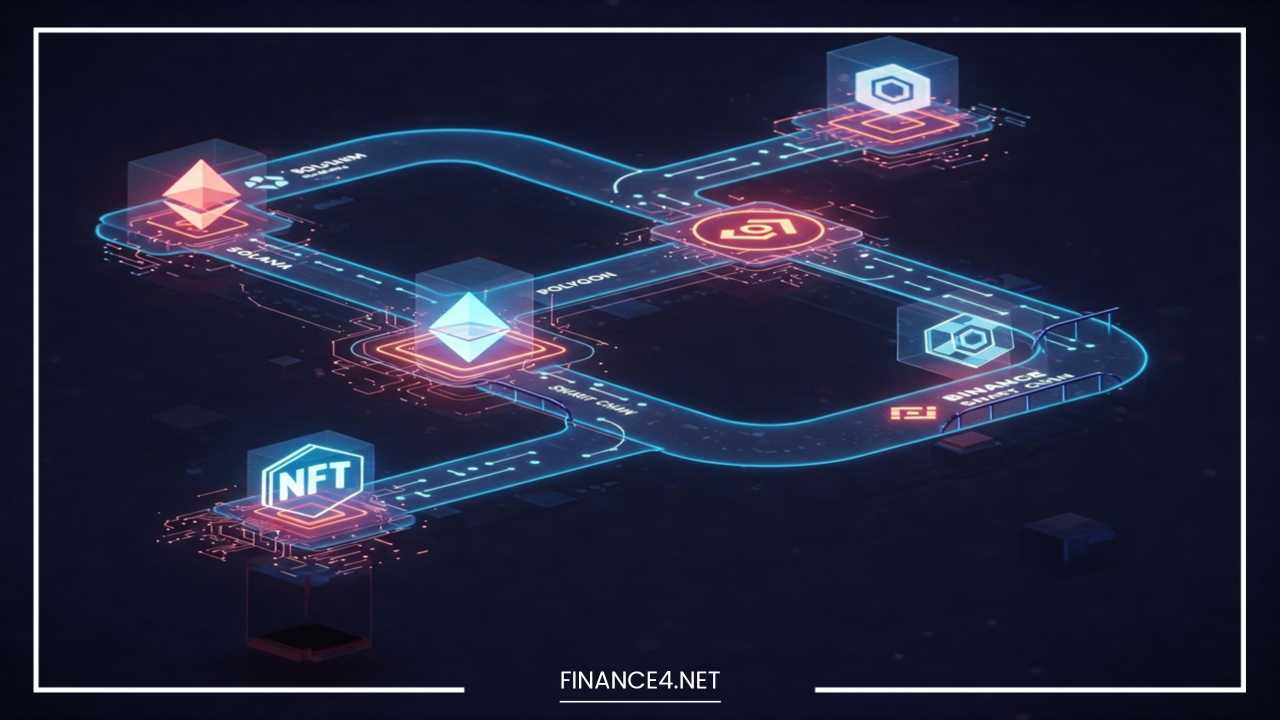
A multi-chain NFT marketplace is a digital platform designed to facilitate the buying, selling, and trading of Non-Fungible Tokens (NFTs) that reside on two or more distinct, non-compatible blockchain networks. Unlike earlier single-chain platforms (like an Ethereum-only marketplace), a multi-chain platform acts as a universal hub.
Its core utility is cross-chain interoperability—the ability to interact with different blockchain protocols, such as Ethereum, Polygon, Solana, BNB Chain, and Avalanche, all from a single user interface.
Imagine a global digital art gallery where the art pieces are stored in different vaults (blockchains) with different rules. The multi-chain marketplace is the front desk that lets you access any of these vaults without needing a separate key for each one. This capability dramatically expands the addressable market for creators and gives collectors access to a broader, more diverse range of digital assets and lower transaction costs offered by alternative chains. The real-world use case is powerful: a collector could buy an Ethereum-based PFP, trade it for a Solana-based gaming asset, and pay the transaction fees using a token on the Polygon network—all within the same application.
How Multi-Chain NFT Marketplaces Work
The operation of cross-chain NFT platforms relies on several sophisticated technological layers to create a seamless user experience across inherently incompatible blockchain networks.
Smart Contracts and Integration
At the foundation are specialized smart contracts deployed on each supported blockchain. These contracts handle the core logic—listing, buying, selling, and managing royalties—according to that chain’s specific rules (e.g., ERC-721 on Ethereum or SPL on Solana). The marketplace’s central platform aggregates and displays all these listings through a unified API.
Wallet Compatibility
For the user, the process begins with wallet compatibility. A leading multi-chain marketplace must support a variety of popular wallets, such as MetaMask (for EVM chains like Ethereum/Polygon), Phantom (for Solana), and WalletConnect (for a broader range of protocols). When a user connects their wallet, the platform automatically detects the chains and assets the wallet holds.
Bridging and Interoperability
The critical element for true cross-chain functionality is bridging assets across chains. While many platforms only allow trading of native NFTs (e.g., an Ethereum NFT being sold in ETH on that chain), true cross-chain marketplaces utilize blockchain bridges. These decentralized protocols lock an NFT on its native chain (e.g., Ethereum) and issue a wrapped, or representative, version of that NFT on the target chain (e.g., Polygon), allowing it to be traded there with lower fees.
Role of Layer 2 Solutions
The rise of Layer 2 (L2) solutions, such as Arbitrum and Optimism, has also been crucial. These L2s operate atop a main chain (like Ethereum), processing transactions off-chain for speed and low cost, then settling them securely on the main chain. Marketplaces integrate these L2s, offering the security of Ethereum with the cost-efficiency needed for high-volume trading.
Benefits of Using Multi-Chain NFT Marketplaces
The shift from single-chain to multi-chain NFT platforms has delivered significant advantages for the entire Web3 ecosystem:
-
Lower Gas Fees: By integrating cheaper networks like Polygon, BNB Chain, and Solana, users can bypass the often-prohibitive gas fees associated with the Ethereum mainnet. Creators can mint, and collectors can trade, at a fraction of the cost, making NFTs accessible to a wider demographic.
-
Wider Audience Reach: For creators, listing on a multi-chain platform instantly exposes their work to the user bases of multiple major blockchains, dramatically increasing the potential pool of buyers and investors. This network effect enhances demand and value.
-
Better Liquidity: Fragmented single-chain markets suffer from low liquidity. By aggregating listings from multiple chains into one interface, multi-chain marketplaces consolidate buyers and sellers, leading to faster transactions and more accurate price discovery.
-
Increased Flexibility for Creators and Collectors: Creators gain the flexibility to choose the most cost-effective or feature-rich chain for minting, while collectors are no longer locked into one ecosystem. They can diversify their portfolio across different blockchain technologies.
-
Reduced Dependency on One Blockchain: The multi-chain approach reduces the risk associated with a single network’s technical issues, downtime, or regulatory uncertainty. It ensures that the marketplace remains operational and liquid even if one chain experiences problems.
Challenges and Risks of Cross-Chain NFT Platforms
While cross-chain NFT platforms unlock immense value, their complexity introduces specific challenges and risks that users must be aware of:
-
Security Risks (Bridges, Exploits): The core vulnerability in the multi-chain model lies in blockchain bridges. These bridges, which lock assets on one chain and mint a tokenized version on another, are highly complex and represent a single point of failure. History has shown that bridge protocols are a prime target for malicious actors, leading to billions of dollars in exploits.
-
Network Congestion and Downtime: Although multi-chain platforms diversify risk, they are still reliant on the stability of the underlying networks. A sudden surge in usage or a technical fault on a major chain can still impact the marketplace’s performance, leading to failed transactions and increased temporary fees.
-
Fragmented Liquidity: Despite the goal of unifying markets, liquidity can still be fragmented. An NFT listed on Ethereum may have a very different price or volume on its wrapped version on a separate chain, complicating trading strategies.
-
User Experience Complexity: Navigating different network settings, understanding which wallet is needed for which chain, and dealing with the nuances of bridging assets can be confusing for beginners, creating a steep learning curve despite the marketplace’s best efforts.
-
Regulatory Uncertainty: The regulatory landscape for crypto and NFTs is evolving. The complexity of cross-chain transactions—especially those involving different geographical jurisdictions—could face greater regulatory scrutiny, which may impact the long-term operations of these platforms.
Key Features to Look for in a Multi-Chain NFT Marketplace
Choosing the right multi-chain NFT marketplace requires a careful evaluation of its technical capabilities, cost structure, and user-centric design.
Supported Blockchains
The number and quality of supported chains are paramount. A top-tier marketplace should support Tier 1 chains (Ethereum, Solana) and Tier 2/L2 solutions (Polygon, Arbitrum, Optimism, Base) to offer a balance of security, liquidity, and low fees. The more diverse the support, the greater the access to different NFT communities (e.g., gaming NFTs on Polygon, curated art on Ethereum).
Fees and Royalties
Transparency in the fee structure is crucial. Look for:
-
Marketplace Fees: The percentage charged on the final sale price (typically 0% to 2.5%). Lower is generally better for traders.
-
Gas Fee Handling: Support for gas-free or “lazy minting,” which defers the cost to the buyer, is highly advantageous for creators.
-
Royalty Enforcement: For creators, the platform must have robust mechanisms to enforce creator-set royalties across secondary sales on all supported chains.
User Interface and UX
A simple, intuitive, and fast interface is essential, especially given the complexity of the underlying multi-chain technology. Key aspects include:
-
A unified dashboard showing assets from all connected chains.
-
Advanced filtering by chain, token standard, price, and rarity.
-
A smooth, non-lagging browsing experience.
Security and Audits
Due to the high-value assets involved, security is non-negotiable. Look for:
-
Smart Contract Audits: Evidence of third-party security audits (e.g., by CertiK or PeckShield).
-
Non-Custodial Nature: The platform should be non-custodial, meaning it never holds your NFTs or crypto; assets remain securely in your connected wallet.
Wallet and Fiat Support
The platform should support a broad array of popular non-custodial wallets (MetaMask, Phantom, Coinbase Wallet). Additionally, the ability to purchase NFTs using fiat currency (USD, EUR) via credit card significantly lowers the barrier to entry for newcomers.
NFT Standards
The platform must seamlessly handle the primary token standards, including:
-
ERC-721 (Unique NFTs) and ERC-1155 (Semi-fungible NFTs) on Ethereum and EVM chains.
-
SPL tokens on Solana.
-
Bitcoin Ordinals support is a growing feature.
Creator Tools and Analytics
For artists and brands, key features include comprehensive launchpad services, simple no-code minting tools, and detailed on-chain analytics to track collection performance and buyer demographics across all supported networks.
Best Multi-Chain NFT Marketplaces in 2025
The competition among cross-chain NFT platforms has intensified, with several key players moving aggressively to dominate the multi-chain landscape. Here is a detailed look at the leading marketplaces in 2025:
OpenSea
OpenSea remains the undisputed industry giant in terms of all-time trading volume and brand recognition. Having started on Ethereum, its evolution into a dominant multi-chain player has cemented its status as the go-to platform for a vast majority of users.
-
Supported Blockchains: Ethereum, Polygon, Solana, Arbitrum, Optimism, Avalanche, Base, Flow, Zora, and many others (over 20+ chains supported on its OS2 architecture).
-
Key Features: The largest selection of NFTs, beginner-friendly interface, lazy minting (free for creators), and comprehensive collection analytics. It is the primary aggregator for the most established, blue-chip Ethereum collections.
-
Pros: Highest liquidity, widest range of NFTs, most chains supported, strong brand trust.
-
Cons: Historically higher overall marketplace fees (though recently reduced), can be overwhelming for new users due to sheer volume.
-
Best for: Beginners and Casual Collectors. Its ease of use and massive catalog make it the ideal starting point for anyone entering the NFT space.
Magic Eden
Magic Eden began as the dominant marketplace for the Solana ecosystem, capitalizing on that chain’s speed and low costs. Its strategic move to become truly multi-chain has positioned it as a serious challenger to OpenSea, especially in the low-fee trading and gaming sectors.
-
Supported Blockchains: Solana, Ethereum, Polygon, Bitcoin (Ordinals/Runes), Base, and others like BeraChain.
-
Key Features: Highly popular Launchpad for new collections, low transaction fees (historically 2% on Solana, lower on EVM chains), a strong focus on gaming and PFP (Profile-For-Picture) collections, and an innovative $ME token rewards ecosystem.
-
Pros: Very low transaction fees, strong community focus, leading platform for Solana and Bitcoin Ordinals, fast transaction speeds.
-
Cons: Initial focus on Solana meant less exposure to Ethereum blue-chips initially (though growing).
-
Best for: Traders and Gaming/Solana Enthusiasts. Its low-fee structure and speed appeal to high-volume traders.
Rarible
Rarible is known for its strong focus on creators, decentralization, and multi-chain support. It aims to be a community-governed marketplace, often promoting unique digital art and providing advanced tools for artists.
-
Supported Blockchains: Ethereum, Flow, Tezos, Polygon, Solana, and Immutable X.
-
Key Features: Decentralized Autonomous Organization (DAO) governance via the RARI token, a strong focus on creator-centric features, gas-free (lazy) minting options, and fiat payment support (credit card). Its new RARI Chain (Ethereum L3) is specifically designed to enforce royalties on-chain.
-
Pros: Community-driven model, excellent for artists seeking a strong voice, flexible royalty options, true multi-chain protocol infrastructure.
-
Cons: Lower liquidity compared to OpenSea or Magic Eden, transaction fees can be higher than competitors on the Ethereum mainnet.
-
Best for: Digital Artists and Creators seeking strong governance and control over their work.
Binance NFT
As the NFT arm of the world’s largest cryptocurrency exchange, Binance NFT leverages its parent company’s massive user base, liquidity, and fiat on-ramps to offer a highly accessible marketplace, particularly in emerging markets.
-
Supported Blockchains: BNB Chain, Ethereum, and Polygon.
-
Key Features: Direct integration with the Binance exchange ecosystem (easy crypto transfers), very low 1% sales fee, support for Mystery Boxes, and exclusive ‘Premium Events’ with high-profile artists and brands.
-
Pros: Seamless fiat on-ramp, excellent security due to exchange backing, massive existing user base, very competitive fees.
-
Cons: More centralized and custodial than true Web3-native platforms, limited to fewer chains than its competitors.
-
Best for: Beginners and Existing Binance Users. Best for those who prioritize ease of access and security integration with a major exchange.
OKX NFT Marketplace
OKX NFT is an aggregator-style marketplace offered by the popular OKX exchange. It provides a unified platform to trade NFTs listed across multiple marketplaces and chains, emphasizing a smooth, professional trading experience.
-
Supported Blockchains: Ethereum, Solana, OKC (OKX’s native chain), Polygon, BNB Chain, and others.
-
Key Features: Aggregates listings from platforms like OpenSea and Magic Eden, offering the best price discovery. Includes powerful trading tools like bulk buying, advanced analytics, and cross-chain swaps.
-
Pros: Acts as a ‘smart router’ for NFTs, consolidating market data for better trading decisions; low fees; strong integration with the OKX trading ecosystem.
-
Cons: Primarily functions as an aggregator, not the source of all listings, which may introduce minor dependency on external platforms.
-
Best for: Serious NFT Traders and Investors who need fast, data-driven decisions and aggregated market views.
Blur
Blur emerged as a formidable, high-speed NFT marketplace specifically designed for professional traders. It features a unique blend of a marketplace and an aggregator, prioritizing speed, transaction efficiency, and institutional-grade tools.
-
Supported Blockchains: Primarily Ethereum, with increasing support for other EVM-compatible chains.
-
Key Features: Zero marketplace fees (0%), advanced tools like batch sweeping, portfolio management, and real-time market data. Its native $BLUR token incentives reward market activity.
-
Pros: Zero trading fees, lightning-fast execution, best-in-class tools for experienced traders, strong token incentives.
-
Cons: Complex interface not ideal for beginners, strong focus on profit-driven trading over casual collecting.
-
Best for: Professional NFT Flipper/Trader with high volume and a deep understanding of market mechanics.
Element Market
Element is a decentralized, aggregated marketplace known for its low fees and comprehensive multi-chain support, making it a strong alternative for savvy users looking for lower transaction costs.
-
Supported Blockchains: Ethereum, BNB Chain, Polygon, Arbitrum, Avalanche, and more.
-
Key Features: Aggregates listings from multiple platforms, very low 0.5% marketplace fee, and a highly streamlined interface for quick transactions. It offers features like ‘Pumping’ for quick buying and selling.
-
Pros: Extremely low platform fee, efficient aggregation across multiple chains, excellent platform for cost-conscious traders.
-
Cons: Less brand recognition and community than OpenSea or Magic Eden, primarily focused on EVM chains.
-
Best for: Cost-Conscious Traders who value low fees and broad EVM chain coverage.
Mintable
Mintable is known for its user-friendly approach and dedication to lowering the barrier to entry for creators. It was one of the early pioneers of gas-free minting.
-
Supported Blockchains: Ethereum, Immutable X, Polygon, and others.
-
Key Features: Extensive use of lazy minting (gasless), free store creation for artists, and a strong focus on education and tutorials for newcomers. Mark Cuban is a key backer.
-
Pros: Ideal for first-time creators due to free/gasless minting, easy-to-use interface, strong educational resources.
-
Cons: Lower trading volume and liquidity compared to market leaders.
-
Best for: New NFT Creators and Hobbyists who want to experiment with minting at zero upfront cost.
Zora
Zora is a highly unique platform, operating as a zero-fee, open-source protocol rather than a traditional centralized marketplace. Its ethos is centered around empowering creators and fostering decentralized ownership structures.
-
Supported Blockchains: Ethereum, Base, Optimism, and its own growing Zora network (a Layer 2).
-
Key Features: Zero platform fees for buying/selling (users only pay gas), open-source protocol allows anyone to build on it, and a strong focus on decentralized on-chain art and music.
-
Pros: Zero-fee protocol, highly decentralized, best for supporting the principles of open-source Web3 development.
-
Cons: Less diverse catalog of established, high-volume collections, transaction costs are still tied to the underlying chain’s gas fees.
-
Best for: Web3 Purists and Developers who prioritize open-source decentralization and minimal platform intervention.
Comparison Table of Top Multi-Chain NFT Marketplaces
| Marketplace | Key Blockchains Supported | Standard Marketplace Fee | Best Use Case | Custodial/Non-Custodial |
| OpenSea | ETH, Polygon, Solana, Arbitrum | 1.0% (Seller) | All-Purpose/Beginners | Non-Custodial |
| Magic Eden | Solana, ETH, Polygon, Bitcoin | 0.5% (EVM) – 2% (SOL/BTC) | Traders/Gaming | Non-Custodial |
| Rarible | ETH, Flow, Tezos, Polygon | 1% (Buyer) + 1% (Seller) | Creators/Artists | Non-Custodial |
| Binance NFT | BNB Chain, ETH, Polygon | 1% (Seller) | Beginners/Exchange Users | Custodial (Exchange Integration) |
| Blur | Primarily Ethereum (EVM) | 0% (Marketplace Fee) | Professional NFT Traders | Non-Custodial |
| Element Market | ETH, BNB, Polygon, Arbitrum | 0.5% (Marketplace Fee) | Cost-Conscious Trading | Non-Custodial |
How to Choose the Right Cross-Chain NFT Platform
Selecting the best cross-chain NFT platform depends entirely on your specific goals, budget, and risk tolerance in the decentralized art market.
Based on User Goals
-
If you are a collector or investor: Prioritize platforms with the highest liquidity and volume, such as OpenSea and Magic Eden, to ensure fast transaction execution and accurate pricing. If you are a high-volume trader, Blur’s zero-fee model is compelling.
-
If you are a creator/artist: Focus on platforms that offer gas-free minting (Mintable, Rarible) and robust, on-chain royalty enforcement (Rarible’s RARI Chain), as well as broad exposure (OpenSea).
Budget and Gas Fees
If your primary concern is minimizing transaction costs, look for platforms that integrate L2 solutions like Polygon (available on most top marketplaces) or that operate natively on low-fee chains like Solana (Magic Eden). Always choose platforms that offer lazy minting to defer gas costs.
Preferred Blockchain Ecosystem
If you have a strong preference for a particular chain, let that guide your decision. For example, a strong Solana enthusiast will find the best support and community on Magic Eden, while someone focused on the burgeoning L2 ecosystem might gravitate toward OpenSea or Blur.
Security and Reputation
Never trade on a platform without a proven track record. Verify that the platform is non-custodial and has undergone independent smart contract audits. Established names like OpenSea, Magic Eden, and the institutional backing of Binance NFT offer a higher degree of trust.
Multi-Chain vs Cross-Chain vs Aggregator Marketplaces
The terminology in the NFT space can be confusing. While “multi-chain” and “cross-chain” are often used interchangeably, there are important distinctions:
-
Multi-Chain Marketplace: A platform that has deployed its own smart contracts and interface on multiple different, non-compatible blockchains (e.g., contracts on Ethereum, Solana, and Polygon). Users still conduct transactions within the same chain their NFT resides on (e.g., buy an ETH NFT with ETH). Example: Rarible, OpenSea.
-
Cross-Chain Marketplace: A platform that not only supports multiple chains but also facilitates true movement or interaction of the actual asset or its representation between those chains, often leveraging bridges. This is the most technically complex form.
-
NFT Aggregators: These are platforms that do not host their own listings but instead pull or ‘aggregate’ listings from various other existing marketplaces (like OpenSea, Blur, etc.) and chains into a single interface, allowing users to find the best price. Example: OKX NFT Marketplace, Blur (hybrid model), Element Market. The main pro of an aggregator is price discovery; the con is that they are dependent on the underlying platforms.
Future of Multi-Chain NFT Marketplaces
The era of isolated blockchain ecosystems is rapidly drawing to a close, and multi-chain NFT marketplaces are at the vanguard of the interconnected future. Several key developments will shape the market moving forward:
-
Interoperability Advancements: The reliance on vulnerable, centralized bridges will decline. New, trustless, and more secure interoperability protocols—such as advanced Layer 0 solutions and specialized cross-chain messaging protocols—will make asset transfer and transaction execution across chains nearly instantaneous and significantly safer.
-
AI and NFT Marketplaces: Artificial intelligence will be increasingly integrated to provide advanced features. This includes AI-driven price prediction models for specific collections, personalized collection recommendations for users, and sophisticated fraud detection to vet new projects and prevent scams.
-
Gaming and Metaverse Integrations: The future of gaming is intrinsically multi-chain, with in-game assets and virtual land needing to move seamlessly between the gaming platform, the underlying chain, and the marketplace. Marketplaces like Magic Eden will deepen their focus to become true asset hubs for the burgeoning metaverse and gaming economies.
-
Institutional Adoption: As major financial institutions and global brands enter the NFT space, they will demand platforms that meet strict compliance and security standards. This will drive higher institutional liquidity and potentially lead to more custodial or hybrid marketplace models to facilitate corporate transactions.
-
Regulation Impact: Regulatory clarity, particularly in the US and Europe, will force marketplaces to adopt transparent know-your-customer (KYC) and anti-money laundering (AML) procedures, potentially weeding out less compliant or overly-anonymous platforms.
FAQs About Multi-Chain NFT Marketplaces
Are multi-chain NFT marketplaces safe?
Yes, but with caveats. Marketplaces themselves (e.g., OpenSea, Rarible) are non-custodial, meaning your assets are safe in your wallet. However, the biggest risk comes from the blockchain bridges used to move assets between chains, which have been targets of major exploits. Always verify the bridge’s reputation and security audits before using it.
What is the best multi-chain NFT marketplace for beginners?
OpenSea is widely considered the best for beginners. It offers the most intuitive interface, the largest catalog of collections, and robust customer support resources, making the initial learning curve as gentle as possible. Binance NFT is also excellent for users who already use the Binance exchange.
Can I transfer NFTs between blockchains?
Yes, but not directly. The transfer process requires a blockchain bridge. Your NFT is locked on the original chain, and a corresponding “wrapped” or “representative” token is minted on the new chain. This process carries a fee and a security risk (see above).
Which marketplace has the lowest fees?
Marketplaces like Blur (0% platform fee) and Element Market (0.5% platform fee) offer the lowest marketplace fees. However, you must factor in gas fees. Platforms on Layer 2 chains (like Polygon) or native chains (like Solana on Magic Eden) offer the lowest overall transaction costs.
Are royalties supported across chains?
Support varies. Most reputable multi-chain marketplaces support creator-set royalties. However, the system for enforcement is fragile, as not all marketplaces voluntarily honor royalties. Projects like Rarible’s RARI Chain are working on L3 solutions to enforce royalties at the protocol level, making them mandatory and robust across all participating chains.
Final Thoughts
The emergence of the multi-chain NFT marketplace is not merely a technical upgrade; it represents the maturation of the entire decentralized digital asset economy. These platforms have successfully broken down the walls of single-chain ecosystems, driving down costs, increasing market liquidity, and expanding the audience for creators globally.
The future of digital ownership is inherently interoperable. Whether you prioritize the massive liquidity of OpenSea, the low-fee speed of Magic Eden, or the creator-focused governance of Rarible, the best decision involves aligning your needs with the platform’s core strengths.
The technology is complex, and risks, particularly related to cross-chain bridges, remain. Therefore, always conduct your own thorough research (DYOR) before making any significant investment. Explore the platforms, compare the fees on the chains you plan to use, and engage with the communities to stay ahead in this dynamic and rapidly evolving multi-chain world.