Top Bridging Aggregator for Small Altcoin Liquidity
 by
by 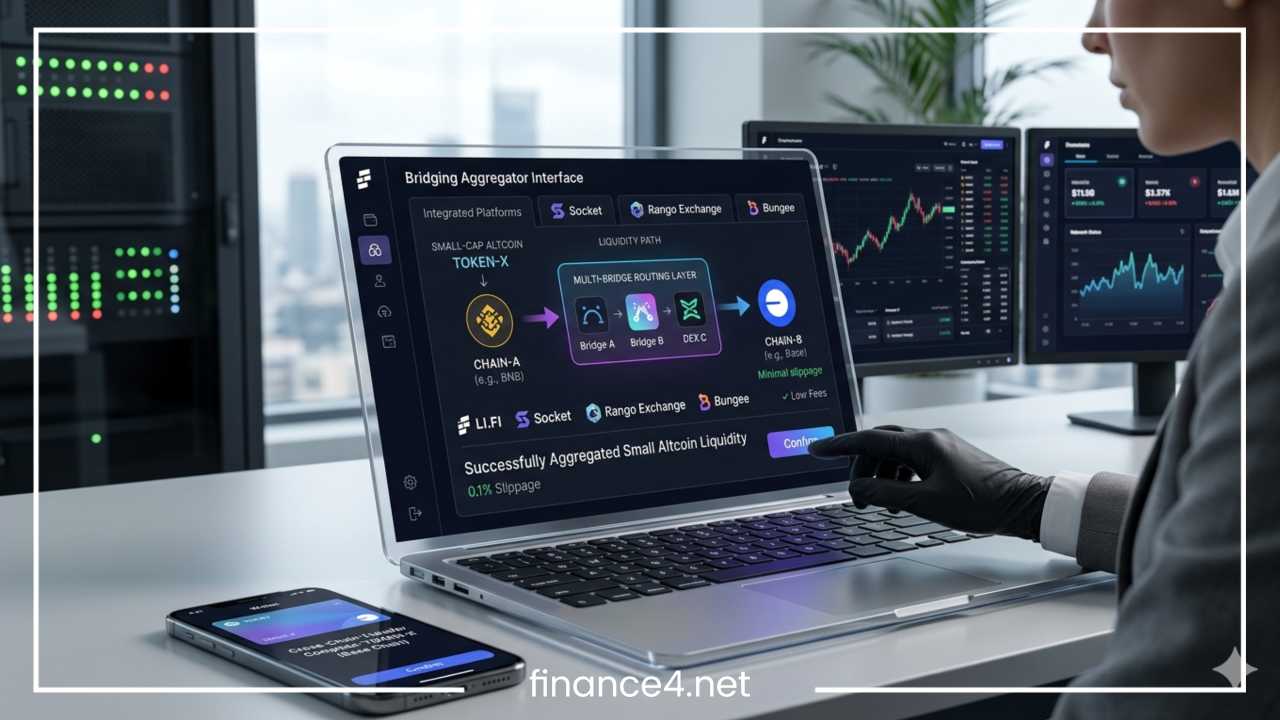
Top Bridging Aggregator for Small Altcoin Liquidity
The digital asset landscape has evolved from a single-chain dominant ecosystem into a vast, multi-chain universe. While this expansion has fostered innovation in decentralized finance (DeFi), gaming, and social protocols, it has simultaneously created a massive challenge for investors: liquidity fragmentation. This issue is particularly acute for small-cap altcoins. Unlike major assets like Bitcoin or Ethereum, which boast deep liquidity across almost every major exchange and bridge, small altcoins often suffer from thin order books and disconnected pools of capital.
For a trader or developer dealing with long-tail assets, moving value between chains is rarely a straight line. It is a fragmented journey fraught with high slippage, failed transactions, and exorbitant fees. As the number of Layer 1 and Layer 2 networks continues to grow, the need for a sophisticated middle layer has become undeniable. This is where bridging aggregators enter the frame.
Instead of requiring users to manually hunt for a bridge that supports a specific niche token, bridging aggregators automate the search, discovery, and execution process. They act as the intelligence layer of the multi-chain web, ensuring that even the most illiquid altcoins can find a path from one ecosystem to another with minimal friction.
What Is a Bridging Aggregator?
To understand a bridging aggregator, one must first distinguish it from a standard bridge or a decentralized exchange (DEX). A standard bridge is a singular piece of infrastructure that connects Chain A to Chain B. It typically relies on its own liquidity pools or a specific messaging protocol to lock an asset on one side and release it on the other.
A DEX, on the other hand, facilitates swaps within a single chain. If you want to trade Token X for Token Y on Arbitrum, you use a DEX.
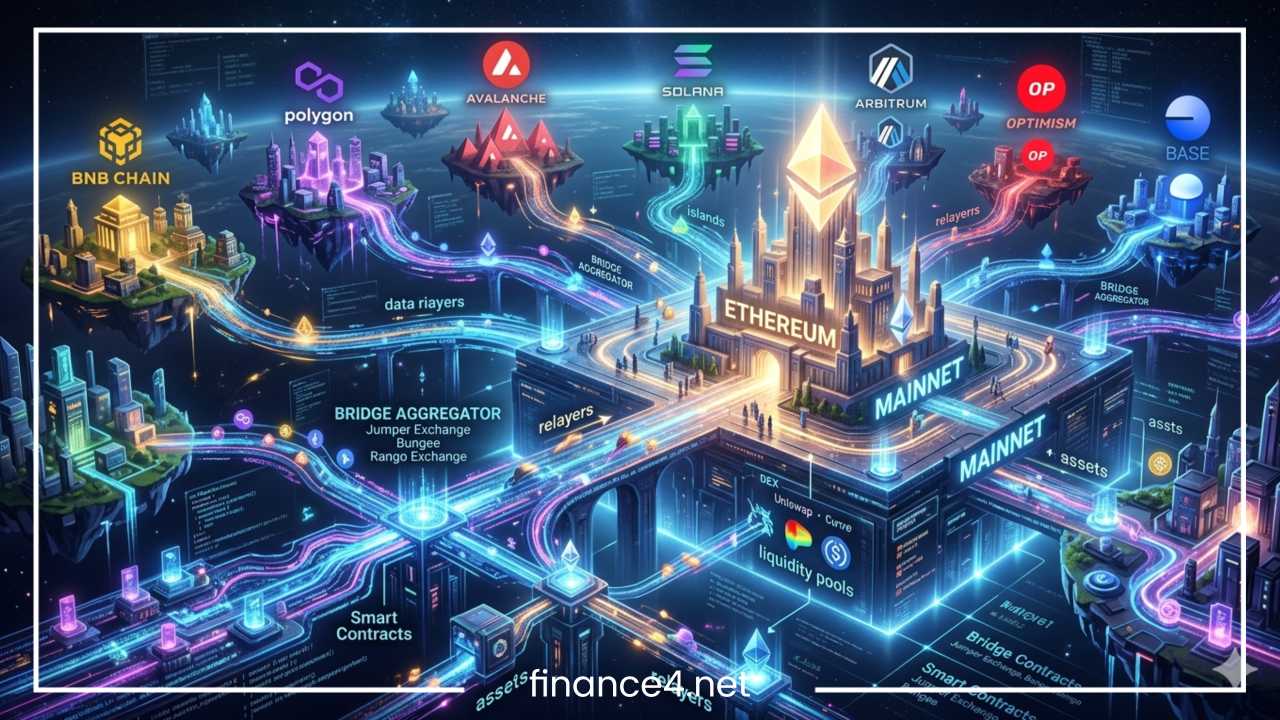
A bridging aggregator is a meta-protocol that sits above both. It integrates dozens of individual bridges and hundreds of DEXs into a single interface. When a user requests a transfer of a small-cap altcoin from the BNB Chain to Base, the aggregator does not just look for a bridge; it looks for the most efficient path. This might involve swapping the altcoin for a stablecoin on the source chain, bridging that stablecoin via the fastest available route, and then swapping it back into a target asset on the destination chain.
Unified Liquidity Access
The primary function of an aggregator is to provide unified liquidity access. By connecting to multiple liquidity sources simultaneously, an aggregator can “split” an order. If a single bridge does not have enough liquidity to handle a large swap of a mid-cap token without 10% slippage, an aggregator might send 50% of the volume through one bridge and 50% through another.
Intent-Based Execution and Smart Routing
Modern aggregators have moved toward intent-based execution. Instead of the user specifying every single technical step of the bridge, they simply state their “intent” (e.g., “I want 1,000 units of Altcoin X on Polygon, and I am paying with Altcoin Y on Ethereum”). The aggregator’s smart routing engine then calculates the optimal path based on current gas prices, bridge security, and available liquidity, executing the entire multi-step process in a single user transaction.
Why Small Altcoin Liquidity Is Hard to Bridge
The difficulties associated with bridging small-cap assets are structural. While a “blue chip” asset like USDC can be moved across chains with almost zero price impact, small altcoins face a unique set of hurdles.
Fragmented Liquidity Across Chains
As projects launch on multiple networks to capture different user bases, their liquidity becomes diluted. A gaming token might have $500,000 of liquidity on Ethereum, $200,000 on Polygon, and $100,000 on Base. For a trader looking to move a significant position, no single chain offers enough depth. This fragmentation leads to price discrepancies where the token may trade at a 2% premium on one chain compared to another, yet the cost and complexity of bridging prevent arbitrageurs from closing the gap.
Low TVL Pools and High Slippage
Total Value Locked (TVL) is the lifeblood of on-chain trading. Small altcoins naturally have lower TVL in their liquidity pools. When a user attempts to bridge a small-cap asset, the automated market maker (AMM) formulas often result in high slippage. If the bridge route requires multiple swaps—such as Altcoin A to ETH, then ETH to Altcoin B—the slippage is compounded at every step. Without an aggregator to find the deepest pools, a user could lose a significant portion of their principal just in execution costs.
Limited Native Bridge Support
Most official “canonical” bridges—those built by the foundation of a specific blockchain—prioritize safety and high-volume assets. They often only support a handful of tokens like ETH, WBTC, and major stablecoins. For the thousands of smaller altcoins, there is often no native bridging path. Users are forced to rely on third-party providers, but searching for which third-party bridge supports a niche AI or meme token is a manual, time-consuming process that often leads users to insecure or high-fee platforms.
Security Risks and Wrapped Assets
Bridging small altcoins often involves “wrapped” versions of the token. If a bridge lacks a native swap mechanism, it might issue a “Bridge-Wrapped Altcoin” on the destination chain. These wrapped assets carry bridge-specific risk. If the bridge is compromised, the wrapped token becomes worthless because the underlying collateral is gone. Smaller altcoins are more susceptible to these risks because they are often traded on newer, less-battle-tested bridges that are willing to list long-tail assets that more established bridges won’t touch.
Features That Make a Good Bridging Aggregator
Not all aggregators are created equal. When evaluating a platform for small altcoin liquidity, several technical and functional pillars must be considered.
Multi-Bridge Integration
The strength of an aggregator is directly proportional to its connectivity. A top-tier aggregator should integrate a diverse range of bridge architectures, including:
-
Liquidity-based bridges (like Stargate or Hop) for fast, low-fee transfers of common assets.
-
Messaging-based bridges (like Wormhole or LayerZero) for transferring arbitrary data and custom tokens.
-
Settlement layers (like Across) that use solvers to provide rapid execution.
By having more integrations, the aggregator increases the probability of finding a path for a niche altcoin.
Deep Liquidity Routing and Split Trading
For small-cap assets, the ability to tap into DEX aggregators is vital. A bridging aggregator should not just connect to bridges; it should connect to DEX aggregators like Uniswap, Curve, and PancakeSwap on every chain it supports. This allows the tool to find the “cheapest” way to exit an altcoin position on the source chain before bridging.
Low Slippage Handling and MEV Protection
Small altcoins are prime targets for Maximum Extractable Value (MEV) bots. When a large bridging transaction is broadcast, bots can front-run the trade, causing the user to get a worse price. A high-quality aggregator incorporates MEV protection, such as private RPCs or specialized solver networks, to ensure that the slippage quoted to the user is what they actually receive.
Chain Coverage and UX
In the current market, liquidity is moving toward Layer 2s and specialized sub-nets. An aggregator must support a wide array of chains, including Ethereum, Solana, Base, Arbitrum, Optimism, Polygon, BNB Chain, and Avalanche, as well as emerging ecosystems like Sui and Aptos. Furthermore, the user interface must abstract the complexity. A user should not need to know that their transaction is going through three different protocols; they should only see a “Swap” button.
Top Bridging Aggregators for Small Altcoin Liquidity
Several platforms have emerged as leaders in the space, each offering a unique approach to solving the liquidity problem for long-tail assets.
LI.FI
LI.FI is widely considered the “gold standard” for bridging infrastructure. It is not just a consumer-facing platform but a comprehensive B2B middleware that other dApps use to power their own bridging.
Technical Capabilities
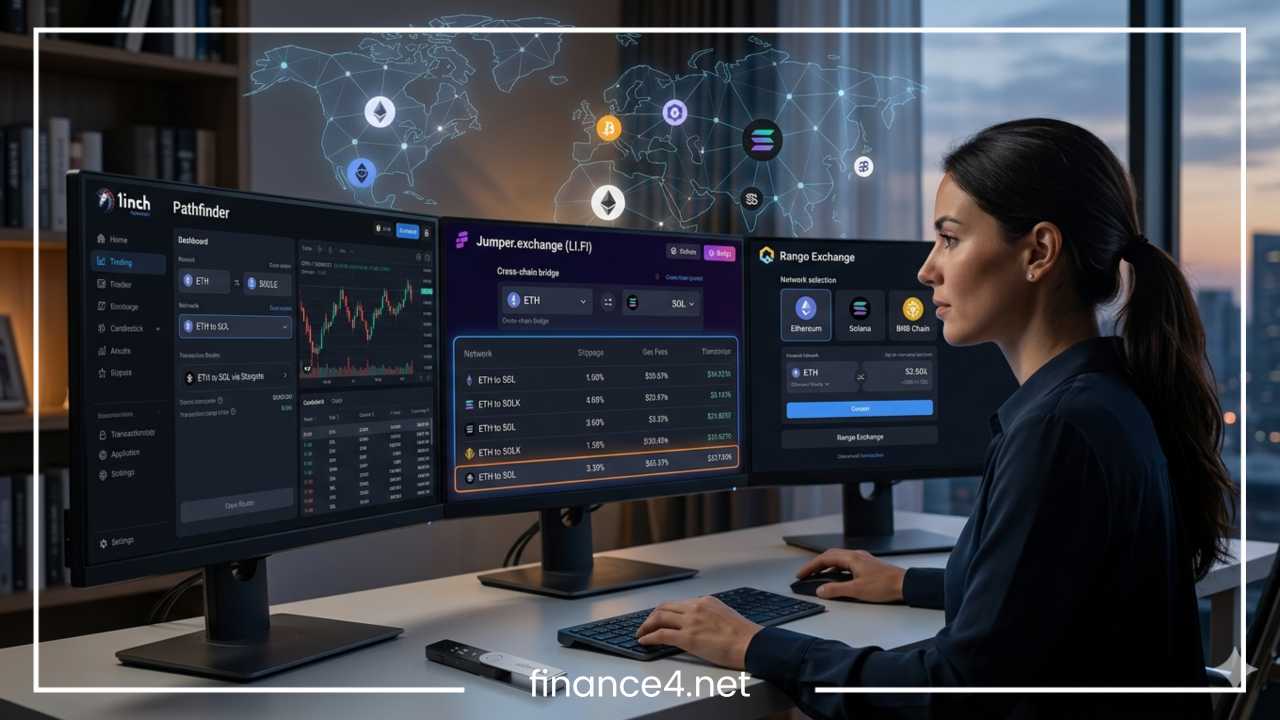
LI.FI aggregates a massive number of bridges (over 20) and DEXs (over 30) across more than 20 chains. Its “Smart Routing” engine is designed to find the most capital-efficient path for any asset, regardless of its liquidity profile. For small altcoins, LI.FI is particularly effective because it can route through a combination of niche DEXs to find the best exit price before moving the value across a bridge.
Pros
-
Unrivaled chain and bridge coverage.
-
Extensive developer documentation and API support.
-
Advanced fallback mechanisms if a specific bridge route fails.
Cons
-
Because it searches so many routes, the gas estimation can occasionally be complex for the user to understand.
-
Transaction speed is capped by the speed of the underlying bridge chosen.
Best For: DeFi power users and developers who need the most robust liquidity routing available for long-tail assets.
Socket
Socket is a modular interoperability layer that focuses on “liquidity abstraction.” It is the engine behind popular consumer tools like Bungee.
Technical Capabilities
Socket operates on the principle that users shouldn’t care about bridges; they should care about the result. Its infrastructure allows for “multi-hop” transactions where an asset can be swapped, bridged, and swapped again in a single sequence. This is critical for small altcoins that may not have a direct bridge path. Socket’s architecture is designed to be developer-friendly, allowing apps to build “Chain Abstracted” experiences.
Pros
-
High emphasis on speed and “intent-based” transfers.
-
Very efficient routing for stablecoin-to-altcoin transitions.
-
Modular design allows for quick integration of new chains.
Cons
-
Primarily focused on EVM chains, though expanding.
-
The underlying protocol complexity can lead to higher fees in high-congestion environments.
Best For: Advanced DeFi integrations and users seeking highly optimized, fast bridging routes.
Rango Exchange
Rango Exchange differentiates itself by being the first “multi-chain DEX aggregator.” While many aggregators focus heavily on EVM-to-EVM (Ethereum-based) transfers, Rango was built to connect disparate ecosystems like Cosmos, Solana, and Bitcoin alongside EVM chains.
Why Relevant for Small Altcoins
Many small-cap tokens exist on non-EVM chains (like Solana or various Cosmos app-chains). Rango is often the only aggregator that can find a path from a small Cosmos-based token to a micro-cap token on Arbitrum. Its support for “exotic” chains makes it the go-to for hunters of truly obscure altcoin liquidity.
Pros
-
Superior support for non-EVM ecosystems (Solana, Cosmos, THORChain).
-
User-friendly interface that handles complex multi-step swaps visually.
-
Aggregates both on-chain and cross-chain liquidity.
Cons
-
The multi-chain nature can lead to longer wait times as different consensus mechanisms (e.g., Bitcoin or Cosmos) settle.
-
Fees can be higher due to the number of individual blockchain interactions required.
Best For: Investors who trade across heterogeneous ecosystems and need access to non-EVM altcoins.
Bungee Exchange
Bungee is the consumer-facing application built on top of the Socket protocol. It is renowned for its clean user experience and “Refuel” feature.
Technical Capabilities
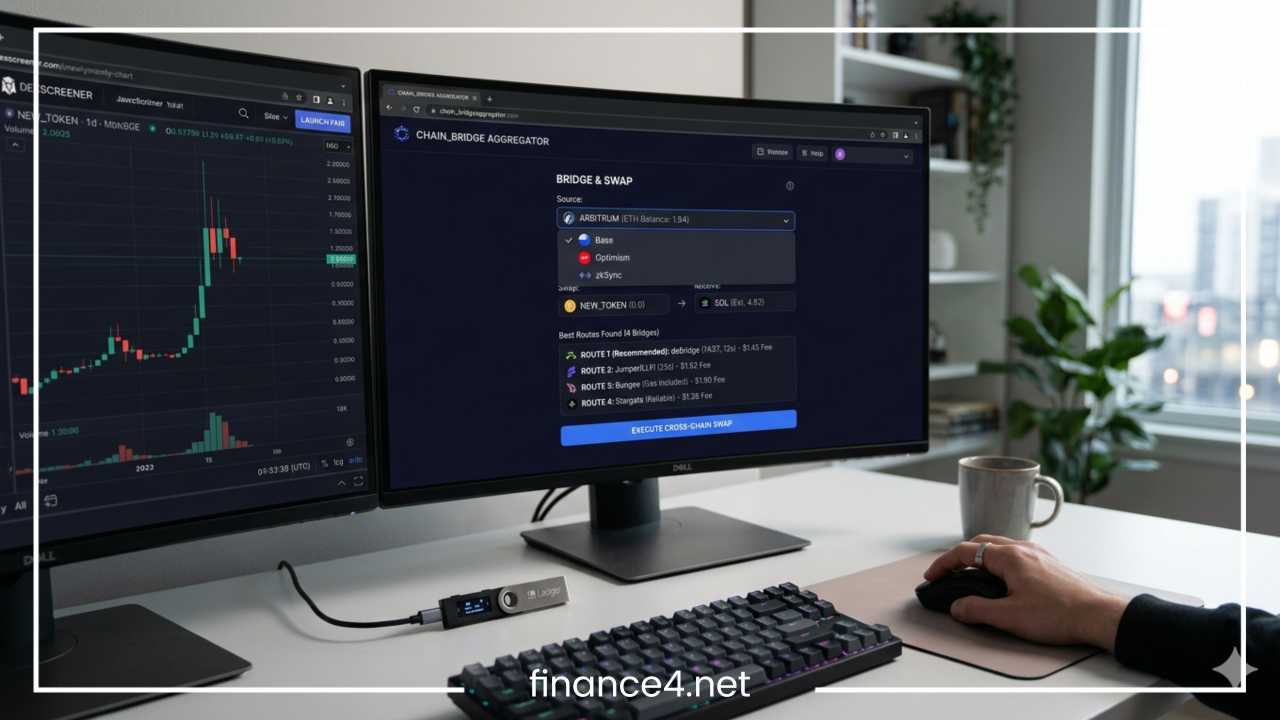
Bungee specializes in finding the “cheapest” and “fastest” routes. Its “Refuel” feature is a lifesaver for altcoin traders; it allows users to bridge a small amount of native gas (like ETH or MATIC) to a destination chain along with their altcoin swap. This prevents the common “trapped” scenario where a user bridges an altcoin to a new chain but has no gas to move it once it arrives.
Pros
-
Exceptional UX; one of the easiest bridges for beginners.
-
“Refuel” feature solves the gas-on-destination-chain problem.
-
Transparent breakdown of fees and estimated times.
Cons
-
Heavily reliant on the Socket protocol’s coverage.
-
May not always have the deep-tail asset support found in Rango or LI.FI.
Best For: Casual traders and those who frequently move between Layer 2s and need a seamless gas solution.
Relay Protocol
Relay is a newer entrant focusing on “instant” cross-chain execution through a solver-based model.
Technical Capabilities
Relay uses a network of “solvers” (liquidity providers) who fulfill the user’s bridge request immediately using their own capital, taking the risk of the slow underlying bridge settlement themselves. For small altcoins, this can drastically reduce the time a user is exposed to price volatility during the bridging process.
Pros
-
Near-instant execution for supported pairs.
-
Drastically reduces the “waiting period” that plagues traditional bridges.
-
Lower fee structures for many common routes.
Cons
-
More limited asset support compared to LI.FI or Rango.
-
Relies on the availability of solvers for specific liquidity pairs.
Best For: Users who prioritize speed and want to avoid the 10-20 minute wait times typical of standard bridges.
Comparison Table: Top Bridging Aggregators
| Aggregator | Chains Supported | Best For | Small Altcoin Support | UX |
| LI.FI | 20+ (EVM & More) | Developers & Power Users | Excellent (Deep DEX integration) | Advanced |
| Rango | 50+ (EVM, Solana, Cosmos) | Cross-Ecosystem Trading | Best for non-EVM altcoins | Good |
| Bungee | All major EVM L2s | UX & Gas Management | Good for popular L2 tokens | Best-in-class |
| Socket | Major EVM L2s | App-level integration | Strong for EVM-based assets | N/A (Middleware) |
| Relay | Select EVM L2s | Instant Execution | Moderate (Focuses on speed) | Minimalist |
Risks and Challenges of Bridging Small Altcoins
While aggregators make life easier, they do not eliminate the inherent risks of cross-chain activity. Users must remain vigilant about several factors.
Smart Contract and Bridge Exploits
Aggregators are layers built on top of bridges. If one of the underlying bridges (like the Wormhole or Ronin hacks of the past) is exploited, the aggregator cannot protect the funds currently in transit through that specific bridge. While aggregators often vet the protocols they integrate, the risk of a “zero-day” exploit in a liquidity pool or a messaging protocol is always present.
Wrapped Token Risks and Liquidity Drying Up
When bridging a small altcoin, you are often receiving a “wrapped” version of that token. If the bridge that issued that wrapped token loses its peg or its collateral, your tokens may become illiquid. Furthermore, during periods of extreme market volatility, liquidity for small-cap assets can vanish. An aggregator might show a route for a token, but by the time the transaction reaches the destination DEX, the price may have shifted so drastically that the trade fails or results in massive slippage.
MEV and Front-Running
As mentioned, small-cap pools are sensitive to large trades. MEV bots monitor bridge contracts. If an aggregator routes a large altcoin swap through a public mempool without protection, a bot can sandwich the trade, effectively stealing a percentage of the value. Always check if your chosen aggregator offers “Slippage Tolerance” settings and use them conservatively.
Future of Cross-Chain Altcoin Liquidity
The future of altcoin trading is moving toward a world where the blockchain becomes “invisible.” This concept, often called Chain Abstraction, suggests that a user will simply hold an asset, and the underlying infrastructure will handle where it lives and how it moves.
Intents and AI-Powered Routing
We are seeing a shift from “imperative” bridging (where the user picks the path) to “declarative” bridging (where the user picks the outcome). AI-powered routing agents will soon be able to scan thousands of liquidity pools in real-time to execute complex, multi-hop trades that would be impossible for a human to coordinate. This will be a game-changer for small altcoins, as it will allow for the “stitching together” of tiny pockets of liquidity across dozens of chains to fulfill a single large order.
Omnichain Liquidity
New token standards (like LayerZero’s OFT or Axelar’s ITS) allow tokens to exist natively on multiple chains without wrapping. As more small-cap projects adopt these “Omnichain” standards, the need for complex DEX-to-DEX routing will decrease, but the need for aggregators to find the cheapest “rebalancing” routes will remain.
Unified Wallets
The next generation of wallets will likely integrate these aggregators directly into the interface. Users will see their total balance of a specific altcoin across all chains and will be able to spend it anywhere, with the wallet performing an “auto-bridge” in the background using an aggregator’s API.
Final Thoughts
The fragmentation of liquidity is the biggest hurdle currently facing the expansion of the altcoin market. For small-cap projects, the ability for users to easily buy, sell, and move tokens across chains is the difference between a thriving ecosystem and a stagnant one.
Bridging aggregators have evolved from simple comparison tools into essential DeFi infrastructure. Platforms like LI.FI, Rango, and Bungee provide the intelligence layer necessary to navigate the complexities of thin liquidity and high slippage. By consolidating hundreds of liquidity sources into a single point of access, they ensure that the “long tail” of the crypto market remains accessible and liquid.
As we move toward a modular, multi-chain future, the role of the aggregator will only grow. The future of altcoin trading will depend less on individual chains and more on seamless liquidity access across ecosystems. For the investor, the message is clear: stop using single bridges and start leveraging the power of aggregation to protect your capital and optimize your trades.
Frequently Asked Questions
What is the best bridging aggregator for low-cap altcoins?
The best aggregator depends on the specific chain, but LI.FI and Rango Exchange are widely considered the top choices for low-cap assets. LI.FI excels in finding deep liquidity routes across EVM-compatible Layer 2s, while Rango is the preferred choice for “exotic” swaps involving non-EVM chains like Solana, Cosmos, and THORChain.
How do I reduce slippage when bridging small altcoins?
To minimize slippage, use an aggregator that supports split routing. Instead of sending your entire transaction through a single bridge with thin liquidity, these platforms break the order into smaller pieces across multiple liquidity pools. Additionally, ensure you set a manual slippage tolerance (typically 0.5% to 1%) to prevent bots from exploiting your trade.
Are bridging aggregators safer than using a single bridge?
Aggregators do not necessarily increase the underlying security of a bridge, but they improve risk management. Most top aggregators vet the protocols they integrate and provide security scores. By using an aggregator, you can choose a route based on a “Trust Score” rather than blindly using a bridge that might have centralized validators or unaudited code.
Why is my altcoin swap taking so long to bridge?
Bridging speed depends on the “finality” of the source blockchain and the architecture of the bridge. While some aggregators like Relay offer near-instant transfers using solvers, traditional bridges may take 10 to 30 minutes to ensure the transaction cannot be reversed. Small altcoins on congested networks or non-EVM chains often require more confirmations, leading to longer wait times.
Can I bridge tokens to a new chain if I don’t have gas money?
Yes, this is a common problem known as the “gas trap.” Aggregators like Bungee Exchange offer a feature called Refuel, which allows you to bridge a small amount of native gas (like ETH, MATIC, or SOL) along with your altcoin. This ensures you have the necessary funds to perform your first transaction once you reach the destination chain.
What are the fees associated with using a bridging aggregator?
Typically, there are three types of fees:
-
Network Gas Fees: Paid to the source and destination blockchains.
-
Bridge Provider Fees: Charged by the underlying bridge (e.g., Stargate or Across).
-
Aggregator Fees: Most aggregators are currently free to use or charge a very minimal convenience fee (often 0.1% or less) to maintain their routing infrastructure.
Is it possible to bridge unlisted or brand-new altcoins?
As long as the altcoin has a liquidity pool on a decentralized exchange (DEX) like Uniswap or PancakeSwap, a high-quality aggregator can usually route it. Because aggregators connect to DEXs on both ends, they can swap your unlisted token into a bridgeable asset (like USDC), move it across, and swap it back into a different asset on the target chain.
What is the difference between a bridge and a cross-chain aggregator?
A bridge is a single highway connecting two specific points. A cross-chain aggregator is a GPS and traffic controller that looks at every available highway, side road, and shortcut across the entire ecosystem to find you the fastest and cheapest route to your destination.