Most Underrated DeFi Projects
 by
by 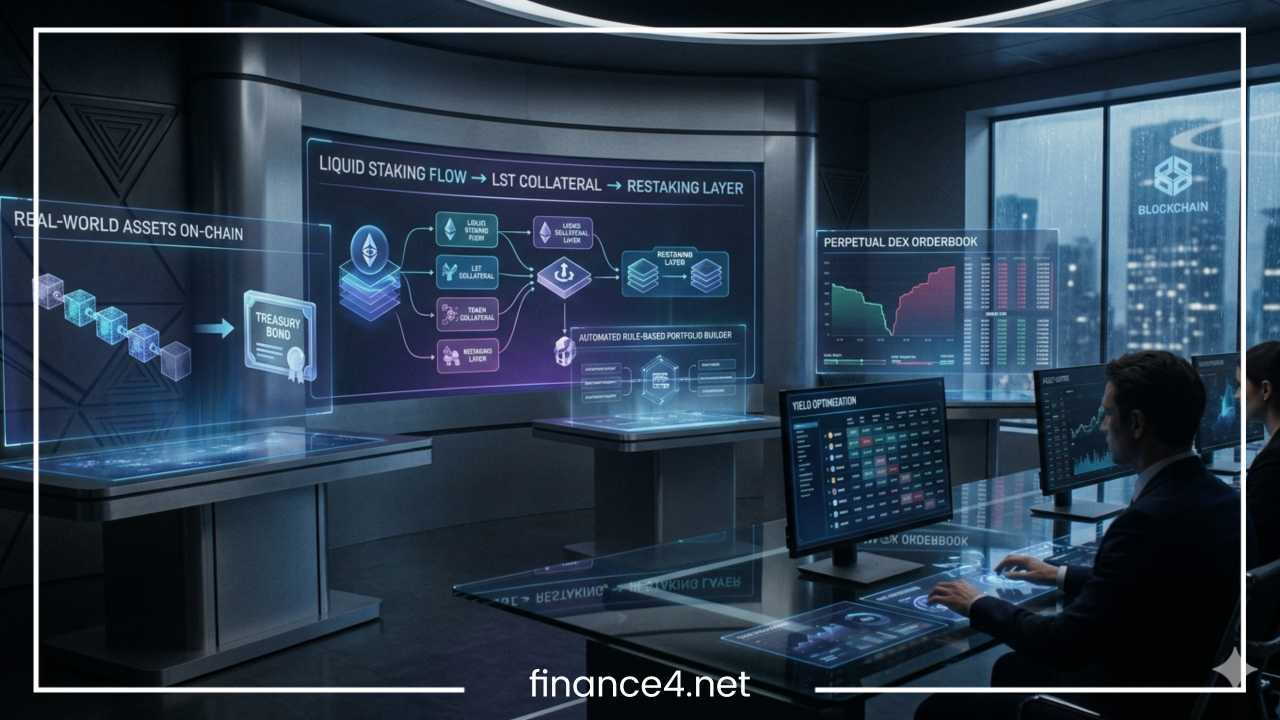
10 Most Underrated DeFi Projects to Watch
The decentralized finance landscape has undergone a profound transformation. What began as a series of experimental protocols primarily used for high-risk speculation has matured into a sophisticated financial infrastructure layer. We have moved past the initial hype cycles where Total Value Locked (TVL) was the only metric that mattered. Today, the industry is entering an infrastructure phase focused on capital efficiency, real revenue generation, and sustainable utility.
In this matured market, the loudest projects are rarely the most important. The “attention economy” in crypto often rewards flashy marketing and high-emission tokens, leading to a significant misallocation of capital. Many of the most robust, revenue-generating, and technically innovative protocols operate quietly in the background, providing the essential rails for the rest of the ecosystem. These are the underrated projects—the hidden gems that are building the future of finance while the majority of the market is distracted by the latest meme coin or temporary incentive program.
Understanding these underrated projects requires a shift in perspective. Instead of chasing social media engagement, savvy participants are looking at how these protocols solve deep-seated liquidity issues, bridge the gap between traditional finance and blockchain, and optimize yield through complex mathematical modeling. This guide explores ten projects and narratives that represent the backbone of the next generation of decentralized finance.
How You Define Underrated
To identify a project as underrated, we must look beyond simple price action or Twitter followers. In a market as volatile as decentralized finance, “underrated” is a qualitative measure of the gap between a protocol’s intrinsic value and its market recognition.
First, we look for low attention versus strong fundamentals. A project may have a modest market capitalization but provide a service that is critical to the operation of dozens of other decentralized applications. If a protocol is the primary source of liquidity for a specific asset class or the underlying risk engine for a lending market, yet is rarely discussed in mainstream crypto media, it is fundamentally undervalued.
Second, we prioritize growing TVL and user retention over social hype. Sustainable growth is often quiet. Protocols that see a steady increase in organic users—those who use the service for its utility rather than just to “farm” a potential airdrop—demonstrate true product-market fit.
Third, we consider the protocol’s role in emerging narratives like restaking, Real-World Assets (RWAs), and modular DeFi. Innovation often happens at the edges of the ecosystem. A project that creates the “plumbing” for these new sectors is inherently more valuable than one that simply provides a frontend for an existing service. Finally, we look for revenue generation. A protocol that earns fees from actual usage and distributes that value back to the ecosystem is far more resilient than one that relies on token inflation to keep its doors open.
Major DeFi Narratives
The projects highlighted in this guide do not exist in a vacuum. They are part of broader shifts in the financial architecture of the blockchain. Understanding these narratives is essential for recognizing why certain “boring” infrastructure projects are poised for long-term dominance.
One of the most significant shifts is the evolution of liquid staking and its derivative, restaking. Liquid Staking Tokens (LSTs) have become the primary collateral of the DeFi world, replacing idle assets with productive ones. The restaking narrative takes this a step further, allowing users to leverage their staked assets to secure additional services, effectively creating a tiered security market. This layer of the stack is becoming increasingly complex and vital for network security and capital efficiency.
Parallel to this is the rise of Real-World Assets (RWAs). The tokenization of treasuries, private credit, and real estate is bringing trillions of dollars of off-chain value onto the blockchain. The protocols that build the compliant, scalable rails for these assets are bridging the final gap between traditional finance and decentralized systems.
Furthermore, we are seeing a move toward “Intent-Based” systems and modularity. Instead of users manually navigating complex cross-chain bridges and swaps, new protocols allow users to express an “intent” (e.g., “I want the best price for X asset on Y chain”), which professional solvers then execute. This abstraction layer is crucial for onboarding the next billion users who don’t want to see the underlying complexity of the blockchain. These narratives—security, real-world integration, and user abstraction—are where the most underrated innovation is currently hiding.
The 10 Underrated DeFi Projects
Morpho: Redefining Lending Efficiency
Morpho represents a fundamental shift in how decentralized lending markets operate. While traditional lending protocols like Aave or Compound use a pool-based model, Morpho introduces a peer-to-peer layer on top of these pools. It works by matching lenders and borrowers directly when possible, allowing them to bypass the spread taken by the pool, which results in better rates for both parties.
Why it matters: Morpho solves the inherent inefficiency of the “liquidity pool” model. In a standard pool, the interest rate is determined by a curve, and there is always a gap between what the borrower pays and what the lender receives. Morpho narrows this gap significantly. Its latest iteration, Morpho Blue, allows for the creation of trustless, isolated lending markets with customizable risk parameters.
Why it is underrated: Morpho is often viewed as a “middleware” protocol rather than a standalone destination. Because it integrates with other protocols, users often interact with it without realizing it. However, its capital efficiency is virtually unmatched in the lending space.
Key traction: Morpho has consistently captured billions in volume by optimizing existing lending pools and is now seeing rapid adoption of its Blue vaults, which offer a more modular approach to risk than traditional monolithic lending protocols.
Risks: The primary risk involves the complexity of the matching engine and the reliance on the underlying protocols it optimizes. However, its transition toward isolated markets mitigates the systemic risk often found in cross-collateralized pools.
Pendle: The Yield Tokenization Pioneer
Pendle is a protocol that enables the trading of future yield. It allows users to wrap yield-bearing assets and then split them into two components: the Principal Token (PT) and the Yield Token (YT). This allows for sophisticated strategies, such as locking in a fixed yield or speculating on yield fluctuations.
Why it matters: Fixed-income markets are the backbone of traditional finance, yet they have been surprisingly slow to develop in DeFi. Pendle provides the tools for institutional-grade yield management. If you believe the yield on a specific LST will rise, you can buy the YT; if you want the certainty of a 10% return, you can buy the PT at a discount.
Why it is underrated: The concept of yield stripping is mathematically intensive and can be intimidating for the average retail user. Consequently, Pendle is often ignored in favor of simpler “high APY” farms. However, its integration into the restaking ecosystem has made it a central hub for liquidity.
Key traction: Pendle has seen an explosion in TVL as it became the primary venue for trading the yields of restaked assets. It has effectively created a “yield curve” for the digital asset space.
Risks: Users face smart contract risk and the potential for “yield decay” if the underlying asset’s performance does not meet expectations.
Hyperliquid: The Orderbook Revolution on a Custom Chain
Hyperliquid is a decentralized perpetual exchange (DEX) that operates on its own dedicated L1 blockchain. Unlike many DEXs that use an Automated Market Maker (AMM) model, Hyperliquid utilizes a highly performant on-chain orderbook.
Why it matters: For DeFi to truly compete with centralized exchanges (CEXs), it must offer a similar user experience: instant execution, deep liquidity, and a familiar orderbook interface. Hyperliquid achieves this while remaining decentralized. It offers a wide array of pairs, including many that are typically only found on centralized platforms.
Why it is underrated: Because it operates on its own chain, it doesn’t always show up in the “top projects” lists of specific ecosystems like Ethereum or Solana. It is a vertical stack that is quietly building a massive lead in trading volume and user experience.
Key traction: Hyperliquid frequently rivals the largest centralized exchanges in terms of daily volume for certain perpetual contracts, all while maintaining a transparent, on-chain environment.
Risks: The project is still in an evolutionary phase, and as an independent L1, it bears the responsibility of its own network security and validator set.
Euler: Resilient and Modular Lending
After a high-profile exploit and a subsequent successful recovery of funds, Euler has rebuilt itself from the ground up. The new version of the protocol is a modular lending environment that allows anyone to create their own lending market with specific assets and risk parameters.
Why it matters: The “one size fits all” approach to lending is dangerous. By isolating risk, Euler ensures that a failure in one obscure asset cannot drain the entire protocol. It provides a flexible framework for developers to build specialized lending products.
Why it is underrated: The shadow of the previous exploit lingers in market sentiment, leading many to overlook the technical brilliance of the new architecture. It is one of the most flexible and capital-efficient lending designs in existence.
Key traction: The protocol is gaining traction among “power users” and DAO treasuries that require granular control over their collateral and risk exposure.
Risks: Any new smart contract architecture carries risk, and Euler must continue to prove its security over time to regain full market trust.
CoW Swap: The Anti-MEV Execution Layer
CoW Swap (Conditional Order Wisdom) is a meta-DEX aggregator that protects users from Maximum Extractable Value (MEV). Instead of sending transactions directly to a public mempool where bots can front-run them, users sign an “intent,” and professional “solvers” compete to find the best execution path.
Why it matters: MEV is a multi-million dollar tax on DeFi users. CoW Swap eliminates this by finding “Coincidences of Wants” (CoW) where two users’ trades can be matched directly without hitting an external pool, saving on fees and slippage.
Why it is underrated: It isn’t a “flashy” protocol with high-yield farming. It is a utility tool. Many users don’t realize they are losing money to MEV on other platforms, so they don’t seek out the protection CoW Swap provides.
Key traction: CoW Swap consistently handles billions in volume and has become the preferred execution venue for DAOs and whales who cannot afford the slippage of traditional DEXs.
Risks: Dependence on the solver network for timely execution and the potential for solver collusion (though the protocol is designed to disincentivize this).
Centrifuge: The RWA Backbone
Centrifuge is a decentralized platform for financing real-world assets. It allows businesses to tokenize their off-chain assets—such as invoices, real estate, or royalties—and use them as collateral to access liquidity from the DeFi ecosystem.
Why it matters: The vast majority of the world’s wealth exists off-chain. Centrifuge provides the bridge. By bringing these assets into DeFi, it offers lenders a source of yield that is decoupled from the volatility of the crypto market.
Why it is underrated: RWA projects move at the speed of law, not the speed of code. This makes them “boring” compared to the fast-paced world of DeFi tokens. However, the long-term potential of tokenizing global credit markets is massive.
Key traction: Centrifuge has facilitated hundreds of millions in real-world loans and has established major partnerships with institutional players and other DeFi giants like MakerDAO.
Risks: Regulatory changes and the inherent difficulty of enforcing off-chain collateral in the event of a default.
Morpho Blue: Permissionless Market Creation
While mentioned earlier as part of the Morpho ecosystem, Morpho Blue deserves its own focus as an underrated infrastructure layer. It is a simple, immutable, and permissionless primitive that allows for the creation of any lending market.
Why it matters: It removes the “governance bottleneck.” In most lending protocols, a DAO must vote to list a new asset. With Morpho Blue, anyone can list anything, provided they find a counterparty. This is the “Uniswap moment” for lending.
Why it is underrated: It is a “primitive,” meaning it is designed for other developers to build on top of. It lacks the flashy consumer-facing features of other apps, but it is becoming the foundation for a new wave of specialized lending vaults.
Key traction: Rapid adoption by risk management firms who are building curated lending “vaults” on top of the Blue primitive.
Risks: Since it is permissionless, users must do their own due diligence on the specific markets they enter, as there is no central “safety” filter.
Gnosis Pay: Real-World Utility
Gnosis Pay is a decentralized payment network that connects a self-custodial wallet (specifically Gnosis Safe) to a traditional Visa debit card. This allows users to spend their on-chain assets anywhere Visa is accepted without having to manually off-ramp to a centralized exchange.
Why it matters: This is the “holy grail” of crypto adoption. It bridges the gap between holding assets in a secure, decentralized way and using them for everyday purchases. It is built on the Gnosis Chain, which offers low fees and high decentralization.
Why it is underrated: It is often categorized as a “wallet” or “payment card” rather than a DeFi project. However, the underlying tech is a sophisticated coordination between smart contracts and traditional banking rails.
Key traction: It is one of the few projects that actually puts a crypto-powered tool in a user’s physical wallet, seeing steady adoption in regions with high crypto penetration.
Risks: Reliance on the Visa network and the traditional banking partners that facilitate the card issuance.
Lyra: Options and Structured Products
Lyra is a decentralized options protocol that provides a high-performance trading experience for vanilla options and structured products. It utilizes a custom AppChain to ensure low latency and high throughput.
Why it matters: Options are a massive part of traditional finance used for hedging and sophisticated speculation. DeFi options have historically struggled with liquidity and high gas costs. Lyra solves this through its specialized chain and automated market-making logic.
Why it is underrated: Options are complex derivatives that the average retail trader often avoids. This keeps the project under the radar, despite it being one of the most technically advanced derivatives platforms in the space.
Key traction: It has successfully built a “one-stop-shop” for crypto derivatives, integrating with other protocols to offer automated yield strategies.
Risks: Options trading carries inherent financial risk, and the protocol must manage complex liquidity provider (LP) risks during periods of high volatility.
Ethena: The Synthetic Dollar
Ethena is a “synthetic dollar” protocol that provides a crypto-native solution for money not reliant on traditional banking infrastructure. It uses a delta-neutral strategy involving staked ETH and short perpetual positions to maintain a stable value.
Why it matters: Most stablecoins are backed by US dollars in a bank. This creates a point of centralization and regulatory risk. Ethena creates a “stable” asset using only on-chain mechanics and market arbitrage.
Why it is underrated: It is often misunderstood as being similar to previous failed algorithmic stablecoins. However, Ethena’s model is based on “basis trading,” a well-established financial strategy, rather than pure uncollateralized minting.
Key traction: Ethena has achieved one of the fastest growth rates in DeFi history, reaching billions in supply as users seek out its “Internet Bond” yield.
Risks: Funding rate risk (if shorts become expensive to maintain) and the reliance on centralized exchange liquidity for the delta-neutral hedging.
Deep Narrative Layer: Why Infrastructure Wins
When we analyze these ten projects, a clear pattern emerges: the most significant innovation is happening at the infrastructure level. In the early days of the internet, investors flocked to “content” websites, but the real, enduring value was captured by the companies that built the routers, the fiber optics, and the protocols that allowed the internet to function. DeFi is currently in a similar phase.
The reason these “boring” protocols often win long-term is that they create “moats” through liquidity and integration. A lending primitive like Morpho or an execution layer like CoW Swap becomes more valuable as more apps build on top of them. This creates a network effect that is incredibly difficult for a flashier, marketing-heavy project to overcome.
Furthermore, we are seeing a “mirroring” effect where DeFi is rebuilding the traditional finance stack, but with added transparency and efficiency. Traditional finance (TradFi) relies on intermediaries for every step—clearing, settlement, custody, and brokerage. Underrated DeFi projects are automating these roles. When a protocol can perform the function of a clearinghouse for a fraction of the cost and with 100% transparency, its eventual dominance is a matter of “when,” not “if.”
We must also recognize the shift toward institutional adoption. Large financial institutions are not looking for the next “moonshot” token. They are looking for robust, compliant, and scalable infrastructure. They want protocols that allow them to manage risk, tokenize assets, and access liquidity without intermediaries. The projects that focus on these fundamental needs are the ones that will capture the massive capital flows as institutional interest grows.
Risks in the Decentralized Frontier
While the potential of these projects is immense, we must approach them with a clear understanding of the risks. Decentralized finance is still an experimental field.
The most prominent risk is smart contract vulnerability. No matter how many audits a project has, the complexity of these protocols means that “unknown unknowns” can always lead to exploits. When protocols are interlinked—such as a yield optimizer building on top of a lending market that uses a liquid staking token—a failure in any one link can have a cascading effect. This is known as “composability risk.”
Liquidity fragmentation is another concern. As more specialized chains and L2s emerge, liquidity is spread thin across multiple venues. This can lead to higher slippage and less efficient markets. While projects like Stargate and CoW Swap attempt to mitigate this, it remains a structural challenge for the industry.
Finally, there is regulatory pressure. As DeFi grows to a size that can impact global financial stability, governments are increasingly looking for ways to apply existing financial laws to decentralized protocols. This is particularly relevant for RWA projects and stablecoins. A sudden change in the legal status of a protocol or its underlying assets could significantly impact its viability.
Future Outlook
The next wave of DeFi will likely be defined by “abstraction” and “intelligence.” We are moving toward a world where the user doesn’t need to know which chain they are on or which liquidity pool they are using. Intent-based systems will handle the complexity, and AI-driven agents will optimize yields and manage risk in real-time.
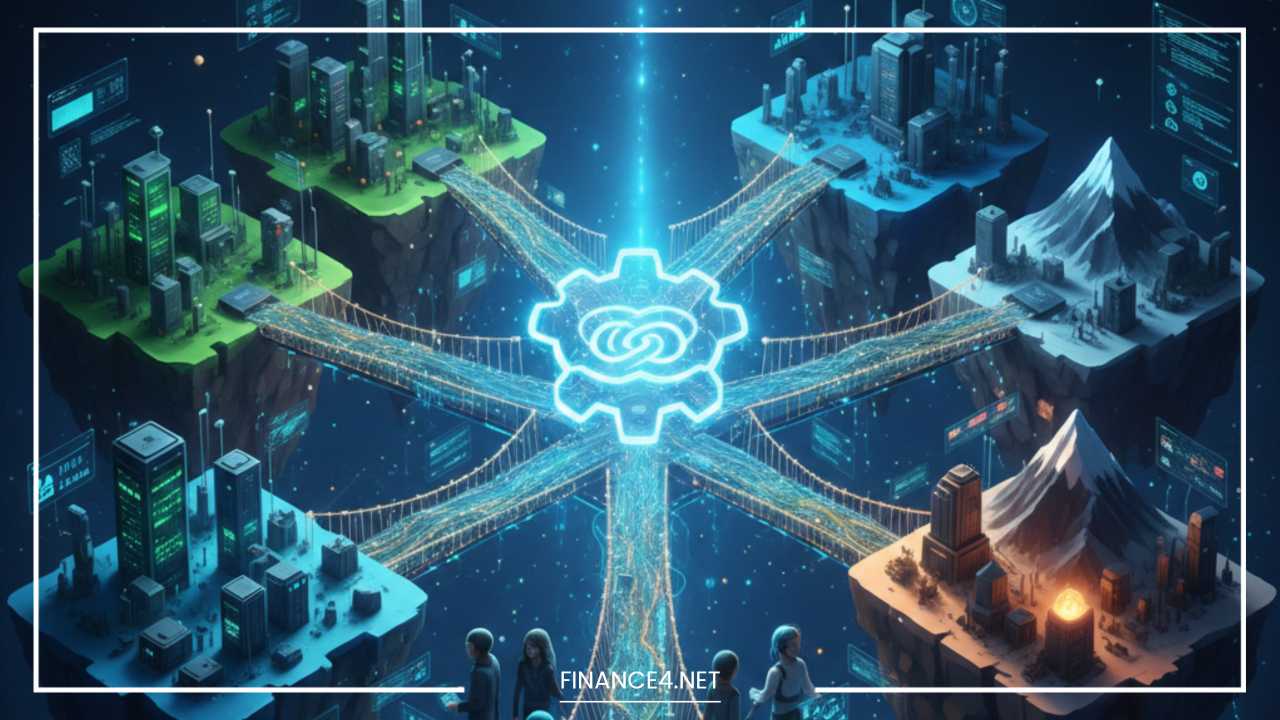
We will also see a deeper integration of cross-chain abstraction layers. The “fragmentation” we see today will be solved by protocols that allow assets and data to move seamlessly across different environments. This will make DeFi feel like a single, unified financial system rather than a collection of isolated islands.
The entrance of institutions will also change the nature of the “underrated” picks. We will see more “Permissioned DeFi” where institutional players can interact in a compliant way while still benefiting from the efficiency of the blockchain. This will likely lead to a bifurcation of the market: a highly regulated “Institutional DeFi” and a fully permissionless “Cycpherpunk DeFi,” both utilizing the same underlying infrastructure.
Final Thoughts
The most important takeaway for any participant in the decentralized economy is that attention is a lagging indicator of value. By the time a project is being discussed by everyone on social media, the most significant gains in terms of both understanding and capital have often already been made.
The projects highlighted in this guide—from the modular lending of Euler and Morpho to the yield stripping of Pendle and the RWA rails of Centrifuge—represent the “plumbing” of the future financial system. They are underappreciated because they are complex, infrastructure-heavy, and often lack the immediate gratification of speculative tokens.
To succeed in this space, one must think in narratives and infrastructure, not just in hype cycles. The future of finance is being built today, one smart contract at one time. While the market may be distracted by the noise, the quiet work of building a more efficient, transparent, and accessible financial system continues unabated. The most underrated projects are not just “investments”; they are the foundational blocks of a new global economy.
Frequently Asked Questions
To help you better understand the nuances of the decentralized landscape, here are answers to some of the most common questions regarding underrated DeFi protocols and emerging financial narratives.
What makes a DeFi project underrated instead of just unpopular
An underrated DeFi project is characterized by a significant gap between its intrinsic utility and its market recognition. While unpopular projects may lack users or a working product, underrated ones often serve as critical infrastructure—such as liquidity layers or risk engines—that other applications rely on. They typically show strong fundamentals, like consistent fee revenue and organic user growth, even if they aren’t trending on social media.
How can I find hidden gems in the DeFi ecosystem early
Finding “hidden gems” requires looking beyond price charts and focusing on on-chain metrics and developer activity. Key indicators include:
-
Total Value Locked (TVL): High TVL relative to market cap can signal that a protocol is deeply trusted by capital providers.
-
Protocol Revenue: Look for projects that generate “real yield” from actual platform usage rather than just token emissions.
-
Ecosystem Integrations: If other major protocols are building on top of a specific “primitive,” it suggests that project is becoming a foundational piece of infrastructure.
What are the safest ways to earn passive income with DeFi
Safety in DeFi is relative, but the most established methods for sustainable income include:
-
Liquid Staking: Using protocols like Lido or Rocket Pool allows you to earn rewards for securing a network while keeping your capital liquid via derivative tokens.
-
Lending and Borrowing: Depositing assets into overcollateralized markets like Aave or Compound allows you to earn interest with lower risk than high-leverage trading.
-
Stablecoin Yields: Providing liquidity for pegged assets (like USDC or DAI) typically reduces the risk of “impermanent loss” while providing steady fee income.
Why is liquid staking considered a major DeFi narrative
Liquid staking solves the “opportunity cost” problem of traditional staking. Previously, if you staked your assets to earn rewards, those funds were locked and couldn’t be used elsewhere. Liquid staking protocols issue a Liquid Staking Token (LST) in exchange for your deposit, which can then be used as collateral in lending markets or for trading, effectively allowing you to earn two layers of utility from the same asset.
What are the biggest risks when using decentralized exchanges
While DEXs offer autonomy, they come with unique risks:
-
Smart Contract Risk: Vulnerabilities in the code can lead to exploits or loss of funds.
-
Slippage and MEV: On less efficient exchanges, large trades can move the price against you, or bots can “front-run” your transaction to take a profit.
-
Impermanent Loss: When providing liquidity to a pair of assets, if one asset’s price changes significantly compared to the other, you might end up with less total value than if you had simply held the assets.
How do real-world assets (RWA) integrate with blockchain
RWAs bring off-chain value—like U.S. Treasuries, real estate, or private credit—onto the blockchain through tokenization. This allows these traditionally “slow” assets to be used in high-speed DeFi protocols. For example, a business can tokenize its invoices to get an immediate loan from a decentralized pool of global investors, bypassing the need for a traditional bank.
Has your experience with DeFi so far been more focused on simple swaps, or have you started exploring advanced strategies like liquid staking and yield tokenization?