Best Bridging Aggregator for BSC
 by
by 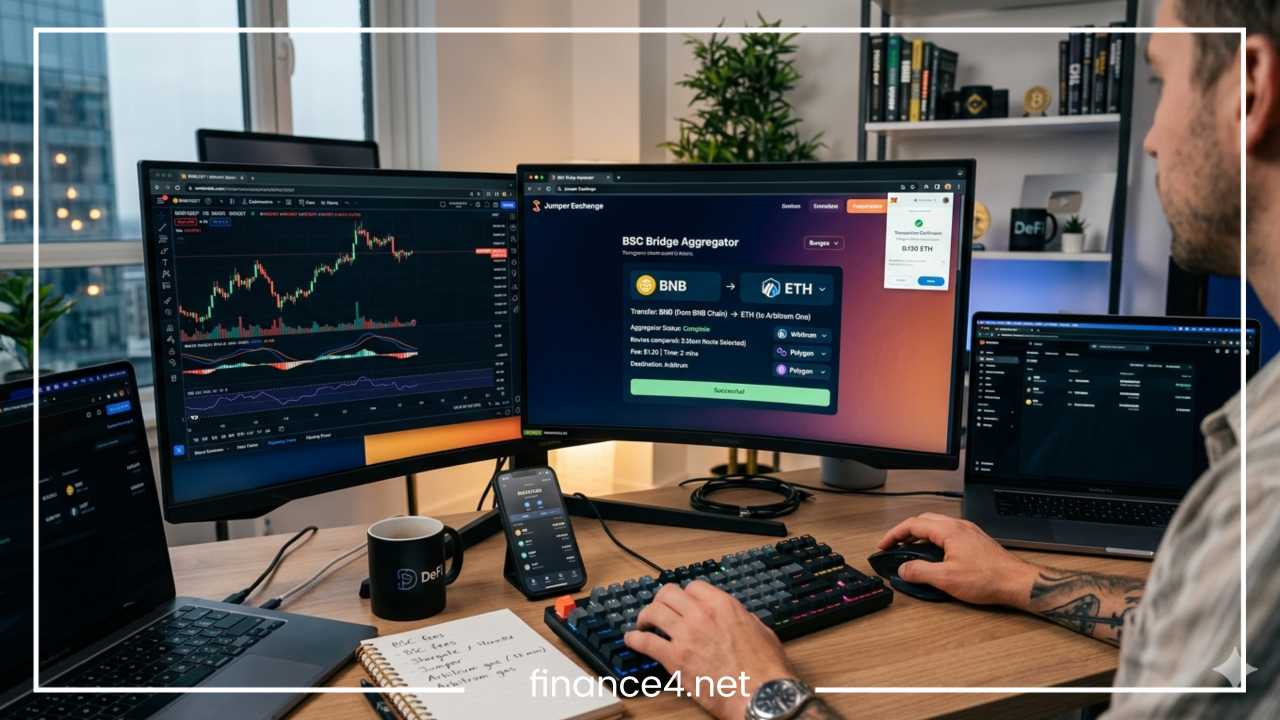
Top 5 BSC Bridge Aggregators: Find the Lowest Fees & Fast Swaps
The Binance Smart Chain (BSC), now widely referred to as the BNB Chain, has solidified its position as a cornerstone of the decentralized finance (DeFi) landscape. Its appeal is rooted in its high-speed performance, significantly lower transaction costs compared to the Ethereum mainnet, and a vibrant ecosystem of decentralized applications (dApps). However, as the blockchain industry evolves into a multi-chain reality, the ability to move assets seamlessly between networks has become a fundamental requirement for any active participant.
Cross-chain bridging is the mechanism that allows assets to move across these isolated digital islands. In the early days of DeFi, this process was fraught with friction. Users were forced to manually research individual bridges, navigate clunky interfaces, and take significant risks with “wrapped” assets that lacked deep liquidity. Furthermore, the volatility of gas prices and the variance in bridge fees meant that a user might spend more on the transfer than they would earn from the yield opportunity they were chasing.
The modern DeFi user on BSC faces a trifecta of challenges:
-
Cost Efficiency: With hundreds of bridges available, identifying the one with the lowest “toll” at any given second is nearly impossible for a human.
-
Time Sensitivity: Market opportunities in DeFi—such as arbitrage or high-yield farming—often vanish in minutes. Waiting an hour for a bridge to confirm is often unacceptable.
-
Security Paradox: While users want speed and low costs, the history of bridge exploits necessitates a cautious approach that prioritizes audited and battle-tested protocols.
This is why bridge aggregators have become the primary entry and exit points for the BSC ecosystem. By acting as a sophisticated “search engine” for liquidity, these platforms allow users to find the most efficient path for their capital without having to master the technical nuances of every individual bridge protocol.
What Are Bridge Aggregators?
To understand a bridge aggregator, one must first understand the limitations of a standard bridge. A standard bridge is a single protocol (like a tunnel) that connects Chain A to Chain B. If that tunnel is congested or charges a high toll, the user has no choice but to pay or look elsewhere manually.
A bridge aggregator is a meta-protocol—a layer that sits on top of all these individual “tunnels.” It integrates dozens of individual bridges and decentralized exchanges (DEXs) into a single, unified interface. It does not hold your funds; instead, it acts as a smart dispatcher, routing your transaction through the most optimal path available at that exact moment.
The value proposition of bridge aggregators rests on three pillars:
Liquidity Fragmentation Management
In a fragmented market, liquidity is spread thin across various chains and protocols. An aggregator “glues” this liquidity back together. If you want to move 100,000 USDT from BSC to Arbitrum, a single bridge might not have enough liquidity to handle the swap without causing high slippage. An aggregator can detect this and potentially split the trade across two different bridges or find a route through an intermediate asset that has deeper pools.
Route Optimization
Aggregators use complex algorithms to calculate the “Total Output” of a transaction. This isn’t just about finding the lowest fee; it’s about calculating the final amount you receive after accounting for:
-
Source chain gas fees.
-
Bridge provider percentage fees.
-
Price impact (slippage).
-
Destination chain gas fees.
Complexity Abstraction
For the average user, the technical differences between a “Burn-and-Mint” bridge, a “Lock-and-Unlock” bridge, and a “Liquidity Provider” bridge are secondary to the goal of moving money. Aggregators abstract these complexities away, presenting the user with simple choices: “Fastest,” “Cheapest,” or “Balanced.”
How BSC Bridge Aggregators Work
The internal mechanics of an aggregator are a marvel of software engineering. When a user interacts with a platform like Jumper or Rango, a high-speed sequence of events occurs in the background.
Step 1: Querying the Mesh
Once you input your desired swap (e.g., BNB on BSC to ETH on Arbitrum), the aggregator’s backend sends out queries to every integrated liquidity source. This includes native bridges (like the Binance Bridge), third-party bridges (like Stargate, Across, and Celer), and DEX aggregators (like 1inch and PancakeSwap).
Step 2: Pathfinding and Simulation
The aggregator doesn’t just look for a direct bridge. It looks for a “path.” Sometimes, the cheapest way to get from BSC to Arbitrum isn’t a direct bridge. It might be:
-
Swap BNB for USDC on PancakeSwap (BSC).
-
Bridge USDC via Across to Arbitrum.
-
Swap USDC for ETH on Uniswap (Arbitrum).
The aggregator runs simulations for hundreds of these combinations in milliseconds to find the one that yields the most tokens for the user.
Step 3: Smart Contract Interaction
Once the user selects a route and signs the transaction, the aggregator’s smart contract takes over. It manages the sequence of swaps and bridging actions. In advanced “atomic” aggregators, if one part of the chain fails, the whole transaction is reverted (where possible) to prevent funds from being stuck in a half-way state.
Step 4: Monitoring and Finality
The aggregator provides a unified tracking dashboard. Bridging involves multiple blockchains, which means multiple “confirmation” times. The aggregator monitors the “source chain” transaction, the “bridge relay” status, and finally the “destination chain” minting or unlocking. This provides a level of psychological security that is often missing when using individual bridges.
Key Factors to Compare
When evaluating the best bridge aggregator for your BSC activities, you should look beyond just the surface-level UI. Here are the core metrics that define a high-quality aggregator.
Fee Transparency
The biggest frustration in bridging is the “hidden fee.” Some platforms show a low fee but hide a massive spread in the exchange rate. A top-tier aggregator will provide an itemized list showing exactly where every cent is going. You should be able to see the gas cost in BNB, the bridge provider’s cut, and any service fee taken by the aggregator itself.
Speed and Latency
In cross-chain operations, speed is tied to security. “Optimistic” bridges are often cheaper but can have longer withdrawal windows. Aggregators that offer “Fast” routes usually leverage liquidity providers (LPs) who “front” the money on the destination chain for a small fee, effectively giving you instant access to your funds while the bridge works in the background.
Security Audits and Reputation
The bridge sector has historically been a target for exploits. When choosing an aggregator, research:
-
Audit History: Has the aggregator’s smart contract code been audited by reputable firms like Trail of Bits or OpenZeppelin?
-
Bridge Filtering: Does the aggregator allow you to filter out bridges that you don’t trust? High-quality aggregators allow users to toggle off specific bridges they deem too risky.
“Gas Refuel” Capabilities
One of the most common “fail states” for a user is bridging a large amount of a stablecoin (like USDT) to a new chain, only to realize they have no native tokens (like ETH or MATIC) on that new chain to pay for the gas to move their USDT. The best BSC aggregators include a “Refuel” feature that allows you to swap a small portion of your BSC funds for native gas on the destination chain during the bridging process.
Chain and Asset Depth
A good aggregator for BSC must support not only the “big” chains (Ethereum, Polygon, Arbitrum) but also the burgeoning ecosystems like Base, Avalanche, and even non-EVM chains like Solana or the Cosmos Hub.
Top 5 BSC Bridge Aggregators
Based on performance, security, and the depth of their integration with the BNB Chain, the following five platforms represent the “gold standard” for cross-chain activity.
1. LI.FI (Jumper Exchange)
LI.FI is widely considered the most advanced liquidity aggregator in the space. Its consumer-facing interface, Jumper Exchange, is designed to be the “Expedia of DeFi.”
-
Why it’s a leader for BSC: LI.FI doesn’t just connect bridges; it connects DEX aggregators. This means if you have a niche token on BSC that isn’t supported by standard bridges, Jumper can swap it into a bridgeable asset (like USDT) on the fly and then swap it back into your desired token on the destination chain.
-
Core Strength: Its “Multi-Bridge” routing. It can simultaneously check Stargate, Across, Celer, and others to find the absolute best price.
-
Pros: Deeply integrated with BSC-native pools, highly transparent, and robust API for developers.
-
Cons: The sheer number of options can be overwhelming for a total beginner.
-
Best For: Professional traders and users moving large sums who need to minimize slippage at all costs.
2. Bungee (Socket)
Bungee is built on the Socket protocol and has earned a reputation for having the most intuitive user interface in the industry.
-
Why it’s a leader for BSC: Bungee is exceptionally fast at indexing new BSC routes. Its “Refuel” feature is arguably the best in the market, allowing users to move from BSC to a dozen other chains without ever worrying about being “gas stranded.”
-
Core Strength: Simplicity and the “Refuel” bridge. It focuses on a clean, “no-nonsense” experience that just works.
-
Pros: Very low failure rate, excellent “Refuel” tool, and fast load times.
-
Cons: Sometimes has fewer “long-tail” token options compared to Rango or LI.FI.
-
Best For: Everyday DeFi users who want a quick, reliable transfer with a built-in gas solution.
3. Rango Exchange
Rango Exchange is the powerhouse of “cross-ecosystem” bridging. While most aggregators are limited to EVM-compatible chains, Rango goes much further.
-
Why it’s a leader for BSC: If you are a BSC user looking to move funds into the Cosmos ecosystem (like Osmosis or Celestia) or into the Solana ecosystem, Rango is often the only aggregator that can handle the entire journey in one transaction.
-
Core Strength: Massive chain compatibility. It bridges the gap between EVM, Cosmos, Bitcoin, and Solana.
-
Pros: Supports over 50+ blockchains and hundreds of tokens; very powerful pathfinding.
-
Cons: The interface is slightly more technical and can be slower to calculate routes due to the complexity of the non-EVM chains.
-
Best For: Users who operate outside the “Ethereum-style” bubble and need to move assets to non-EVM networks.
4. Squid Router
Squid is built on the Axelar Network, which is a specialized blockchain designed specifically for cross-chain communication.
-
Why it’s a leader for BSC: Squid offers “one-click” experiences. Because it uses Axelar’s “General Message Passing,” it can do more than just send a token. It can send a token and then immediately stake it or deposit it into a lending protocol on the destination chain.
-
Core Strength: Speed and “One-Click” functionality. It aims to make bridging feel like a local swap.
-
Pros: Backed by the institutional-grade security of Axelar; very fast “intent-based” feel.
-
Cons: Because it relies heavily on Axelar’s liquidity, it may not always have the absolute cheapest price for every single token pair compared to a general aggregator.
-
Best For: Users who value speed and want to interact with destination-chain dApps immediately upon arrival.
5. 1inch Fusion+
1inch was the original pioneer of DEX aggregation on BSC, and its move into cross-chain swaps via “Fusion+” has changed the game for security-minded users.
-
Why it’s a leader for BSC: 1inch uses a “Dutch Auction” model. When you want to bridge, you submit an order, and professional “resolvers” (market makers) compete to fill it. This often results in prices that are better than what you can find on a standard bridge.
-
Core Strength: MEV (Maximal Extractable Value) protection. Because your swap is handled by a resolver, you are protected from the bots that often “front-run” large trades on BSC.
-
Pros: Extremely secure, no “bridge risk” in the traditional sense, and often the best rates for massive “whale” trades.
-
Cons: Can be slower than other bridges because you have to wait for a resolver to pick up your order.
-
Best For: High-net-worth individuals and security-conscious traders moving large volumes.
Comparison Table: Finding Your Perfect Match
| Feature | Jumper (LI.FI) | Bungee | Rango Exchange | Squid Router | 1inch Fusion+ |
| Primary Focus | Deep Liquidity | User Experience | Chain Variety | Speed/Utility | Security/Whales |
| BSC Integration | Excellent | Great | Good | Great | Excellent |
| Non-EVM Support | Limited | Minimal | Best in Class | Axelar Chains | Minimal |
| Gas Refuel | Yes | Best in Class | Yes | No | No |
| Fee Level | Very Low | Low | Medium | Low | Competitive |
| Typical Speed | 2-10 mins | 2-5 mins | 5-15 mins | < 2 mins | 5-20 mins |
Which BSC Bridge Aggregator is Best?
Choosing the “best” aggregator is a subjective decision based on your specific transaction.
-
For the Absolute Lowest Fees: Start with Jumper (LI.FI). Their algorithm is notoriously aggressive at finding the cheapest path, often involving multiple hops that save you a significant percentage on larger swaps.
-
For Moving to a New Chain for the First Time: Use Bungee. Their “Refuel” feature is a safety net that ensures you’ll actually be able to use your funds once they arrive on the other side.
-
For Navigating the “Interchain”: If you are moving from BSC to Solana or Juno, Rango Exchange is the undisputed champion. It saves you the headache of using three different websites to move one asset.
-
For Speed and Convenience: Squid Router is the choice. If you just want your funds on the destination chain as quickly as possible and don’t mind a slightly smaller selection of tokens, Squid is incredibly efficient.
-
For Maximum Security on Large Trades: 1inch Fusion+ is the safest bet. Their auction model eliminates many of the risks associated with bridge smart contracts and predatory trading bots.
Risks and Safety Considerations
Despite the convenience of aggregators, the underlying infrastructure of cross-chain movement still carries risks.
Smart Contract Vulnerability
Every bridge you use via an aggregator has its own smart contract. While aggregators generally only list audited bridges, an audit is not a guarantee of future safety. If a bridge like Stargate or Multichain (historically) were to be compromised, the aggregator cannot “claw back” your funds once they have been sent into that bridge’s contract.
Wrapped Asset Risk
Some bridges don’t send “native” assets; they send “wrapped” versions (e.g., binance-peg ETH). If the bridge that issued those wrapped tokens is hacked, the tokens in your wallet could lose their peg and become worthless. Always prioritize bridges that support “Native-to-Native” transfers, such as those using the LayerZero or IBC protocols.
Liquidity Imbalance
In times of extreme market stress, everyone might be trying to move funds in one direction (e.g., everyone fleeing a chain to get back to BSC). This can drain the liquidity on the destination side of a bridge. An aggregator might show you a route, but the transaction could fail or be delayed significantly if the bridge “runs out” of the destination asset.
How to Stay Safe:
-
Check the Route: Before clicking “Swap,” look at which bridge the aggregator has selected. If it’s a name you’ve never heard of, consider choosing the second-cheapest option from a more reputable provider.
-
Revoke Permissions: Once your bridge transaction is complete, use a tool like “Revoke.cash” to remove the aggregator’s permission to spend your tokens. This is a best practice in DeFi security.
Future of Bridge Aggregators on BSC
We are currently moving toward a future defined by Intent-Based Infrastructure. In this model, the user doesn’t even see the word “bridge.” You will simply go to a dApp and say, “I want to buy this NFT on Polygon using my BNB on BSC.” The dApp will use an aggregator API to fulfill that intent instantly.
Furthermore, the rise of Zero-Knowledge (ZK) Proofs will likely make bridging much safer. Future aggregators will leverage ZK-bridges that allow for the mathematical verification of a transaction on another chain without needing to trust a middleman or a multisig.
The BNB Chain is also evolving. As it introduces more Layer 2 scaling solutions (like opBNB), the role of the aggregator will shift toward moving liquidity between the BSC Mainnet and its various sub-networks, creating a seamless “BNB Ecosystem” that feels like a single, unified chain.
Final Thoughts
The ability to move capital freely is the lifeblood of decentralized finance. For users of the Binance Smart Chain, bridge aggregators are no longer just a convenience—they are an essential tool for survival and profitability. By using platforms like Jumper, Bungee, and Rango, you are essentially hiring a sophisticated digital assistant to navigate the complex, expensive, and often dangerous waters of cross-chain transfers.
Whether you are looking for the absolute lowest fees, the fastest confirmation times, or the ability to reach the furthest corners of the crypto world, there is an aggregator designed for your needs. Always remember to prioritize security, double-check your routes, and keep an eye on the ever-evolving landscape of cross-chain technology. The bridges of today are the highways of tomorrow’s global financial system.
Frequently Asked Questions
What is the cheapest way to bridge from BSC to Ethereum?
The cheapest way is typically to use a bridge aggregator like Jumper or Bungee. Because gas fees on Ethereum are significantly higher than on BSC, aggregators help by finding routes that use liquidity providers (LPs) or “intent-based” models. These methods often bypass the traditional, expensive “lock-and-mint” smart contract interactions on the Ethereum side, saving you a substantial amount in network fees.
How do I fix a stuck bridge transaction from BNB Chain?
If your transaction is stuck, first check the transaction hash on BscScan. Most bridge aggregators provide a “claims” page or a “history” tab. Usually, a transaction sticks because of low gas or a temporary lack of liquidity on the destination chain. You can often manually trigger the “claim” function on the destination chain’s block explorer or wait for the aggregator’s relayers to automatically retry the process.
Can I bridge from BSC to Solana without a centralized exchange?
Yes, you can use Rango Exchange or the Portal Bridge (Wormhole). These aggregators allow you to connect both your BSC-compatible wallet (like MetaMask) and your Solana wallet (like Phantom) simultaneously. They facilitate the swap on BSC, bridge the assets through a cross-chain protocol, and deposit the native Solana assets directly into your SPL wallet, completely bypassing the need for a centralized exchange.
Are BSC bridge aggregators safe from hacks?
While no protocol is 100% immune, bridge aggregators are generally considered safer than using a single, obscure bridge. This is because aggregators usually only integrate high-volume, well-audited protocols like Stargate or Across. Furthermore, because aggregators do not hold your funds in a central vault (they only route them), the “honeypot” risk is lower than that of the underlying bridge contracts themselves.
How long does it take to bridge USDT from BSC to Arbitrum?
Typically, bridging USDT from BSC to Arbitrum takes between 2 and 10 minutes. Aggregators that utilize “liquidity-based” bridges (like Squid or Hop) can often complete the transfer in under 2 minutes. If you use a native bridge or a chain with slower finality, it may take longer. Aggregators will always give you an “Estimated Time of Arrival” before you confirm the swap.
Do I need ETH for gas when bridging from BSC to a Layer 2?
Normally, yes, you need the destination chain’s native token (like ETH for Arbitrum or Base) to perform any action once your funds arrive. However, if you use the “Refuel” feature on Bungee or Jumper, the aggregator will swap a small portion of your BSC-based tokens for native gas on the destination chain. This ensures you have enough gas to make your first trade without needing to buy ETH elsewhere.
What is the best BSC bridge for small amounts of crypto?
For small amounts (under $100), the gas fees are your biggest enemy. Using an aggregator is essential here because it will highlight the “Cheapest” route. Look for bridges that use “Liquidity Pools” rather than “Minting” protocols, as the transaction complexity is lower, resulting in lower gas costs. Bungee is often preferred for small amounts due to its low-overhead routing.
Can I bridge NFT assets from BSC to other chains using aggregators?
Most standard bridge aggregators currently focus on fungible tokens (ERC-20). To bridge NFTs, you would typically need a specialized NFT bridge like XP.NETWORK or a specific marketplace bridge. However, many aggregators are beginning to integrate NFT-checkout features, allowing you to use your BSC tokens to buy an NFT on another chain in a single transaction.