Top NFT Aggregator Platforms
 by
by 
Top NFT Aggregator Platforms | Best NFT Marketplaces & Tools for Collectors and Traders
The landscape of non-fungible tokens has undergone a massive structural shift since its early days. What began as a nascent ecosystem dominated by one or two centralized storefronts has evolved into a highly decentralized, multi-chain network of dozens of independent marketplaces. For collectors, investors, and high-frequency day traders, this fragmentation has introduced significant operational friction. Attempting to track down the absolute lowest floor price or efficiently execute a bulk purchase across multiple disparate platforms can be incredibly time-consuming and costly.
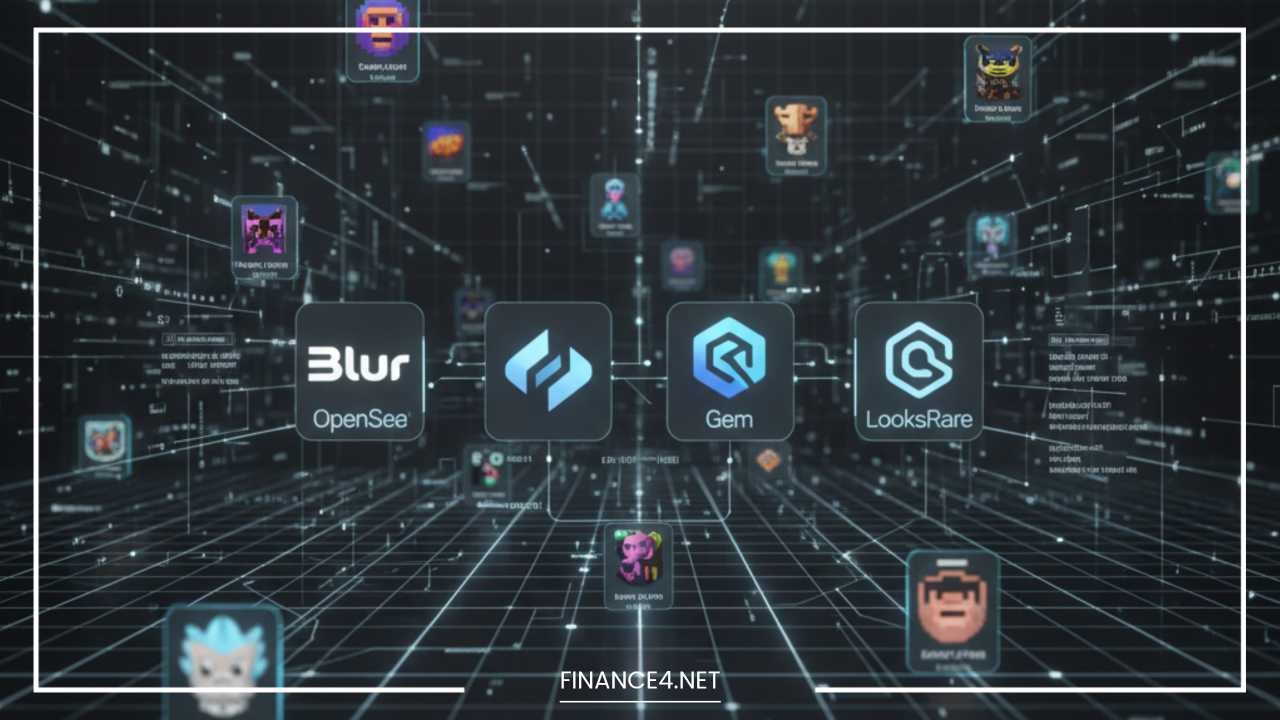
This deep fragmentation of liquidity is precisely why NFT aggregator platforms have grown into an essential layer of the Web3 infrastructure. Liquidity across decentralized environments naturally becomes siloed; a seller might list a high-value digital collectible on OpenSea, while another lists a matching piece from the same collection on Blur or LooksRare to take advantage of varying fee structures. For an end-user, checking every single portal manually is highly inefficient.
NFT aggregator platforms solve this structural issue by serving as a unified interface that scans, compiles, and routes orders across all major liquidity venues simultaneously. In this comprehensive guide, we will break down exactly how these platforms work, explore why they have become vital tools in both bull and bear market cycles, analyze the core features that separate elite tools from basic ones, and review the top aggregator platforms available to market participants today.
What Is an NFT Aggregator Platform?
An NFT aggregator is a specialized Web3 interface and smart contract protocol that pulls real-time listing data, order books, and transaction history from multiple independent NFT marketplaces into a single, cohesive dashboard. Instead of forcing a user to open separate browser tabs for every platform, an aggregator serves as a master control panel, allowing market participants to view, analyze, buy, and sell digital assets across the entire ecosystem simultaneously.
To understand the core distinction, it helps to look at how traditional digital commerce operates. Standard NFT marketplaces function as standalone storefronts or destination venues. They maintain their own proprietary databases of listings, execute transactions via their own specialized smart contracts, and establish independent fee protocols. If you list an asset exclusively on a standard marketplace, it is typically visible and purchasable only by users interacting directly with that specific platform.
Aggregators, by contrast, operate on a layer above individual marketplaces. They do not necessarily rely on their own native listings; instead, they continuously scan external marketplace APIs and smart contracts to build a macro view of global market supply. When a user executes a trade through an aggregator, the underlying smart contract routes the transaction to whichever external marketplace holds the target listing, handling all the complex cross-protocol execution behind the scenes.
A simple yet highly accurate real-world analogy is to think of NFT aggregators as the Google Flights or Skyscanner of the Web3 world. When searching for a flight, you rarely visit every individual airline website one by one to compare ticket prices. Instead, you use a travel aggregator that pulls flight times, seat availability, and pricing tiers from hundreds of airlines into a single window, enabling you to purchase the absolute cheapest or most convenient ticket instantly. NFT aggregators act exactly like this comparison engine, but for digital collectibles and tokenized on-chain assets.
Why NFT Aggregators Matter
The primary driver behind the adoption of NFT aggregators is the pursuit of maximum capital efficiency and superior data visibility. In a fast-moving, highly volatile market, the speed at which a trader can access information and execute orders directly determines their overall profitability. Aggregators provide a series of structural advantages that standard marketplaces simply cannot replicate.
First and foremost is the concept of optimized price discovery. Because individual marketplaces feature localized listings, price disparities frequently occur. A collector looking to acquire a specific digital asset might find it listed for a lower price on a secondary platform simply because the seller wanted to avoid high platform fees. An aggregator highlights this price discrepancy immediately, ensuring that buyers always pay the true, global market floor price rather than an inflated local rate.
Time efficiency is another critical factor. For professional traders executing hundreds of transactions per week, the seconds saved by using a consolidated terminal can mean the difference between sniping a mispriced asset or missing out entirely. Aggregators streamline portfolio management by allowing users to manage, list, and delist assets across multiple marketplaces through a single Web3 wallet signature.
Furthermore, aggregators unlock significantly higher liquidity access. Liquidity is the lifeblood of any financial market, representing how easily an asset can be bought or sold without causing a drastic shift in its price. By blending the order books of all connected platforms, aggregators create a deep pool of consolidated liquidity. This deep liquidity prevents arbitrage inefficiencies, where sharp price differences exist for the exact same asset across different locations, helping to stabilize and mature the broader digital asset landscape.
The utility of these tools shifts distinctively depending on the overarching market cycle:
During explosive bull markets, asset velocity increases dramatically. In these environments, aggregators are primarily used for rapid collection sweeping and instant trait sniping. When a collection experiences a massive wave of momentum, floors move within seconds. Aggregators allow whales and momentum traders to buy dozens of assets simultaneously across different venues before individual marketplace front-ends can even update their visual interfaces.
During prolonged bear markets, trading volumes dry up, and every fraction of a crypto token matters. In these quiet, illiquid environments, aggregators become vital tools for strict cost conservation. Traders utilize them to map out the deepest gas fee optimizations, identify marketplaces that have waived platform fees, and precisely track historical volume trends to avoid buying into completely dead collections.
Key Features to Look for in NFT Aggregator Platforms
Not all aggregation protocols are engineered equally. Some are tailored explicitly for the retail collector who values clean visuals, while others are built as high-performance trading terminals designed for algorithmic executions. When evaluating which platform to integrate into your daily trading workflow, several non-negotiable features must be analyzed.
Multi-Marketplace Integration
The ultimate strength of an aggregator rests entirely on its connectivity. A platform that only aggregates two or three minor marketplaces offers very little value. The best tools maintain stable, ultra-low-latency integrations with every major marketplace across the ecosystem, including open-ended platforms, niche curated networks, and decentralized automated market makers.
Real-Time Price Tracking
Delayed data is worse than no data in Web3 trading. Elite platforms utilize advanced indexing engines that monitor the blockchain on a block-by-block basis. This ensures that when an asset is bought, cancelled, or relisted anywhere on the network, the aggregator updates its main terminal dashboard within milliseconds, eliminating the frustration of attempting to purchase stale or already-filled listings.
Advanced Filtering and Rarity Scoring
Serious collectors rarely buy the generic floor asset blindly; they look for highly specific individual traits, historical provenance, or mispriced rarity tiers. Top-tier aggregators integrate mathematical rarity distribution protocols directly into their filtering systems. This allows users to sort an entire collection by rare attributes, metadata combinations, or specific visual components instantly.
Wallet Integration and Security
Because aggregators require permissions to interact with your digital assets, smart contract security is paramount. The platform must support multiple secure wallet ecosystems, maintain fully audited smart contracts, and offer granular approval parameters so users can revoke marketplace access whenever necessary without incurring excessive gas costs.
Cross-Chain Support
The modern Web3 ecosystem is definitively multi-chain. A trader may hold capital on Ethereum but want to chase gaming assets on Solana or low-cost collectibles on various Layer-2 scaling solutions like Polygon, Base, or Arbitrum. Leading aggregators provide native cross-chain functionality, enabling collectors to view portfolios across multiple chains and, in some cases, swap assets across networks seamlessly in a single step.
Analytics Dashboards
Data-driven decision-making requires robust historical context. High-performing platforms offer deeply integrated charting tools that display rolling volume metrics, historical floor walls, listing-to-sales ratios, and wallet distribution data. Understanding how many unique wallets hold an asset helps traders gauge whether a collection is genuinely decentralized or heavily manipulated by a few large entities.
Top NFT Aggregator Platforms
The competitive landscape for NFT aggregation features a mix of dedicated professional terminals, hybrid marketplace protocols, and developer-facing infrastructure layers. Below is an in-depth breakdown of the dominant platforms shaping the sector.
Blur
Blur launched with a clear, singular mandate: to serve professional high-frequency traders who treat digital assets exactly like traditional equities or derivatives. Rather than presenting a clean, art-focused shopping mall aesthetic, Blur looks and operates like a Bloomberg Terminal for Web3 assets, prioritizing pure data density and lightning-fast execution speeds over everything else.
The core infrastructure of Blur is built entirely around velocity. It boasts a custom-built indexing architecture that updates floor prices and listing states up to ten times faster than previous-generation aggregators. A cornerstone of its massive adoption is its zero platform fee model, combined with an innovative incentive structure driven by its native governance token.
Key Features:
-
Real-time portfolio analytics detailing unrealized gains, historical cost-basis, and collection depth.
-
Advanced floor-sweeping mechanics allowing users to purchase up to dozens of assets simultaneously with highly optimized gas configurations.
-
A native peer-to-peer lending protocol that enables traders to collateralize their digital assets to access instant liquidity or purchase high-value collectibles on margin.
Pros:
-
Unmatched execution speeds and data refresh rates.
-
Deeply optimized smart contracts that dramatically reduce gas costs during high-congestion periods.
-
The collection-wide bidding framework allows traders to place standing bids across entire asset tiers simultaneously, acting as a functioning order book.
Cons:
-
The user interface can be incredibly overwhelming for casual collectors or beginners.
-
Highly focused on the Ethereum mainnet and select scaling networks, making it less ideal for multi-chain generalists.
-
The aggressive trading environment frequently leads to intense bidding wars and automated bot manipulation.
Best Use Case: Highly active, capital-intensive day traders and portfolio managers who require real-time market depth charts, immediate liquidity solutions, and rapid execution of high-volume bulk orders on Ethereum.
OpenSea Pro
Originally entering the market as an independent aggregator known as Gem, this platform was acquired by OpenSea and subsequently underwent a comprehensive architectural overhaul to become OpenSea Pro. It represents a strategic bridge between casual retail collecting and ultra-fast institutional trading, combining a visually elegant interface with heavy-duty aggregation capabilities.
OpenSea Pro pulls deep liquidity from vast numbers of independent marketplaces across multiple distinct blockchain networks. It is carefully engineered to provide optimized gas routing, mapping out the most cost-effective path through the blockchain to ensure that bulk transactions do not suffer from unnecessary financial leakage due to redundant network fees.
Key Features:
-
Advanced inventory management that allows users to batch-list, edit, and delist items across multiple platforms in a single transaction.
-
Highly sophisticated trait-based filtering and instant rarity tiering overlays.
-
Live, interactive sales maps and volume trend monitors that track market momentum visually.
Pros:
-
Offers an exceptionally smooth, intuitive user experience that balances advanced technical data with visual clarity.
-
Excellent cross-chain and Layer-2 visibility, aggregating listings seamlessly across diverse networks.
-
Deep institutional backing ensures world-class security audits and continuous platform updates.
Cons:
-
While vastly improved, it can occasionally experience slight indexing delays compared to completely raw, terminal-style competitors during extreme network surges.
-
Fee models can pivot based on parent-company marketplace strategies.
Best Use Case: Intermediate to advanced collectors who want deep data analysis and multi-marketplace sweeping capabilities without sacrificing clean design and robust portfolio tracking visuals.
Uniswap NFT Aggregation
As a titan in the decentralized finance space, Uniswap expanded its footprint into the cultural asset ecosystem by acquiring Genie, the world’s very first functional NFT aggregator. Following this strategic acquisition, Uniswap fully integrated Genie’s core infrastructure directly into its primary Web3 web interface, establishing a unified destination where users can swap tokens and trade digital collectibles simultaneously.
The defining philosophy behind Uniswap’s model is universal asset interoperability. By positioning digital collectibles directly alongside traditional ERC-20 tokens, Uniswap treats all digital assets as vital components of the broader financial ecosystem, appealing heavily to native crypto-financial enthusiasts who prefer a single, decentralized access point.
Key Features:
-
Unified multi-routing smart contracts that execute token swaps and NFT purchases in one smooth transaction.
-
Direct integration into the standard Uniswap liquidity router, allowing users to buy digital collectibles using any arbitrary crypto token they hold.
-
Deep integration with open-source liquidity protocols to maximize decentralization.
Pros:
-
Eliminates the multi-step friction of converting alternative tokens into base assets before buying an item.
-
Exceptionally high smart contract security standards backed by extensive public bug bounties.
-
Provides a highly familiar, trustworthy environment for existing decentralized finance users.
Cons:
-
Lacks the hyper-granular analytics charts, historical floor depth maps, and bidding terminals found on pro-only platforms.
-
Features fewer specialized tools for advanced trait-based rarity hunting.
Best Use Case: Decentralized finance participants and casual Web3 users who value supreme security, simplicity, and the unique ability to purchase digital art using diverse alternative tokens in a single click.
Rarible Aggregation Features
Rarible has built a highly respected reputation as an intensely creator-focused ecosystem that champions decentralization and absolute transparency. Rather than operating purely as a standalone silo, Rarible successfully evolved into a powerful marketplace and aggregator hybrid, blending its decentralized order books with listings gathered from its primary competitors.
The core differentiator for Rarible is its unyielding commitment to honoring creator earnings and royalties. While many trading terminals aggressively stripped away creator royalties to cater exclusively to short-term day traders, Rarible structured its aggregation logic to explicitly prioritize and highlight listing sources that fairly compensate the artists and teams behind the projects.
Key Features:
-
Multi-chain architecture that spans across major Layer-1 and Layer-2 networks.
-
A robust, community-governed ecosystem driven by a decentralized autonomous organization framework.
-
Custom marketplace deployment tools that feed directly back into the primary aggregation engine.
Pros:
-
Excellent reputation for protecting creator rights, making it the preferred platform for fine art collectors.
-
Decentralized governance model ensures that user feedback directly impacts platform development.
-
Broad multi-chain visibility with highly accessible minting interfaces.
Cons:
-
Lower baseline trading volume for professional day-trading loops compared to pure terminal systems.
-
The interface is heavily optimized for artistic exploration rather than high-density financial data feeds.
Best Use Case: Values-driven collectors, digital artists, and long-term community members who want to browse multiple chains while actively supporting creator compensation models.
Reservoir
Reservoir operates on a completely different philosophy than the other platforms listed above. It does not focus on providing a retail-facing consumer website. Instead, Reservoir is a developer-focused infrastructure layer and open-source API protocol that powers the aggregation features inside countless other Web3 applications.
Reservoir acts as the underlying plumbing for digital asset liquidity. It provides completely open, forks-ready database endpoints, smart contracts, and liquidity routers. When an app developer wants to build a custom wallet with a built-in shopping experience, a specialized community hub, or their own niche trading platform, they integrate Reservoir to gain instant access to aggregated market order books without building indexing engines from scratch.
Key Features:
-
Comprehensive, granular API endpoints covering historical pricing, item metadata, and live order books.
-
Turnkey web development kits and customizable user interface components.
-
Completely decentralized liquidity caching that prevents reliance on a single centralized database provider.
Pros:
-
Absolute creative and structural freedom for Web3 engineers and platform designers.
-
Aggregates both native on-chain orders and off-chain listings from major marketplaces seamlessly.
-
Highly scalable architecture built explicitly for enterprise-grade applications.
Cons:
-
Completely unsuited for casual retail users; requires competent software engineering knowledge to utilize.
-
No standalone consumer-facing trading dashboard.
Best Use Case: Web3 developers, gaming studios, decentralized autonomous organizations, and technology companies building specialized consumer products that require back-end marketplace connectivity.
Specialized Multi-Chain Tools
Beyond the historically dominant platforms, two specialized platforms have captured substantial market share by dominating specific blockchain networks and high-growth niches.
Tensor has established itself as the absolute gold standard for trading within the Solana ecosystem. Mirroring the rapid execution style of professional trading terminals, Tensor provides Solana-native collectors with incredibly dense charts, real-time automated market-making pools, and deep collection sweeping functionality. By leveraging Solana’s ultra-low transaction costs and extreme speed, Tensor allows traders to snipe rare traits and manage vast portfolios with virtually zero gas friction.
Element serves as a massive multi-chain superpower, aggregating listings across an extensive selection of networks including BNB Chain, Avalanche, Ethereum, Polygon, and various emerging Layer-2 scaling solutions. Element focuses heavily on lowering the barrier to entry for global markets, offering unique features like cross-chain bulk purchasing, multi-token payment processing, and localized community reward structures.
Comparison Table
| Platform | Main Blockchains Supported | Primary Target Audience | Primary Advantage | Platform Fee |
| Blur | Ethereum, Layer-2 Networks | Professional Day Traders | Fastest execution speed and built-in lending markets | 0% |
| OpenSea Pro | Ethereum, Polygon, Base, Solana | Intermediate Collectors | Perfect balance of deep analytics and clean interface | Dynamic / Low |
| Uniswap NFT | Ethereum, Main Layer-2s | DeFi Users | Direct purchases using any alternative crypto token | 0% on routing |
| Rarible | Ethereum, Immutable, Polygon | Creator-Focused Buyers | Absolute dedication to honoring creator royalties | Varies by source |
| Tensor | Solana Ecosystem | Solana Pro Traders | Deep Solana liquidity with ultra-fast order tracking | 0% on basic tiers |
| Element | BNB Chain, Avalanche, Ethereum | Multi-Chain Generalists | Massive chain coverage and cross-chain bulk options | Extremely Low |
Use Cases: Who Should Use NFT Aggregators?
The beauty of aggregation infrastructure is that its utility shifts dynamically based on the specific goals, capital scales, and operational needs of the individual user.
Short-Term Traders and Flippers
For market participants focused entirely on capturing short-term price momentum, aggregators are mandatory tools. A short-term flipper relies on buying an underpriced asset and reselling it the moment the floor ticks upward. By using real-time terminal views, flippers can see instant listing alerts, identify underpriced items across obscure marketplaces, and execute sales before the broader retail market notices the trend.
Long-Term Collectors
While long-term collectors care less about microsecond execution speeds, they care deeply about historical provenance and finding unique visual assets. Aggregators aid long-term collectors by providing comprehensive structural data over long periods, allowing them to verify wallet concentration, study past price bottoms, and seamlessly browse every available piece globally to find the exact metadata combination they desire.
Rarity Hunters
Rarity hunters specialize in exploiting pricing inefficiencies where sellers list highly rare items at or near the generic floor price because they fail to check metadata metrics. By deploying the advanced trait sorting and mathematical rarity engines built into modern aggregators, these specialists can scan thousands of listings instantly, pinpointing mispriced high-tier items across secondary platforms within seconds.
Institutional Investors and Whales
When an institutional entity or high-net-worth individual decides to deploy massive capital into a specific collection, doing so through a single marketplace can cause immense price slippage. If a whale buys twenty floor items on one platform, the local price spikes violently. Aggregators allow whales to execute massive buy orders by intelligently splitting the purchases across five or six separate marketplaces simultaneously, minimizing market distortion and preserving capital.
Risks and Limitations
While NFT aggregators are incredibly powerful tools, navigating the Web3 landscape requires a sober understanding of the underlying risks, structural vulnerabilities, and functional limitations inherent to these complex protocols.
-
Smart Contract Vulnerability: Aggregators rely on their own specialized multi-routing smart contracts to interact with external marketplaces. Every additional line of code introduces a potential attack surface. If an aggregator’s custom purchasing contract contains a hidden bug or zero-day exploit, users interacting with the platform could risk lost funds or compromised asset approvals.
-
Data Sync and API Lag: Aggregators are fundamentally dependent on the external data streams provided by individual marketplaces. If a major platform experiences a severe API outage, or if network congestion causes a delay in data transmission, the aggregator may display a false floor price or show an asset as available when it has actually already been purchased.
-
The Risk of Slippage: During periods of extreme market panic or explosive hype, hundreds of users may attempt to sweep the exact same floor items simultaneously. If the specific items you targeted are purchased by a rival wallet a millisecond before your transaction processes, your aggregator contract may automatically route to the next cheapest available item, potentially resulting in you paying a significantly higher price than originally intended.
-
Disparate Protection Standards: Because aggregators pull data from a wide variety of unverified secondary marketplaces, they can occasionally index fraudulent listings, stolen assets that have been frozen by major centralized portals, or malicious look-alike collections designed to scam unsuspecting buyers.
Future of NFT Aggregation
As the broader digital asset ecosystem continues to evolve toward a more mature, interconnected financial landscape, aggregation technology is poised to undergo several massive paradigm shifts.
The most critical evolutionary frontier is the transition toward absolute cross-chain execution layers. The current model still requires traders to hold specific network tokens to buy assets on corresponding blockchains. The future points directly toward unified multi-chain abstractions, where a collector holding capital exclusively on one network can browse a collection located on an entirely different blockchain and complete the purchase instantly, with back-end protocols handling the bridging, swapping, and contract execution in a single block.
Furthermore, we are witnessing an accelerating convergence between NFT aggregation and decentralized finance protocols. Digital collectibles are rapidly moving past purely artistic tokens and entering the realm of productive financial assets. Future iteration layers will blend standard marketplace aggregation with advanced decentralized financial utilities, allowing users to cross-aggregate asset rental markets, fractionalized ownership shares, automated collateral evaluation engines, and real-time cross-platform lending yields into a single mastermind dashboard.
Artificial intelligence will also play a transformative role in discovery and execution. Future platforms will likely integrate machine-learning evaluation models that analyze a user’s historical portfolio preferences, map out real-time global volume spikes, and automatically recommend deeply undervalued assets based on complex trait trends and mathematical liquidity curves, changing the trading landscape forever.
Final Thoughts
The fragmentation of digital asset liquidity across dozens of disparate marketplace protocols is a natural, permanent byproduct of a healthy, competitive Web3 ecosystem. Rather than viewing this decentralization as an obstacle, market participants can leverage NFT aggregator platforms to transform this fragmentation into an absolute competitive advantage.
Whether you are a high-frequency day trader requiring real-time terminal analytics and zero-fee executions, a long-term collector hunting for rare traits across obscure multi-chain networks, or a developer constructing the next generation of consumer applications, choosing the correct aggregation tool is paramount. By integrating these powerful control panels into your daily digital asset workflow, you effectively cut through the noise of the fragmented web, optimize your capital efficiency, and gain an unclouded view of the global digital asset marketplace.
Frequently Asked Questions
What is the best NFT marketplace aggregator for professional day traders?
The best choice for high-frequency day traders is Blur. It acts as an institutional-grade trading terminal, prioritizing ultra-low latency, real-time data feeds, and advanced collection-wide bidding. Its native zero-fee model and optimized batch-sweeping smart contracts drastically lower execution costs, making it highly efficient for executing rapid, high-volume transactions on the Ethereum network.
How do NFT marketplace tools optimize blockchain gas fees?
NFT aggregators use specialized custom routing smart contracts to bundle multiple purchases, listings, or cancellations into a single on-chain transaction. By consolidating these actions, the protocol minimizes redundant smart contract interactions, mapping the most direct and efficient path through the network to save users significant amounts in transaction fees compared to buying items individually across separate platforms.
Can you use multi-chain NFT aggregators to buy Solana assets with Ethereum tokens?
While traditional aggregators require you to hold the native cryptocurrency of the corresponding blockchain, advanced modern multi-chain platforms and cross-chain tools are increasingly introducing liquidity abstraction layers. These features allow you to look up collections across alternative networks like Solana or Polygon and execute the purchase using your main network tokens, handling the underlying bridging and token swapping dynamically behind the scenes.
What are the main security risks when connecting crypto wallets to NFT tools?
The primary risk stems from smart contract vulnerabilities within the aggregator’s routing protocol. Because these tools require granular permissions to interact with your digital assets, any undetected exploit in their code can put your approved assets at risk. Additionally, because aggregators continuously compile data from a vast array of unverified secondary marketplaces, users face a higher risk of accidentally interacting with malicious, look-alike clone collections or stolen assets that may end up blacklisted on primary venues.
Why do NFT floor prices occasionally show incorrect data on aggregator dashboards?
Aggregators rely fundamentally on external data pipelines and Application Programming Interfaces (APIs) provided by individual underlying marketplaces. During periods of extreme network congestion or sudden market volatility, these data streams can experience synchronization lag or temporary API outages. This causes a slight delay in updates, occasionally displaying a stale price or showing an asset as available when it has already been bought by another wallet.
How do rarity ranking features work inside top NFT aggregator tools?
Top platforms integrate automated statistical distribution algorithms directly into their collection filters. The software continuously scans the underlying metadata of every single token within a smart contract to calculate the exact mathematical scarcity of specific visual traits, attribute combinations, and overall unique properties. This structural data is then instantly translated into an on-chain rarity score, enabling collectors to isolate and hunt down underpriced high-tier items with absolute precision.