How to Track Multi-Chain Transactions
 by
by 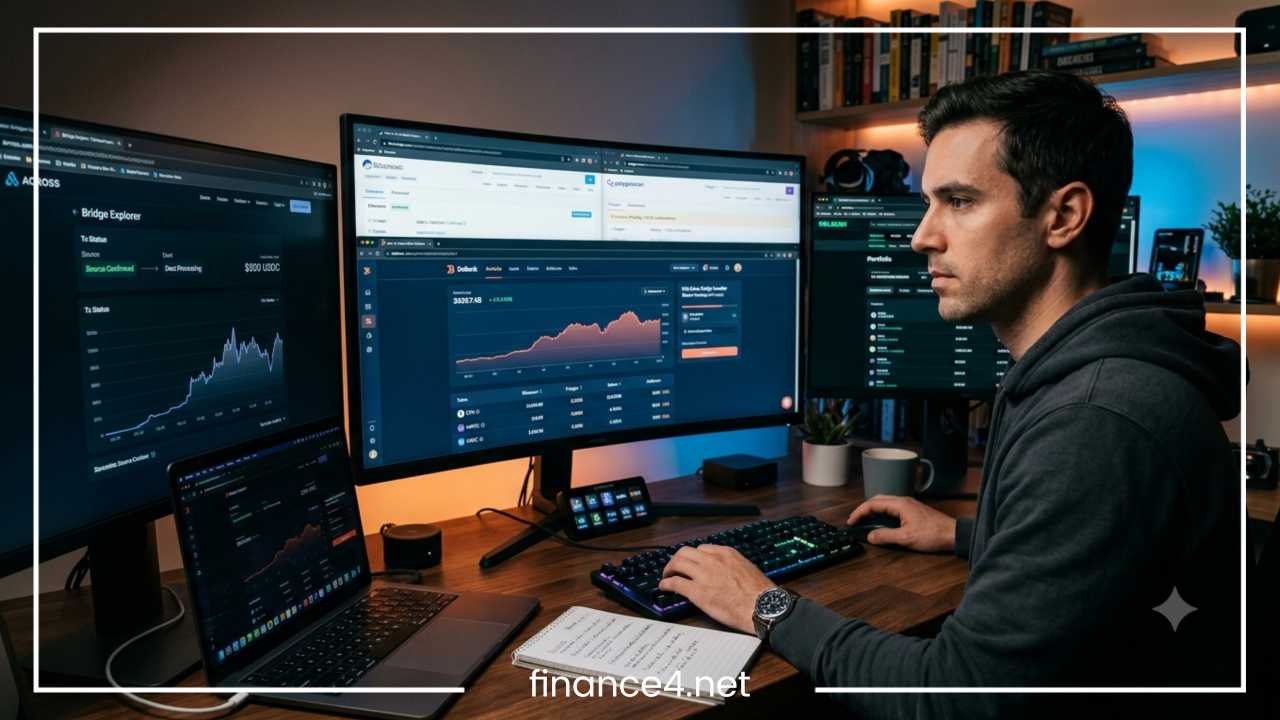
How to Track Multi-Chain Transactions | Step-by-Step Guide
The blockchain landscape has undergone a massive shift from a single dominant network to a vibrant, interconnected web of distinct ecosystems. In the early days of cryptocurrency, decentralized activity was largely concentrated on a single network like Ethereum. Today, capital, liquidity, and user activity are distributed across dozens of networks, including Layer 1 ecosystems like Solana and Avalanche, alongside Layer 2 scaling networks like Arbitrum, Optimism, and Polygon.
While this multi-chain architecture has dramatically lowered transaction fees and increased processing speeds, it has introduced a major operational challenge: fragmentation. When assets are constantly shifted across disparate networks via cross-chain bridges, decentralized exchanges, and automated smart contracts, keeping an accurate record of your funds becomes exceptionally difficult. A single financial action can split into multiple sub-transactions across three different blockchains, leaving users staring at missing balances, delayed transfers, and confusing explorer screens.
Learning how to track multi-chain transactions is no longer an advanced skill reserved for blockchain developers or data analysts. It is a fundamental requirement for anyone participating in decentralized finance (DeFi), collecting non-fungible tokens (NFTs), managing active portfolios, or accurately reporting crypto taxes. This comprehensive guide provides a detailed, step-by-step framework to demystify multi-chain tracking, offering the exact methodologies, tools, and troubleshooting workflows required to maintain total visibility over your digital assets.
Understanding Multi-Chain Ecosystems
To track transactions across different blockchains effectively, it is critical to understand how these networks interact and where the data silos exist.
Multi-Chain vs Cross-Chain
Though often used interchangeably, “multi-chain” and “cross-chain” refer to different concepts in blockchain infrastructure:
-
Multi-Chain: Refers to an environment where application developers deploy independent versions of their smart contracts across several distinct networks simultaneously. For example, a decentralized exchange might operate natively on Ethereum, Polygon, and Arbitrum. The user interacts with the application on one specific chain at a time, and the assets remain native to that network.
-
Cross-Chain: Refers to the actual interoperability technology that allows data, messages, and assets to move directly between two or more entirely different blockchains. Cross-chain operations require smart contracts, oracles, or cryptographic relays to listen to events on a source chain and trigger corresponding actions on a destination chain.
Key Blockchain Ecosystems
The modern decentralized landscape is comprised of several prominent ecosystems, each operating with its own consensus mechanisms, virtual machines, and ledger architectures:
-
Ethereum: The foundational Layer 1 network for smart contracts. It utilizes the Ethereum Virtual Machine (EVM) to execute transactions. Due to higher historical gas fees on Ethereum, a massive network of secondary scaling solutions has emerged around it.
-
Polygon: Originally launched as a proof-of-stake sidechain to Ethereum, it has evolved into a robust multi-chain framework featuring zero-knowledge rollups and customizable app-chains. It maintains full EVM compatibility.
-
BNB Chain: A high-throughput, EVM-compatible Layer 1 blockchain developed to offer low fees and fast execution, sharing the same address structure as Ethereum.
-
Solana: A non-EVM Layer 1 network built for extreme speed and scalability using a unique Proof-of-History consensus mechanism. It uses an entirely different architecture, language, and address format compared to EVM chains.
-
Avalanche: A multi-chain network featuring custom subnets and a tripartite architecture consisting of the Exchange Chain (X-Chain), Platform Chain (P-Chain), and Contract Chain (C-Chain). The C-Chain is EVM-compatible and hosts the vast majority of Avalanche’s DeFi activity.
What Happens During Multi-Chain Activity
When you initiate a multi-chain transaction, your assets rarely “fly” across cyberspace from one ledger to another. Instead, a series of coordinated accounting updates occur behind the scenes.
During a standard bridge transfer, you deposit an asset into a smart contract on the source chain. This asset is locked or burned. A decentralized relay network or validator set monitors this deposit event and sends a cryptographic proof to the destination chain. Upon verification, the destination chain’s smart contract mints or releases an equivalent amount of the asset to your receiving address.
During cross-chain swaps, this bridge protocol is closely coupled with a decentralized exchange. Your source asset is swapped for a stablecoin or intermediate token, bridged to the destination network, and then swapped again for the final desired token, all within a single, multi-stage transaction flow.
Where Tracking Becomes Difficult
The core difficulty in multi-chain tracking stems from architectural fragmentation. Every independent blockchain operates as an isolated ledger. Ethereum has no native awareness of what occurs on Solana, and vice versa.
Consequently, each ecosystem relies on its own proprietary block explorer to index data. Address formats vary wildly; while an EVM chain address always begins with a standard hex format, a Solana address uses a completely different cryptographic scheme. Furthermore, asset representation changes during transit. A native asset on Ethereum becomes a wrapped token on another network, altering its unique contract identifier and making manual tracking incredibly confusing for the untrained eye.
Types of Multi-Chain Transactions
Multi-chain transactions take several distinct forms, each requiring a slightly different analytical lens to trace accurately.
Cross-Chain Transfers via Bridges
This is the most common form of multi-chain activity. A user moves a specific token from a source network to a destination network using a dedicated bridging protocol. The transaction involves at least two clear components: a lock/burn event on the originating chain and a release/mint event on the destination chain.
DEX Swaps Across Chains
Advanced cross-chain liquidity aggregators allow users to swap Token A on Chain X directly for Token B on Chain Y. This transaction combines asset bridging with automated market maker (AMM) trade routes. Tracking this requires identifying the initial swap, the bridging step, and the final automated execution on the destination exchange.
NFT Transfers Across Ecosystems
As digital collectibles expand beyond Ethereum, cross-chain NFT bridges have become increasingly popular. Tracing an NFT requires tracking not just the movement of capital, but the specific token ID and the underlying smart contract metadata as it moves from one network’s token standard to another.
Wrapped Asset Movements
When a native asset like Bitcoin or Ether is used outside its native environment, it must be wrapped. This process encapsulates the original asset inside a smart contract and issues a synthetic version on the target chain. Tracking these movements requires validating that the total supply of the wrapped token matches the aggregate collateral locked in the native custody contracts.
Smart Contract Interactions Across Chains
Advanced decentralized applications use cross-chain messaging protocols to trigger smart contract functions on external networks without moving liquid tokens. For example, a governance vote on a Layer 2 network might execute a protocol upgrade on the Ethereum mainnet. Tracing these actions requires auditing complex cross-chain message logs.
Layer 2 Movements
Transactions occurring between Ethereum and its execution rollups represent a distinct category of multi-chain activity. Depositing funds into a rollup or withdrawing them back to the mainnet involves strict state verification processes, which feature distinct tracking windows depending on whether the network utilizes optimistic or zero-knowledge scaling architecture.
Challenges in Tracking Multi-Chain Transactions
To successfully navigate multi-chain accounting, you must first recognize the structural obstacles built into decentralized networks.
Fragmented Blockchain Explorers
Because individual block explorers are optimized solely for their respective chains, they act as informational silos. Checking Etherscan will show you that funds left your Ethereum wallet, but it will provide absolutely no details on whether those funds arrived safely on a non-EVM network. You are forced to manually jump between multiple tabs, software interfaces, and documentation logs to stitch the full story together.
Address Reuse Confusion
In the EVM ecosystem, your public address is identical across Ethereum, Polygon, Arbitrum, and BNB Chain. While convenient, this often leads to a false sense of security. Users frequently send assets to an address on a network where they have not configured their wallet provider to view that specific chain, leading to the mistaken belief that their funds have vanished into thin air.
Wrapped vs Native Asset Confusion
A single asset can exist in multiple, non-interchangeable forms on the exact same blockchain. For example, you can hold native Ether on Ethereum, but you can also hold wrapped Ether on Polygon, or even wrapped Ether bridged via a third-party protocol onto Solana. These assets look identical in name but possess entirely different contract addresses and liquidity profiles. Tracing the wrong contract address will completely derail your asset tracking ledger.
Delayed Finality in Bridges
Different blockchains require varying periods to achieve finality—the point at which a transaction is permanently carved into the ledger and cannot be altered. While a source chain might confirm a deposit in three seconds, the cross-chain bridge may require dozens or even hundreds of block confirmations before it deems it safe to release the funds on the destination chain. This gap creates an anxious informational blind spot where funds seem to disappear from both chains simultaneously.
Gas Fee Differences Across Chains
Every single transaction step across a multi-chain path requires native gas tokens to pay network validation fees. If a multi-stage transaction auto-executes a bridge but fails on the final destination swap due to an unexpected spike in local gas costs or a lack of native gas tokens in the destination wallet, the transaction stalls midway through the pipeline, leaving assets stranded in intermediate smart contracts.
Tools to Track Multi-Chain Transactions
To overcome these structural tracking hurdles, you must equip yourself with an analytical toolkit consisting of network explorers, aggregate portfolio dashboards, and protocol-specific indexers.
Blockchain Explorers
Block explorers are the authoritative source of truth for raw on-chain data. They read the state transitions directly from ledger nodes.
-
Etherscan: The gold standard for the Ethereum network. It allows users to inspect wallet balances, transaction histories, smart contract source codes, and token transfer event logs.
-
Polygonscan: Built on the same infrastructure as Etherscan, this explorer provides specialized visibility into the low-cost transactions, state checkpoints, and token standards unique to the Polygon network.
-
BscScan: The dedicated ledger browser for the BNB Chain, offering optimized indexing for BEP-20 tokens and decentralized exchange interactions within that ecosystem.
-
Snowtrace: The premier analytics platform and block explorer for the Avalanche C-Chain, mapping out smart contract executions and asset balances across the network.
Multi-Chain Trackers and Dashboards
Rather than inspecting individual blocks, portfolio dashboards aggregate multi-chain data at the wallet address level, offering a unified financial view.
-
DeBank: A highly sophisticated DeFi portfolio tracker that automatically scans hundreds of distinct web3 networks. It pulls data from decentralized lending pools, staking contracts, yield farms, and spot wallets to display a clean, real-time breakdown of all assets tied to a single address across ecosystems.
-
Zerion: A user-centric asset management interface that consolidates multi-chain historical data, tracks portfolio performance over time, and provides clear tracking lines for assets spread across multiple networks.
-
Zapper: An asset visualizer optimized for mapping out complex DeFi positions, NFT collections, and cross-chain transactions across major EVM ecosystems.
-
Nansen: An enterprise-grade blockchain analytics platform that provides advanced wallet profiling, entity labeling, and deep forensic transaction tracking across multiple networks for power users and institutions.
Bridge-Specific Trackers
When an asset is mid-transit between two networks, specialized bridge indexers provide real-time updates on the internal state of the cross-chain transaction.
-
Across Explorer: A dedicated tracking interface for the Across bridging network, showing the exact phase of a cross-chain transfer from origin deposit to destination payout.
-
Hop Protocol Explorer: A specialized tracker designed to monitor the journey of canonical tokens moving across various Layer 2 scaling networks via Hop’s liquidity pools.
-
LayerZero Scan: An omni-chain block explorer that tracks cross-chain messages, arbitrary data transfers, and token movements utilizing LayerZero’s messaging protocol.
Portfolio Tools
For users who require long-term financial records, tax reporting, and multi-wallet consolidation across both decentralized and centralized platforms, robust portfolio software is essential.
-
CoinStats: A comprehensive tracking application that supports API integrations and wallet syncing across thousands of digital assets and dozens of distinct blockchains.
-
Kubera: A modern, institutional-grade wealth tracking platform built to monitor holistic net worth, elegantly aggregating traditional financial accounts alongside multi-chain cryptocurrency assets.
Step-by-Step: How to Track a Multi-Chain Transaction
Tracking a multi-chain transaction requires a methodical approach. When an asset leaves your wallet on one chain but fails to appear instantly on another, follow this sequential playbook to pinpoint its exact location.
Step 1: Identify the Originating Transaction
Every blockchain interaction begins with a unique cryptographic signature known as a transaction hash (TX Hash). This string of characters serves as the receipt for your activity.
-
Open your Web3 wallet extension or application interface.
-
Navigate to the activity or history tab and ensure your wallet is set to the network where you initiated the transaction.
-
Locate the specific transfer event and copy the transaction hash string.
-
Navigate to the primary block explorer for that specific originating chain (such as Etherscan for Ethereum or BscScan for BNB Chain).
-
Paste the hash into the central search bar to load the raw transaction details.
Step 2: Check Bridge Activity
If your multi-chain move involved a bridge protocol, you must verify that the source chain successfully executed its side of the contract arrangement.
-
On the originating explorer page, confirm that the transaction status reads “Success.”
-
Look closely at the “Tokens Transferred” or “Interacted With” sections. You should see your assets moving from your personal address into a verified bridge smart contract address.
-
Note the exact timestamp and the unique event logs generated by the smart contract. If the bridge protocol provides a native tracking tool (like LayerZero Scan), copy your initial transaction hash directly into that bridge-specific portal to see the real-time status of the cross-chain message relay.
Step 3: Follow the Destination Chain
Once the source chain confirms the asset lock or burn, the focus shifts entirely to the destination network.
-
Open a new browser tab and navigate to the dedicated block explorer for the target network (such as Polygonscan or Snowtrace).
-
Instead of searching for the transaction hash (which may be entirely different on the new chain), paste your personal receiving wallet address into the search bar.
-
Look for the “Transactions” or “Internal Transactions” tab.
-
Check for incoming execution events originating from a bridge release contract that match the timing and asset volume of your initial transfer.
Step 4: Track Token Conversion
If your asset did not arrive in its native format, it likely underwent an automatic conversion into a wrapped asset variant during transit.
-
On the destination block explorer, inspect the specific token dropdown list associated with your wallet address.
-
Look for assets bearing a “w” prefix or a protocol identifier tag (such as wETH or bridged USDC variants).
-
If the token balance is visible in the explorer but missing from your software wallet interface, copy the unique token contract address listed on the explorer page. Paste this contract address directly into your wallet’s “Import Custom Token” field to make the asset visible within your application.
Step 5: Verify Final Balance
With the transfer located, perform a definitive calculation to ensure accuracy.
-
Review the destination explorer’s balance log for that specific asset type.
-
Subtract any localized network gas fees or bridge protocol processing deductions that were noted in the initial transaction parameters.
-
Confirm that the final on-chain ledger balance perfectly matches your expected net payout calculation.
Step 6: Use a Portfolio Tracker for a Holistic View
For complex multi-stage routes involving multiple wallets or concurrent transactions, skip manual explorer hopping and let an automated indexer verify your balances.
-
Navigate to an aggregate portfolio tracker like DeBank.
-
Input your public wallet address into the search field. Do not connect your private keys; simply paste the public string.
-
Review the consolidated dashboard. The software will automatically ping dozens of chains simultaneously, pulling up hidden wrapped tokens, stuck bridge claims, or liquidity pool deposits that you may have missed during manual inspection.
Example Walkthrough
To ground these steps in a real-world context, let us trace a common, practical multi-chain scenario: a user transferring $500 worth of USD Coin (USDC) from the Ethereum mainnet to the Polygon network via a decentralized bridging application.
The Problem Scenario
The user initiates the transfer inside their Web3 wallet, signs the transaction, and pays the Ethereum gas fee. Five minutes pass. The wallet is toggled over to the Polygon network, but the $500 USDC balance still shows as $0. The user feels a sudden wave of panic. Where is the money?
The Tracking Execution
To trace the capital safely, the user opens their browser and systematically executes the following workflow:
| Stage | Platform / Explorer | Action Taken | Data Identified |
| 1. Origin Verification | Etherscan | Search the public wallet address under the Ethereum network. | Locates a successful transaction showing 500 USDC transferred to an external smart contract titled Across Bridge. Status is marked as Success. |
| 2. Bridge Audit | Across Explorer | Paste the initial Ethereum transaction hash into the specialized bridge tracker. | The tracker confirms that the 500 USDC deposit was successfully recognized by validators. It reveals a status message: Processing destination payout. |
| 3. Target Inspection | Polygonscan | Switch to the Polygon network explorer and search the same public wallet address. | Under the ERC-20 Token Txns tab, a new entry appears timed exactly four minutes after the Ethereum block. It shows an inbound transfer from a bridge contract. |
| 4. Wallet Alignment | MetaMask Wallet | Notice that the wallet still reads zero. Copy the token contract address directly from the Polygonscan entry. | Select Import Token, paste the contract string. The software instantly recognizes the token metadata and displays the $500 balance inside the application UI. |
By following this objective audit trail, the user confirms that the funds were never lost; they were simply held briefly in the bridge processing queue and then hidden from view due to an unconfigured wallet interface.
Advanced Tracking Techniques
As you become more active across decentralized networks, manual tracking becomes inefficient. Advanced participants rely on specialized programmatic and data-driven methods to monitor multi-chain activity.
Using API Tools
For developers, automated systems, and power users managing high transaction volumes, calling raw block explorer APIs is the most reliable way to extract structured transaction data. By writing simple scripts that connect to endpoints provided by platforms like Etherscan or Covalent, you can pull complete multi-chain transaction histories directly into localized databases or spreadsheets. This approach allows you to filter out noise, calculate cost bases, and programmatically flag anomalies across several networks simultaneously without ever opening a manual browser tab.
On-Chain Analytics Platforms
When tracking large-scale ecosystem trends, institutional movements, or complex multi-contract exploits, static tools fall short. Open data platforms like Dune Analytics allow users to write custom SQL queries that interface directly with indexed blockchain datasets. You can build comprehensive tracking dashboards that monitor the macro-liquidity flows moving across specific bridging smart contracts, visualising capital flight or accumulation trends across disparate ecosystems in real-time.
Address Clustering
Advanced forensic tracking often requires deanonymizing complex transaction pathways where an entity spreads capital across multiple fresh wallet addresses to break the visual chain. Address clustering techniques rely on tracking heuristic patterns—such as identifying wallets that consistently interact with the same localized smart contracts, share a singular gas funding source, or execute trades at identical timestamps. By mapping these behavioral similarities, you can group disparate addresses into a single logical cluster, exposing the true flow of multi-chain assets.
Tracking Smart Contract Events
Not all critical multi-chain data is neatly displayed in a block explorer’s primary transaction list. Many advanced protocols utilize internal smart contract calls that execute nested actions deep within an ecosystem’s runtime environment. To trace these actions, you must audit the raw “Event Logs” generated by smart contracts during a block transition. These logs contain precise, unalterable cryptographic data points detailing exactly who triggered a function, what parameters were passed, and which assets were shifted behind the scenes.
Monitoring Alerts
Instead of reactively searching for transactions after the fact, configure automated notification layers to stay informed in real-time. By utilizing specialized blockchain monitoring tools, automated Telegram tracking bots, or dedicated Web3 wallet notifications, you can bind specific public addresses to instant alert systems. The moment an asset is deposited on a source chain or minted on a destination network, an automated ping is delivered to your device, providing an instantaneous link to the relevant block explorer.
Common Mistakes When Tracking Multi-Chain Transactions
Most instances of “lost” crypto assets are actually the result of simple tracking errors or misinterpretations of on-chain data. Avoid these common pitfalls to keep your analytical process clean:
-
Searching the Wrong Chain Explorer: Pasting an Arbitrum transaction hash into Etherscan will return a generic error message stating that the transaction cannot be found. Always double-check that the block explorer you are viewing matches the exact network where the transaction was signed.
-
Confusing Wrapped Tokens with Native Tokens: Assuming that wrapped Ether on a sidechain behaves identically to native Ether on the main network is a frequent point of failure. These assets utilize entirely different smart contract paths. Always check the underlying contract address rather than relying on the token’s visual symbol.
-
Ignoring Bridge Delays: Expecting instantaneous cross-chain settlement often leads to unnecessary panic. Bridge protocols prioritize security over raw speed, requiring multiple validation rounds. Always check the bridge provider’s documentation to understand their average finality windows under heavy network congestion.
-
Not Verifying Contract Addresses: Malicious actors frequently deploy fake tokens with identical names (such as “USDC”) to trick unsuspecting users. When inspecting an inbound multi-chain transfer, always cross-reference the token’s unique contract address against verified repository listings to confirm its authenticity.
-
Relying on a Single Tool: No single portfolio tracker or dashboard possesses perfect visibility into every single niche blockchain subnet or decentralized application. If a balance looks incorrect on one interface, always validate the data by checking the raw ledger states on an authoritative network explorer.
Security Tips While Tracking Transactions
The process of tracking transactions requires interacting with various web interfaces and data portals, making it a target for malicious actors looking to exploit distracted users. Adhere to these fundamental security protocols at all times:
-
Never Share Your Private Keys: No real block explorer, portfolio tracker, or technical support representative will ever ask you to provide your wallet’s private keys or seed phrase. Asset tracking is an entirely public data exercise; it requires only your public wallet address.
-
Use Read-Only Wallet Connections: When utilizing advanced portfolio tools like DeBank or Zerion, you do not need to grant transaction permissions or sign complex smart contract write approvals. Utilize read-only views or copy-paste your public address manually to eliminate contract exploitation risks.
-
Verify the URLs of Explorers: Phishing actors frequently deploy exact visual replicas of popular sites like Etherscan under subtly altered domain names. Bookmark authoritative tracking sites and carefully audit your browser’s address bar before interacting with any platform.
-
Beware of Fake Tracking Tools: Avoid downloading unverified desktop applications or browser extensions that promise advanced multi-chain tracking features. Stick to industry-standard web dashboards that operate entirely within a standard, non-privileged browser environment.
-
Double-Check Contract Addresses: Before copying an address from a transaction history to execute a follow-up transfer, manually verify the string character by character. Malicious software can alter clipboard data, pasting lookalike address strings designed to divert your capital into attacker-controlled wallets.
Final Thoughts
Navigating the multi-chain ecosystem requires a fundamental shift in how we think about digital accounting. As liquidity continues to fracture across independent Layer 1 networks and specialized Layer 2 rollups, the ability to trace assets as they cross network boundaries is an essential component of basic blockchain literacy.
When a transaction seems to stall or a balance fails to register, remember that data on the blockchain does not simply vanish. By applying a structured tracking process—identifying the originating hash, auditing bridge validation states, inspecting target chain explorers, and utilizing aggregate multi-chain portfolios—you can easily pinpoint the location of your funds.
Ultimately, maintaining absolute visibility over your assets is a matter of utilizing the right tools and maintaining methodical precision. By combining the raw, authoritative data found on primary block explorers with the elegant consolidation provided by modern Web3 dashboards, you can participate in the multi-chain future with complete confidence, clarity, and security.
Frequently Asked Questions
Why is my cross-chain bridge transaction pending so long?
Cross-chain bridge delays usually happen because different blockchains require varying lengths of time to achieve finality. Finality is the point at which a transaction becomes permanently carved into the ledger and cannot be altered or reversed.
While a high-throughput source chain might confirm your initial deposit in just a few seconds, the bridge protocol itself often waits for dozens or even hundreds of block confirmations on the originating network before it considers the funds safe to release. This security buffer prevents double-spending exploits. During periods of high network congestion or gas fee spikes on the destination chain, validators may also delay processing the outbound transaction, leaving your funds temporarily in transit.
How do I find a missing crypto transaction on another blockchain?
When an asset leaves your wallet on one network but fails to appear on another, the most effective approach is to check the destination block explorer using your public wallet address rather than the original transaction hash. Because block hashes are unique to their native ledgers, an Ethereum hash will not return results on a Polygon or Avalanche explorer.
Search your public address on the target network’s explorer and navigate to the token transfers or internal transactions tab. If the transaction is recorded there but your software wallet interface shows a zero balance, the asset is likely a wrapped variant. You can resolve this by copying the verified token contract address directly from the explorer and pasting it into your wallet’s custom token import settings.
What is the difference between EVM and non-EVM transaction tracking?
Tracking transactions within the Ethereum Virtual Machine (EVM) ecosystem is relatively straightforward because networks like Ethereum, Polygon, Arbitrum, and BNB Chain share identical address formats and structural logic. This uniformity allows multi-chain portfolio dashboards to index your assets simultaneously using a single public address.
In contrast, non-EVM networks like Solana use entirely different cryptographic architectures, programming environments, and public key formats. Consequently, an asset transfer moving from an EVM chain to a non-EVM chain cannot be traced through a single standard explorer. You must manually bridge the gap by shifting from an EVM explorer to a dedicated non-EVM network browser, tracing how the asset was handled by the cross-chain protocol’s specialized smart contracts.
Can you track a transaction across different crypto bridges?
Yes, you can track cross-chain movements by using protocol-specific rail explorers instead of general network browsers. Major interoperability protocols maintain dedicated indexing platforms designed specifically to read cross-chain messaging logs.
For example, if your transfer relies on LayerZero architecture, pasting your originating hash into LayerZero Scan will surface the entire journey of the asset, including the decentralized verifier networks that approved the move and the final destination execution receipt. Similarly, platforms like WormholeScan or specialized multi-hop routing indexers allow you to track the exact lifecycle stage of an asset as it moves through intermediate liquidity hubs.
How do multi-chain portfolio trackers sync wallet balances automatically?
Multi-chain portfolio dashboards sync your asset balances by using advanced indexing APIs to scan public blockchain nodes across dozens of networks simultaneously. When you input a public wallet address, the tracker queries these networks for any balance or smart contract state tied to that specific cryptographic string.
These platforms automatically detect funds locked in decentralized finance lending pools, staking contracts, yield farms, and automated market makers. Because this process relies entirely on reading public ledger data, the synchronization is completely non-custodial and read-only, meaning it requires no private keys, seed phrases, or security permissions to give you a consolidated financial overview.