How to Trade NFTs Profitably
 by
by 
How to Trade NFTs Profitably: Step-by-Step Guide
Can You Really Trade NFTs Profitably?
Non-fungible token (NFT) trading has grown from a niche digital experiment into a dynamic asset class within the broader Web3 ecosystem. At its core, NFT trading involves buying unique digital assets stored on a blockchain and selling them for a financial profit. However, trading NFTs requires a fundamentally different skill set than collecting them. A collector purchases a digital item based on personal appreciation, emotional connection, or aesthetic value. A trader views the same asset through the lens of market structure, volume trends, liquidity risks, entry pricing, and net profit margins.
Trading NFTs profitably is possible, but it is neither easy nor guaranteed. Markets in the blockchain space move rapidly, driven by shifting collector trends, technological updates, and liquidity cycles. While dramatic gains attract significant public attention, the underlying reality is that high volatility brings substantial financial risk. Achieving consistent profitability does not rely on luck or buying into hype. Instead, it depends on methodical research, disciplined timing, healthy liquidity, strict fee calculations, and systematic risk management.
This guide serves as a practical, end-to-end blueprint for navigating the market. It walks through the mechanics of valuation, execution infrastructure, analytical metrics, entry and exit strategies, and risk controls designed to help you build a repeatable trading methodology.
Understand How NFT Trading Works
To build a profitable NFT trading strategy, you must first understand how these tokens function within decentralized marketplaces. Unlike fungible cryptocurrencies like Bitcoin or Ethereum, where every unit is identical and interchangeable, each NFT possesses unique metadata and a distinct blockchain token ID. This non-fungible nature means pricing is not uniform across a single collection; individual assets fluctuate based on specific attributes, historical ownership, and current market demand.
NFT trading takes place across primary and secondary markets:
-
Primary Market: The initial mint or release where a creator sells an NFT to its first owner.
-
Secondary Market: Open peer-to-peer marketplaces where buyers and sellers trade previously minted tokens.
Determining the true market value of an NFT requires looking beyond the seller’s asking price. Listed prices reflect seller expectations, not actual market worth. Real market value is established through executed transaction prices, bid depth, and current sales velocity. Three core metrics govern this dynamic:
-
Floor Price: The lowest asking price for an NFT within a specific collection.
-
Sales Volume: The cumulative amount of capital traded within a given period.
-
Liquidity: The ease with which an NFT can be converted into liquid capital without suffering a severe price markdown.
Every trade incurs friction costs that impact profitability. On-chain transactions require network gas fees to process execution. Furthermore, secondary marketplaces charge service fees, and creators may levy creator royalties on every sale. Failing to account for these overheads can turn a paper profit into an actual loss.
Choose the Right Blockchain and Marketplace
Selecting the appropriate network and trading venue directly impacts your trade speed, fee exposure, and potential buyer pool. Different blockchains cater to distinct segments of the NFT ecosystem.
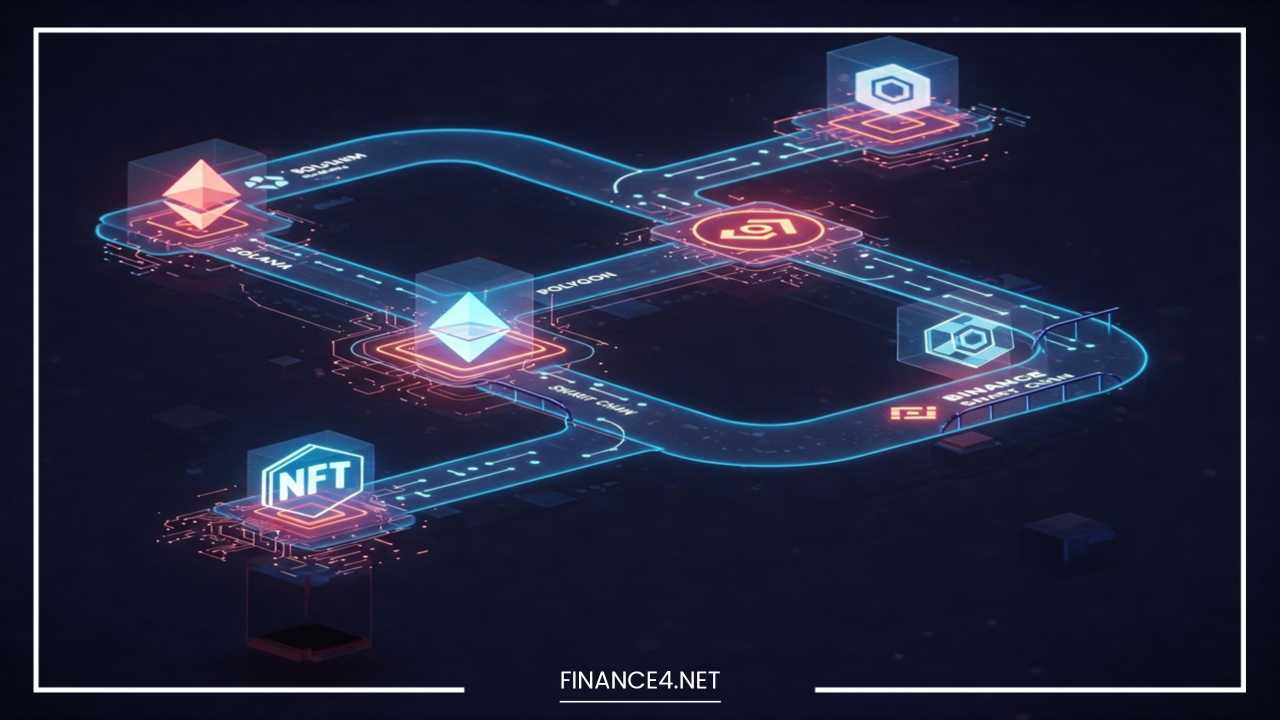
Major Blockchain Ecosystems
-
Ethereum: The primary hub for blue-chip projects, high-value art, and deep liquidity. While it commands the highest market volume, it also incurs significant network gas fees during periods of congestion.
-
Solana: Known for high transaction throughput and sub-cent network fees. It offers an active ecosystem for fast-paced trading, smaller position sizes, and high-frequency flips.
-
Polygon: An Ethereum Layer-2 scaling solution that provides low fees and high execution speeds while maintaining compatibility with the Ethereum virtual ecosystem.
-
Base: An emerging Layer-2 ecosystem backed by major exchange infrastructure, offering low transaction costs and rapidly growing liquidity for new consumer applications and digital collectibles.
Marketplace Considerations
When evaluating where to execute trades, base your decision on operational mechanics rather than superficial metrics:
| Marketplace Metric | Why It Matters for Traders |
| Trading Volume | High volume ensures an active flow of buyers, making it easier to exit positions. |
| Fee Structure | Lower platform fees reduce total overhead, preserving profit margins on tight flips. |
| Liquidity & Depth | Deep order books and active offer pools allow instant execution when liquidating positions. |
| Security & Reputation | Established smart contracts reduce exposure to technical exploits or execution bugs. |
| Royalty Structures | Fixed, optional, or custom royalty enforcement dictates your net revenue per sale. |
| Wallet Compatibility | Native integration with your preferred Web3 wallet ensures fast order signing. |
Choosing a marketplace solely for its low platform fees can be a costly mistake if that marketplace lacks active buyers. Capital efficiency requires trading where active liquidity is concentrated, even if service fees are slightly higher.
Set Up Your NFT Trading Infrastructure
Executing trades cleanly and securely requires setting up dedicated infrastructure before deploying capital.
Step-by-Step Infrastructure Setup
-
Create a Compatible Wallet: Install a reputable browser-extension or mobile Web3 wallet compatible with your chosen blockchain.
-
Secure the Seed Phrase: Record your multi-word recovery phrase offline on physical media. Never store seed phrases in digital documents, cloud storage, or plain text files.
-
Fund the Wallet: Transfer your base trading currency (such as ETH or SOL) from a centralized exchange to your Web3 wallet address.
-
Connect to Verified Marketplaces: Direct your browser only to verified marketplace URLs. Bookmark official domains to prevent phishing attacks.
-
Master Core Mechanics: Practice approving tokens, placing bids, listing assets, and canceling listings to understand how gas costs and order cancellations operate.
-
Separate Trading and Storage Capital: Maintain a dedicated hot wallet for active daily trades and a separate, disconnected wallet for profits and long-term holdings.
Essential Security Protocols
-
Hardware Wallets: Use a physical hardware wallet to sign high-value transactions, keeping private keys completely isolated from internet-connected devices.
-
Verify Contract Approvals: Regularly audit and revoke unnecessary smart contract approvals using token permission tools to prevent draining exploits.
-
Ignore Unsolicited Airdrops: Malicious tokens sent directly to your public address often contain links or contract interactions designed to steal funds upon interaction.
How to Research an NFT Collection Before Buying
Thorough evaluation separates systematic traders from speculative buyers. Before deploying capital into any collection, evaluate its metrics across four core dimensions.
Project Fundamentals
Evaluate the team behind the collection. Anonymous teams carry higher operational risk than fully public, verifiable teams with proven track records in technology, design, or business execution. Assess the underlying purpose of the asset—whether it provides utility, access, digital identity, or artistic value. Review the roadmap to confirm if planned deliverables are realistic, technically feasible, and supported by a clear development schedule.
Collection Metrics
Examine the supply dynamics and ownership distribution of the asset:
-
Total Supply: A smaller supply can lead to price spikes during demand surges, whereas a large supply requires broad buyer interest to sustain price increases.
-
Unique Holders: Calculate the ratio of unique holders to total supply. A ratio above 40% to 50% generally indicates healthier distribution across independent buyers.
-
Holder Concentration: Avoid collections where a tiny percentage of wallets hold a massive proportion of the total supply. If a single holder owns 5% to 10% of a project, their sales can crash the floor price.
-
Listing Percentage: Monitor the proportion of total supply actively listed for sale. A low listing percentage (ideally under 5% to 8%) signals that holders are not rushing to exit.
Market Activity
Analyze real-time transaction history rather than relying on current asking prices. Review the number of sales completed over the last 24 to 72 hours. Look for consistent, organic buy orders spread across multiple independent wallets. Watch out for artificial volume generated by a small group of wallets trading the same asset back and forth—a practice known as wash trading designed to fabricate market activity.
Community and Sentiment
Evaluate the quality of engagement on community platforms like Discord, Telegram, and social networks. True market strength manifests as active, constructive discussions surrounding project updates, software releases, or community initiatives. High follower counts accompanied by repetitive, low-effort messages often indicate artificial bot activity rather than real buyer demand.
Learn to Evaluate NFT Rarity and Value
Not all tokens within a generative collection share equal market value. Understanding how specific traits influence pricing allows you to identify undervalued assets listed at or near the floor price.
Rarity Dynamics
Generative collections use algorithms to assemble combinations of traits—such as background color, eyewear, clothing, and accessories—with varying statistical frequencies. Trait rarity measures the statistical scarcity of an individual attribute within the entire supply.
While statistical rarity software assigns overall scores to tokens based on trait combinations, mathematical scarcity alone does not dictate market value. Demand must align with that scarcity. A statistically rare trait that buyers find visually unappealing may trade below a common trait that the community considers iconic.
Rarity-Adjusted Valuation
Profitable trading requires establishing a rarity-adjusted valuation rather than relying solely on the collection’s floor price. Two assets within the same project may share an identical collection floor price of 1.0 ETH, yet hold vastly different market valuations due to individual attributes.
For example, Asset A may feature common traits and carry a true market value equal to the floor price of 1.0 ETH. Asset B, featuring a highly sought-after rare trait, may hold a true market value of 1.6 ETH. If a seller lists Asset B at 1.15 ETH because they are focusing strictly on the general floor price, an alert trader can recognize the mispricing, buy the asset below its trait-adjusted value, and relist it near its true market value.
Develop an NFT Trading Strategy
Operating successfully across varying market cycles requires choosing a defined trading strategy matched to your risk tolerance, capital base, and execution speed.
Floor Flipping
Floor flipping involves buying assets listed at or near the floor price of a collection and relisting them for a modest mark-up during periods of heightened buying momentum.
-
Pros: High asset availability; simple execution mechanics.
-
Cons: High exposure to sudden drops in floor price; narrow profit margins after accounting for gas and platform fees.
Rarity Flipping
Rarity flipping focuses on scanning market listings to spot rare, sub-category, or visually desirable traits listed at generic floor prices. Traders buy these mispriced assets and relist them in higher pricing tiers aimed at trait collectors.
-
Pros: Larger potential profit margins per trade; less reliant on overall floor price movement.
-
Cons: Lower overall liquidity; rare traits can take longer to sell.
Momentum Trading
Momentum trading relies on tracking real-time volume spikes, social media trends, and sudden breakouts. Traders enter collections experiencing rapid accelerations in buyer velocity and exit shortly after the initial buying wave peaks.
-
Pros: Rapid turnover of capital; significant short-term upside.
-
Cons: High risk of buying at market tops; requires constant market monitoring.
Event-Driven Trading
This approach targets predictable catalysts, such as upcoming mint launches, major protocol partnerships, physical event access, artwork reveals, or token distributions. Traders buy ahead of the event and sell into the heightened demand leading up to execution.
-
Pros: Clear timelines; market interest builds around specific dates.
-
Cons: High sell-offs often occur the moment the event completes (“sell the news” dynamics).
Long-Term Conviction Trading
Long-term traders select established projects with strong fundamentals, active development teams, and sustainable community backing. Positions are held through medium-to-long-term cycles rather than flipped over days or weeks.
-
Pros: Less time-intensive; avoids high short-term transaction fee drag.
-
Cons: Ties up capital for extended periods; high exposure to broader market declines.
How to Identify a Profitable NFT Entry Point
Timing your market entry requires balancing risk management with potential upside. Ideal entry points occur when market metrics confirm emerging demand before pricing reflects that demand fully.
Key Bullish Entry Signals
-
Accelerating Sales Velocity: Transaction frequency increases from a few sales per day to multiple sales per hour.
-
Listing Contraction: The overall percentage of listed assets declines steadily as buyers absorb open inventory.
-
Rising Bid Depth: Collection-wide offer prices trend upward, indicating institutional or high-capital buyers are placing competitive floor bids.
-
Wallet Concentration Spreads: The total count of unique holders increases alongside rising sales volume, confirming broad market distribution.
Confirmation vs. Anticipation
Trading decisions fall between anticipating a market move and waiting for on-chain confirmation. Buying in anticipation of a potential trend yields a lower purchase price, but carries higher execution uncertainty and risk since the market catalyst may fail to materialize. Conversely, waiting for clear on-chain volume confirmation reduces execution uncertainty, but results in paying a higher purchase price and capturing lower relative upside.
How to Decide When to Sell an NFT
Exiting a position cleanly is often more challenging than opening one. Discipline requires setting clear exit parameters before submitting a buy order.
Core Exit Mechanics
-
Predetermined Profit Targets: Set explicit sell orders at pre-calculated price levels (such as 25%, 50%, or 100% above your cost basis) rather than holding out for ungrounded price targets.
-
Selling into Demand: List your assets for sale while buying volume is active and order books show depth. Attempting to sell when trading activity stalls often requires undercutting the floor aggressively to find a buyer.
-
Staggered Profit Taking: Scale out of larger positions gradually. For example, if you own three tokens from a collection, sell one to recover your original capital, sell the second for net profit, and hold the third to capture potential extended upside.
-
Thesis Invalidation: If the fundamental reasons behind your purchase change—such as key team members departing, floor volume collapsing, or holder listings surging—exit the position immediately to preserve capital.
Never allow emotional attachment or past capital outlay to dictate your exit timing. An illiquid asset holding a high asking price yields no realized returns until a buyer settles the transaction.
Calculate the Real Profit Before Trading
A fundamental mistake in NFT trading is confusing gross revenue with net profitability. On-chain trading incurs multiple transaction costs that reduce profit margins.
Net Profit Equation
Net Profit equals Sale Price minus Purchase Price minus Marketplace Fees minus Creator Royalties minus Buy Gas minus Sell Gas minus Approval and Cancellation Fees.
Numerical Trading Example
Consider a scenario where you buy an NFT for $1,000.00 and sell it for $1,300.00:
| Cost Item | Breakdown | Amount |
| Purchase Price | Base Asset Purchase | $1,000.00 |
| Buy Transaction Gas | Network Gas Fee on Buy | $15.00 |
| Approval Gas Fee | Marketplace Smart Contract Approval | $8.00 |
| Sale Price | Executed Gross Sale | $1,300.00 |
| Marketplace Fee (2.5%) | Platform Commission | -$32.50 |
| Creator Royalty (5.0%) | Enforced Creator Fee | -$65.00 |
| Sell Transaction Gas | Network Gas Fee on Listing Accept/Sale | $18.00 |
| Gross Profit | Sale Price – Purchase Price | +$300.00 |
| Total Friction Overhead | Sum of Fees and Gas Costs | -$138.50 |
| Actual Net Profit | Gross Profit – Total Friction Overhead | +$161.50 |
In this example, total friction costs consume 46.1% of your gross gains. In high-gas environments or low-margin flips, transaction costs can easily eliminate paper profits entirely. Always factor slippage, network congestion, and potential currency fluctuations into your trade planning.
NFT Risk Management
Preserving capital is the primary requirement for remaining solvent across changing market cycles. Without systematic risk controls, a small series of unsuccessful trades can deplete your account balance.
Position Sizing and Portfolio Limits
-
Maximum Allocation per Trade: Limit single-project exposure to no more than 5% to 10% of your total liquid trading capital.
-
Maintain Stable Reserves: Keep a substantial portion of your portfolio (30% to 50%) in liquid base currency or stable assets rather than holding 100% of your balance in illiquid NFTs.
-
Avoid Leverage: Never use borrowed funds or leverage to buy volatile, non-fungible assets.
Managing Liquidity Risk
Unlike fungible markets where stop-loss orders execute automatically at specified prices, selling an NFT requires a buyer to accept your specific listing price or offer. During market downturns, liquidity can disappear entirely. If buyers vanish, you may be unable to liquidate an asset at any price without taking a catastrophic loss.
Behavioral Discipline
-
Eliminate FOMO (Fear of Missing Out): Avoid buying into assets that have already experienced sudden, parabolic price spikes. Wait for market consolidation or look for fresh opportunities elsewhere.
-
Prevent Revenge Trading: Do not increase position sizes or lower quality standards immediately after a loss to make back capital quickly. Stick to your risk parameters.
-
Set Operational Limits: Establish daily or weekly loss thresholds. If your portfolio drops by a predetermined percentage (such as 15%) within a specific period, pause all trading activity to re-evaluate your strategy.
Common NFT Trading Mistakes to Avoid
Learning to avoid recurring market traps saves capital and accelerates your trading development.
-
Chasing Floor Pumps: Buying an asset simply because its floor price is rising rapidly often results in purchasing right at the peak of short-term demand.
-
Ignoring Transaction Friction: Failing to calculate gas fees, listing costs, and platform royalties leads to unexpected net losses on narrow trades.
-
Confusing Listed Prices with Real Value: Assuming a collection is valuable because sellers set high asking prices, without verifying if completed sales support those valuations.
-
Following Influencer Recommendations: Buying projects promoted on social channels without conducting independent on-chain research. Promoters often dump their holdings onto incoming retail buyers.
-
Overlooking Holder Concentration: Ignoring wallets that hold large percentages of a project’s total supply leaves you vulnerable to sudden, coordinated market dumps.
-
Holding Illiquid Positions Indefinitely: Refusing to cut losses on a failing project due to emotional attachment, causing capital to remain trapped in dead assets.
-
Over-Trading Low-Conviction Assets: Executing dozens of low-quality flips that generate high gas fees while offering minimal statistical advantage.
-
Interacting with Malicious Smart Contracts: Clicking unverified links or signing unknown transaction payloads that allow drainers to compromise your trading wallet.
A Step-by-Step NFT Trading Workflow
To convert these concepts into a clear operational routine, follow this step-by-step workflow for every potential trade:
Phase 1: Preparation & Screening
-
Step 1: Define your total available trading budget and calculate your maximum allowable loss for the current trade.
-
Step 2: Select the target blockchain ecosystem based on your available capital base and preferred gas fee tolerance.
-
Step 3: Scan marketplace analytical tools to identify collections showing unusual volume expansion, rising buyer activity, or unusual listing reductions.
Phase 2: Fundamental & Metrics Audit
-
Step 4: Analyze project fundamentals, confirming team reputation, community authenticity, and technical execution safety.
-
Step 5: Audit liquidity metrics, ensuring high daily transaction counts and healthy buyer distribution across independent wallets.
-
Step 6: Check holder concentration metrics and evaluate rarity pricing distributions within open marketplace listings.
Phase 3: Execution & Management
-
Step 7: Calculate your target entry price, factoring in historical floor support levels and trait-based valuation adjustments.
-
Step 8: Run the complete Net Profit calculation. Confirm that expected gains comfortably cover all marketplace fees, creator royalties, and maximum gas costs.
-
Step 9: Execute the purchase only if the risk-to-reward ratio meets your strategy requirements (such as a minimum 2:1 target gain relative to potential loss).
-
Step 10: Monitor the trade actively, tracking changes in collection volume, listing percentages, and broader market sentiment.
-
Step 11: Execute your exit plan cleanly. Take profit at your predetermined targets or cut losses promptly if market metrics invalidate your trade thesis.
-
Step 12: Log the completed transaction into your trading journal, documenting operational successes and mistakes to refine future execution.
Track and Improve Your NFT Trading Performance
Long-term success requires evaluating your trading methodology using objective data rather than memory or emotion. Maintaining a comprehensive NFT trading journal allows you to identify which strategies generate consistent returns and which bleed capital.
Key Trading Journal Metrics
To track performance accurately, log the following data points for every executed trade:
| Journal Field | Details to Record |
| Asset Details | Project Name, Token ID, Blockchain, and Marketplace |
| Timing | Exact Date and Time of Entry and Exit |
| Pricing & Costs | Entry Price, Exit Price, Total Gas Fees, and Marketplace Royalties |
| Strategy & Thesis | Core Reason for Purchase, Expected Catalyst, and Strategy Used |
| Trade Outcome | Net Realized Profit/Loss and Holding Duration |
| Post-Trade Review | Execution Assessment (What went right, what went wrong) |
Review your journal every month to assess performance metrics like win rate, average profit per winning trade, average loss per losing trade, and total capital eaten up by gas fees. Focus on refining your execution process rather than obsessing over individual outcomes; a well-executed trade can lose money due to unexpected market events, while a poorly executed trade can occasionally make money through luck. Over time, strict adherence to a high-probability process generates reliable trading results.
Final Takeaway
Trading NFTs profitably demands the same analytical rigor, financial discipline, and operational security required in traditional asset markets. Non-fungible tokens are highly speculative, illiquid, and volatile assets. There is no single formula, indicator, or trading strategy that guarantees profitable returns across all market conditions.
Focus on mastering on-chain data analysis, evaluating true trait scarcity, accounting strictly for transaction friction, and protecting your capital with rigorous risk controls. Start with small position sizes, build your execution workflow step-by-step, and treat every trade as an objective hypothesis to be tested against real market liquidity. By prioritizing risk management over market hype, you position yourself to navigate the NFT market with consistency, control, and long-term sustainability.
Frequently Asked Questions About NFT Trading
How to start trading NFTs with a small budget?
Starting with a small budget requires choosing low-fee blockchains like Solana, Polygon, or Layer-2 Ethereum networks (Base or Arbitrum) to prevent gas fees from consuming your capital. Focus on floor-flipping micro-cap projects, participating in allowlist mints, or hunting for undervalued trait rarities in emerging collections. Always set strict risk limits so a single bad trade does not deplete your account.
How do beginners make money flipping NFTs?
Beginners can flip NFTs profitably by monitoring real-time market volume, identifying underpriced listings near the floor price, and selling during short-term demand surges. Successful flipping relies on strict profit target rules, verifying holder distribution to avoid wash trading, and factoring marketplace commissions and gas fees into every trade before executing the purchase.
What is the safest way to trade NFTs without getting scammed?
The safest way to trade NFTs is to use a dedicated hardware wallet for signing transactions and keep your primary funds separated in a cold storage wallet. Always navigate to marketplaces via official, bookmarked links, never share your secret recovery phrase, and audit active token approvals regularly using security tools like Revoke.cash to prevent malicious wallet-draining contracts.
How do gas fees affect NFT trading profit margins?
Gas fees represent network execution costs that directly reduce your net profit margins. High gas fees on congested networks can turn a paper profit into a real net loss, especially on low-cost trades. To maximize returns, calculate your total transaction overhead—including marketplace fees, creator royalties, and both buy and sell gas costs—before entering any position.
How to calculate rarity and value of an NFT before buying?
To evaluate an NFT’s true market value, analyze its statistical trait scarcity alongside real buyer demand using analytics platforms like NFTGo or Rarity.tools. Compare trait-specific sales history rather than relying solely on the collection’s floor price. An NFT featuring rare or aesthetically popular attributes can command a premium price even if the general collection floor drops.