Top Blockchain Use Cases in Real Estate
 by
by 
Top Blockchain Use Cases in Real Estate: 8 Applications Transforming the Industry
The global real estate sector represents one of the largest asset classes in the world, yet it remains hampered by legacy operational models. High transaction costs, lengthy closing periods, fragmented property records, and substantial capital barriers have long restricted market liquidity and efficiency. Traditionally, buying or selling property involves a complex maze of paper-based documentation, title searches, escrow management, and extensive coordination among buyers, sellers, brokers, attorneys, and financial institutions.
As digital transformation accelerates across global commerce, distributed ledger technology is emerging as a structural innovation for property markets. By providing a decentralized, tamper-evident framework for recording transactions and managing digital agreements, blockchain offers new ways to record ownership, streamline workflows, and structure property investments.
Understanding the top blockchain use cases in real estate illustrates how modern cryptographic infrastructure can enhance transparency, reduce administrative friction, and democratize access to high-value real estate assets while operating alongside established legal frameworks.
The current global economic landscape demands assets that offer high verifiability and operational speed. Institutional and retail market participants alike face distinct operational hurdles when navigating property acquisitions, capital syndications, and property administration. Intermediaries such as escrow agents, clearinghouses, title registries, and notary publics are heavily relied upon to establish trust. While these entities serve critical regulatory and risk-mitigation functions, their involvement introduces compounding layers of administrative delay, transaction fees, and human error.
Furthermore, capital markets have increasingly sought fractional exposure to real assets without the burdensome illiquidity traditionally inherent in physical real estate. By digitizing property rights and anchoring them to cryptographically secure ledgers, blockchain technology bridges the gap between physical real estate markets and modern, frictionless digital financial ecosystems. Exploring these transformation mechanisms reveals how blockchain technology addresses foundational structural vulnerabilities within traditional property ecosystems.
Understanding Blockchain Technology in Real Estate
Before evaluating specific applications, it is essential to understand the underlying technical mechanisms that make blockchain relevant to property markets.
What Is Blockchain Technology?
At its core, a blockchain is a distributed, immutable digital ledger shared across a peer-to-peer network. Unlike centralized databases maintained by a single administrator, a blockchain records transactions in cryptographic blocks that are linked together sequentially. Once data is validated by the network and committed to the ledger, modifying historical entries becomes computationally impractical without consensus across the participating nodes. This architectural design creates a tamper-resistant record of transactions, ensuring data integrity without requiring sole reliance on a central intermediary.
The cryptographic foundation of blockchain relies on hash functions, asymmetric key infrastructure, and consensus mechanisms such as Proof of Stake or Byzantine Fault Tolerant protocols. When a transaction occurs—whether transferring a tokenized equity share or logging a recorded lien—the transaction payload is cryptographically signed using the initiator’s private key. Network nodes validate the cryptographic signature, confirm that the transaction complies with network rules, and incorporate it into an emerging block. This process guarantees that transaction histories remain transparent, audit-ready, and resistant to uncoordinated alterations.
How Does Blockchain Work in Real Estate?
In real estate applications, property-related data—such as ownership history, encumbrances, transaction milestones, or fractional economic rights—can be recorded directly on a blockchain network.
-
Smart Contracts: These are self-executing digital programs deployed on a blockchain that automatically enforce and execute contractual clauses when predefined logic conditions are fulfilled.
-
Tokenization: This process represents physical real estate assets, economic interests, or debt instruments as digital tokens on a blockchain, establishing verifiable digital provenance.
-
Network Infrastructure: Real estate solutions typically utilize permissioned (consortium) blockchains for private enterprise workflows or public blockchains when broader investor accessibility and open liquidity are required.
-
On-Chain vs. Off-Chain Relationship: Blockchain ledgers track digital state changes, but legally binding ownership ultimately depends on statutory property laws, land registry recognitions, and legal title deeds maintained within local jurisdictions.
To establish functional integration, real estate blockchain architectures utilize off-chain data feeds known as oracles. Oracles transmit external real-world information—such as confirmed bank deposits, completed physical property inspections, or official municipal filings—directly into smart contracts. This allows on-chain code to execute conditional logic based on verified off-chain occurrences while maintaining cryptographic consistency across the entire network.
Top Blockchain Use Cases in Real Estate
The following eight core applications represent the primary ways blockchain technology is transforming property development, investment, management, and title administration.
Real Estate Tokenization
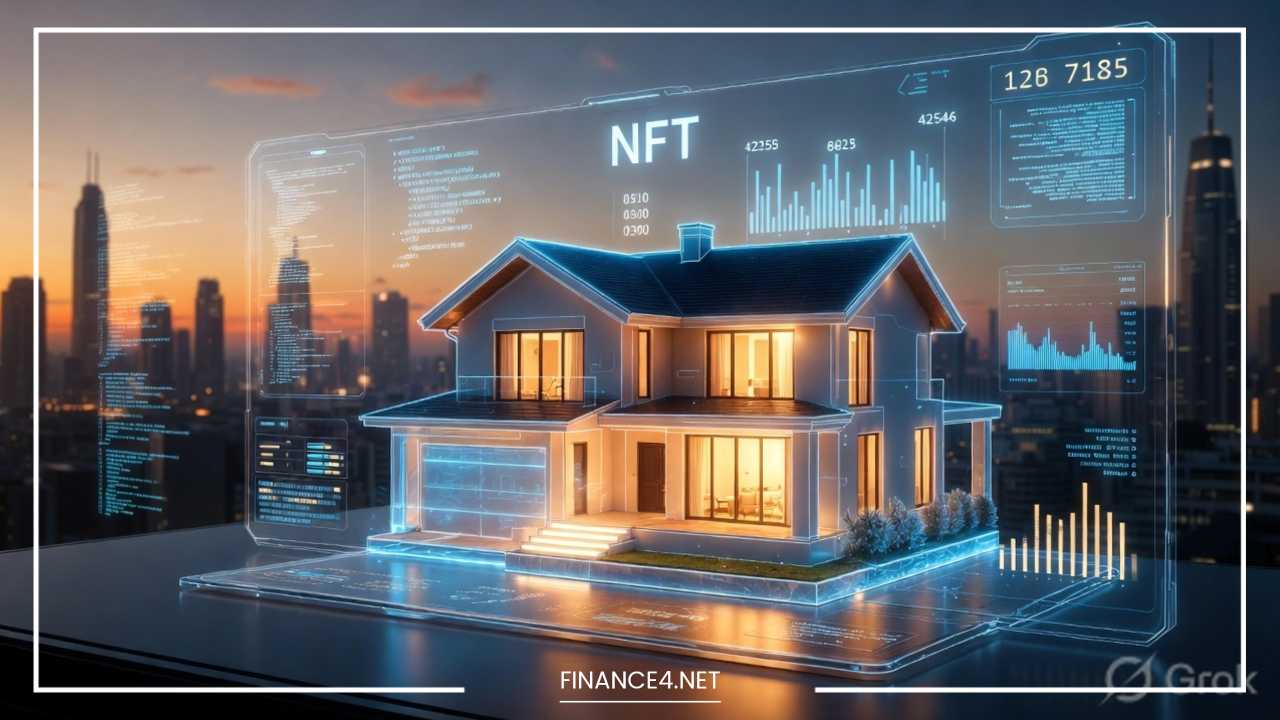
Real estate tokenization is the process of converting the economic rights, equity, or debt of a physical property into programmable digital tokens hosted on a distributed ledger. Each token represents a specific, fractional share of the underlying asset or its generated cash flow. By dividing multi-million-dollar commercial developments or residential portfolios into smaller, digital units, tokenization lowers minimum capital requirements for eligible investors.
In practice, a property-owning entity (such as a Special Purpose Vehicle or Limited Liability Company) holds the physical real estate deed. The digital tokens represent equity shares or debt obligations in that holding entity. Smart contracts facilitate automated distribution of rental income directly to token holders’ digital wallets, while maintaining detailed digital cap tables for issuer reporting.
Furthermore, tokenization creates opportunities for secondary market trading on regulated digital asset exchanges, potentially introducing liquidity to an inherently illiquid asset class. However, tokenizing an asset does not automatically bypass legal transfer protocols; token ownership must legally align with securities regulations and corporate ownership laws in the relevant jurisdiction.
Beyond basic capital formation, tokenized real estate alters capital structure optimization for property developers. Traditionally, securing equity financing for large-scale developments required negotiating with institutional private equity firms or high-net-worth syndicates. Tokenization allows developers to pool capital from broader, globally distributed networks of accredited investors under compliant private placement frameworks.
Tokenized structures can also incorporate programmable compliance directly into the token smart contract using standards like ERC-3643 or ST-20. These security token standards restrict token transfers at the protocol level, enforcing rules such as mandatory Know Your Customer status, investor caps by jurisdiction, and investor accreditation checks prior to transaction finalization. Consequently, token secondary markets can operate continuously without risking regulatory non-compliance or unverified ownership changes.
Smart Contracts for Property Transactions
Property acquisition traditionally requires extensive manual oversight to handle earnest money deposits, title searches, loan approvals, and closing documents. Smart contracts streamline this coordination by automating transaction logic when predefined operational criteria are met.
When a buyer and seller initiate a purchase agreement, funds can be held in a smart contract-based digital escrow account. The contract automatically releases the earnest deposit or total purchase price to the seller only after validated external inputs—such as a cleared title report, verified inspection clearance, or recorded deed—are registered on-chain by authorized entities.
This programmable automation reduces manual administrative overhead, eliminates unnecessary delays, and minimizes counterparty risk during the settlement phase. Despite these automated efficiencies, smart contract logic must be supported by rigorous legal drafting, independent code audits, and established dispute-resolution mechanisms to address edge cases or human errors in real-world property conditions.
In a traditional property closing workflow, multiple parties handle sensitive funds and execution tasks sequentially. A single delay in funds verification by a lending bank or a delayed signature from an escrow officer can derail time-sensitive transactions, leading to added bridge-financing costs or contractual penalties. Smart contracts transform sequential execution into deterministic, parallel verification.
Consider a commercial real estate acquisition involving earnest money, environmental clearances, and secondary debt financing. The buyer deposits digital fiat or stablecoin reserves into a multisig smart contract escrow. Simultaneously, environmental inspection agencies upload cryptographic attestations of completed surveys to the chain.
Once the land registry or designated title company publishes a signed cryptographic proof of deed transfer, the smart contract instantaneously routes purchase proceeds to the seller, pays broker commissions directly to agency wallets, and remits transfer taxes to municipal treasury accounts. By converting settlement into a deterministic execution event, transaction timelines shrink from months to days or hours.
Property Title and Land Registry Management
Land registry systems in many regions still depend on physical archives or disconnected municipal databases, making title verification labor-intensive and vulnerable to administrative error or title fraud. Implementing blockchain technology within land administration provides a unified, chronological history of title transfers and encumbrances.
When property titles are indexed on a distributed ledger, every transfer, mortgage placement, or lien removal creates an immutable audit trail. Government land registries, title insurance companies, buyers, and financial institutions can query a single, verified record of historical transactions, significantly reducing title search durations and associated legal fees.
Because records on a blockchain are cryptographic and timestamped, unauthorized alterations or fraudulent title transfers become significantly harder to execute. Successful implementation requires accurate initial data entry (preventing inaccurate historic data from being digitized) and formal legal recognition by governing land authorities.
Title fraud represents a costly point of vulnerability within legacy property frameworks. Unscrupulous actors can forge deeds, execute unauthorized quitclaim transfers, or take out fraudulent mortgages against unencumbered properties using falsified identity documents. By the time the legitimate owner discovers the fraud, navigating legal channels to clear property titles requires substantial litigation expense.
Anchoring property land registries on a permissioned, government-backed blockchain renders unauthorized deed transfers computationally impractical. Property records are bound to cryptographic key pairs controlled by designated government authorities and verified property owners. A title transfer cannot be submitted to the distributed ledger without dual cryptographic signatures from the registered owner and the municipal land recorder.
Furthermore, secondary liens, tax assessments, and mechanics’ liens are recorded directly to the property’s digital ledger entry. This creates an uninterrupted, single source of truth regarding property encumbrances, drastically lowering the underwriting risk and operational costs borne by title insurance providers.
Faster and More Transparent Property Transactions
A standard property transaction involves multiple independent stakeholders, including buyers, sellers, real estate agents, mortgage lenders, title agents, and legal counsel. Because each party traditionally maintains separate records, transaction progress often stalls during document verification and milestone reconciliation.
A shared blockchain layer acts as a single source of truth for transaction milestones. Stakeholders with appropriate access permissions can track document submissions, loan approvals, appraisal receipts, and closing statuses in real time. Standardizing transaction workflows on a shared ledger improves document provenance and accelerates settlement times by removing redundant communication loops.
While blockchain technology streamlines record synchronization and milestone tracking, it does not replace necessary real-world due diligence, physical property inspections, structural surveys, or regulatory disclosures required by law.
The operational inefficiency of current property transaction loops stems largely from data asymmetry and siloed information architectures. Each enterprise involved in a deal utilizes proprietary database systems, resulting in redundant validation steps. For example, a buyer’s financial capacity is checked independently by the seller’s agent, the title company, the mortgage lender, and the closing attorney.
When transactions leverage a shared blockchain layer, participants interact with a unified transaction ledger while preserving data confidentiality through zero-knowledge proofs or private transaction channels. A buyer can prove their financial solvency to a seller and lender cryptographically without exposing their entire bank account statement or sensitive financial history.
Milestone updates—such as appraisal reports uploaded by licensed appraisers or property condition reports verified by inspectors—are recorded to the shared ledger instantly. All permissioned parties receive automated, immutable status updates, eliminating thousands of hours typically consumed by manual follow-up emails, phone calls, and redundant document uploads.
Fractional Property Ownership
While tokenization provides the cryptographic mechanism for asset digitization, fractional property ownership represents the overarching commercial model enabling co-investment in real estate assets. Digital platforms leverage blockchain architecture to aggregate capital from multiple investors, allowing them to participate in high-value commercial properties, logistics parks, or residential complexes.
Through legally structured investment vehicles integrated with blockchain management portals, fractional owners receive proportional rights to net rental yields and long-term capital appreciation. The blockchain ledger maintains an unalterable registry of fractional unit holders and automates voting procedures for major property decisions, such as capital improvements or asset sales.
Unlike traditional real estate syndications, which require substantial investment minimums and complex paper administration, digital fractional ownership reduces management overhead, allowing broader demographic access to commercial property markets within applicable regulatory frameworks.
Fractional ownership democratizes access to institutional-grade real estate that was previously reserved for sovereign wealth funds, pension funds, and ultra-high-net-worth individuals. Assets such as Class-A office buildings, multi-tenant industrial logistics hubs, and high-density multifamily complexes typically require capital commitments running into millions of dollars.
By structuring these developments into legally recognized fractionalized models operating on digital ledgers, individual investors can allocate smaller capital amounts across multiple property types and geographical markets.
Furthermore, fractional governance can be facilitated directly through decentralized or automated voting protocols embedded within smart contracts. When a property manager proposes a major capital expenditure—such as installing solar power infrastructure or executing a building renovation—fractional token holders cast verifiable, cryptographic votes proportional to their ownership stakes.
Voting results are logged directly on-chain, triggering automated budget allocations from property reserve smart accounts once consensus thresholds are met. This structure reduces agency conflicts between asset managers and fractional equity holders while ensuring complete financial transparency.
Property Management and Rental Payments
Managing operational real estate requires ongoing administration of lease agreements, security deposits, maintenance requests, and vendor invoices. Blockchain platforms and smart contracts bring automation and transparency to day-to-day property operations.
Residential or commercial leases can be executed as smart contracts that automatically trigger monthly rental payments from a tenant’s account to the landlord’s account on set dates. Security deposits can be locked in neutral escrow contracts, with release conditions tied to digitized move-out inspection reports.
Additionally, maintenance schedules, contractor agreements, and utility expenses can be logged permanently on-chain. This provides real estate investment trusts (REITs) and individual property owners with an auditable accounting record, reducing property management friction and improving financial reporting accuracy for investors.
The daily operations of large-scale residential and commercial complexes involve continuous capital transfers and operational logistics. Lease management platforms powered by smart contracts streamline these operations by establishing automated financial workflows.
When a tenant executes an on-chain lease agreement, recurring payment instructions are established using automated stablecoin routes or integrated bank APIs. Rent collection occurs automatically on the due date, routing funds through a pre-programmed distribution hierarchy that immediately allocates portions of the rent to mortgage servicing accounts, property tax reserves, maintenance funds, and owner distributions.
Security deposit management also benefits significantly from smart contract integration. Historically, security deposit disputes represent a primary source of friction between property managers and tenants. By locking security deposits in smart contract escrows with programmed release rules, funds cannot be unilaterally withheld or misallocated.
When a tenancy concludes, independent third-party property inspectors submit a standardized digital condition report to the network. The smart contract assesses pre-existing move-in baseline data against the move-out report, automatically disbursing appropriate security deposit refunds to the tenant while remitting verified repair costs to authorized service contractors.
Real Estate Financing and Mortgage Processing
The commercial and residential mortgage underwriting process is traditionally paper-intensive, requiring extensive manual verification of borrower assets, income, credit history, and property collateral.
Blockchain technology streamlines real estate financing by establishing standardized, verifiable data pipelines between borrowers, primary lenders, secondary mortgage markets, and credit agencies. Mortgage agreements documented via smart contracts can automate payment distribution, track outstanding loan balances, and calculate interest accruals automatically.
Furthermore, real estate debt can be tokenized into digital financial instruments, enabling fractional participation in loan portfolios by institutional or qualified investors. By maintaining transparent collateral records and immutable payment histories, lenders can improve secondary market loan pooling, lower origination costs, and enhance regulatory compliance oversight.
Mortgage underwriting and secondary market securitization suffer from significant structural opacity. In legacy secondary mortgage markets, originators bundle thousands of individual mortgages into residential mortgage-backed securities (RMBS) and sell them to institutional investors.
Verifying the underlying loan quality, payment performance, and borrower creditworthiness of individual loans within a massive pool requires costly due diligence and continuous auditing.
Blockchain-enabled mortgage platforms record every loan origination, payment event, property revaluation, and escrow adjustment directly to an immutable ledger. Secondary market purchasers can instantly inspect granular, anonymized loan performance histories across an entire mortgage portfolio using verifiable audit tools.
Furthermore, loan servicing is automated via smart contracts; principal and interest payments from borrowers are automatically calculated, split, and distributed to secondary bondholders according to the exact waterfall mechanics defined in securitization contracts. This granular auditability mitigates systemic credit risks, reduces loan servicing fees, and lowers mortgage origination expenses for home buyers.
Digital Identity Verification and Fraud Prevention
Real estate transactions are frequent targets for identity theft, wire fraud, and fraudulent document submission due to the high monetary values involved. Incorporating decentralized digital identity protocols (DID) and verifiable credentials onto blockchain networks mitigates these security vulnerabilities.
Buyers, sellers, and service providers can establish verified digital identities that comply with Know Your Customer (KYC) and Anti-Money Laundering (AML) regulations. Once verified by an accredited institution, credentials can be cryptographically presented to transaction counterparties without repeatedly exposing sensitive personal identification data.
In parallel, property deeds, bank wire details, and power-of-attorney documents can be digitally signed and hashed to the ledger. Counterparties can verify document authenticity in real time before releasing funds, preventing phishing attacks and unauthorized account alterations during closing.
In real estate closings, wire fraud presents an ongoing operational threat. Cybercriminals frequently compromise the email accounts of real estate agents, closing attorneys, or title companies to send altered wire transfer instructions to buyers right before closing. Once funds are wired to fraudulent accounts, recovering them is exceptionally difficult.
Decentralized identity frameworks built on W3C digital identity standards eliminate dependence on unencrypted email communications for closing instructions. Under a blockchain-enabled identity model, every entity in a transaction—from the closing law firm to the escrow agent and buyer—holds a cryptographically verifiable digital credential issued by accredited trust authorities.
Closing instructions, including destination bank details and routing numbers, are digitally signed by the verified escrow officer using their private key and anchored to the transaction’s smart contract. The buyer’s payment interface verifies the cryptographic signature directly against the escrow officer’s public credential on-chain before executing any funds transfer. This render wire spoofing and middleman phishing attacks completely ineffective.
Key Differences: Traditional vs. Blockchain-Enabled Real Estate
The shift from legacy real estate workflows to blockchain-supported infrastructure changes how data, money, and ownership rights move across transaction participants.
| Operational Dimension | Traditional Real Estate Process | Blockchain-Enabled Real Estate Process |
| Recordkeeping | Centralized, fragmented databases; paper records | Distributed, immutable shared ledger |
| Ownership Structure | High minimum capital; whole-asset purchases | Fractional access via digital token structures |
| Transaction Execution | Manual document preparation, physical signatures | Automated execution via verified smart contracts |
| Title Verification | Manual title searches across multiple local archives | Instantaneous audit of cryptographic historical deeds |
| Settlement Time | 30 to 90 days average closing window | Near real-time conditional settlement and release |
| Financial Auditing | Periodic, manual reconciliation of accounts | Real-time continuous reporting on immutable ledgers |
| Intermediary Reliance | Heavy reliance on multiple disconnected brokers, escrows, and agents | Streamlined interaction via protocol-level smart rules |
| Market Liquidity | Highly illiquid; long sales cycles and capital lockups | Enhanced secondary liquidity via regulated digital exchanges |
| Data Accessibility | Siloed, proprietary databases with asymmetric access | Permissioned, transparent data shared across stakeholders |
| Identity Verification | Repeated, paper-based KYC/AML verification steps | Reusable, cryptographically verifiable digital identity credentials |
Key Benefits of Blockchain in Real Estate
Integrating blockchain infrastructure into property markets yields several structural advantages for investors, property operators, and public institutions.
Greater Transparency and Traceability
Distributed ledgers provide a single, verified record of historical property events, lease agreements, and ownership changes. All authorized network participants view identical transaction histories, reducing disputes over missing documentation and improving data clarity during due diligence processes.
Improved Operational Efficiency
Automating manual validation tasks, document verification, and escrow workflows through smart contracts eliminates redundant administrative processes. This leads to shorter closing timelines and reduces reliance on manual coordination across disparate intermediaries.
Reduced Administrative Costs
By reducing repetitive paperwork, manual title searches, financial reconciliation, and escrow management fees, blockchain integration lowers total transaction and operational costs for buyers, sellers, and property managers.
Broader Access to Property Investment
Through legal fractionalization and digital token structures, high-value commercial and residential real estate becomes accessible to a broader base of investors who may not have the capital required for full-property acquisitions.
Stronger Record Integrity
Cryptographic hashing and distributed consensus ensure that once data is recorded on the blockchain, it cannot be modified or deleted retroactively. This tamper-evident framework protects against unauthorized record tampering and improves long-term auditability.
Enhanced Asset Liquidity
Real estate has historically suffered from structural illiquidity, requiring months or years to execute property sales and convert equity into liquid capital. By establishing compliant secondary trading markets for tokenized equity and fractional property shares, investors can buy, sell, or rebalance property allocations with significantly lower transaction costs and reduced execution timeframes.
Standardized Compliance and Automated Auditing
Regulatory compliance within traditional real estate transactions relies on periodic manual reviews conducted by legal and financial compliance personnel. Smart contract architectures allow regulatory constraints—including investor limits, accredited investor status checks, foreign ownership restrictions, and tax withholding rules—to be encoded directly into the asset’s digital token logic.
Every transfer attempt triggers an automated audit against these protocol rules, ensuring continuous, programmatic compliance without requiring manual administrative intervention.
Challenges and Limitations of Blockchain Adoption
While the potential of blockchain technology in real estate is substantial, widespread industry adoption faces several regulatory, technical, and operational hurdles.
-
Regulatory Uncertainty: Real estate is heavily regulated at national, state, and municipal levels. Clear legal guidelines regarding securities laws for tokenized assets, cross-border token offerings, digital land registration, and taxation remain evolving across many jurisdictions.
-
Legal Ownership and Enforceability: A digital token on a blockchain does not inherently convey legal property ownership under statutory law unless explicitly supported by legal contracts, corporate structures (such as SPVs), and official government land registry recognition.
-
Data Privacy Concerns: Public blockchain networks retain permanent, immutable records. To comply with global privacy regulations (such as GDPR), sensitive personal data must be stored securely off-chain, using only cryptographic proofs or hashes on the public ledger.
-
Cybersecurity and Smart Contract Vulnerabilities: While the underlying blockchain network may be secure, flaws or bugs within smart contract code can be exploited by malicious actors, potentially leading to a loss of funds or locked digital assets.
-
Integration with Legacy Systems: Existing municipal land registries, banking networks, and enterprise resource planning (ERP) platforms rely on legacy architecture that requires significant technical investment to integrate with distributed ledger systems.
-
Data Accuracy and the Risk of Inaccurate Initial Data: A blockchain ensures that recorded data remains unchanged, but it cannot independently verify whether physical property documents, deeds, or inspection reports were accurate or genuine when first uploaded.
-
Adoption and Implementation Costs: Transitioning to blockchain-based infrastructure demands significant capital investment, stakeholder alignment, ongoing legal oversight, and comprehensive staff training.
Overcoming these limitations requires structured coordination between technology architects, legal professionals, and regulatory bodies. The risk of inaccurate initial data entry highlights the reality that blockchain records are only as reliable as the inputs provided by real-world authority figures. Establishing accredited validator networks—composed of certified surveyors, licensed title officers, and verified municipal clerks—is essential to verify physical conditions before anchoring data to distributed ledgers.
Similarly, addressing privacy regulations requires hybrid data architectures. In these configurations, personally identifiable information (PII), such as full legal names, financial statements, and government identification numbers, remains hosted in secure, encrypted off-chain storage systems.
Only cryptographic hashes or zero-knowledge proofs are committed to the public ledger. This allows counterparties to verify the validity of a document or identity without exposing underlying private data on an immutable network.
The Future of Blockchain in Real Estate
The real estate sector is moving toward hybrid models where distributed ledgers seamlessly interface with traditional legal frameworks and modern enterprise systems.
Future developments will likely focus on the convergence of real estate tokenization with institutional finance, supported by clear regulatory frameworks for security token offerings. As municipal governments digitize land registries, public-private partnerships will establish direct integration between official property deeds and on-chain registries.
Furthermore, integrating blockchain with artificial intelligence (AI) and Internet of Things (IoT) sensors will enable smart buildings to execute autonomous maintenance payments and real-time lease updates. Decentralized digital identity protocols will simplify global investor onboarding, creating a more interconnected, liquid, and transparent global real estate marketplace.
As tokenized real estate ecosystems mature, digital property tokens will increasingly interact with broader decentralized finance (DeFi) protocols in institutional contexts. Tokenized property equity can serve as verifiable, high-quality collateral for secure lending protocols, allowing property owners to obtain instant liquidity against their real estate holdings without selling the underlying physical assets.
Concurrently, artificial intelligence models will consume clean, unalterable on-chain real estate data—such as occupancy rates, historical rent yields, and automated property appraisals—to generate real-time property valuations and predictive investment analytics. This integration of blockchain, artificial intelligence, and decentralized finance will form the backbone of modern, automated property asset management.
Final Thoughts
Blockchain technology presents a transformative approach to addressing long-standing inefficiencies in the real estate industry. From property tokenization and smart contract execution to title registry management and fraud prevention, the top blockchain use cases in real estate demonstrate how distributed ledgers can enhance transparency, improve operational efficiency, and expand investment access.
However, blockchain is a foundational recordkeeping and operational technology—it does not replace statutory legal systems, physical due diligence, or established property laws. Successful long-term adoption will depend on sensible regulatory frameworks, reliable integration with existing land management systems, and a focus on solving real-world market friction. Organization leaders and investors who approach blockchain adoption with technical clarity and legal compliance will be well-positioned to navigate the future of property technology.
Building a sustainable, blockchain-enabled real estate market requires an iterative approach that balances digital innovation with established legal protection. Stakeholders must avoid viewing distributed ledgers as an overnight replacement for real estate law, recognizing them instead as an advanced infrastructure layer that elevates accuracy, velocity, and trust across all real estate transactions. Through thoughtful implementation, industry participants can unlock unprecedented liquidity and efficiency in global property markets.
Frequently Asked Questions
What are the primary benefits of tokenizing commercial and residential real estate?
Property tokenization divides the economic rights and equity of physical real estate into digital tokens on a blockchain. This process lowers minimum capital requirements for investors, improves portfolio diversification, and creates opportunities for secondary market trading on regulated digital asset exchanges, addressing the historical illiquidity of real estate assets.
How do smart contracts automate property transactions and escrow workflows?
Smart contracts are self-executing digital programs that automatically execute contractual agreements when predefined conditions are satisfied. In real estate transactions, they handle earnest money deposits and automate funds release upon receiving verified digital inputs, such as cleared title reports or municipal deed filings, significantly accelerating closing timelines.
Can blockchain technology completely replace traditional land registries and title deeds?
Blockchain technology cannot independently replace statutory land registries or legal title deeds. While distributed ledgers provide a tamper-evident, chronological record of title transfers and liens, legally binding ownership must be anchored to local statutory property laws and official municipal government land registries.
What is the difference between fractional property ownership and real estate tokenization?
Fractional property ownership is an investment model that allows multiple individuals to co-own a property or shareholding entity, whereas tokenization is the underlying cryptographic mechanism that represents those fractional economic interests as digital tokens on a distributed ledger.
How does decentralized identity verification prevent wire fraud in real estate closings?
Decentralized digital identity protocols utilize cryptographically verifiable credentials for buyers, sellers, and escrow agents. By signing closing instructions and banking details with private keys anchored to the transaction’s smart contract, counterparties can verify authenticity in real time, preventing email-based wire fraud and phishing attacks during escrow settlements.