Best Aggregator for Bridging Gaming NFTs Cross-Chain
 by
by 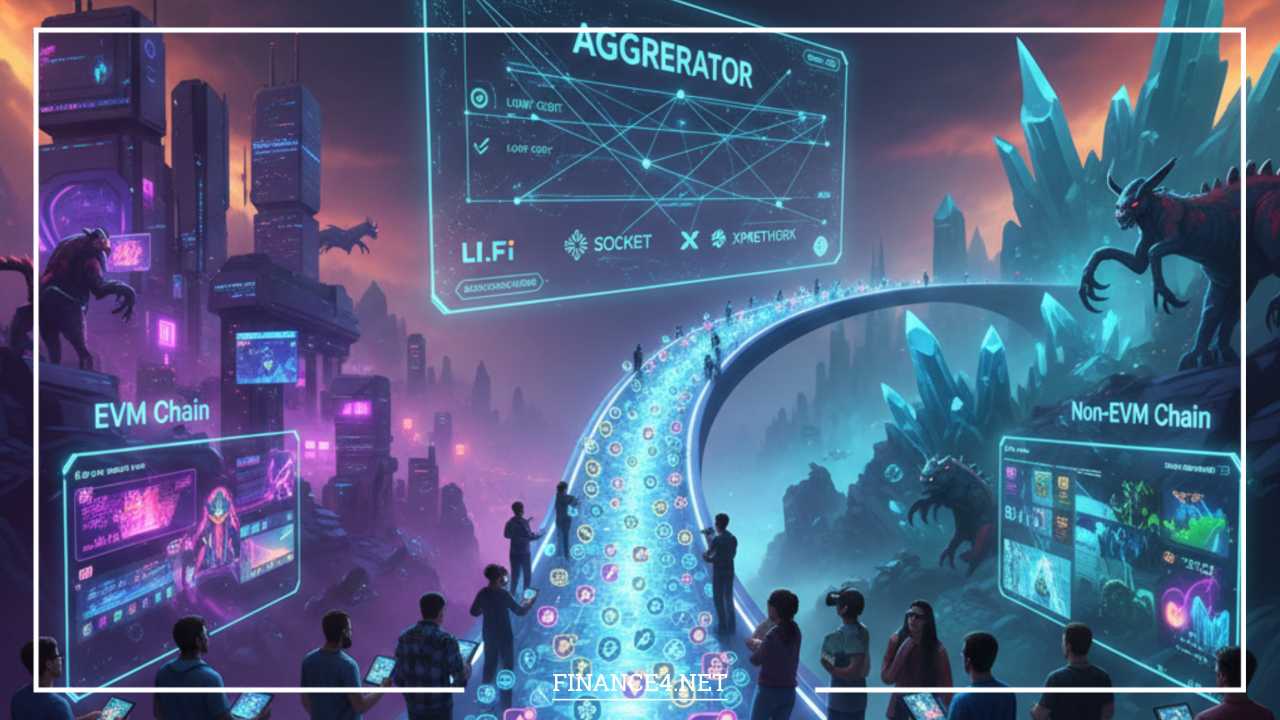
Best Aggregator for Bridging Gaming NFTs Cross-Chain | Top NFT Gaming Bridges
The digital gaming world has been irreversibly transformed by the introduction of Non-Fungible Tokens (NFTs). These tokens, representing in-game assets like unique skins, powerful weapons, or virtual land, give players true ownership and the potential to earn real-world value. However, the multi-chain nature of the blockchain ecosystem presents a significant barrier to the true potential of this innovation.
Why Cross-Chain Matters for Gaming NFTs
Today’s GameFi projects are not confined to a single blockchain. A developer might choose a high-throughput, low-fee side-chain like Polygon or ImmutableX for gameplay transactions, but want to leverage the massive liquidity and security of Ethereum Mainnet for high-value asset sales. Simultaneously, other games might thrive on Solana, Avalanche, or BNB Chain. This fragmentation of blockchain ecosystems is a major impediment.
The Challenge for Gamers, Developers, and Collectors
For a gamer or collector, this multi-chain reality creates significant friction.
-
Limited Liquidity: An asset locked on one chain may have limited buyers compared to the total market.
-
Locked Assets: Moving an asset across chains is a multi-step, technical process.
-
Difficulty Trading: A gamer cannot easily sell a Polygon-based sword for an equivalent on the Avalanche marketplace without navigating complex transfers.
-
Multiple Wallets and Gas Fees: Managing private keys for disparate chains and constantly having to acquire native gas tokens (ETH, SOL, MATIC, etc.) for each chain is a major usability headache.
Purpose of Article & What the Reader Will Gain
The solution lies in robust interoperability solutions—specifically, NFT Bridges and Aggregators. This article serves as a comprehensive guide to the leading platforms that are working to abstract away this cross-chain complexity, allowing gaming NFTs to flow freely and unlocking a more interconnected Web3 gaming landscape. We will evaluate the top contenders to help you determine the best option for your specific needs, whether you are a casual player, a serious collector, or a GameFi developer.
What is a Cross-Chain NFT Bridge / Aggregator — Key Concepts & Why They Matter
While the terms are often used interchangeably, understanding the technical difference between a bridge and an aggregator is crucial for evaluating security and performance.
Definition: Bridge vs. Aggregator
A Cross-Chain Bridge is a protocol that facilitates the transfer of assets or data between two distinct blockchains. For NFTs, this usually involves a “lock-and-mint” or “burn-and-mint” mechanism, where the original NFT is locked on the source chain, and a corresponding “wrapped” or canonical version is minted on the destination chain, ensuring that the total supply remains constant.
A Cross-Chain Aggregator sits on top of multiple existing bridges and decentralized exchanges (DEXs). Its function is akin to a flight comparison website: when a user wants to move an NFT or token from Chain A to Chain B, the aggregator automatically analyzes all available routes via its integrated bridges and swaps, selecting the optimal path based on user-defined criteria (e.g., lowest cost, fastest speed, or specific security model). For the end-user, this creates a seamless, one-click experience.
Technical Challenges & What Aggregators Solve
Aggregators are necessary because bridging NFTs is fundamentally more complex than bridging fungible tokens.
-
Preserving NFT Metadata and Ownership: The bridge must ensure that all the unique attributes—rarity scores, visual data, in-game stats—represented by the NFT’s metadata are perfectly preserved and instantly accessible on the new chain. A failure here could render a valuable in-game asset worthless or unusable.
-
Handling Different NFT Standards: While EVM-compatible chains mostly use ERC-721 and ERC-1155 standards, non-EVM chains (like Solana’s SPL) have different token standards. Bridges must manage the conversion and wrapping between these distinct architectures.
-
Reducing Friction for End-Users: Aggregators simplify the user journey by offering features like auto gas refueling (paying for gas on the destination chain using a portion of the source chain asset), best-cost routing, and a single, intuitive interface, eliminating the need for gamers to manually interact with multiple protocols.
Risks and Trade-offs
Interoperability comes with inherent risks that must be acknowledged, especially in the context of high-value gaming assets.
-
Security Risks: Bridges have historically been major targets for exploits, with billions of dollars lost due to vulnerabilities in their smart contracts or validator systems. Aggregators attempt to mitigate this by spreading risk across multiple underlying bridges, but they can also introduce a new single point of failure (the aggregator’s smart contract itself).
-
Risks with Wrapped NFTs: If the underlying bridge that holds the original, locked NFT suffers a smart-contract bug or the validator system fails, the newly minted “wrapped NFT” on the destination chain could lose its peg to the original asset, leading to potential loss or devaluation.
-
Complexity Abstraction: While abstraction is great for casual users, serious developers or high-volume traders may prefer transparency. Aggregators often hide the details of the chosen bridge, which can be a downside for those who wish to manually audit the security assumptions of the path taken.
Criteria for Evaluating a “Best” Aggregator for Gaming NFTs
Determining the “best” solution is context-dependent, but for GameFi, a few criteria stand out as critical differentiators.
Multichain / Broad Network Support
The platform must support the blockchains most relevant to GameFi. This includes core EVM chains (Ethereum, Polygon, Arbitrum, Optimism, Avalanche, BNB Chain), and increasingly, non-EVM giants like Solana or specialized gaming chains/L2s. Maximum chain coverage directly translates to maximum addressable market and liquidity for the gaming project.
Support for NFT Standards Relevant to Gaming
A top-tier solution must reliably support the transfer of ERC-721 (unique assets) and ERC-1155 (semi-fungible, often used for consumables or stackable in-game items) while ensuring the integrity of the crucial metadata. The ability to bridge assets between EVM and non-EVM standards is a massive bonus.
Low Cost & Optimized Routing (Gas, Fees)
For a gamer, transaction fees must be minimal to support a fun and engaging experience. The best aggregators must incorporate sophisticated routing logic that not only finds the cheapest bridge but also factors in real-time gas prices and potential hidden swap fees on the destination chain.
User-Friendliness (UI/UX)
The interface must be clean, simple, and require minimal technical knowledge. Features like integrated wallet compatibility, clear fee breakdowns, and simplified cross-chain transaction tracking are essential for onboarding mainstream gamers.
Security & Audit History
This is paramount. Platforms should demonstrate a history of successful audits by reputable security firms (e.g., CertiK, Quantstamp). Preference should be given to solutions with trust-minimized architecture (like optimistic or ZK-based systems) over fully trusted validator sets. Aggregators must be transparent about the security models of the underlying bridges they utilize.
Developer / dApp Support (SDKs, APIs)
For GameFi projects, the ability to seamlessly integrate the bridging function directly into the game’s user interface or marketplace is crucial. A strong Software Development Kit (SDK) or API allows developers to create a truly native, in-game bridging experience, preventing the user from having to leave the game environment.
Support for Liquidity / Marketplaces
The bridge should not only move the NFT but also ensure its continued utility. The best solutions facilitate the NFT’s immediate presence and tradability on destination chain marketplaces, or even integrate features for cross-chain listing where the asset can be listed on a marketplace from the source chain and sold on the destination chain upon arrival.
Top Aggregators & Bridges for Cross-Chain Gaming NFTs (with Pros & Cons)
The landscape of interoperability is constantly evolving, but several key players have emerged as leaders in cross-chain NFT bridging and aggregation.
LI.FI
LI.FI is primarily a bridge and DEX aggregator that has expanded its core functionality to include NFT transfers, making it a powerful contender for the GameFi space. It functions by offering an API/SDK that developers can integrate to access a mesh of interconnected bridges, optimizing for cost and speed.
| Pros | Cons |
| Broad Chain Coverage: Aggregates a wide range of EVM-compatible chains. | Complexity: Routing logic can be difficult to interpret for novice users. |
| Optimized Routing Logic: Automatically selects the most cost-efficient or fastest route by combining bridging and swapping steps. | Primary Focus is Tokens: While supporting NFTs, the protocol’s core expertise and aggregation strength lie in fungible tokens. |
| Developer-Focused: Strong SDK for direct integration into dApps and gaming platforms. | Trust in Aggregation Layer: User ultimately relies on LI.FI’s logic to choose the most secure underlying bridge. |
Use-Case Suitability: Best for Maximum Chain Coverage and Cost-Efficient Token/NFT Bundles.
XP.Network
XP.Network is one of the few platforms that was built from the ground up specifically as an NFT-centric bridge. This specialization gives it an edge in handling the intricacies of NFT metadata and multi-standard support.
| Pros | Cons |
| NFT-Specific Bridging: Excellent for preserving all NFT metadata and properties across the transfer. | Security Model: Uses a multi-signature/validator model, which requires trusting the security and honesty of the validator set. |
| EVM & Non-EVM Support: Connects a significant number of EVM chains and several major non-EVM chains (e.g., Algorand, Tezos), which is crucial for diverse gaming projects. | Not an Aggregator: It is a dedicated bridge, meaning it does not route through other protocols to find cheaper paths. |
| Support for Any NFT: Can transfer any minted ERC-721 or ERC-1155, without requiring whitelisting. | Liquidity: Its focus is on transfer, not directly on marketplace listing or liquidity. |
Use-Case Suitability: Best for NFT-Heavy Projects Requiring EVM/Non-EVM Interoperability and Full Metadata Preservation.
Socket (Bungee)
Socket, through its end-user application Bungee, is another middleware/aggregator that focuses on creating seamless cross-chain experiences. It leverages its aggregation engine to facilitate efficient token swaps and, increasingly, NFT transfers.
| Pros | Cons |
| Fast & User-Friendly: Known for its clean front-end (Bungee) and focus on speed and ease of use for general users. | NFT Support is Evolving: NFT functionality may be less comprehensive or specialized compared to NFT-native bridges. |
| Bridge Aggregation: Routes transactions through multiple underlying protocols to optimize for the best result. | Security Incident History: The protocol has faced security incidents which, while managed, highlight the inherent risks of aggregation. |
| Developer Focus: Strong middleware design, allowing dApps to easily “plug in” cross-chain functionality. | Less Focused on Gaming Assets: Its primary optimization is often for fungible tokens and stablecoins. |
Use-Case Suitability: Best for Casual Gamers/Users Requiring a Simple, Fast UI for General Cross-Chain Operations.
Synapse Protocol
Synapse is a universal cross-chain communication protocol that began as a liquidity network but evolved into a generalized cross-chain message passing system. This message-passing functionality is powerful for GameFi developers.
| Pros | Cons |
| Generalized Message Passing: Allows for complex cross-chain smart contract calls (e.g., “Bridge this NFT and simultaneously stake it on the destination chain”). | Developer Centric: The true power lies in its messaging layer, which requires developer integration. Less relevant for a casual user looking for a simple bridge. |
| Security via Optimistic Model: Uses an optimistic verification system for security, relying on an external set of observers to submit fraud proofs. | Liquidity Dependent: For some assets, it relies on deep liquidity pools, which may not be present for highly niche gaming NFTs. |
| Developer Toolkit: Offers an SDK for building truly native cross-chain dApps and games. | Chain Coverage: While broad, its competitive edge is less about aggregating all bridges and more about secure, generalized communication. |
Use-Case Suitability: Best for Game Developers Building Complex, Native Cross-Chain dApps and Game Logic.
Rubic
Rubic is a comprehensive DEX and bridge aggregator known for its extensive network support, enabling seamless swapping and bridging across a massive number of chains, including non-EVM networks.
| Pros | Cons |
| Extreme Chain Coverage: Supports over 90 blockchains and aggregates liquidity from 360+ protocols, offering immense flexibility. | Not NFT-Specialized: While it supports NFT bridging, its core utility and best-rate aggregation are heavily skewed toward fungible tokens. |
| One-Click Swapping & Bridging: Excellent user experience for complex routes (e.g., swapping a token on Chain A for a different token on Chain B, using a bridge in the middle). | Gaming Niche: Less focus on the unique standards and in-game attributes critical to complex GameFi assets. |
| Fiat On-Ramps and Swap Flexibility: Provides full-service crypto functionality, not just bridging. | High Abstraction: Hides many transaction details, which can obscure fees or the security model of the chosen route. |
Use-Case Suitability: Best for Flexibility, High Chain Count, and Users Who Need Swapping and Fiat On-Ramps Integrated with Bridging.
Special Considerations for Gaming NFTs & GameFi Projects
Gaming NFTs are not just static collectibles; they are active, functional components of a game’s economy and mechanics. This necessitates features that go beyond a standard NFT bridge.
Why Gaming NFTs May Need More Than Ordinary NFTs
-
Complex Metadata and In-Game Asset Standards: Game assets often have dynamically changing metadata (e.g., an armor’s durability, a character’s XP level). The bridging solution must not only transfer the token but also guarantee the destination chain can read and correctly update the entirety of the asset’s data.
-
Cross-Game Interoperability: The ultimate goal of the “metaverse” is for assets to move between distinct games. A bridge must support not just Chain A to Chain B, but also Game X’s asset standards to Game Y’s.
-
Royalties and Ownership Logic: Royalty rules or complex ownership mechanics tied to the smart contract need to be preserved or re-implemented correctly on the destination chain.
User Experience for Gamers
The average gamer should not need to worry about RPCs, gas tokens, or block confirmations. Simplicity is the king of adoption. The best solution is one that can be integrated almost invisibly into the in-game user interface, where bridging becomes a simple “Transfer to Polygon” button click, with the gas fees handled automatically.
Consideration for Game Developers
Game studios require an SDK that is stable, well-documented, and highly secure. The platform must offer tools for metadata management and cross-chain testing to ensure that assets do not break when they migrate. A developer needs confidence that the security model can withstand the large transaction volumes and value often associated with high-profile NFT drops.
Risks, Limitations & What to Watch Out For
While aggregators are a leap forward, they do not eliminate all risks.
Bridge Security Vulnerabilities
The history of Web3 is riddled with multi-million dollar bridge hacks. For gaming, this risk is heightened because the assets being moved are often not fungible and hold unique sentimental and financial value. A large bridge hack could instantly de-peg thousands of wrapped NFTs, leading to a catastrophic loss of value for an entire gaming ecosystem.
Wrapped NFTs & Potential Loss of Metadata/Uniqueness
Most bridging involves locking the original and minting a wrapped version. If the bridging contract or the custody mechanism is compromised, the original NFT is lost. Furthermore, poor implementation can lead to a wrapped NFT that loses its connection to the original metadata, stripping it of its in-game utility. Gamers must verify the integrity and provenance of their wrapped asset.
Liquidity Fragmentation
Bridging an NFT to a new chain does not guarantee it will be sold. If a user moves an asset from a high-liquidity chain (like Ethereum) to a niche chain for lower gas fees, they may land on a chain with no existing buyers, effectively trading lower transaction costs for zero market opportunity.
User Error Risk
Even with an aggregator’s simplified UI, human error remains a factor. Sending an asset to the wrong address, failing to approve the necessary smart contracts, or selecting the wrong destination chain can lead to irreversible loss.
Best Practices & Recommendations for Gamers / Developers / NFT Collectors
Casual Gamers
-
Prioritize UI/UX: Stick to user-friendly aggregators like the front-ends offered by Socket or LI.FI, which feature few steps and integrated gas refueling.
-
Start Small: Test the bridging process with a low-value or expendable asset before moving your most valuable gaming assets.
Developers / Serious Projects
-
Integrate via SDKs: Utilize the SDKs/APIs from platforms like Synapse or LI.FI to create a native, secure in-game experience.
-
Test Metadata Integrity: Rigorously test the NFT’s attributes and in-game functionality after a cross-chain transfer.
-
Prefer Audited Solutions: Only integrate with protocols that have a history of multiple, positive security audits.
NFT Collectors
-
Evaluate Risk Carefully: For high-value or ultra-rare assets, question whether the benefit of bridging (e.g., accessing a new marketplace) outweighs the security risk of locking the asset in a bridge contract.
-
Confirm Metadata Integrity: After a bridge transaction, immediately verify on a reputable explorer or marketplace that the NFT’s art, properties, and attributes are identical to the original.
Future Trends & What’s Next for Cross-Chain Gaming NFTs
The current generation of bridges and aggregators is just the beginning. The future of cross-chain gaming will be defined by further abstraction and security improvements.
-
Growth of Aggregator + Marketplace Hybrids: We will see platforms that not only bridge the NFT but also automatically list it on the optimal destination chain marketplace, providing end-to-end service.
-
Layer-Zero Interoperability: Protocols focusing on general message-passing (like Synapse) will become more foundational, allowing developers to build cross-chain games where the underlying chains are irrelevant to the user experience.
-
Standardization of NFT Metadata: Industry-wide adoption of canonical cross-chain NFT standards will simplify the conversion between EVM and non-EVM assets, reducing developer overhead and bridging complexity.
-
Developer-Friendly Tools: Expect more robust SDKs, APIs, and low-code solutions specifically tailored for GameFi, managing complex cross-chain state changes and asset updates seamlessly.
-
Improved Security Frameworks: New security models, including zero-knowledge proofs (ZK) for verification, will emerge to offer greater cryptographic assurance and move away from multi-sig or optimistic trust assumptions.
Final Thoughts
Cross-chain bridging is the essential plumbing that will connect the fragmented universe of GameFi into a coherent, liquid, and expansive virtual economy. Without the ability to freely move assets, the promise of true digital ownership and an open metaverse remains unfulfilled.
The “best” aggregator depends entirely on the user’s needs:
-
For the developer building a complex, cross-chain game, Synapse or the SDK of LI.FI offers the necessary message-passing and aggregation power.
-
For the collector prioritizing asset integrity, an NFT-native solution like XP.Network might be the preference.
-
For the casual gamer or liquidity seeker, an aggregator focused on UI/UX and broad routing like LI.FI or Socket provides the easiest path.
Ultimately, users and developers must balance the trade-off between convenience, cost, security, and utility. By carefully evaluating the underlying bridge security and the integrity of NFT metadata, the industry can confidently move toward a truly interoperable, and therefore much larger, gaming future.