How to Do Bridging-Based Netting for Stablecoins
 by
by 
How to Do Bridging-Based Netting for Stablecoins | Step-by-Step Guide
The proliferation of blockchain networks has ushered in an era of unprecedented financial innovation, with stablecoins emerging as a cornerstone of decentralized finance (DeFi) and cross-border payments. However, the fragmented nature of these networks presents challenges, particularly when it comes to transferring stablecoins between different blockchains. Bridging technology has emerged as a crucial solution, enabling the movement of assets across disparate ecosystems. Building upon this foundation, bridging-based netting offers a sophisticated approach to optimize these cross-chain transfers, enhancing efficiency, reducing costs, and mitigating risks.
This article delves into the concept of bridging-based netting for stablecoins, exploring its underlying principles, benefits, technical architecture, implementation considerations, potential risks, and future prospects.
Stablecoin bridging refers to the process of transferring stablecoins, which are cryptocurrencies designed to maintain a stable value relative to a fiat currency or other reference asset, from one blockchain network to another. This is typically achieved through specialized protocols known as bridges. Netting, in the context of financial systems, is a mechanism used to reduce the number of payments and the total value of funds transferred between parties by offsetting mutual obligations. Bridging-based netting combines these two concepts, applying netting principles to cross-chain stablecoin transfers facilitated by bridging infrastructure. This innovative approach is particularly significant for enhancing cross-chain stablecoin activity by offering several key benefits, including increased efficiency through the consolidation of transactions, significantly lower gas costs by reducing the number of bridge transactions, and reduced settlement risk by minimizing the gross exposure between participants.
Background Concepts
A. Stablecoins Overview
Stablecoins are cryptocurrencies whose value is pegged to a stable asset, most commonly the US dollar. Examples include USD Coin (USDC), Tether (USDT), and decentralized stablecoins like Dai (DAI). These digital assets play a vital role in the DeFi ecosystem, serving as a stable medium of exchange, collateral for lending and borrowing, and a unit of account. Their utility extends beyond DeFi, with increasing adoption for payments and remittances due to their speed and lower transaction fees compared to traditional financial systems.
B. Blockchain Bridging Explained
A blockchain bridge is a technology or protocol that enables the transfer of assets and information between two or more distinct blockchain networks. It acts as an intermediary, facilitating interoperability between otherwise siloed ecosystems. Bridges can be broadly categorized into several types:
- Trusted (Centralized) Bridges: These bridges rely on a central entity or a consortium to manage the transfer of assets. Users deposit their assets on one chain, and the central entity verifies the deposit and mints an equivalent wrapped asset on the destination chain. While often efficient, they introduce a single point of failure and require trust in the central operator.
- Trustless (Decentralized) Bridges: These bridges aim to minimize or eliminate the need for trust in a central intermediary by using cryptographic proofs and smart contracts to verify cross-chain transactions. Examples include bridges utilizing light client relays or zero-knowledge proofs. While generally more secure, they can be more complex and potentially have higher latency.
- Hybrid Bridges: These bridges combine elements of both trusted and trustless approaches, often leveraging trusted entities for certain functions while incorporating decentralized verification mechanisms to enhance security.
Common bridging protocols include Wormhole, which facilitates cross-chain messaging and asset transfers; LayerZero, an omnichain interoperability protocol; and Axelar, a decentralized network connecting multiple blockchains.
C. Netting in Finance
Netting is a risk mitigation technique used in financial markets to reduce the gross amount of financial obligations between two or more parties into a single, smaller net obligation. There are primarily two types of netting:
- Bilateral Netting: This involves two parties agreeing to offset their mutual obligations, resulting in a single net payment from one party to the other.
- Multilateral Netting: This involves multiple parties and a central clearinghouse or netting agent. Each participant’s obligations to others are netted against what they are owed, resulting in a single net debit or credit for each participant with the clearinghouse.
The purpose of netting is to significantly reduce the volume of transactions that need to be processed, thereby lowering operational costs, minimizing settlement risk (the risk that a counterparty will fail to meet their obligations), and reducing the overall amount of capital exposed.
What Is Bridging-Based Netting?
Bridging-based netting extends the principles of traditional netting to the realm of cross-chain stablecoin transfers. Instead of executing multiple individual bridge transactions between different blockchain networks, bridging-based netting aggregates these intended transfers and settles only the net amounts. This means that if multiple participants intend to send stablecoins between the same two chains in opposite directions, the netting mechanism will calculate the net flow and execute a significantly smaller number of bridge transactions, ideally just one in the direction of the net flow.
Consider a scenario where User A wants to send 100 USDC from Ethereum to Solana, and User B wants to send 80 USDC from Solana to Ethereum. Without netting, two separate bridge transactions would be required, each incurring its own gas fees and potentially bridge fees. With bridging-based netting, the system would recognize these offsetting transfers and execute a single bridge transaction of 20 USDC from Ethereum to Solana (the net difference).
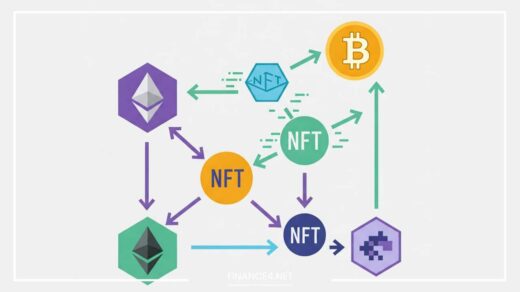
The core concept revolves around transaction aggregation and achieving settlement efficiency across different blockchain environments. This can be visualized as a multi-party agreement where instead of each party individually settling with every other party they transacted with, they all settle with a central counterparty or through a defined netting process, significantly reducing the total number of settlements required.
Use Cases & Applications
Bridging-based netting offers compelling advantages across various use cases within the blockchain ecosystem:
- Cross-chain payments for institutions: Financial institutions and businesses that frequently move stablecoins between different blockchains for operational purposes can significantly reduce transaction costs and settlement times by utilizing netting.
- Liquidity providers reducing gas costs: Liquidity providers (LPs) who operate on multiple decentralized exchanges (DEXs) across different chains often need to rebalance their positions. Bridging-based netting can aggregate these rebalancing transactions, leading to substantial savings on gas fees associated with bridge usage.
- Arbitrage and market makers: Arbitrageurs and market makers who capitalize on price discrepancies across different blockchain-based markets often need to move stablecoins rapidly between chains. Netting can streamline these movements, allowing for faster and more cost-effective arbitrage opportunities.
- DeFi protocols settling across chains: As DeFi protocols become increasingly interoperable, the need to settle obligations (e.g., in lending/borrowing or LP migrations) across different blockchains will grow. Bridging-based netting can provide an efficient mechanism for these cross-chain settlements.
Technical Architecture
Implementing bridging-based netting requires a sophisticated technical architecture involving several key components:
- Oracles: Oracles are essential for providing off-chain data, such as the state of balances and pending transactions on different blockchains, to the netting mechanism. They ensure that the system has an accurate and up-to-date view of the cross-chain transfer intentions of participants.
- Smart contracts: Smart contracts deployed on the participating blockchains will play a crucial role in orchestrating the netting process. These contracts will likely handle the locking of stablecoins intended for transfer, the verification of netting calculations, and the initiation of the net bridge transaction(s).
- Relayers or messaging layers: A reliable cross-chain communication infrastructure is necessary to facilitate the exchange of information between the netting smart contracts on different blockchains. Protocols like CCIP, LayerZero, or others that offer secure and efficient cross-chain messaging can serve this purpose.
The high-level flow of bridging-based netting can be illustrated with a simplified example:
- Transaction Intent Submission: Participants on different blockchains indicate their intention to transfer stablecoins to another specific chain, specifying the amount and destination. This intent might be registered through a dedicated netting platform or by interacting with the netting smart contracts.
- Aggregation and Calculation: The netting system (which could be a centralized coordinator or a decentralized protocol governed by smart contracts) aggregates all the submitted transfer intents for a specific netting cycle. It then calculates the net flow of stablecoins between each pair of participating blockchains.
- Net Transaction Execution: Instead of initiating individual bridge transactions for each user, the system initiates a single (or a significantly reduced number of) bridge transaction(s) corresponding to the net flows calculated in the previous step. For instance, in our earlier example, only a 20 USDC transfer from Ethereum to Solana would be initiated.
- On-Chain Settlement: Once the net bridge transaction is confirmed on the destination chain, the netting smart contracts on both the source and destination chains facilitate the distribution of the received stablecoins to the intended recipients based on their original transfer requests.
The benefits of this architecture are manifold: reduced bridge usage as only net amounts are bridged, lower gas costs due to fewer bridge transactions, and minimal trust assumptions if the netting logic is implemented transparently through auditable smart contracts and relies on secure cross-chain communication protocols.
Implementation Considerations
Implementing bridging-based netting involves careful consideration of various factors:
A. Infrastructure Needs
- Setting up the bridging layer: The choice of underlying bridging technology is critical. The bridge must be reliable, secure, and support the stablecoins and blockchain networks involved in the netting process.
- Cross-chain messaging protocols: Selecting a robust and secure cross-chain messaging protocol is essential for the reliable exchange of netting-related data between different blockchains. The protocol should offer guarantees regarding message delivery and integrity.
- Smart contract design patterns for netting: Designing efficient and secure smart contracts to handle transaction intent registration, aggregation, net calculation, and settlement is paramount. Considerations include gas optimization, handling potential edge cases, and ensuring the integrity of the netting logic.
B. Security Considerations
- Bridge vulnerabilities: The security of the underlying bridges used for the net settlements is crucial. Exploits or vulnerabilities in these bridges could lead to loss of funds. Robust monitoring and selection of well-audited and secure bridging solutions are necessary.
- Double-spending risks: Mechanisms must be in place to prevent participants from utilizing the same stablecoins for multiple transfer intents within the same netting cycle. This might involve locking the funds in the netting smart contracts during the participation window.
- Reentrancy and timing attacks: The smart contracts involved in the netting process must be carefully designed to prevent reentrancy attacks and other vulnerabilities related to the timing of cross-chain operations. Thorough auditing by reputable security firms is essential.
C. Compliance and Auditing
- Transparency and auditability: The entire netting process should be transparent and auditable, allowing participants and regulatory bodies to verify the accuracy and integrity of the calculations and settlements. On-chain records of transaction intents, netting calculations, and net settlements are crucial.
- Off-chain reporting and on-chain verification: While the core netting logic might reside on-chain, off-chain reporting mechanisms could provide summaries and analytics of the netting activity. On-chain verification of these reports can further enhance transparency and trust.
Risks and Limitations
Despite its potential benefits, bridging-based netting also presents certain risks and limitations:
- Failure of one side to deliver: If a participant’s intended incoming transfer on one chain fails (e.g., due to insufficient funds), it could potentially disrupt the netting outcome for other participants. Robust mechanisms for handling such failures, such as fallback procedures or collateralization, would be necessary.
- Latency in confirmations: Cross-chain transactions can sometimes experience latency in confirmations. Delays in the finality of bridge transactions could impact the overall settlement time of the netting process.
- Regulatory scrutiny: As cross-chain activities involving stablecoins gain more attention, regulatory scrutiny is likely to increase. Ensuring compliance with relevant regulations across different jurisdictions will be a significant consideration for the adoption of bridging-based netting.
- Bridge downtime or congestion: The reliability of the underlying bridges is paramount. Downtime or congestion on a specific bridge could impede the execution of net settlements. Redundancy and the ability to utilize alternative bridging routes might be necessary.
Future of Bridging-Based Netting
The future of bridging-based netting for stablecoins appears promising. Several trends and potential developments could further drive its adoption and evolution:
- Integration into stablecoin standards: Future stablecoin standards or protocols might natively incorporate netting capabilities, simplifying implementation and fostering wider adoption.
- Institutional adoption: As institutions increasingly engage with DeFi and cross-chain payments, the efficiency and cost savings offered by bridging-based netting could make it an attractive solution for their stablecoin transfer needs.
- Interoperability improvements: Advancements in interoperability technologies, such as more secure and efficient cross-chain communication protocols, will provide a stronger foundation for robust and scalable bridging-based netting solutions.
- Rollups and L2s using similar mechanisms: The principles of aggregation and netting could also be applied within and between layer-2 scaling solutions (rollups) to optimize stablecoin transfers and reduce fees within those ecosystems, potentially extending to cross-rollup transfers as well.
Final Thoughts
Bridging-based netting represents a significant step forward in optimizing cross-chain stablecoin transfers. By applying the well-established principles of financial netting to the emerging landscape of blockchain interoperability, it offers compelling benefits in terms of cost reduction, enhanced efficiency, and improved scalability. While challenges related to security, reliability, and regulatory compliance need to be carefully addressed, the potential of this innovative approach to streamline stablecoin movements across a multi-chain future is undeniable. As the blockchain ecosystem continues to mature and interoperability solutions advance, bridging-based netting is poised to play a crucial role in fostering a more interconnected and efficient decentralized financial system.