Multi-Chain NFT Standards Explained
 by
by 
Multi-Chain NFT Standards Explained: Navigating the Interoperable Future of Digital Assets (Early 2025)
The meteoric rise of Non-Fungible Tokens (NFTs) has fundamentally reshaped how we perceive digital ownership. With verifiable scarcity and unique identity baked into their architecture, NFTs enabled the tokenization of art, music, gaming assets, domain names, and countless other digital items.
Initially, NFTs were inextricably tied to Ethereum—the pioneer of smart contract functionality and home to standards like ERC-721 and ERC-1155. Ethereum’s dominance was instrumental in fueling the early NFT boom, but it also exposed a series of bottlenecks.
High gas fees, network congestion, and a siloed ecosystem quickly became roadblocks to broader adoption.
As the NFT space matured, these limitations became increasingly unsustainable. The concept of multi-chain NFT standards began to gain traction, driven by a vision of seamless interoperability—where digital assets could move freely across diverse blockchain environments without compromising security, functionality, or provenance.
By early 2025, the push for cross-chain compatibility is no longer just a technical curiosity; it’s a necessity. This evolution is defining the next chapter in the NFT journey—one that’s more decentralized, inclusive, and future-proof.
The Genesis of the Multi-Chain Imperative: Breaking Free from Silos
Ethereum’s Early Dominance and Its Limits
Ethereum’s first-mover advantage was key to NFT adoption. Standards like ERC-721, which allows for the creation of unique, indivisible tokens, and ERC-1155, which adds batch transfers and semi-fungibility, became the backbone of early NFT applications. These standards laid the groundwork for platforms like OpenSea, Rarible, and Decentraland.
However, Ethereum’s strengths became double-edged swords as user demand surged. With limited throughput and a fee-based prioritization model, network congestion became frequent, and gas fees skyrocketed—sometimes hitting hundreds of dollars per transaction during peak periods.
For creators, gamers, and collectors in emerging markets, this created a cost barrier that was antithetical to the spirit of decentralization.
The Siloed Nature of NFTs
Another major drawback was the isolation of NFTs within a single blockchain environment. An NFT minted on Ethereum could not natively interact with marketplaces, games, or wallets built on Solana, Polygon, Avalanche, or other chains.
This fragmented the ecosystem into isolated “walled gardens,” where innovation was restricted and liquidity was fragmented.
It also made user onboarding unnecessarily complicated. If a collector wanted to explore new NFT communities or applications on a different chain, they’d often need to bridge assets manually or start from scratch. This friction limited experimentation and broader ecosystem growth.
The Rise of Multi-Chain Thinking
As alternative Layer-1 and Layer-2 networks emerged—each offering specific advantages like faster throughput, lower fees, or unique consensus models—the desire for flexible NFT infrastructure intensified. Creators wanted to reach audiences on multiple chains.
Users wanted to own assets that traveled with them, regardless of the blockchain they used. Developers sought to build dApps that could tap into a global pool of assets and communities, not just those confined to a single chain.
In this climate, multi-chain NFT standards are no longer optional—they’re mission-critical.
Understanding Multi-Chain NFT Standards and Approaches
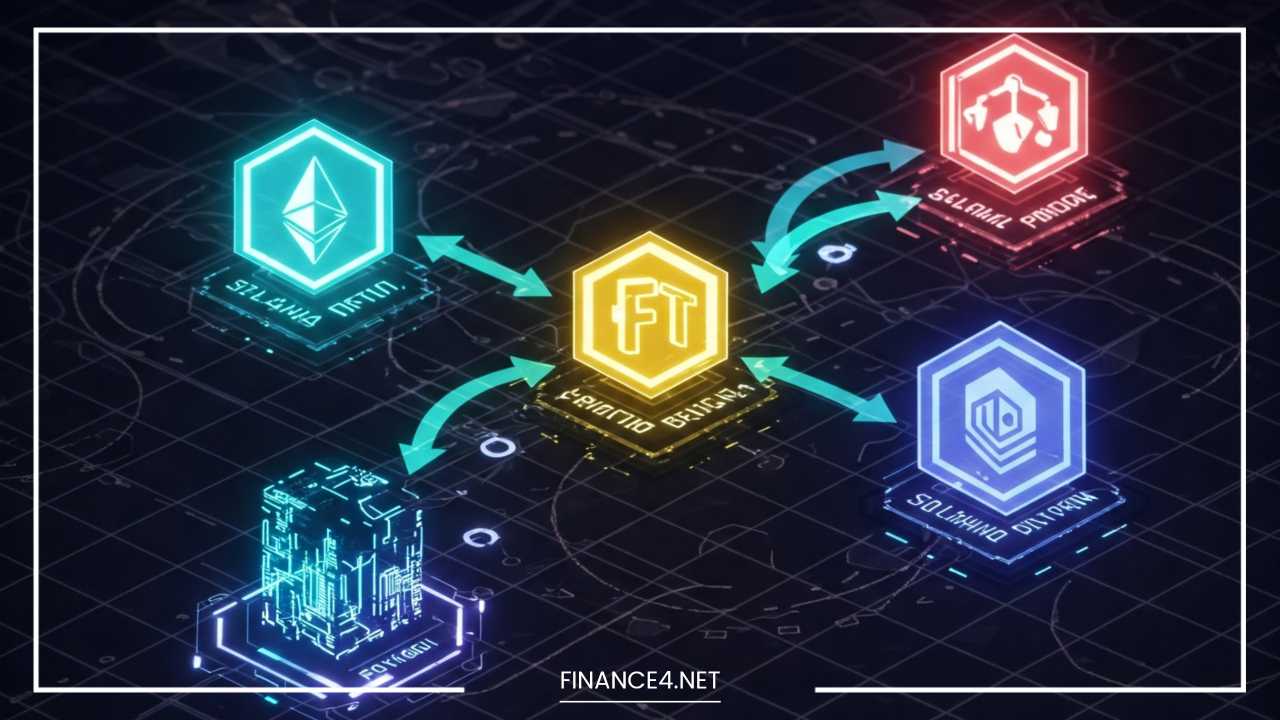
Achieving true interoperability for NFTs is a nuanced, multi-faceted challenge. There’s no one-size-fits-all solution. Instead, various approaches are being explored and adopted, each offering different trade-offs between decentralization, usability, and technical complexity.
Bridging: The First Step Toward Interoperability
One of the earliest and most widely implemented methods for enabling NFTs to move across chains is bridging. While far from perfect, bridges have laid the foundation for cross-chain interaction.
How NFT Bridges Work
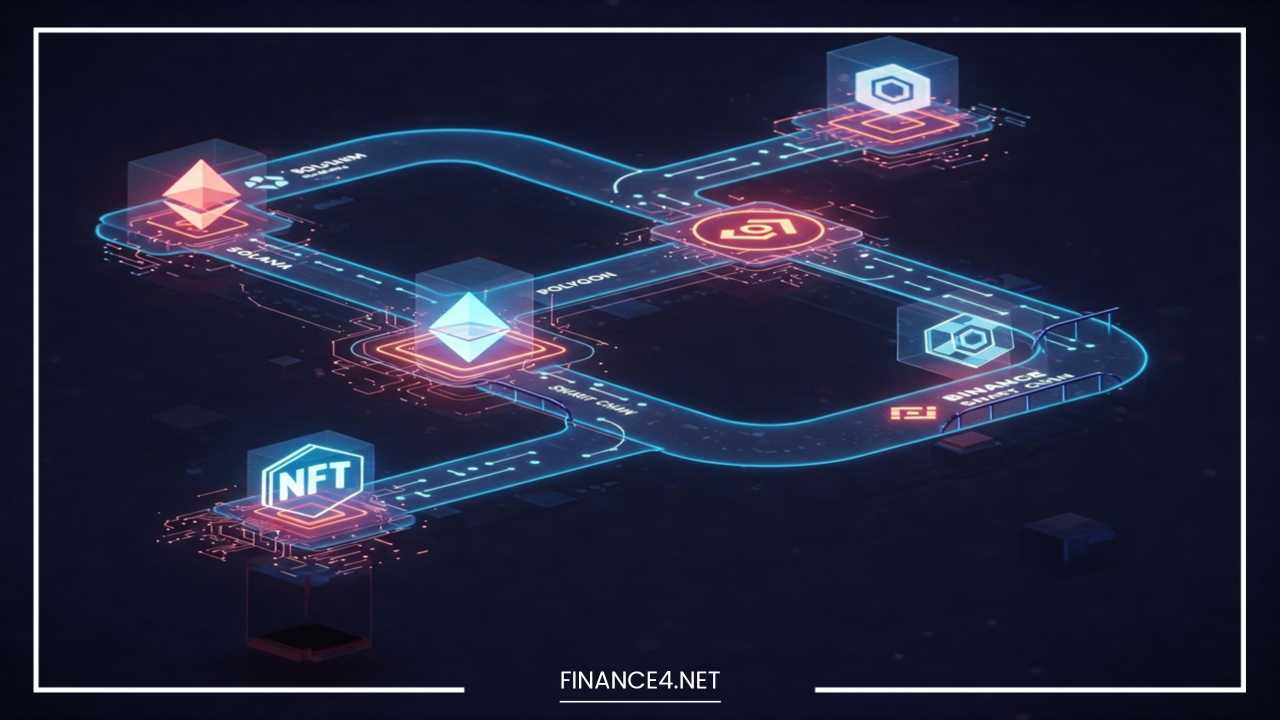
At a high level, bridges use a lock-and-mint or burn-and-mint mechanism to transfer NFTs between chains. Here’s a step-by-step breakdown:
- Locking on Source Chain: A user initiates the bridge process by sending their NFT to a bridge smart contract on the original blockchain (e.g., Ethereum). This contract locks the NFT, preventing it from being transferred or sold while it’s bridged.
- Verification Mechanism: The bridge protocol then confirms that the NFT is securely locked. Depending on the bridge design, this verification might be handled by:
- A federation of validators
- Oracles such as Chainlink
- Light clients or proof-of-stake verification mechanisms for more decentralized trust models
- Minting on Target Chain: Once verified, a wrapped NFT is minted on the destination chain (e.g., Solana, BNB Chain, or Avalanche). This wrapped token mimics the properties of the original and typically includes metadata that points back to the source asset.
- Returning (Burn/Unlock): When the user wants to return their NFT to the original chain, they send the wrapped NFT to a burn or lock contract on the target chain. Upon verification, the original NFT is released (unlocked) back to the user on the source chain.
Advantages of Bridging
- Accessibility: Allows NFT holders to leverage dApps, marketplaces, or games on other chains.
- Cost Efficiency: Users can access cheaper transaction fees or faster execution on L2s and alt-L1s.
- Flexibility: Creators can mint on one chain and distribute on others without duplicating effort.
Disadvantages of Bridging
- Security Concerns: Bridges have historically been among the most exploited components in blockchain infrastructure. High-profile hacks (e.g., Wormhole, Ronin) have exposed weaknesses in validator sets and smart contract code.
- User Complexity: Bridging often requires users to interact with multiple interfaces, understand technical workflows, and pay transaction fees on multiple chains.
- Wrapped NFTs vs. Native NFTs: The bridged version is typically not the original token, which could impact how it’s used in applications that rely on token provenance, such as curated galleries or game environments that require on-chain authentication.
Beyond Bridging: Emerging Multi-Chain Approaches
While bridging is the current default for interoperability, newer methods are gaining traction as the community seeks safer, more seamless, and more scalable alternatives.
Native Multi-Chain Minting Protocols
Some NFT platforms are building natively multi-chain minting frameworks. These protocols allow creators to mint NFTs simultaneously across several chains or to choose the chain they want during the creation process—without relying on post-mint bridges.
Examples include:
- Minting APIs and SDKs that abstract away the underlying blockchain
- Cross-chain marketplaces that can display and transact with NFTs across networks without requiring users to switch wallets or networks manually
This native approach eliminates the need for wrapped tokens and maintains full provenance, as the NFTs are truly minted on each chain rather than being copies.
Token Standards with Built-in Cross-Chain Logic
Some proposals are aiming to standardize cross-chain functionality at the protocol level. These advanced token standards include:
- XERC-721 (Cross-Chain ERC-721): An evolution of the standard NFT interface that includes logic for state tracking and transfers across multiple chains.
- LayerZero’s Omnichain NFTs: Using a lightweight cross-chain messaging protocol to enable NFT states to be passed between chains without bridging.
- InterNFT and IBC (Cosmos Ecosystem): Leveraging the Inter-Blockchain Communication protocol to allow NFTs to travel securely between Cosmos-based chains while preserving metadata, ownership history, and functional logic.
NFT Aggregators and Meta-Layers
Instead of moving the assets themselves, some platforms are building meta-layers that aggregate and index NFTs across multiple chains. Think of these like unified dashboards or marketplaces that let users see, buy, or interact with NFTs from different blockchains in one place.
Examples include:
- Multichain-compatible wallets that track NFTs from different chains under one UI
- Cross-chain marketplaces that list assets from Ethereum, Solana, Polygon, etc., and handle the underlying swap or bridge logic automatically
- DePIN (Decentralized Physical Infrastructure Networks) using NFTs across chains for asset tracking or supply chain provenance
Looking Ahead: The Future of Multi-Chain NFTs
The momentum behind multi-chain NFT standards in 2025 is not just a trend—it’s an infrastructural revolution. As blockchains continue to specialize and diversify, the ability for NFTs to fluidly traverse these networks will define their utility, value, and cultural relevance.
However, this future hinges on several ongoing efforts:
- Improving bridge security through decentralized verification models and audit-resistant code
- Standardizing metadata schemas to ensure NFTs look and behave the same on any chain
- Creating interoperable dApps that are chain-agnostic by design
- Enhancing the user experience to abstract away the complexity of chain switching and wrapped assets
Ultimately, the success of NFTs in this new era will be measured by how seamlessly they integrate into a truly multi-chain web. One where digital assets move as freely as ideas—and where creators, collectors, and developers are no longer limited by the boundaries of any single blockchain.
Wrapping and Beyond: Evolving Standards for a Multi-Chain NFT Future
As NFTs mature into critical building blocks of digital economies, the demand for interoperability—particularly the ability to move assets across chains without sacrificing security or user experience—has become paramount.
While bridging has dominated the interoperability conversation, wrapping, native multi-chain protocols, and cross-chain communication layers are increasingly taking center stage as both complementary and alternative approaches.
These technologies aim to redefine how NFTs are created, transferred, and utilized across blockchain environments.
Wrapping: Cross-Chain Representation Without Losing Origin
Understanding NFT Wrapping
Wrapping refers to the process of taking an NFT minted on one blockchain and creating a new representation of it on another chain. The resulting wrapped NFT is not a duplicate or counterfeit—it is a derivative token that maintains a 1:1 linkage with the original.
This technique is functionally similar to how wETH (Wrapped Ether) or wBTC (Wrapped Bitcoin) operate in the fungible token space, enabling cross-platform utility while preserving core identity.
Wrapping is often a component within broader bridging mechanisms, but it can also be employed independently for purposes like interoperability, liquidity expansion, and cross-chain NFT integration in games and dApps.
How NFT Wrapping Works
- Original NFT Deposit: The NFT owner sends their token to a smart contract on the source chain. This smart contract locks the NFT, rendering it non-transferable and inaccessible until a reverse operation is initiated.
- Verification and Instruction Relay: Depending on the infrastructure used (manual or automated), a verification mechanism ensures the NFT is locked before proceeding. This could be handled by trusted validators, oracles, or decentralized messaging protocols.
- Minting the Wrapped NFT: A new token is minted on the target chain. This token conforms to that chain’s native NFT standard (e.g., BEP-721 on BNB Chain, or SPL on Solana) and carries metadata linking it to the original token. Metadata may be pulled via IPFS, Arweave, or a hybrid on-chain/off-chain model.
- Transfer and Use: The wrapped NFT can now be sold, transferred, or used in smart contracts on the target chain. It behaves like a native token on that chain but with clear documentation of its origin and wrapped status.
- Unwrapping Process: To reclaim the original, the owner must send the wrapped NFT to a designated burn contract or lock it on the target chain. Upon successful execution, the original NFT is unlocked on the source chain and returned to the owner.
Advantages of Wrapping
- Cross-Chain Compatibility: Allows NFTs to be used in protocols, dApps, or marketplaces on blockchains that would not otherwise support the originating standard.
- DeFi Integrations: Wrapped NFTs can be used as collateral in lending protocols or as part of staking strategies across DeFi platforms.
- Extended Functionality: NFTs from chains without advanced smart contract support can be wrapped and leveraged in more complex environments (e.g., wrapping a Tezos NFT for use in an Ethereum-based game).
- Brand Expansion: Projects can extend their reach to users on other chains, enhancing visibility and user acquisition.
Disadvantages and Limitations
- Security Dependency: The security of wrapped NFTs depends heavily on the smart contracts involved in the wrapping and unwrapping processes. If the original contract is compromised or incorrectly written, the locked NFTs may be permanently inaccessible.
- Layered Abstraction: Each layer of wrapping introduces complexity. The wrapped NFT is a derivative, not the original. This can affect how it is perceived in terms of value and provenance.
- Incompatibility Risks: Not all metadata structures are easily portable. Differences in storage, formatting, or URI standards between chains can lead to inconsistencies or broken metadata.
Use Cases in the Wild
- pNetwork and Wormhole have enabled wrapped NFT functionality across networks like Ethereum, Solana, and BNB Chain.
- Rarible Protocol has supported wrapped NFT minting and transfers as part of its multi-chain framework, allowing creators to leverage diverse ecosystems.
- Gaming platforms increasingly use wrapping to migrate assets between EVM-compatible chains and high-performance chains optimized for real-time interactions.
Native Multi-Chain NFT Protocols: Designing for Interoperability From the Ground Up
Defining Native Multi-Chain NFTs
Unlike wrapped NFTs, which rely on locking and minting mechanisms to simulate cross-chain ownership, native multi-chain protocols are built to treat NFTs as inherently multi-chain assets.
These protocols aim to ensure that the same NFT can move between chains, retaining its state, ownership, and metadata without being destroyed, cloned, or reissued.
This vision involves building interoperability into the standard itself, rather than relying on external infrastructure like bridges.
How Native Multi-Chain Protocols Work
- Shared Ownership Registry: These protocols maintain a decentralized registry—either on a root chain or distributed across participating networks—that tracks NFT ownership, state, and history regardless of its current location.
- State Synchronization: When an NFT is moved from Chain A to Chain B, its state (metadata, ownership, etc.) is updated across the registry and local chain environment. Some models rely on finality proofs and light clients to ensure data consistency.
- Cross-Chain Logic: Smart contracts on each chain interact with the registry or verification layer to ensure actions (like transfers or burns) are valid, synchronized, and irreversible.
- Chain-Native Instantiation: The NFT is “instantiated” natively on the target chain, meaning it exists there without being a wrapped derivative. The originating instance is either locked or marked as inactive.
Advantages of Native Multi-Chain Standards
- True Interoperability: NFTs can be used natively on multiple chains without relying on wrapped representations or external bridges.
- Unified Identity and Provenance: Maintains one consistent identity for the NFT, avoiding metadata divergence and chain-specific fragmentation.
- Expanded Composability: Facilitates advanced use cases like cross-chain staking, lending, dynamic metadata updates, and programmable game mechanics that span multiple ecosystems.
Disadvantages and Hurdles
- Technical Complexity: Implementing such systems requires deep coordination between chains, shared consensus layers, or innovative cryptographic proofs (e.g., zk-SNARKs or optimistic rollups).
- Limited Support: Most blockchains were not designed with multi-chain asset management in mind, requiring custom integrations or retrofitting.
- Evolving Standards: These protocols are still experimental and may lack broad adoption or community consensus.
Prominent Examples
- Cosmos and IBC (Inter-Blockchain Communication): Enables NFTs to move freely between Cosmos-based chains like Osmosis, Stargaze, and Juno.
- Polkadot and XCMP (Cross-Chain Message Passing): Allows NFTs to transfer between parachains, with native support for asset registration and state management.
- LayerZero’s Omnichain NFTs: NFTs created using LayerZero technology can seamlessly switch between chains without duplication, ensuring consistent ownership tracking.
Cross-Chain Communication Protocols: The Infrastructure Beneath Interoperability
The Role of Communication Protocols
While wrapping and native multi-chain standards focus on NFT representation and movement, cross-chain communication protocols like Axelar, LayerZero, and Chainlink CCIP serve as the underlying communication layer, allowing disparate chains to speak the same language.
These protocols handle message passing, state updates, and event relaying between blockchains—essential for verifying ownership, executing contracts, or triggering NFT-related actions across chains.
How Cross-Chain Protocols Work
- Message Sending: A smart contract on Chain A sends a message to Chain B (e.g., “this NFT has been transferred”).
- Relay Mechanism: The message is transmitted using secure pathways—such as validator networks, cryptographic proofs, or oracle-based relayers.
- Execution on Target Chain: Once verified, the message triggers an action on Chain B (e.g., minting a mirrored NFT, updating metadata, or registering the new owner).
These protocols are modular and can be integrated into both bridges and native NFT protocols.
Advantages
- Standardization: Provides a consistent method for different blockchains to communicate without requiring one-off solutions.
- Security Abstraction: Allows NFT developers to focus on core features while relying on professionally maintained communication infrastructure.
- Developer Flexibility: Protocols like CCIP offer SDKs and APIs for rapid integration of cross-chain features into NFT projects.
Disadvantages
- Dependency Risk: If the communication layer is compromised, the entire system relying on it (including NFTs) may be at risk.
- Latency and Cost: Cross-chain message processing can be slower and more expensive than on-chain transactions.
Current Trends in Multi-Chain NFT Ecosystems (Early 2025)
Bridging Dominance with Refinement
Bridging remains the most widely used method for cross-chain NFT functionality. However, newer bridges are significantly more secure, efficient, and user-friendly, employing multi-signature validators, threshold cryptography, and real-time audits.
Emergence of Cross-Chain Marketplaces
Platforms like OpenSea, Rarible, and Magic Eden have embraced multi-chain support, integrating Ethereum, Polygon, Avalanche, Solana, and even niche Layer-2s. These marketplaces are becoming aggregation layers, offering seamless trading, discovery, and management of NFTs across chains.
Layer-2 Adoption and Rollup Strategies
Rollups like Arbitrum, Optimism, and **
zkSync** have become hotbeds for NFT activity, offering low-cost, high-speed alternatives to Ethereum mainnet while retaining Ethereum’s security.
UX-Driven Development
Projects like Zapper and Rainbow are focusing on intuitive wallet interfaces that abstract the complexities of chain switching, gas fees, and bridge interactions. This is key for onboarding the next wave of mainstream users.
Utility-First Multi-Chain NFTs
NFTs in 2025 are no longer just collectibles. They are keys to accessing experiences, staking contracts, governance platforms, and even identity systems.
Projects are increasingly designing NFTs with multi-chain use cases in mind, ensuring portability across gaming platforms, virtual worlds, and DeFi protocols.
Challenges in Realizing Seamless Multi-Chain NFTs
Despite the rapid advancements in multi-chain technology, several hurdles remain for achieving seamless interoperability.
These challenges touch on security, complexity, liquidity, and regulatory concerns that all need to be addressed for multi-chain NFTs to achieve widespread adoption.
1. Security Risks
Security is one of the primary concerns when bridging NFTs between chains. Blockchain bridges are often centralized in design and involve locking the original asset on one chain while minting a derivative token on another.
This creates potential vulnerabilities, as malicious actors could exploit weaknesses in the bridging protocol, leading to loss of assets.
Solution:
To combat these security risks, more decentralized bridging solutions are being developed. For instance, some bridges are incorporating decentralized oracles and validators to verify the locked asset before minting the wrapped token on the target chain.
Furthermore, advanced cryptography and enhanced consensus mechanisms are being implemented to ensure the security of cross-chain interactions.
2. Lack of Universal Standards
While the ERC-721 standard is widely recognized, each blockchain has its own version of NFT standards, creating fragmentation. Solana uses SPL tokens for NFTs, while Tezos has its own standard.
These variations make it difficult for NFTs to seamlessly operate across different ecosystems, as they need to be adapted or wrapped into different standards for use on each chain.
Solution:
A potential solution lies in the creation of cross-chain interoperability standards that can harmonize these different NFT standards.
There are ongoing efforts to standardize NFT metadata, identification, and transfer protocols, which could reduce fragmentation and enable NFTs to be more easily transferred and recognized across chains.
For instance, projects such as Polkadot and Cosmos are working towards enabling interoperability through their shared relay chains and interchain protocols.
3. Complexity for Users
The process of interacting with multi-chain NFTs is often cumbersome and confusing for the average user. Switching between different chains, managing wallets for each chain, and using bridges for cross-chain transfers can be overwhelming.
This complexity is a significant barrier to mainstream adoption, especially for users unfamiliar with blockchain technology.
Solution:
One of the key strategies to simplify this is through user experience (UX)-driven development. Platforms are focusing on making multi-chain interactions as simple as possible for users.
Wallets like Rainbow and Zapper have made significant strides in simplifying the user interface, offering a seamless, intuitive experience for interacting with multiple blockchains.
Additionally, decentralized applications (dApps) are being designed with cross-chain functionality in mind, providing a single point of entry for users to access multi-chain NFTs without needing to understand the underlying complexities.
4. Maintaining Data Integrity and Provenance
For NFTs, maintaining data integrity and provenance across chains is critical. The metadata and transaction history tied to an NFT help establish its authenticity and value.
However, when NFTs are transferred across different chains, discrepancies can arise in how metadata is stored or how the ownership is recorded, leading to inconsistencies and potential issues with authenticity.
Solution:
One way to address this challenge is through the use of decentralized storage solutions like IPFS or Arweave, which ensure that metadata remains consistent and secure across multiple chains.
Additionally, efforts to develop interoperable metadata standards are underway, ensuring that NFTs retain their integrity no matter where they are stored or traded.
5. Liquidity Fragmentation
As NFTs are distributed across multiple blockchains, liquidity for these digital assets becomes fragmented.
Users may struggle to find buyers or sellers for NFTs on a specific blockchain, leading to less efficient markets and potentially lower prices. Fragmented liquidity can also make it difficult for projects to maintain visibility across the broader NFT market.
Solution:
The rise of multi-chain marketplaces that aggregate liquidity from different chains is one potential solution to this problem.
Platforms like OpenSea and Rarible are already integrating multiple blockchain networks, allowing users to trade NFTs across different ecosystems.
As these platforms grow in sophistication, they will help mitigate liquidity fragmentation by pooling assets from multiple blockchains into a single marketplace.
6. Regulatory Uncertainty
The regulatory landscape surrounding NFTs, especially those that interact across multiple chains, remains uncertain.
Different jurisdictions have varying laws regarding digital ownership, cross-border transactions, and the treatment of digital assets like NFTs. These regulations could impact the way NFTs are transferred, traded, and taxed, introducing further complexity into the multi-chain ecosystem.
Solution:
In response to this challenge, projects are beginning to work with regulators to establish clearer guidelines for cross-chain interactions and digital asset taxation.
Industry organizations and blockchain consortiums are also advocating for greater regulatory clarity to ensure that NFT projects can operate without fear of legal ramifications.
This includes working with legal experts to design solutions that ensure compliance while maintaining the decentralized ethos of blockchain technology.
Emerging Solutions and the Path Forward
While challenges remain, innovative solutions continue to emerge, addressing the gaps in the multi-chain NFT ecosystem. These developments are shaping the future of digital ownership, enabling NFTs to become increasingly interoperable and accessible.
1. Improved Bridge Security
As discussed, bridges play a pivotal role in cross-chain interoperability. To mitigate the security risks associated with bridges, the industry is seeing the development of more decentralized and cryptographically secure bridges.
Solutions such as LayerZero and Axelar aim to decentralize the bridge infrastructure, ensuring that the security of NFTs being transferred is less reliant on any single entity or point of failure.
Moreover, proof-of-stake (PoS) consensus mechanisms are being used to enhance the security of cross-chain validation.
Validators or oracles responsible for confirming transactions across chains are incentivized to act honestly through staking mechanisms, reducing the chances of malicious activity.
2. Development of Interoperability Protocols
Protocols that enable cross-chain communication are essential for seamless multi-chain NFTs. Axelar and Chainlink’s Cross-Chain Interoperability Protocol (CCIP) are leading the way in providing the infrastructure for secure, cross-chain messaging and data transfer. These protocols are essential for enabling NFTs to move freely across chains while maintaining security and integrity.
Additionally, Polkadot’s relay chains and Cosmos’ IBC (Inter-Blockchain Communication) are creating the foundational layers for cross-chain communication.
By allowing multiple blockchains to communicate and share state, these protocols could serve as the backbone for native multi-chain NFT standards in the future.
3. Enhanced User Interfaces
The key to mainstream adoption of multi-chain NFTs lies in simplifying the user experience. Projects like Zapper and Rainbow are providing intuitive wallet interfaces that abstract away the complexities of interacting with multiple chains.
These platforms allow users to manage their NFTs across different ecosystems with ease, without needing to understand the technical details behind each blockchain.
For example, Rainbow Wallet has integrated with various chains like Ethereum, Polygon, and Optimism, enabling users to interact with NFTs across multiple blockchains without having to switch wallets or manually manage different networks.
4. Standardization Efforts
A significant step towards improving interoperability is the adoption of common standards across blockchains. ERC-721 and ERC-1155 have been dominant on Ethereum, but efforts are underway to establish multi-chain standards that ensure NFTs can function seamlessly across various blockchain ecosystems.
By collaborating on metadata standards, identification protocols, and transfer mechanisms, the industry can reduce fragmentation and create a more unified NFT landscape.
5. Cross-Chain Atomic Swaps and Composability
One exciting development on the horizon is atomic swaps for NFTs. Atomic swaps allow users to directly trade NFTs between chains without the need for intermediaries or bridges.
This could significantly simplify the process of cross-chain NFT transactions, making them more secure and efficient.
Moreover, atomic composability is another emerging concept that allows NFTs to be used as building blocks in decentralized applications across different chains.
This opens up possibilities for NFTs to act as collateral, governance tokens, or assets in DeFi protocols, further expanding their utility beyond simple collectibles.
Real-World Examples and Case Studies
The concept of multi-chain NFTs is already becoming a reality, with several projects and platforms leading the way in showcasing its potential.
1. Multi-Chain Marketplaces
Marketplaces like OpenSea, Rarible, and Magic Eden have made significant strides in supporting multi-chain NFTs. These platforms allow users to buy, sell, and trade NFTs across multiple blockchain ecosystems.
For instance, OpenSea supports not only Ethereum but also networks like Polygon and Solana, providing users with access to a more diverse range of assets.
These platforms are helping to overcome the liquidity fragmentation issue by pooling NFTs from various blockchains into a single marketplace, making it easier for users to find buyers and sellers for assets across different chains.
2. Cross-Chain Infrastructure Providers
Projects like Axelar and LayerZero are playing a crucial role in enabling secure cross-chain communication.
Axelar, for example, provides the infrastructure that allows NFTs to be moved seamlessly between chains while maintaining security and trust. This infrastructure is crucial for supporting the development of multi-chain NFT applications.
3. Gaming and Metaverse Projects
Gaming platforms and metaverse projects are increasingly adopting multi-chain strategies to enable NFTs to be used across different environments.
For example, Metal Valley has integrated multi-chain capabilities to allow players to use their NFTs across various gaming platforms and virtual worlds.
By enabling NFTs to move freely between chains, projects like these ensure that digital assets retain their value and usability across multiple ecosystems.
The Future of Multi-Chain NFTs
Looking ahead, the future of multi-chain NFTs is incredibly promising. As the technology continues to evolve, we can expect:
- More Advanced Interoperability: Moving beyond simple bridges to allow NFTs to have richer cross-chain functionalities.
- Increased Standardization: The creation of universally accepted NFT standards across blockchains.
- Wider Adoption Across Sectors: NFTs will see increased use cases in industries beyond art and collectibles, including gaming, real estate, and DeFi.
- Enhanced User Experiences: Simplified tools for interacting with multi-chain NFTs, abstracting the technical complexities for mainstream users.
- Greater Liquidity: The rise of cross-chain marketplaces will provide better price discovery and smoother trading experiences.
The journey of multi-chain NFTs is just beginning. The next few years will be pivotal in determining how interoperability, security, and usability evolve, paving the way for a truly interconnected NFT ecosystem.
Final Thoughts
The multi-chain future of NFTs represents a significant leap forward in the evolution of digital ownership.
While challenges remain, the technological advancements being made in bridging, interoperability, and user experience are laying the groundwork for a more seamless and efficient digital asset marketplace.
As the ecosystem matures, NFTs will no longer be confined to single blockchain silos but will operate across diverse, interconnected ecosystems, driving further innovation and adoption in the digital asset space.