How to Tokenize Digital Identity Cross-Chain
 by
by 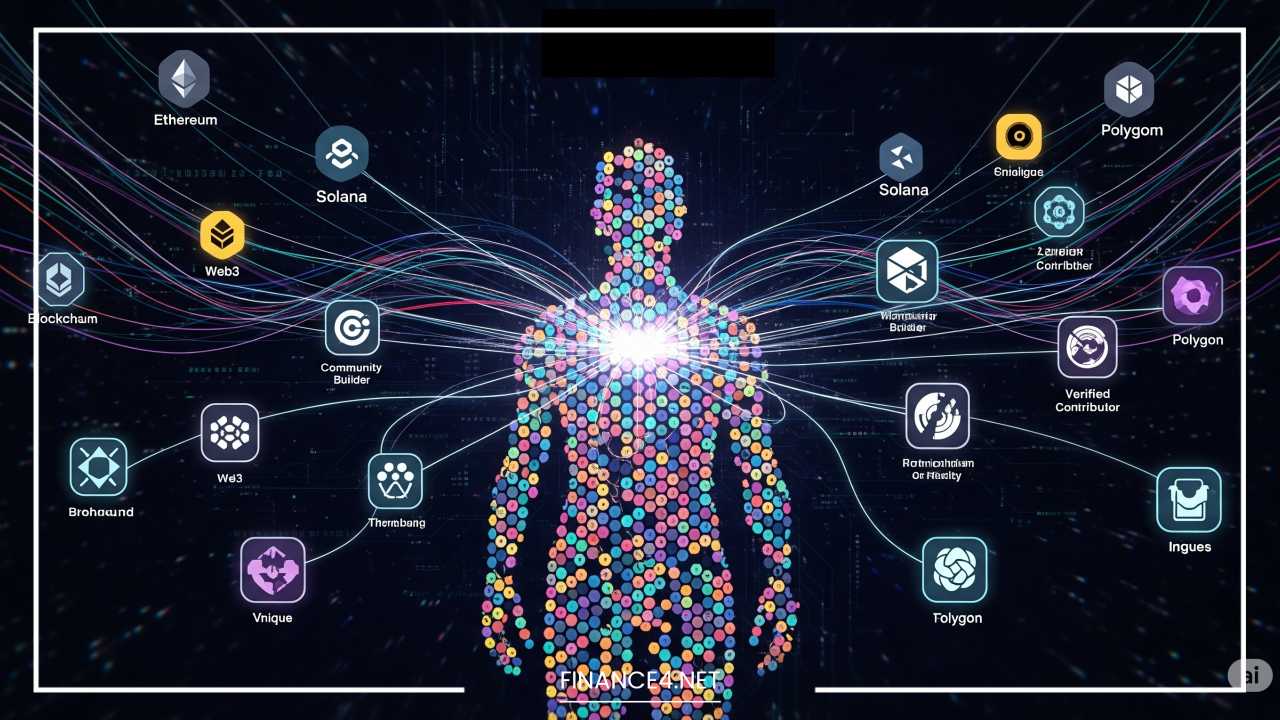
How to Tokenize Digital Identity Cross-Chain | Cross-Chain Identity Tokenization Guide
The digital landscape is rapidly evolving, ushering in an era of decentralized control and ownership. At the heart of this transformation, particularly within Web3, lies the concept of digital identity. No longer a mere username and password, digital identity in Web3 is poised to become a user-controlled, verifiable, and portable representation of an individual’s online and real-world attributes. This shift is monumental, moving us from fragmented, platform-centric identities to a unified, self-sovereign model.
Identity tokenization, the process of encoding these digital attributes into blockchain-based tokens, is crucial for realizing this vision. It imbues identity with the immutable and verifiable properties of blockchain technology, giving users unprecedented control over their personal data. However, the burgeoning multi-chain ecosystem presents a significant challenge: how can a tokenized identity be seamlessly utilized across disparate blockchain networks? This article will delve into the intricacies of tokenizing digital identity and, more importantly, explore the critical need for and mechanisms of achieving cross-chain compatibility for these identity systems. We will cover the foundational concepts, the technological components, the step-by-step tokenization process, various real-world applications, and the vital security and privacy considerations, culminating in a look at the challenges and future outlook of this transformative technology.
What is a Tokenized Digital Identity?
At its core, a digital identity is the collection of information that defines an individual or entity online. This can range from personal details like name and date of birth to professional credentials, educational achievements, and online reputation. In the traditional Web2 model, this identity is often fragmented and controlled by centralized entities like social media platforms or government databases.
Identity tokenization revolutionizes this by embedding these identity attributes into blockchain-based tokens. This effectively transforms abstract data points into digital assets that can be owned, managed, and controlled by the individual. There are two primary approaches to identity tokenization:
- Identity as Verifiable Credentials (VCs): This approach, championed by the W3C (World Wide Web Consortium), involves cryptographically secure digital attestations of identity attributes. A verifiable credential is a tamper-evident digital document that an issuer (e.g., a university) can sign, asserting certain claims about a holder (e.g., a degree earned). The holder stores these VCs in a digital wallet and can selectively present them to a verifier (e.g., an employer) without revealing unnecessary information. While VCs themselves are not always tokens in the strict sense, they can be represented by or linked to tokens.
- Identity as NFTs or Soulbound Tokens (SBTs): Non-Fungible Tokens (NFTs) are unique digital assets representing ownership of an item or piece of data. While traditional NFTs are often associated with digital art, they can also represent unique identity attributes, such as a certified professional license or a membership token. A more specialized and promising form of identity tokenization is the Soulbound Token (SBT). Unlike transferable NFTs, SBTs are permanently tied to a user’s wallet and are non-transferable. This immutability makes them ideal for representing verifiable credentials, personal accomplishments, professional background, and community reputation (e.g., a university diploma, a proof of attendance, or a DAO voting history). SBTs introduce legitimacy and trustworthiness to blockchain interactions by creating non-transferable digital identities.
Key properties of a tokenized digital identity include:
- Ownership: The user truly owns their identity, not a centralized entity. They control access to their data.
- Privacy: Users can selectively disclose information using privacy-preserving technologies like Zero-Knowledge Proofs (ZKPs), revealing only what is necessary for a given interaction.
- Portability: The identity is not tied to a specific platform or service; it can be seamlessly moved and utilized across various decentralized applications and ecosystems.
- Verifiability: Identity attributes, especially when represented by VCs or SBTs, are cryptographically verifiable, making them tamper-proof and highly trustworthy.
Cross-Chain Interoperability: The Need for Cross-Chain Identity
The blockchain ecosystem, while vibrant and innovative, is inherently fragmented. Numerous independent blockchains, such as Ethereum, Solana, Cosmos, and Polkadot, operate in isolation, each with its own consensus mechanisms, programming languages, and token standards. This isolation creates “silos” of data and functionality, hindering the seamless flow of assets and information across the decentralized landscape. This phenomenon is known as the “interoperability problem.”
For digital identity systems, cross-chain interoperability is not merely a convenience; it’s a fundamental necessity. In today’s Web3 landscape, users rarely confine their activities to a single blockchain. They might engage with DeFi protocols on Ethereum, participate in a DAO on Arbitrum, play a game on Polygon, and explore a metaverse on Solana. Without a cross-chain identity, users would be forced to recreate or re-verify their identity on each new chain, leading to a fragmented, cumbersome, and insecure user experience. This defeats the very purpose of self-sovereign identity, which aims to provide a unified and portable digital persona.
The implications of siloed identity solutions are significant:
- Fragmented User Experience: Users have to manage multiple identities and reputations, leading to confusion and inefficiency.
- Redundant Verification: Repeated KYC/AML checks across different platforms and chains are time-consuming and costly for both users and service providers.
- Limited Utility of Reputation: On-chain reputation built on one chain cannot be leveraged on another, diminishing its overall value and impact.
- Hurdles to Decentralized Governance: DAO voting mechanisms that rely on reputation or verified identity struggle to scale across multiple chains if identity cannot be easily transferred.
The need for cross-chain identity is evident across a multitude of use cases:
- DeFi (Decentralized Finance): Imagine a user building a credit score based on their borrowing and lending history across various chains. A cross-chain identity allows this aggregated reputation to be used for better loan terms or access to specialized financial products on any chain.
- DAOs (Decentralized Autonomous Organizations): Reputation-based DAO voting, where voting power is weighted by a user’s contributions or expertise, requires a unified identity that spans the various chains a DAO might operate on or interact with.
- Gaming: Players could carry their unique gaming achievements, rare in-game assets, and character reputation as a unified identity across different blockchain-based games and metaverses, regardless of the underlying chain.
- Metaverses: As virtual worlds become more interconnected, a persistent and portable digital identity will be essential for users to maintain their avatars, possessions, and social standing across various metaverse platforms.
Technology Stack for Tokenized Cross-Chain Identity
Building robust tokenized cross-chain identity solutions requires a sophisticated interplay of various blockchain technologies and protocols.
- Blockchain Layer: The foundational layer where identity data is anchored and transactions are processed.
- Ethereum: A widely adopted smart contract platform, suitable for DIDs and VCs, but often faces scalability and high gas fee issues.
- Layer 2s (e.g., Polygon, Arbitrum, Optimism): Solutions built on top of Layer 1s like Ethereum to improve scalability and reduce transaction costs, making identity operations more practical for daily use.
- Cosmos: A network of interconnected sovereign blockchains (zones) designed for interoperability via the Inter-Blockchain Communication (IBC) protocol, making it inherently suitable for cross-chain identity.
- Polkadot: A multi-chain framework that enables different blockchains (parachains) to communicate and share security, offering a strong foundation for a unified identity layer.
- Identity Frameworks: These provide the architectural blueprints for building decentralized identity systems.
- Decentralized Identifiers (DIDs): Globally unique, resolvable identifiers that do not require a centralized registry. DIDs are controlled by their owners, not by an intermediary, forming the bedrock of self-sovereign identity.
- Verifiable Credentials (W3C): Cryptographically verifiable digital credentials that allow holders to prove claims about themselves (e.g., age, qualifications) to verifiers without revealing unnecessary personal information.
- SSI (Self-Sovereign Identity): A paradigm that empowers individuals with ownership and control over their digital identity and personal data, enabling them to decide what information to share and with whom.
- Token Standards: These define how identity attributes are represented as tokens.
- ERC-721: The widely adopted standard for non-fungible tokens, suitable for representing unique identity artifacts or proofs of personhood (e.g., a unique avatar or a digitally signed certificate).
- ERC-1155: A multi-token standard that allows a single contract to manage both fungible and non-fungible tokens, offering flexibility for representing various identity attributes (e.g., a certain number of reputation points alongside a unique achievement badge).
- ERC-735 (Identity Claims): A proposed standard specifically designed for managing identity claims on Ethereum, allowing users to issue, revoke, and manage verifiable claims associated with their identity.
- Soulbound Tokens (SBTs): As discussed, these non-transferable NFTs are particularly relevant for permanent identity attributes and verifiable credentials, acting as a “Web3 resume” or digital attestations of various facets of an individual’s identity.
- Cross-Chain Protocols: These protocols facilitate communication and asset transfer between different blockchains, essential for cross-chain identity verification and usage.
- LayerZero: A generalized messaging protocol that enables arbitrary data to be sent between blockchains, providing a crucial infrastructure for cross-chain identity systems to verify claims and share information.
- Axelar: A universal overlay network that connects all blockchains, allowing for secure cross-chain communication and asset transfers, enabling identity information to flow seamlessly.
- Wormhole: A generic message passing protocol that enables communication between various blockchains, supporting the transfer of tokens and arbitrary data for cross-chain identity.
- IBC (Inter-Blockchain Communication Protocol): The native interoperability protocol for the Cosmos ecosystem, designed for secure and reliable data transfer between sovereign blockchains.
- Middleware/Tools: These provide essential services and abstractions to simplify the development and management of decentralized identity.
- Ceramic Network: A decentralized data network for composable data, enabling users to store and manage their identity data off-chain in a permissionless and censorship-resistant manner, while maintaining on-chain anchors.
- SpruceID: Offers open-source tools for building self-sovereign identity solutions, including SDKs for DIDs and VCs, and support for privacy-preserving mechanisms.
- Lit Protocol: A decentralized key management network that enables programmable encryption and access control, allowing for secure sharing of encrypted identity data across chains.
- Polygon ID: A privacy-preserving identity solution built on Polygon that leverages Zero-Knowledge Proofs to enable verifiable credentials and selective disclosure, facilitating compliant and private identity interactions.
Tokenization Process: Step-by-Step
The process of tokenizing digital identity cross-chain involves several key steps, combining identity management with interoperability mechanisms:
- Step 1: User Creates/Verifies Identity (using DIDs/VCs):The journey begins with a user establishing their decentralized identity. This typically involves creating one or more Decentralized Identifiers (DIDs). A DID is a self-owned and globally unique identifier that doesn’t rely on a centralized authority. Once a DID is established, the user can then obtain Verifiable Credentials (VCs) from trusted issuers. For example, a university might issue a VC attesting to a user’s degree, or a government agency might issue a VC for proof of age. These VCs are cryptographically signed by the issuer and stored in the user’s decentralized identity wallet. The user maintains full control over these credentials, deciding when and with whom to share them.
- Step 2: Encode Identity Attributes into Token Format:Once the VCs or other identity attributes are acquired, they need to be prepared for tokenization. This involves encoding the relevant identity data into a format compatible with blockchain token standards. For instance, a VC’s claims (e.g., “age > 18”) can be packaged as metadata for an NFT or SBT. For privacy, only a hash or a minimal identifier derived from the VC might be stored on-chain, with the full credential kept off-chain and selectively disclosed using Zero-Knowledge Proofs (ZKPs). For SBTs, the specific identity claims or attestations are directly embedded into the token’s smart contract logic or metadata.
- Step 3: Mint Identity Token (NFT or SBT) on Primary Chain:With the identity attributes encoded, the next step is to mint the identity token on a primary blockchain. This could be an ERC-721 NFT for a unique identity marker, or more commonly, an SBT. The choice of the primary chain often depends on factors like network fees, speed, and ecosystem support. For example, a user might mint an SBT representing their “Proof of Humanity” on an Ethereum Layer 2 like Polygon due to lower transaction costs. This token serves as the on-chain representation of a verifiable aspect of the user’s identity.
- Step 4: Enable Cross-Chain Functionality:This is the crucial step for achieving cross-chain identity. The minted identity token on the primary chain needs a mechanism to be recognized and utilized on other blockchains. Several approaches facilitate this:
- Bridges: These protocols allow for the transfer of tokens (or the representation of tokens) between different blockchains. For identity tokens, a bridge could “lock” the original identity token on the primary chain and “mint” a wrapped or mirrored version on the destination chain. However, traditional bridges can introduce security risks and centralization points.
- Wrappers: Similar to bridges, wrappers create a representation of the original asset on another chain. In the context of identity, a wrapper could be a smart contract on a different chain that verifies the existence and validity of the identity token on the primary chain.
- Interoperable Smart Contracts: Instead of direct token transfers, smart contracts on different chains can be designed to communicate and verify identity information. For instance, a smart contract on Chain B might query a smart contract on Chain A to ascertain if a specific DID or SBT is associated with a certain set of verifiable credentials.
- Step 5: Verify on Other Chains using Relayers or Messaging Layers:To enable seamless verification on a destination chain, a mechanism is needed to relay the identity token’s status or associated claims.
- Relayers: These are entities that monitor events on one blockchain and relay them to another. In the context of identity, a relayer could observe the minting or update of an identity token on the primary chain and transmit this information to a smart contract on a secondary chain.
- Messaging Layers: Protocols like LayerZero, Axelar, or IBC provide generalized messaging capabilities, allowing smart contracts on different chains to directly communicate and verify each other’s states. For instance, a dApp on Solana might use LayerZero to query an identity smart contract on Ethereum to confirm a user’s verified age without requiring the user to port their entire identity token. This often involves cryptographic proofs to ensure the integrity of the relayed information. The user then provides a ZKP to the dApp on the destination chain, proving they possess the necessary identity attribute without revealing the underlying data.
Cross-Chain Identity Use Cases & Applications
The ability to tokenize digital identity and seamlessly transfer or verify it across different blockchain networks unlocks a vast array of transformative applications:
- DAO Voting with Cross-Chain Reputation: In decentralized autonomous organizations, reputation is paramount. Instead of relying solely on token ownership, which can lead to plutocracy, DAOs can implement reputation-based voting. With cross-chain identity, a user’s contributions, verified achievements (e.g., participation in previous DAO initiatives, successful project deliveries), or professional credentials from various chains can be aggregated into a unified, on-chain reputation score. This allows for more meritocratic governance, where voting power is aligned with proven expertise and commitment, regardless of which chain those contributions originated on.
- Cross-Chain KYC/AML: Regulatory compliance remains a significant hurdle for many decentralized applications. Cross-chain KYC (Know Your Customer) and AML (Anti-Money Laundering) solutions leverage tokenized identity to streamline this process. A user could undergo a single KYC verification with a trusted identity provider, who then issues a privacy-preserving verifiable credential. This credential, linked to a tokenized identity, can then be presented to multiple DeFi protocols or exchanges across different chains, proving compliance without revealing sensitive personal data repeatedly. This drastically reduces the burden on both users and regulated entities.
- DeFi Credit Scoring and Lending: Traditional credit scores are centralized and often exclude individuals in developing economies. With cross-chain identity, a user’s on-chain financial history, including borrowing, lending, and repayment records across various DeFi protocols on different chains, can be aggregated. This data can then be used to generate a decentralized, privacy-preserving credit score, allowing users to access uncollateralized or under-collateralized loans across various blockchain networks, fostering greater financial inclusion.
- NFT Provenance Linked to On-Chain Identity: The burgeoning NFT market often struggles with verifying the authenticity and provenance of digital assets, especially in the context of intellectual property and creator attribution. By linking NFT provenance to a creator’s verified on-chain identity (perhaps via an SBT representing their artistic credentials or official studio), buyers can gain greater assurance of authenticity. This also allows for royalty distribution and intellectual property rights to be tied to the creator’s persistent cross-chain identity, regardless of where the NFT is traded or used.
- Gaming Avatars with Unified Identities: In the nascent metaverse, players desire persistent identities that transcend individual games or virtual worlds. Tokenized cross-chain identity enables gaming avatars to carry their unique characteristics, accumulated achievements, rare in-game items (as NFTs), and reputation across different blockchain-based games. A player could use the same verifiable identity to log into a game on Polygon, use their unique avatar in a metaverse on Ethereum, and display their hard-earned achievements on a social platform built on Solana, fostering a truly interconnected gaming experience.
Security, Privacy, and Compliance Considerations
While cross-chain identity offers immense potential, it also introduces complex challenges related to security, privacy, and regulatory compliance.
- ZKPs (Zero-Knowledge Proofs) and Selective Disclosure: Privacy is paramount for decentralized identity. ZKPs are cryptographic techniques that allow a “prover” to convince a “verifier” that a statement is true without revealing any information beyond the validity of the statement itself. In the context of identity, ZKPs enable selective disclosure: a user can prove they are over 18 without revealing their exact birthdate, or that they are a verified resident of a specific country without disclosing their address. This is critical for meeting privacy norms like GDPR and CCPA while enabling necessary verifications. Implementing robust ZKP schemes is complex but essential for privacy-preserving cross-chain identity.
- Data Storage (On-Chain vs. Off-Chain): Deciding where to store identity data is a trade-off between security, cost, and scalability.
- On-chain storage offers immutability and transparency, but it’s expensive and limited in capacity, making it unsuitable for large amounts of personal data. Only hashes or minimal identifiers should typically be stored on-chain.
- Off-chain storage (e.g., decentralized storage networks like IPFS, Arweave, or centralized databases for sensitive data) is more scalable and cost-effective. However, it introduces challenges around data integrity, availability, and access control. Hybrid approaches, where a minimal, verifiable proof is stored on-chain, while the bulk of the data resides off-chain, often secured and accessible via decentralized networks like Ceramic, strike a balance.
- GDPR, CCPA, and Data Ownership: Blockchain’s immutability presents unique challenges for data protection regulations like GDPR (General Data Protection Regulation) and CCPA (California Consumer Privacy Act), which grant individuals the “right to be forgotten” and control over their data. While a tokenized identity can empower user control, ensuring that personally identifiable information (PII) can be effectively managed or removed from public blockchains (or linked to via revocable credentials) is crucial for compliance. Self-Sovereign Identity (SSI) frameworks aim to address this by emphasizing user control over data and enabling consent-based sharing and revocation mechanisms.
- Risks with Bridges and Interoperability Layers: Cross-chain bridges and interoperability protocols are complex systems and have historically been targets for exploits due to their role as critical infrastructure connecting different economic zones. A vulnerability in a bridge or messaging layer could lead to the compromise of identity tokens or the fraudulent verification of identity claims across chains. Robust security audits, formal verification, and decentralized governance models for these interoperability layers are paramount to mitigate these risks and ensure the integrity of cross-chain identity. The security of the underlying cryptographic primitives and the decentralization of relayers are also key considerations.
Challenges and the Future of Cross-Chain Identity
Despite the immense potential, the journey towards truly seamless and ubiquitous cross-chain identity is fraught with challenges:
- Technical Complexity: Building and integrating the various components of a cross-chain identity system – from DID resolution and VC issuance to cross-chain messaging and ZKP implementation – is technically demanding. Developers face a steep learning curve and the need for specialized expertise across multiple blockchain ecosystems.
- Lack of Universal Standards: While DIDs and VCs are W3C standards, their implementation across different chains and the broader Web3 ecosystem is still evolving. A universal set of standards for how identity tokens are structured, how claims are verified cross-chain, and how privacy is maintained, is still under development. This fragmentation can hinder seamless interoperability and adoption. Emerging Ethereum Improvement Proposals (EIPs) and Ethereum Request for Comments (ERCs) like ERC-5484 (Non-Transferable ERC-721) and EIP-5573 (Signed Data Attestations) are steps towards greater standardization for identity-related tokens and verifiable data.
- Evolving Privacy Norms: The legal and ethical landscape around digital privacy is constantly shifting. As blockchain identity gains traction, new regulatory frameworks and societal expectations regarding data ownership, consent, and privacy will emerge. Ensuring that cross-chain identity solutions remain adaptable and compliant with these evolving norms will be an ongoing challenge.
- User Experience and Adoption: For cross-chain identity to achieve mainstream adoption, the user experience must be intuitive and frictionless. Abstracting away the underlying technical complexities of DIDs, VCs, ZKPs, and cross-chain bridges is crucial to encourage widespread use. Wallet interfaces and dApps need to seamlessly integrate these functionalities.
Despite these challenges, the future of cross-chain identity is bright. Continued research and development in areas like ZKPs, secure MPC (Multi-Party Computation) for key management, and more robust cross-chain messaging protocols will pave the way for more secure and private identity solutions. The increasing collaboration between blockchain foundations and identity-focused projects is also fostering the development of shared standards and best practices. As Web3 matures, cross-chain tokenized identity will likely become an indispensable component of a truly decentralized and user-centric internet.
Final Thoughts & Key Takeaways
Tokenizing digital identity cross-chain represents a paradigm shift in how we manage and interact with our digital selves. It moves us from a world of fragmented, centralized identities to one where individuals have unprecedented ownership, privacy, and portability over their personal data. The core benefits lie in empowering users with self-sovereignty, enabling seamless interactions across a fragmented blockchain landscape, and unlocking novel use cases in DeFi, DAOs, gaming, and the metaverse.
The process involves establishing decentralized identifiers and verifiable credentials, encoding these attributes into tokens (especially non-transferable Soulbound Tokens), and enabling cross-chain functionality through bridges, wrappers, and advanced messaging protocols. Critical to this vision are privacy-enhancing technologies like Zero-Knowledge Proofs, which allow for selective disclosure and compliance with evolving data protection regulations.
While challenges remain, including technical complexity, the need for universal standards, and the evolving privacy landscape, the ongoing innovation in this space promises a future where a single, user-controlled digital identity can seamlessly and securely traverse the vast and diverse Web3 ecosystem. The future of digital identity is decentralized, cross-chain, and firmly in the hands of the individual.