Multi-Token Bridging & Bundling Assets in One Go
 by
by 
Multi-Token Bridging & Bundling Assets in One Go: Unlocking Seamless Cross-Chain Interoperability
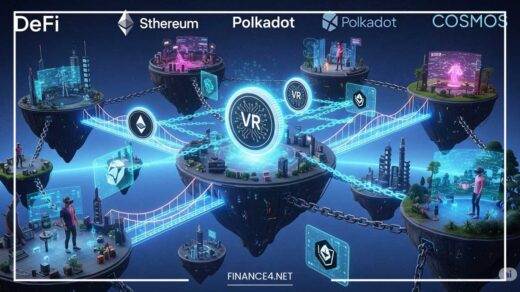
The blockchain landscape is no longer a collection of isolated islands. Instead, it’s rapidly evolving into a sprawling archipelago of interconnected networks, each with its unique strengths, functionalities, and thriving communities. This multi-chain reality, while offering users a diverse range of options and fostering innovation, presents a significant challenge: the friction of moving digital assets between these disparate ecosystems. Bridging tokens across different blockchains has emerged as a critical necessity for achieving true interoperability, allowing value and information to flow freely and seamlessly. However, the traditional approach of bridging assets one by one is often cumbersome, costly, and time-consuming, hindering the user experience and limiting the potential of cross-chain applications.
This is where the concepts of multi-token bridging and asset bundling come into play, offering a revolutionary approach to transacting across chains by enabling users to move multiple distinct assets in a single, efficient transaction. This article will delve into the intricacies of these groundbreaking technologies, exploring their mechanisms, benefits, challenges, real-world applications, and their pivotal role in shaping the future of a truly interconnected Web3.
Understanding Cross-Chain Token Bridging
At its core, token bridging is the process of transferring digital assets, primarily cryptocurrencies and tokens, from one blockchain network to another. This process is essential because different blockchains operate with their own consensus mechanisms, data structures, and token standards, making direct asset transfers impossible. Imagine trying to use Euros to pay for goods in the United States without converting them to US Dollars first – token bridging serves as the digital currency exchange for the blockchain ecosystem.
Traditional (single-token) bridges typically function through various mechanisms, broadly categorized as custodial and non-custodial. Custodial bridges involve locking up tokens on the origin chain and issuing wrapped or synthetic versions of those tokens on the destination chain. A centralized or decentralized custodian is responsible for holding the locked assets and ensuring the peg between the original and wrapped tokens. While often straightforward to use, custodial bridges introduce a degree of counterparty risk. Non-custodial bridges, on the other hand, employ techniques like atomic swaps, liquidity networks, or message passing protocols to facilitate cross-chain transfers without relying on a central intermediary holding the assets. These methods often involve more complex technical implementations but offer greater security and decentralization.
Despite their crucial role, existing single-token bridging solutions face several limitations. Speed can be a significant issue, with some bridges taking considerable time to confirm transactions across different networks. Cost, primarily in the form of gas fees on both the source and destination chains, can be substantial, especially during periods of network congestion. Security remains a paramount concern, as bridges often become attractive targets for malicious actors due to the large amounts of assets they hold or facilitate. Furthermore, the fragmented nature of the blockchain ecosystem means users often have to navigate multiple different bridges to access assets on various chains, leading to a disjointed and inefficient experience. The importance of interoperability cannot be overstated in this fragmented landscape. Seamless asset and data transfer is vital for unlocking the full potential of decentralized applications (dApps), fostering collaboration between different blockchain communities, and ultimately creating a more unified and user-friendly Web3.
What Is Multi-Token Bridging?
Multi-token bridging represents a significant evolution in cross-chain technology. Simply put, it is the ability to transfer multiple distinct and unrelated tokens across different blockchain networks within a single transaction. Unlike traditional bridges that handle one token at a time, multi-token bridges allow users to bundle various assets, such as different cryptocurrencies, stablecoins, or even NFTs (depending on the bridge’s capabilities), and move them to a target chain in one go.
The purpose of multi-token bridging is to streamline the cross-chain transfer process, making it more efficient, cost-effective, and user-friendly. It addresses the limitations of repeatedly initiating and paying for individual bridging transactions when users need to move a portfolio of diverse assets.
The key difference from traditional bridges lies in the ability to handle a heterogeneous set of tokens simultaneously. Traditional bridges typically require separate transactions for each asset, leading to increased gas fees and a more complex user experience. Multi-token bridges, on the other hand, aggregate these individual transfer requests into a single operation.
There are numerous use cases where the ability to move multiple tokens simultaneously proves invaluable. In gaming, players might want to transfer in-game currencies and various digital collectibles (NFTs) from one gaming-specific chain to another. For DeFi protocols, managing cross-chain positions often involves moving multiple asset types, such as collateral and yield-bearing tokens, which can be significantly simplified with multi-token bridging. DAOs managing treasuries across multiple chains can benefit from the efficiency of moving diverse assets for investments or operational purposes in a single transaction. NFT platforms could enable users to seamlessly move bundled NFT collections, potentially including different tiers or related assets, across various marketplaces.
Consider an example scenario where a DeFi user wants to move their portfolio from an Ethereum-based lending protocol to a similar protocol on a Layer 2 network to take advantage of lower fees. This portfolio might consist of ETH, a stablecoin like DAI, and a yield-bearing token. Using a traditional bridge, the user would need to initiate three separate bridging transactions, each incurring gas fees on both Ethereum and the Layer 2. With a multi-token bridge, they could bundle these three assets and move them all in a single transaction, significantly reducing gas costs and the overall time and effort involved.
The Concept of Asset Bundling
The concept of asset bundling is intrinsically linked to multi-token bridging and refers to the act of grouping multiple distinct digital assets together as a single unit for the purpose of a transaction, in this case, a cross-chain transfer. This bundle is then treated as a single package as it moves across the bridge.
The advantages of bundling are manifold. Efficiency is a primary benefit, as multiple asset transfers are consolidated into one operation, reducing the number of interactions with the blockchain and the associated overhead. This directly translates to reduced gas fees, as users pay transaction costs for a single, albeit larger, transaction rather than multiple smaller ones. This also leads to a better UX by simplifying the process for users who no longer need to initiate and track numerous individual transfers.
There’s a parallel with traditional finance in the concept of asset bundling. Think of Exchange Traded Funds (ETFs) or mutual funds, which allow investors to gain exposure to a diversified basket of stocks or other assets through a single investment vehicle. Similarly, asset bundling in the blockchain space offers a way to manage and move a collection of assets more conveniently.
However, there are also risks or tradeoffs associated with asset bundling. Complexity in the underlying smart contracts and bridging infrastructure is increased to handle the logic of bundling and unbundling various asset types. There’s also the potential for loss if one token within the bundle experiences a significant price drop or a security vulnerability during the transfer, although the bridge itself ideally should not be affected by the individual performance of the bundled assets. Ensuring the integrity and accurate representation of each bundled asset on the destination chain is crucial.
How Multi-Token Bridging & Bundling Work Together
Multi-token bridging and asset bundling are complementary concepts that work in tandem to achieve efficient cross-chain transfers of multiple assets. The underlying technical overview involves sophisticated smart contract logic on both the source and destination chains, as well as coordination mechanisms that can be on-chain, off-chain, or a hybrid of both.
The smart contract logic behind bundling multiple assets typically involves allowing users to specify which tokens and how much of each they want to include in their cross-chain transfer. The smart contract on the origin chain then locks or burns these tokens (depending on the bridge’s mechanism) and records the details of the bundled transfer, including the destination chain and the recipient address.
On-chain and off-chain coordination are crucial for relaying information about the bundled transfer and ensuring the correct minting or unlocking of the assets on the destination chain. Relayers or messengers often play a vital role in transmitting the details of the origin chain transaction to the destination chain. Oracles might be used to verify the state of the origin chain and the successful locking or burning of the bundled assets. In some architectures, aggregators might be involved in optimizing the routing of the bundled transfer across different bridge protocols.
When the bundled transfer information reaches the destination chain, the corresponding smart contract verifies the proof of the origin chain transaction and then mints or unlocks the equivalent amount of each token in the bundle for the specified recipient address. The process needs to ensure atomicity, meaning that either all tokens in the bundle are successfully transferred, or none are, to prevent inconsistencies.
The specific implementation details can vary significantly depending on the underlying bridging technology. Some bridges might use a canonical token approach where specific wrapped versions of assets are maintained across chains, while others might employ more generalized messaging protocols that allow for the transfer of arbitrary data and token information.
Benefits of Bridging Multiple Tokens in One Go
The ability to bridge multiple tokens in a single transaction offers several significant benefits:
Gas efficiency and cost savings are perhaps the most immediate advantages. By consolidating multiple transfers into one, users pay the base transaction fee only once, along with the gas costs associated with processing the bundled operation. This can lead to substantial savings, especially when moving a large number of different tokens.
Reduced user friction is another key benefit. Instead of having to initiate, approve, and track multiple separate transactions, users can manage their cross-chain portfolio movements in a single, streamlined process. This simplifies the user experience and makes cross-chain interactions more accessible to a wider audience.
Improved transaction throughput can also be achieved. By reducing the number of individual transactions on the origin and destination chains, multi-token bridging can contribute to overall network efficiency and reduce congestion, particularly during peak times.
Enhanced composability in DeFi or NFT ecosystems is another significant advantage. Imagine a scenario where a user wants to deposit a basket of different tokens as collateral on a cross-chain lending protocol. With multi-token bridging, this entire operation can be executed in a single step, enabling more complex and efficient cross-chain DeFi strategies. Similarly, in the NFT space, being able to move a bundle of related NFTs and associated utility tokens simultaneously can unlock new possibilities for collections and metaverses.
Challenges and Risks
Despite the numerous benefits, multi-token bridging and asset bundling are not without their challenges and risks:
Security risks remain a primary concern. Bridges, by their nature, act as central hubs for cross-chain asset flows, making them attractive targets for exploits. The increased complexity of smart contracts handling multi-token transfers could potentially introduce new vulnerabilities and smart contract bugs. A successful attack on a multi-token bridge could result in the loss of a diverse range of assets, potentially impacting a large number of users.
Liquidity fragmentation across different chains can also pose a challenge. While multi-token bridges facilitate the movement of assets, they don’t inherently solve the issue of insufficient liquidity on the destination chain for the specific tokens being transferred. Users might still face slippage or difficulty in swapping their bridged assets if the target network lacks sufficient depth for those particular tokens.
A complex UX for non-technical users could be a barrier to adoption. While the goal is to simplify cross-chain interactions, the underlying mechanisms of bundling and multi-token transfers can be intricate. User interfaces need to be intuitive and user-friendly to abstract away this complexity and make the process accessible to individuals with varying levels of technical expertise.
Regulatory and compliance concerns are also emerging as the cross-chain landscape matures. The movement of diverse digital assets across jurisdictions raises questions about regulatory oversight, KYC/AML requirements, and the legal status of wrapped or synthetic assets. Clear and consistent regulatory frameworks will be crucial for the widespread adoption of multi-token bridging solutions.
Real-World Applications & Use Cases
The potential applications of multi-token bridging and asset bundling are vast and span across various sectors of the Web3 ecosystem:
In DeFi, users can leverage multi-token bridging for efficient portfolio rebalancing across different chains, moving various assets to optimize their holdings based on market conditions or investment strategies. It also enables seamless participation in cross-chain yield farming, where users can move multiple types of collateral to a target chain to earn yield in a single operation.
GameFi projects can greatly benefit by allowing players to move their game assets and currencies in bulk between different gaming ecosystems or sidechains, enhancing interoperability and asset portability within the gaming metaverse.
DAOs managing treasuries across multiple blockchains can utilize multi-token bridging for more efficient treasury management, consolidating or reallocating diverse assets for investments, operational expenses, or cross-chain governance participation in a single transaction.
NFT Projects can explore innovative use cases by bundling art NFTs with utility tokens or other related digital assets and allowing users to move these bundled packages seamlessly across different NFT marketplaces or platforms.
Projects & Protocols Leading the Way
Several innovative projects and protocols are actively developing and deploying multi-token bridging and asset bundling solutions. LI.FI is a bridge aggregation protocol that aims to connect all available bridges and DEXs, offering users the ability to perform complex cross-chain swaps and transfers, often involving multiple tokens, in a single transaction. Chainlink CCIP (Cross-Chain Interoperability Protocol) is designed to provide secure and reliable cross-chain messaging and token transfers, with the potential to facilitate multi-token movements through its generalized messaging capabilities. LayerZero is an omnichain interoperability protocol that enables dApps to build across multiple blockchains in a native way, supporting the transfer of arbitrary data and assets, including multiple tokens. Wormhole is another prominent interoperability platform that supports a wide range of blockchains and facilitates both asset and data transfers, with the infrastructure to enable multi-token bridging. These projects, among others, are constantly innovating and pushing the boundaries of cross-chain interoperability, each with their unique architectures, security models, and approaches to handling multi-asset transfers.
The Future of Interoperability
The future of blockchain interoperability looks increasingly focused on seamless and efficient cross-chain experiences, and multi-token bridging and asset bundling are poised to play a central role in this evolution. The development of Layer 2 scaling solutions, ZK-rollups, and modular blockchains will further contribute to a more interconnected and scalable ecosystem, potentially reducing the need for complex bridging mechanisms in some scenarios but also creating new opportunities for cross-layer interactions.
The ultimate goal is to achieve the dream of seamless multi-chain UX, where users can interact with dApps and manage their assets across different blockchains without being constrained by the underlying network boundaries. This could eventually lead to chain abstraction, where the user is no longer consciously aware of which blockchain their transactions are being executed on, interacting with a unified Web3 environment instead. Multi-token bridging and bundling are crucial steps towards realizing this vision by abstracting away the complexities of moving diverse assets across disparate networks.
Final Thoughts
In conclusion, multi-token bridging and asset bundling represent a significant leap forward in the quest for blockchain interoperability. By enabling the efficient and cost-effective transfer of multiple diverse assets in a single transaction, these technologies address the limitations of traditional bridging solutions and unlock a new realm of possibilities for cross-chain applications. While challenges related to security, liquidity, and user experience remain, the ongoing innovation in this space, as demonstrated by various leading protocols, points towards a future where moving value and data across different blockchain networks will be as seamless as navigating the internet today. The ability to bundle and bridge assets in one go is not just a technological advancement; it’s a fundamental building block for a more interconnected, composable, and ultimately more user-friendly Web3 ecosystem.