Advantages of Multi-Chain Token Bridging
 by
by 
Bridging the Divide: The Transformative Advantages of Multi-Chain Token Bridging
Since the advent of Bitcoin, the blockchain landscape has undergone remarkable evolution. What began as a singular revolutionary ledger has now expanded into a thriving and diverse ecosystem of interconnected yet fundamentally distinct networks.
These blockchains—whether Ethereum, Solana, Binance Smart Chain, Polkadot, Avalanche, or various Layer 2 scaling solutions—each present unique features, trade-offs, and specialized use cases.
This proliferation of blockchains has fostered innovation and provided users and developers with an array of choices.
However, it has also brought about a significant challenge: fragmentation. Without effective integration, assets, data, and functionality often remain siloed within individual chains, limiting liquidity, user access, and the potential for seamless, interconnected decentralized applications (dApps).
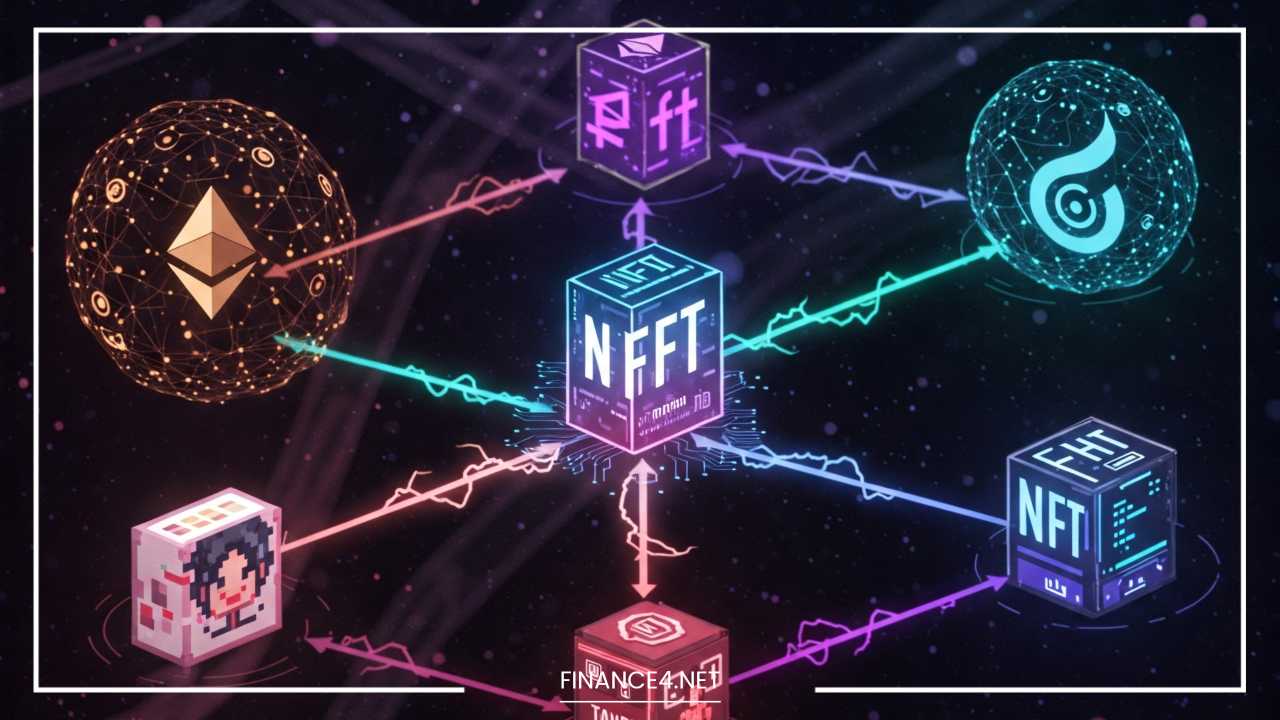
This is where multi-chain token bridges come in. These bridges serve as vital conduits between isolated blockchain ecosystems, enabling the transfer of assets and information.
While still evolving and facing notable security challenges, the advantages offered by secure and robust multi-chain token bridges are profound, and arguably indispensable, for the continued growth, adoption, and realization of the decentralized web (Web3).
This article will explore the manifold benefits that multi-chain token bridging brings to users, developers, and the entire blockchain ecosystem.
The Problem: A Fragmented Digital Continent
Before delving into solutions, it’s crucial to first understand the issue that bridging addresses. The multi-chain world, in the absence of effective bridging, can be likened to a continent divided into many isolated islands.
- Siloed Liquidity: Capital becomes trapped on specific chains. For example, Ether (ETH) on Ethereum cannot directly be used within Solana’s decentralized finance (DeFi) protocols, nor can SOL on Solana participate in yield farming on Polygon. This fragmentation reduces overall market efficiency and limits the potential for capital deployment.
- Limited User Access: Users are often restricted to the dApps and opportunities present on the chain where their assets are held. Exploring new ecosystems typically involves complex procedures like centralized exchanges (CEXs) or facing high fees and delays.
- Developer Constraints: Developers trying to build dApps that require access to assets or features across multiple chains face significant challenges without bridging infrastructure. This severely limits the scope and capabilities of decentralized applications.
- Suboptimal User Experience: Transferring assets between chains is often a tedious and error-prone process, requiring multiple steps, different wallets, and opening up potential for mistakes. This complexity serves as a major barrier to mainstream adoption.
- Missed Opportunities: Users could miss out on profitable yield farming opportunities, limited NFT drops, or novel dApps just because their assets reside on the “wrong” chain.
Multi-chain token bridging offers the crucial infrastructure needed to overcome these limitations, unlocking a wealth of advantages that are reshaping the decentralized landscape.
Core Advantages of Multi-Chain Token Bridging
The advantages of effective multi-chain token bridging are far-reaching, impacting virtually every facet of the blockchain ecosystem. Let’s dive deeper into the most notable benefits:
1. Enhanced Liquidity and Capital Efficiency
The most immediate and impactful benefit of token bridging is the unlocking of liquidity. By enabling assets to move freely between chains, bridges break down the barriers that confine capital.
- Accessing Cross-Chain DeFi: Users holding assets on one chain can bridge them to another to participate in its DeFi ecosystem. For instance, a user with stablecoins on Ethereum might bridge them to Polygon or Avalanche to capitalize on lower transaction fees for frequent trading or to engage in yield farming opportunities unavailable on Ethereum mainnet. Wrapped Bitcoin (wBTC) is a prime example, bridging Bitcoin’s value onto Ethereum for use within its expansive DeFi ecosystem.
- Increased Capital Deployment: Protocols benefit from a larger pool of users and capital. A lending platform on Solana can tap into liquidity from users holding assets on Binance Smart Chain, and vice versa. This increased interconnectivity leads to deeper liquidity pools, reducing slippage and improving the efficiency of decentralized markets.
- Arbitrage Opportunities: Price discrepancies for the same asset across different exchanges or protocols on various chains can be exploited by arbitrageurs using bridges, helping to align prices and increase market efficiency across the ecosystem.
- Efficient Asset Management: Users can strategically move their assets between chains that offer the best combination of yield, fees, and risk, optimizing their capital allocation within the decentralized ecosystem.
This improved liquidity and capital efficiency isn’t just a technical benefit—it propels economic activity within DeFi, making it more robust and accessible.
2. Improved User Experience and Accessibility
Bridging streamlines the process of engaging with different blockchain ecosystems, leading to a more seamless and intuitive user experience.
- Seamless Asset Movement: Instead of going through the cumbersome steps of transferring assets to centralized exchanges, converting them to the target chain’s native token, and withdrawing, bridges provide a direct or near-direct route, minimizing the number of transactions and reducing points of failure.
- Accessing dApps on Preferred Chains: Users can access dApps on multiple chains without initially holding that chain’s native token (though gas fees still apply). They can bridge stablecoins or other common assets and swap them on the target chain.
- Lowering the Barrier to Entry: By simplifying the process of moving assets, bridges make it easier for users to explore and engage with different chains and applications, which is crucial for onboarding new users to Web3.
- Unified Wallet Interaction (Potential): While still developing, future bridging solutions aim to provide users with a unified interface that allows seamless interaction with multiple chains, abstracting away the underlying complexity of different networks.
A more intuitive user experience is crucial for widespread adoption. Bridging moves the ecosystem away from a fragmented, niche space and towards a more accessible, user-friendly environment.
3. Increased Interoperability and Composability
Interoperability refers to the ability of different blockchain networks to exchange data and interact with each other. Composability—the ability of decentralized protocols and applications to work together like Lego blocks—is essential for Web3 innovation. Token bridging is a key enabler of both.
- Cross-Chain dApp Functionality: Bridges enable the creation of dApps that leverage assets or services across multiple chains. For example, a lending protocol on Ethereum could accept collateral in tokens bridged from Solana, or an NFT marketplace on Polygon could allow payments via stablecoins bridged from Binance Smart Chain.
- Unified Protocol Interaction: Protocols on one chain can interact with services on another. A DAO governance vote on one chain could trigger actions or smart contract executions on another via bridges or messaging protocols.
- Building More Complex Use Cases: Moving assets (and potentially data) across chains unlocks new possibilities for dApps, such as cross-chain gaming economies, unified identity solutions, or global supply chain tracking.
- The Vision of a Connected Web3: True interoperability is essential to realizing a decentralized internet, where users and applications interact freely across the entire ecosystem, unbound by the limitations of a single blockchain.
The composability enabled by bridging is a powerful driver of innovation, allowing developers to leverage the strengths of multiple ecosystems to build new and exciting decentralized applications.
4. Access to Diverse Ecosystems and Opportunities
The multi-chain world offers a wide array of ecosystems, each with its own unique dApps, communities, and opportunities. Bridging gives users the tools to unlock these disparate environments.
- Exploring New dApps and Protocols: Ethereum users can easily access DeFi opportunities on Avalanche, high-performance gaming platforms on Solana, or enterprise solutions on Hyperledger Fabric (although permissioned networks have their own bridging concerns).
- Participating in Cross-Chain NFT Markets: The NFT space spans multiple blockchains (Ethereum, Flow, Solana, Polygon, etc.). Bridging allows collectors and creators to move their assets between chains and engage with markets beyond their native chain.
- Accessing Exclusive Opportunities: Some protocols or opportunities may initially launch on specific chains. Bridging ensures that users from other ecosystems are not excluded and can participate.
- Diversifying Participation: By spreading their activity across different chains, users can reduce reliance on the performance or issues of a single network.
Bridging acts as a gateway to the vast, ever-expanding world of decentralized applications and opportunities.
5. Risk Mitigation and Diversification
Relying solely on one blockchain exposes users to risks specific to that network, such as congestion, high fees, outages, or vulnerabilities in its consensus mechanism. Bridging provides an avenue for risk mitigation.
- Distributing Assets: Users can spread assets across multiple chains, reducing the impact of a catastrophic event on one network.
- Accessing Different Security Models: Each blockchain uses different security protocols and consensus mechanisms. Bridging allows users to choose networks with security features best suited for their specific assets or activities.
- Avoiding Congestion and High Fees: In times of high network activity (e.g., Ethereum during major NFT mints), transaction fees can become excessive. Bridging allows users to move assets to less congested chains to conduct transactions more affordably.
- Exploring Alternative Networks: If a blockchain faces technical challenges or regulatory uncertainties, bridging enables users to move their assets to more stable or compliant environments.
Diversifying across chains through bridging adds resilience to decentralized asset holdings and activities.
6. Lower Transaction Costs and Faster Speeds (Contextual)
While bridging itself carries fees, moving assets to chains with significantly lower transaction costs and faster block times provides a substantial advantage.
- Cost-Effective Transactions: Moving assets from high-fee chains like Ethereum to lower-fee Layer 2 solutions or faster Layer 1 blockchains (e.g., Polygon, Arbitrum, Solana, Avalanche) allows users to engage in multiple transactions at a fraction of the original cost.
- Quicker Confirmations: Bridging to chains with faster block times benefits applications requiring rapid transaction finality, such as high-frequency trading or gaming, improving user experience and opening up new possibilities.
- Optimizing for Activity: Users can choose chains that are most cost-effective and efficient for their specific needs post-bridge.
Though bridging itself can incur some overhead, the resulting savings and efficiency improvements make it a strong advantage for frequent users and specific transaction types.
7. Stimulating Innovation and Competition
The demand for effective multi-chain solutions has spurred significant innovation in bridging technology, fostering healthy competition among blockchains and decentralized applications.
- Advancements in Bridging Technology: Addressing the challenges of cross-chain communication has led to innovations such as optimistic and zero-knowledge-based bridges, decentralized relay networks, and novel consensus mechanisms designed specifically for interoperability.
- Driving Chain Specialization: The ability to move assets freely incentivizes blockchains to specialize and excel in specific areas, such as low-cost payments, high-performance computing, or specific dApp use cases.
- Fostering dApp Improvement: Competition among dApps across different chains motivates continuous enhancements in features, security, and user experience.
- Enabling Cross-Chain Protocols: The infrastructure provided by bridges enables the development of new protocols that function across multiple chains, facilitating the creation of more complex decentralized applications.
Bridging technology acts as a catalyst for technological advancements and ecosystem growth, driving innovation throughout the space.
8. Laying the Groundwork for Unified Identity and Data (Emerging)
Though primarily focused on asset transfers, the technology behind some bridges—especially those that facilitate cross-chain messaging—could eventually enable more complex interactions, such as portable identities, reputations, or data that can be used across multiple chains.
- Cross-Chain Messaging: Bridges enabling general message transfers can allow smart contracts on one chain to trigger actions on another, providing a basis for more sophisticated interactions.
- Potential for Unified Profiles: In the future, decentralized identity systems could emerge, where a user’s reputation or credentials earned on one chain are portable and verifiable on others, improving trust and enabling new applications.
- Seamless Data Access: While still an emerging challenge, bridging technology could facilitate solutions for accessing or interacting with data across different blockchains.
This emerging advantage sets the stage for a future in which a user’s digital presence transcends the limitations of individual networks.
Challenges and Considerations
Though the advantages of multi-chain bridging are substantial, it’s important to recognize the challenges involved. Security risks, particularly with bridges, remain a significant concern, with high-profile hacks leading to substantial losses.
- Security Vulnerabilities: Bridges are complex systems that interact with multiple blockchains, making them attractive targets for hackers. Vulnerabilities in smart contracts, consensus mechanisms, or compromised validator sets can lead to exploits.
- Complexity: Building and utilizing bridges can be technically challenging, both for developers and users.
- Fees and Slippage: Bridging may involve fees and potential slippage, depending on the specific design of the bridge (e.g., liquidity pool-based bridges).
- Centralization Risks: Some bridges rely on centralized or semi-centralized components, such as limited sets of validators, which introduce risks of single points of failure.
- Lack of Standardization: The lack of universal standards for cross-chain communication creates interoperability issues among different bridges.
Addressing these challenges through robust security measures, decentralized governance models, user-friendly interfaces, and the development of industry-wide standards will be critical for unlocking the full potential of multi-chain bridging.
The Future of Multi-Chain Bridging
As multi-chain bridging continues to evolve, we can expect:
- More Secure and Robust Designs: There will be a focus on decentralized bridge architectures, zero-knowledge proofs, and formal verification of smart contracts.
- Improved User Interfaces: Bridges will become more user-friendly, potentially integrated directly into wallets or dApps, reducing the underlying complexity.
- Expanded Interoperability Protocols: The development of generalized cross-chain messaging protocols will allow for more complex interactions beyond token transfers.
- Native Cross-Chain Capabilities: Future blockchain designs may incorporate native features for cross-chain communication, reducing reliance on external bridges.
- Wider Institutional Adoption: As bridges become more secure and reliable, institutional adoption will increase, enabling cross-chain asset management.
Final Thoughts: Connecting the Decentralized World
The multi-chain future of blockchain is not a distant possibility; it is already here. While it offers benefits of specialization and diversity, it also introduces the challenge of fragmentation.
Multi-chain token bridging is the essential solution to this challenge, offering a transformative way to connect disparate blockchain networks.
The advantages are clear: improved liquidity, enhanced user experience, greater interoperability, access to diverse ecosystems, risk mitigation, lower transaction costs, stimulation of innovation, and the groundwork for unified digital identities.
While security challenges must continue to be addressed, ongoing development and adoption of strong bridging solutions are key to the maturation and widespread success of Web3.
Bridging is more than just a technical link—it is a catalyst for a more connected, efficient, accessible, and innovative decentralized future.
As technology advances and security strengthens, multi-chain token bridging will play an increasingly critical role in unlocking the full potential of an interconnected blockchain ecosystem, breaking down silos and creating new possibilities for users and developers alike.
The ability to move assets and information seamlessly across chains is not just an advantage; it is an essential requirement for the decentralized world to thrive and achieve mainstream adoption.