Bridging Cardano to Tron
 by
by 
Bridging Cardano to Tron: A Comprehensive Guide
In the rapidly evolving world of blockchain technology, the ability to move assets seamlessly between disparate networks has become a cornerstone of the decentralized finance movement. Blockchain interoperability—the technical capacity for different ledgers to communicate and exchange value—is no longer just a luxury; it is a necessity for a fluid and efficient digital economy. Users are increasingly seeking to bridge Cardano to Tron to leverage the unique advantages of each ecosystem, moving beyond the limitations of isolated, siloed blockchains.
The growth of multi-chain ecosystems has empowered investors to chase higher yields, lower costs, and better liquidity across various protocols. Bridging allows for cross-chain asset transfers, enabling individuals to participate in decentralized finance opportunities, access different liquidity pools, or utilize the stablecoin-heavy environment of the Tron network.
This guide serves as a foundational resource for navigating these transfers, detailing the “how” and “why” behind the process. Readers will learn about the mechanisms that make these transfers possible, the inherent risks associated with cross-chain movement, and the step-by-step methodologies to safely navigate the path from the Cardano environment to the high-throughput Tron ecosystem.
By the end of this guide, you will have a clear understanding of how to manage your assets across these two distinct blockchains while maintaining security and efficiency, ensuring that your capital remains mobile and productive in an increasingly interconnected market.
Understanding Cardano and Tron
What is Cardano?
Cardano is a third-generation blockchain platform that distinguishes itself through an evidence-based, peer-reviewed academic approach. Built on a Proof-of-Stake consensus mechanism known as Ouroboros, Cardano prioritizes sustainability, scalability, and security. Its unique Extended Unspent Transaction Output model provides a highly deterministic environment for smart contracts, which separates the accounting layer from the computation layer. This design choice is intentional, aimed at maximizing security and auditability. The Cardano ecosystem is centered around the native asset, ADA, which is used for transaction fees, staking, and governance within the network. Its primary strengths lie in its rigorous commitment to decentralization, its high degree of formal verification, and its robust, research-driven development cycle, which ensures that updates to the protocol are thoroughly vetted before deployment.
What is Tron?
Tron is a high-performance, public blockchain platform designed to host decentralized applications, particularly those focused on payments and high-frequency content sharing. Utilizing a Delegated Proof-of-Stake consensus mechanism, Tron is renowned for its high throughput and exceptionally low transaction costs. A defining feature of the Tron ecosystem is its dominance in the stablecoin market, specifically for USDT issued as a TRC20 token. By providing a platform where transactions can be processed in seconds for fractions of a cent, Tron has captured a significant portion of the global remittance and payment-processing market. With a massive, active user base and a fast-paced decentralized finance environment, Tron has positioned itself as a go-to network for rapid value transfer and stablecoin-based financial services, acting as the backbone for much of the world’s decentralized payment activity.
Comparison Table
| Feature | Cardano | Tron |
| Native Token | ADA | TRX |
| Consensus | Proof-of-Stake | Delegated Proof-of-Stake |
| Throughput | Moderate to High | Very High |
| Transaction Fees | Low | Extremely Low |
| Main Use Cases | Governance, DeFi, NFTs | Payments, Stablecoins |
| Ecosystem Focus | Academic/Research | Consumer/Payment Apps |
Why Bridge Assets Between Cardano and Tron?
The primary motivation for moving assets across these two chains is the pursuit of optimized capital efficiency and expanded utility. In a fragmented crypto landscape, keeping assets static on one chain often limits your ability to respond to changing market conditions.
Access to DeFi Opportunities
Users often bridge assets to tap into specific protocols on the Tron network, such as lending platforms or liquidity pools, that may not exist or offer similar yields within the Cardano ecosystem. The Tron ecosystem thrives on high-frequency trading and lending, offering diverse yield farming opportunities that can complement a long-term holding strategy.
Stablecoin Transfers
Tron is a undisputed hub for global USDT liquidity. Many users bridge assets to acquire or utilize stablecoins within the TRC20 environment for daily payments or trading, taking advantage of the network’s speed and reliability when interacting with merchants or exchanges that prioritize the Tron standard for stablecoin transactions.
Portfolio Diversification
Spreading assets across different chains reduces exposure to any single ecosystem’s risks. By holding assets on both Cardano and Tron, investors gain exposure to the different market dynamics and technological philosophies of both networks, hedging their overall position against potential protocol-specific downtime or volatility.
Lower Costs
For frequent, high-volume transactions, moving assets to a chain optimized for throughput—like Tron—can significantly lower operational costs compared to transacting on more congested networks. This cost-efficiency is particularly important for users who engage in daily active trading or micro-transactions.
Cross-Chain Trading
Interoperability allows for arbitrage opportunities, where traders exploit price differences of the same asset across different chains. Bridging facilitates the movement of capital to wherever the price is most favorable, effectively keeping markets efficient and well-liquidated on a global scale.
What Is a Blockchain Bridge?
A blockchain bridge is a protocol that allows the transfer of tokens, data, or smart contract instructions between two independent blockchain networks. Because blockchains cannot naturally communicate with each other, a bridge acts as an intermediary, facilitating the movement of value across the “gap” between separate ledgers.
Most bridges function through one of two primary mechanisms:
-
Lock-and-Mint: The original assets are locked in a smart contract on the source chain, and a corresponding amount of “wrapped” tokens are minted on the destination chain. This ensures that the total supply of the asset remains constant across the bridge.
-
Burn-and-Release: The original assets are destroyed (burned) on the source chain, which triggers a minting or release of equivalent assets on the destination chain. This method is often preferred for cross-chain native asset transfers where the supply must be strictly controlled.
Types of Bridges
-
Custodial Bridges: A central entity or a set of trusted validators holds the collateral. While often fast, they require high levels of trust in the custodian.
-
Non-Custodial Bridges: These rely on decentralized smart contracts and trustless validator sets to manage the assets, significantly reducing the reliance on a central authority.
-
Liquidity-Based Bridges: These use deep liquidity pools on both sides to facilitate immediate swaps rather than traditional minting, often offering faster settlement times and lower slippage for large transfers.
-
Messaging Bridges: These focus on transferring information or commands between chains rather than just assets, allowing for more complex cross-chain decentralized application functionality where smart contracts on one chain can trigger actions on another.
Challenges of Bridging Cardano to Tron
Bridging between Cardano and Tron involves navigating significant technical differences, which can pose risks to the average user.
Different Architectures
Cardano’s Extended Unspent Transaction Output model functions fundamentally differently from the account-based model used by Tron. Cardano tracks individual transaction outputs (like cash), whereas Tron tracks account balances (like a bank ledger). Translating the state of a transaction from one model to the other is technically complex and requires sophisticated relayers that can interpret both states accurately.
Smart Contract Compatibility
Cardano’s smart contracts are written in Plutus, a language rooted in functional programming principles, while Tron’s contracts are fully compatible with the Ethereum Virtual Machine. This lack of native compatibility necessitates the use of complex wrappers or translation layers, which increases the surface area for potential bugs or exploits.
Liquidity Constraints
Because there are fewer direct, established routes between these two specific chains, liquidity can be thin. Low liquidity often leads to higher slippage, where the price you receive on your bridge swap is significantly worse than the current market rate, effectively taxing the user for the convenience of the transfer.
Bridge Availability
There is a limited number of direct bridges between Cardano and Tron. Users are often forced to use longer, more convoluted paths involving multiple “hops” across different intermediary chains (e.g., Cardano to Ethereum to Tron), which increases the number of points of failure.
Security Concerns
Bridge exploits have historically been some of the largest security events in cryptocurrency. Each bridge introduces a new smart contract that serves as a potential point of failure. If the underlying contract of a bridge is compromised, all locked collateral on that bridge is at risk, making the security of the bridge provider the single most important factor for any user.
Available Methods for Bridging Cardano to Tron
Method 1: Direct Cross-Chain Bridge
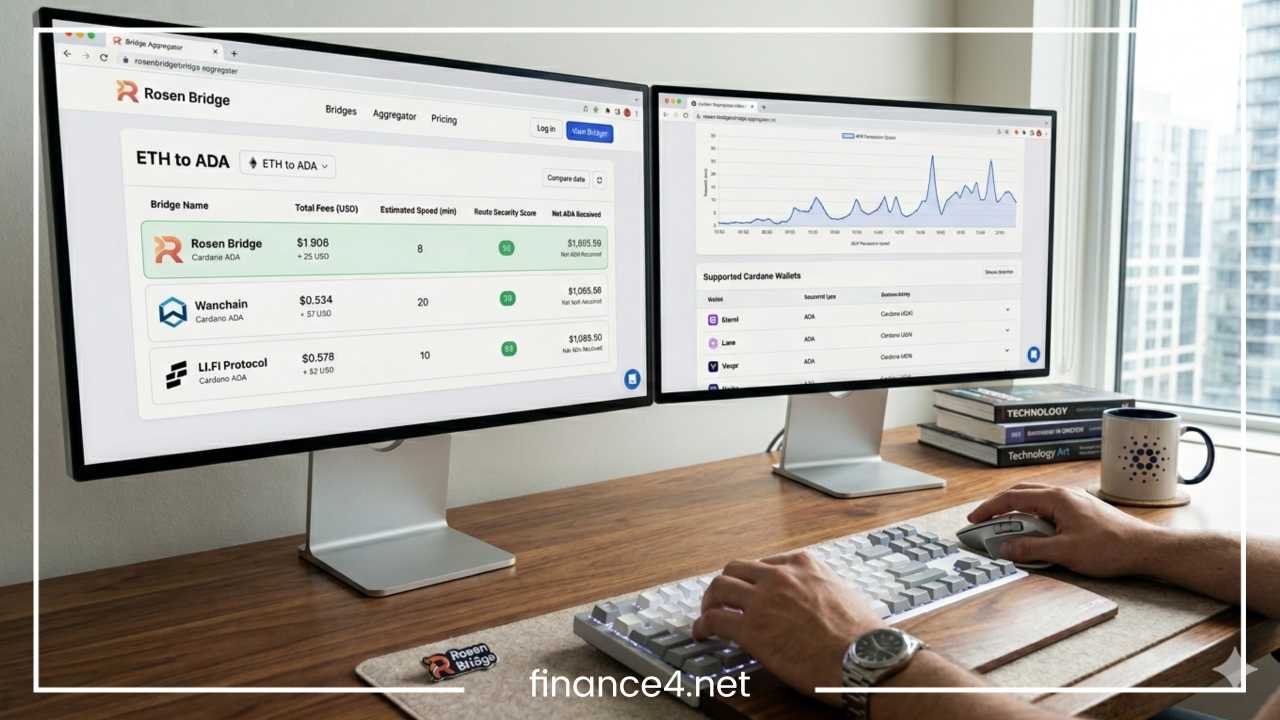
When a direct bridge is available, it is the most efficient path. These platforms act as a single gateway, providing a streamlined user interface. While convenient, users must ensure the bridge has a strong reputation, as they are essentially locking their native assets in the bridge’s contract. Always check for recent audits before proceeding with this method.
Method 2: Using an Intermediate Network
Due to the scarcity of direct Cardano-to-Tron routes, many users choose to bridge through an intermediate, highly liquid chain, such as Ethereum or the BNB Chain.
-
The Workflow: Cardano to Ethereum -> Ethereum to Tron.
-
Benefits: Major chains typically have significantly higher liquidity and a greater number of audited, reliable bridge providers. While this adds an extra step and an extra set of transaction fees, it significantly reduces the risk of being stuck in a low-liquidity route where assets might become trapped or unswappable.
Method 3: Centralized Exchange Route
This is often the most practical method for the majority of users.
-
Deposit your native Cardano assets into a centralized exchange (CEX) that supports both Cardano and the Tron (TRC20) network for withdrawals.
-
Sell the native assets for a stablecoin like USDT or the destination network’s native token.
-
Withdraw the funds to your Tron wallet address using the TRC20 network.
-
Pros: It is extremely simple, generally safe for reputable exchanges, and eliminates the risk of dealing with unproven bridge contracts.
-
Cons: You lose the decentralization aspect of your transaction, as you are relying on the exchange to custody your funds and process the trade.
Step-by-Step Guide: Bridging Cardano to Tron
Step 1: Prepare Wallets
Before attempting a transfer, ensure you have a dedicated, non-custodial wallet for each chain. For Cardano, popular and secure choices include Lace, Eternl, or Yoroi. For the Tron side, use established wallets like TronLink or Trust Wallet. Keep both your recovery phrases stored securely offline; never store them digitally.
Step 2: Select a Bridge
Research bridges based on their reputation, security audits, and current liquidity. Do not choose a bridge solely because it advertises the lowest fees—low fees often indicate a lack of security or liquidity. Look for evidence of a multi-signature security setup or a history of successful, hack-free operations.
Step 3: Connect Wallet
Connect your Cardano wallet to the bridge interface. Be hyper-vigilant during this step; ensure the website URL is absolutely correct to avoid sophisticated phishing sites that mimic the appearance of official bridge platforms. Bookmark the official site beforehand.
Step 4: Choose Asset and Amount
Select the asset (such as ADA or a stablecoin) you wish to transfer. Input the amount, and double-check the “estimated arrival” amount shown by the bridge. This figure will account for bridge service fees, network congestion fees, and potential slippage.
Step 5: Confirm Transaction
Review all transaction details in your wallet extension. You will likely be asked to sign a transaction that authorizes the bridge contract to lock your assets on the Cardano side. Verify the recipient address on the Tron side one last time.
Step 6: Wait for Finalization
Do not close your browser tab until the transaction is confirmed. The bridge needs to verify the transaction on the Cardano blockchain—which may take several minutes depending on current network congestion—before triggering the minting or release process on the Tron network.
Step 7: Verify Receipt on Tron
Once the status on the bridge interface indicates “Success” or “Completed,” open your Tron wallet. You may need to manually add the token contract address if the asset does not appear in your balance automatically. Verify that the balance is correct and matches the amount you expected to receive.
Fees Associated with Bridging
Bridging is rarely free. Understanding the breakdown of costs is vital for maintaining your capital efficiency:
-
Network Fees: These are the costs paid to miners or validators on the source chain (Cardano) to send the assets to the bridge contract, plus the gas fees on the destination chain (Tron) to receive the assets.
-
Bridge Fees: This is the service fee charged by the bridge operator to cover the costs of running the relayer nodes and maintaining the smart contract infrastructure.
-
Liquidity Provider Fees: Many modern bridges incentivize users to provide capital that makes the swap possible. These fees compensate those liquidity providers for the risk they take.
-
Slippage Costs: This is the difference between the expected price and the executed price, which can increase significantly during periods of high market volatility.
Example Calculation: If you bridge $2,000 worth of assets, you might pay $3 in Cardano network fees, a $10 bridge service fee, and $5 in slippage, resulting in roughly $1,982 arriving on the Tron network. Always factor these costs into your strategy before initiating a transfer.
Security Best Practices
-
Verify Official Websites: Bookmark the official URL of any bridge you use. Never navigate to a bridge via search engine ads or social media links, as these are common vectors for phishing.
-
Start with Small Transfers: Always perform a test transaction with a very small amount of assets to ensure the route is working correctly before attempting to move your entire portfolio.
-
Review Smart Contract Audits: Only use bridges that have been audited by reputable, publicly recognized cybersecurity firms. Look for documentation of these audits on the bridge’s official website or GitHub.
-
Beware of Phishing: Be highly skeptical of any messages, emails, or pop-ups claiming you need to “verify” your wallet or “claim” bridged funds via a third-party link. Official bridges do not require you to provide your seed phrase.
-
Double-Check Addresses: Always verify that you are sending to a valid TRC20 address on the Tron network. Sending assets to a non-compatible address, even on the correct network, can result in a permanent, irrecoverable loss of your assets.
-
Keep Wallet Software Updated: Ensure your wallet browser extensions and, if applicable, your hardware wallet firmware, are fully up to date to protect against known security vulnerabilities.
Common Issues and Troubleshooting
-
Transaction Stuck: If a transfer seems stuck, check the blockchain explorer for both chains using the transaction hash. Ensure that you have met the minimum confirmation count required by the bridge for the assets to be considered “final.”
-
Asset Not Appearing: If the transaction is confirmed on-chain but the balance is empty in your wallet, you may need to manually “import” the custom token contract address in your Tron wallet settings.
-
Insufficient Gas: If your transaction fails, you may not have enough TRX in your destination Tron wallet to cover the incoming transfer or to interact with the destination contract once the assets arrive.
-
Wrong Network: Always ensure you are working with bridge-compatible tokens. Sending native assets to an address that does not explicitly support those tokens can result in them being lost or unreachable.
Future of Cardano–Tron Interoperability
The landscape of interoperability is shifting toward more robust, decentralized protocols. We are seeing the rise of cross-chain messaging standards that will eventually remove the need for traditional, centralized “bridges.” These emerging standards aim to create a world where smart contracts on one chain can naturally interact with assets on another without relying on a third-party lock-and-mint contract. As the technology matures, users can expect more seamless, “one-click” cross-chain experiences. Furthermore, as the Cardano ecosystem continues to grow, native integration with other chains through advanced protocols will likely reduce the reliance on centralized exchanges and improve the overall liquidity and security of moving assets from Cardano to Tron. The focus of the industry is clearly moving toward removing the “bridge” as a point of friction and replacing it with a truly connected, interoperable infrastructure.
Final Thoughts
Bridging assets from Cardano to Tron is a powerful way to maximize the utility of your digital portfolio. While the process offers significant benefits—such as access to high-speed stablecoin payments, lower transaction fees, and diverse decentralized finance landscapes—it is not without its technical complexities and inherent security risks. By understanding the underlying architecture of these two different networks, choosing reputable bridging methods, and adhering to strict security protocols, users can navigate the cross-chain space with confidence.
Interoperability is the next major hurdle for the blockchain industry. As the technology continues to evolve, the future holds promise for even smoother, safer, and more efficient paths for transferring value. Until that future of frictionless interoperability is fully realized, the best approach is one of caution and due diligence. Whether you are seeking higher yields, better payment options, or portfolio diversification, remember that the security of your assets should always take precedence over convenience. Stay informed, stay vigilant, and continue to explore the possibilities of a connected blockchain world, knowing that your ability to move your capital is one of the most important tools in your financial toolkit.
Frequently Asked Questions
What is the easiest way to bridge Cardano (ADA) to the Tron (TRX) network?
The most straightforward method for most users is using a reputable non-custodial exchange or a cross-chain aggregator. These platforms allow you to swap ADA for a stablecoin like USDT (TRC20) and send it directly to your Tron wallet address in a single, streamlined process, avoiding the technical complexity of manually managing cross-chain smart contracts.
Is it safe to transfer my crypto assets from Cardano to Tron?
Bridging involves risks, primarily related to smart contract vulnerabilities and bridge security. To stay safe, always use well-audited, established platforms, verify that you are on the official website before connecting your wallet, and avoid using “beta” or unverified bridge protocols. Performing a small test transaction first is a recommended industry best practice.
Why does it take time for my assets to appear after bridging?
Cross-chain transfers must be verified on both the source and destination blockchains. This requires the source network (Cardano) to confirm your transaction, the bridge’s relayer or validator system to observe that confirmation, and the destination network (Tron) to mint or release the corresponding tokens. Network congestion on either chain can cause delays.
What are the common fees associated with a cross-chain bridge?
You will typically encounter three types of costs: network gas fees (paid to the validators on both Cardano and Tron), bridge service fees (charged by the platform for facilitating the transfer), and potential slippage costs if there is low liquidity for your specific asset pair.
What should I do if my bridged assets haven’t arrived in my TronLink wallet?
First, check the transaction hash on the blockchain explorer to see if the transfer was successful on the network. If the transaction is confirmed, you may simply need to manually “add” or “import” the specific token contract address within your wallet interface to make the asset balance visible.
Can I bridge NFTs between Cardano and Tron?
Currently, most cross-chain bridges are designed for fungible tokens (like ADA, TRX, or USDT). Bridging NFTs is significantly more complex due to their unique metadata and different token standards. Most standard bridges do not support direct NFT transfers between these two specific ecosystems.
Why is it sometimes better to use an intermediate network like Ethereum?
If a direct route between Cardano and Tron is unavailable or has extremely low liquidity, bridging through a highly liquid intermediate chain (like Ethereum) ensures you can complete the trade with less slippage and a higher probability of success. While this may add one extra step, the increased liquidity often makes it more reliable for larger transfers.
How do I identify a secure crypto bridge?
Look for platforms that have been publicly audited by reputable blockchain security firms (such as CertiK or OpenZeppelin), possess a long operational history, and maintain transparency regarding their fee structures and validator models. Avoid bridges that lack documentation or have anonymous development teams.