Best Sidechain Solutions for NFT Gaming
 by
by 
The Fast Lane to Fun: Best Sidechain Solutions for NFT Gaming
The promise of true digital ownership and player-driven economies has propelled NFT gaming into the mainstream, but the underlying blockchain infrastructure, particularly Ethereum’s mainnet, often struggles to keep pace. High gas fees, slow transaction speeds, and network congestion have created significant barriers to entry and a less-than-ideal user experience.
This is where sidechains come in, acting as vital off-ramps that unlock scalability, reduce costs, and empower a new generation of immersive and economically vibrant NFT games.
This article delves into the critical role of sidechains in the NFT gaming ecosystem, examining their benefits, current limitations, and a comprehensive comparison of the leading solutions driving the future of play-to-earn (P2E) and play-and-own (P&O) gaming.
The Mainnet Bottleneck: Why Sidechains are Essential
The Ethereum mainnet, while a pioneer in smart contract functionality, was not built for the rapid, high-volume transactions inherent in gaming. Imagine a bustling city street (the mainnet) trying to accommodate a major sporting event with millions of simultaneous attendees. The result is inevitable: traffic jams, increased costs for every movement, and a frustrating experience for everyone.
For NFT games, this translates to:
- Prohibitive Gas Fees: Every in-game action, from minting an NFT character to trading a virtual item, requires a transaction on the blockchain, incurring gas fees. On a congested mainnet, these fees can quickly outweigh the value of the in-game asset or the reward for playing, making the game financially unviable for many.
- Slow Transaction Speeds: Gamers expect instantaneous responses. Waiting minutes, or even seconds, for a transaction to confirm can break immersion and lead to a poor user experience, especially in fast-paced games.
- Limited Throughput: The mainnet can only process a limited number of transactions per second (TPS). As a game’s popularity grows, this bottleneck leads to severe performance degradation and network instability.
- Fragmented User Experience: Players often need to navigate complex wallet setups and fund them with native tokens, adding friction to the onboarding process for traditional gamers.
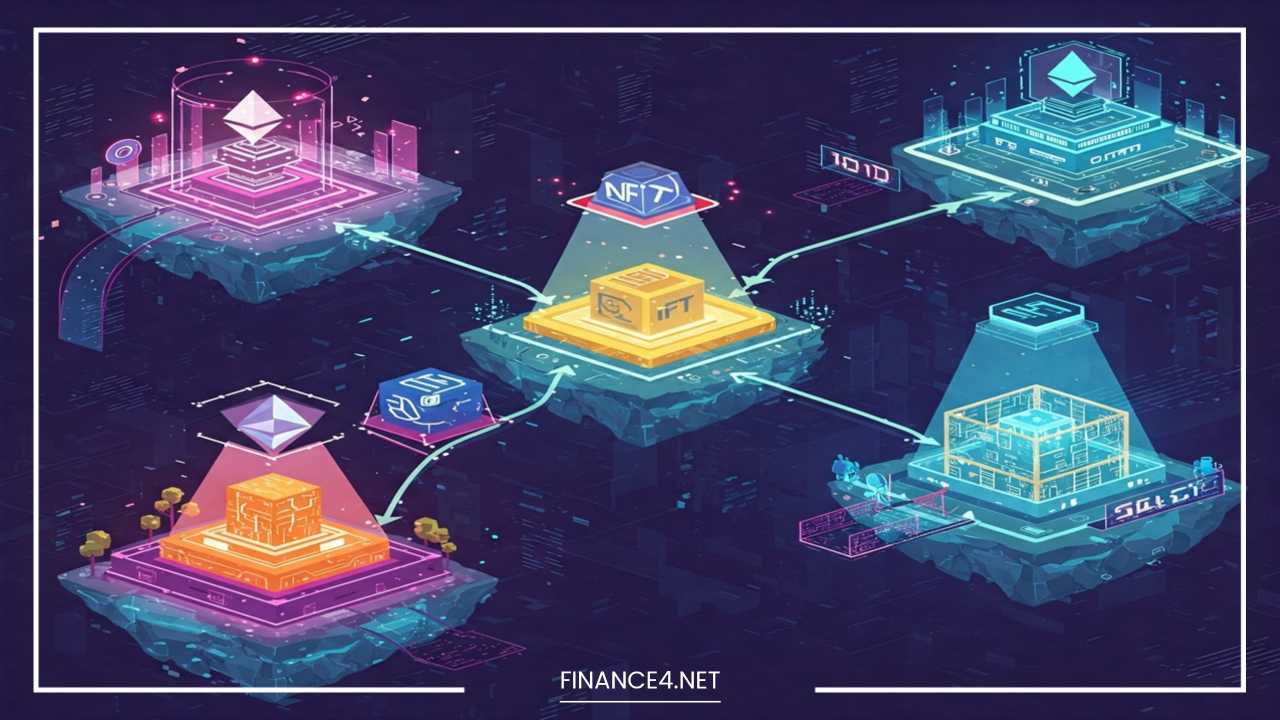
Sidechains offer a powerful solution by operating as independent, parallel blockchains that are connected to the mainnet. They can process a high volume of transactions off-chain, significantly reducing fees and increasing speed, while still periodically settling transactions back to the mainnet for security and finality. This “express lane” approach is crucial for building responsive, engaging, and economically sustainable NFT gaming experiences.
The Benefits of Sidechains for NFT Gaming
The advantages of utilizing sidechains for NFT games are multifaceted and directly address the limitations of mainnet operations:
- Reduced Transaction Costs (Gas Fees): This is perhaps the most significant benefit. Sidechains allow developers to design games where in-game actions incur minimal to zero gas fees, making the experience more accessible and enjoyable for players.
- Increased Transaction Speed and Throughput: Sidechains can handle thousands of transactions per second, ensuring near-instantaneous confirmations for in-game actions. This eliminates lag and creates a fluid gaming experience that rivals traditional online games.
- Enhanced Scalability: As a game scales, sidechains can accommodate a growing player base and transaction volume without compromising performance. This allows for the development of more complex and ambitious game worlds.
- Improved User Experience: Lower fees and faster transactions contribute to a smoother and more intuitive user experience, bridging the gap between traditional gaming and blockchain gaming.
- Greater Flexibility for Developers: Sidechains often offer more flexibility in terms of consensus mechanisms, programming languages, and customizability, allowing developers to tailor the blockchain environment to the specific needs of their game.
- Focus on Gameplay over Technicalities: By abstracting away the complexities of high gas fees and slow transactions, developers can prioritize creating engaging gameplay mechanics and rich narratives, rather than being constrained by blockchain limitations.
- Interoperability (in some cases): While sidechains are separate, many aim to facilitate seamless asset transfer and communication with the mainnet and other sidechains, promoting a more interconnected gaming metaverse.
Leading Sidechain Solutions for NFT Gaming
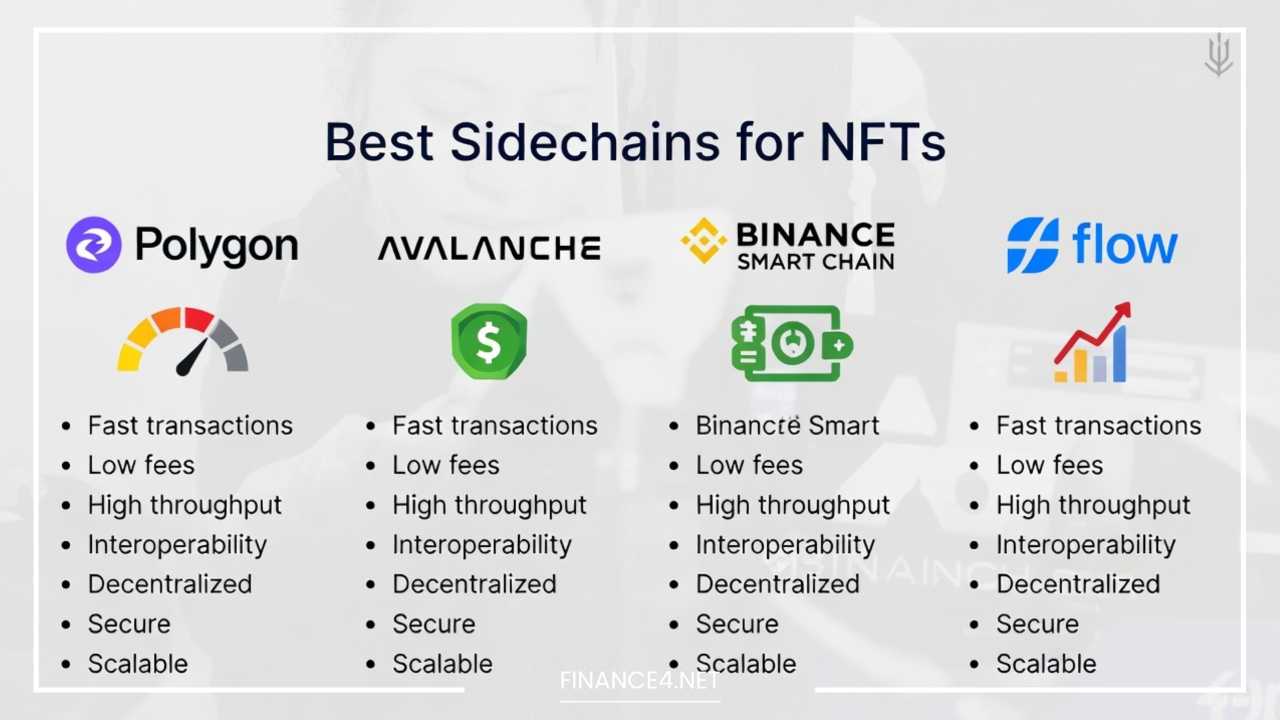
The landscape of sidechain solutions for NFT gaming is rapidly evolving, with several strong contenders vying for developer and player adoption. Each offers a unique set of features, trade-offs, and a growing ecosystem of games.
Ronin Network
Overview: Ronin Network is a purpose-built Ethereum sidechain developed by Sky Mavis, the creators of the hugely popular play-to-earn game, Axie Infinity. Its origin directly addresses the scalability challenges faced by Axie Infinity on the Ethereum mainnet.
Key Features for Gaming:
- Game-Optimized: Designed from the ground up to support the specific needs of blockchain gaming, focusing on high transaction volume and low costs.
- Near-Zero Gas Fees: Ronin is known for its extremely low or often non-existent transaction fees, making in-game actions highly affordable for players.
- Fast Transaction Finality: Transactions on Ronin are processed quickly, ensuring a smooth and responsive gaming experience.
- Dedicated to Gaming: Unlike general-purpose sidechains, Ronin’s infrastructure and development efforts are singularly focused on enhancing the gaming experience.
- Strong Community and Ecosystem: Benefits from the massive success of Axie Infinity and a dedicated community of players and developers.
- Seamless User Onboarding: Ronin Wallet simplifies the process of interacting with the network, making it easier for new players to join.
Prominent Games: Axie Infinity, Pixels.
Considerations: While highly effective for gaming, Ronin’s focus on a single ecosystem (Sky Mavis games) might be seen as a limitation for developers looking for broader cross-chain interoperability. However, its proven track record with Axie Infinity speaks volumes about its capabilities for high-throughput gaming.
Polygon (Matic)
Overview: Polygon is a Layer 2 scaling solution for Ethereum that aims to address its scalability issues without sacrificing decentralization or security. It offers a framework for building and connecting Ethereum-compatible blockchain networks, including sidechains.
Key Features for Gaming:
- EVM Compatibility: Full compatibility with the Ethereum Virtual Machine (EVM) means developers can easily migrate existing Ethereum dApps and smart contracts to Polygon, or build new ones with familiar tools.
- Low Gas Fees: Significantly reduces gas fees compared to Ethereum mainnet, making in-game transactions affordable.
- High Throughput: Boasts a high transaction throughput, capable of handling thousands of transactions per second.
- Diverse Scaling Solutions: Polygon offers a suite of scaling solutions beyond just its PoS sidechain, including zk-rollups (Polygon zkEVM) and optimistic rollups, providing flexibility for different gaming needs.
- Robust Ecosystem and Developer Support: A large and growing ecosystem of dApps, wallets, and developer tools, along with strong community support. Many major traditional companies and Web3 projects are building on Polygon.
- Interoperability: Facilitates seamless asset transfers between Polygon and Ethereum, and increasingly with other chains.
Prominent Games: The Sandbox, Decentraland, Zed Run, Sunflower Land, and many more. Polygon is a popular choice for a wide range of NFT games due to its versatility and established presence.
Considerations: While Polygon offers excellent scalability, its shared security model with Ethereum (via checkpoints) means that the security of Polygon is ultimately tied to the security of Ethereum, which is generally a positive. However, for specific gaming needs, some developers might seek dedicated, game-specific chains.
Immutable X
Overview: Immutable X is a Layer 2 scaling solution built specifically for NFTs on Ethereum, leveraging StarkWare’s ZK-Rollup technology. It aims to provide instant trades, massive scalability, and zero gas fees for NFT minting and trading, making it ideal for blockchain games and marketplaces.
Key Features for Gaming:
- Zero Gas Fees for NFTs: A standout feature, Immutable X eliminates gas fees for minting, trading, and transferring NFTs, making it incredibly cost-effective for players.
- Instant Transaction Confirmation: Transactions on Immutable X are confirmed almost instantly, ensuring a smooth and responsive user experience for in-game NFT interactions.
- Massive Scalability: Capable of processing thousands of transactions per second, easily handling the high volume of NFT interactions in popular games.
- Ethereum Security: Inherits the security of the Ethereum mainnet, as transactions are batched and settled on Ethereum using ZK-Rollups.
- Developer SDKs and API: Provides comprehensive tools and APIs to simplify the integration of NFT functionality into games.
- Carbon Neutral: Immutable X is committed to offsetting its carbon footprint, appealing to environmentally conscious developers and players.
Prominent Games: Gods Unchained, Guild of Guardians, Illuvium, Habbo X.
Considerations: While excellent for NFT-heavy games, the focus on NFT transactions might mean that for games with complex in-game logic that doesn’t solely revolve around NFT transfers, other sidechains might offer more comprehensive smart contract execution environments.
Oasys
Overview: Oasys is a blockchain built “by gamers for gamers,” specifically designed to address the challenges of blockchain gaming. It employs a unique multi-layered architecture consisting of a high-speed Layer 1 (Hub Layer) and customizable Layer 2s (Verse Layers).
Key Features for Gaming:
- Gaming-Optimized Architecture: The dual-layer approach is specifically designed to handle high transaction volumes and provide zero gas fees for players on the Verse Layers.
- EVM Compatibility: Verses are EVM-compatible, allowing developers to leverage existing Ethereum tools and knowledge.
- Instant, Gas-Free Transactions: Players on Verse Layers experience immediate, gas-free transactions, crucial for seamless gameplay.
- Flexible Verse Design: Developers can create their own customizable Verse Layers, allowing for tailored blockchain environments to meet specific game requirements. This gives game studios significant control.
- Strong Industry Backing: Supported by leading gaming companies like SEGA, Ubisoft, and Yield Guild Games, instilling confidence in its future.
- Developer Toolkit: Oasys offers a comprehensive suite of tools, including wallets, NFT marketplaces, and SDKs, to streamline game development.
Prominent Games: A growing number of games are either building on Oasys or are set to launch, leveraging its gaming-centric design.
Considerations: As a relatively newer player compared to Polygon or Ronin, Oasys is still building out its ecosystem and market presence. However, its strong gaming focus and industry partnerships make it a compelling option for game developers.
Avalanche Subnets
Overview: Avalanche is a Layer 1 blockchain that allows anyone to launch highly scalable, custom blockchains called Subnets. Subnets are essentially application-specific blockchains that share security with the Avalanche primary network but can have their own virtual machines, consensus mechanisms, and tokenomics.
Key Features for Gaming:
- Customizable Blockchains: Game developers can launch their own dedicated Subnets, giving them complete control over the blockchain’s parameters, including gas fees (which can be set to zero or paid in custom tokens), validators, and virtual machines.
- High Throughput and Low Latency: Subnets can achieve extremely high transaction speeds and low latency, essential for real-time gaming.
- Shared Security: Subnets benefit from the robust security of the Avalanche primary network by utilizing its validators.
- No Network Congestion Impact: A game running on its own Subnet won’t be affected by congestion on other Subnets or the Avalanche C-chain, ensuring consistent performance.
- Interoperability: Avalanche Warp Messaging (AWM) enables seamless communication and asset transfer between Subnets and the C-chain.
- Strong Developer Support and Incentive Programs: Avalanche has actively invested in promoting Web3 gaming through incentive programs and developer resources.
Prominent Games: DeFi Kingdoms (DFK Subnet), Beam (Merit Circle), and a growing number of other games are leveraging Avalanche Subnets for their unique needs.
Considerations: While offering immense flexibility, launching and maintaining a dedicated Subnet can be more complex than simply deploying on a shared sidechain like Polygon. However, for large-scale games or those with highly specific requirements, the control offered by Subnets is a significant advantage.
BNB Smart Chain (BSC)
Overview: BNB Smart Chain (formerly Binance Smart Chain) is a popular blockchain known for its high transaction speeds and low fees. It operates in parallel with the BNB Beacon Chain and is EVM-compatible.
Key Features for Gaming:
- Low Transaction Fees: BSC offers significantly lower transaction fees compared to Ethereum, making it attractive for GameFi projects.
- Fast Transaction Speeds: High throughput ensures quick processing of in-game transactions.
- EVM Compatibility: Easy for Ethereum developers to port their dApps and smart contracts to BSC.
- Large User Base and Liquidity: Benefits from the vast user base of Binance and its associated ecosystem, providing ample liquidity for GameFi tokens and NFTs.
- Robust Ecosystem of DeFi and NFTs: A thriving ecosystem of decentralized finance (DeFi) protocols and NFT marketplaces, which can be leveraged by GameFi projects.
Prominent Games: Alien Worlds, Splinterlands, Bomb Crypto, and a wide array of other GameFi projects.
Considerations: While popular, BSC has faced criticism regarding its decentralization compared to Ethereum. For some developers and players who prioritize maximum decentralization, this could be a concern. However, for many GameFi projects, the balance of speed, low cost, and a large user base makes BSC a compelling choice.
Arbitrum (Specifically Arbitrum Nova)
Overview: Arbitrum is a leading Ethereum Layer 2 scaling solution using Optimistic Rollups. While Arbitrum One is a general-purpose rollup, Arbitrum Nova is a specific AnyTrust chain optimized for ultra-low cost and high-throughput applications, making it particularly suitable for gaming and social applications.
Key Features for Gaming (Arbitrum Nova):
- Ultra-Low Transaction Costs: Nova is designed for extremely low transaction fees, making it highly economical for frequent in-game actions.
- High Throughput: Optimized for high transaction volumes, providing the necessary speed for demanding game environments.
- Optimistic Rollup Security: Benefits from the security of Ethereum, as transactions are periodically batched and settled on the mainnet.
- EVM Compatibility: Familiar development environment for Ethereum developers.
- Data Availability: Utilizes a data availability committee to ensure transaction data is accessible, contributing to lower costs.
Prominent Games/Applications: While still relatively new, Arbitrum Nova is attracting projects focused on high-frequency, low-value transactions like those found in certain gaming scenarios.
Considerations: As an Optimistic Rollup, there’s a “challenge period” for withdrawals back to the Ethereum mainnet, which can be several days. While this doesn’t impact in-game transactions, it’s a factor for players looking to move assets off the sidechain.
Choosing the Best Sidechain for Your NFT Game
The “best” sidechain solution isn’t a one-size-fits-all answer; it heavily depends on the specific needs and design of your NFT game. Here’s a framework for evaluation:
-
Game Type and Transaction Volume:
- High-frequency, low-value transactions (e.g., in-game currency, frequent item trades): Ronin, Immutable X (for NFTs), Polygon, Arbitrum Nova, Oasys, BSC are excellent choices due to their low fees and high throughput.
- NFT-centric games with many mints/trades: Immutable X shines with its zero-gas NFT operations.
- Games requiring complex on-chain logic and customizability: Avalanche Subnets offer unparalleled control and flexibility.
-
Target Audience and User Experience:
- Mass adoption and ease of onboarding: Solutions with simplified wallet experiences and minimal friction (like Ronin Wallet or Oasys Passport) are beneficial. Low to zero gas fees are paramount for attracting traditional gamers.
-
Developer Experience and Tooling:
- EVM compatibility: Polygon, BSC, Oasys, and Arbitrum offer seamless integration for developers familiar with Ethereum.
- Specific SDKs and APIs: Immutable X and Oasys provide specialized tools for game developers.
-
Security and Decentralization:
- Shared security with Ethereum: Immutable X (ZK-Rollup), Polygon (PoS, zkEVM), Arbitrum (Optimistic Rollup) leverage Ethereum’s security model.
- Dedicated validation for Subnets: Avalanche Subnets offer customized security models.
- Degree of decentralization: Consider the validator set and governance model of each chain.
-
Ecosystem and Community:
- Established user base and existing games: Polygon and BSC have broad ecosystems.
- Niche gaming community: Ronin benefits from the Axie Infinity community.
- Industry partnerships: Oasys’s backing by major gaming companies is a strong indicator.
-
Cost and Funding:
- Development costs and gas fees for developers: Some chains might have lower operational costs for developers.
- Incentive programs: Many chains offer grants and support for game developers building on their platforms.
The Future of Blockchain Gaming Infrastructure
The trend is clear: the future of NFT gaming lies in highly scalable, low-cost, and user-friendly blockchain infrastructure. While Ethereum’s mainnet will likely remain the ultimate settlement layer for high-value assets and critical smart contracts, sidechains and Layer 2 solutions will continue to serve as the operational backbone for fast-paced, interactive gaming experiences.
We can expect to see:
- Further Optimization: Sidechains will become even more specialized and optimized for specific game genres and economic models.
- Improved Interoperability: Bridges and cross-chain communication protocols will become more robust, allowing for seamless asset and data flow across different sidechains and mainnets, contributing to a truly interconnected metaverse.
- Abstracted Complexity: The underlying blockchain technology will become increasingly invisible to the end-user, making NFT games feel indistinguishable from traditional games in terms of performance and ease of use. This includes innovations like account abstraction.
- Hybrid Solutions: Games may utilize a combination of sidechains, Layer 2s, and even specialized L1s to achieve optimal performance and security for different aspects of their game.
- Focus on Play-and-Own (P&O): The emphasis will shift from pure “play-to-earn” to “play-and-own,” where the true value lies in engaging gameplay and true ownership of in-game assets, with earning opportunities as a natural byproduct.
In conclusion, sidechains are not just an optional add-on for NFT gaming; they are a fundamental requirement for its widespread adoption and long-term success. By providing the necessary scalability, speed, and cost-effectiveness, these innovative solutions are paving the way for a new era of decentralized, player-centric gaming where fun and true digital ownership go hand-in-hand. Developers who carefully select and leverage the best sidechain solution for their game will be at the forefront of this exciting revolution.